
Shetland’s nature reserves: Sumburgh Head
Puffins within a few feet, a Stevenson lighthouse and a wartime radar hut at Sumburgh Head.
Words by Laurie Goodlad
For those who love wild places and nature, Shetland has it all. With broad horizons, big skies and outstanding Nature Reserves, there are plenty of reasons to visit Shetland and get off-the-beaten-track as you explore some of the incredible nature reserves.
Of all Shetland’s nature reserves, Sumburgh Head’s RSPB reserve is probably the most accessible for those who are not keen walkers but want to get up-close-and-personal to nature. Sumburgh Head lies on the southernmost point of Mainland Shetland and enjoys commanding views out to sea and across the ‘Roost’ to the most southerly of the Shetland Isles – Fair Isle.
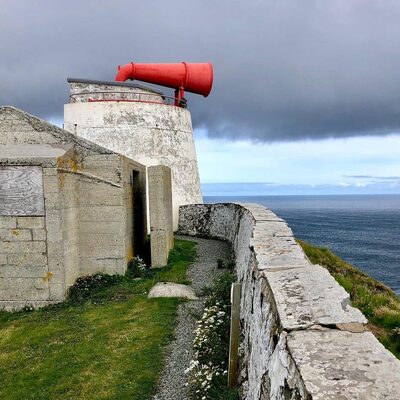
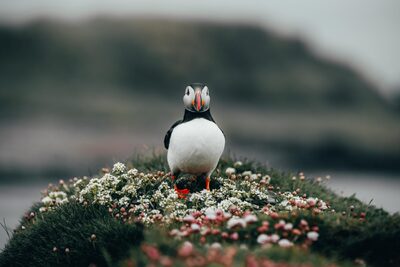
Sumburgh Head is home to an array of breeding seabirds including guillemots, shags, fulmars, kittiwakes and puffins. Gannets, great skuas and terns can also be seen feeding in the rich fishing waters around the Head. In the breeding season, visitors can get to within a few feet of the puffins. Orcas and other cetaceans are seen passing through the area in search of feed.
But it’s not just wildlife that draws visitors to the southernmost extremity of Shetland; the lighthouse dominates the headland and has played an essential role in Shetland for generations. It was built by the famous ‘lighthouse’ Stevenson family and completed in 1821. The lighthouse was lived in by a keeper and his family until the light was automated in 1991.
When the Stevenson family arrived to survey the site in 1814, they brought their close family friend, Sir Walter Scott. His visit to Sumburgh Head went on to inspire his novel The Pirate, which is based in and around the south of Shetland.
During the Second World War, Sumburgh Head played a prominent role as an early warning radar station, warning of any Nazi movements in the North Sea area. On 8th April 1940, Sumburgh’s radar station was to arguably change the course of the war as they intercepted a massive Nazi attack on the British fleet at anchor in Scapa Flow, Orkney.
Today, the lighthouse keeper’s accommodation and the outlying buildings are part of a complex managed by Shetland Amenity Trust. Visitors can explore a Marine Life Centre, gift shop, Smiddy and recreated Radar Hut. The site is also home to the RSPB who monitor the marine life in the area as well as across Shetland as a whole.
Sumburgh Head provides the perfect recipe for thriving wildlife in its geology and location. The area is made up of old red sandstone, providing ideal breeding ledges in the cliffs for seabirds. Combined with this, the site sits where the merging of the North Sea and North Atlantic create a tidal rip; kicking up nutrients and feed in the water, creating a ‘fish soup’ for marine mammals and birds.
Sumburgh Head makes a good stop, whether you have half an hour before a flight or an afternoon to watch the comical and expressive puffins.
 Out now
Twice a year, to your door
One hundred and sixty pages of Scotland, every photograph commissioned, every word written by someone who went. Members get both issues posted and everything on screen.
 Chasing the Night
 Beaver, Is That You?