
A day in the South Mainland
Mousa’s broch, Jarlshof, puffins at Sumburgh Head and the sandy beaches of Shetland’s far south.
Words by Laurie Goodlad
The South Mainland will likely be one of the first places that you’ll see in Shetland as the island’s main airport is based at the southernmost tip of the Mainland, at Sumburgh. The South Mainland is the long, narrow peninsula that protrudes south of the Central Mainland – and has been likened to the blade of a sword. Interestingly, the Old Norse name for Shetland was Hjaltland – or Hitland – and one theory is that this name comes from the hilt (hjalt) of a sword.
The South Mainland is best-known for its fertile farmland, gently rolling hills and beautiful sandy beaches. However, it’s also an area of contrast, dominated by the rugged Clift Hills that run down the peninsula like a spine, separating east from west.
The South Mainland spans only a few miles at its widest point and, at its narrowest, the width of the runway. The southernmost tip is so narrow that the main artery road (A970) that runs north to south passes over the main airport runway.
The South Mainland comprises Old Red Sandstone, providing relatively fertile soils, particularly around Quendale and Bigton, where most of the island’s crops are grown.
Lying 24 miles south of Sumburgh Head is Fair Isle, Shetland’s most southerly island – but we’ll save that jewel in the ocean for another day.
The South Mainland has some of the best beaches and archaeology in Shetland, and the following itinerary suggestions very much reflect this.
Although you’re likely to want to spend more time exploring the South Mainland, these suggestions will give a few of the highlights and act as a springboard to explore more.
The South Mainland stretches down from Lerwick and Scalloway, around 25 miles and takes in the villages of Cunningsburgh and Sandwick and the rural communities of ‘Da Ness’ before reaching the southernmost point Sumburgh. The uninhabited islands of St Ninian’s Isle and Mousa are also found in the South Mainland. Both of these are worth a visit, and the itineraries below will provide details about visiting both.
Self-catering options
You may wish to base yourself in the South Mainland to enjoy the beaches and gentle landscapes fully. If so, the following are a few options for places to stay.
Voortrekker, in Levenwick, has adult-only apartments with coastal views, a hot tub and a sauna.
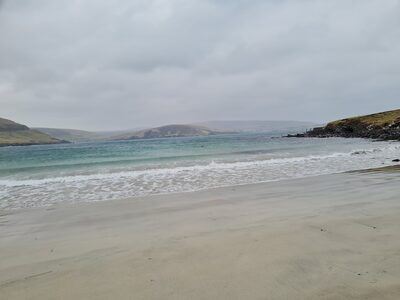
Shetland Glamping Pods opened in spring 2022 and offer three glamping pods for guests. They are based in Rerwick, just south of Bigton, and close to some of the best beaches in Shetland.
Da Peerie Hoose is in Sandwick, the largest village in the South Mainland.
Eating Options
Several places in the South Mainland serve food, including:
The Unken Kaffee – with outstanding panoramic views, the Unken Kaffee at Sumburgh Head is one of the best places to enjoy watching wildlife and tucking into some exceptional food. Run by Katja, the cafe is only open throughout the summer months. During the winter, Katja sells her German-inspired cakes and bakes from the Unken Wagen – a converted bus usually parked along the Lochside Road in Lerwick.
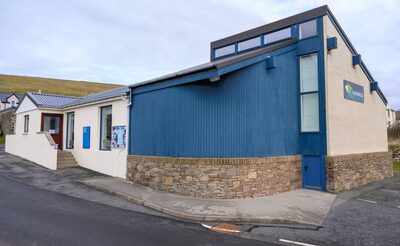
Hoswick Visitor Centre – with a menu packed with local produce, the Hoswick Visitor Centre Cafe offers a fantastic selection of food and drink – as well as a great craft shop selling the work of almost 100 island artists from Unst to Sumburgh.
Da Kitchen Table – based in Mackenzie’s Farm Shop just north of Cunningsburgh, Da Kitchen Table opened its doors in 2021 and has proved to be a hit amongst locals – particularly for the incredible selection of cakes on offer.
Sumburgh Hotel – You may recognise the Sumburgh Hotel as one of the filming locations for the Shetland TV show – it was used as a care home – but the Hotel also serves daily lunches, dinners and afternoon tea.
Shops – you may want to pick up a picnic from Mainlands in Dunrossness, or the Sandwick Baking Company also make their own pies, bread and fancies in their popular bakery.
Top tip: If you’re planning to visit the South Mainland on a Sunday, be sure to check the What’s On guide in the weekly Shetland Times newspaper or check roadside signs advertising Sunday Teas in any one of the local public halls. Sunday Teas are quintessentially Shetland. Basically, a team of volunteers will open the hall for an afternoon selling tea, coffee, cakes, bakes, sandwiches, soup. For a nominal fee, visitors can tuck into an all you can eat buffet-style spread with the best local home-baking and hospitality. Cunningsburgh Hall holds Sunday Teas most weeks – and Bigton’s teas are a real treat for the tastebuds.
The best of Shetland’s archaeology in a day
This day trip is for anyone keen on Shetland’s archaeology, with some wildlife and beaches along the way.
Itinerary: Clickimin Broch, Mousa, Jarlshof, Sumburgh Head.
Top tip: If you’re setting off from Lerwick in the morning, The Peerie Shop Cafe make fantastic picnic lunches that you can pre-book and collect anytime after 8 am. You’ll need to bring a picnic with you as you will spend your lunch on the uninhabited island of Mousa where there are no facilities.
For this itinerary, timings are everything, so this one is broken down by the hour.
8 am - If you’re beginning your day in Lerwick, try a Peerie Shop Cafe breakfast in the town centre. Housed in a former 18th-century lodberrie, the cafe is a popular spot for locals, and James’ scrambled eggs are sure to set you up for the day. Order a picnic for the day, which should be ready by the time you finish your morning coffee.
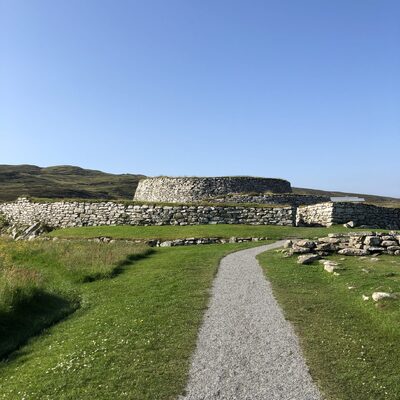
9 am - Visit Clickimin Broch in Lerwick for a taste of a 2,000-year-old Iron Age broch.
Situated in the middle of Lerwick, Shetland’s main town, Clickimin Broch stands elegantly on the shores of the loch, facing the modern High School building. One of about 120 known broch sites in Shetland, these Iron Age structures dominate much of the Shetland landscape – this is just a warm-up for the impressive Mousa Broch that will come later.
For more on Clickimin Broch, see our Site in Focus.
10 am - Leave Lerwick and drive to Hoswick, 14 miles south following the A970. Visit the Hoswick Visitor Centre, see the local history displays, and pick up a locally-made gift. The centre is a hub of local produce, featuring around 90 local makers.
11 am - Leave Hoswick and drive two miles to Sandsayre for the Mousa Boat ferry. The Mousa Boat operate daily sailings into the island. Daytime bookings are not needed (£18 adults; £8 children).
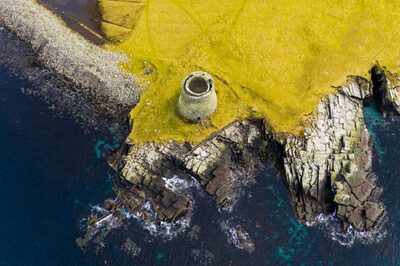
On the island, guests have three hours on the island to explore the wildlife and impressive broch. Enjoy your Peerie Shop Cafe picnic in the shadow of the broch for a magical experience.
For more information about Mousa, see our Site in Focus.
3 pm - from Mousa, head south, following the A970 to Jarlshof Prehistoric and Norse Site at the southernmost point of Mainland Shetland.
Top tip: we’re no longer under time pressure with Mousa timings so if you want to saunter down to Jarlshof slowly, consider a stroll to St Ninian’s Isle on the way.
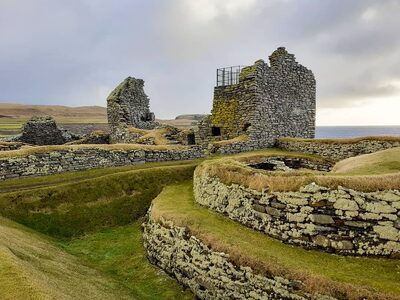
Jarlshof is a fascinating site spanning some 5,000 years of human history in Shetland.
For more information about Jarlshof, see our Site in Focus.
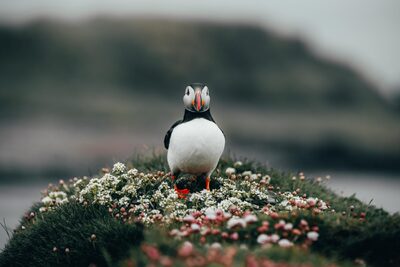
From Jarlshof, head to Sumburgh Head. If visiting between April and August, you can view the impressive puffin colonies. Early evening is one of the best times to view the puffins as they return from fishing trips to sea.
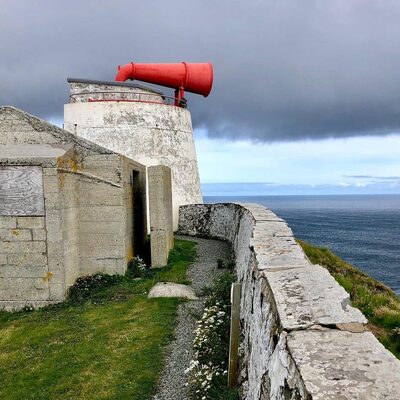
Sumburgh Head is home to the impressive Stevenson-built Sumburgh Head Lighthouse.
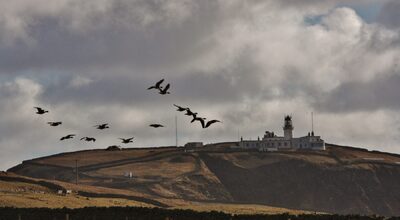
For more information about Sumburgh Head, see our Site in Focus.
Why not enjoy dinner at the Sumburgh Hotel and catch the sunset from Sumburgh Head while you’re here?
Be a beach bum for the day
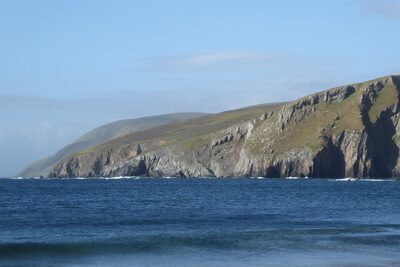
The South Mainland has no less than 12 beautiful sandy beaches to explore – the following is our pick of the best six.
West Voe
St Ninian’s Isle
Quendale
Rerwick & Scousburgh Sands
Levenwick
Museums and Heritage Centres
There are plenty of museum attractions in the South Mainland, particularly handy if it’s a rainy day – or if you want to become immersed in the history and heritage of the area.
Hoswick Visitor Centre (serves food) - free admission
Sandsayre Interpretive Centre - free admission
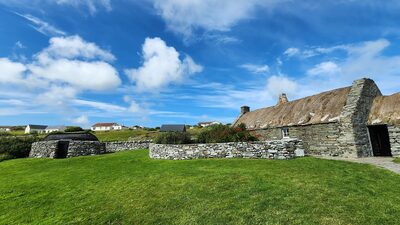
Crofthouse Museum - entry fee
Quendale Mill - entry fee
Sumburgh Head Visitor Centre (serves food) - entry fee
Hoswick Visitor Centre
More about Hoswick Visitor Centre
Sandsayre Interpretive Centre
Situated at Sandsayre – where the Mousa Boat departs – the centre provides a history of the area, including the story of the impressive grand house of Sandlodge, the copper mining industry in the area and the nearby brochs of Mousa and Burland.
More about Sandsayre Interpretive Centre
Crofthouse Museum
Quendale Mill
Visit the restored 19th-century watermill at Quendale and discover more about the milling traditions of the islands.
Sumburgh Head
Walks
For lovers of hiking and history, the South Mainland has several sites of interest.
St Ninian’s Isle Circular
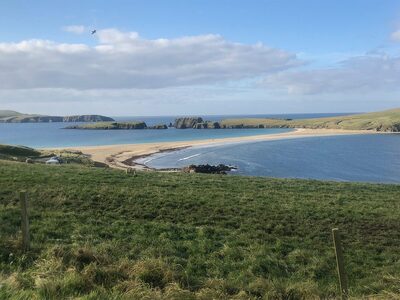
St Ninian’s Isle is probably Shetland’s best-known beach. Its iconic image is found in most brochures and internet searches for places to visit in Shetland, and rightly so. St Ninian’s Isle is a picture-postcard pristine white sand tombolo spanning some 500 metres from the Shetland Mainland, across to the uninhabited St Ninian’s Isle. The 9th-century treasure hoard was discovered on the island, now displayed in Edinburgh’s National Museum.
Ness of Burgi
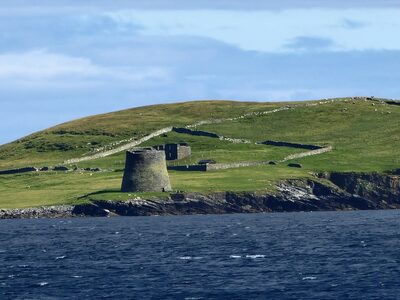
The Ness of Burgi is almost at Shetland’s southernmost point – it’s the neighbouring headland that looks across to Sumburgh Head and is home to an impressive Iron Age block fort. The walk is about two miles (3.25 km) in total and will take you around an hour.
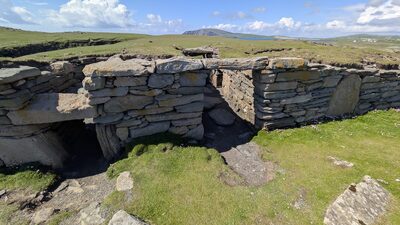
This fort is one of at least three block forts known to have been in Shetland during the Iron Age. Other examples are found at Clickimin Broch and in Whalsay. Ness of Burgi is about 2,000 years old and contemporary with the brochs. The fort itself is about 23m by 5.5 with walls that stand at about 1.5 metres high today. The fort has a central passage and two large chambers to the north and south.
Top tip: Walking here in June is beautiful as the headland plays host to a carpet covering of sea pinks or thrift.
Fitful Head
This is a more challenging walk – about 5.5 miles (9 km) and is relatively steep and challenging in places. Your efforts will be well rewarded at the top, where there are stunning panoramic views looking south towards Sumburgh Head and north, up the west coast of Shetland.
A poignant memorial is found in the cliffs in the upper reaches of Fitful, commemorating the crew of a Halifax Bomber that crashed when returning to Sumburgh following a mission. Seven crewmen were lost.
This is an excellent spot to catch a summer sunset.
Other places worth a visit in the South Mainland
Catalina crash site, near Cunningsburgh – another wartime crash site sits in the Clift hills, south of Cunningsburgh.
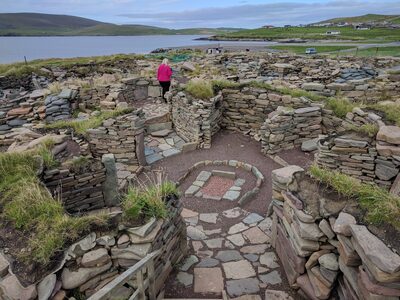
Old Scatness Broch and Iron Age Village is a complex and fascinating archaeological site. The broch and surrounding village were accidentally discovered in 1975 whilst building a road to the airport.
Spiggie Loch – If fishing is your thing, permits can be bought to fish Spiggie Loch.
Catpund Quarry – this fascinating Viking site is situated halfway between Cunningsburgh and Sandwick. It’s poorly marked, but look for the old road and the stream that leads up the hill. Follow the stream uphill to see the steatite (soapstone) workings left by Norse settlers to the islands.
 Out now
Twice a year, to your door
One hundred and sixty pages of Scotland, every photograph commissioned, every word written by someone who went. Members get both issues posted and everything on screen.

 The Last Stop Before Nowhere
 A Weekend Exploring the Isle of Mull
 What's On in Scotland: Autumn and Winter