
Design Disruptors - Timorous Beasties
As they prepare to open their new Edinburgh showroom, designers Paul Simmons and Alistair McAuley tell Hidden Scotland how their Glasgow-based studio Timorous Beasties ended up with a reputation as the enfant terrible of the interior design world.
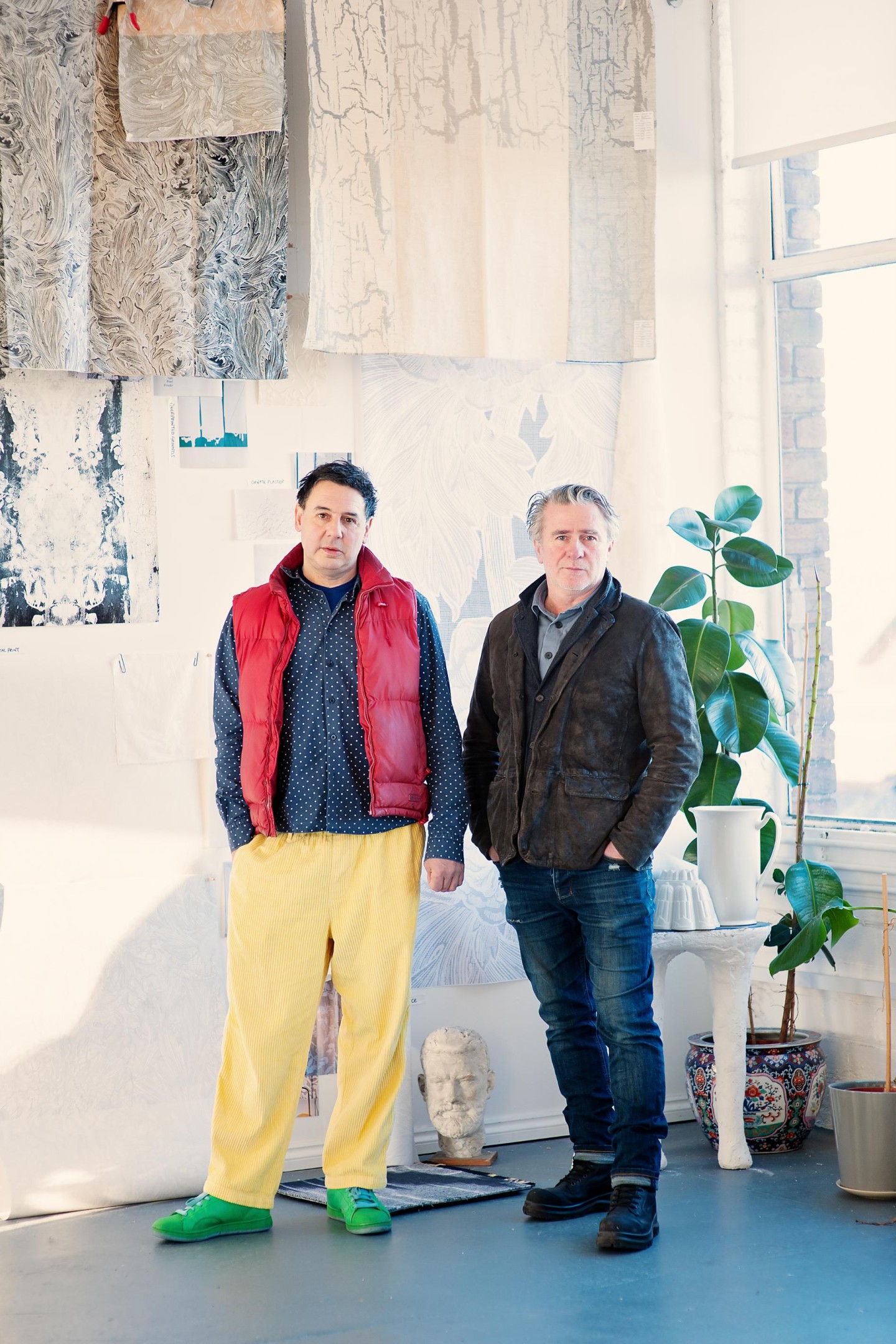
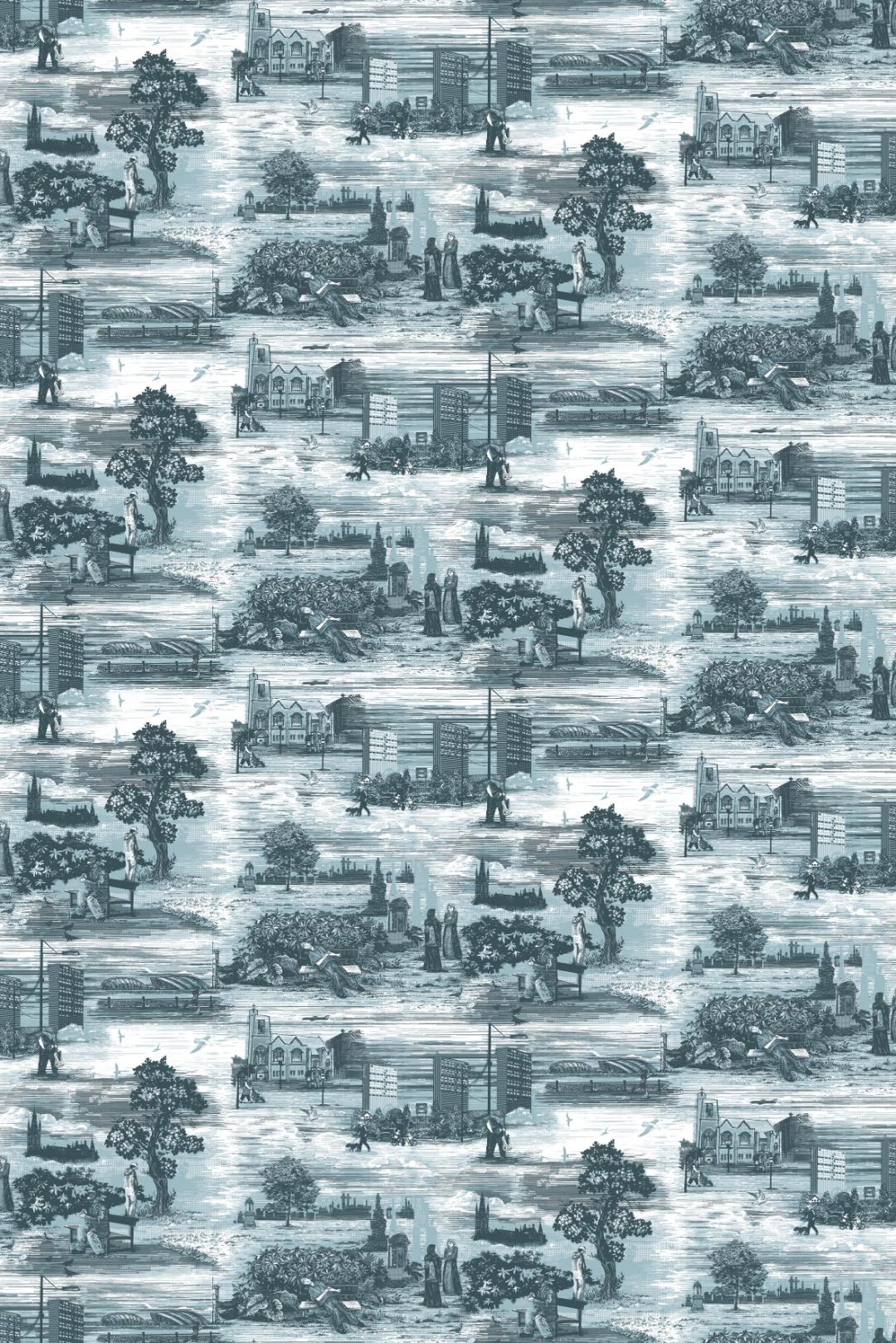
If you’ve spent time at some of Scotland’s top hotels and hospitality venues you may have come across the work of design studio Timorous Beasties. The printed fabrics and wallpapers developed by Paul Simmons and Alistair McAuley are popular with interior designers looking to add a contemporary edge to their schemes. Often featuring surprising elements like insects, skulls or gritty urban scenes, their playful and provocative patterns are all hand drawn or crafted using different media at their Glasgow studio. In addition to developing their own collections, Timorous Beasties work on commercial and creative collaborations ranging from designs for bank notes to artwork for musician Kate Bush.
The studio has also undertaken bespoke projects for brands including Brintons, Liberty, Fortnum & Mason and Nike, as well as working on architectural interventions for The Wellcome Trust, Bristol’s Cabot Circus shopping centre and Princes Square in Glasgow.
This year is a big one for Timorous Beasties, with the launch of its first Edinburgh showroom and a commission to create an interactive installation for the Dundee Design Festival. Here, Simmons and McAuley look back at the early years of their studio, explain why standing out is better than fitting in, and offer their thoughts on the state of contemporary craft in Scotland.
AM: Paul and I met while studying Printed Textiles at Glasgow School of Art and set up our studio in 1990. When we started out we didn't know exactly what we were going to do, hence why we chose the name Timorous Beasties (borrowed from Robert Burns’ famous poem, 'To a Mouse') as opposed to Simmons McAuley Fabrics and Wallpaper. Those products will always be the core of our business, but we’re one of the few companies that can add album covers, gravestones and whisky bottles to their repertoire and it doesn't look ridiculous. We take on most things and just view it as a challenge.
PS: In the studio’s early years, the only way we could engage with the market was by making things ourselves. Fortunately during our studies we learnt how to do that and we still enjoy the manufacturing and trade side of the business. We specialised in printed textiles and over the past few decades we’ve explored every possible technique, from hand printing with different types of inks, to roller printing, flat bed printing and working with digital technologies.
AM: Our approach has never been about being purely commercial or just creating things that will sell in large volumes, and that’s why we’re still quite a niche company. Back in the early nineties interior design was quite minimalist – there was a lot of grey and beige and we didn’t really fit in with that. We were producing unusual patterns that would actually diminish the product’s saleability rather than enhance it. But our approach helped us to stand out and made us even more determined to keep making the things we really wanted to make.
PS: It doesn't take much to be outrageous or outré in the textile world, but it was never our intention to try and shock people. I’ve always disliked a lot of the twee, saccharine images that are popular in textile design, so instead of pretty florals or traditional designs I try to create things that are a bit stranger or a bit darker. There are flowers, birds and other natural elements in a lot of our designs but we like to celebrate the so-called uglier side of nature. It becomes a fun part of the challenge: how do you make a big iguana munching on insects into a beautiful repeat design that people can live with.
AM: We really enjoy applying our approach to a wide variety of projects and it’s better for our mental wellbeing to have that diversity in our work. We couldn’t just do fabrics and wallpapers every day. We’re lucky that so many clients approach us with oddball ideas, from working with Kate Bush, to designing money for The Royal Bank of Scotland or helping to create bottles for Johnnie Walker or Hepple Gin. When companies are looking for something quite unusual they’ll often think of us and that’s why we’ve been able to work on some really high calibre projects.
PS: As designers we like to be challenged and have constraints rather than a really open brief. One example is scale, because you approach a project differently if the outcome is going to be a huge printed wallpaper or a tiny chocolate box like the one we designed for Fortnum & Mason. We’ve also worked with all sorts of materials, from printed lampshades for the Wellcome Trust that changed appearance when the light was turned on, to cement panels for a London office building and a foliage-inspired exterior installation for Princes Square in Glasgow. The more restrictions or technical considerations there are in a project, the more creative we have to be.
AM: Everything we produce starts with a hand drawing or some original artwork created in our studio. We’ve always had this focus on process and making, which appears to align with a real revival of interest in Scottish craft right now. People seem to be rejecting the modern, machine-made aesthetic and are instead seeking out products that display an element of craftsmanship and the skill involved in making things by hand. Craft in Scotland had a bad image for a while but it’s become much more relevant and all about making high-quality objects using carefully sourced materials.
AM: We find that Scotland, and Glasgow in particular, is such an accepting and encouraging environment for a creative business like ours. If we’d opened our studio in London we might not have lasted as long as we have because it took us 14 years to open our first shop. But in the meantime we found enough clients who were happy to support a couple of local fellas and the business we were building.
PS: We’re very excited to be opening our first showroom in Edinburgh this year, which will join our existing spaces in Glasgow and London. It seems like Edinburgh has really matured recently, with new galleries, museums and restaurants adding to its reputation as one of the world’s great capital cities. The showroom is located on Dundas Street, which feels like a perfect fit as it’s in the heart of the architecturally spectacular New Town and there are plenty of other interiors shops nearby so visitors can spend a morning or afternoon popping into different places.
PS: I think tastes are changing in Edinburgh, which used to be viewed as quite traditional and conservative in terms of its style. New attitudes towards food and drink as well as fashion and interiors are helping to alter that perception. Our products are used in several hotels in the city, including The Balmoral, Tigerlily and Kimpton Charlotte Square, as well as in bars and restaurants such as The Kitchin and Ryrie’s Bar. There are also plenty of stunning houses and buildings in Edinburgh so we’re optimistic that we’ll have opportunities to work on some really interesting projects going forward.
-full-1741030642.jpg)
Promoted Post
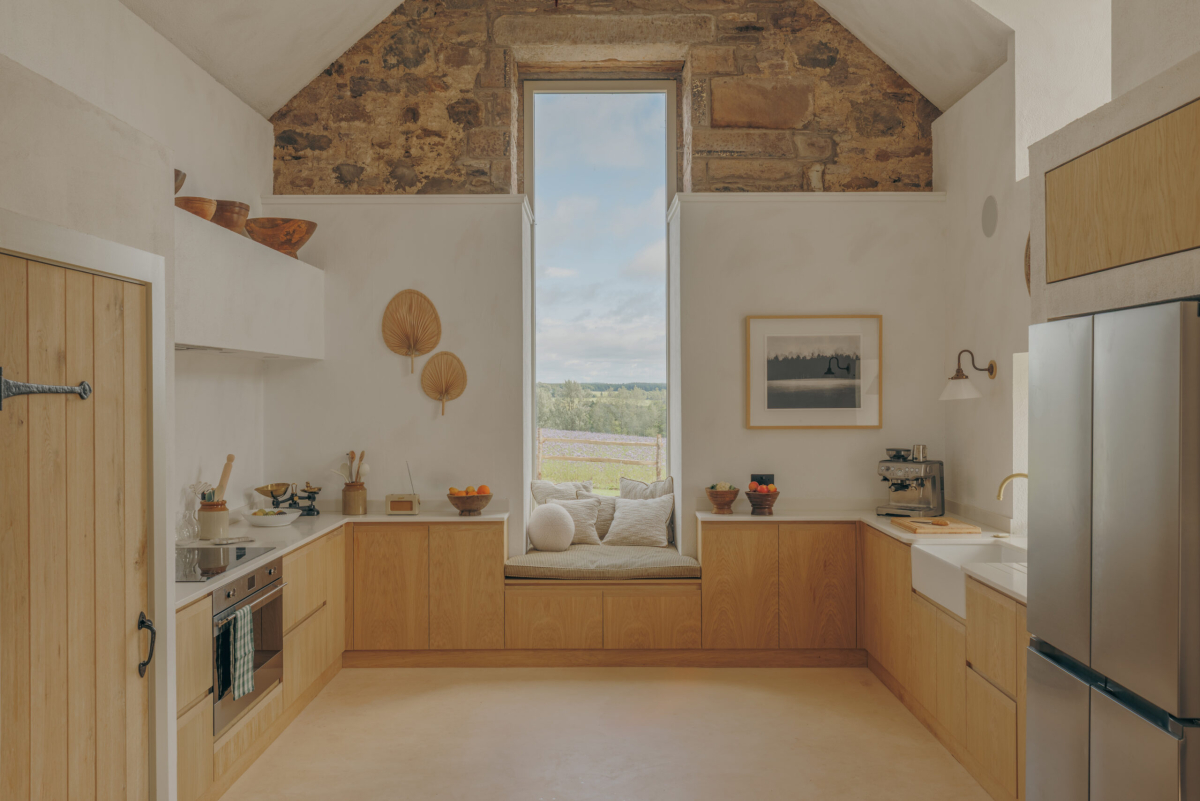
Whitehill Farmhouse
Located on Colquhalzie Estate, this 19th Century farmhouse has been lovingly restored into a family home, having previously been home to the Shepherd who lived there for 40 years. We welcome friends and families of up to 8 people on a self-catered basis for at least 4 nights.
-full-1744750664.jpg)






 Sign in with Google
 Sign in with Email