
Getting to Lochaber and around.
The trains, the roads and the ferries
Fort William is the main transport hub, with daily trains from Glasgow along the West Highland Line. The route continues to Mallaig, passing through Glenfinnan and Arisaig – a journey often listed among the best in the world. Local buses connect Fort William with Kinlochleven, Ballachulish, and points along the A82, though timetables can be limited outside summer.
Driving gives the greatest flexibility, particularly for reaching Ardnamurchan, Morvern or the more remote parts of Glen Nevis and Glen Etive. The Corran Ferry provides a key crossing to Ardgour, offering access to quieter roads and the furthest west of the mainland.
Cycling is possible on parts of the old rail line and forest tracks, and the region has hosted world mountain biking events. Walking routes are extensive, with options for every level – from forest trails around Glen Nevis to high-level scrambles on the Aonach Eagach. Ferries from Mallaig connect to Skye and the Small Isles, with seasonal sailings to Knoydart.
By train
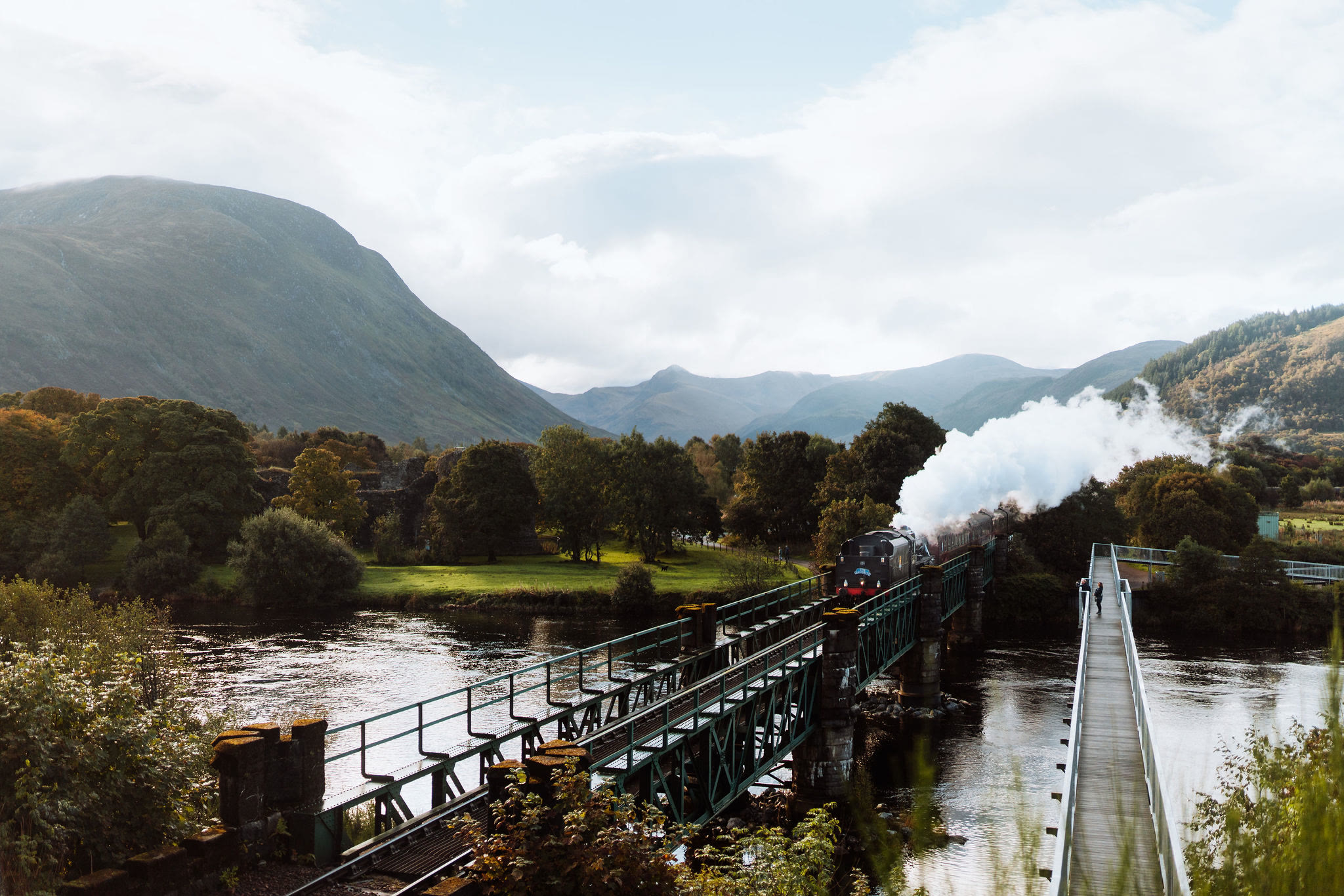
The West Highland Line runs from Glasgow to Fort William and on over the Glenfinnan Viaduct to Mallaig, and in summer the Jacobite steam train makes the same run from Fort William.
The Caledonian Sleeper from London comes into Fort William in the morning.
By road and ferry
The A82 brings you over Rannoch Moor and through Glen Coe to Fort William, and the little Corran Ferry crosses Loch Linnhe to Ardgour and the roads west to Ardnamurchan.
From Mallaig, CalMac sails to Skye and the Small Isles, so check CalMac's service page before you travel.
Getting around
Buses run from Fort William along the A82 and out to Mallaig, but a car is the easiest way to reach Ardnamurchan and Morvern.
West of Fort William most roads are single track with passing places, so everything takes longer than the map suggests.
Fort William has the most places to stay and eat, and trains, buses and roads in every direction. Glencoe village suits the glen and the mountains, and Arisaig or Mallaig put you on the coast for the beaches and the ferries.
Three or four days covers Glen Coe, Fort William and the Road to the Isles to Glenfinnan and Arisaig. Add a night or two on Eigg or Canna if you can.
The Mountain Track from Glen Nevis is a long day, usually seven to nine hours up and down, and the top can be wintry in any month. Go prepared, or take the Nevis Range gondola on Aonach Mòr for the view without the climb.
From the viewpoint path above the Glenfinnan visitor centre. The Jacobite runs in summer and crosses the viaduct in the morning and again in the afternoon, so arrive early, as the car parks fill up.
Lochaber is one of the wettest parts of Britain, and the weather on the hills changes quickly. Pack waterproofs, and midge spray from June to September.
CalMac sails from Mallaig to Eigg, Muck, Rum and Canna, and in summer a boat from Arisaig runs to Eigg, Muck and Rum. Not every island has a boat every day, so check the timetables and book ahead.
Photographs by ncnean; Leah Chappell via Google
More of Lochaber.
 See and doGlenfinnan, island churches and castles
 Eat, drink and shopSeafood by the harbour and island kitchens
 Where to stayCabins, cottages and a lodge by the loch
 History and storiesClan feuds, Glencoe and the last Jacobite rising
 ItinerariesDays we have driven, stop by stop
 What is on in LochaberSomething new from the region every day