Getting to Arran and around.
The ferries, the roads and the buses
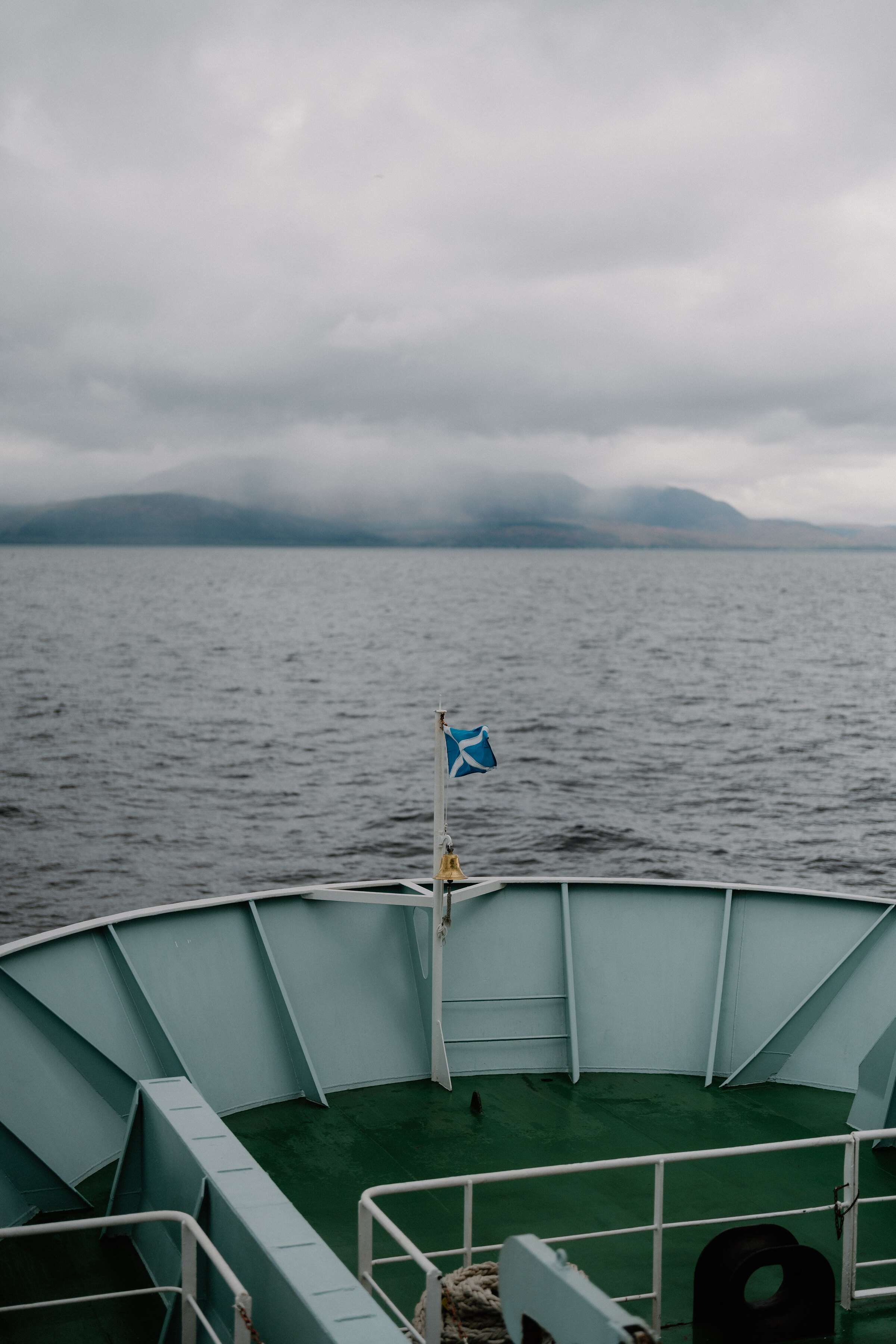
Getting here The CalMac ferry from Ardrossan to Brodick takes just under an hour and runs several times a day. Ardrossan Harbour has its own station, with regular trains from Glasgow Central. In summer a second, smaller crossing runs from Claonaig on Kintyre to Lochranza at the north end.
Book the car ahead Vehicle space on the Ardrossan crossing goes early, particularly in summer and at weekends. Foot passengers rarely need to.
Getting about One road runs right around the island, about 56 miles, with a second cutting across the middle through the String. Buses follow the coast road and connect the ferry at Brodick with the villages; services are less frequent on Sundays and in winter. The coast road is a well-known cycle circuit, and the interior is walking country rather than driving country.
Ardrossan or Troon to Brodick
The main crossing: 55 minutes from Ardrossan, 75 from Troon, with trains from Glasgow to both harbours.
Book a space for the car well ahead in summer, and check CalMac's service page for which harbour is sailing.
Claonaig to Lochranza
A small ferry from Kintyre in half an hour, handy if you're coming down from Argyll or going on to Islay and Jura.
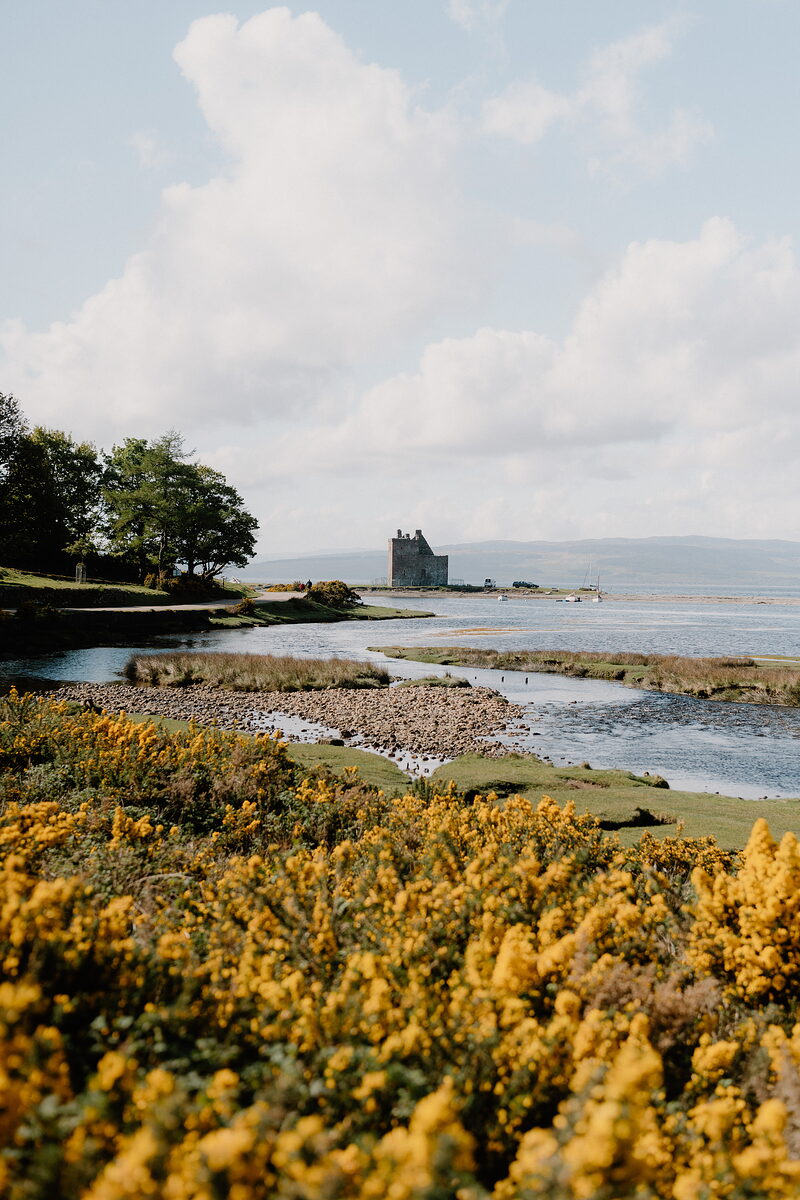
It lands at the north end, right by Lochranza's castle and distillery.
Getting around
One road runs right round the coast, about 56 miles, and the String Road crosses the middle from Brodick to Blackwaterfoot.
Buses meet the ferries and circle the island, and parking is free.
Arran has a mild maritime climate, with cool summers and damp, often windy winters. Even in July and August, temperatures usually sit around 16°C during the day and can dip below 10°C at night. Rain is possible at any time, and cloud cover can roll in quickly, particularly in the hills. Sunshine and downpours can easily happen within the same hour. Visitors should come prepared for changeable weather with layers, waterproof jackets, and suitable footwear. The island’s western side can be slightly wetter due to its exposure to prevailing winds, while the eastern side often enjoys calmer conditions.
The most common route to Arran is by ferry from Ardrossan on the mainland to Brodick on the island's east coast. This crossing takes around 55 minutes and runs several times daily, with additional sailings in the summer months. There's also a smaller seasonal ferry from Claonaig to Lochranza, on the northern tip of the island. Both routes are operated by CalMac, and booking in advance, especially for cars, is recommended during the summer. Once on Arran, the main road circles the island, with single-track sections in the north. Driving is straightforward and relaxed, though patience is needed on narrower rural roads. For those without a car, local buses connect Brodick with Lamlash, Blackwaterfoot, Lochranza, and other villages. Cycle hire is available in Brodick, and the relatively compact scale of the island makes it manageable for confident cyclists.
A car provides the greatest flexibility, particularly if you're interested in remote hikes, coastal detours, or visiting several villages in a short space of time. However, it’s possible to visit Arran without one. Bus services are reliable along the main circular route and are timed to connect with ferry arrivals. For visitors based in Brodick or Lamlash, it’s feasible to explore on foot or by bike. Many of the island’s highlights, such as Brodick Castle, Goat Fell, and the beach at Lamlash, are reachable without driving, and local taxi services can help fill the gaps for those without their own transport.
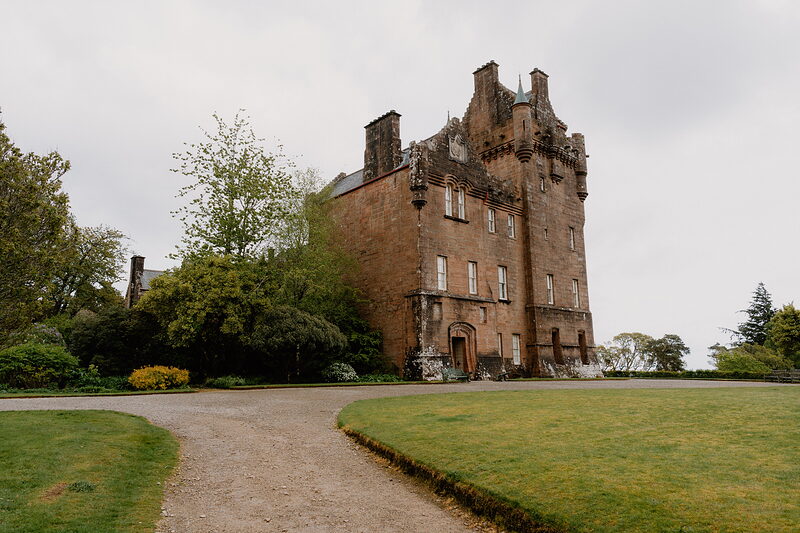
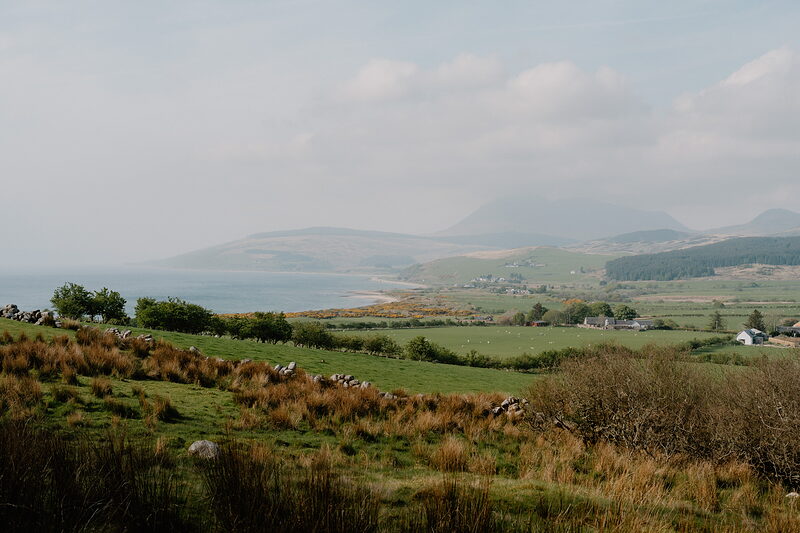
Arran is often described as ‘Scotland in miniature’ for good reason: it has highland and lowland scenery, high peaks, quiet beaches and prehistoric remains. Goat Fell, the island’s highest mountain at 874 metres, offers one of the most accessible and rewarding hill walks in Scotland. Brodick Castle, managed by the National Trust for Scotland, is a well-maintained country house with gardens, woodland walks, and interactive exhibitions. Machrie Moor, on the west side of the island, has standing stones and burial cairns out on open moorland. On the west coast, the King’s Cave near Blackwaterfoot is tied to the legend of Robert the Bruce and can be reached by a loop walk with sea views and forest tracks. In the north, Lochranza is home to a 13th-century castle ruin, often photographed with red deer grazing in the surrounding fields, and the island’s older whisky distillery, which offers tours and tastings.
Red deer are commonly seen, especially around Lochranza and Glen Rosa, and golden eagles patrol the mountain ridges. Otters live along the coastline, although patience and a bit of luck are needed to spot them. Seals are frequently seen hauled out on rocks near Kildonan and Whiting Bay. The island is also popular with birdwatchers, with hen harriers, buzzards, and oystercatchers among the regular sightings. Arran’s geology is also significant. The island has been recognised as a UNESCO Global Geopark for its diverse and well-preserved geological features, with trails and interpretation boards explaining how its landscapes were formed over hundreds of millions of years.
Yes, Arran suits a family holiday. The scale of the island means travel times are short, and there are plenty of safe, well-maintained attractions that appeal to children. Brodick Castle includes adventure play areas, seasonal outdoor events, and interactive exhibits. The beach at Lamlash is sandy and calm, ideal for paddling or kayaking. At Auchrannie Resort, families can book accommodation with pool access and take part in organised outdoor activities like gorge walking or archery. Many of the shorter walks, such as those at Eas Mor waterfalls or around Glen Rosa, are manageable for older children with supervision. Wildlife cruises and boat trips from Lamlash or Lochranza are another option, especially for younger visitors.
Photographs by Kilmory Workshop Wood & Pottery and sarah cairns via Google