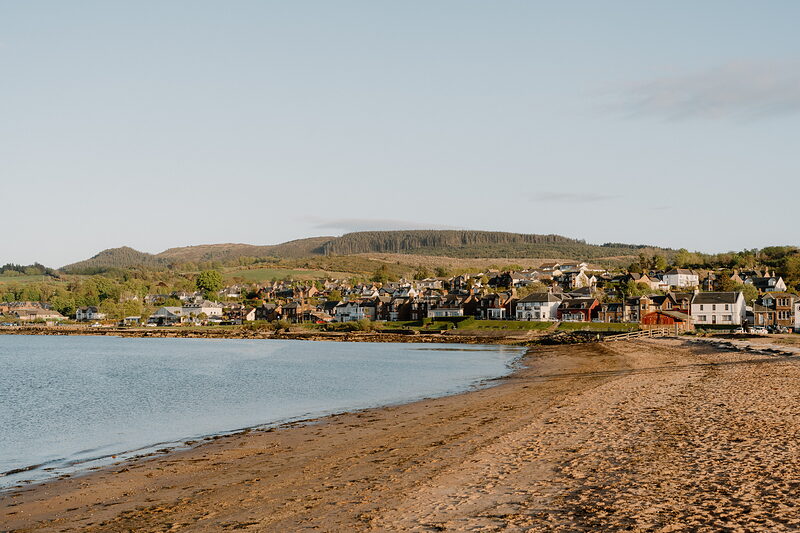
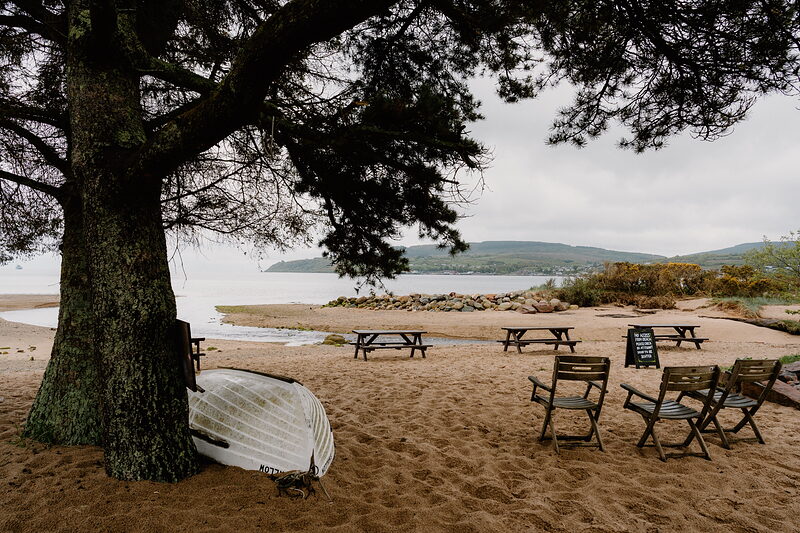
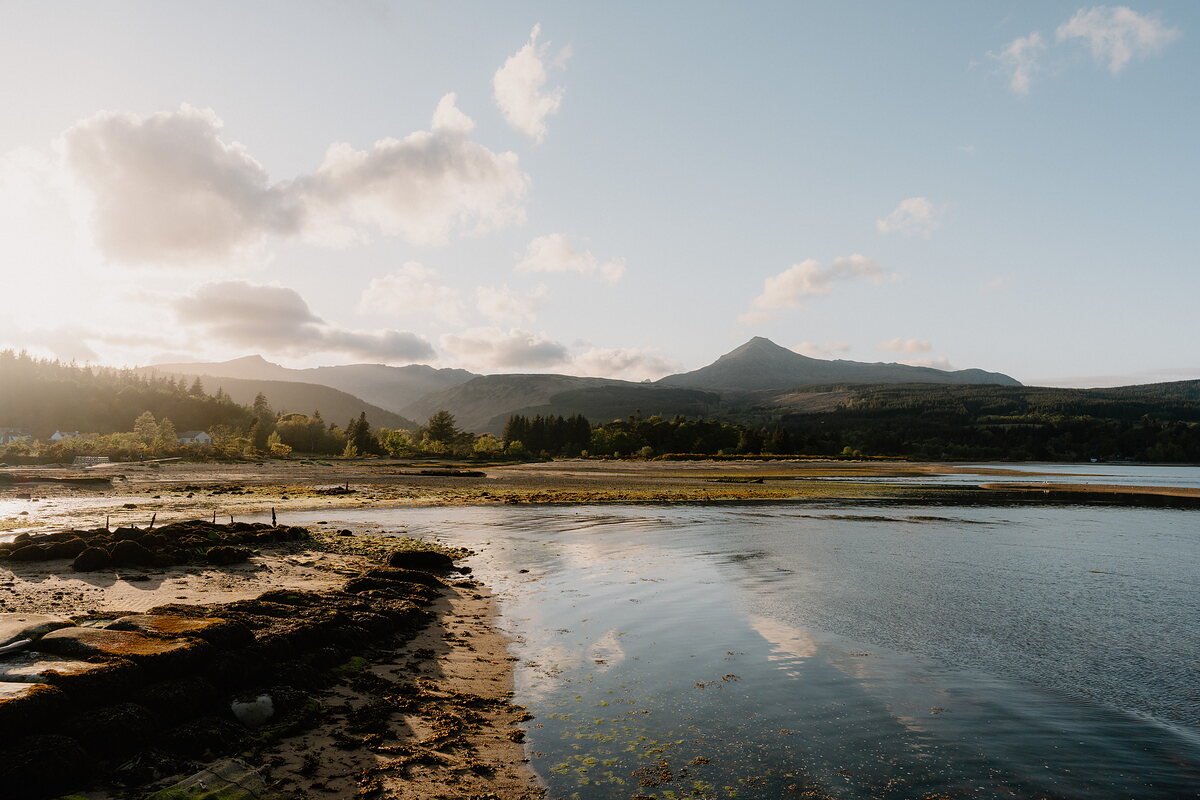
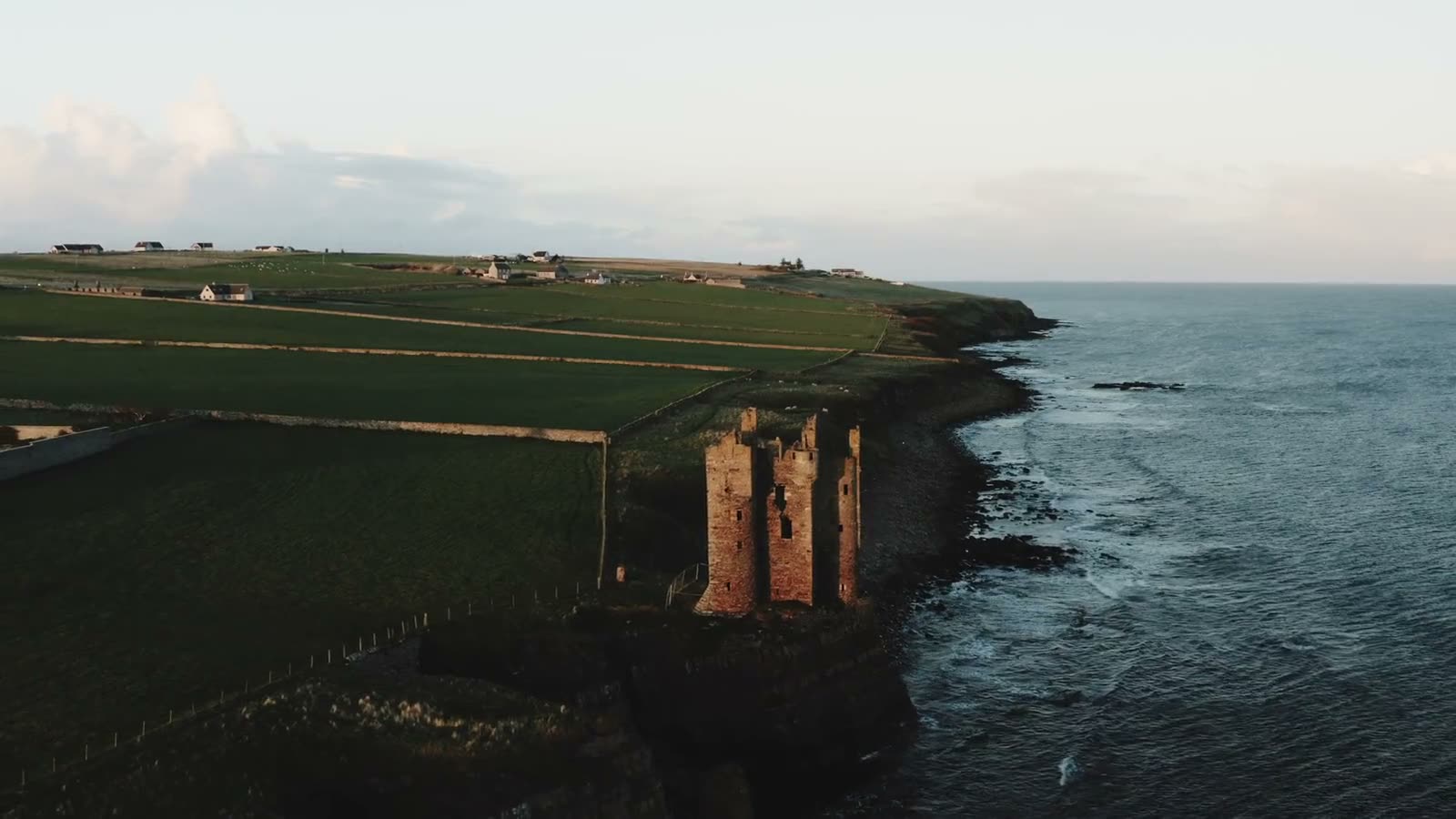
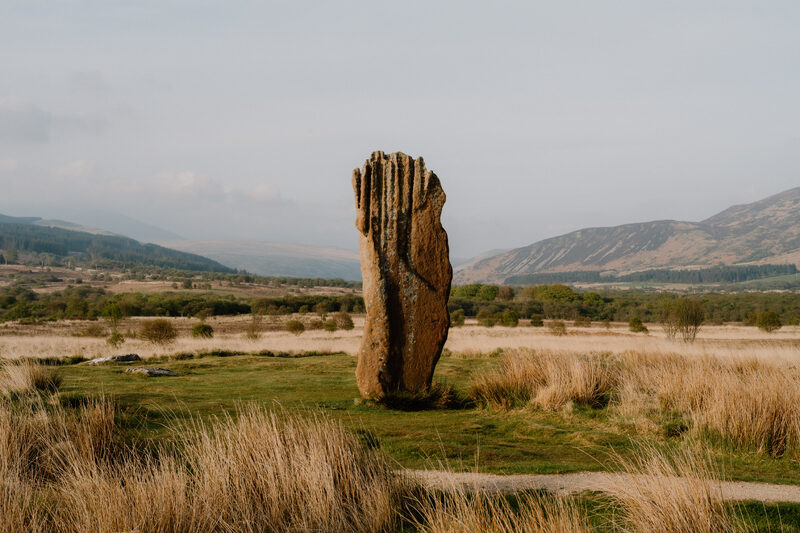
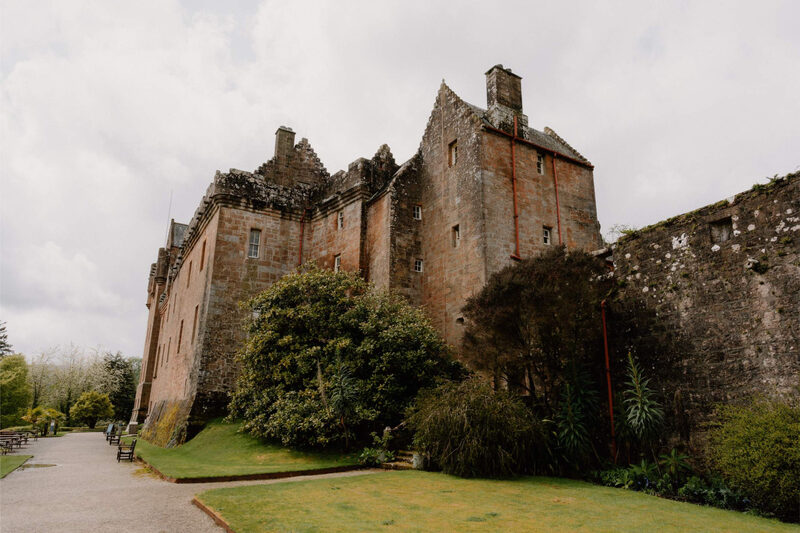
People have lived on Arran for well over 5,000 years, and they left their mark all over it. Neolithic farmers built long chambered cairns for their dead, such as Torrylin near Kilmory and Carn Ban in the hills of the south. On Machrie Moor the first pits were dug around 3500 BC, and timber circles there later gave way to the stone circles that stand today. In the Iron Age, islanders built forts on headlands and hilltops, the largest of them on the cliffs at Drumadoon. From the 6th century, Gaelic-speaking settlers came over from Ireland, and holy men followed them, St Molaise on Holy Isle among them. The 19th century brought the hardest change. Under the 10th Duke of Hamilton, small farms were cleared to make way for sheep, and in 1829 the village in Glen Sannox was abandoned. Over the next decade, more island families left for Canada. At the same time the steamers began calling at Brodick and Lamlash, and by the early 1900s Glasgow families were sailing doon the watter to Arran for the Fair Fortnight. Tourism is still the island's main industry. Brodick Castle passed to the National Trust for Scotland in 1958. In 2008 the north of Lamlash Bay became a No Take Zone, where the sea is left to recover.

The Weekly, every Sunday: one place worth going and one thing worth reading.
The Library