
Argyll and Bute
Kisimul Castle
Overview
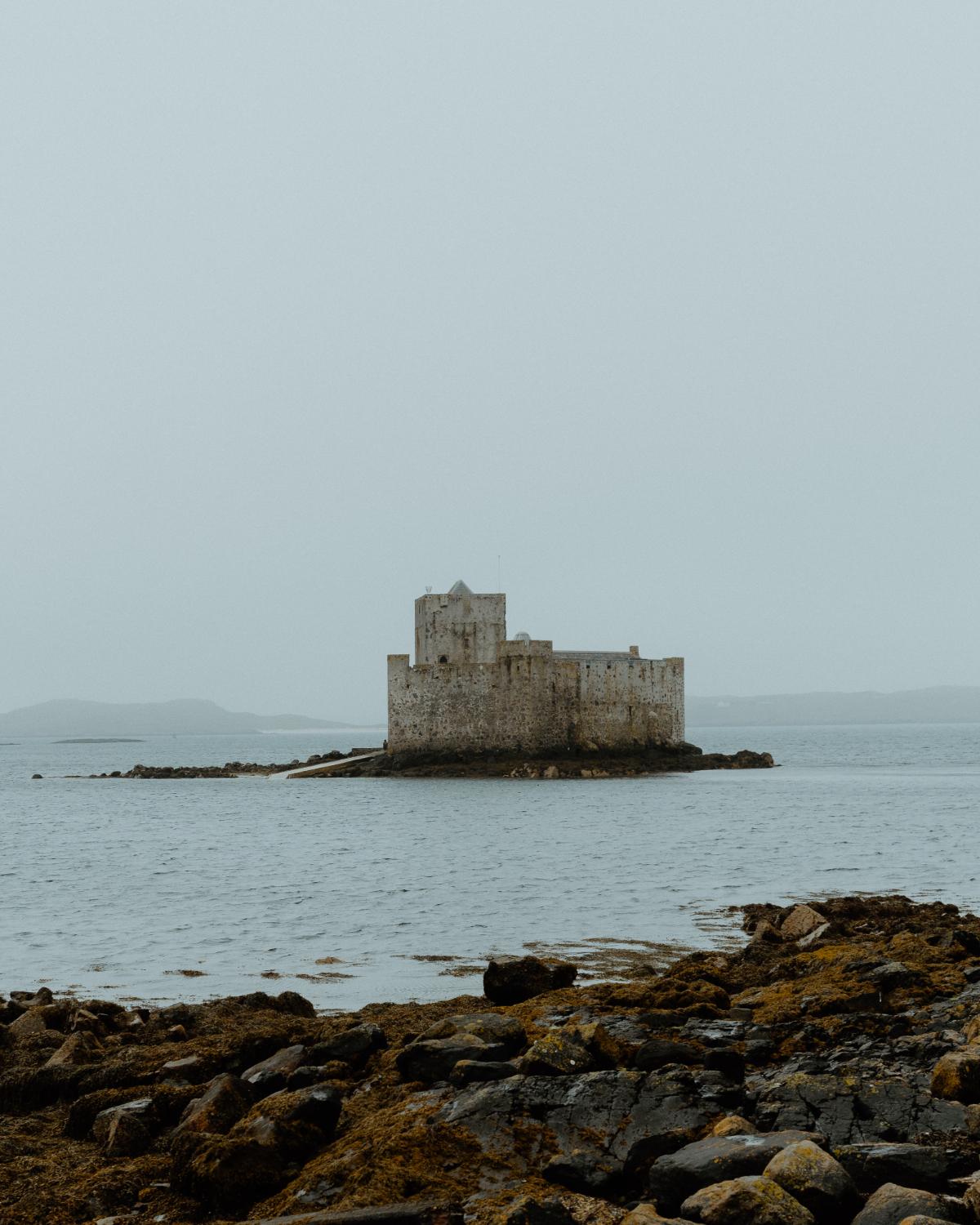
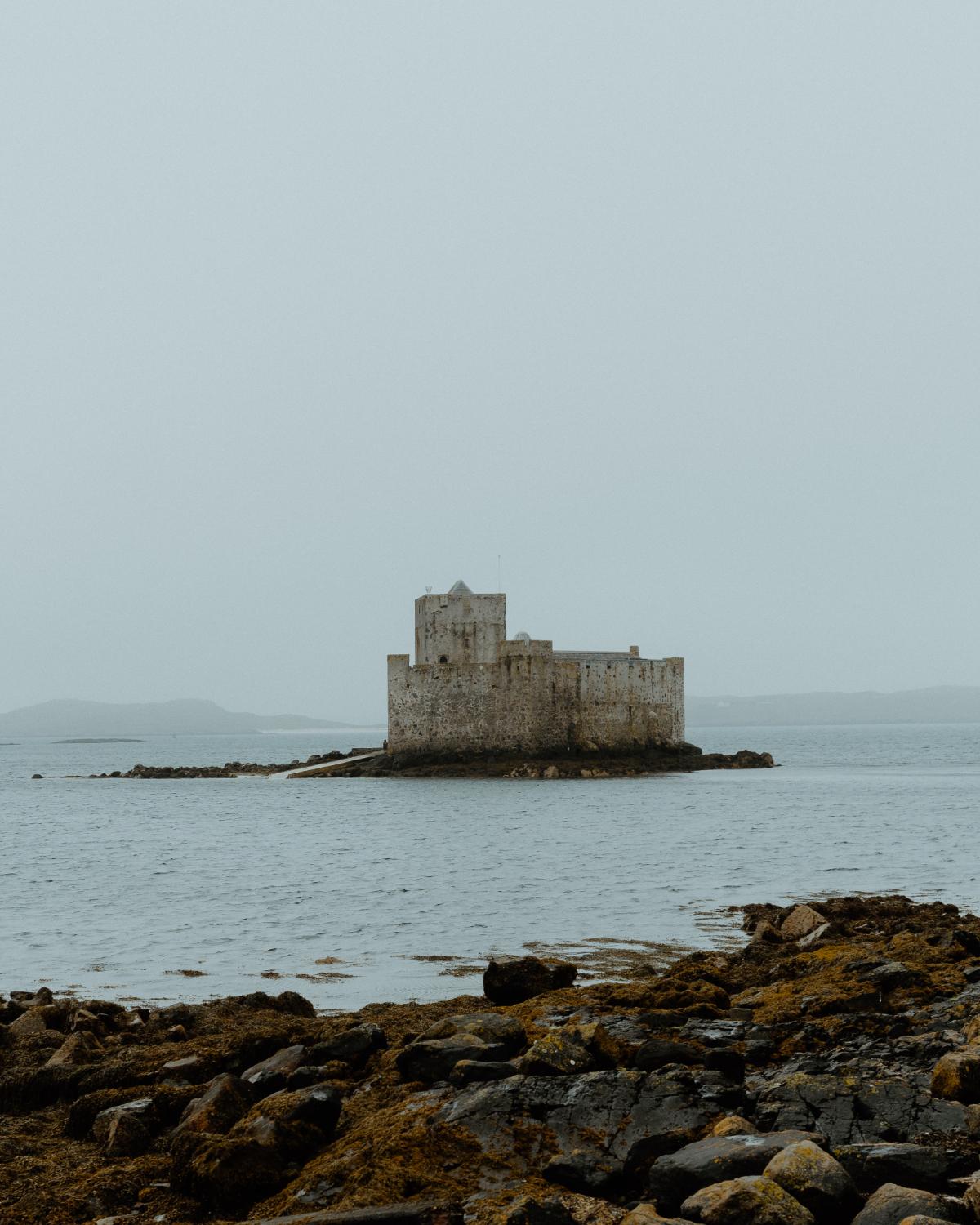
There are few approaches as memorable as the one to Kisimul Castle. Rising out of the bay like a set-piece from another age, this small fortress occupies an island no larger than a football pitch, entirely surrounded by water and only reachable by boat. It has long been the defining symbol of Barra—a Hebridean stronghold with its foundations sunk into rock and its story woven into the identity of Clan MacNeil.
The name Kisimul is believed to derive from Ciosamul, thought to mean “castle of the small island,” and records suggest there’s been a structure here since at least the late 15th century. For generations, it served as the seat of the MacNeils of Barra, a clan with a proud seafaring tradition and a reputation for independence. Its strategic position in Castlebay provided not just protection but control—over the harbour, over trade, and over the movement of people and goods across these waters.
The castle as it stands today is relatively compact, with a central tower house surrounded by curtain walls and smaller ancillary buildings, including a great hall and chapel. It isn’t grand in scale, but it’s compelling in character. There’s a simplicity to the structure that reflects the rugged setting: no ornate flourishes, just functional fortification. When the weather turns, as it often does in the Hebrides, the sea crashes against the stonework with force—a reminder of both isolation and resilience.
Kisimul was abandoned in the 19th century and fell into disrepair. For a time, its future looked uncertain. But in 1937, Robert Lister MacNeil bought the ruins and began a careful restoration. Later, the castle was leased to Historic Scotland for 1,000 years at the symbolic rent of £1 per year and a bottle of whisky. Today it’s cared for by Historic Environment Scotland and is open to visitors during the warmer months, reached by a short boat ride from Castlebay.
Standing within its walls, with the Atlantic on all sides, the effect is both grounding and transportive. Kisimul Castle doesn’t try to impress through scale or embellishment. Instead, it holds your attention by existing so completely in its place—built not just beside the sea, but into it.
Kisimul Castle: A Timeline of Barra’s Iconic Stronghold
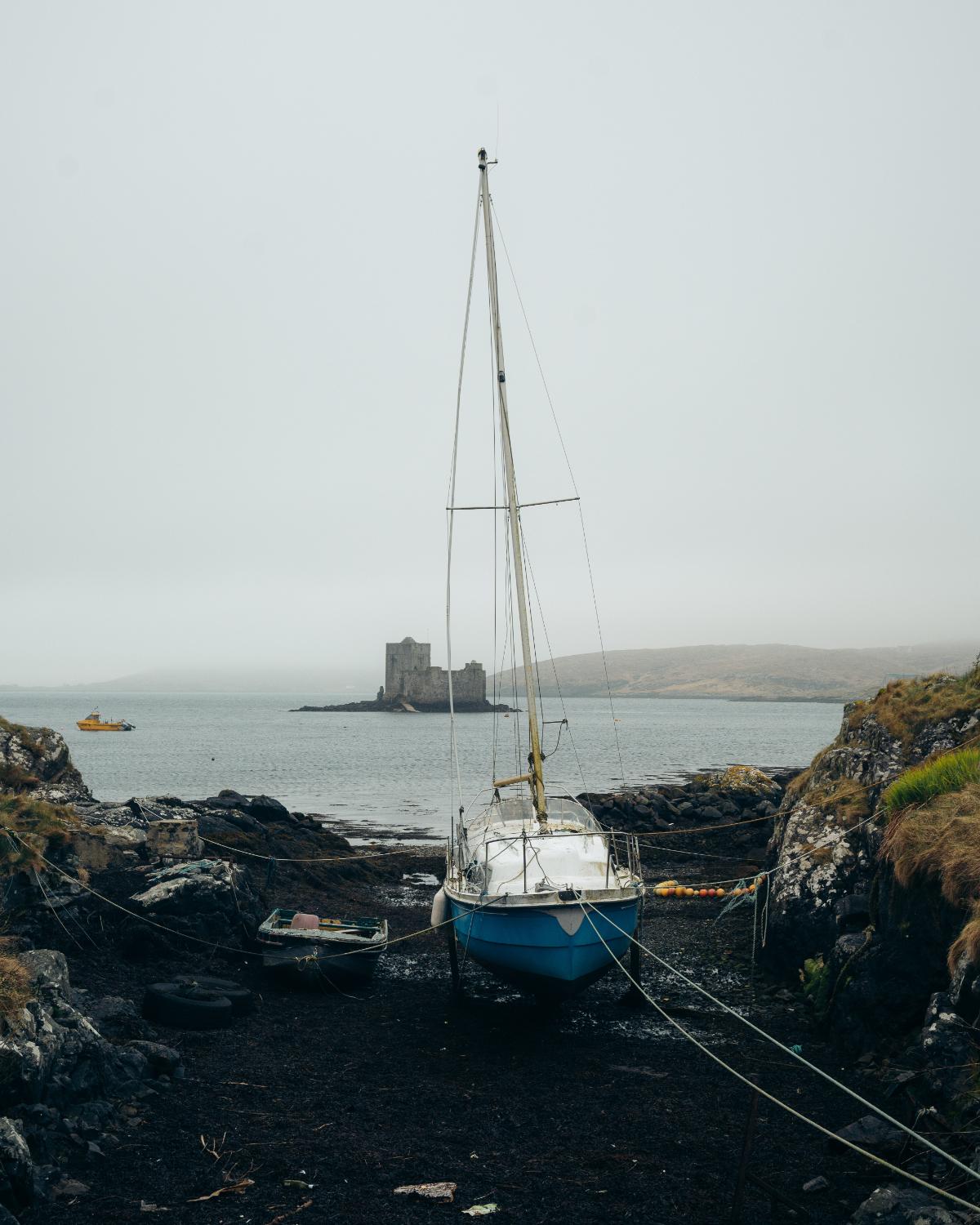
Kisimul Castle has guarded the waters of Castlebay for centuries. With its stone curtain walls rising directly from the sea, it’s often described as the seat of Clan MacNeil, and its silhouette has become a symbol of Barra itself. Though the precise origins of the site are still being studied, archaeological work and clan records help sketch a rough outline of its long and sometimes turbulent past. This timeline brings together the key moments that have shaped the story of Kisimul.
Pre-11th Century
There’s no confirmed structure on the islet at this point, though its strategic location and defensible nature would likely have made it significant to early inhabitants of Barra. The name 'Kisimul' possibly derives from Norse, meaning "castle island."
11th–13th Century
The MacNeils begin to emerge as a distinct lineage in the Hebrides during this period, claiming descent from Niall of the Nine Hostages, a legendary Irish king. The islet may already have been in use as a defended site.
Late 15th Century
The stone-built castle that stands today likely originates from this era. Documents suggest the MacNeils constructed Kisimul Castle as a maritime stronghold, offering control over the bay and surrounding waters.
1549
Dean Monro, in his famous description of the Western Isles, refers to “the castill of Kismull,” calling it “ane strength upon the sea.” This is one of the earliest written mentions of the structure.
17th Century
Kisimul remains the seat of the MacNeil chiefs throughout this period. It was attacked and briefly captured during clan conflicts and later during government efforts to suppress the Jacobite threat.
1838
Roderick MacNeil, the 40th chief, leaves Barra, and the castle falls into disuse. By the mid-19th century, Kisimul is abandoned, and much of the stone is repurposed for building projects locally and as far away as Glasgow.
1937
American architect and MacNeil descendant Robert Lister MacNeil buys Barra and begins restoration work on the ruined castle, breathing new life into its walls.
2000
Kisimul Castle is leased to Historic Scotland (now Historic Environment Scotland) for 1,000 years at the cost of £1, with a bottle of whisky due each year in rent.
Present Day
Now maintained by Historic Environment Scotland, Kisimul remains a key heritage site in the Western Isles. It is currently closed for conservation work, but its profile and story continue to define Barra’s historic identity.
Location
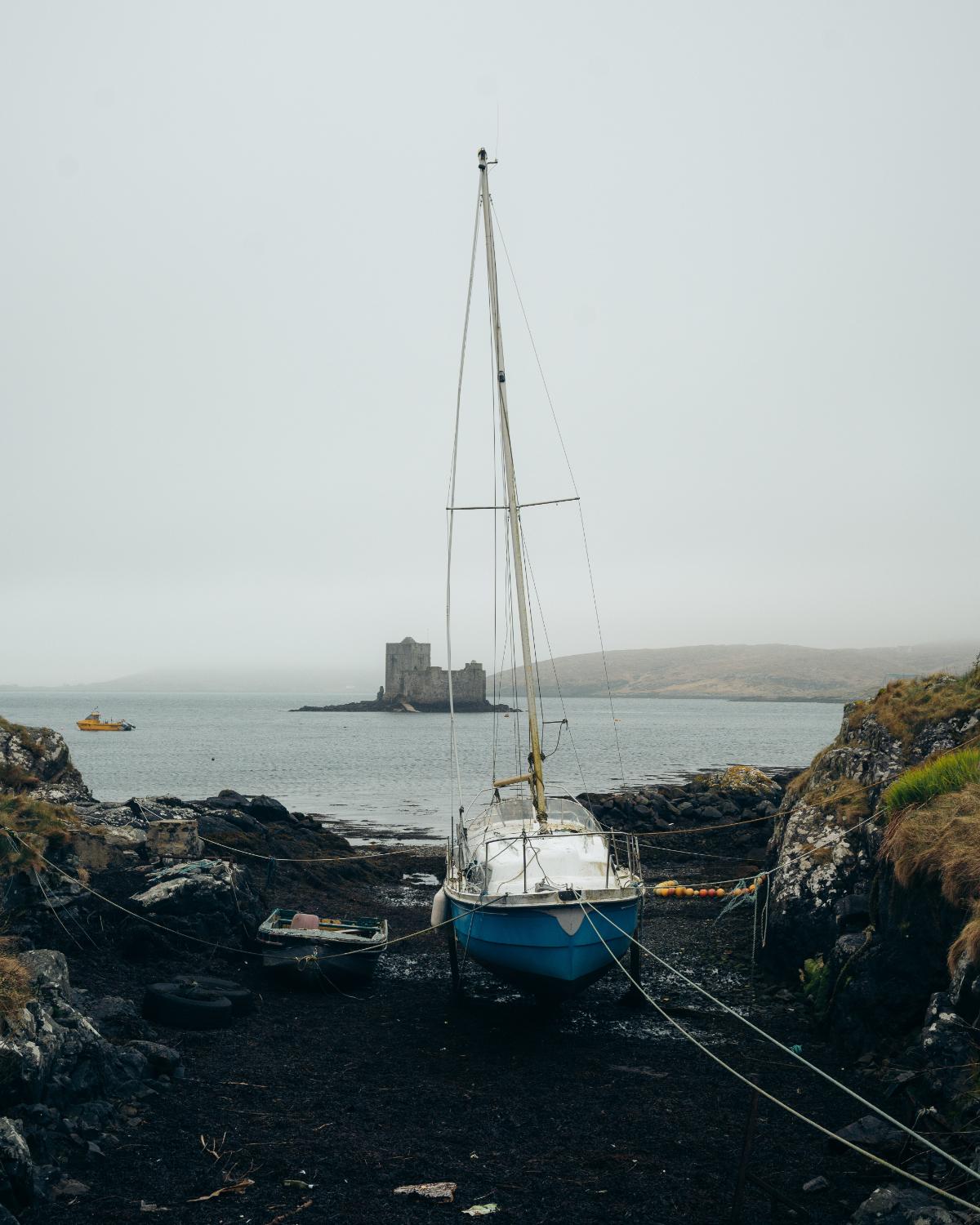
Kisimul Castle sits on a rocky islet just off the coast of Castlebay, the main settlement on the Isle of Barra in the Outer Hebrides. It’s clearly visible from the harbourfront and reached by a short boat ride arranged through Historic Environment Scotland. The crossing takes only a few minutes, offering close-up views of the castle’s defensive walls rising directly from the sea. Access depends on weather and tide conditions, so check local schedules before visiting.
What's nearby
From the slipway at Castlebay, it’s a short walk to Barra Heritage Centre, where local exhibits give wider context to the island’s history and the MacNeil clan. Stroll uphill and you’ll find the hilltop war memorial with striking views across the bay. The island’s main village has a few cafés, shops, and a Co-op for essentials. For something more atmospheric, follow the road south to the ruins of Cille Bharra, an early Christian site with medieval graveslabs. Vatersay, linked to Barra by a causeway, offers sweeping beaches and remnants of the Vatersay Raiders’ crofts—quiet spots that reward those who linger.
Where to stay nearby






 Sign in with Google
 Sign in with Email