Skye's Dinosaur Coast – Footprints, Fossils and One Low Tide
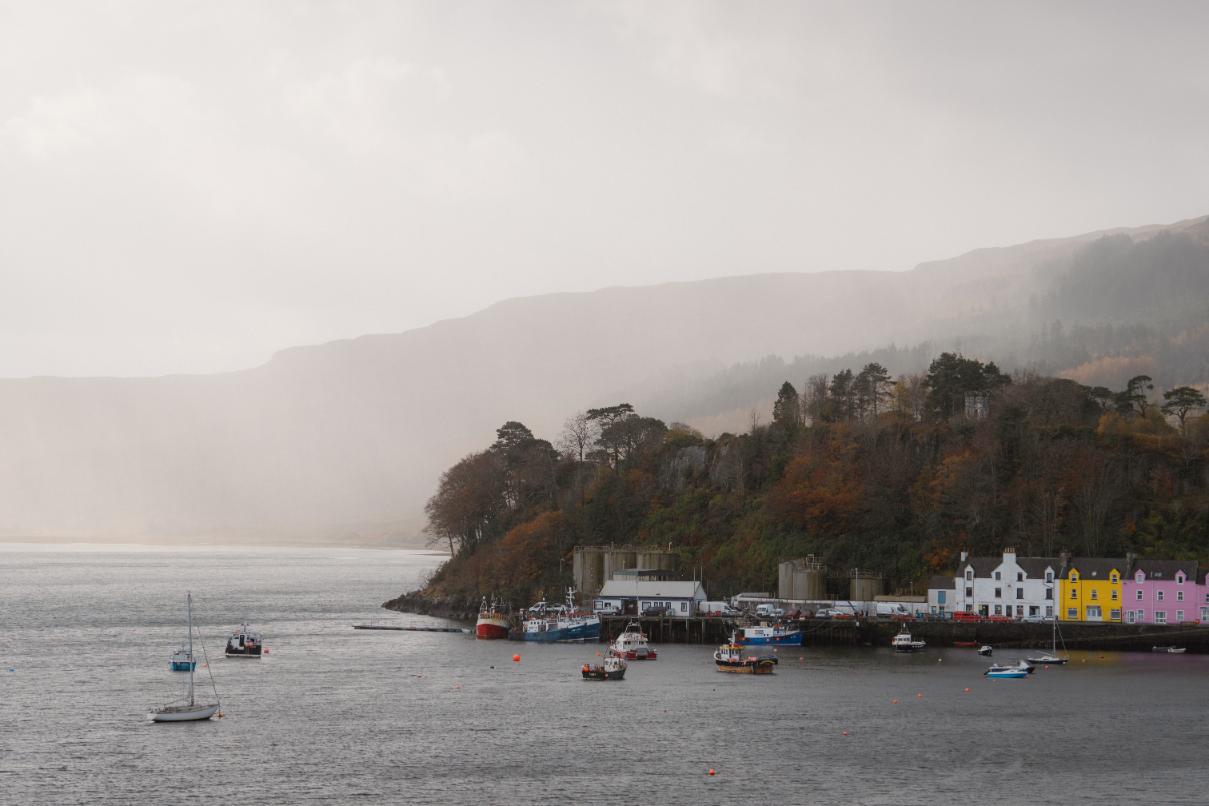
A day by car, from Portree and back.
The route
Middle Jurassic fossils are rare the world over, and on Skye you can stand beside the footprints dinosaurs left in the rock around 170 million years ago.
Some of the easiest to reach lie along one short stretch of the Trotternish coast. This day out from Portree follows the A855 north and hangs on a single low tide. It starts at Brothers' Point, below Culnacnoc, on the falling water, stops at Kilt Rock, the dinosaur museum at Ellishadder and Staffin, and ends at An Corran's big three-toed prints between low water and mid-tide. It's about 70 minutes at the wheel. One rule for everyone, grown-ups too: look, photograph and leave it. The rock is very slippery: wear shoes with grip. With under-fives, leave out Brothers' Point and go to the museum at eleven if it is open, have an early lunch in Staffin, then go to An Corran between low water and mid-tide.
Before you go
Book early for late August, when Skye is at its busiest: the day starts and ends in Portree, which has the widest choice of beds and suppers on the island. Staffin has B&Bs, cottages and a campsite for anyone who would rather wake up by the footprints.
The day
Staffin
A day on the trail of Skye's dinosaurs, up the Trotternish coast from the footprints at Brothers' Point, by Kilt Rock and the museum at Ellishadder, to the big three-toed prints at An Corran. Set off from Portree with a picnic about three hours before low water.
1 hr 40 min at the wheelAbout 37 miles
Brothers' Point
An attraction
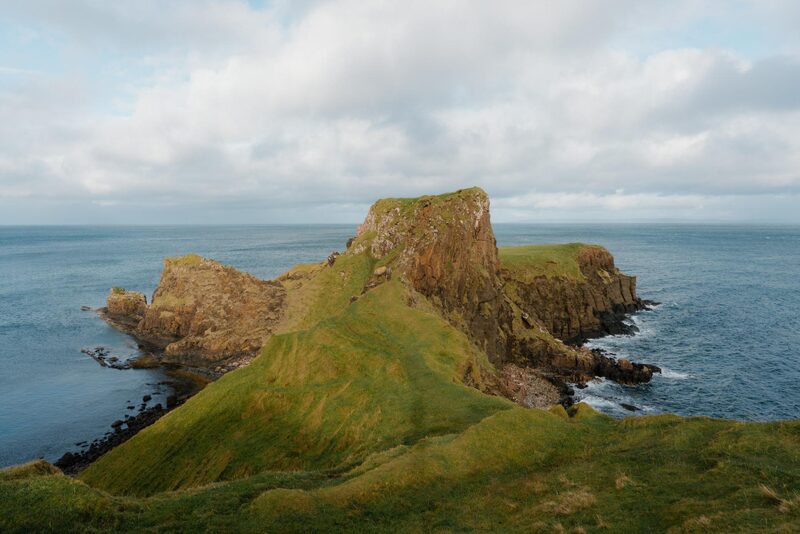
It's 24 minutes' drive, past the Storr, to the small car park at Culnacnoc; if it is full, Lealt's is 2 minutes back south, a 40-minute walk in through Grealin. Cross the road for the path down to the shore at the burn (the stream), 25 minutes, and a steady climb back. The prints lie about 100 metres beyond the burn mouth: cross on the stones, harder after rain. Families stay on the shore, never the point, which runs above sheer drops. Weed hides many prints: some find a few, some none.
4 min by car
Kilt Rock
An attraction
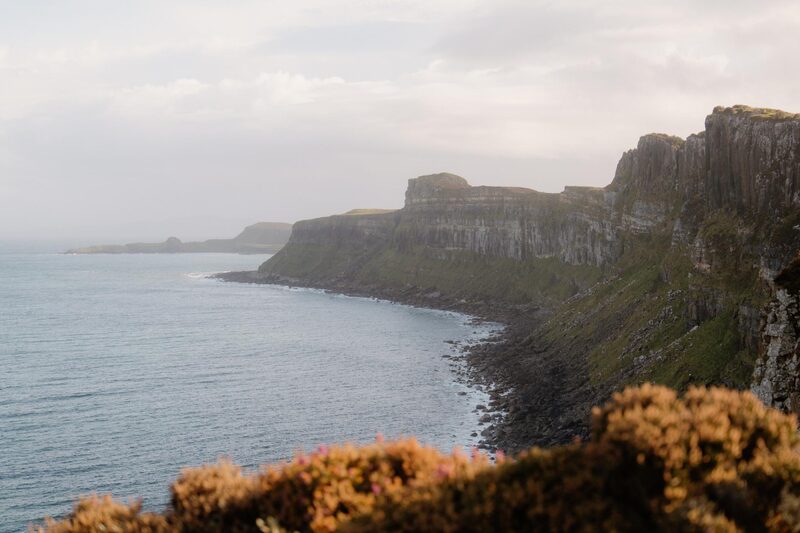
Drive on 4 minutes, through Valtos, to the Kilt Rock car park, £3 for two hours in 2026. From the railings, with Mealt Falls pouring off the cliff before you, look for the pale band of rock under the dark columns. That is the Valtos Sandstone, sand spread by rivers across a warm coast while dinosaurs walked it. At Valtos, the township you have just passed, the same rock holds the tracks of meat-eating dinosaurs large and small, read in a 2025 study as dinosaurs foraging by a lagoon.
2 min by car
Staffin Dinosaur Museum
An attraction
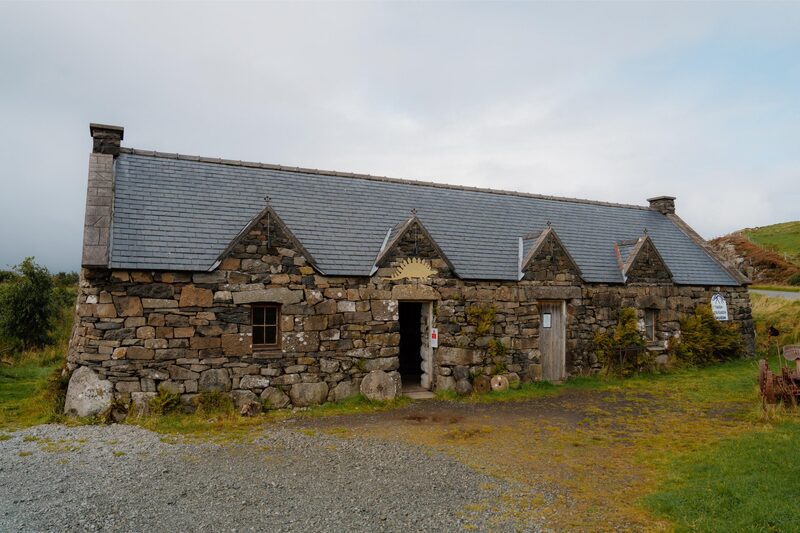
Just 2 minutes' drive further on, at Ellishadder, the Staffin Dinosaur Museum puts real footprints and bones from this coast where children can see them up close; allow 30 to 45 minutes. It was listed as open in 2026: check it is open before you go. On a day it is shut, the two shores still make the day. Dugald Ross, who gathered the collection over a lifetime, died late in October 2025. Steve Brusatte of the University of Edinburgh said Ross had almost single-handedly uncovered Skye's prehistoric past.
4 min by car
Staffin
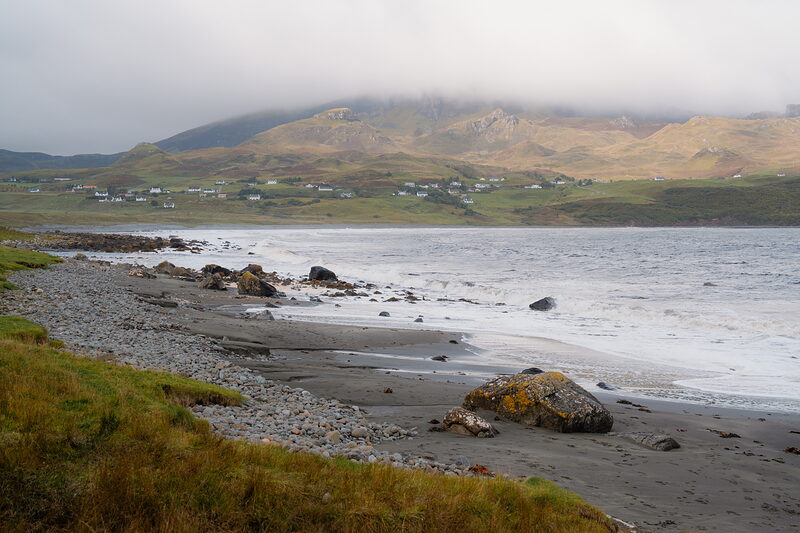
The hall at Stenscholl, in the middle of Staffin, is 4 minutes' drive: 15 to 20 minutes for the toilets and the village shop, with lunch already eaten on the shore. Before the last shore, tell the children what they are looking for: three blunt toes pressed into flat rock, often holding water like a little pool. Staffin's beach is 3 minutes' drive on, past the An Corran turn, then 400 metres on foot through Brògaig: mostly shingle by the road end, with sand at low water.
33 min by car
An Corran Beach
An attraction
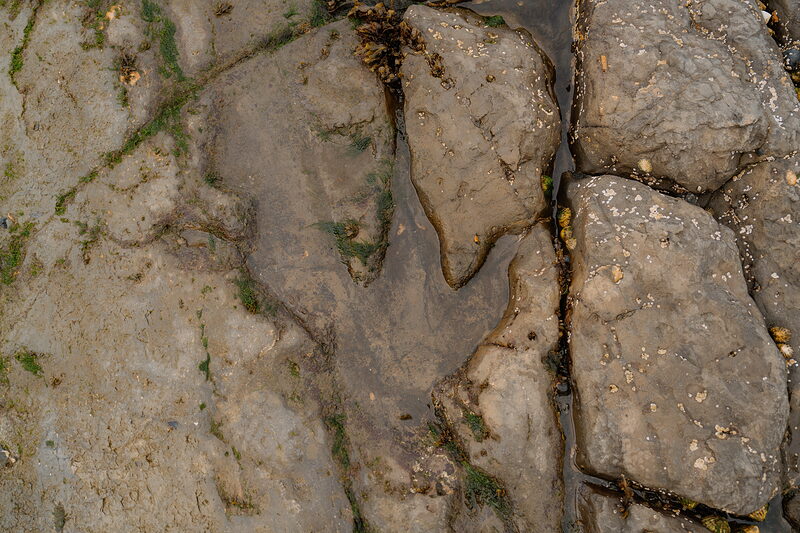
Drive 3 minutes down the slipway road to the free parking by An Corran beach. On the flat shelf by the ramp are the tracks of a big meat-eating dinosaur, first found in 2001, some nearly half a metre long. They show between low water and mid-tide, so come as the water rises; there's sand for small children. The law has guarded them since 2019, after someone filled them with plaster in 2016. The harbour at the road end has toilets and Corran Coffee; Portree is 33 minutes' drive back.
If it rains
Light rain is no bar at An Corran, where it can even wash the sand off the prints, but it makes every rock slipperier. In heavy rain or a strong wind leave out Brothers' Point: its path turns muddy and steep, and the burn at the bottom is harder to cross. Give the dinosaur museum at Ellishadder longer, see Kilt Rock's Jurassic sandstone from the railings, and look for the An Corran prints from the ramp between low water and mid-tide, with toilets and coffee in the harbour building at the road end. Back in Portree, the Fingal Centre has a swimming pool (check its timetable: 31 August 2027 falls in Highland term time), and the Isle of Skye Candle Co has its visitor centre in the old Aros building, on the south side of the town.
On the way
- Bearreraig Bay
For older children only, on another morning or in place of Brothers' Point. From the parking area on the hydro road, short of the Storr Lochs dam, a steep path with steps and a handrail drops about 150 metres to the power station on the shore of a quiet bay whose stones hold ammonites and belemnites. In 1959 an amateur collector found the bones of an ichthyosaur here, a dolphin-shaped sea reptile later named Dearcmhara. Just over 3 km there and back, the climb at the end. The fossils are at the far end of the bay: go on a falling tide.
- Duntulm Castle
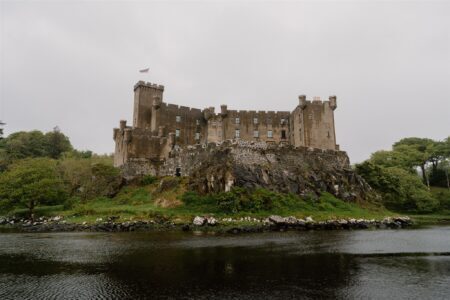
Not on this day's tide: Duntulm is for the next day's low water, about 2pm at Portree on Wednesday 1 September 2027 (a prediction: check the table). Go within about two hours of it. On the shore of the bay just south of the castle, long-necked sauropods left round hollows up to about 70 centimetres across, among the largest track sites in Scotland, under the sea at high tide. It's 16 minutes on from An Corran, or 45 from Portree by Uig, to the viewpoint lay-by; then across the field and down a rough bank.
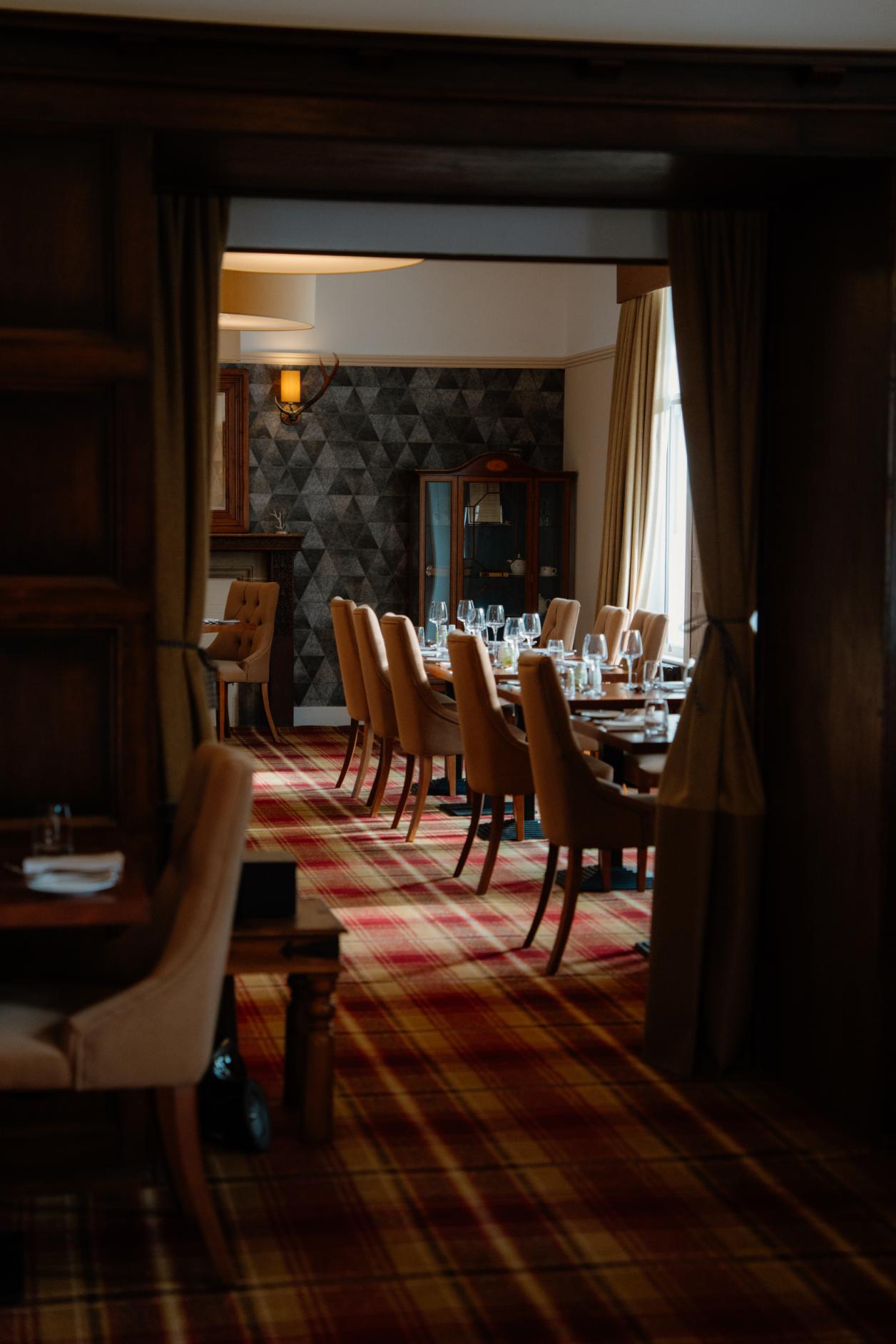
 PortreeAntlers Bar & GrillPub grub, Portree Hotel
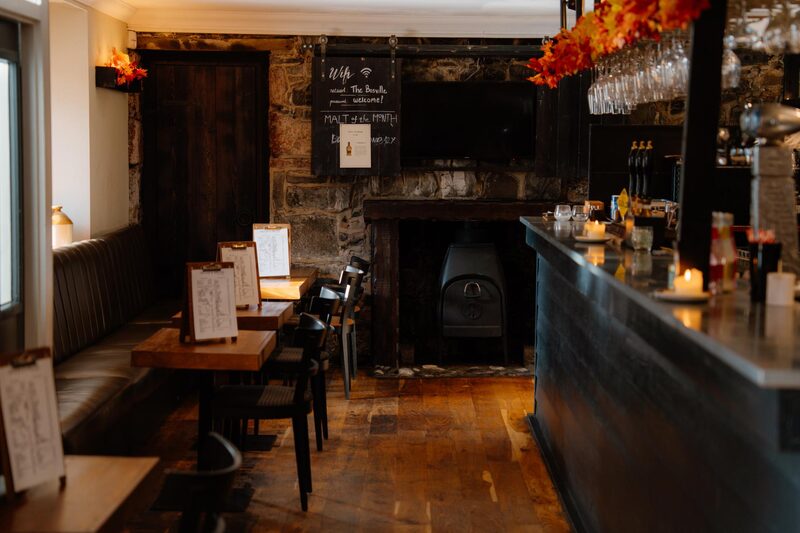 PortreeDulse and BroseSkye and Highland larder
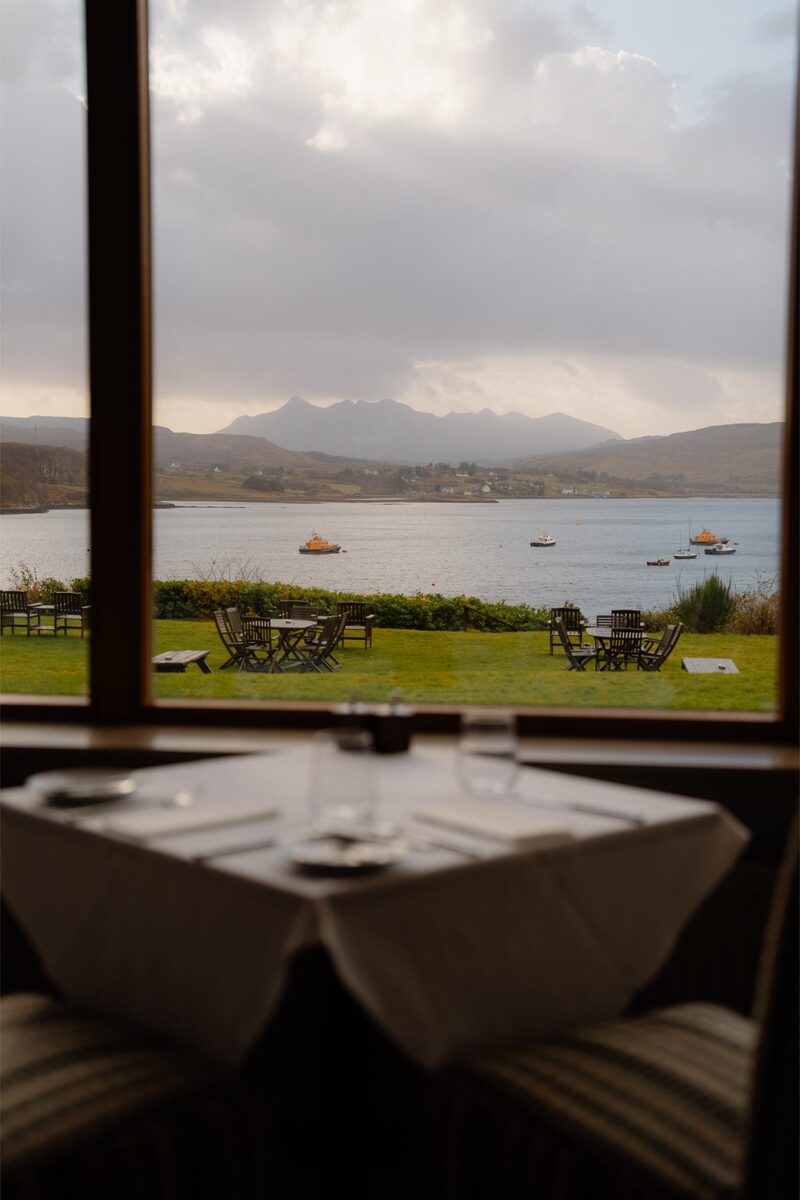 PortreeThe View RestaurantBay views, Cuillin Hills Hotel
 PortreeScorrybreac RestaurantSeasonal Skye produce
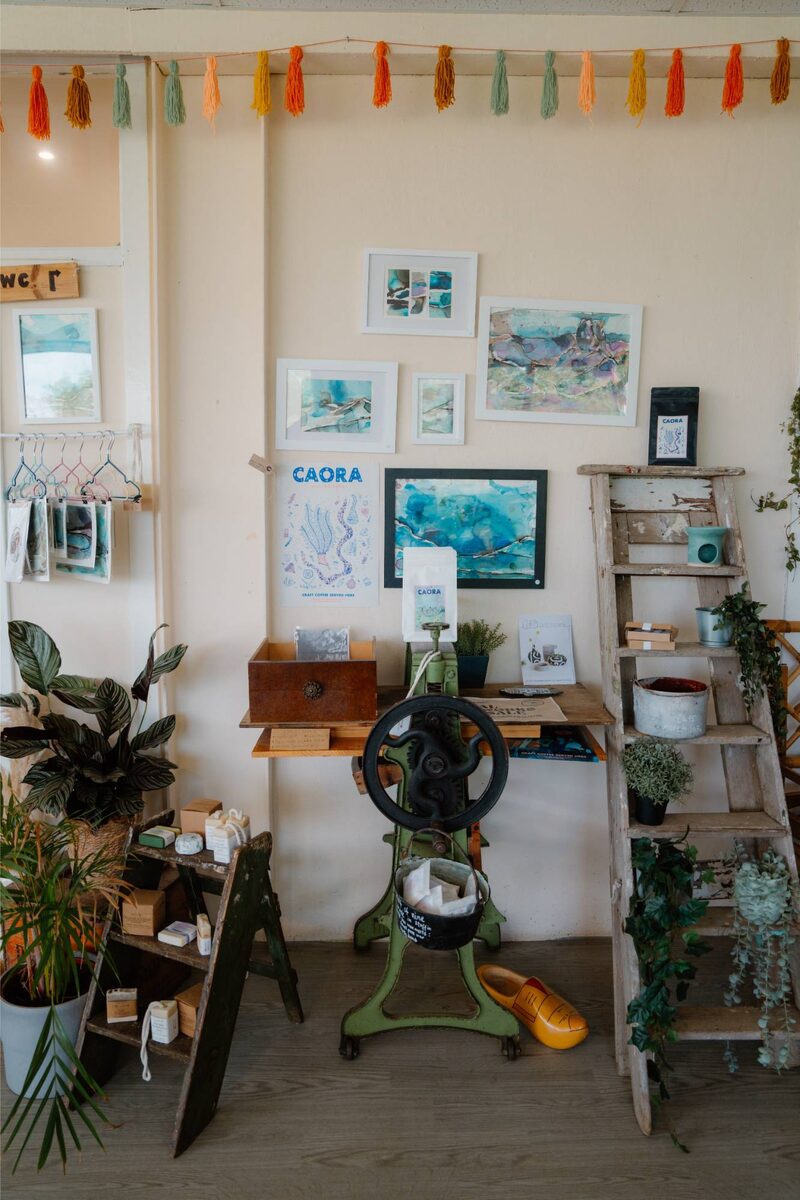 StaffinThe Hungry GullBrunch café
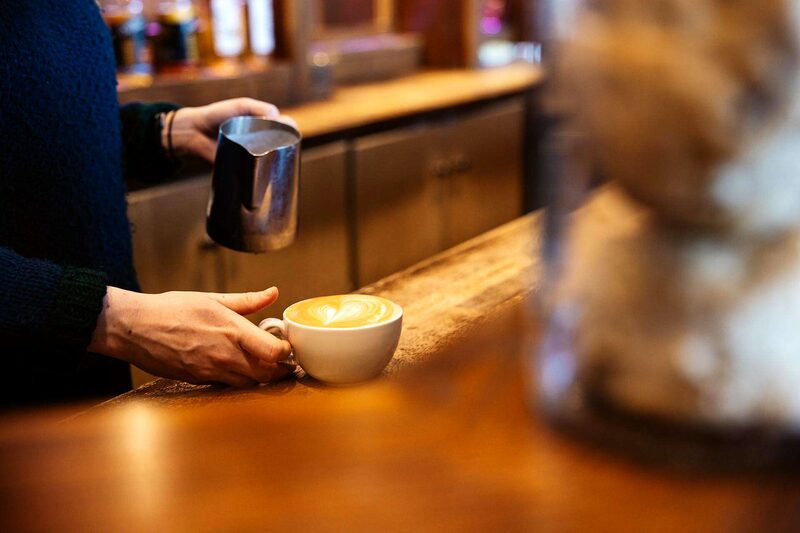
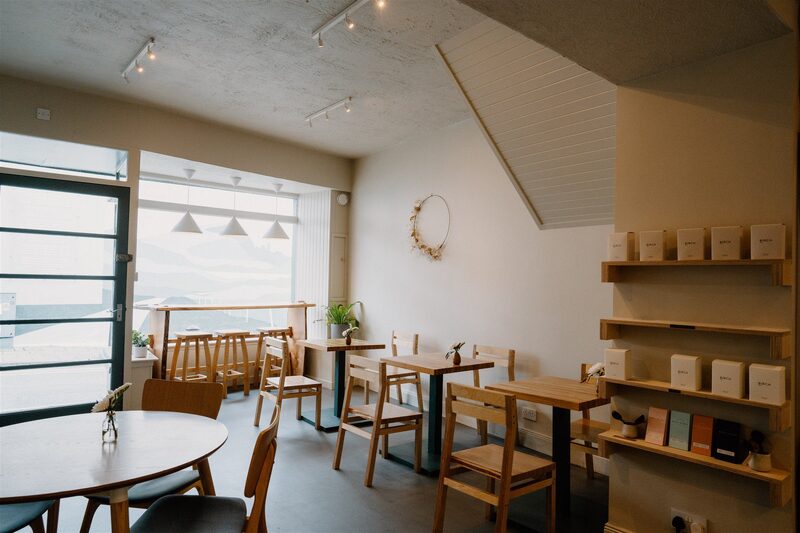 PortreeBirchSkye's own coffee roasters
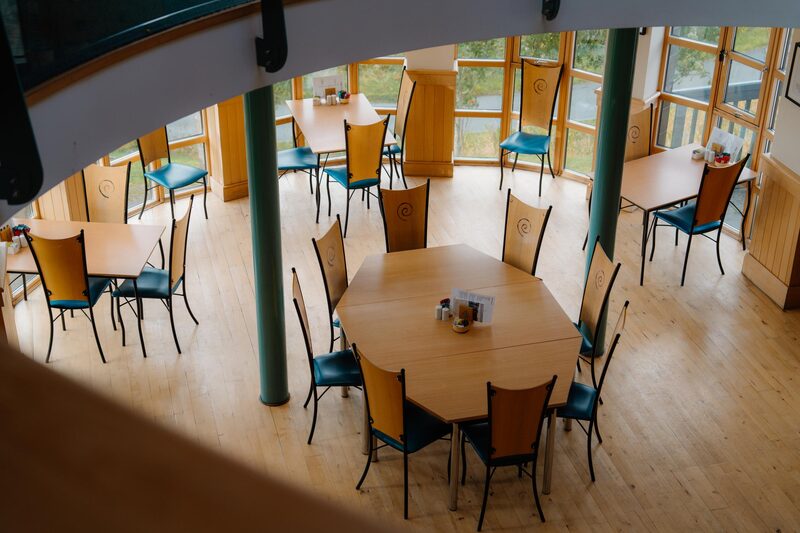 StaffinColumba 1400Charity café under Trotternish
Make it a weekend