
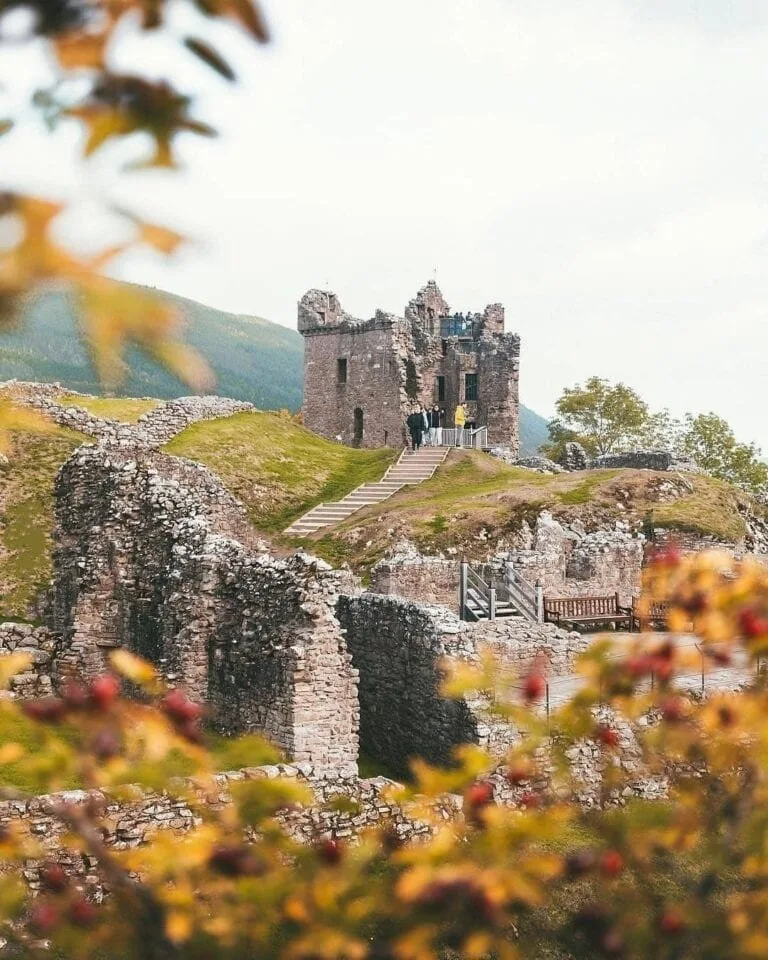
The Siege of Urquhart Castle
Andrew Moray’s night attack in 1297, and the Countess of Ross who arrived to mediate.
Words by Beth Reid
In 1296, Edward I of England effectively ‘conquered’ the Kingdom of Scotland, rendering it a province of England with little autonomy of its own.
Andrew Moray is an unsung hero of the Scottish Wars of Independence, often overshadowed by his ally, William Wallace. Whilst Wallace inspired rebellion against the English occupation of Scotland in the south-west, Moray led a relentless and carefully executed rebellion in the north-east. Moray’s leadership nearly came to a premature end on the banks of Loch Ness, during his dramatic siege of the iconic Urquhart Castle.
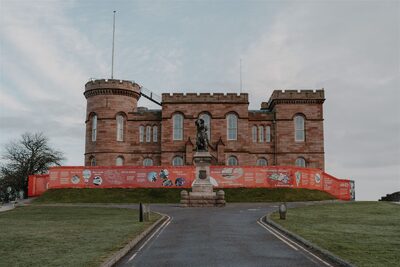
On the 25th of May 1297, a meeting took place at Inverness Castle between lieutenants of the English administration in northern Scotland to discuss the problem of Andrew Moray. In attendance was the constable of Urquhart Castle, Sir William fitz Warin. Urquhart was a strategically important castle for controlling the Great Glen and the northern reaches of the kingdom; fitz Warin would have been aware that Andrew Moray was likely to attempt to seize the castle. The meeting at Inverness may have been a hasty last chance for fitz Warin to prepare for such an attack, but Moray moved quicker than expected. While fitz Warin travelled back to Urquhart after the Inverness meeting, he was ambushed by Moray and his forces. Although fitz Warin managed to escape, the ambush was a chilling reminder of Moray’s increasingly threatening presence to the English administration in the north-east.
Within hours after the ambush, Moray struck. Urquhart Castle was attacked in a daring night-time siege by Moray and his armed rebels, who demanded that fitz Warin surrender the castle. As the two men battled over the castle, an unexpected player in the siege arrived – Euphemia, Countess of Ross. Moray’s rebellion had placed the powerful countess between a rock and a hard place. With her husband a prisoner in the Tower of London, Euphemia had been subtly toeing the line as a pro-English northern vassal in the hopes that he would be freed. Since Moray’s rebellion had been such a success in Euphemia’s earldom, doubt over the countess’ loyalties to the English had been raised, thwarting her careful balance of support and putting her husband’s life at greater risk. Arriving at Urquhart in dramatic fashion with her armed retinue, the countess made a great show of mediating between Moray and fitz Warin, without directly acting against either man.
Moray ultimately met his match with the countess of Ross and fitz Warin, and was forced to abandon his unsuccessful siege of Urquhart. This brief failure did not halt him for long, and the summer of 1297 saw Moray wrest control of northern Scotland from the English administration before joining forces with William Wallace at Dundee in September. The siege of Urquhart Castle may have tested him, but Moray’s persistence and bravery saw his success.
Beth Reid is a Scottish history graduate whose research specialises in medieval Scotland. Beth runs a microblog on Instagram and has written for Hidden Scotland, The History Corner, and the Historians Magazine.
 Out now
Twice a year, to your door
One hundred and sixty pages of Scotland, every photograph commissioned, every word written by someone who went. Members get both issues posted and everything on screen.

 The 900th Anniversary of Stirling
 Kilmartin Glen