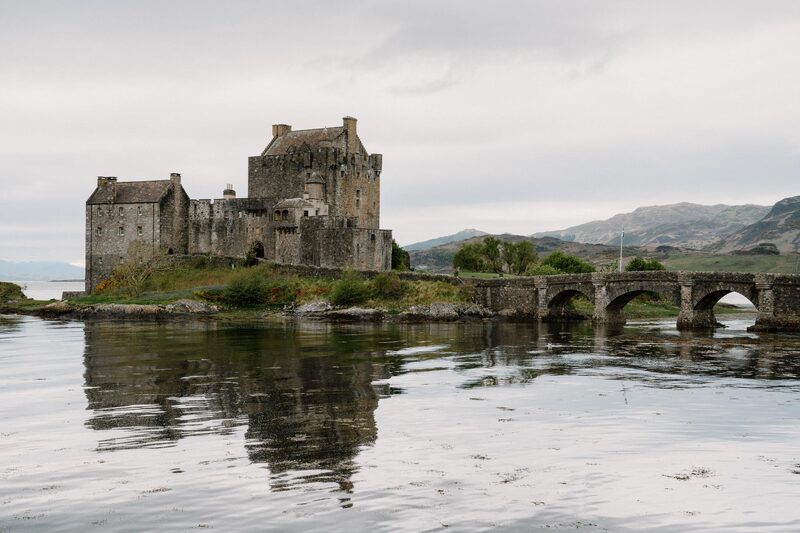
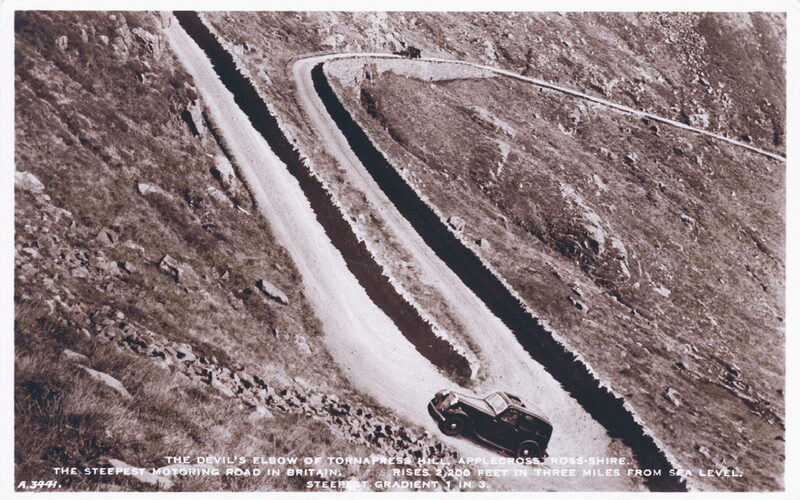
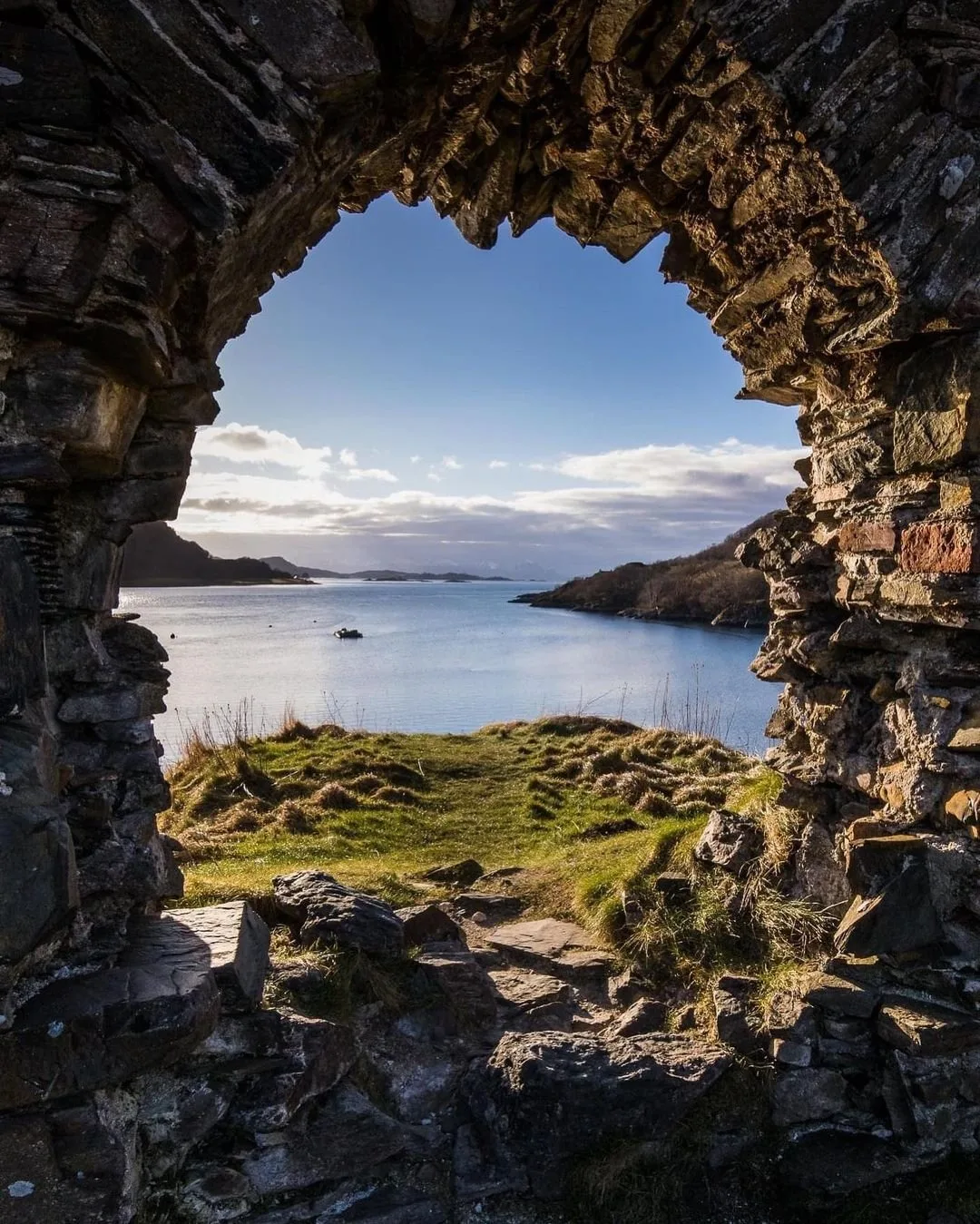
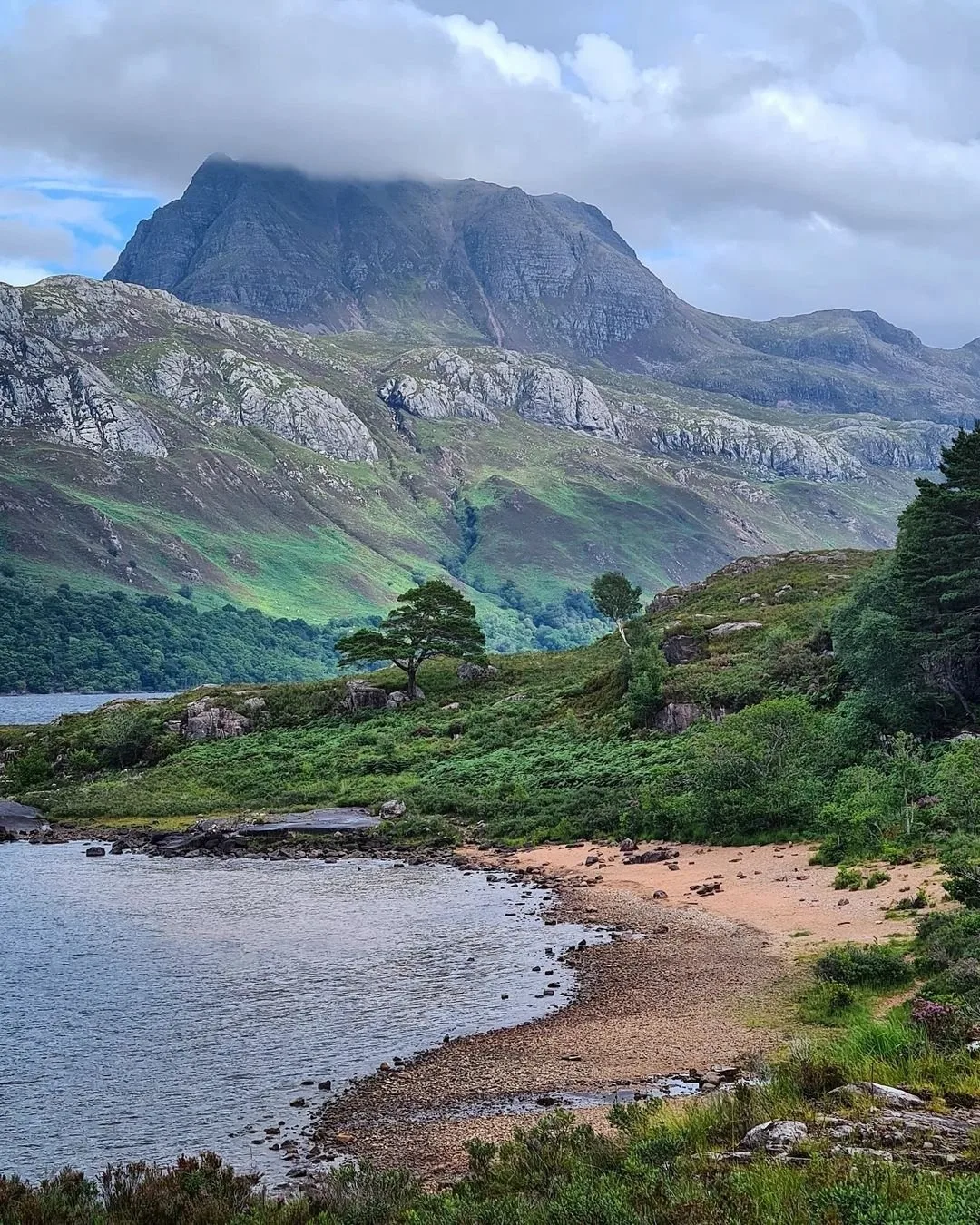
People have lived on this coast for a very long time. Stone Age hunter-gatherers left shell middens by the rock shelters of Applecross, and in the late seventh century the Irish monk Maelrubha founded a monastery there. Applecross is still called A' Chomraich in Gaelic, meaning the sanctuary. His name lives on in Loch Maree, where a ruined chapel on Isle Maree is believed to mark his hermitage. Norse settlers followed and left their words on the map, and the name of Ullapool may be one of them. In the Middle Ages the Mackenzies of Kintail, whose stronghold was Eilean Donan, rose to rule much of the region. They fought the Macdonalds of Glengarry for the narrows at Strome until they blew up the castle there in 1602. The railway reached Strome Ferry in 1870 and Kyle of Lochalsh in 1897, carrying fish to market and visitors to the hills. Osgood Mackenzie began his garden at Inverewe in 1862, and Queen Victoria stayed by Loch Maree in 1877. In the Second World War, Loch Ewe was the gathering place for many of the Arctic convoys to Russia, and in 1951 Beinn Eighe became Britain's first National Nature Reserve. The coast road finally linked Applecross to Shieldaig in 1976, and the Skye Bridge opened from Kyle of Lochalsh in 1995. Crofting, fishing and visitors keep the villages going today, and the old routes along the coast are as busy as they have ever been in summer.

The Weekly, every Sunday: one place worth going and one thing worth reading.
The Library