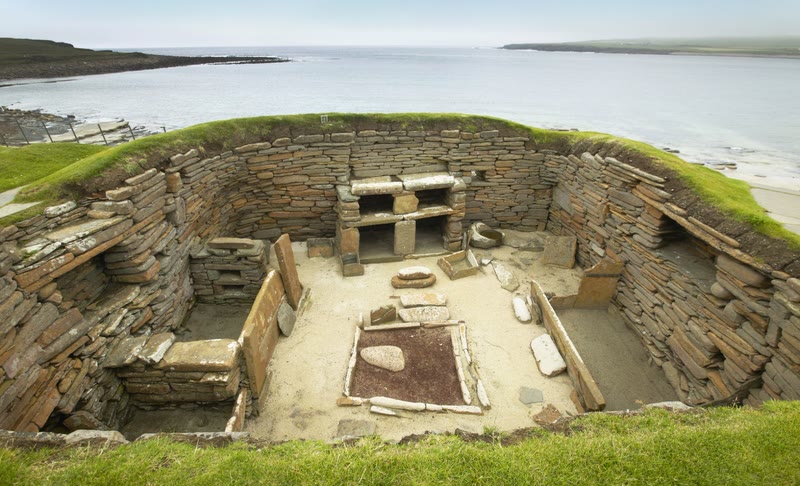
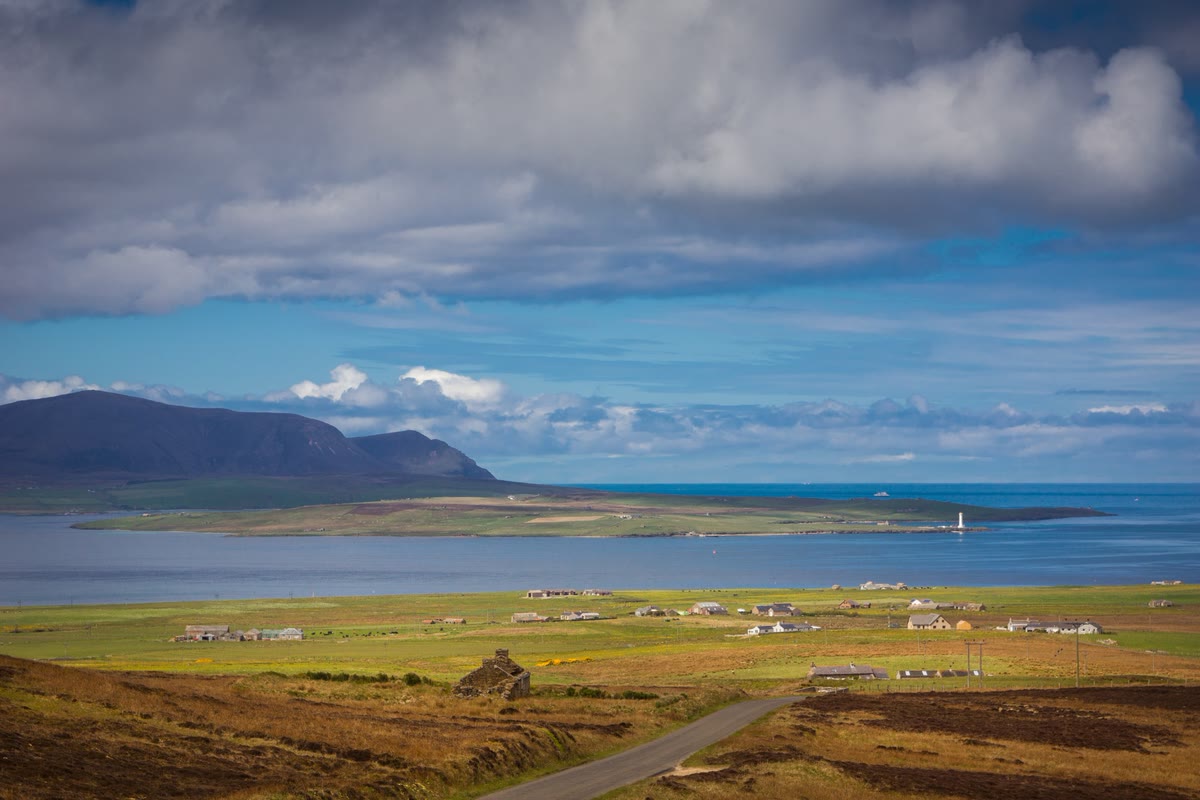
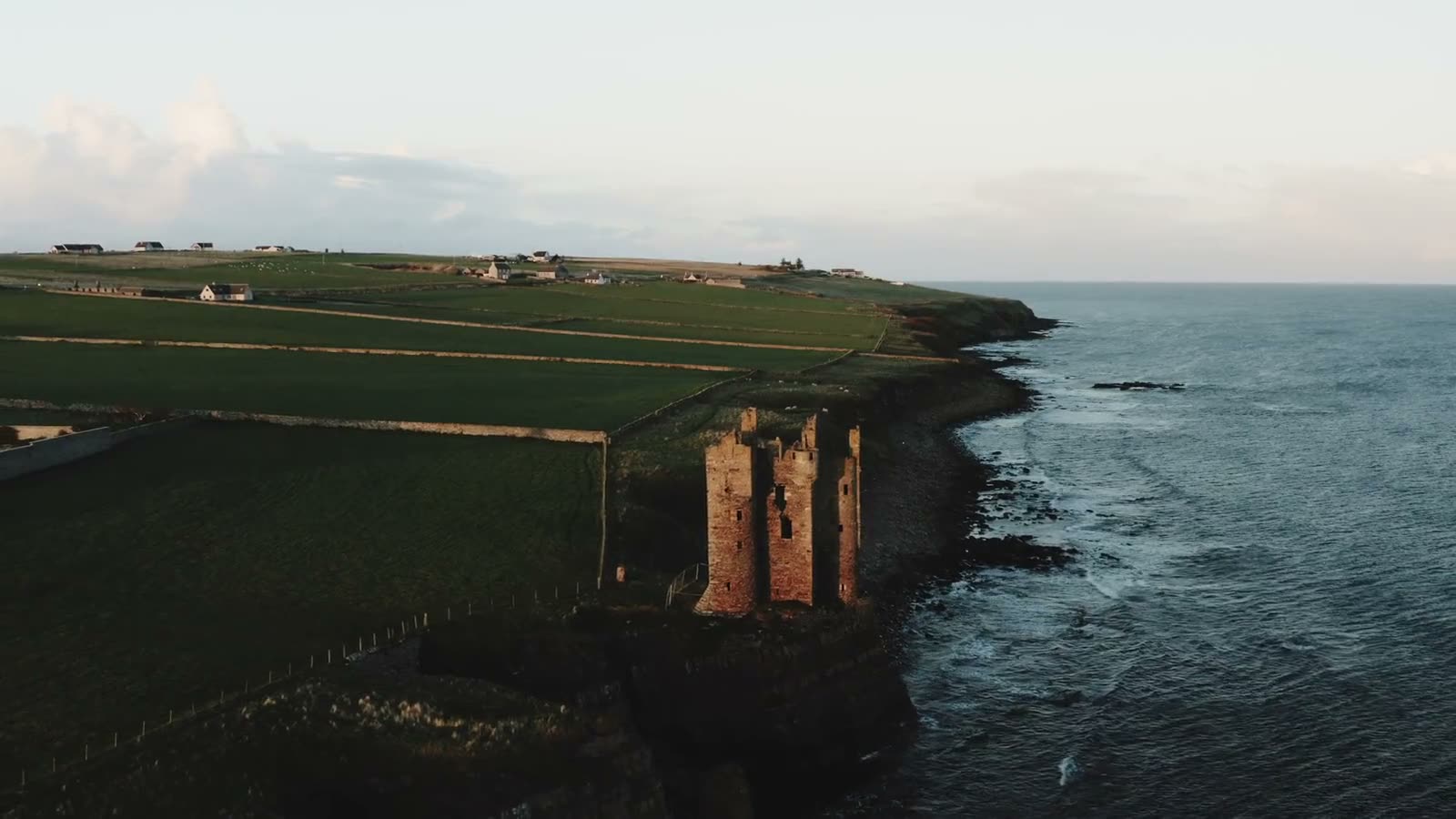
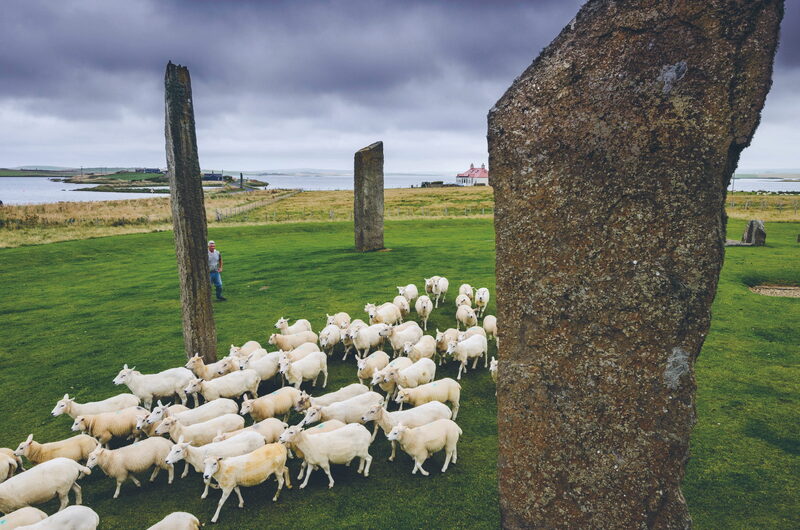
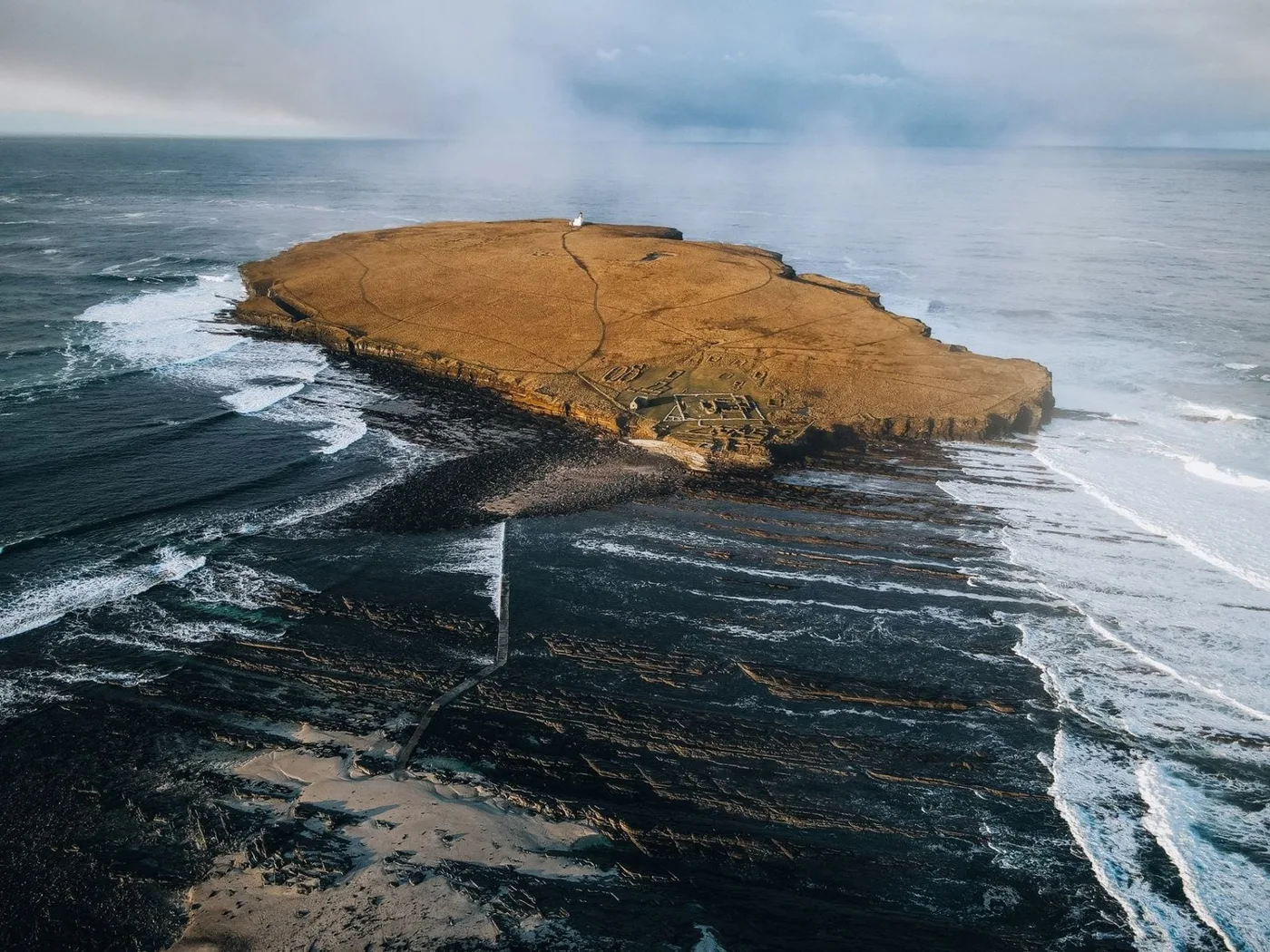
People have farmed Orkney for more than five thousand years. At the Knap of Howar on Papa Westray, a pair of stone farmhouses built around 3700 BC may be the oldest standing houses in northern Europe. Over the following centuries the islanders built Skara Brae, the great tomb of Maeshowe and the stone circles at Stenness and Brodgar, and the finds at the Ness of Brodgar show a society able to build on a grand scale. In the Iron Age, families raised round stone towers called brochs, often with villages clustered at their feet, as at Gurness. By the time the first written records reach these islands, Orkney was part of the Pictish world, and Pictish settlements survive at Birsay. Scottish rule brought the Stewart earls, and Earl Patrick Stewart built a fine palace in Kirkwall before he was executed in Edinburgh in 1615. In later centuries Stromness grew as the last port of call for ships heading west across the Atlantic, and Orcadians signed on in large numbers with the Hudson's Bay Company in Canada. In the twentieth century both world wars brought the Royal Navy to Scapa Flow. The German fleet was scuttled there in 1919, and the sinking of HMS Royal Oak in 1939 led to the building of the Churchill Barriers. The naval base closed in 1957, and Orkney today lives by farming, fishing, tourism and renewable energy.

The Weekly, every Sunday: one place worth going and one thing worth reading.
The Library