
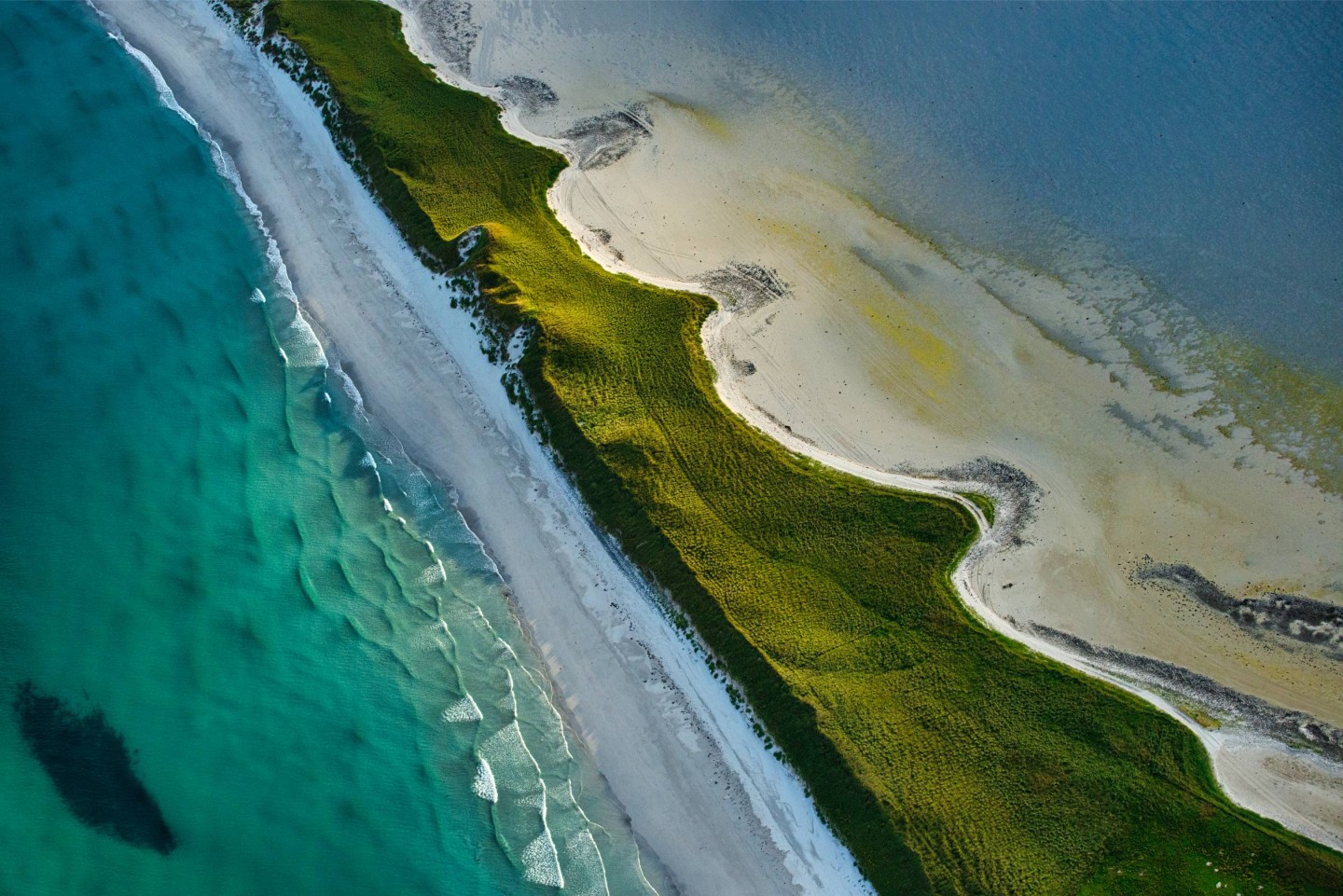
I was in a room crowded with National Geographic editors showing my first Scotland story. Editor Bill Allen looked over the layouts and said “We don’t have any Orkney in here, do we?” While he flipped through Orkney pictures that hadn’t made the cut (a lobster fisherman pulling pots from the North Sea, a ewe bedding down with her lambs beside the Stones of Stenness) I could see gears turning in his head. “We almost have another story right here.”
Seeing my chance I sidled closer. “Bill, there’s good reason to do Orkney separately,” I whispered. “It’s Scandinavian, not Scottish.”
He thought a moment. “All right but just three weeks more field time.”
I was going back to Orkney!
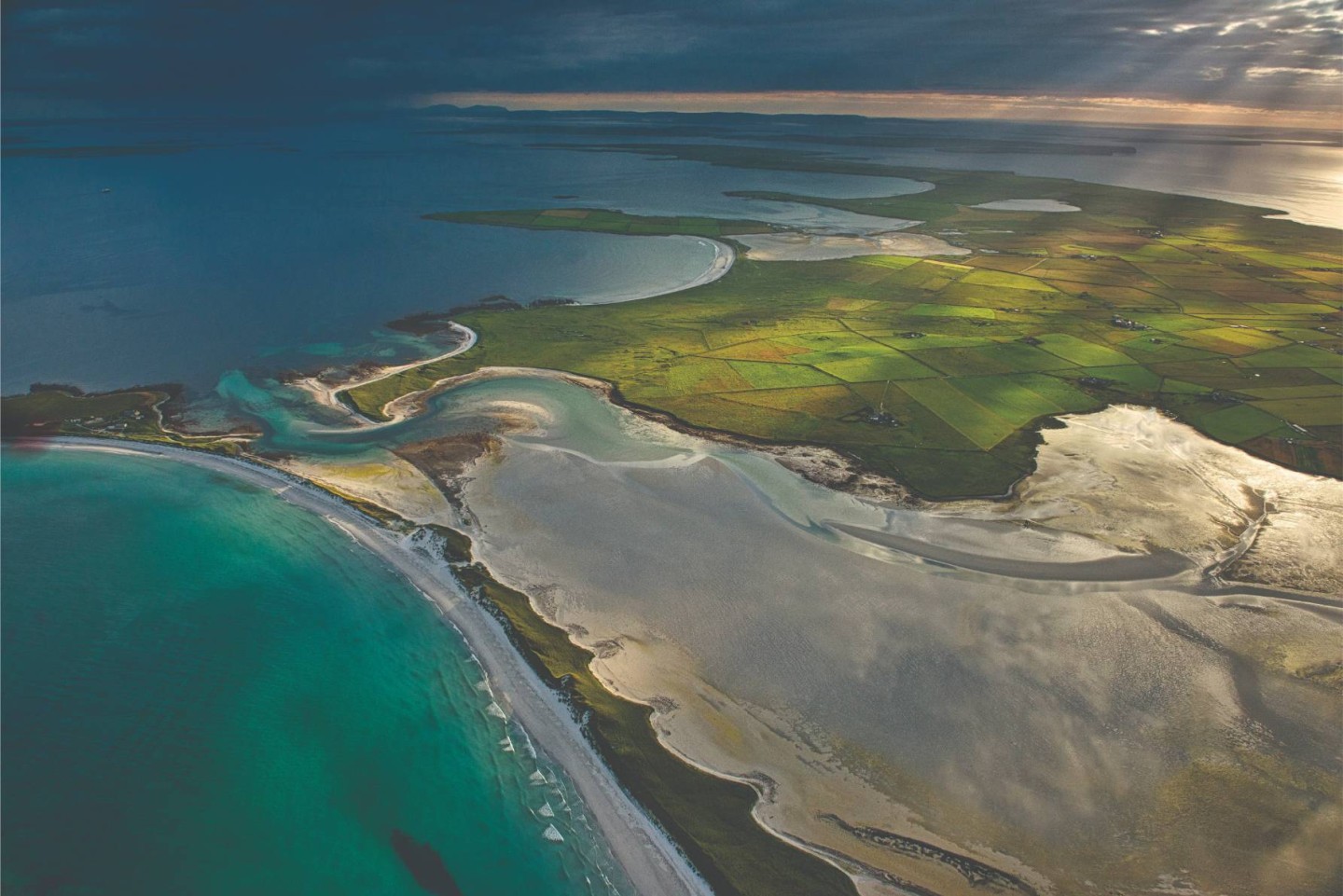
Over the next 25 years going back to Orkney became a habit. The richness of these island that float like whales in the North Sea grew on me as the unexpected gradually became familiar. Like most visitors my first visits had been to tourist favorites: stone age village Skara Brae and the Ring of Brodgar, and the narrow lanes of Kirkwall that led me to St. Magnus Cathedral, that hulking red sandstone relic of murderous Viking rivalries and island martyrdom.
Such ordained wonders have always been Orkney’s big tourist draw. But for me life here revealed itself best as I explored the everyday rhythms of island life. One day I asked farmer Jimmy Tulloch how he got the right to graze his sheep amongst the Neolithic Stones of Stenness. “Oh, I own them,” he said. “They were on the farm when I bought it.” Just an ordinary fact of life in Orkney.
GETTING THERE:
Mainland Orkney can be reached by ferry or plane. Ferries depart from various ports on the north coast of mainland Scotland, as well as Aberdeen and Lerwick, arriving in either Stromness, Kirkwall or South Ronaldsay. Loganair flies to Kirkwall from various UK airports.
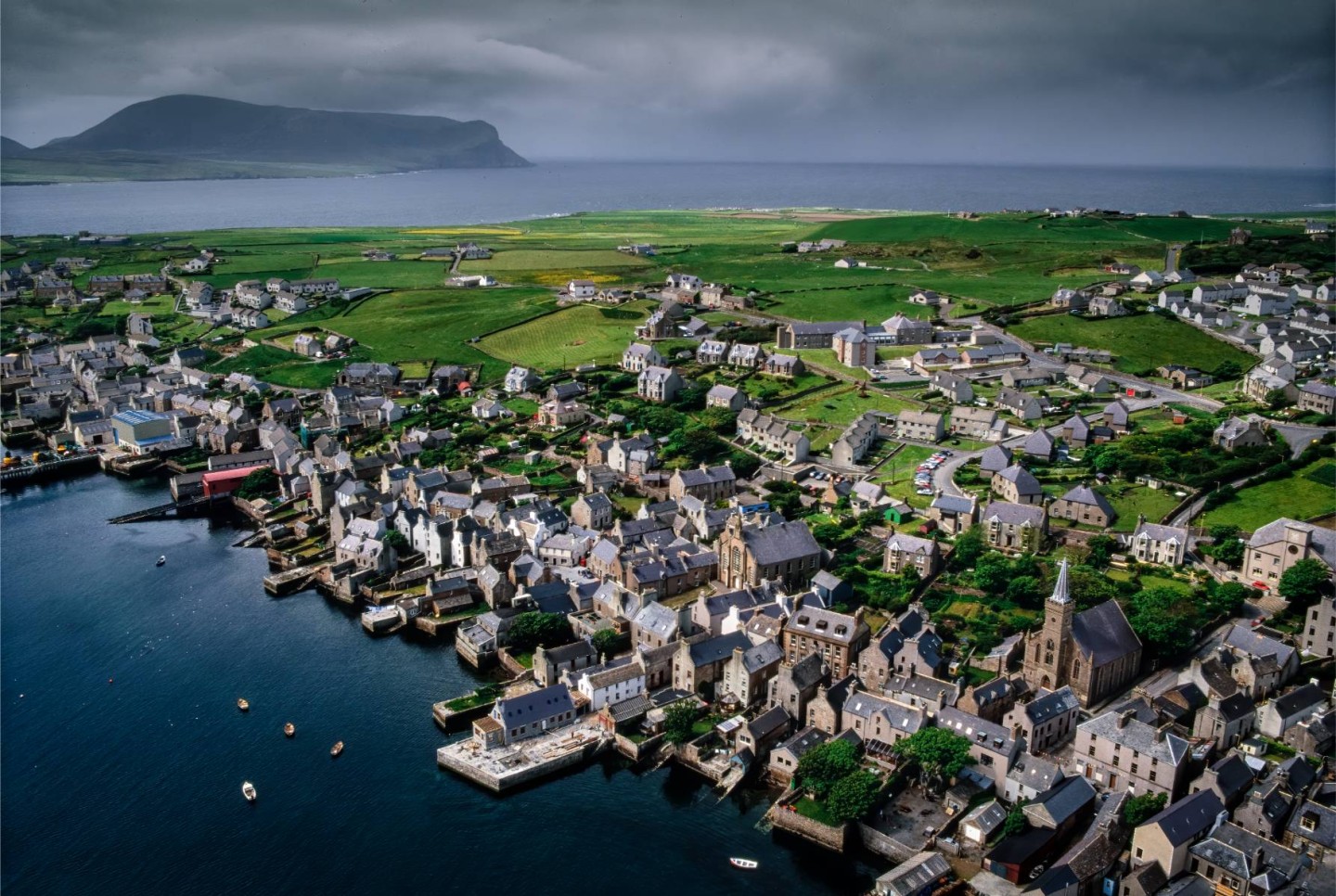
Likewise, during my early days Stromness had made a beautiful picture from the air; an historic fishing village strung along the bay. But it came to life most when I went out with the school children who were learning to row. (Required education for island kids. They crashed a lot.) Or when island lads took me along on a “blackening,” the Orkney tradition of highjacking a friend soon to be married, drizzling him with treacle, sand and grass, before hauling him around town on the back of a lorry and getting him good and drunk. Two weeks later I was at his wedding dance where townspeople joined arms in a circle as they sang Auld Lang Syne at midnight.
Gradually other islands beyond Mainland (as the big island is known) beckoned to me. North to Westray where Pierowall hugs the perfectly round bay tucked into the island. Then over to Noup Head lighthouse where the seabirds float up the towering seacliffs as if riding invisible elevators. Then to Papa Westray via the shortest scheduled airline flight in the world (record time 53 seconds) to visit the 5,000-year-old Knapp of Howar, the oldest farmstead in north-west Europe. (All alone, I enjoyed my picnic amongst the Neolithic ghosts till rain sent me into the ruins for shelter.)
Island social life was sometimes beyond my ken. One evening the Westray ferry hauled a crowd of us down to Eday for a Ceilidh. (Eday folk were waiting at the pier to haul us up to the community hall.) The Sanday Fiddlers (school-age musicians with a cracking leader) had come over to provide music.
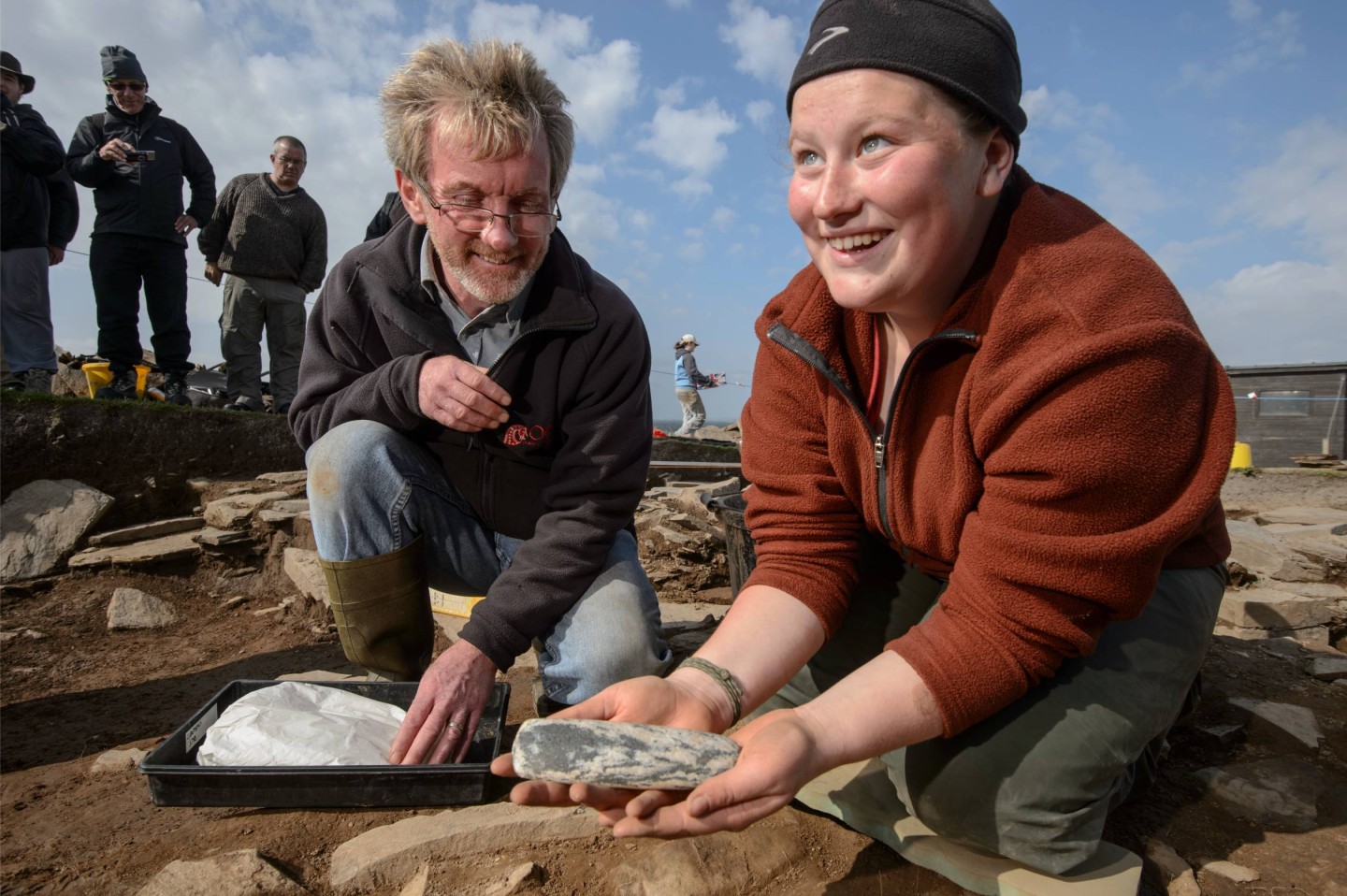
Ness of Brodgar dig led by Nick Card
Tables were heavy laden with food, strong drinks were passed out through a wee window, everybody danced with everybody — feisty old people with feisty kids — the swirling life force relentless until 3:00 in the morning. Then the Eday islanders drove us down to the pier and the ferry getting us home to Westray just as the sun was coming up.
Looking for an island doctor took me up to North Ronaldsay (population about 80, at the time) where Dr. Kevin Woodbridge had the smallest practice in the National Health Service. He also ran the bird sanctuary, kept sheep like most crofters, and wore several other island hats. He also made house calls. We visited Mary O’Nether Linnay to check on her ageing feet. There are three farms, you see: Linnay, Upper Linnay and Nether Linnay. Hence Mary’s last name. Such was my island education.
On South Ronaldsay (a world away from North Ronaldsay as Orkney crows fly) I found farmer David Scott coaching his sons in the fine art of beach ploughing. The county boys ploughing competition at the Sands of Wright was coming up and the Scotts are proud three-generation champions. Farmers here mostly grow hay for their cattle. In another life I wouldn’t mind being a cow in Orkney. Their pastures are incredibly rich and it’s not unusual to see herds crowded up to a fence talking cow talk with their neighbours across a narrow farm road.
I don’t actually know what Orkney cows say to each other but if anybody ever knew it was probably George MacKay Brown, the quirky, poetic island author who seems to have been able to intuit the deepest human meaning from ordinary daily village life. Ancient history was just as juicy as tavern gossip in Brown’s vivid telling.
But everybody in Orkney talks about archaeology. They joke that you can’t stick a spade in the ground without hitting something ancient. Farmer Ronald Simison told me how he did just that, and found a Neolithic tomb in his pasture — with skulls inside. He notified the authorities. He waited (impatiently) for a couple of decades. Finally he excavated it himself. Island independence in the flesh.
While ancient stuff is thick on the ground in Orkney, what the archaeologists — led by Nick Card — found at the Ness of Brodgar was altogether something else. West Mainland was already world famous as the Heart of Neolithic Orkney, a UNESCO World Heritage Site, when excavations behind a farmhouse began in 2003. Over the next two decades (as one summer dig season followed another) a stupendous scientific find emerged from the soil: a complex of massive buildings beyond any normal reckoning from 5,000 years ago.
Like many Orcadians I have driven the narrow road past the Stones of Stenness, across the one-lane causeway that separates Loch Stenness from Loch Harray and on up the hill past the massive Ring of Brodgar which dominates the landscape, without ever realising what lay hidden under a farm field a few feet away. But that has all changed, and it changed me. Where once I thought of that bygone era as something obscured by unfathomable mystery the archaeological work done here has begun to lift that veil. Real people have begun to emerge from the mists of prehistory, people not so different from us, as it turns out.
Those days at the Ness of Brodgar dig with Nick Card, surrounded by scientists, students and volunteers, caught up in the thrill of discovery, were exhilarating. Suddenly a student would lift a stone and find an axe head, a ceremonial offering, put there when the Pyramids of Giza were still brand new. Electricity would flow through the dig as everyone gathered round to see the trembling student be the first person to touch it in 5,000 years.
It is bittersweet to realize that 2024 will be the last dig season at the Ness of Brodgar. After that they will cover up the dig, burying it to preserve it for future generations. I hope to return for one last look at one of the world’s great cultural treasures.
By now, 25 years later, going back to Orkney has become something more than going back to a place. It has become a form of time travel connecting me with people across space and time. Not many places can pull that off like Orkney
Promoted Post
Stormhouse
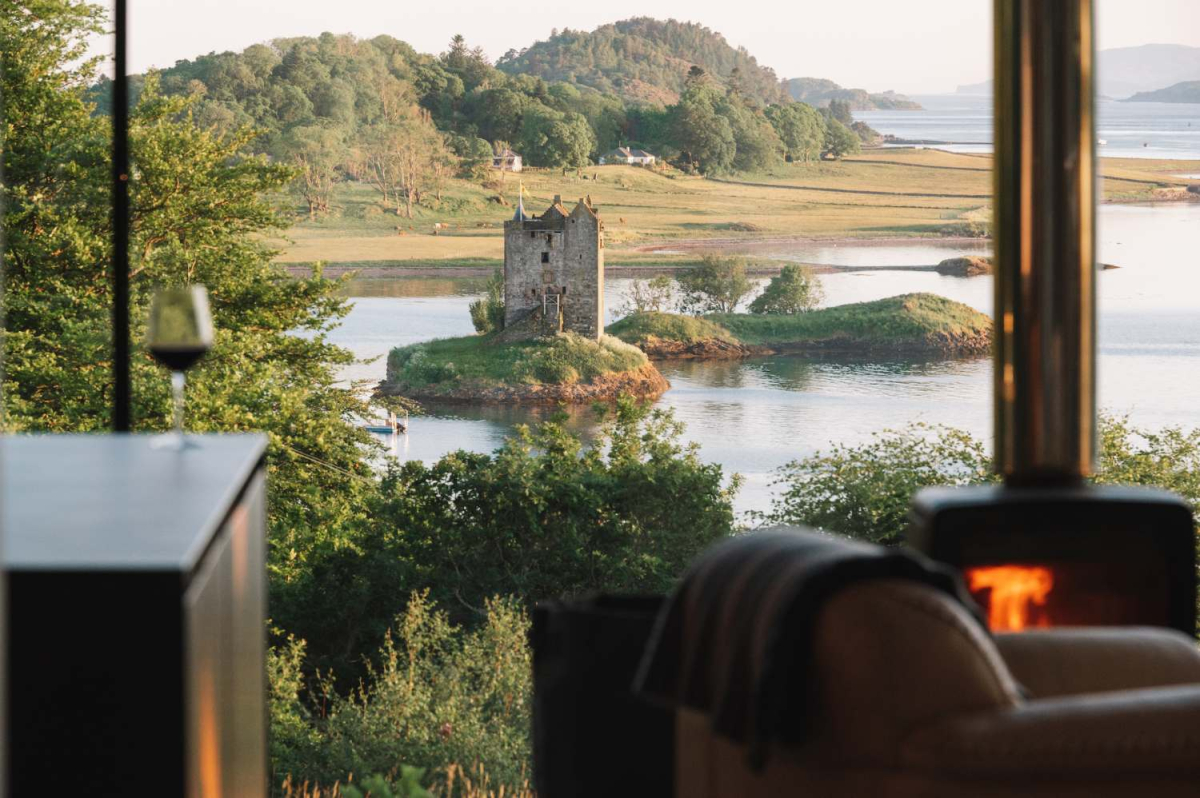
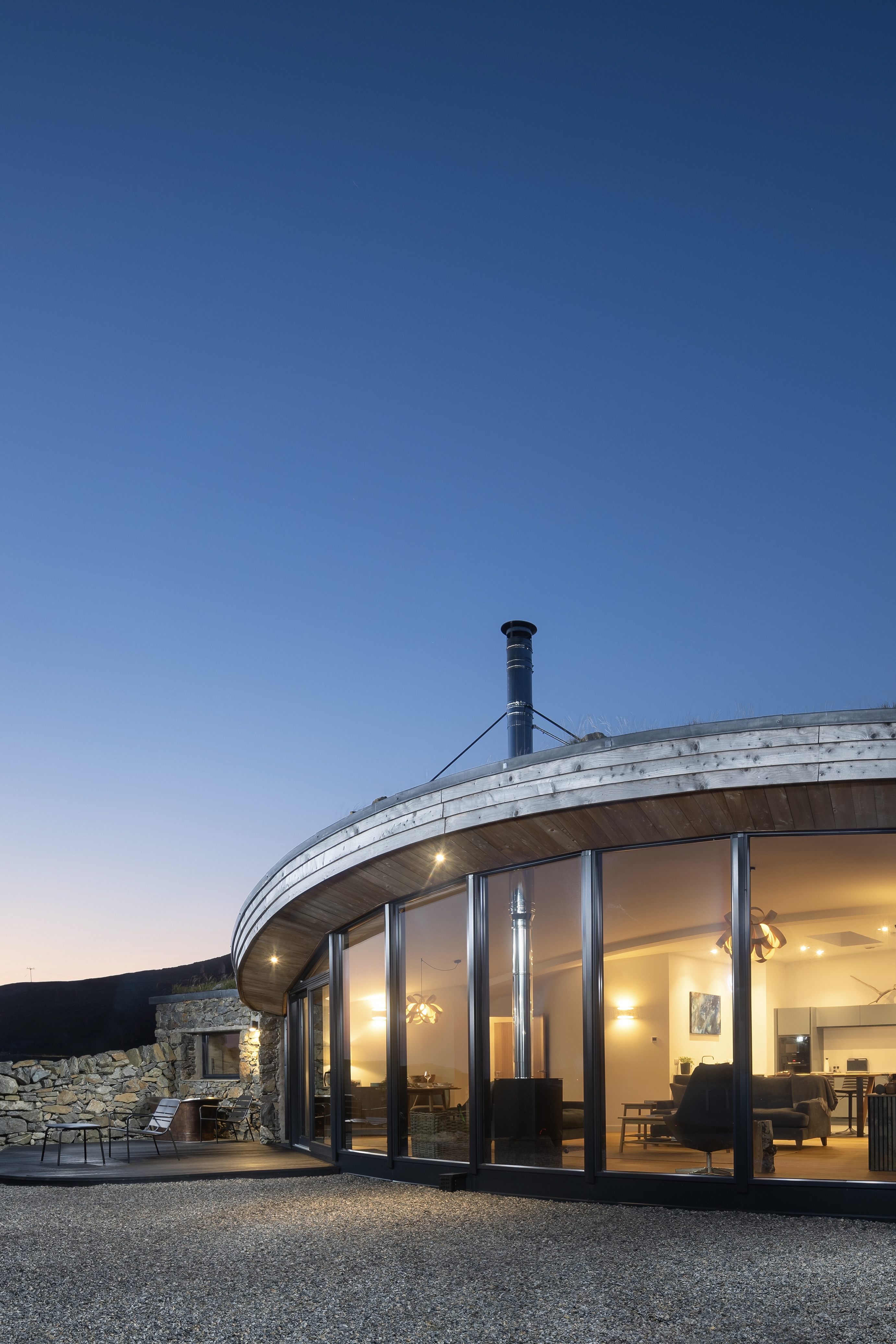
Escape to the wild, rugged landscape of Scotland’s west coast, perfectly located between mountain and sea
-full-1748964954.jpg)






 Sign in with Google
 Sign in with Email