
Shetland’s nature reserves: Noss
How to reach Noss, the nature reserve island off Bressay with 150,000 breeding birds.
Words by Laurie Goodlad
For those who love wild places and nature, Shetland has it all. With broad horizons, big skies and outstanding Nature Reserves, there are plenty of reasons to visit Shetland and get off-the-beaten-track as you explore some of the incredible nature reserves.
Noss National Nature Reserve sits off Shetland’s east coast and is only accessible throughout the summer months. Noss is famed for its spectacular scenery, sheer cliffs and wildlife and the striking landscape is a draw for any adventure seeker.
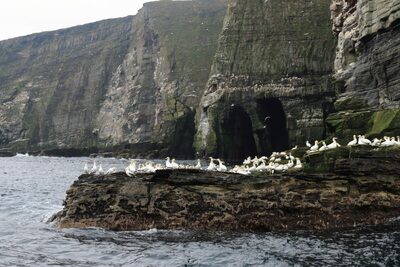
The name Noss comes from the Old Norse language and literally means ‘nose’. The Norse settlers who arrived here from the 9th century would likely have called it Nossay – the island shaped like a nose.
There are two options for a trip to Noss. If you would like to visit on foot, visitors must first take a ferry from the main town of Lerwick to the island of Bressay, just a short five-minute hop across Bressay Sound, before taking a small boat across to the island. Alternatively, daily boat trips are operated from Lerwick that will take guests close to the seabird colonies and allow outstanding views from the sea of one of the most significant gannet colonies in the UK.
To visit the island on foot, guests must first take the ferry to Bressay. Bressay is home to about 340 people and makes a great day-trip in itself. With walks, history, archaeology, a pub/restaurant and a cafe, there is plenty to do if the weather prevents a trip on to Noss.
From Bressay’s east side, wardens operate a small rib that will take guests to the now uninhabited island of Noss. The three-minute Noss Sound ferry operates five-days-a-week (not Mondays or Thursdays) during the summer season (May to late August) while the island’s wardens are living on Noss.
On the island, a designated path will take visitors to the Noup of Noss and on a three-hour circular route around the island. Walkers will have the opportunity to view the seabird colonies, sandy and boulder beaches, moorland expanses and the grazing land for the resident island sheep. Harbour seals and grey seals can also be spotted around the shores of Noss and be sure to watch out for passing whales who often cut through the narrow Noss Sound channel.
A boat trip is perhaps the best way to get a sense of the bird colonies. From the boat, visitors can gaze up at the 180-metre high cliffs and witness an apartment block of nesting seabirds. With 150,000 breeding birds, the cliffs are a remarkable sight. The boat trips do not allow passengers to land on the island, but they explore the coastline, caves and crags and these tours are wheelchair friendly. The boat trip brings the visitor right into the middle of nature.
 Out now
Twice a year, to your door
One hundred and sixty pages of Scotland, every photograph commissioned, every word written by someone who went. Members get both issues posted and everything on screen.
 Chasing the Night
 Beaver, Is That You?