
A day in the North Mainland
Mavis Grind, the Eshaness cliffs and Ronas Hill: a day out in Shetland’s North Mainland.
Words by Laurie Goodlad
Shetland’s North Mainland is alluring in its beauty and can appear both stark and awe-inspiring in the same instant. With its harsh and dramatic landscapes, this area continues to draw in hikers, explorers and those who want to get into the wild and discover the landscape and wildlife in this fascinating part of Shetland.
The North Mainland stretches from Mavis Grind – just beyond the town of Brae – north to the most northerly point of Mainland Shetland, Fethaland, east to the picturesque village of Ollaberry with its lush green pastures, and west to the dramatic cliffs and rugged beauty of Eshaness and the village of Hillswick.
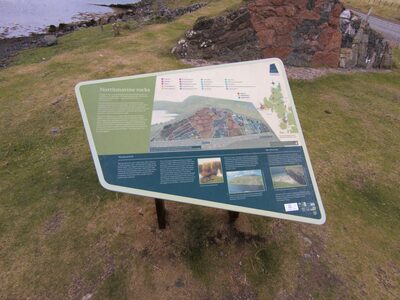
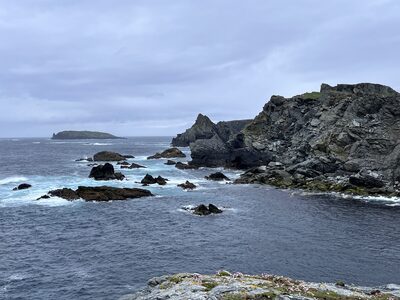
The North Mainland – or Northmavine – begins at Mavis Grind, where a large metal sign announces a “Welcome to Northmavine” to visitors. It is a narrow neck of land where the North Sea and North Atlantic almost meet. This narrow point almost separates Northmavine from the rest of Mainland Shetland.
In many ways, this area feels ‘apart’ from the rest of the Mainland. There’s a real sense of community in Northmavine, and those who live there are proud to be ‘fae nort’. Traditional culture is strong, and there are still rich pockets of dialect speakers who proudly talk with a Shetland accent. It has an ‘island’ feel despite being connected to Mainland Shetland.
The North Mainland is probably best known for its dramatic northwest corner, around Eshaness. The name, Eshaness, gives us a clue about what might be discovered here. Translating from Old Norse, Eshaness means ‘the ashy headland’. This area of impressive lava formations and sheer ash-black cliffs represent the best section through the flank of a volcano found anywhere in the UK.
It’s also dominated by Shetland’s highest hill, Ronas Hill, an extraordinary batholith that protrudes from the landscape and is visible from almost everywhere in Shetland.
Although you’re likely to want to spend more time exploring the North Mainland, these suggestions will give a few of the highlights and act as a springboard to explore more.
Accommodation options
You may wish to base yourself in the North Mainland to fully enjoy the hiking opportunities and dramatic landscapes. If so, the following are a few options for places to stay.
Busta House Hotel sits tucked away on the shores of Busta Voe, just a few miles from Brae. Today it’s a three-star hotel placed in an idyllic rural location in one of Shetland’s most beautiful historic houses, but it also has its own unique ghostly tale to tell.
St Magnus Bay Hotel (Hillswick) is tucked away in the northwest corner of the picturesque village of Hillswick. Hostess Andrea gives guests a real taste of Shetland hospitality. The hotel is also located close to some of the best walks in the area.
Braewick and Burravoe Wigwams. There are a couple of options in the area for those who would like to enjoy some no-fuss glamping. For more ‘upmarket’ glamping pods, the Burravoe Wigwams in Brae offer the chance to stay in a wooded area close to all the local amenities of Brae itself, or, for those with a sense of adventure, the wigwams at Braewick offer ‘no fuss’ accommodation with the bonus that guests can use the facilities and restaurant on site.
Several self-catering options are available to suit various needs, including pet-friendly suggestions. The best place to find these is via Shetland Visitor’s accommodation pages.
Eating Options
Several places in the North Mainland serve food, including:
Braewick Cafe – with outstanding panoramic views out to the iconic Drongs (sea stacks) and the Heads of Grocken, the Braewick Cafe is a family-run cafe and caravan park with touring and tent pitches, as well as some of the best local produce for miles around, served in their friendly and welcoming restaurant.
Busta House Hotel – with a menu packed with local produce, Busta House Hotel offers a fantastic selection of food and drink and some authentic rustic charm in the historic house that, amongst being one of the most beautiful buildings in Shetland, also has a resident ghost. After your meal, the Longroom has an open fire and a long whisky list.
St Magnus Bay Hotel (Hillswick) – Hillswick is a beautiful village dominated by the St Magnus Bay Hotel. Built by The North of Scotland, Orkney & Shetland Steam Navigation Company in the late 19th century, this impressive wooden building is now privately-owned with a reputation for serving honest and hearty food and drink.
Frankies Fish & Chips – Famously known as Britain’s most northerly fish and chip shop, this award-winning chippie in Brae serves the freshest fish from Shetland’s fleet of local fishing boats – if you ask, they’ll likely tell you which boat caught the fish on your plate.
Shops – you may want to pick up a picnic from the Coop or Garage in Brae or the community shops in Hillswick or Ollaberry.
Top tip: If you’re planning to visit the North Mainland on a Sunday, check the What’s On guide in the weekly Shetland Times newspaper or check roadside signs advertising Sunday Teas in any one of the local public halls. Sunday Teas are quintessentially Shetland. Basically, a team of volunteers will open the hall for an afternoon selling tea, coffee, cakes, bakes, sandwiches, soup. For a nominal fee, visitors can tuck into an all you can eat buffet-style spread with the best local home-baking and hospitality. If you’re visiting around Up Helly Aa time (January), look out for the Sullom Halls Soup and Sweet event where they serve up traditional reestit mutton tattie soup and bannocks with saat beef.
Takeaway: Brae has a Chinese takeaway, and there are sometimes takeaway nights in the local halls – look out for roadside signs that advertise these.
Fuel: If you have a car, you’ll find fuel pumps at the Brae Garage and Ollaberry Shop.
Explore Shetland’s Geopark
This day trip explores some of the fantastic places that make up Shetland’s Geopark, but these areas are much more than ‘geological sites’, so don’t let the title put you off. These are some of the most outstandingly beautiful and photogenic places in Shetland.
For some background, Shetland became a Geopark in 2009 for its outstanding landscapes and internationally important rocks. For its size, Shetland has an incredible array of geology which give rise to the varied terrain and the island’s overall charm and allure.
Itinerary: Mavis Grind, Ollaberry – boundary fault, Eshaness, Stenness & Dore Holm.
Top tip: Time your day around food; stop for coffee in Busta’s Longroom before continuing north, where you can have lunch and make the most of the stunning views at the Braewick Cafe. Book a table at the St Magnus Bay Hotel for dinner or head back to Brae for a bar supper at Busta or fish and chips at Frankies.
Mavis Grind
Start the day at Mavis Grind, the gateway to Northmavine, where it’s said you can throw a stone between the North Sea and the North Atlantic. This narrow point of Mainland Shetland has almost split the island in half – almost creating another island in the north. This is a spot steeped in lore; it’s where the Vikings hauled longships overland to save lengthy – and dangerous – crossings around the south or north of Shetland. This practice continued by fishermen right up until the 1950s.
It’s also an area where you can see remnants of wartime Shetland. A tank trap on the western side was placed here during the Second World War as a defence for the strategically important Sullom Voe on the other side. These concrete pyramids cover the beach and act as a reminder of Shetland’s important role during the war.
This is also a great place to get to know the Geopark. A Geo Wall sculpture made up of all the rock types shows the diversity of the area’s geology and acts as a springboard for understanding Shetland’s dramatic north.
Ollaberry – Walls Boundary Fault
Continue north for 10 miles along the A970 and B9079 to Ollaberry. Ollaberry is a patch of green fields amid the harsh landscape that surrounds it. It’s a beautiful village with a real community feel. Stop at the shop just before the village and pick up a little picnic snack before following the B9079 through Ollaberry, where you can park at the church behind the wooden council housing beside the shore.
North of the village, across grazing fields, the Walls Boundary Fault sits at the Back of Ollaberry and Back Sand, and a scramble down to the beach gives the best view of it. This is part of the Great Glen Fault – a series of splits in the Earth’s crust between the Great Glen of Scotland and Shetland. One side of the fault is a granite wall, and on the other side is schist. This is the best example of a shear fault in Britain, and the crumpled folds of schist on the western side of the fault show the powerful forces that shaped them.
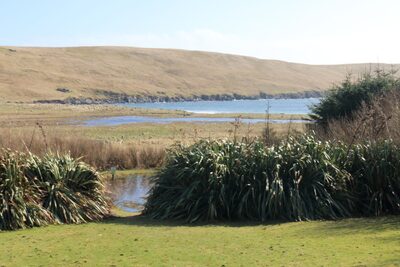
From Ollaberry, it’s time for lunch at Hillswick or Braewick before heading on towards Eshaness.
Eshaness
Eshaness is an exposed peninsula in the northwest Shetland Mainland, about an hour’s drive from Lerwick. Head north on the A970 until the double road ends and follow the signs for Eshaness.
As you arrive at the designated car park, the first thing that you see is the impressive Stevenson-built lighthouse. This was the last lighthouse in Shetland, built by the famous Stevenson family and completed in 1929. The light is now automated (1974), and the lightkeeper’s buildings are now used as holiday lets.
The area around Eshaness is geologically fascinating. This rugged and sea-ravaged peninsula was formed about 360 million years ago when Shetland lay close to the equator. The cliffs show a series of lava flows from that time, a landscape of volcanoes, fire and lava.
The Eshaness Circular walk is well advertised on an interpretation panel at the car park. Highlights of the walk include the Kirn o’ Slettans – a blowhole that plunges vertically into the sea below. Thought to have been a side vent/cone in what was the Eshaness volcano. Other highlights are the Hols of Scradda – a collapsed sea cave that has created a vast gloup inland from the sea – and Da Grind o’ Da Navir – an impressive natural amphitheatre with storm-thrown boulders strewn across the surrounding landscape. Archaeological highlights include the ruinous Broch of Houlland found on the circular walk.
From Eshaness, the small island, Muckle Ossa, the solidified lava vent channel that would have fed the volcano’s main vent is visible, and, on a clear day, the offshore Clair oil field 75km (47 miles) west of Shetland can be seen on the horizon.
Calder’s Geo is the first part of the coastline that you reach – this is where most of the iconic photos of Eshaness are taken. A cave at Calder’s Geo is believed to be Britain’s largest sea cave. A scientific study of its inner chambers found that the actual dimensions of the cave are greater than previously thought, 60ft tall and spanning a floor area of 5,600 square metres. This makes it one-and-a-half times bigger than the cave at Cheddar Gorge in Somerset.
To make the most of this fascinating area, allow three hours.
Top tip: make some photo-stops
There are some pretty incredible photo opportunities around this area, including:
The Dore Holm – this offshore natural arch appears like a horse taking a drink and is best seen from the road just before the final turn towards the Eshaness Lighthouse or, on foot, park at Stenness and follow the coast south until the Dore Holm comes into view.
The Drongs – the Drongs are offshore sea stacks that stand like teeth off the west side of the Ness of Hillswick. There are several laybys that you can photograph these from, or park at Braewick Cafe, which has the best views of the stacks.
Heylor – Follow the road signs from Urafirth to Heylor. Heylor sits on the water’s edge at Ronas Voe with uninterrupted views across to the dominating Ronas Hill. This former fishing station has remnants of old buildings and the original pier that the shifting beach has almost swallowed up.
Magnus Bain’s House – for any Shetland TV series fans, the house that sits on the road to Eshaness overlooking the beach at Sandwick and across to the Ness of Hillswick was used as a filming location in Series One.
Ronas Hill & Da Lang Ayre
Ronas Hill and Da Lang Ayre is not a hike for inexperienced walkers as it is relatively long and challenging and takes in Shetland’s highest hill and longest beach – which means a hike from sea level back up the 450-metre heights of Ronas Hill.
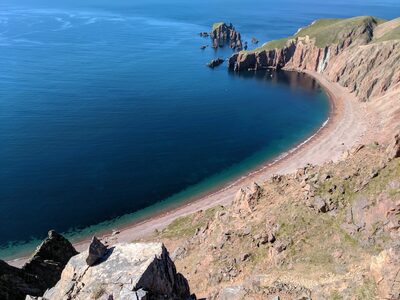
Ronas Hill is not a Munro but the younger cousin of the Munro – a Marilyn – of which Shetland has quite a number. The walk is around 9 miles (15km) and takes about six hours (including time for a picnic, which you must take).
Northmavine is characterised by stunning red granite, and Ronas Hill is no exception. The walk starts from the top of Collafirth Hill.
Top tip - the weather in this part of Shetland can change very quickly, and walkers are frequently caught out by low lying cloud and fog, so please remember to take an OS map and download the What3Words app in case you become lost.
Ronas Hill is home to several varieties of Arctic Alpines that have survived here, presumably from before the last Ice Age retreated about 10,000 years ago. Of these miniature marvels, there is Mountain azalea, alpine lady’s mantle and spiked woodrush. These hardy little miniatures are usually only found on high mountains or in the Arctic, but they thrive here.
From the top, the views stretch across the whole island from Fitful Head in the south to Unst in the north. There’s also a Neolithic chambered cairn that still stands proud on this exposed hill.
From the summit the walk drops to Da Lang Ayre. The only way onto its red stones is down a deep ravine, with a rope at the top of the cliff. This is not a walk for the winter months.
The Lang Ayre itself is a veritable palette of colour; reds, oranges, greys and blues, all thrown together, rocks polished and smoothed in nature’s rock-tumbler. Each one placed and formed by the violent North Atlantic that ravages this impressive and imposing coastline.
The return is uphill all the way, almost back to the top of Ronas Hill, before the descent to Collafirth Hill and its telephone mast.
Walks
For hiking lovers, the North Mainland is home to some of the most dramatic and challenging hikes.
Fethaland
Fethaland, at Shetland Mainland’s most northerly point, was once a thriving deep-sea fishing station. This type of deep-sea fishery was known locally as da haaf fishing and was carried out from small open boats called sixareens. The walk out to the now ruinous buildings that made up this 19th-century fishing station will take a few hours, so you might want to pack a picnic and OS Explorer No 469. Park responsibly at the end of the Isbister road – bearing in mind that the farmer requires access to the farm road. You can take the direct ‘overland’ route following the farm track or do a longer, more scenic coastal circular. No matter what way you choose, you’ll be rewarded with some fantastic views and outstanding built heritage at the end of the peninsula.
Uyea
Uyea is a stunningly beautiful tidal island that can be accessed via a sand tombolo. This is an excellent hike with stunning views and the chance of seeing seals and other wildlife. Follow the route for the Sandvoe to Uyea Circular – this is a challenging nine-mile (15k) walk, so you’ll need to be prepared, taking a picnic and OS Explorer No 469.
Top tip: For a more accessible alternative, follow the farm track from North Roe and walk overland in and out to Uyea. Note that this easier route doesn’t enjoy the same views as the circular. Please note that vehicles are not allowed on this track unless permission is sought from the landowner.
Hams of Roe
Connected to Mainland Shetland by a road bridge link, Muckle Roe translates as the Big Red Island due to the impressive granite coastline and spectacular scenery. One of the best walks here is to the Hams of Roe, following the Hams of Muckle Roe Circular. This is another challenging seven-mile (11k) walk.
Top tip: This walk can be reduced by following the overland farm track (OS Explorer no 469).
Other places worth a visit in the North Mainland
Tangwick Haa Museum – Tangwick Haa Museum in Eshaness is a former Laird’s House – known as a Haa – used as a community museum. The museum has excellent local history displays and a fantastic gift shop stocking local gifts and knitwear from local crafters, artists and knitters.
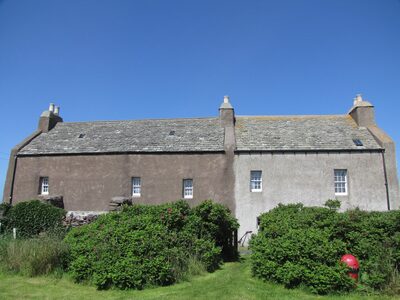
Nort Trow Gairdins – is a fantastic community garden located in North Roe, near the Church of Scotland. The land was initially developed to become a graveyard, but it has now passed to the community, who have developed it into a colourful and busy community space.
Hillswick Wildlife Sanctuary – tucked away down by the sea in Hillswick is the Wildlife Sanctuary which has been rehabilitating otters and seals for over 30 years. Jan and Pete welcome guests by appointment. It offers a rare opportunity to view seals in outdoor pools and learn more about the rehabilitation process and environmental problems facing the island’s marine wildlife.
 Out now
Twice a year, to your door
One hundred and sixty pages of Scotland, every photograph commissioned, every word written by someone who went. Members get both issues posted and everything on screen.

 The Last Stop Before Nowhere
 A Weekend Exploring the Isle of Mull
 What's On in Scotland: Autumn and Winter