
Scotland's Grand Designs
Across Scotland, there are buildings that have fallen on hard times – unloved and forgotten. Some are hidden away in remote glens; others, in plain sight, lie broken by the side of the road. While some of us merely dream of Channel 4-worthy renovation projects, thankfully those with more vision – and courage – jump in, embarking on journeys to breathe new life into old stones.
Birnam Hotel was once Fraser Potter’s old stomping ground, its grand baronial hall the scene of wild ceilidhs, celebrations and community events. Lately, though, it had lost its lustre.
The stately 19th-century hotel, built in the same era as the Fife Arms in Braemar for curious Victorian tourists, had become tired and rundown. Once an old-fashioned pitstop for whistlestop coach tours, it had closed its doors to locals. It wasn’t derelict or abandoned. It wasn’t even for sale – but when Potter has a plan, details like that don’t stand in his way.
During lockdown, he transformed The Taybank – a renowned pub across the river in Dunkeld – after setting up a successful event catering business. In his free time, he’s rowed across the Atlantic for charity. He has the energy of a Duracell bunny with no off switch.
‘It wasn’t a spur-of-the-moment decision,’ he admits. ‘I’d been thinking about it for three or four years. It was always in the back of my mind.
’ Now the scaffolding is up, the renovation is well underway and the reimagined hotel is due to open in the spring of 2026. Wallpaper has been peeled away, carpets stripped to reveal original tiled floors and years of rubble cleared from the chimneys. Whatever can be rescued, restored, reused will be – and treasures are emerging along the way.
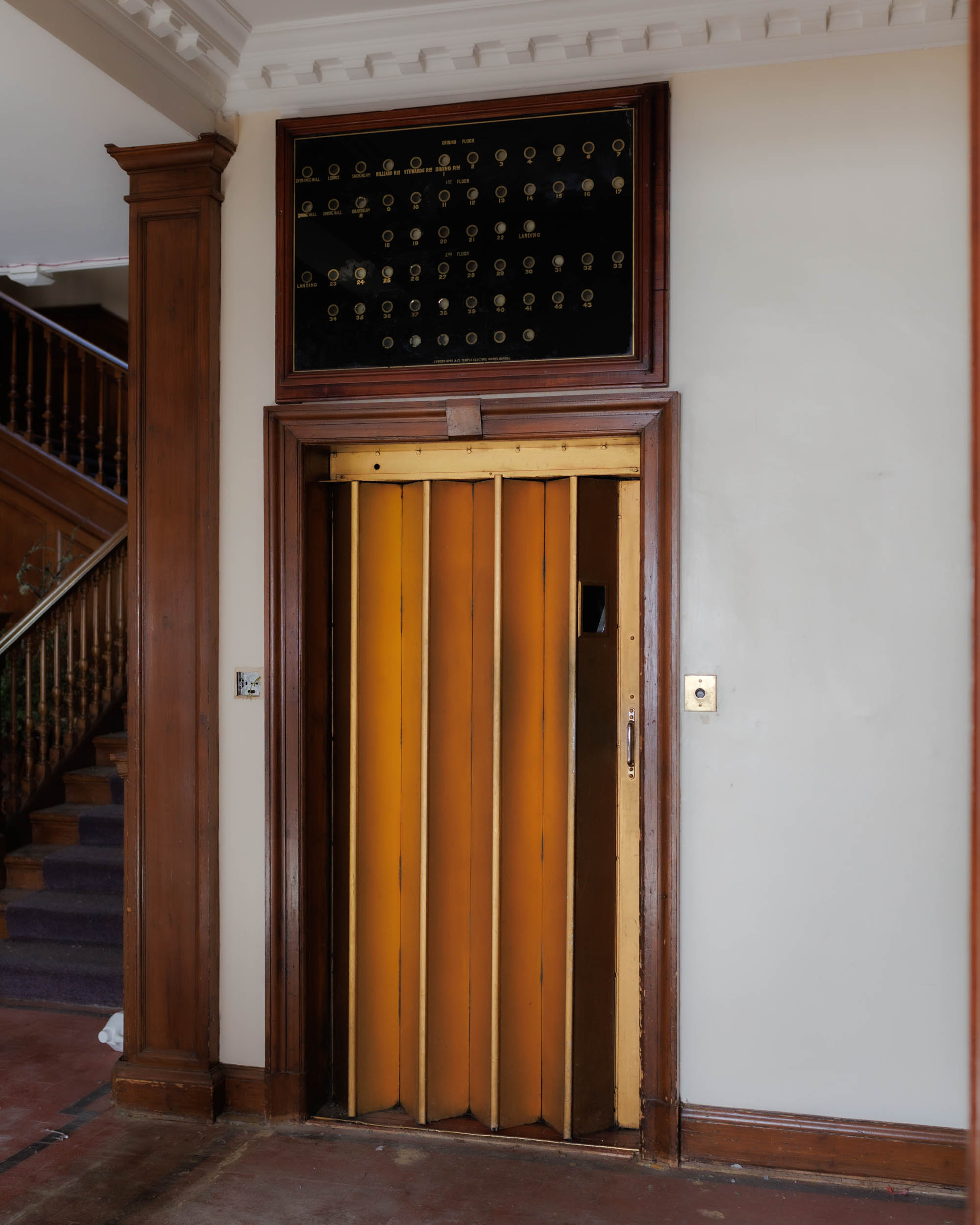
The original lift, with its concertina-style double doors, still works. They’ve also uncovered a dumb waiter which goes up to the baronial hall. Potter is joined by his partner Kim Grant – founder of Rural Studio – and designer Eric Bremner (formerly Creative Director at Max Mara), who are collaborating on interiors, branding and concept development.
Kim explains that the restaurant will be based around a traditional Scottish kitchen. Originally, the plan was for an elegant country house hotel look – but the discovery of a set of 1910 birch dining chairs by East Brothers of Dundee went on to change the direction of the space.
The Birnam Hotel by Alex Martin (left and right)
The Birnam Hotel by Alex Martin (left and right)
‘We’ll have a long, custom-built dresser, and we’ve found some big, buttery-yellow laundry sinks from the Dunfermline Clay Works that we’re hoping to put in, so it feels more like a home than a dining room,’ says Kim.
In another ground-floor room, Fraser pulls back a cloth to reveal a large mahogany boardroom table from the Dewar’s Whisky lot in Perth. ‘This will be a co-working space for people passing through or who live in the village, a space where people feel welcome,’ he explains. When pulled out fully, it seats 20 and doubles as a private dining room in the evenings.
‘It’s also going to be the library, full to the gunnels with books,’ Kim adds.
The hotel will have 28 bedrooms, two bars, a restaurant, private dining room and that showstopping baronial hall. The Birnam Inn, to the rear, will be phase two.
Moss green paint sweeps up the staircase to conjure Birnam Glen, while Barra-based artist Lydia Warren has been commissioned to paint a limewash mural mimicking a walk through the glen.
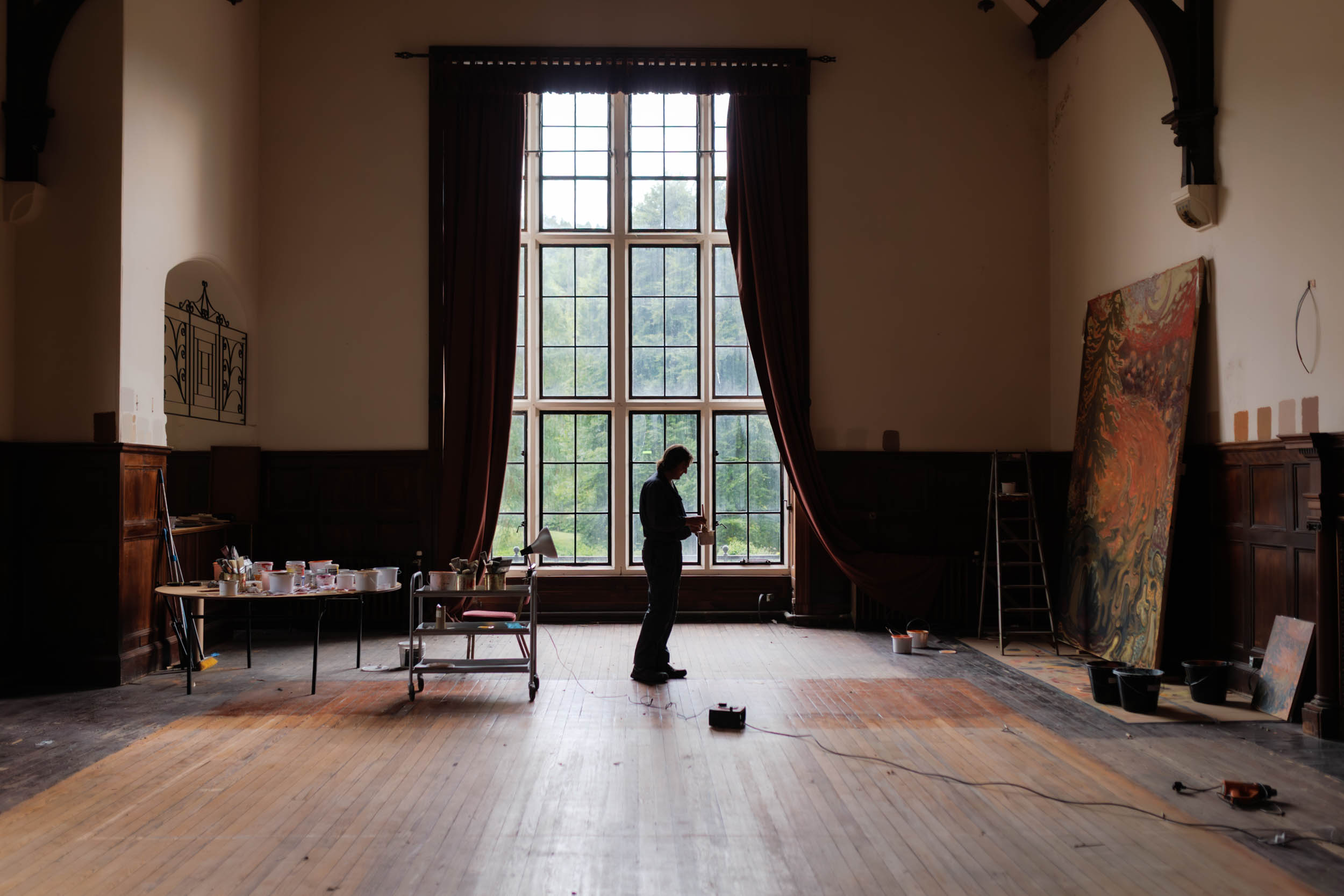
The baronial hall – once home to ceilidhs with music so lively the glassware rattled in the bar below – is the star attraction. ‘This was once the largest sprung dance floor in Scotland,’ Eric marvels.
‘The glassware used to rattle in the bar downstairs,’ laughs Fraser. ‘They had to turn the music up when there was a ceilidh on.’ Historic Dunkeld’s archivists are helping piece together the building’s story, combing old photos and documents. A 1912 fire blazed through much of the interior before the fire brigade arrived.
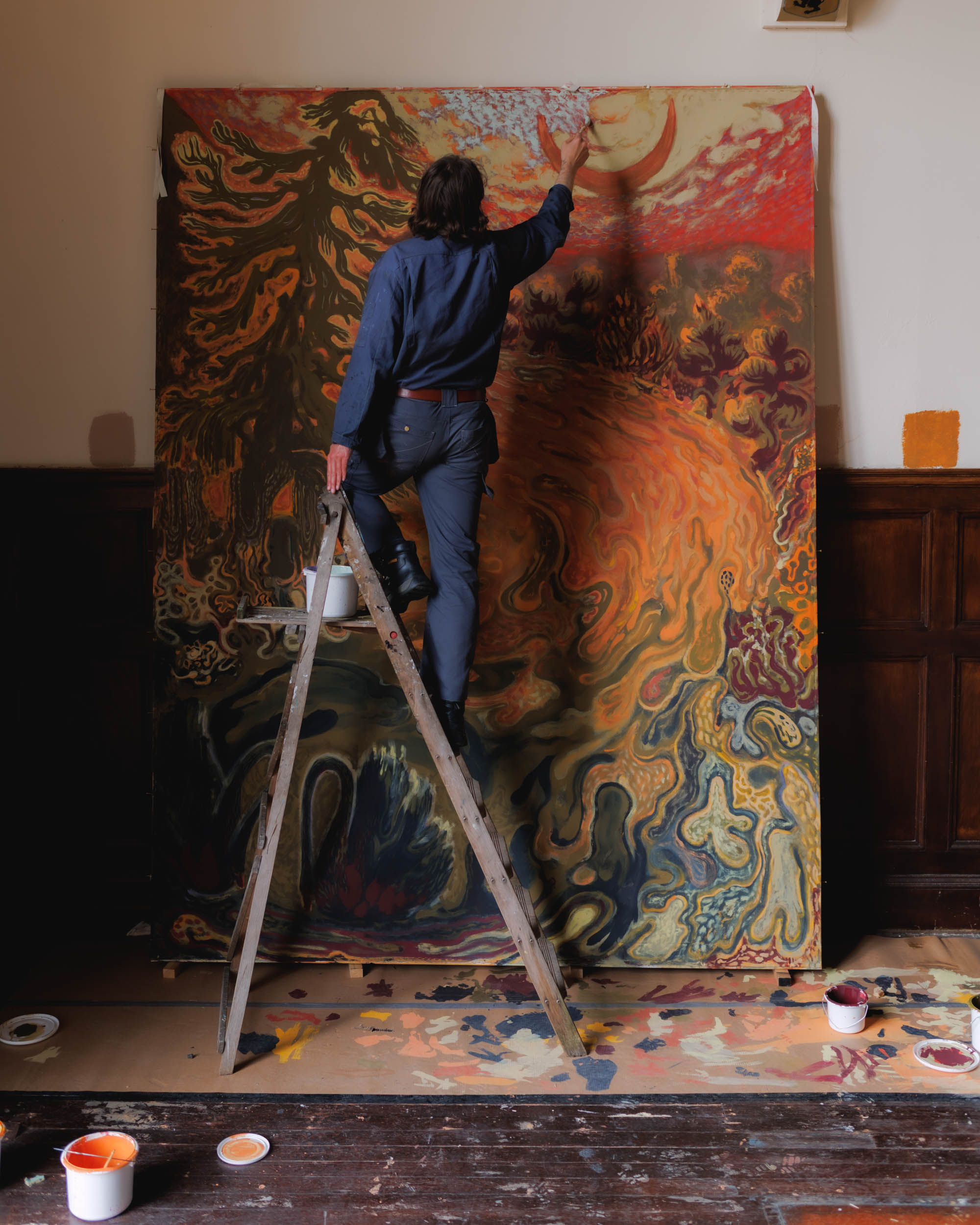
At one end of the hall, a vast window frames the hillside. At the other end, four giant seasonal landscape paintings are being created by artist Felix Zandt, a friend of Kim’s from Glasgow School of Art, to be displayed on rotation.
‘We’re trying to work as much as possible with local craftspeople,’ Eric says. This will be a truly Scottish project – ‘Even if it’s not covered in antlers,’ smiles Fraser.
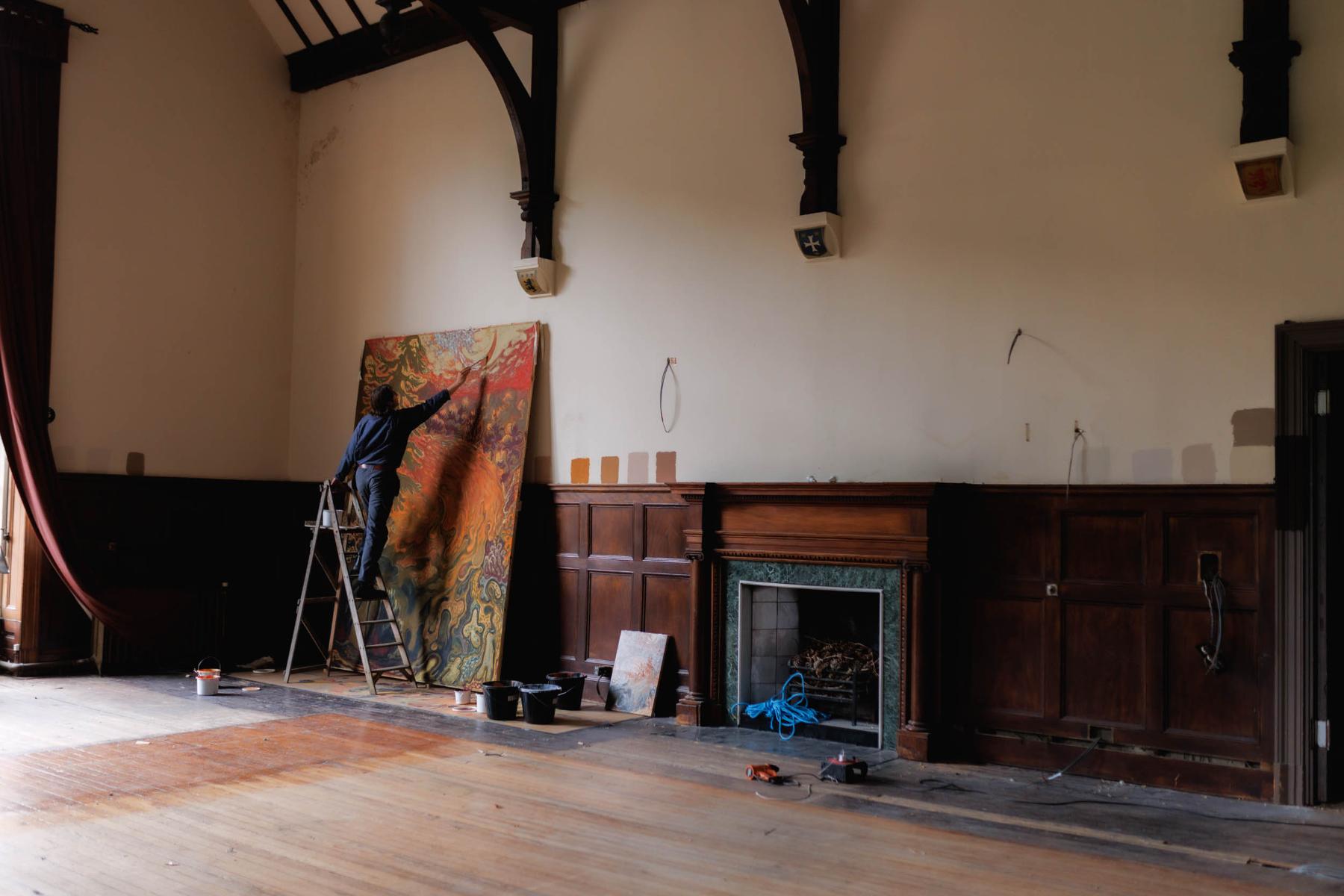
‘This will not be a repeat of The Taybank,’ he continues. ‘Our vision for The Birnam Hotel is rooted in Scottish tradition but reimagined for today’s traveller.’ A contemporary Scottish country house hotel, celebrating arts, crafts and craftsmanship.
Just an hour south, in the historic conservation village of Culross (pronounced Coo-riss) in Fife – familiar to Outlander fans for its cobbled streets – another renovation story has been quietly unfolding.
Laura Wilson returned to the area in 2020 after living in Canada for a decade. Her first project was The Dundonald, a 19th-century coaching inn, transformed into a design-led, mid-centurymeets- Scandinavian guesthouse. The cottage next door became a chic self-catering let. With its picturesque coastal setting, white-harled buildings and 17th-century ochre palace, Culross had long been a popular day trip. The Dundonald turned it into a hip weekend destination – and her next project is furthering its appeal.
This summer, she opened The Mercat, a café, homeware and provisions store in what was once the W. McKay Butchers’ shop.
Working with an architect, she reconfigured the space, taking the back section ‘right down to the bricks’ to create a homeware area – all while preserving listed windows, doors and tiles.
‘I wanted to open a shop as guests at The Dundonald are always asking where I got the linens, vintage paintings and ceramics,’ explains Laura.
The café’s walls are clad in stunning Art Nouveau tiles, their buttery yellow and reddish-brown hues inspiring the branding. Vintage tables and chairs proved elusive, so Laura opted for marble bistro tables from Graham and Green. The result is a light-filled space stocked with carefully curated provisions from artisan producers, and a menu devised alongside Edinburgh-based food writer Jess Elliott Dennison.
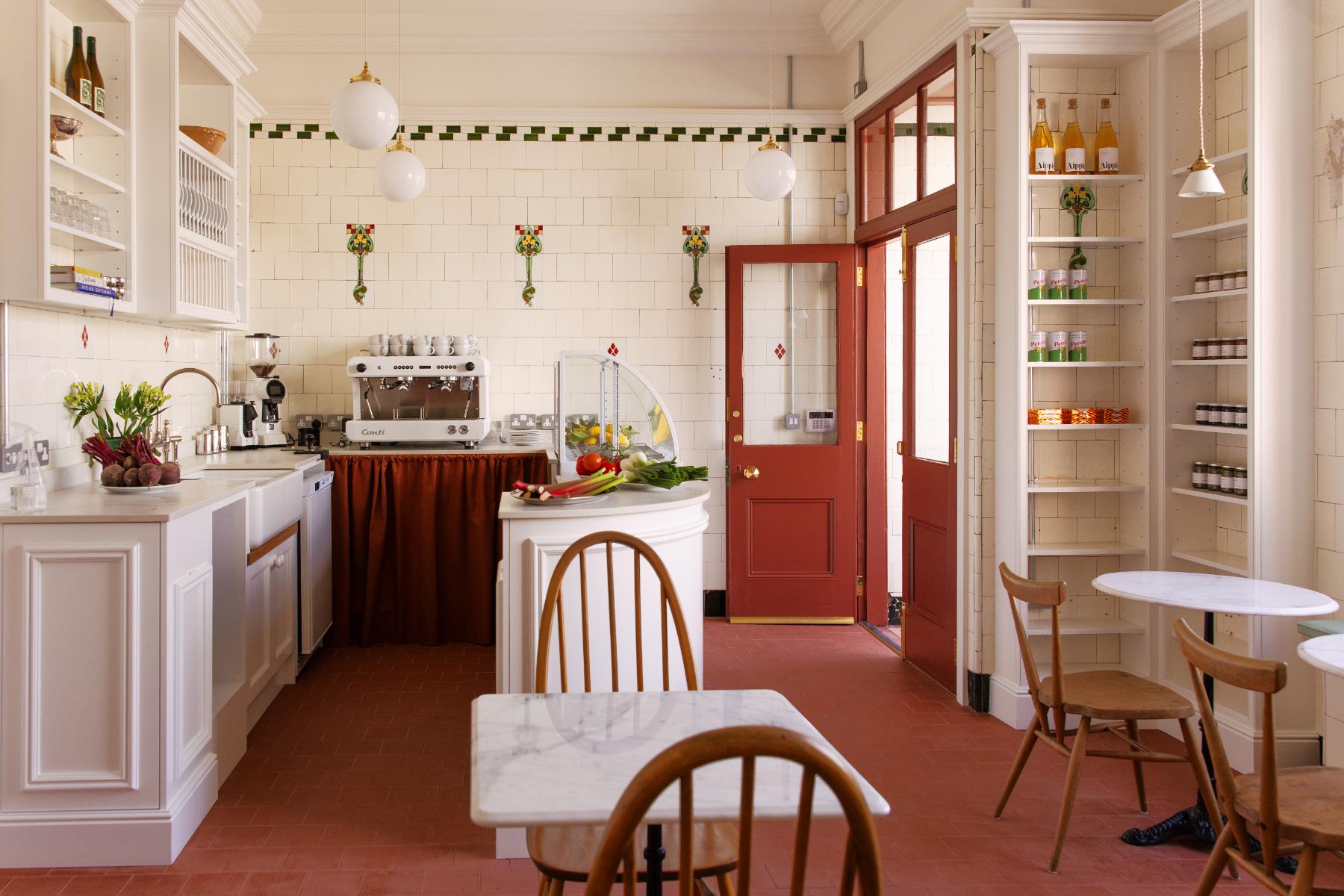
The Mercat by Laura Tiliman
On the north coast, Burr’s Store in Tongue has also been reborn. The historic trading post dates back to the early 1900s and was expanded in 1932 by Peter Burr to include a transport hub, tearoom, bakery and store – a vital lifeline to the community.
But over time it fell into disrepair, eventually becoming a tired Spar and petrol stop. In 2019, Danish entrepreneur and landowner Anders Holch Povlsen bought it. Through his company Wildland Ltd, he held community consultations – and a bakery topped the wish list.
Now restored, Burr’s Store houses an artisan bakery, café and bookstore, plus a space to showcase local crafts. It’s both a vibrant community hub with regular markets and events, and a must-stop on the North Coast 500.
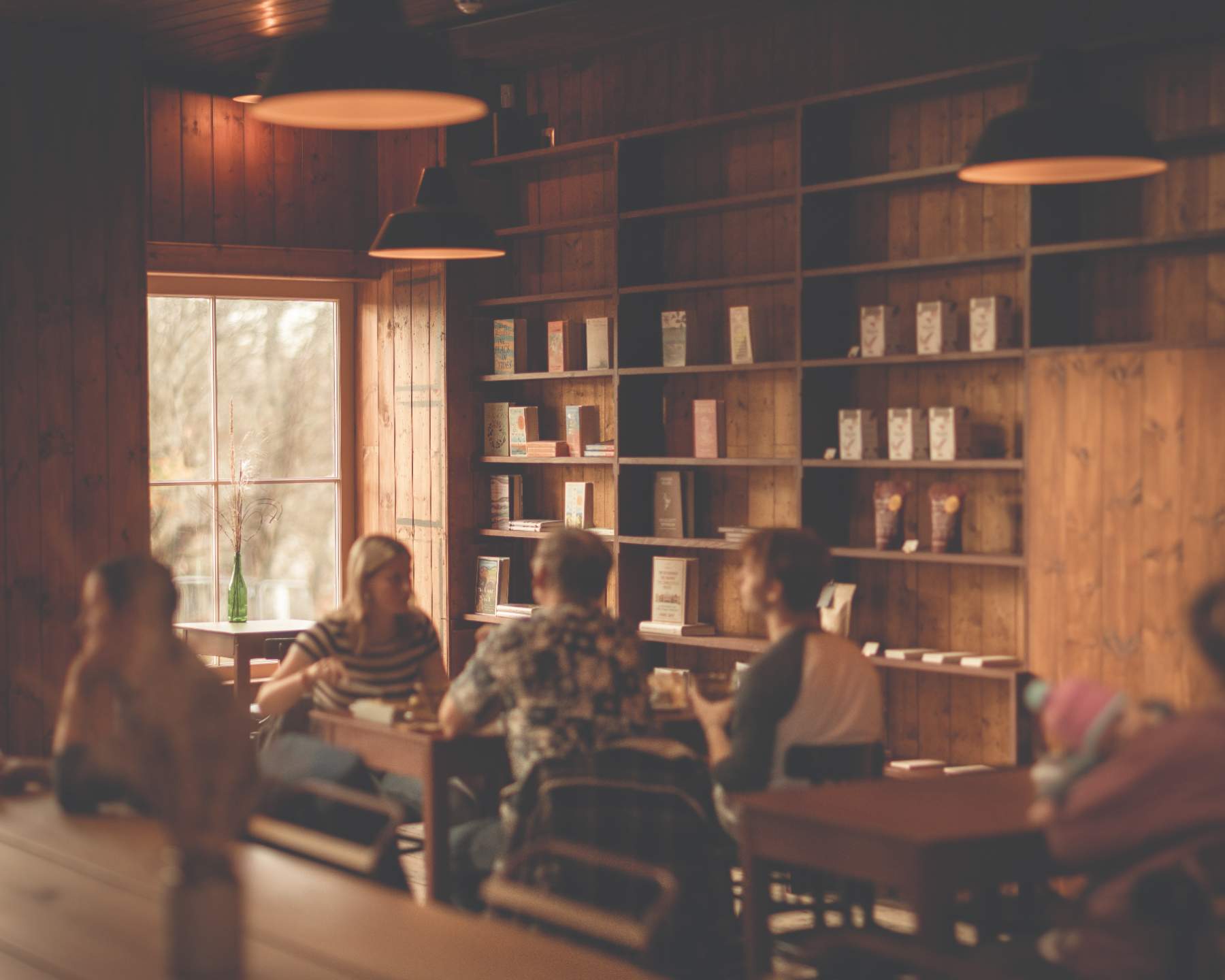
Burr's of Tongue
And then there’s the Channel 4-famous one: the ruined castle that became The Great Hotel Escape. Kilmartin Castle is the ultimate restoration fantasy. Stef Burgon and Simon Hunt were working in Dubai when they saw the 16th-century castle for sale – and bought it.
In 2018, they parked their campervan – home for the next year – on-site and learned on the job how to lay pipes, fix roofs and install heating and plumbing.
By 2021, the interiors were complete. Next came landscaping: digging drainage channels, creating an outdoor entertaining area, adding an orchard and a kitchen garden. And with the help of their neighbour, garden designer Amber Crawley, a dreamy wild swimming pond. In 2022, they added a glasshouse for outdoor dining.
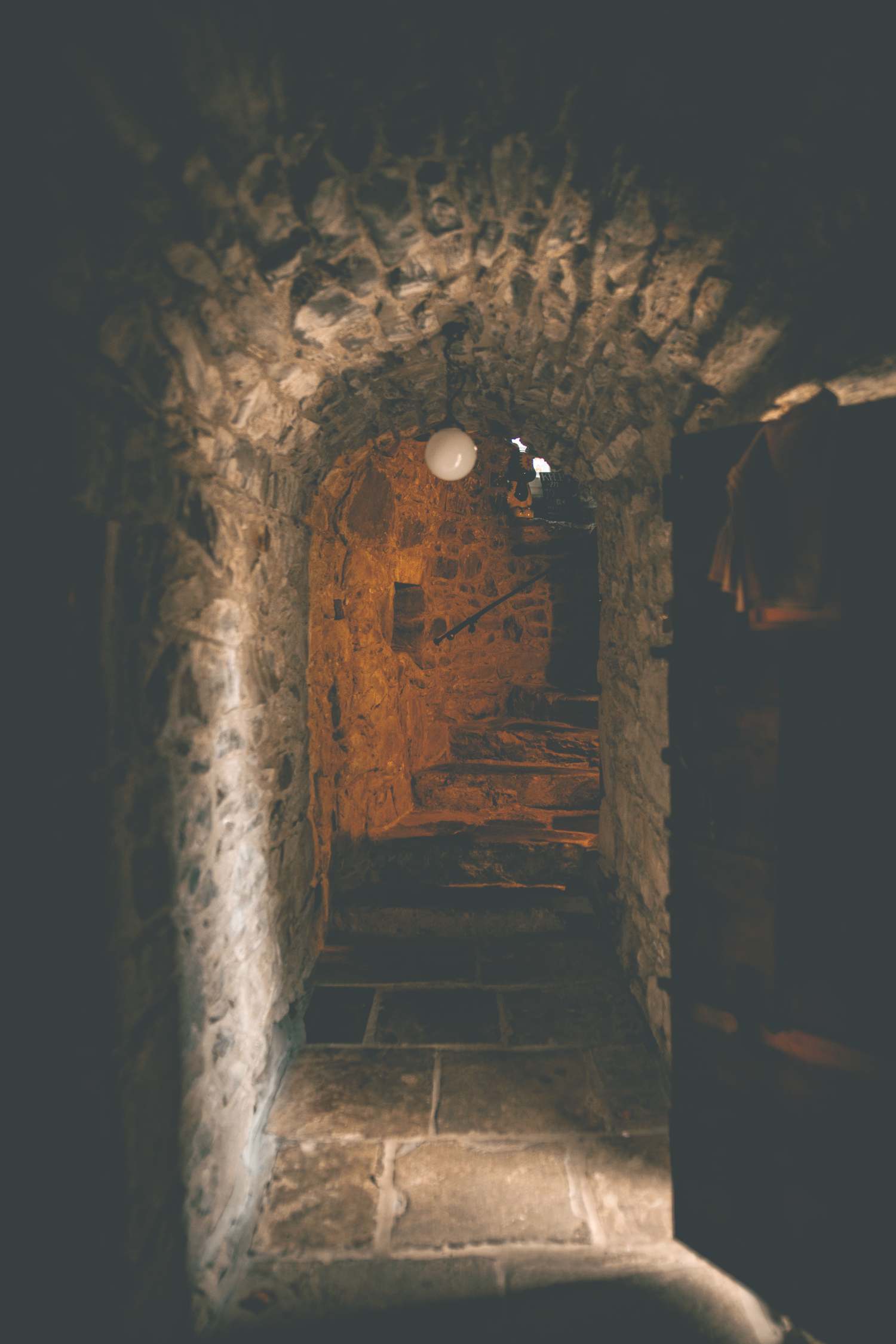
Now, guests can stay in the ancient fortress, its five fairytale bedrooms a mix of romance and restoration. The Snug, on the ground floor, has an original barrel-vaulted ceiling and antique toilet. 1550, on the first floor, has a freestanding Victorian cast-iron bath and canopy bed. (The yellow window seat was built from the castle’s old floorboards by Simon.) Clarke features quirky pheasant wallpaper; Carswell, a copper tub; Speel, a monsoon shower in a turret.
Is the build finally done? Technically, yes – but Stef and Simon haven’t hung up their overalls. They’ve caught the restoration bug, now converting an old church in the glen into a gallery to exhibit work by the resident artists they invite to the castle. Stef is even developing a Scottish lime paint for heritage projects.
You can almost imagine Kevin McCloud’s grudging admiration, his trademark to-camera musings on how, against the odds, they’ve created something magical – and kept the building’s soul intact.
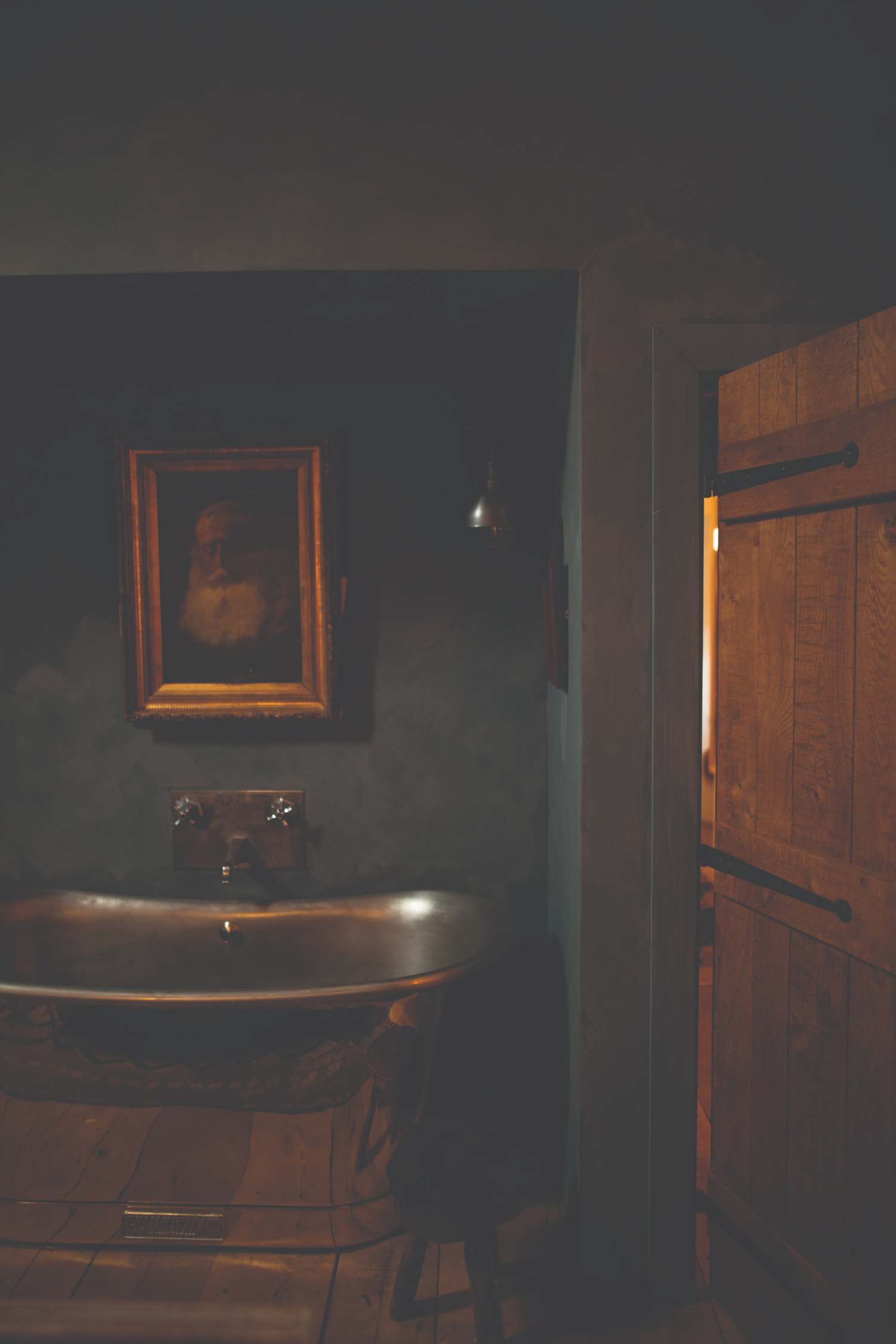
Kilmartin Castle by Christian Watson
Promoted Post
Issue 12 is now shipping worldwide from Scotland.
Issue 12 is now shipping worldwide from Scotland.






 Sign in with Google
 Sign in with Email