Renovating History - Six astonishing Landmark Trust properties

Self-catering takes on new meaning when it comes to holidays with the Landmark Trust, which opens up culturally important buildings to paying guests. In Scotland, you can choose from castles, townhouses, a mill and even a giant stone pineapple. Here are six to inspire your next getaway.
Would you like to read the PDF version of the magazine? If so, please click here.

Profile

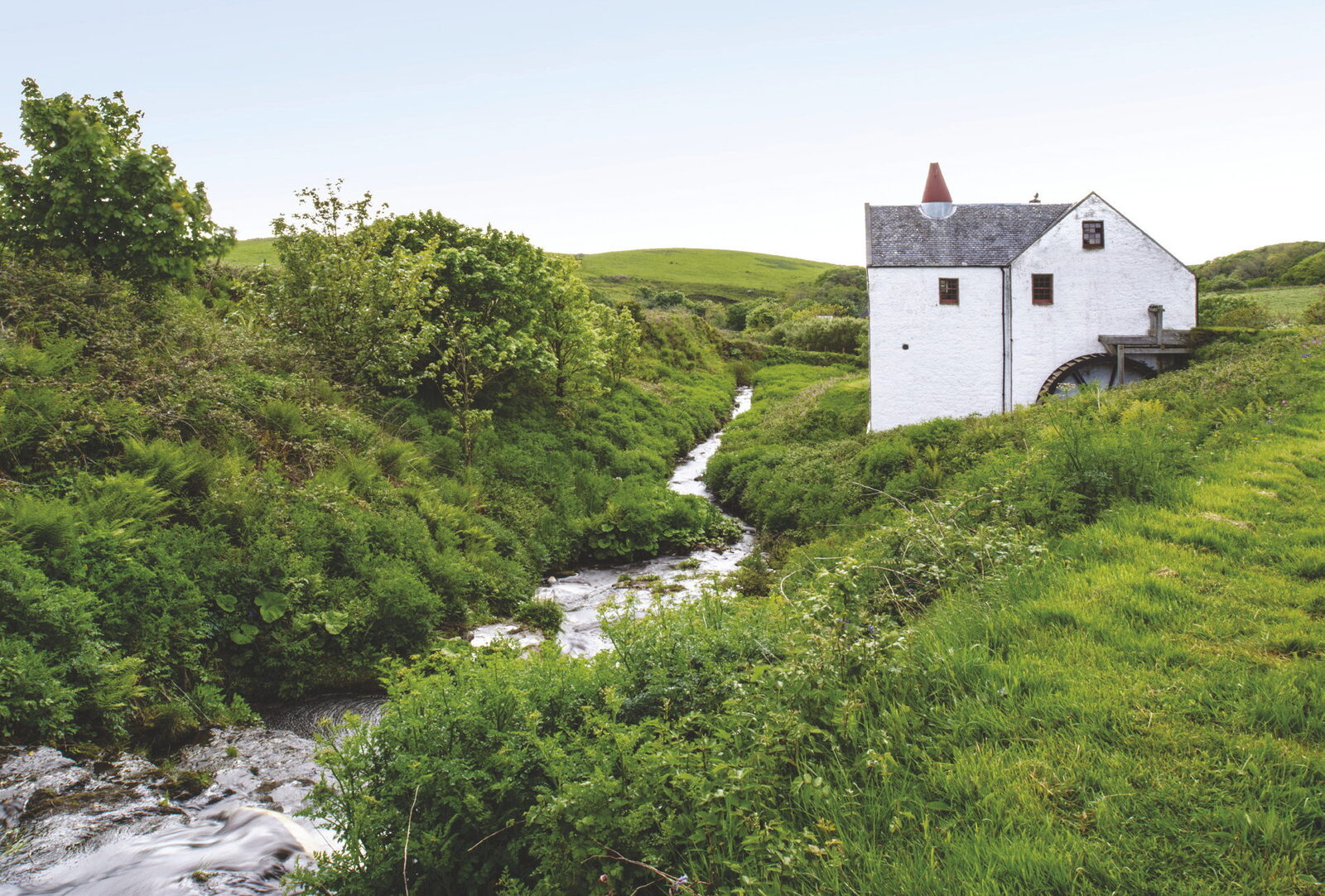
The building is of white-painted harled whinstone with a conical crimson turret, like a unicorn’s horn, and it sits sheltered where a wide meadow puckers into a shallow ravine. Just over the horizon, the Atlantic crashes against the coast, but you can’t see or hear it. Here, birdsong chimes with the thrum of the burn that once fed the mill. Within the deep walls, the ceiling is suspended on thick dark beams. A grandfather clock is ticking, and deep armchairs fill corners. An Old Chelsea China tea set is laid out on the table. Just through the door, a piece of the original mill machinery stands, as if on pause. Tangy Mill is ready for its next guests. 

This early 19th-century watermill on the Kintyre Peninsula is now one of 21 Landmark Trust properties in Scotland (most are in England and a few in Italy) that are rented out as self-catering holiday accommodation. Like all the others, it was rescued by the trust that philanthropist Sir John Smith and his wife Christian founded in 1965 to restore smaller historic buildings and open them to guests to pay for their maintenance.

Each property comes with a custom interior reflecting its heritage, all with hand-printed curtains, paint specially mixed to suit the building, upholstered armchairs and handmade kitchens featuring Le Creuset cookware. Doors open with big iron keys, and there’s always a library of books carefully selected to show aspects of the building or locality, ‘as you might find in the house of a well-read friend,’ says Landmark Trust representative Jayne Robinson. 

\xAlong with the books, there are fireplaces to gather around and board games piled inside antique cupboards. Make a point of browsing the logbooks – they are iconic tomes, filled with well-written accounts of holidays past, travel recommendations and, often, beautiful illustrations. The history albums, penned by historians, make for good reading too, revealing intriguing stories from the property’s past and renovation. 

‘We hope that visitors come away with a sense of stewardship and appreciation for Britain’s architectural legacy,’ explains Jayne. ‘Staying in one of these properties is a chance to become a temporary custodian of an astonishing place, part of a tradition of care that spans generations.’

Image One

Tangy Mill by Jill Tate

Saddell Castle

Kintyre, Argyll and Bute

This golden tower, recently reopened after a year of renovation work, stands like a beautiful, oversized sandcastle on the long white shore in Saddell Bay. And it has quite the vantage point from the battlemented wall walk around the roof, where you can see across the Kilbrannan Sound to the Isle of Arran. 

Each room is unique: you might find panelling or a decorated ceiling, deep window embrasures and even closets hidden in the thick walls. Held by the Campbells for almost 400 years, the castle was built in 1508 for the Bishop of Argyll. Only the outer walls and two fireplaces remain of the original building, and when Landmark took it on, large trees were growing from the parapets.

These days, the charity owns the whole of Saddell Bay, including a mansion and four cottages alongside the castle, which sleep eight people. 

TOP TIP: Bring your binoculars: Saddell Bay is home to seals, otters, a myriad of seabirds and a sculpture created by artist Antony Gormley. It is a short walk to the 12th-century Saddell Abbey, containing carved medieval grave slabs. You could simply stroll the sand, humming 'Mull of Kintyre' to yourself – this is the beach where Paul McCartney filmed the music video.

Image One

Tangy Mill 

Kintyre, Argyll and Bute

Water still flows beneath the backshot wheel at this 19th-century watermill on the Kintyre Peninsula, which now sleeps six across three bedrooms. Tangy Mill was so complete when it came into Landmark Trust’s care in the 1970s that hardly any changes were needed. Instead, the muscular wooden arms of the dressing, drying, hoisting and grinding machinery, which processed grain – mostly oats – until the 1960s, are part of the interior. One bedroom contains the threshing machine. A second, on the drying floor of the kiln, retains the original perforated cast-iron floor that miller Mr McConnachie fell through into the fire in 1961 (don’t worry – he survived!).

The setting is undisturbed, but you are just a few minutes’ drive from one of Scotland’s finest beaches – Westport, with six miles of white sand – and 15 minutes from Campbeltown for whisky distilleries, the Art Deco cinema and cave paintings on Davaar Island.

TOP TIP: Pick up local produce, including honey and ice cream made on the Isle of Gigha, at Muasdale Stores, which was named Scotland’s best village shop at the Countryside Alliance Awards in 2024.

Image One

Tangy Mill by Jill Tate

Glenmalloch Lodge 

Newton Stewart, Dumfries and Galloway

You have to travel about a mile inland from the Solway Coast Area of Outstanding Natural Beauty, along a bumpy track that pushes between bracken, pines and tussocky hummocks, to reach this tiny Landmark. It sleeps two – or makes the ideal writing retreat for one – and is a charming mesh of Classical, Tudor and Gothic styles, with forest- green pierced bargeboards, a towering chimney and an opulent bay window almost as big as the façade, behind which the sole bedroom is warmed by a wood-burning stove.

Orignially built as a schoolhouse for 25 girls some time before 1842, as part of Harriet, Countess of Galloway’s, programme of educational and social initiatives. These days, interiors are quintessentially Landmark, with beige-painted half-height panelling, Persian-style rugs and pause-for- thought historic art.

TOP TIP: Head to Galloway Forest Park for walking, mountain biking and the world’s first International Dark Sky Park, where you can see over 7,000 stars and planets on a clear night.

Image One

Glenmalloch Lodge by Jill Tate (left and right)

Image Two

The Pineapple Dunmore

Central Scotland

It is thought that this eccentric 18th-century summerhouse – a stonework phenomenon featuring conventional architraves with shoots that top out as prickly leaves – resulted from the 4th Earl of Dunmore’s sense of humour. Forcibly returned from serving as Governor of Virginia, where sailors would put a pineapple on their gatepost to signal they were home, he commissioned a more permanent 37-foot version of the tradition. 

In 1973, it became Scotland’s first Landmark Trust property with space for four guests, offering accommodation in the stone bothies on either side of the pineapple that once housed the gardeners. 118 The walled garden to the front (managed by the National Trust for Scotland) is magnificent. Stretching towards bucolic woodland, there is a private garden for guests at the back, with stairs into the pineapple itself. In all, it evokes a playful sense of majesty.

TOP TIP: Do not miss important sights nearby, including the Falkirk Wheel and the National Wallace Monument, or stay local and stroll the conservation village of Dunmore.

Image One

The Pineapple Dunmore

Image Two

The Pineapple Dunmore

The Mackintosh Building

Comrie, Perthshire

This Landmark sleeps four in an apartment on the first floor of the Mackintosh Building, on the corner of Dunira Street in Comrie, close to Perth and Stirling. It was designed by Charles Rennie Mackintosh in 1903–1904 for a local draper and ironmonger, but just a few original features remain – among them the dark green fireplace in the sitting room.

Much of the furniture, dark-toned against white walls, is the work of early 20th-century architects influenced by Mackintosh – the likes of Baillie Scott, Gordon Russell and Heal’s. In the main room, which spreads into the projecting tourelle (turret), you can gaze onto the pebbly River Earn and the wooded hills beyond. If you are lucky, you’ll catch a performance by the local pipe band in the square below.

TOP TIP: Follow the Deil’s Cauldron and Melville Monument circular walk from Comrie village centre for river rapids, atmospheric woodland and panoramic views from the obelisk dedicated to the powerful 18th-century politician Henry Dundas, 1st Viscount Melville.

Image One

The Mackintosh Building by Jill Tate

Fairburn Tower 

Muir of Ord, Ross-shire

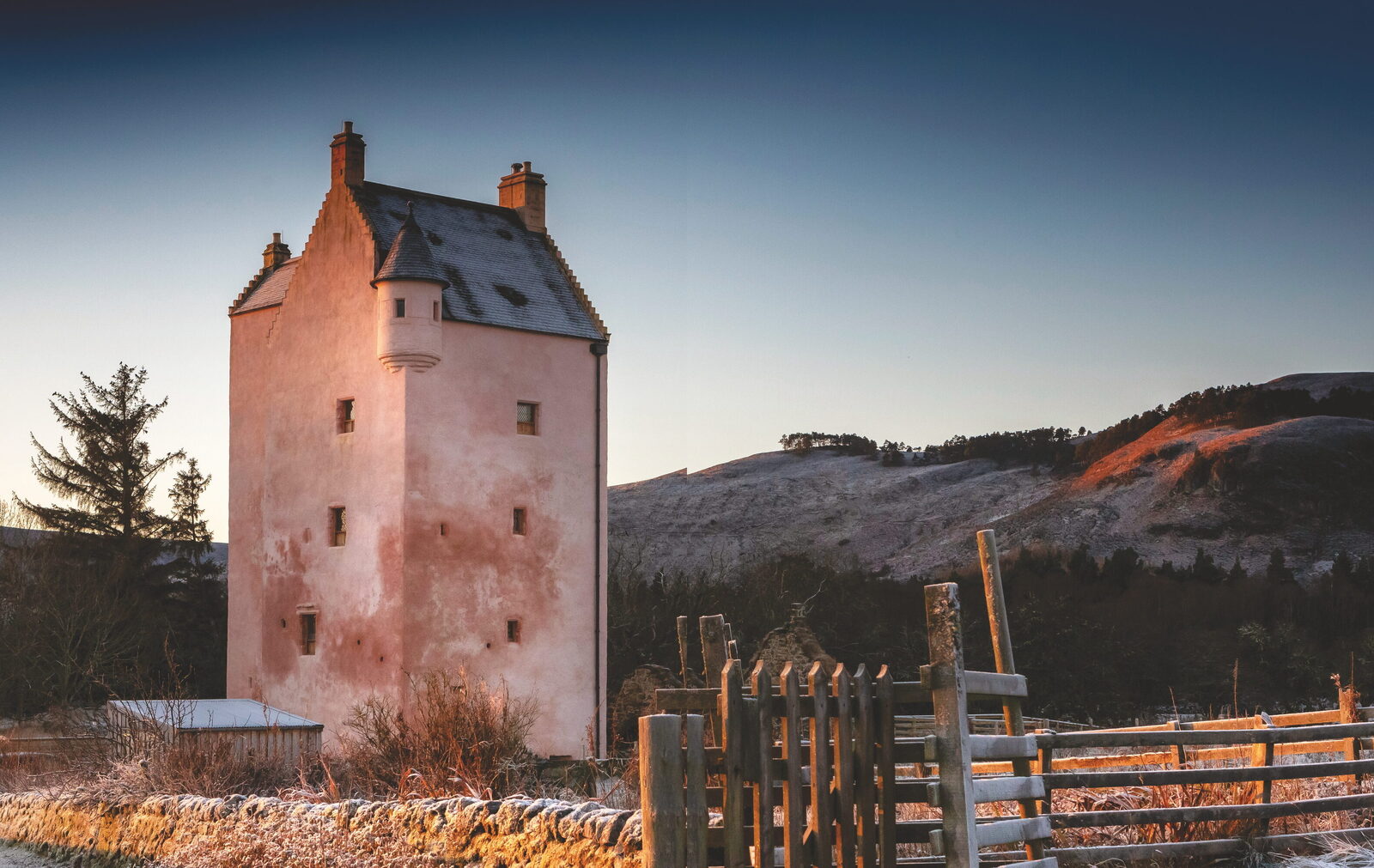
A turreted Scottish Renaissance tower, Fairburn has blush-pink limewashed walls, sleeps four in two en- suite bedrooms across five floors and is heated by electricity from its solar panels. But when Landmark took it on, it was a gutted, roofless ruin. 

These days, sporting an award-winning renovation, the A-listed building is as dazzling as it would have been in the 16th century. Note the heavy wall hangings and the recreated painted ceiling on the third floor sitting room, so mesmerising you’ll want to lie on your back to study it for hours. Designed by Delgatie-based artist and craftsman Paul Mowbray, it features Renaissance motifs, symbols and texts, as well as the initials of Murdo Mackenzie, groom to James V’s bedchamber, who built the tower after the king granted him his own piece of land in 1542. 

Fairburn is situated on the 1,000-hectare estate, a 30-minute drive north-east of Inverness, offering gorgeous walking trails, including one along the River Conon. TOP TIP Look out for open days throughout the year to visit Fairburn Tower if you are not staying there.

Image One

Fairburn Tower, The Landmark Trust