
New Shoots, Old Roots - Call of The Wild
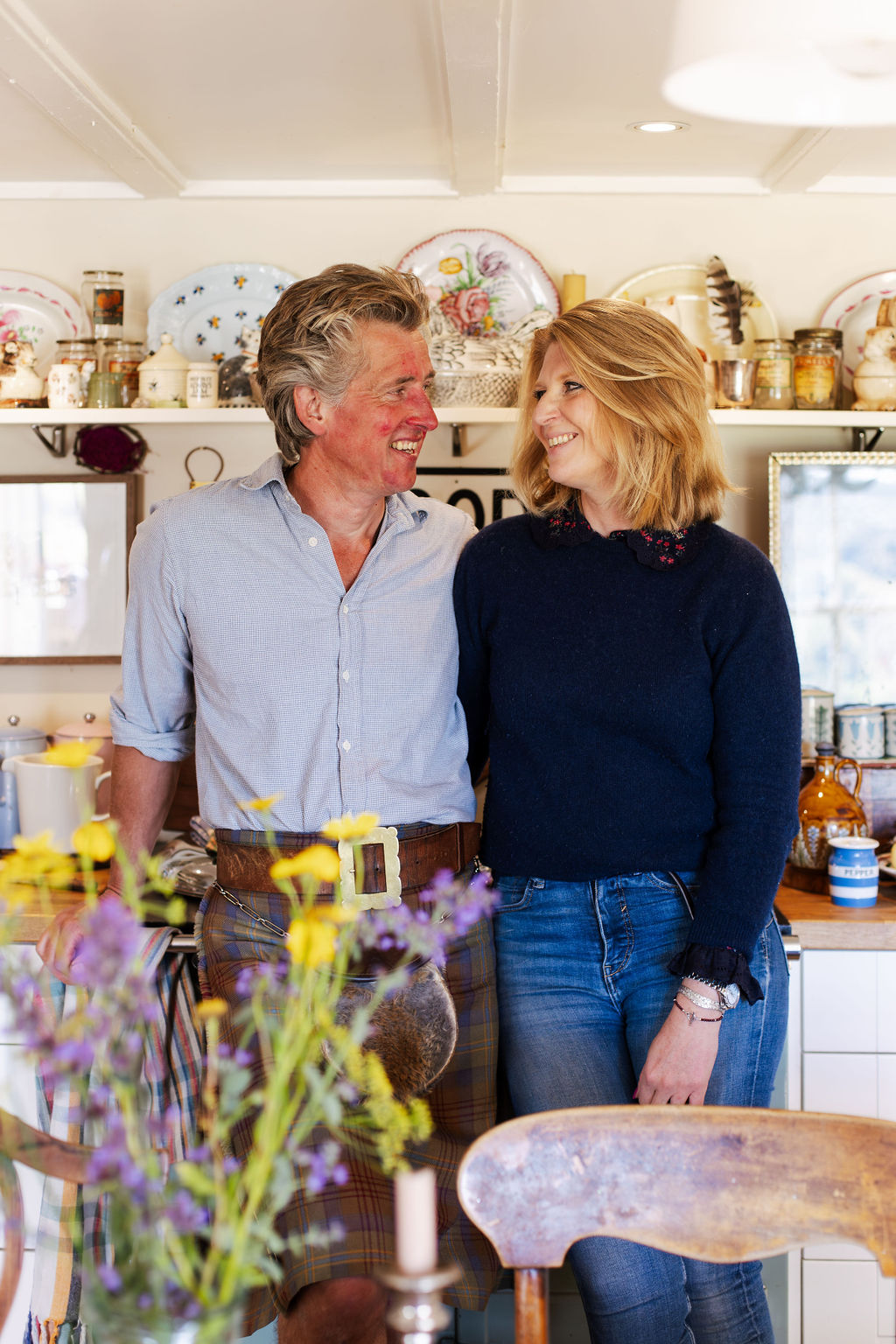
Have you ever really felt the call of the wild? The need to explore and be with nature, or simply to go outside and take a deep breath? Then perhaps you’ll relate to Hamish and Liberty Martin, whose call of the wild was so strong it propelled them to move from city to country, creating a wilder, more sustainable way of life for themselves and their family — alongside a legacy that will last beyond their earthly years.

Written by Rachel Rowley
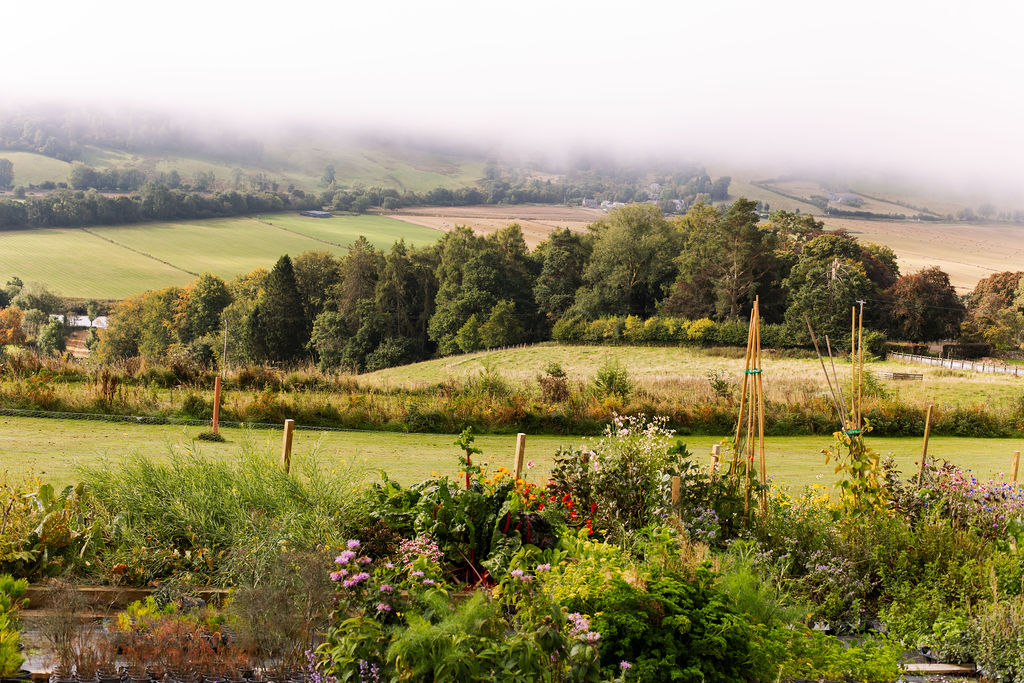
Change can often be daunting, but after a chance meeting in July 2021 presented the Martins with the opportunity to buy Highland Perthshire Hill Farm and the attached SSSI (Site of Special Scientific Interest) land — all 225 acres of it — their vision was clear.
By that point, they had established the specialist herb nursery Secret Herb Garden (2013) and Secret Garden Distillery (2017) from a derelict 7.5-acre site on the outskirts of Edinburgh. They had created two vibrant businesses that celebrated the majesty of nature, yet they were longing for a different life for themselves and their five children.
Now, four years after their move to Tombane Farm near Pitlochry, the family has embraced their dream and lives hand in hand with nature. The couple have created wetlands to provide the rare Northern damselfly with its most southerly breeding ground. Several fields have been planted with 10,000 trees using the Miyawaki method, a process that encourages rapid growth and creates corridors for wildlife. Invasive Sitka spruce trees, which aren’t indigenous, have been cleared to safeguard the Caledonian pines. Alongside the daily rhythm of family life, this is Hamish and Liberty’s “invitation to nature” — a term they deeply prefer to rewild. In addition, the seeds of entrepreneurship have bloomed into two distinct but linked businesses: Call of the Wild and Highland Outfitters.
While Liberty is a homemaker and animal lover — the couple has seven dogs, two cats, a spotted eagle owl and a small flock of sheep as part of their brood, not to mention the three goldfinch fledglings she hand-reared last year like some kind of real-life Snow White (and, of course, the real-life children) — Hamish has a contagious passion for his country and natural surroundings. This combination of nurture, nature and energy is behind everything they do.
Call of the Wild launched on Instagram in 2023 (@cotwild) and has been an incredible platform to document the couple’s adventure. The community of followers is now over 160,000 strong and provides a visual introduction to the family’s life and work. Hamish effervescently shares the magic of nature with every post. He says: ‘You don’t need to wait for scientists to say forest bathing is good for you. Just go for a walk, notice how uplifted you feel, and take that into your daily life.’
Call of the Wild offers nature-reconnection experiences, including guided walks, garden exploration, bespoke workshops and wild craft/ forest school activities through their partners Everwild and Wilderness Folk School. There’s also a shop where customers can adopt a Scots pine sapling or sponsor a Granny Pine tree as a timeless keepsake, or buy carefully curated gifts. Guests can also indulge in wild dining, from picnics to dinners.
A Walk in the Woods
with Hamish Martin and the Scots Pine (Pinus sylvestris)
There is nothing more spiritually uplifting than walking within an ancient Scots pine wood. The wind creates secret shards of whispering through the needles, and the sweet scent will take you into a dream world. There is a symbiotic energy where juniper, blaeberries, moss, lichen and pine communicate. Take time to reconnect alongside the pine martens, red squirrels, eagles, Scottish crossbills, and wildcats.
Our Scots pine is commonly recognised as our first native tree, but this accolade goes to the silver birch and hazel, which arrived around 11,700 years ago, with Scots pine making its debut about 1,200 years later.
Our early settlers would make shelter, fi res, and light from the resin-rich wood. This resin was used as an antiseptic and later for producing turpentine and glue for shipbuilding, while the needles — rich in vitamin C — made a useful tea in winter.
Caledonian forests are a priority habitat under the UK Biodiversity Action Plan, and encouraging natural regeneration is essential, alongside planning the growth of new pine woods in the right locations. So let’s celebrate this evergreen as the Druids once did, making it part of our seasonal celebrations with stars and lights ahead of the shorter days and longer hours of darkness.
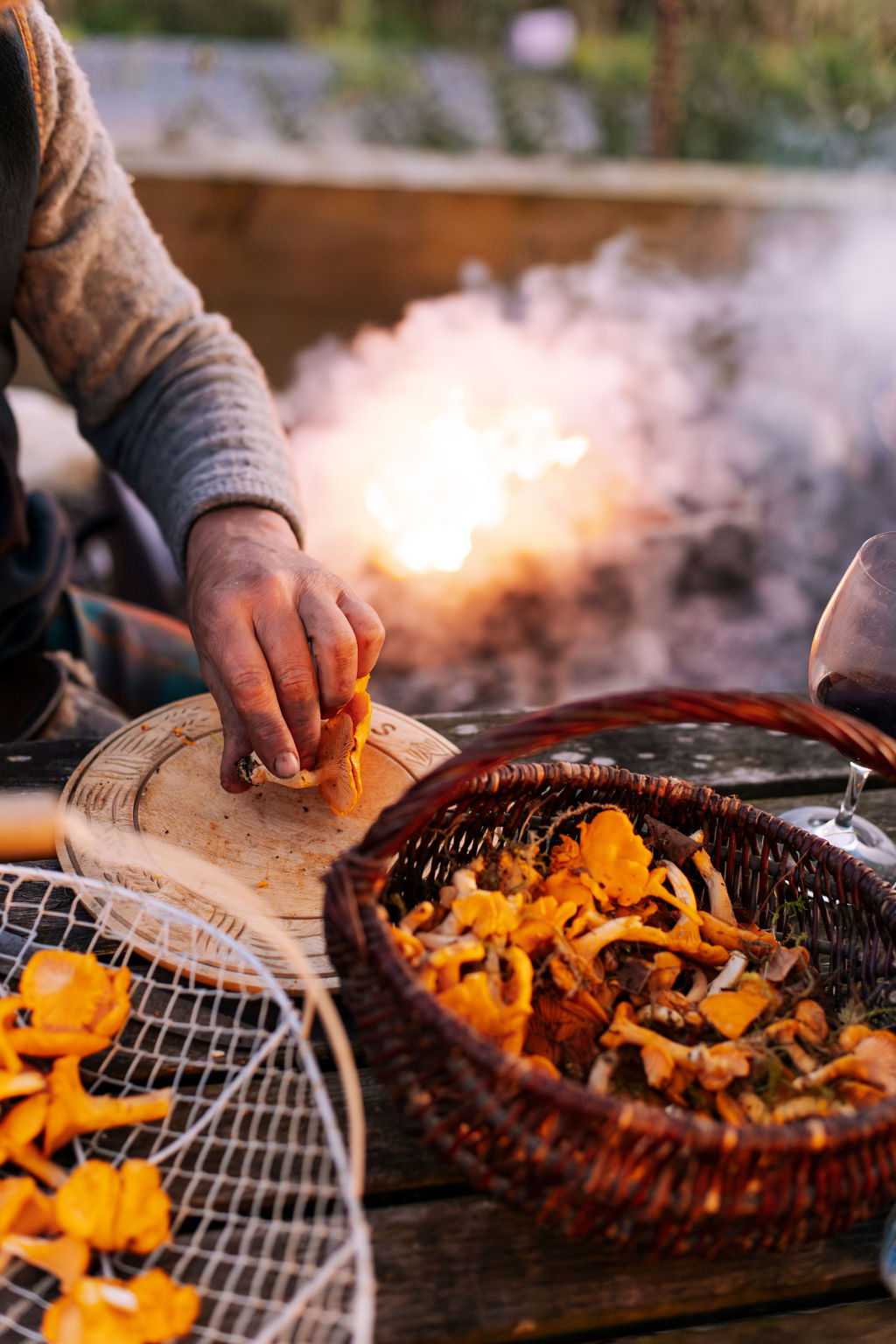
LIBERTY’S VENISON STEW
Ingredients
900g–1,000g diced venison or any red meat
6 fi nely chopped garlic cloves
300g shallots, skinned and halved, or 300g thickly diced onions
2 large parsnips
600g carrots — I like to use Chantenay as they are good to go, but if using
normal-sized carrots, halve and dice into 5cm chunks
Salt and pepper to taste
1 dsp tomato paste
1.5–2 tbsp plain fl our or cornfl our
2 beef stock pots
1.5 tbsp vegetable stock (I use powdered bouillon)
330ml–500ml stout
Method
Pop the garlic and shallots/onions into a heavy-based stock
pot and soften over the hob.
Add the venison or meat of choice, along with a good pinch
or two of salt and pepper, and gently brown.
Add the parsnips and carrots, and continue
gently cooking for another 10 minutes.
Evenly shake in the fl our, stirring to prevent it catching at the bottom
of the pan, then slowly add the stout, stirring continuously.
Next, add the tomato paste, beef stock, and vegetable stock, stirring thoroughly
with each addition. If the liquid hasn’t quite covered the ingredients, top up with
more stout or boiling water.
Bring to a simmer and cook gently for 5 minutes. Give it one fi nal stir, pop a lid
on, and place in the middle shelf of a preheated oven at 130–140°C. I leave mine
in the oven for fi ve hours and might give it a stir if I remember — but don’t panic
if you forget. If you need your stew sooner, turn the oven up to 160°C for the
fi rst hour, then reduce to 140°C for at least another hour before serving.
Note: Due to the cooking time, all alcohol should have evaporated,
but a non-alcoholic stout works just as well.
I normally accompany the stew with mashed or buttery potatoes, but another fi rm
favourite in our house is a good old Yorkshire pudding stuffed to the brim with stew.
Liberty is, unsurprisingly, a talented home cook and game specialist. Then there are special seasonal events such as The Greenman — a wonderful, nature-led festive experience that will return later this year. This spring saw the launch of beautifully appointed Call of the Wild Shepherds’ Huts, where guests can stay and fully immerse themselves. Some couples have even chosen to elope to their incredible ancient hillside — as Hamish describes it, ‘a land lost in time.’
The second business sapling is Highland Outfitters, offering bespoke, traditional tailoring and tartans. Founded by Hamish and his eldest son, Nicholas (a recent Scottish History graduate), the team is committed to providing insight into kilt-wearing culture and tradition, and can help guests identify their family tartan or introduce them to the bespoke Call of the Wild tartans — four seasonal designs created by Liberty, all woven locally to reflect the colours found in the natural landscapes and wildlife. In the tailor’s room at Tombane, guests can be expertly measured (this can also be arranged online) and then shop from a range of accessories, including socks, kilt pins, belts, sgian dubh, sporrans, and other heirlooms — some exquisitely made by world-renowned jeweller and engraver Malcolm Appleby, based nearby in Grandtully.
As the couple move into their fourth year, they are excited to continue sharing their love of the Scottish Highlands and celebrating the nature that surrounds them — welcoming people to reconnect, relax and explore the magical land this family calls home.
So, next time you feel the call of the wild, be sure to seek adventure, knowledge, and wonder with Hamish and Liberty by your side. Join them in person in Perthshire or online from wherever you are. They can’t wait to share their wild life with you.
Next Article
Promoted Post
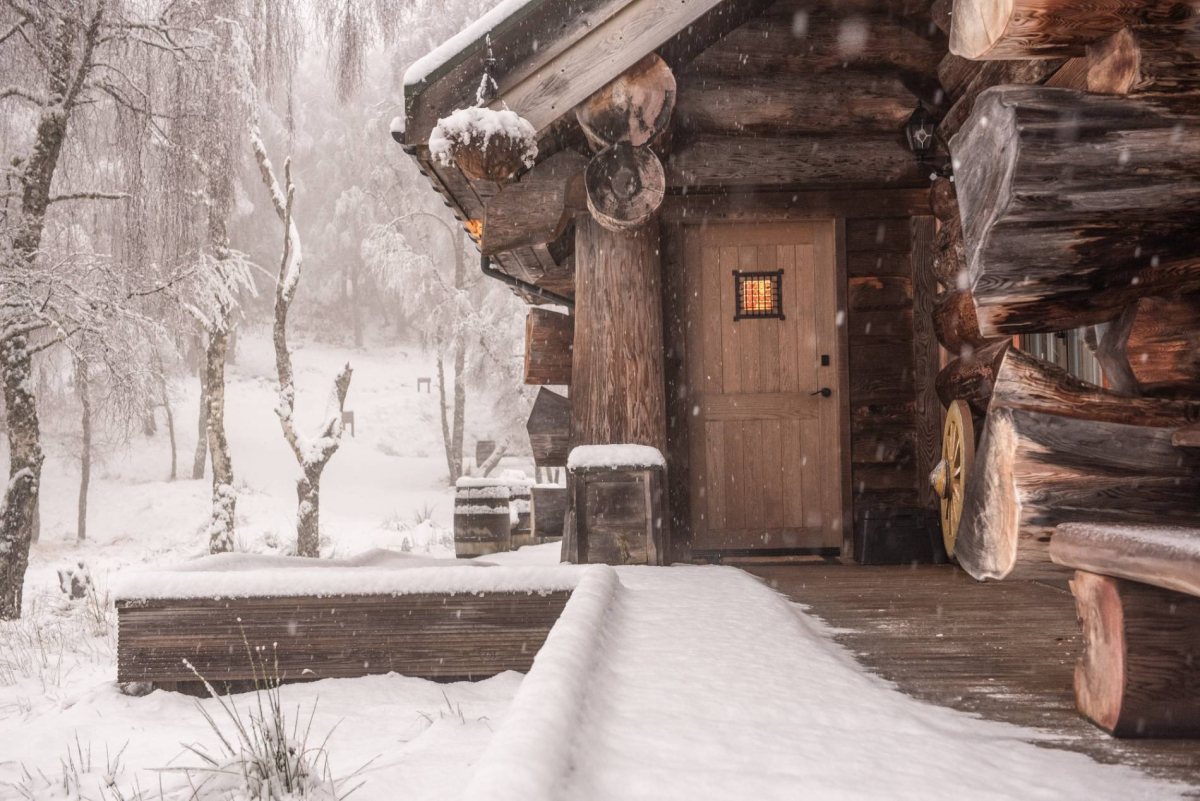
Eagle Brae
Escape to Eagle Brae, a secluded collection of Highland log cabins near Beauly. Handcrafted cedar, big skies, and deer on the hillside, with a fireside welcome that makes it easy to slow down.






 Sign in with Google
 Sign in with Email