
Cambuskenneth Abbey and the Disinherited
Bannockburn won, and the 1314 parliament where Robert the Bruce stripped his enemies of their lands.
Words by Beth Reid
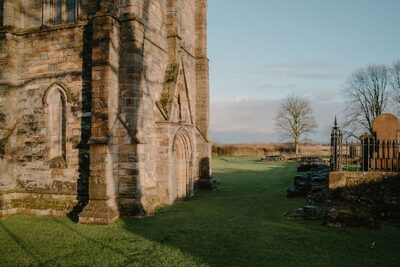
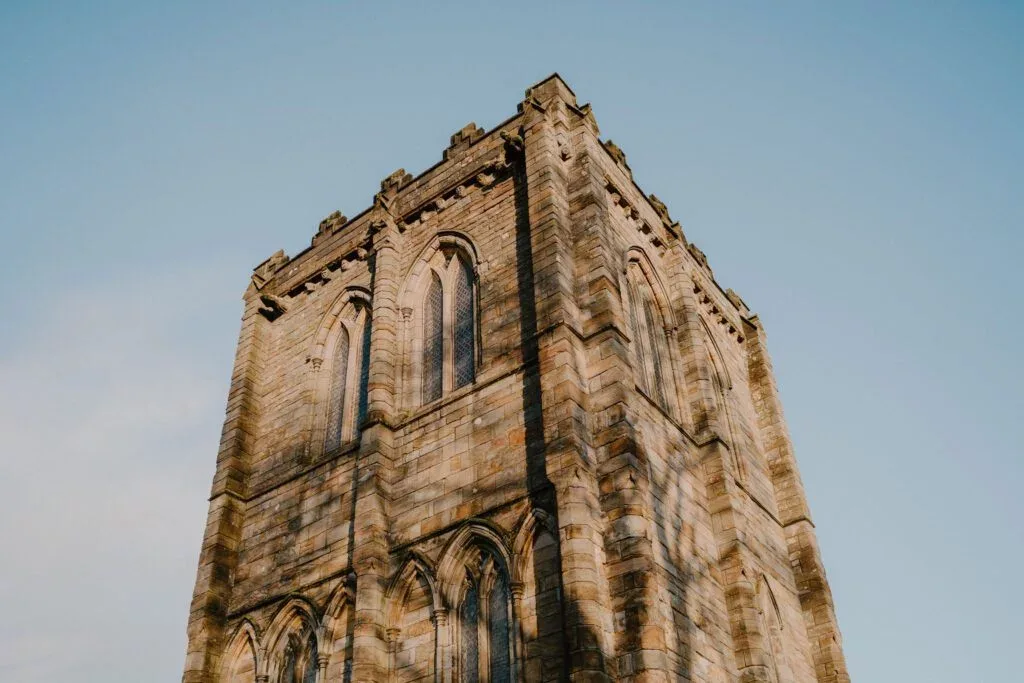
Cambuskenneth Abbey is an underrated piece of Scottish history. Beneath the shadow of the mighty Stirling Castle, the ruins of the abbey are often overlooked in favour of their royal neighbour on the rock. However, in November 1314 the abbey would have been far from overlooked as it hosted Robert the Bruce’s dramatic post-Bannockburn parliament.
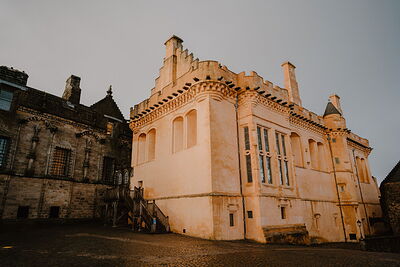
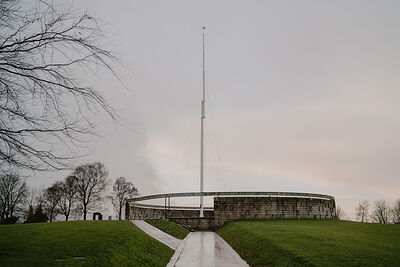
Bruce’s victory at the Battle of Bannockburn in June 1314 was a turning point for the king in what had been a very unstable reign so far. He had spent the years from his inauguration in 1306 clawing back the losses which came in the aftermath of his seizure of the throne, focusing on tackling his Scottish enemies and taking back castles under English command. Bannockburn saw Bruce finally face Edward II of England in a pitched battle for Stirling Castle, a victorious result for the Scots in which Edward only narrowly escaped. Despite what many believe was a decisive victory for Bruce, this was by no means the end of his battle for control of Scotland. From the 6th to the 14th of November 1314, the parliament at Cambuskenneth Abbey demonstrated this continuing struggle.
Despite being in the wake of the king’s victory, this must have been a difficult parliament that was fraught with tension. The massive workload of Bruce’s restarting of Scottish administration and law, after nearly twenty years without secure Scottish kingship, would have been set out at this parliament. Socio-economic hardships from years of warfare and recent environmental issues would have been raised, creating an intimidating and stressful outset for many. This parliament also ushered in an era in which Bruce would shake up the landholding and political landscape of the nobility by disinheriting all those who remained against him.
At parliament, an act of forfeiture of Bruce’s enemies was introduced: ‘All who died outside the faith and peace of the said lord king in the war or otherwise, or had not come to his peace and faith on the said day… should be disinherited perpetually of lands and tenements and all other title within the kingdom of Scotland.’
What did this mean? The lands and titles of those who still opposed Bruce as king – or had even died at Bannockburn on the opposing side – would be removed from them. This was quite the forfeiture; despite Bannockburn, Bruce had many Scottish and English enemies remaining. The sheer amount that was forfeited would be handed out over the coming months and years to Bruce’s loyal and close supporters, significantly reshaping Scottish politics and landholding.
Key changes included Robert’s brother-in-law, Neil Campbell of Lochawe, being elevated to Earl of Atholl to replace David Strathbogie, who had defected to the English the night before Bannockburn – a poor decision on Strathbogie’s part. Swathes of land brought to Bruce also included Buchan, Badenoch, Galloway and Argyll. English nobles who held Scottish lands were also forfeit, severing the ties of cross-border landholding. Major Scottish nobles who were still on the fence – such as the Earl of Fife – were mercifully given more time to negotiate for their lands, but this was on a knife’s edge. A restructuring of the nobility to this extent had never been seen before in Scotland.
Beth Reid is a Scottish history graduate whose research specialises in medieval Scotland. Beth runs a microblog on Instagram and has written for Hidden Scotland, The History Corner, and the Historians Magazine.
 Out now
Twice a year, to your door
One hundred and sixty pages of Scotland, every photograph commissioned, every word written by someone who went. Members get both issues posted and everything on screen.

 The 900th Anniversary of Stirling
 Kilmartin Glen