
Architectural Wonders
What makes for a great piece of architecture? It’s a subjective question – a masterpiece to some can be a monstrosity to others – but when a structure truly makes an emotional impact, it involves a balanced blend of aesthetics, function, and longevity. Beautiful buildings do far more than just look good. They catch the eye, of course, but they also serve a purpose beyond their shape and form. The best of them tell a story.

Written by Ben Lerwill
(1)-full-1748640552.jpg)
This is something that Scotland knows all about. The country’s long, meandering history has left it with a remarkable architectural legacy, from craggy medieval castles to cutting-edge design museums. Some of its most successful buildings are large; others are small. Some are much-vaunted; others are little-known. What they have in common, however, is a kind of intrinsic character – something genuine and tangible – that resonates with modern-day visitors. The ten structures included here show the sheer scope of different styles that make up the country’s manmade skylines, but (and this is no less telling) we could just as easily have substituted them for ten other choices. Great architecture is something to be prized, and here in Scotland there’s a surfeit of it.
HIPPODROME CINEMA
Bo’ness, Lothian
If there’s anywhere in the country that retains the glamour of cinema’s sepia-tinged past – an era of matinée idols, plush curtains and costumed usherettes – it’s here in the harbour town of Bo’ness, where the Hippodrome stands as the oldest picture house in Scotland. The outbreak of WWI was still two years away when the venue first opened its doors in 1912, thanks to the ambition of local cinematographer Louis Dickson (a man who reportedly drove a Rolls Royce and lived in a house named Hollywood) and the vision of a local architect, Matthew Steele.\
It was, and is, no small-time cinema. When built, it had a seated capacity of more than 700, and was initially intended to host circus troupes and cabaret shows as well as film screenings. Design-wise it’s a rare example of cinema architecture that predates Art Deco, with an oakpanelled foyer, circular auditorium If there’s anywhere in the country that retains the glamour of cinema’s sepia-tinged past – an era of matinée idols, plush curtains and costumed usherettes – it’s here in the harbour town of Bo’nessand wrap-around gallery, the latter supported by cast-iron pillars. Various alterations have been made in the intervening years – in 1970 it even began a stint as a bingo hall – but to a large degree it retains the same shape and character as it has done for the past 110 years.
Steele, the man who created the building, is described in his autobiography as not just an architect but “an interpreter, innovator, creator, avid motorist and obsessively bad golfer”. The Hippodrome remains his best-known work, and the cinema’s cream-coloured presence in Bo’ness is a longstanding part of the town’s identity. It reopened for good in 2009, and still offers a memorable movie experience. On certain Saturdays it even offers two-for-one Jeely Jar Screenings, harking back to the days when local youngsters could exchange clean jeely (jam) jars for film tickets.
GETTING THERE
Bo’ness sits between Edinburgh and Falkirk on the Firth of Forth, and can be easily reached from the M9. It’s well served by buses from nearby Linlithgow, which has direct rail services to both Edinburgh and Glasgow.
SEE & DO NEARBY
Bo’ness & Kinneil Railway
A magnet for heritage rail enthusiasts, with passenger services and a fantastic museum of old locomotives and carriages.
Kinneil House
Visit the grounds of this historic house, once the main seat of the Hamilton family and still an imposing presence.
Bo’ness Motor Museum
Home to a great collection of classic cars, including many that have appeared on screen. Open weekends only, or by appointment.
EAT & DRINK NEARBY
So Strawberry Caffe
A friendly, high-quality, family-owned café in nearby Linlithgow, selling cakes, breakfast, toasties, coffee and more.
Corbie Inn
Just off the John Muir Way, this community pub occupies a century-old building and offers a beer garden, real ales, whiskies and food.
(1)-full-1748637878.jpg)
THE FALKIRK WHEEL
Falkirk
Now here’s an extraordinary piece of engineering. The iconic Falkirk Wheel has been compared to everything from a double-headed Celtic axe to the spine of a giant fish, and stands as the world’s first (and only) rotating boat lift. The £74 million project linking the Union Canal with the Forth & Clyde Canal creates a navigable waterway from the east coast to the west. When it was opened by Queen Elizabeth II in 2002, its striking appearance led the Royal Fine Arts Commission for Scotland to praise it as “a form of contemporary sculpture”. Well, quite.
More than 1,000 construction staff helped to build the structure, using some 1,200 tonnes of steel and 15,000 metal bolts, each one of which was hand-tightened. Once opened, its reputation grew fast. By 2006, culture and heritage body The Saltire Society had named it the most outstanding piece of Scottish civil engineering of the past 25 years; a deserved plaudit for a piece of architecture that manages to appear both hugely complex and deceptively simple. Fast forward to today, and it attracts some half a million visitors a year, drawn by everything from dedicated one-hour boat trips to a kids’ water playpark.
The wheel itself was conceived as a replacement for the arduous 11-step lock system that originally connected the two canals (the Union Canal being some 100 feet higher than the Forth & Clyde below). Passing from one to the other was a process that could take countless hours, with 44 separate lock gates needing to be navigated, but the wheel’s remarkable rotating gondolas now allow vessels to do the same job in minutes. Perhaps most impressively of all, a full rotation uses the equivalent power of boiling just eight household kettles.
GETTING THERE:
Falkirk’s two stations are well served by trains from Glasgow, Edinburgh, Perth and Stirling. The Wheel is around 2.5 miles from both stations, and can be reached by bus, foot, or one of the electric bikes available for hire around Falkirk. There’s also a car park.
SEE & DO NEARBY
The Helix: Home Of The Kelpies
A parkland and visitor centre dominated by a pair of stunning 30m-high sculptures of horse heads – the largest of their kind in the world.
Callendar House
An absorbing mix of French renaissance stylings and Scottish baronial design, this 14th century mansion is home to various historic displays and a working Georgian kitchen.
Antonine Wall
The UNESCO-listed Antonine Wall was built by the Romans right across central Scotland. Part of its remains pass through the Falkirk region.
EAT & DRINK NEARBY
Fork & Mustard
A cosy café in central Falkirk, specialising in home-baked goods. Has good vegan and gluten-free options, and is dog-friendly too.
Finnegans
An award-winning Falkirk coffee shop serving reliably good breakfasts, sandwiches, cakes and snacks.
(1)-full-1748638090.jpg)
CAERLAVEROCK CASTLE
Near Dumfries
Besieged. Abandoned. Halfdemolished. The history of this magnificently moody medieval fortress is one of roiling drama, but it still stands tall and immutable in the Dumfries and Galloway countryside. Now a scheduled monument, it was first constructed back in the 13th century, to the same triangular plan that gives it such a distinctive and unusual appearance today. Its dark moat, beefy towers and thick battlements combine to create a ruin that’s not just full of Middle Ages atmosphere but displays real architectural prowess. Who, after all, would think to make a triangular castle?
Eight hundred years of history – including a series of violent border conflicts – have taken their toll on the red sandstone walls, but it’s still possible to imagine how imposing it would have looked when the local Maxwell clan ordered its construction. Various other strongholds had previously been built close to the site (including, according to Arthurian legend, one that was once home to Merlin) but Caerlaverock, to the great benefit of modern-day visitors, is the one that lasted.
When David Tennant and Kelly MacDonald filmed The Decoy Bride in 2011, the castle was chosen as a backdrop for its impossibly telegenic good looks. But a more meaningful endorsement came in the year 1300, when Edward I attacked it with 3,000 men but still failed to breach the defences. Records from the time reveal that they described it as “so strong a castle that it feared no siege... in shape it was like a shield for it has but three sides round it, with a tower at each corner... And I think that you will never see a more finely situated castle.” Which shows that even back in the mists of time, architecture critics knew a good thing when they saw one.
GETTING THERE: The castle sits a 20-minute drive south of Dumfries – the same journey takes around an hour by bus, with at least one change. Dumfries itself is located where the A75 meets the A76, approximately 25 miles from Gretna Green on the English border.
SEE & DO NEARBY
WWT Caerlaverock
Caerlaverock Wetland Centre is a glorious spot, with deep views, coastal air and plenty of seasonal birdlife.
Dumfries Museum
Telling the tale of the region and its people, this cracking local museum includes everything from fossil footprints to Victorian artefacts.
Robert Burns House
This sandstone house in Dumfries was where Scotland’s national poet spent the final years of his life. He died here in 1796, aged just 37.
EAT & DRINK NEARBY
Boathouse Restaurant
Sitting a few short miles from the castle, on the banks of the River Nith, this quayside restaurant serves top-notch brunch and lunch dishes.
Mabie House Hotel
‘Definitely Mabie’ is the slogan of this traditional country house hotel and restaurant, which sources its food from local suppliers.
-full-1748638336.jpg)
KYLESKU BRIDGE
Northwest Scotland
There’s nothing too showy about Sutherland’s Kylesku Bridge. It has no ornate flourishes, no open-close bascules and no sky-spearing towers – but what it does have is grace, and in spades. Curving elegantly across a narrow section of Loch a’ Chàirn Bhàin on the country’s rugged northwest coast, the boxgirder bridge measures just 900 feet and fits perfectly into the sweeping grandeur of the landscape. There’s something deeply pleasing about the way its concrete span bends gently above the water, drawing the eye but in no way detracting from the scenery. In a setting like this, its architect seems to be saying, less is most definitely more.
Naturally, its function is as important as its form. Until the 1980s, crossing the strait from Kylesku in the south to Kylestrome in the north required catching a small ferry – it’s said that cattle herders even used to swim their livestock across – so the bridge’s opening in 1984 played a vital role in making the region more accessible. These days, the section of the A894 forms part of the North Coast 500 route, giving road-trippers ample reason to pull over. Indeed, well placed car parks at either end of the bridge allow you to do just that – the northern viewpoint is particularly enjoyable.
The views aren’t the only reason to stop off. The boutique Kylesku Hotel has been welcoming Highland travellers since at least 1883, and has previously been named Scotland’s Informal Hotel Restaurant of the Year. If the idea of seafood caught straight from the loch appeals – not to mention pork and beef from local crofters – then you’re in luck. Its whisky-based Moonlit Loch cocktails, meanwhile, taste pretty special when you’ve got one of the country’s most beautiful bridges as a backdrop.
GETTING THERE:
You’ll find Kylesku on the northwest coast, less than an hour north of Ullapool. The A894 winds right across the bridge, forming an official part of the scenic North Coast 500 route.
SEE & DO NEARBY
Quinag Trail
Nearby, the three peaks of Quinag represent one of the finest hill-walks in northwest Scotland. In summer, allow at least eight hours.
Ardvreck Castle
This 16th century ruin – built by the Macleod clan – looks out moodily from a promontory on the banks of Loch Assynt.
The Bone Caves
Some 20 minutes south of the bridge is the car park for the so-called Bone Caves, which were once full of the remains of Ice Age creatures.
EAT & DRINK NEARBY
Kylesku Hotel A fine example of locally focused Scottish dining, just a short distance from the bridge itself.
Newton Lodge
A restaurant and bar with rooms, ideally placed for a meal overlooking Loch Glencoul. There’s a conservatory and an outdoor decking area.
-full-1748638681.jpg)
V&A MUSEUM
Dundee
Local curiosity was piqued when acclaimed Japanese architect Kengo Kuma was appointed to design an outpost of London’s V&A Museum in Dundee. Happily, Kuma – also responsible for the sleek National Stadium at the Tokyo Olympics, and recently named the world’s most influential architect by TIME Magazine – more than justified the hype. “The big idea for V&A Dundee was bringing together nature and architecture,” he said of the project, which was completed between 2010 and 2018, “to create a new living room for the city.”
The end result is a glorious one. The country’s first design museum sits on the banks of the Tay and resembles, intentionally, an angular Scottish cliff face. Its horizontally layered external walls – all 21 sections of which have a slight curve to them – are made from 2,500 pre-cast rough stone panels, creating a monumental venue in which to showcase the exhibits inside. Thanks to the creation of 30 boreholes, meanwhile, the building runs on geothermal energy. It now sits at the heart of a £1 billion, threedecade initiative to regenerate the wider waterfront area.
Inside, the museum’s permanent galleries focus on the global impact of Scottish creativity, from furniture and fashion to video game design. Alongside these collections, a series of excellently curated temporary exhibitions run throughout the year. The schedule for 2022 includes the first ever major exhibition on pioneering Scottish dancer and choreographer Michael Clark – running from February 26 to September 4 – while the later part of the year sees the opening of Plastic: Remaking Our World, which takes a challenging look at the material’s history, and Tartan, a radical new exploration of this familiar fabric. “Design,” says V&A Dundee director Leonie Bell, “is a critical part of everyone’s lives.”
GETTING THERE
Set on the banks of the Tay, Dundee is a 25-minute rail trip – or a half-hour drive – from Perth. It can be reached in under 90 minutes from Edinburgh, by both road and rail, and also sits a similar distance from Aberdeen, to the north.
SEE & DO NEARBY
RRS Discovery
The expedition ship that took Scott and Shackleton to Antarctica was built here in Dundee, and is now docked next to the V&A.
Verdant Works
A brilliant industrial museum looking at the history of jute production in Dundee. It’s based in a restored mill.
Dundee Law
A hill formed from the remains of a volcanic sill, Dundee Law still looms above the city. On a clear day, the view from the summit is spectacular.
EAT & DRINK NEARBY
Collinsons
Based in nearby Broughty Ferry, the muchlauded Collinsons serves classy meals alongside a strong wine list.
Brasserie Ecosse
This modern brasserie is in the middle of the city, just a five-minute walk from the V&A. Expect slick service and quality Scottish produce.
-full-1748639423.jpg)
BELL ROCK LIGHTHOUSE
Arbroath
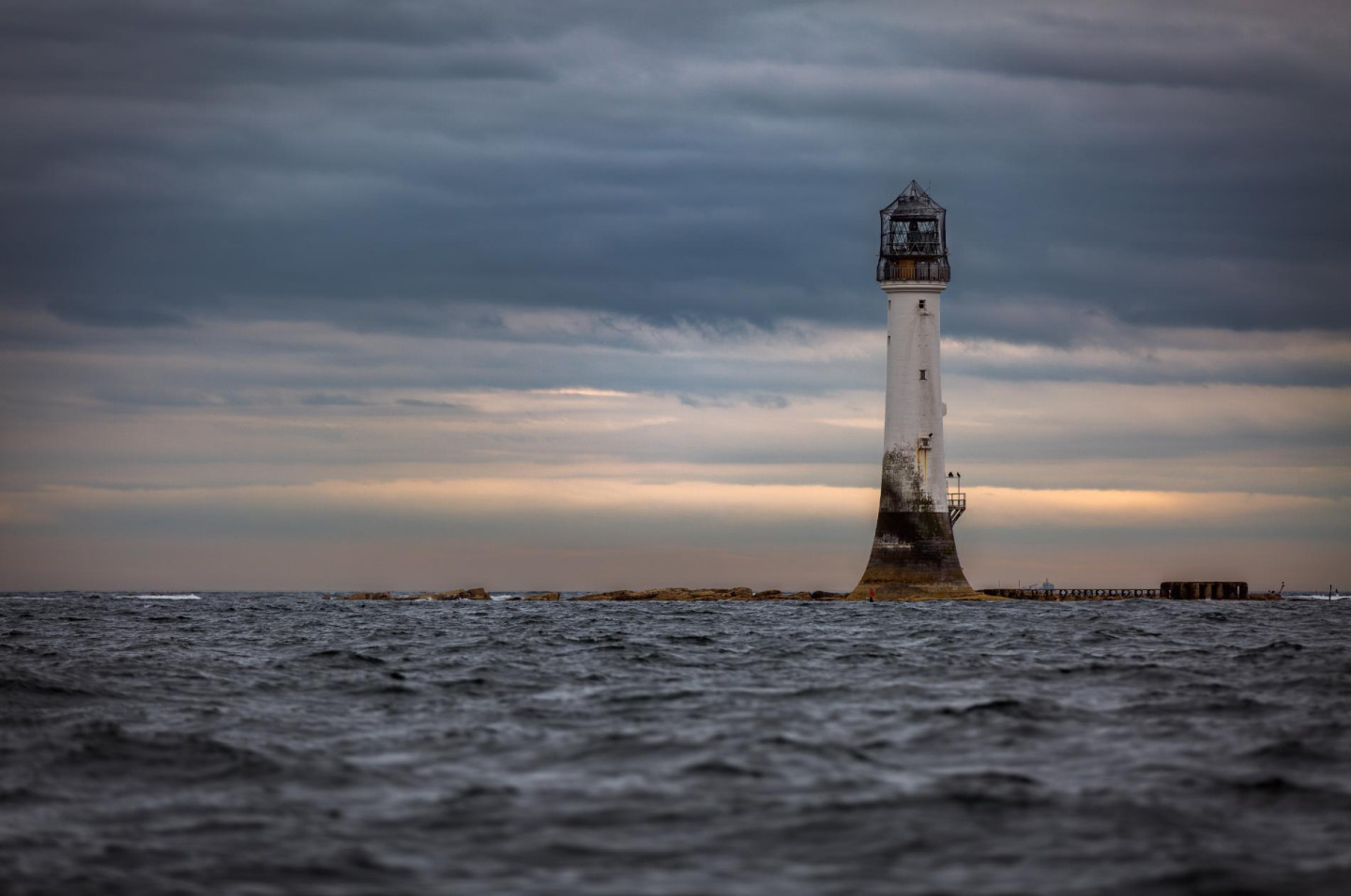
The cold waves of the North Sea have crashed around the base of this rockperched beacon for more than 210 years, making it the oldest active seawashed lighthouse in the world. The structure is set on a treacherous reef (namely, Bell Rock) some 12 miles off the Angus coastline, reaching up to a height of 115 feet. It was designed to stand firm against the elements, and to guide ships in and out of the relative sanctuary of the Firths of Forth and Tay. In both respects, this slender seamark – the beam of which can clearly be seen from the shore – has more than proved its worth.
Its architect, as with so many of Scotland’s most impressive seamarks, was civil engineer Robert Stevenson. He designed almost 20 lighthouses, but this was the first, and arguably the most hazardous to build. Work began in 1807 and was completed in 1811. Chief among the dangers was the fact that the surface of the reef is only exposed at low water, becoming submerged under 16 feet of sea when the tide turns. A famous watercolour by JMW Turner, from 1819, shows the lighthouse being pummelled by tempestuous waves. Astonishingly, however, the finished stonework was so solid that it has never needed adapting.
Stevenson, who was also the grandfather of writer Robert Louis Stevenson, passed away more than 150 years before the lighthouse was named one of the Seven Wonders of the Industrial World, alongside the likes of Brooklyn Bridge and the Panama Canal. That accolade alone, and the sheer number of storms and swells to have battered Bell Rock over the centuries, says plenty about the dedication and determination that went into its construction. The lighthouse is now fully automated.
GETTING THERE
The most obvious way of seeing the lighthouse up close is by boat from Arbroath Harbour, either by chartering a vessel or by joining one of the angling trips on offer. Arbroath sits on the coast some 16 miles east of Dundee, a journey of around half an hour by car, or 20 minutes by direct train.
SEE & DO NEARBY
Arbroath Abbey
Founded in 1178, this now-ruined abbey witnessed the writing of the Declaration of Arbroath, which swore independence from England.
Signal Tower Museum
This harbourside attraction tells the full story of Bell Rock Lighthouse, as well as containing other fishing and maritime displays.
Seaton Cliffs
A short way north of Arbroath, head to the red sandstone Seaton Cliffs for caves, arches, blowholes, seabirds and wildflowers.
EAT & DRINK NEARBY
Webmor’s Coffee Shop
A great Arbroath café offering a tempting array of home bakes, as well as light lunches and good coffee.
Vin-Tealicious
Part tearoom, part vintage store, this much-loved Arbroath spot offers everything from lunches to afternoon teas.
PHOTOGRAPHY // Shahbaz Majeed: framefocuscapture.co.uk - Instagram: @shahbazmajeed
SCOTT MONUMENT
Edinburgh
It’s almost impossible to imagine a modern-day equivalent to this totemic tribute to Sir Walter Scott. The great novelist was so revered by the Edinburgh luminaries of the 1830s that they gathered the necessary funds to erect a 200-foothigh monument in his honour, its decorative pinnacle spearing into the sky above Princes Street Gardens. Is there a writer alive today who could expect a similar shrine? The thought’s a faintly ludicrous one, but it says much about the solemnity and ambition that makes this Victorian Gothic memorial so fascinating. And don’t forget that the monument sits just a couple of minutes from Waverley Station, named after one of Scott’s most famous works.
The centrepiece of the structure is a vast statue of the man himself, carved from a single piece of Carrara marble weighing 30 tons and showing the writer seated next to his favourite dog, a crossbreed deerhound named Maida. Elsewhere on the monument, more than 60 characters from his novels are also portrayed in statue form. The overall design took inspiration from the medieval might of Melrose Abbey and was one of more than 50 plans submitted for consideration. Tragically, the winning architect – self-taught gothic maestro George Meikle Kemp – died before seeing his project reach completion. His 10-year-old son Thomas is said to have laid the topmost stone when the memorial was finished in the autumn of 1844.
When it’s open to visitors, the monument affords spectacular views over Edinburgh from its third-floor viewing platform, and also shares enlightening information about the life and works of Scott himself. And although the monument remains the world’s second largest memorial to a writer – after a Havana tower dedicated to Cuba’s Jose Marti – Scott is actually buried in Dryburgh Abbey, in the Borders.
GETTING THERE
The Scott Monument is a stone’s throw from Edinburgh Waverley Station, in the New Town. The station has excellent connections to many other parts of Scotland – Glasgow Queen Street is just over an hour away, while Aberdeen is around two-and-a-half hours away – as well as services to and from England.
SEE & DO NEARBY
Scottish National Portrait Gallery
A five-minute walk away is the Venetian gothic palace of the Scottish National Portrait Gallery – don’t miss the Great Hall.
Calton Hill
Rising high over Princes Street, Calton Hill offers one of the best viewpoints in Edinburgh, and also has a fine collection of monuments.
Scottish National Gallery
Also close by is the Scottish National Gallery, housing an assortment of works by big-name artists, including galleries dedicated to Scottish art.
EAT & DRINK NEARBY
Lowdown Coffee Occupying a basement premises a short walk from the Scott Monument, Lowdown Coffee is a great speciality café.
Hoot The Redeemer
A quirky cocktail bar with a vintage funfair vibe, including an ice cream parlour, a tarot reader and some hugely creative drinks.
-full-1748639985.jpg)
-full-1748639985.jpg)
ROSSLYN CHAPEL
Roslin
“When I decided to write The Da Vinci Code, I knew that its finale would have to take place at the most mysterious and magical chapel on earth – Rosslyn.” So said Dan Brown, author of the worldwide bestseller that shone fresh attention onto this enigmatic 15th century church. Sitting a few miles south of Edinburgh but occupying a spiritual realm of its own, it was founded in 1446 by Sir William St Clair – the 3rd prince of Orkney and the 11th baron of Rosslyn – and ownership has been in the family ever since. Its aristocratic proprietors, however, are very much a side note to the chapel’s elaborately carved interior and richly symbolic imagery.
The chapel is by no means a huge building, so its reputation is testament to the sheer amount of decoration and intrigue it contains. Pillars of vines and dragons; images of North American corn that seem to predate the crop’s discovery; a trussed-up Lucifer dangling upsidedown; more than 100 pagan Green Man carvings; a ceiling vault of roses and stars. To walk among it all is to notice new details with every pace – Dan Brown wrote of the chapel’s alleged links to the Knights Templar and the Freemasons, and various engravings reflect this. The whole project took more than 40 years to finish, a timescale that meant its founder never saw its completion.
The exterior, of course, is no less remarkable: a triumph of Scottish gothic architecture complete with pinnacles, buttresses and walls of sculpted, sanctified stone. Some visitors are surprised to learn that the chapel is still a functioning place of worship, with regular services (visitors are welcome to attend these), and this ongoing life gives the building a personality and vitality that many medieval structures lack.
GETTING THERE
Buses run south from central Edinburgh to Roslin, taking less than an hour. If you’re driving, the village is a short distance off the A701. The chapel car park also has racks for bikes, and if you’re feeling really adventurous, it’s even possible to walk from Edinburgh to the chapel along the ten-mile Rosslyn Chapel Way.
SEE & DO NEARBY
Roslin Glen Country Park
With plenty of woodland and waterside walks, this is a great place to explore the nature and wildlife of the Esk Valley.
Rosslyn Castle
A short stroll from the chapel is this partially ruined castle, the ancestral home of the St Clair family. Hawthornden Literary Retreat For ten months of each year, nearby Hawthornden Castle welcomes six writers at a time, for month-long writing retreats.
EAT & DRINK NEARBY
Original Rosslyn Inn
Robert Burns, Sir Walter Scott and William Wordsworth are reputedly among the past guests of this family-run inn.
Angelina Coffee Snug
A ten-minute drive from the chapel is this appealing ‘café snug’, where you’ll find homemade cakes, cards, candles and more
(1)-full-1748640506.jpg)
Promoted Post
The Scullery
Tucked away in the heart of the Yarrow Valley, The Scullery is a one-bedroom boutique hideaway, eloquently designed for comfort, calm, and connection. Whether you’re escaping the city or craving a countryside reset, this is your space to slow down and just be.
-listable-carousel-1769292770.jpg)






 Sign in with Google
 Sign in with Email