
A Brief History of Scotland
From the stone circles at Stenness and Callanish to the shipyards of the industrial age.
Words by Hidden Scotland
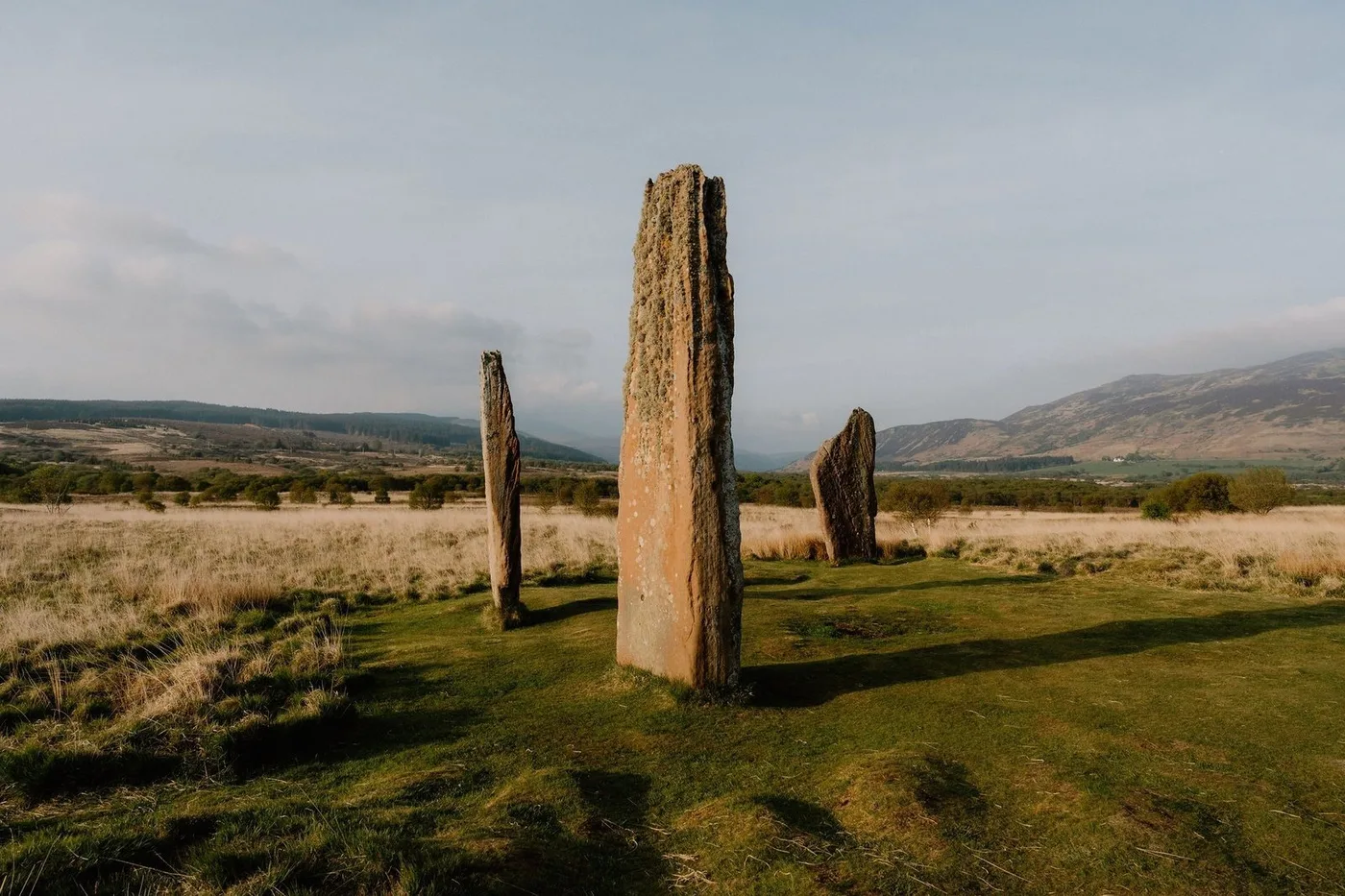
Traditionally, Scottish written history begins with the arrival of the Romans in the first century AD, although for thousands of years tribes had roamed the land, forging a simple life in stone huts and gathering food from the land. The first settlers arrived in the aftermath of the Ice Age, crafting stone (and later, bronze) weapons and tools to hunt wild animals and developing farming techniques to take full advantage of the harvest. Few remnants remain of this period of Scottish history today, although the stone circles at Stenness and Callanish, amongst others, tell us something of prehistoric society and belief.
Roman Occupation
The Roman invasion of Scotland, or Caledonia, began in 80AD, by which time most of southern Britain was already under Roman control. Scotland, however, proved to be a more challenging battleground: tribes controlled huge areas of land and important natural resources, such as lead, silver and gold, were not going to be yielded willingly to an invading army from Rome.
Despite some early successes, by 123AD the Roman occupation was retreating, and the construction of a six-metre-high wall was underway on the orders of Emperor Hadrian, to keep the tribes of the north out of Roman territory to the south. With the frontier established, it became the scene for repeated incursions from either side for the next 280 years, until the Romans withdrew entirely from Britain in the early 5th century, spurred on by the need to defend Rome from tribal assaults.
The Arrival of the Scots
Until the 6th century, the name Scotland was unheard of, but the establishment of the kingdom of Dalriada by the Scots, a group of Irish settlers who landed on the western shores of the country with little opposition from the native Picts, heralded the formation of the modern country. For the next 400 years, the Scots collaborated and clashed with the Picts in equal measure, until the two groups were unified in 844AD in a single kingdom.
By this time, Christianity was established in Scotland. The language and symbols of the Picts gradually disappeared and, as other kingdoms, such as Strathclyde, became absorbed into the country, modern Scotland was created.
The Influence of the Normans
Norman domination of England quickly influenced Scottish politics. King Malcolm III, son of Donnchad mac Crinain who was immortalised by Shakespeare as the incompetent Duncan, married Margaret, an English princess, who brought English ways to the Scottish court.
During the reign of Malcolm’s son, David (1124-1153), Norman migration to Scotland increased, monasteries were built, townships were created and powerful trade links with England were formed. However, Scottish kings remained impotent in their control of the outlying parts of the country where local chieftains governed, often under the direction of overseas rulers.
The Start of the Rebellion
The death of Alexander III in 1286, and of his heir four years later, led to a power vacuum in Scotland with at least 13 claims to the throne made. As arbitrator, Edward I installed John Balliol, a decision that was to spark centuries of rebellion and conflict with the English. Balliol’s refusal to support an attack on France led to his demise and Edward I’s attempt to rule Scotland alone, installing English officials to govern the country.
The subsequent landowner rebellion, led by William Wallace and famously recreated – though without much historical accuracy – in Braveheart, inflicted a heavy defeat on the English at Stirling Bridge in 1297. Continued English aggression was firmly rebuffed, restricting English territorial control to the south-east of the country, until Robert the Bruce's victory at Bannockburn in 1314. In 1328, with the Treaty of Edinburgh–Northampton, England officially recognised Scottish independence.
The Road to the Union
The reign of James IV, at the turn of the 16th century, brought greater peace and prosperity within Scotland, with the rise of literature, printing and education. Nevertheless, continued skirmishes with England persisted, with attacks on both sides of the border.
The Reformation confirmed Protestantism as the official religion of Scotland and, as civil war raged in England, Scottish forces repeatedly tried to make incursions south of the border; Cromwell’s forces eventually occupied Scotland in its entirety, a situation which only ended with the Restoration of Charles II.
The 1707 Act of Union, which created the United Kingdom and joined the parliaments of Scotland and England, proved to be unpopular with many, leading to a series of rebellions led by the Jacobites who recognised James, son of the deposed James II, as rightful king. However, the Jacobite risings were defeated by government forces, finally at Culloden in 1746, and strict laws were imposed to curtail their freedoms, strengthening the Union.
The Industrial Revolution
Industry, as in the rest of the western world, flourished in the 19th century, with rapid growth in towns and cities and the coal, steel and iron industries booming. Scotland became renowned as a world centre for shipbuilding.
However, as in England, living conditions could not keep pace with industrial development; housing was of a poor standard with little space and sanitation, leading to disease and low life expectancy for many workers. Only with the growth of the trade unions towards the 20th century did standards begin to improve.
The 20th Century
In common with other leading nations, Scotland experienced a huge economic slump in the 1920s, with homegrown industries such as mining, steel manufacture and shipbuilding all suffering a downturn. Unemployment was high, but the decades following World War 2 witnessed prosperity and economic stability. Redundant industries were gradually superseded by service industries and, with the advent of technology and IT, Scotland established itself as a key player in the United Kingdom.
 Out now
Twice a year, to your door
One hundred and sixty pages of Scotland, every photograph commissioned, every word written by someone who went. Members get both issues posted and everything on screen.

 The 900th Anniversary of Stirling
 Kilmartin Glen