
Boreraig – Over the Hill to a Cleared Village on Loch Eishort
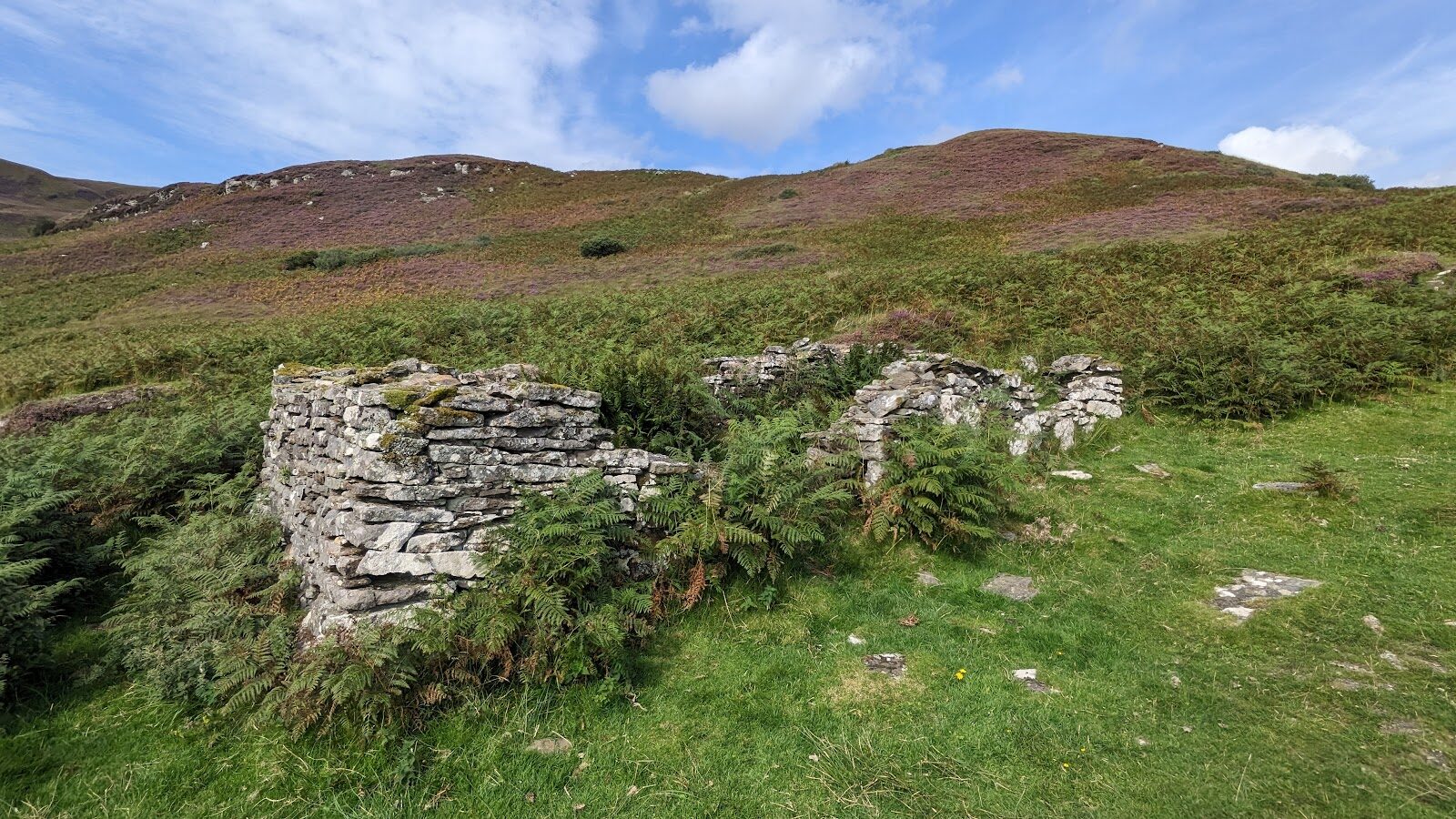
Boreraig was a township on the shore of Loch Eishort until 1853, when its people were cleared to make way for sheep.
The houses are still there, roofless in the bracken, and the only way to see them is on foot, over the hill from the old church of Cill Chriosd. It's a long, easy walk on the line of an old marble railway and a moorland path, and it ends at a place that shows plainly what the Clearances meant on Skye.
- Time
- Three hours' walking to Boreraig and back, 10 km, by the Isle of Skye guide's figures. Five to six hours for the full round by Suisnish, which Walkhighlands gives as 16.5 km with 350 m of climb.
- The path
- A gravel path on the old railway bed, climbing slowly, then a rougher, narrower moorland path with a gate and a stile.
- Where to start
- The lay-by beside the ruined church of Cill Chriosd on the B8083, two and a half miles from Broadford on the Elgol road. An extra-long passing place, not a marked car park.
- When to go
- All year in daylight. From November to January set off for Boreraig by 11.30am. The long round by Suisnish is not for December or early January.
- Dogs
- On a lead: sheep graze this ground.
- Children
- Long for small legs: 10 km with no shelter and nowhere to cut it short.
- Toilets
- None on the walk; the nearest are in Broadford.
- Before you set out
- A well-kept gravel path on the old railway, then a rougher moorland path. The shore path on to Suisnish has been carried away in places by rockfalls. No shelter.
The walk
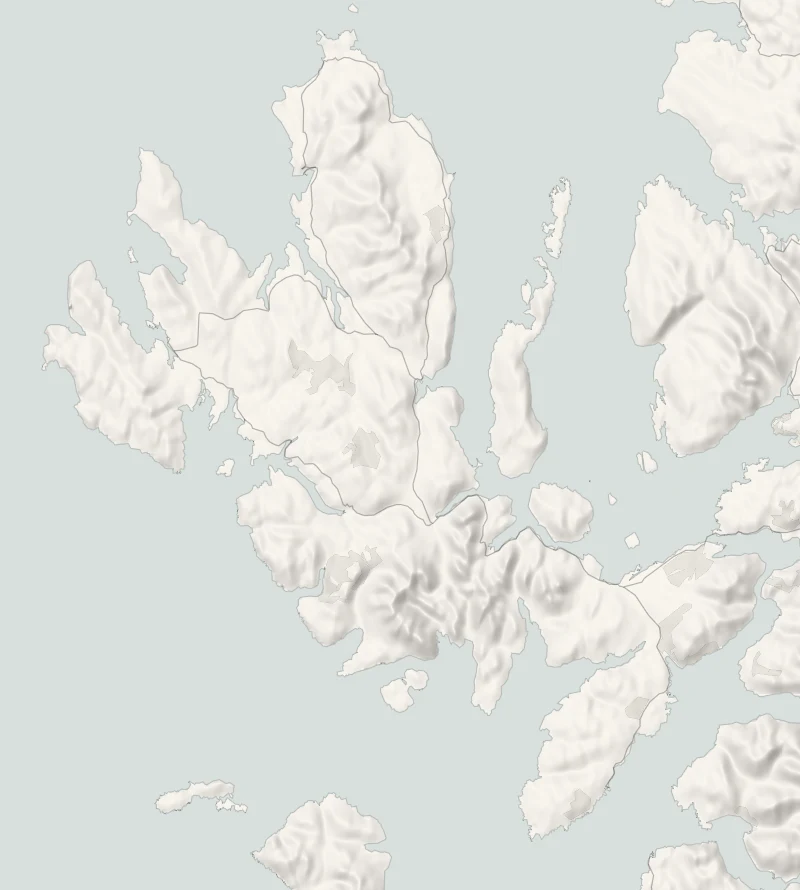
Park in the lay-by beside the ruined church of Cill Chriosd, on the single-track road from Broadford to Elgol, two and a half miles out of Broadford. It isn't a marked car park, only an extra-long passing place, so park tight and leave the road clear. The walk to Boreraig goes over the hill from here to the shore of Loch Eishort. The Isle of Skye guide gives it as 10 km there and back and three hours' walking, long but easy. The first stretch is the bed of the old marble railway, a well-kept gravel path that climbs slowly past the brick ruin of the quarry's station and heaps of pale waste marble. Beyond the quarry a rougher path crosses the moor by a low pass and comes down beside a young native woodland to the sea. Boreraig is at the bottom: the walls of ruined houses in the bracken, green ground above the loch, and the hills of Sleat across the water.
It was cleared in 1853, along with Suisnish further round the coast, by Lord Macdonald, who wanted the land for sheep. Some thirty-two families were put out of the two townships. Their doors were nailed shut and the thatch was burned so that nobody could come back. It's a very quiet place now. Strong walkers can go on along the shore, under cliffs and waterfalls, to Suisnish and back to the road by a track above Loch Slapin. Walkhighlands gives that round as 16.5 km with 350 metres of climb, and five to six hours. The shore path has been carried away in places by rockfalls, so it's rough going.
Sheep graze all this ground, so keep dogs on a lead. There are no toilets and no shelter on the walk. The nearest toilets and food are in Broadford. From November to January, set off for Boreraig by 11.30am. For the long round, be walking by 9.30am, and leave it alone in December and early January, when there are fewer than seven hours of daylight.
If it rains
There's no shelter anywhere on the walk, and the moor path is wet underfoot after rain. In poor weather walk only as far as the marble quarry on the old railway, which is a good gravel path, and keep Boreraig for a clear day.
Before you go
Book accommodation nearby
If you are staying over: here are ours nearest where the day starts and ends.

For further reading, before you go.
Photograph by Warren Butler via Google