
Before you go to RaasayPart 2 of 4
History
2 minute read
Raasay’s history is a compelling saga of clan rule, Jacobite loyalty, and remarkable individual fortitude. For centuries, the island was the stronghold of the Macleods of Raasay, a branch of the powerful Skye clan. They built the strategically placed Brochel Castle on the east coast and resided in the elegant Raasay House. The clan’s loyalty to the Jacobite cause had devastating consequences; following the Battle of Culloden in 1746, where the Macleods fought for Bonnie Prince Charlie, government forces laid waste to the island, burning homes and slaughtering livestock. The Prince himself hid on Raasay for two nights during his escape, a fact that sealed the islanders' fate but became a point of enduring pride.
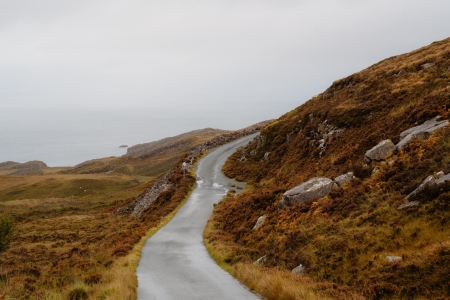
Like many islands, Raasay suffered through the Highland Clearances, with its population falling from over a thousand to the small community of today. The 20th century saw a period of industrial activity with the mining of iron ore, the remnants of which can still be seen near the ferry terminal. Yet, the most famous chapter in Raasay's modern history was written not by an army or an industry, but by a single man. From 1964, a crofter named Calum Macleod, frustrated with the council's refusal to build a road to his remote northern township of Arnish, took on the task himself. Over ten years, using little more than a shovel, a pickaxe, and a wheelbarrow, he single-handedly constructed nearly two miles of road. This incredible feat, now immortalised as "Calum's Road," stands as a powerful monument to the island's spirit of tenacity and self-reliance.