
Sands of Breckon
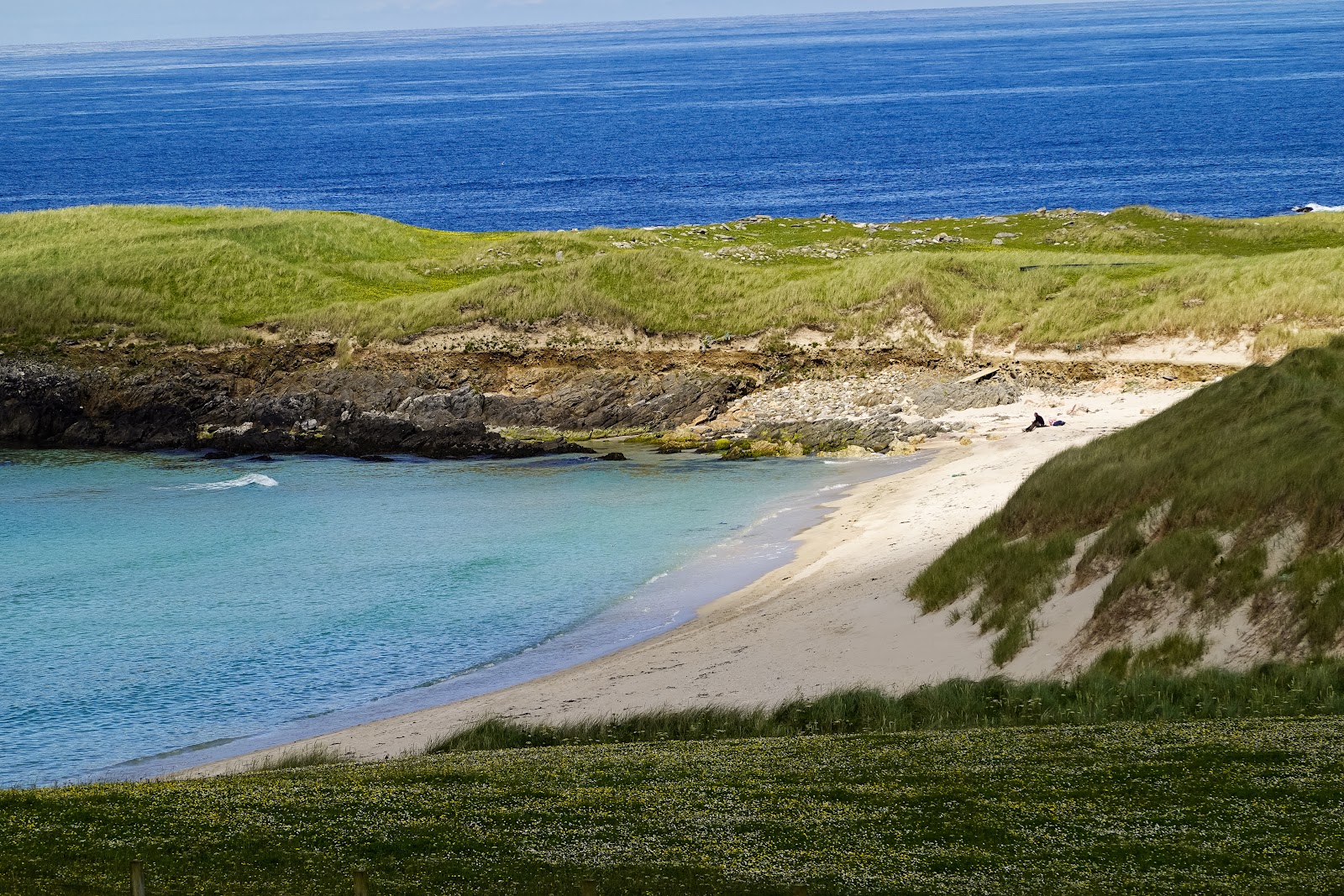
A shell-sand beach in the far north of Yell, sheltered, turquoise and backed by dunes and flowering machair.
The Sands of Breckon lie at the far north of Yell, framed by the island's cliffs, and they are one of its highlights.
The beach holds a Seaside Award from Keep Scotland Beautiful. Although the bay opens to the Atlantic, it is sheltered from most winds, and the dunes behind make endless picnic spots on a good day. The sand is a mix of rock and shell, piled deep and shelving quite steeply, which gives the water its colour.
Breckon has the largest area of blown shell sand in Shetland. Marram grass traps the sand into dunes, and behind them lies machair, grassland full of wild flowers that thrive on the calcium; more than 80 kinds of plant have been recorded. People have lived here for at least 4,000 years, and finds from the dunes include Iron Age and Viking remains, bone combs and even Roman coins. The cliff tops nearby make a good walk. It is at the very north end of the island, about 21 miles from the Ulsta ferry.
Open at any time and free.
Take the ferry from Toft to Ulsta in Yell, about 20 minutes, and book a car ahead in summer; then drive about 21 miles to the far north of the island.
- Getting there
- Toft to Ulsta, about 20 minutes; then about 21 miles north.
- Good for
- Picnics in the dunes; cliff-top walks.
- Care
- Keep off the fragile dunes.
Breckon, North Yell, ZE2 9DD.
Scotland, in print.
Every photograph commissioned, every word written by somebody who went. Printed twice a year, made in Scotland.
For further reading, before you go.
- Sands of BreckonThe beach, its dunes and its history.shetland.orgShetland.org↗
- YellThe island and its ferry.shetland.orgShetland.org↗
- Ferries to ShetlandThe overnight ferry from Aberdeen to Lerwick.shetland.orgShetland.org↗
- Flights to ShetlandFlights to Sumburgh.shetland.orgShetland.org↗
- Inter-island ferry timetablesSailings to the other isles.shetland.gov.ukShetland Islands Council↗