
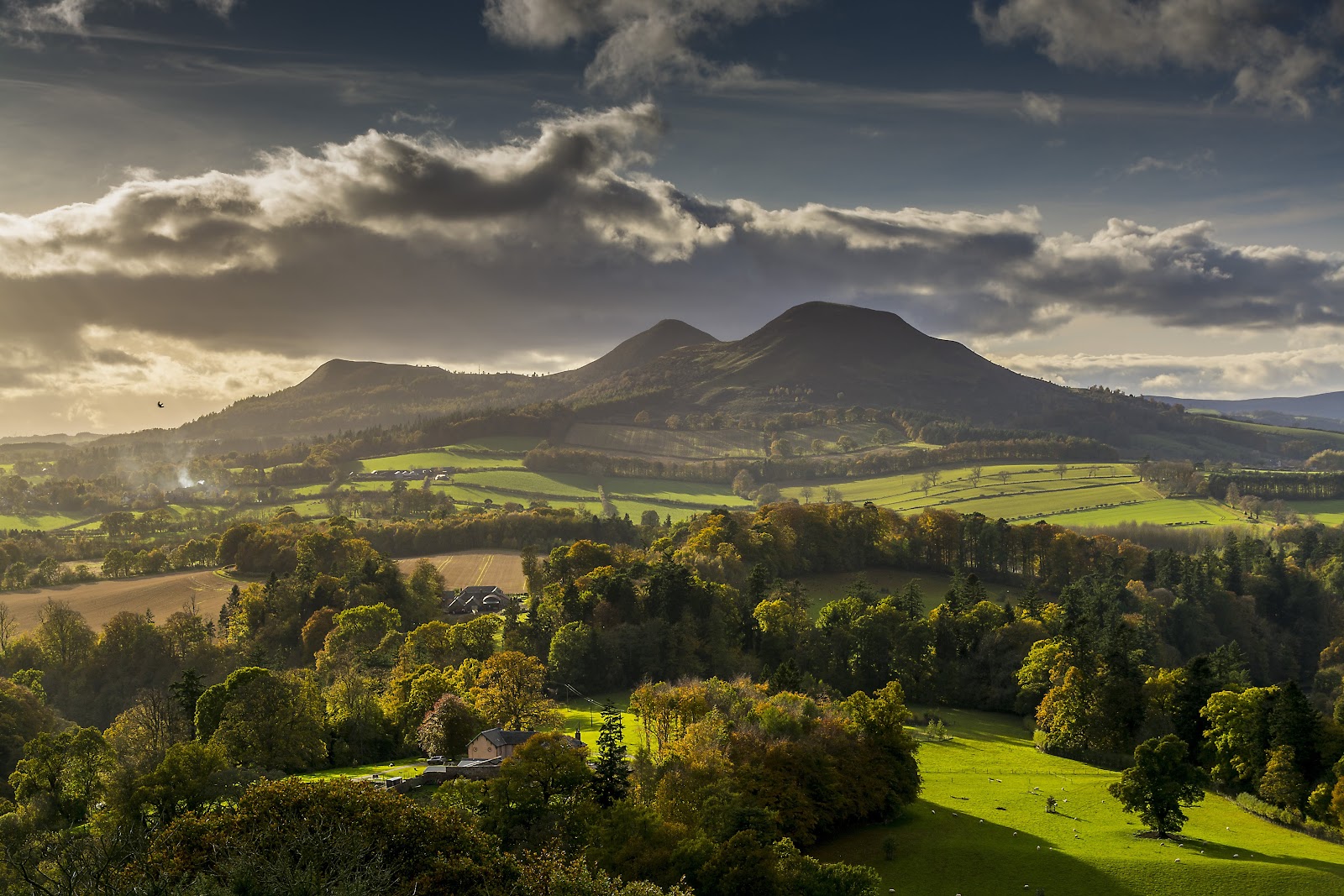
Eildon Hills
The three volcanic summits above Melrose, crowned by the largest Iron Age hill fort in Scotland and crossed by St Cuthbert's Way.
Rising straight out of the Tweed valley above Melrose, the three summits of the Eildon Hills are the great landmark of the Borders.
Mid Hill is the highest at 422 metres, and all three are the worn remains of volcanic rock some 350 million years old.
People lived on them long before the Romans came. The North Hill was crowned by the largest Iron Age hill fort in Scotland, home perhaps to as many as 2,000 people, and later the Romans put a signal tower on its summit, naming their great fort below Trimontium, the place of three hills. Legend clings to them too: Thomas the Rhymer, King Arthur and the wizard Michael Scott all have stories here.
St Cuthbert's Way climbs from Melrose Abbey over the saddle between the summits, and the views from the top, over Melrose and the whole Tweed valley, are superb.
The Daily
Arrives at 5am every day.
A free morning email to see what’s on this week, catch up on what’s happening in Scotland and find somewhere new to go.
Open hill ground, at any hour.
- Where
- Above Melrose.
- Highest
- Mid Hill, 422 metres.
- On the top
- An Iron Age hill fort.
Been here? Tell others what you know, and the best go on this page with your name.
Add your reviewScotland, in print.
We want to show you the best that Scotland has to offer. The makers and the creatives, the enduring experiences, the evocative tales, the concealed corners. The roads less travelled that take you to places that matter. The adventures that gather you up and sweep you away. The blend of the wild and the artistic that makes Scotland what it is. We’d love for you to join us.
What we have written about it and more in the Scottish Borders.
For further reading, before you go. The details on this page were checked on .