
Whisky, Castles & Pyramids - A 35-Mile Trail Through Aberdeenshire’s Royal Heartland
Written by Hidden Scotland
.jpg)
This route traces a single day through some of Aberdeenshire’s most distinctive ground — starting with sea air and ending high above Royal Deeside. It begins at Dunnottar Castle, perched alone on a headland. The walk down and back up takes time, especially if the morning mist hasn’t lifted, but the view is worth it. Seabirds circle the cliffs. The ruins open slowly with each step.
From there, the road inland is quiet and tree-lined. Crathes Castle is the first stop — smaller, brighter, more self-contained. The painted ceilings are worth pausing under, and the gardens, even out of season, hold their shape. Just beyond the gates, the Hidden Scotland Shop sits in a row of converted stone buildings at Milton of Crathes. It’s an easy place to linger — books, maps, things well made.
Rather than dawdle, the route continues west to Ballater for lunch. There’s usually space at The Bothy, or something a little more characterful at the Rossay Rooms with its carriages and mismatched furniture. The village is compact and worth walking — bookshops, fudge, galleries, a sense of calm that holds even when it’s busy.
A quick stop at Tarmachan Café provides the reset. Then it’s on to Balmoral. The castle grounds change depending on the season, but the riverside and trees remain steady. The distillery at Royal Lochnagar is barely a mile away — small, traditional, and better if booked ahead.
The walk to the pyramid — Prince Albert’s Cairn — is steep and uneven in places. It doesn’t take long, but it feels further than it is. At the top, the cairn stands alone. Behind it, the land opens out and the day quietly settles.
Start the Day at Dunnottar Castle
This is a place that works at any hour. Even before the gates open at 9am, the view alone is worth the early start. From the car park, a short walk along the hillside brings you to a natural lookout where the entire headland comes into view — steep cliffs, swirling sea, and the remains of a once-mighty fortress silhouetted against the coast.
It’s a powerful spot to begin the day. The light hits from the east, and if you arrive just after sunrise, the stone glows with warmth, even in cold air. It’s easy to imagine watchmen on the walls or supply boats slipping in under cover of mist. Dunnottar’s story is long and severe — Norse raids, siege fire, a hidden chapel where the Scottish Crown Jewels were smuggled past Cromwell’s men. You feel the distance from town, the defiance of building something here.
The full visit — down the steps and into the ruins — is possible once the site opens. Inside, you’ll find the chapel, lodgings, barracks and views out over the North Sea from inside the walls. But even without entry, you get the shape of it from above. The best-known angle is just beyond the car park, along the clifftop trail to the north. It’s a short walk and gives the clearest sense of how isolated the place really is.
There’s a food van for coffee, toilets near the parking area, and enough space to sit and take it in before heading west. It’s the only sea-facing stop on the trail, and it stays with you long after you’ve left the coast behind.
Drive Inland to Crathes Castle
Leaving the coast behind, the road turns west through farmland and scattered woodland. It’s about 35 minutes from Dunnottar to Crathes, following the Slug Road inland — a quieter route with long straights and a slow, steady climb into Deeside. By the time the castle comes into view, the sea already feels far behind.
Crathes is a classic tower house with turrets, thick walls, and a long front lawn that opens onto sculpted gardens. Built in the late 1500s, it’s now managed by the National Trust for Scotland. Inside, the rooms are low-ceilinged and filled with character — original painted timber beams, carved fireplaces, and portraits that haven’t been moved in decades. Outside, the gardens are laid out in a series of enclosed spaces, each bordered by yew hedges planted more than 300 years ago. There’s always something in bloom, but even in the off-season, the structure holds.
The 1702 Café in the courtyard serves soup, hot drinks, and home baking. Parking is easy, and there’s no rush. If you’re not going into the house, an hour is still well spent between the gardens and the café.
Before heading west, there’s one more stop just a minute down the road. The Hidden Scotland Shop sits in the converted stone buildings at Milton of Crathes, a short walk or very quick drive from the castle. It’s our own space — carefully curated, with guidebooks, maps, prints, and pieces made by Scottish makers. Many visitors say they discover places here they hadn’t planned for — or just find a reason to slow down a little longer before continuing the journey deeper into Deeside.
Stop In at the Hidden Scotland Shop
Just a minute down the road from Crathes Castle, in a converted stone farmhouse on the edge of the River Dee, sits the Hidden Scotland Shop. Tucked into a quiet corner of Milton of Crathes, it’s easy to miss unless you’re looking — but worth the stop. The shop brings together many of the people and places featured in the magazine, from small-batch candle makers to photographers, authors, ceramicists, and printmakers working across Scotland.
The space itself feels like a continuation of the magazine. Old scaffold boards and corrugated metal form the till, built by a local maker. The shelves came from the cellar of the Fife Arms, still marked with wine stains. Along the walls: sea glass jewellery, botanical prints, field guides, books on wild food, and titles you won’t find in chain stores. Cairn Candles burn quietly in the background, and dried flowers hang from an antique ladder above the counter.
The stock changes often — many items are handmade or seasonal — and the team know the story behind everything on the shelves. There’s a planning station with a tablet for travel tips, and a bookshelf packed with guidebooks and old favourites. There’s even a kids’ corner tucked under the stairs.
Visitors come for different reasons. Some follow the Deeside Way and stop in with muddy boots and dogs in tow. Others arrive with a destination in mind and leave with three more circled on a map. It’s the kind of shop you linger in longer than you expect.
From here, the journey west continues — but for a moment, it’s worth pausing, taking in the quiet of Milton, and maybe picking up something small to take along the road.
Lunch and a Wander in Ballater
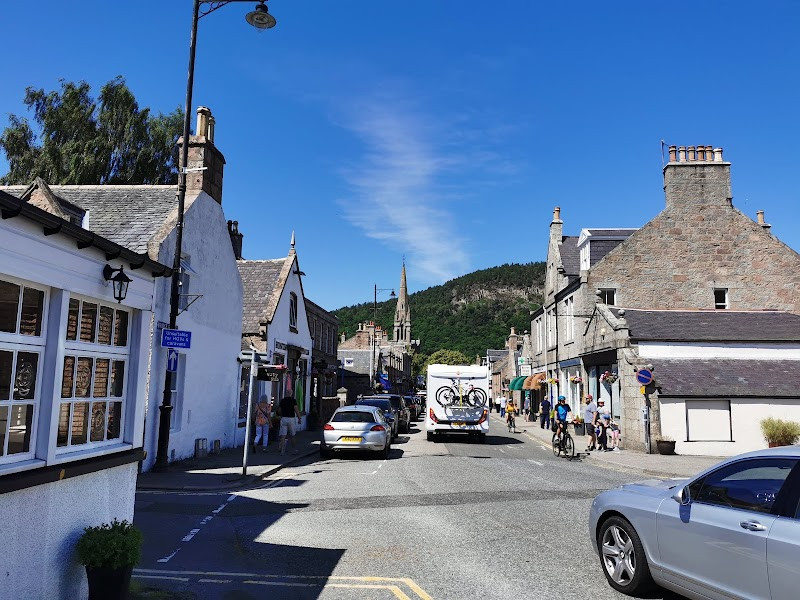
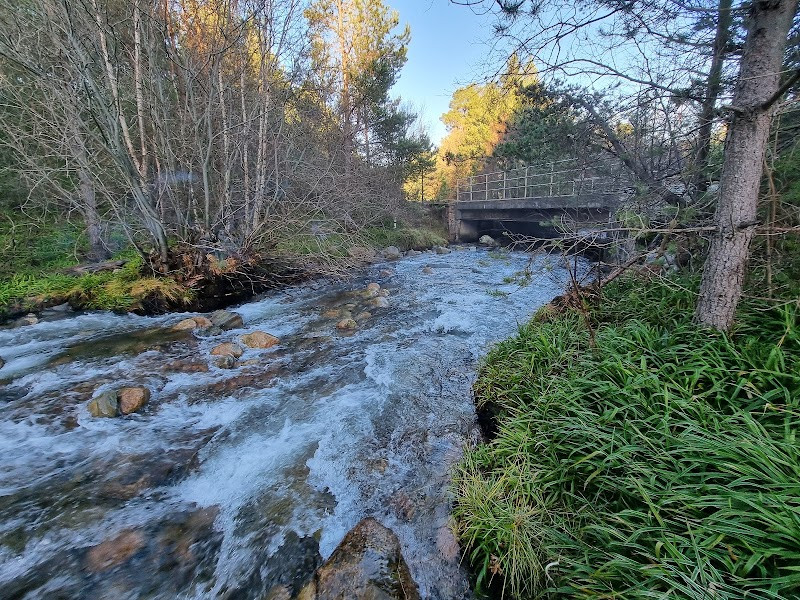
The road west follows the River Dee closely now, with woodland and heather rising on either side. It’s about 35 minutes from Milton of Crathes to Ballater — a quiet, scenic drive that eases into the Cairngorm foothills. The town appears gradually: stone houses, ironwork details, a curved green, and the distinctive Royal Station at its centre.
Ballater’s ties to Balmoral are everywhere — from the crests above shopfronts to the Royal Warrants still proudly displayed in windows. But it’s more than a royal satellite. This is a good place to stop, slow down, and refuel.
The Bothy is a favourite for lunch. It’s informal, friendly, and always busy — soups, toasties, baked potatoes, and plenty of traybakes behind the counter. There’s usually a dog under one table and a walker drying off near the fire. If you're after something with a bit more character, The Rothesay Rooms next to the old station offers a quieter setting, with booths inside old railway carriages, homemade soups, local cheeses, and cakes worth staying for. It’s run by a community trust and feels rooted in the place.
After lunch, there's time to wander. Deeside Books is a proper browse — shelves of local titles, maps, fiction and old editions. There’s a gallery or two, a sweet shop, a cheesemonger, and plenty of smaller shops carrying things you won’t find further west. Walk the loop around the green and you’ll catch most of them.
This isn’t a long stop, but it gives the day breathing space. And it puts you just minutes from Balmoral — close enough that the shift to the estate feels natural. Before that, though, there’s time for a quick detour and a very good coffee.
A Quick Stop at Tarmachan Café
Just a few minutes up the road from Ballater, on the left just before Crathie, sits Tarmachan Café — a small, low-built spot with wooden cladding, big windows, and a quiet air about it. It’s the kind of place that doesn’t shout for attention but draws regulars all the same. Cyclists, locals, and returning visitors tend to know it’s there.
Inside, the coffee is reliably good, the baking is homemade, and the menu sticks to what works — soups, toasties, fresh bread, maybe something sweet with fruit that’s in season. There are a few tables outside if the weather’s kind, and the inside is warm, simple, and unfussy. You’ll usually hear low conversation, the clink of mugs, and dogs breathing quietly under tables.
It’s not essential, but it makes sense as a pause. Especially if Ballater was busy, or if Balmoral’s coming next. This is the calm in between — a chance to take stock before the afternoon leg. The café sits close to the Deeside Way, so there’s often a few walkers passing through. Sometimes the whole place smells of fresh coffee and damp pine, depending on who’s just come in.
If it’s open, it’s worth the stop. A short break, a hot drink, maybe a slice of something baked that morning. Then the road turns again — just a few minutes more to Balmoral, and the entrance to the estate.
Walk the Grounds at Balmoral Castle
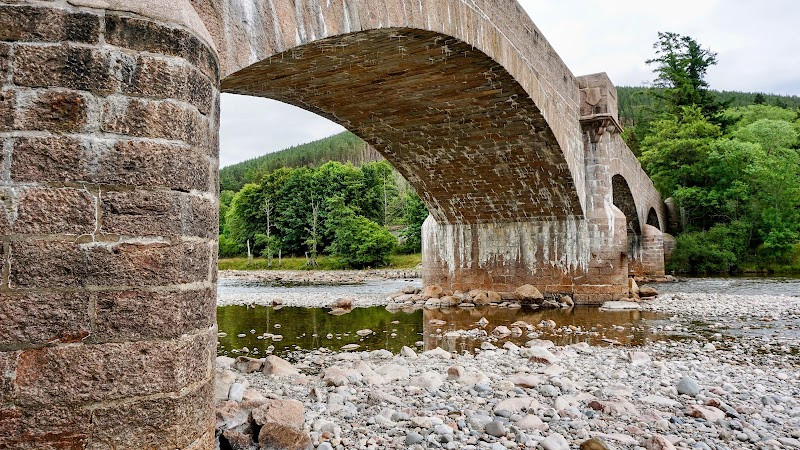
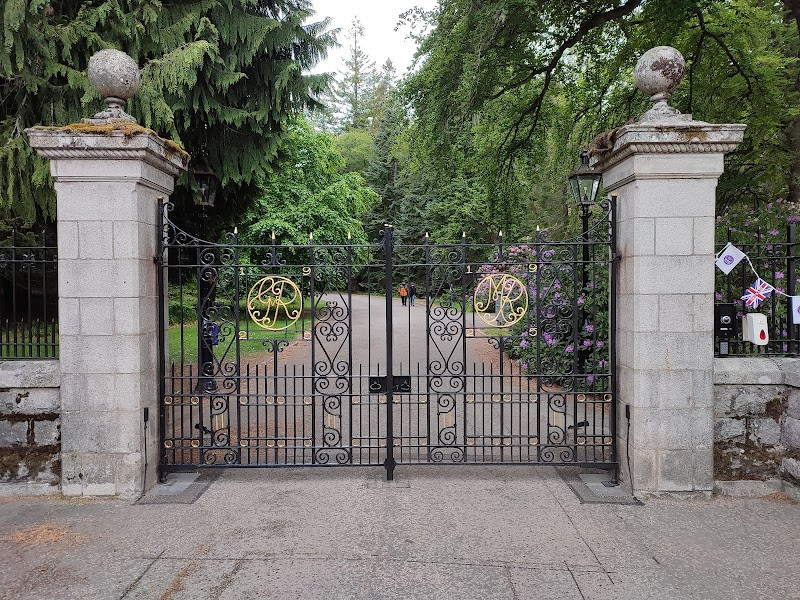
The entrance to Balmoral appears suddenly. A bend in the road, a stone bridge, and then the gates — understated, but unmistakably part of something larger. The car park sits just across the road in Crathie, and from there it’s a short walk to the visitor entrance. Even outside peak season, there’s a quiet presence to the place.
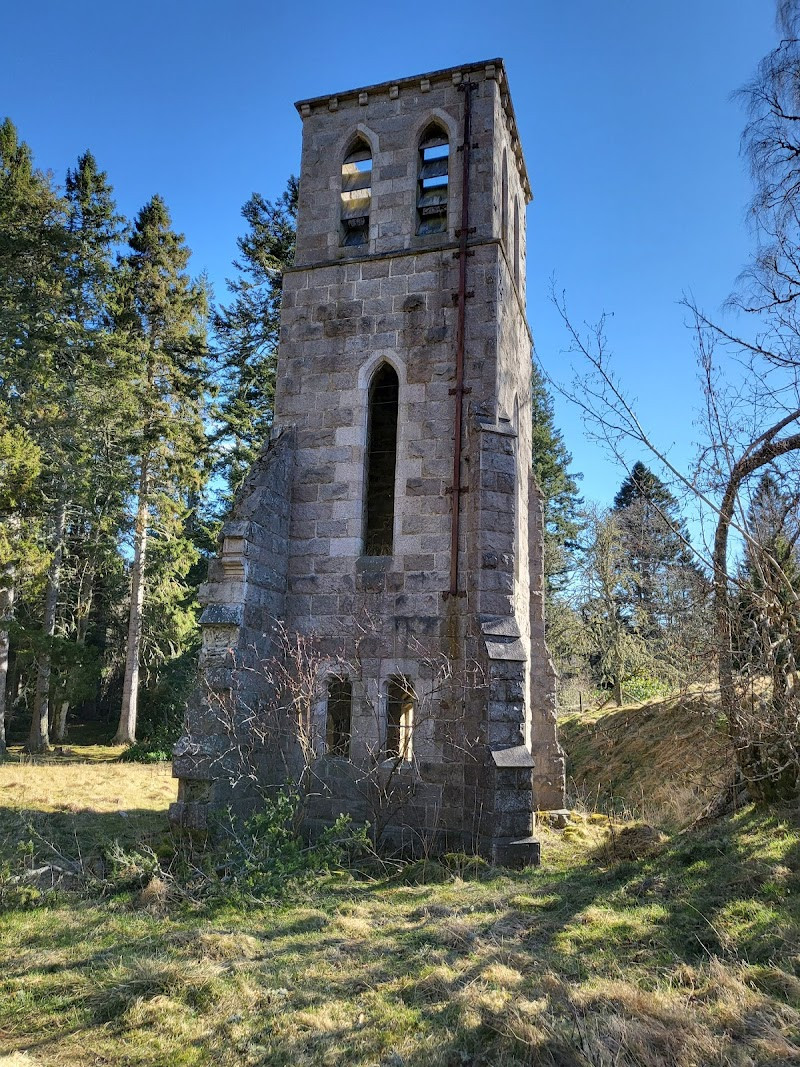
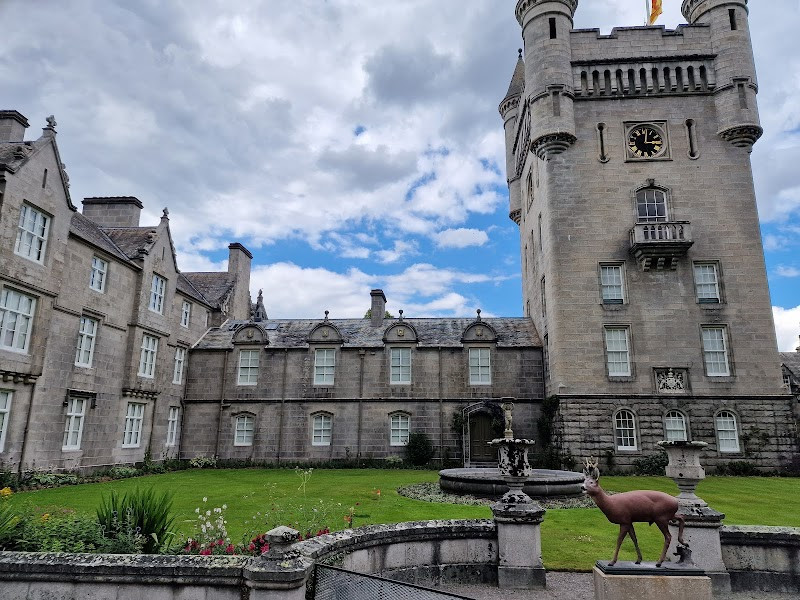
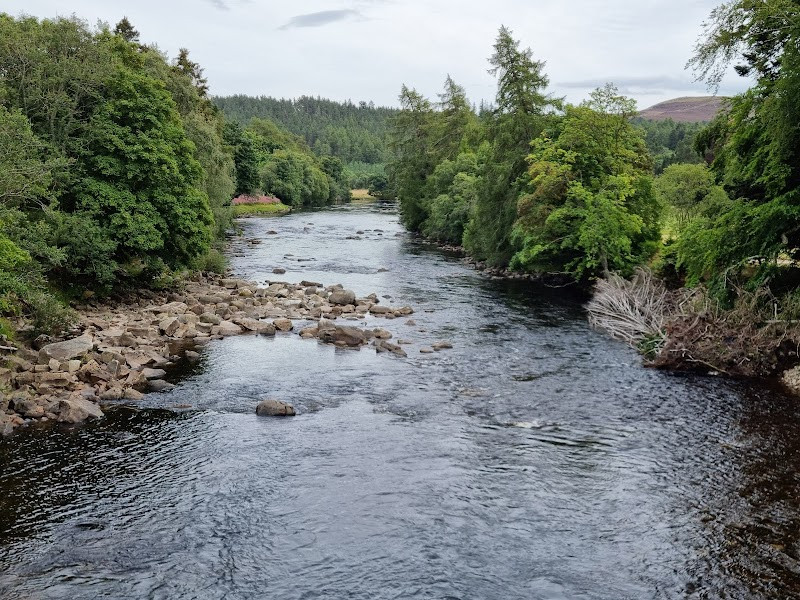
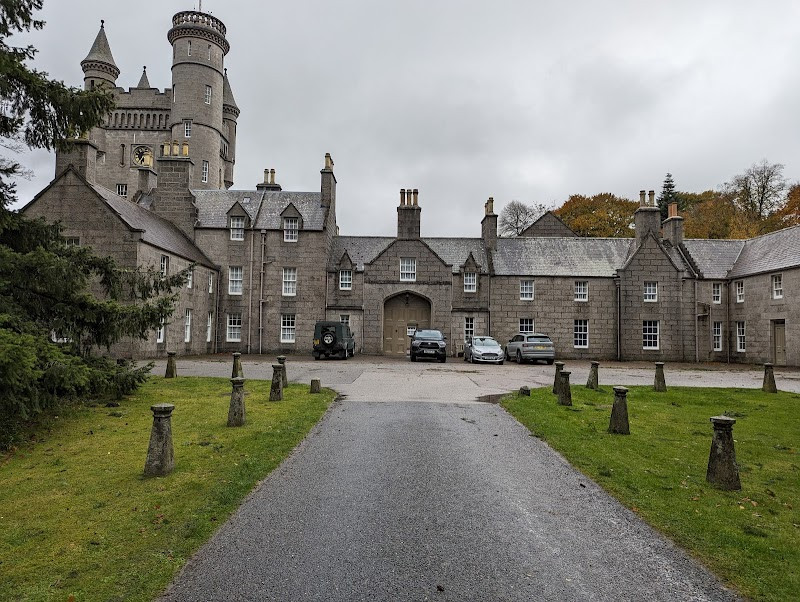
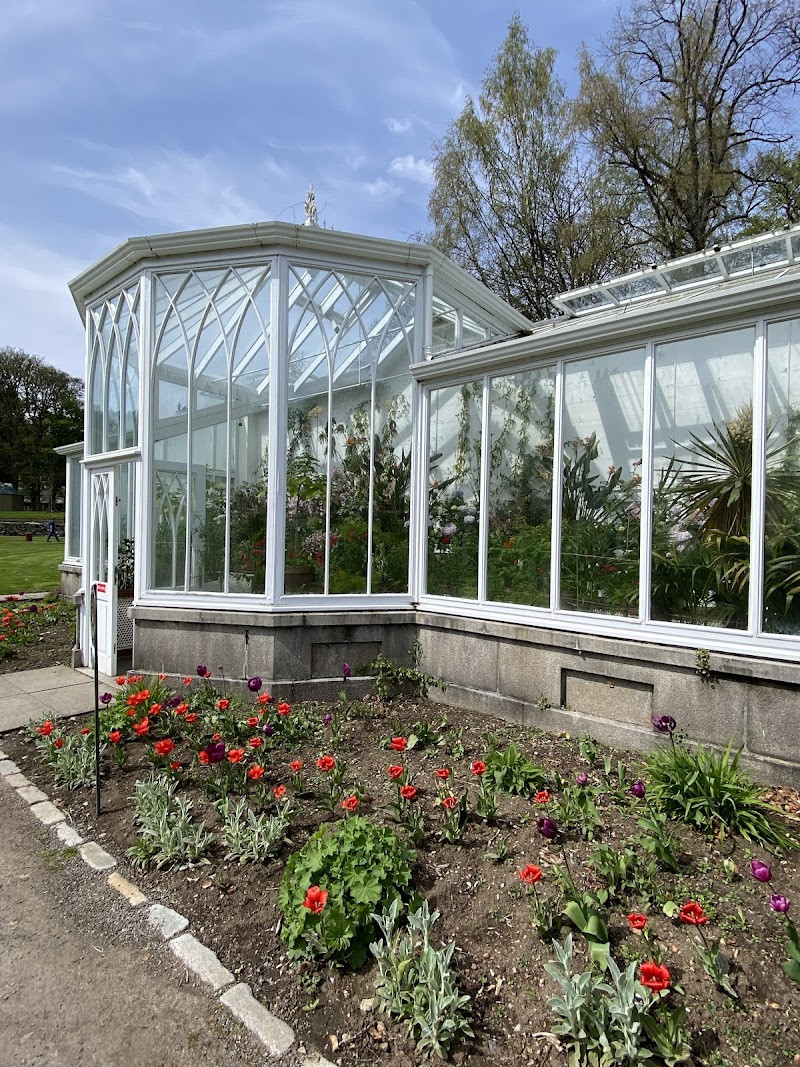
Most of the year, it’s the gardens and grounds that are open. You follow a path through trees and over gravel, past wide lawns and neat flower beds towards the main house. The castle itself is still in use — a working royal residence — so access inside depends on the time of year. But the estate alone carries weight. Trees are labelled with small wooden signs. The Dee moves steadily in the background.
The highlight for many is the ballroom, when open — a high-ceilinged space filled with paintings, uniforms, and gifts from across the Commonwealth. Elsewhere, the footpaths are simple and well-marked, and the setting does most of the work. There’s a shop, a small café nearby, and benches in sheltered spots if the weather holds.
There’s no rush here. Some stay an hour, others longer. It’s not a place that demands attention, but if you take the time, you notice more — the lichen on the stones, the slope of the hill behind, the way the drive curves without revealing too much too soon.
From the main gate, it’s only a minute by car to the next stop. Just behind the estate, at the base of Lochnagar itself, sits one of Scotland’s smaller distilleries. But it’s not to be rushed. If you’re heading there next, it’s worth booking ahead. Tours don’t run all day.
Tour and Taste at Royal Lochnagar Distillery
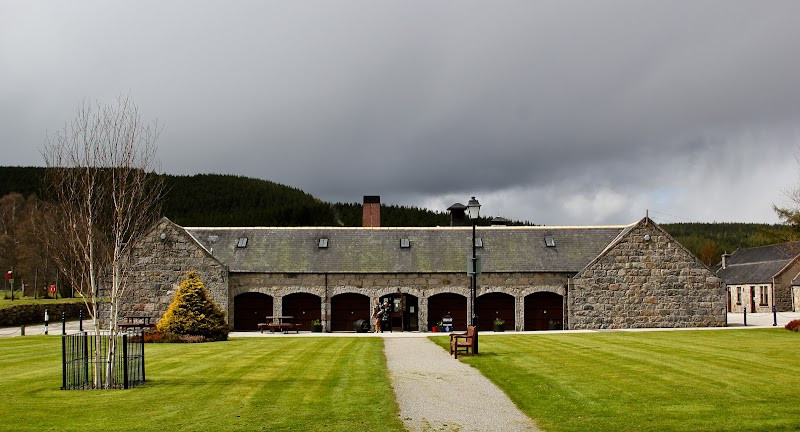
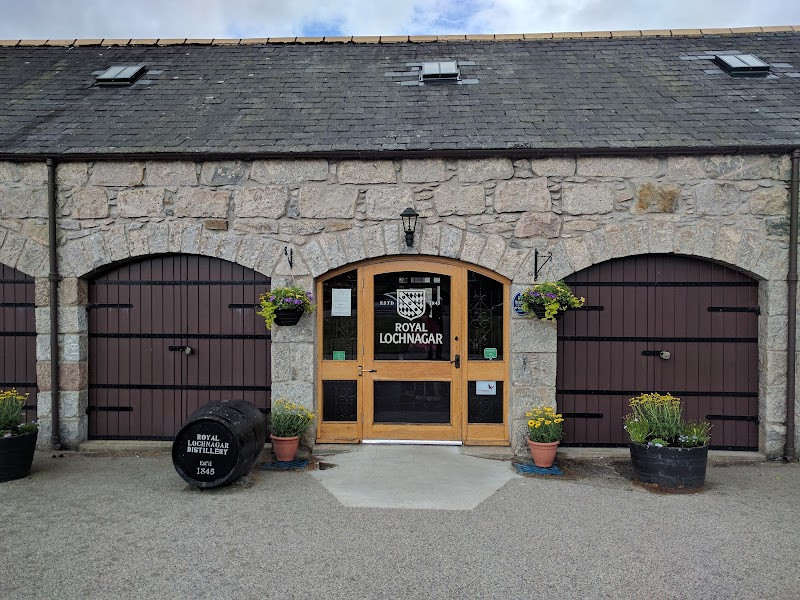
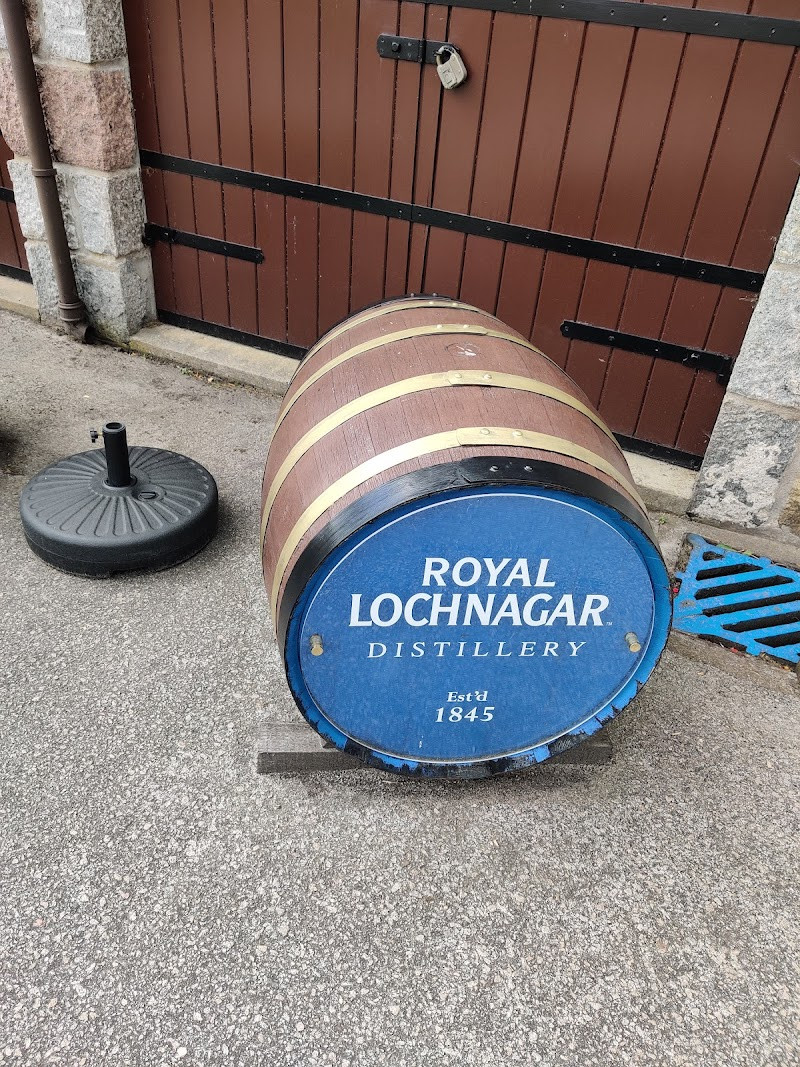
The distillery sits just behind Balmoral, a short drive past the gates and up a quiet road that feels almost too small for visitors. Royal Lochnagar is modest in size, tucked beneath the mountain it’s named after, with stone buildings and a small yard surrounded by pine.
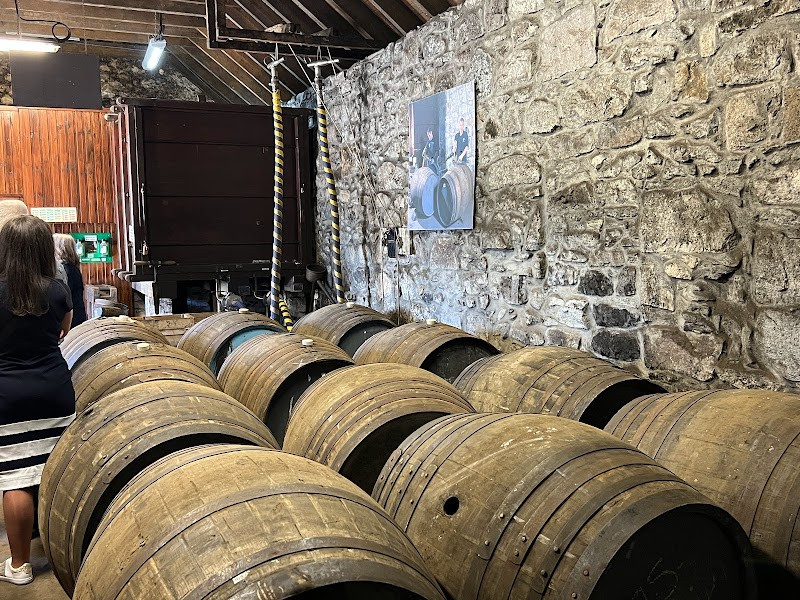
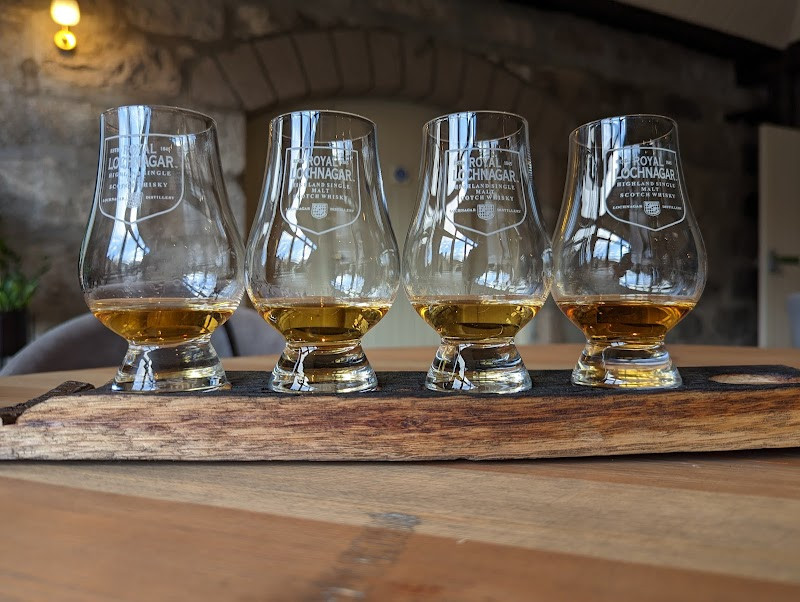
It’s one of the few distilleries with a royal connection — Queen Victoria visited in 1848 and granted it a Royal Warrant soon after. Inside, little has changed in principle. Small stills, traditional worm tubs, wooden washbacks — everything scaled down, personal, and easy to follow. The team here work close to the process, and the tours reflect that. It's not theatrical. You’re walked through the production, the story, the warehouse, and into a small tasting room for a dram that’s come a short distance from grain to glass.
Booking ahead is strongly recommended. Spaces are limited, and they don’t run every hour. If you’re lucky, a tour might be available on the spot — but it's not guaranteed. There’s also a tasting bar and shop open to all, even without joining a tour.
The whisky is Highland in style — slightly dry, lightly peated, and well-suited to the setting. You drink it close to where it’s made, with the cold air pressing in from Lochnagar outside and the faint smell of malt still hanging in the rafters.
Most spend under an hour here, but it’s an hour well used. There’s no café, so it’s best to arrive prepared — and there’s no rush afterwards. Because the last stop of the day is just up the hill, and while it’s a climb, the view at the top clears everything out.

Climb to Prince Albert’s Cairn
The track starts just beyond the road near the estate. There’s no grand sign, just a gate and a well-used path leading uphill into the trees. The cairn — built by Queen Victoria in memory of Prince Albert — isn’t visible from below. You have to climb first.
The walk takes around 25 minutes each way. It’s short but steep, with patches of uneven ground and loose stone underfoot. The forest closes in for the first stretch, but clears near the top. And then, suddenly, it’s there — a stone pyramid set high on the hillside, 41 feet tall and sharper-edged than expected. There’s a plaque on one side and nothing else. Behind it, the land opens wide: the River Dee winding through the valley, the ridge lines of the Cairngorms rising beyond.
Most visitors arrive out of breath and quiet. It’s not crowded — even on busier days, the walk filters people out. Some stay only a few minutes. Others linger, looking out over the day’s journey in reverse: Ballater in the distance, Balmoral hidden in the trees, the road back winding somewhere below.
There’s no interpretation board, no visitor centre, no café — just the pyramid, the view, and the air. And that’s enough. On a clear day, it’s easy to see why Victoria came here often after Albert’s death. The place holds a kind of space that doesn’t need explaining.
It’s a quiet end to a varied day. From the sea at Dunnottar to the hill above Balmoral, this 35-mile route covers castles, coffee, stories in stone, and something close to stillness. You finish with a view, a walk, and time to let it all settle. Ask ChatGPT






 Sign in with Google
 Sign in with Email