
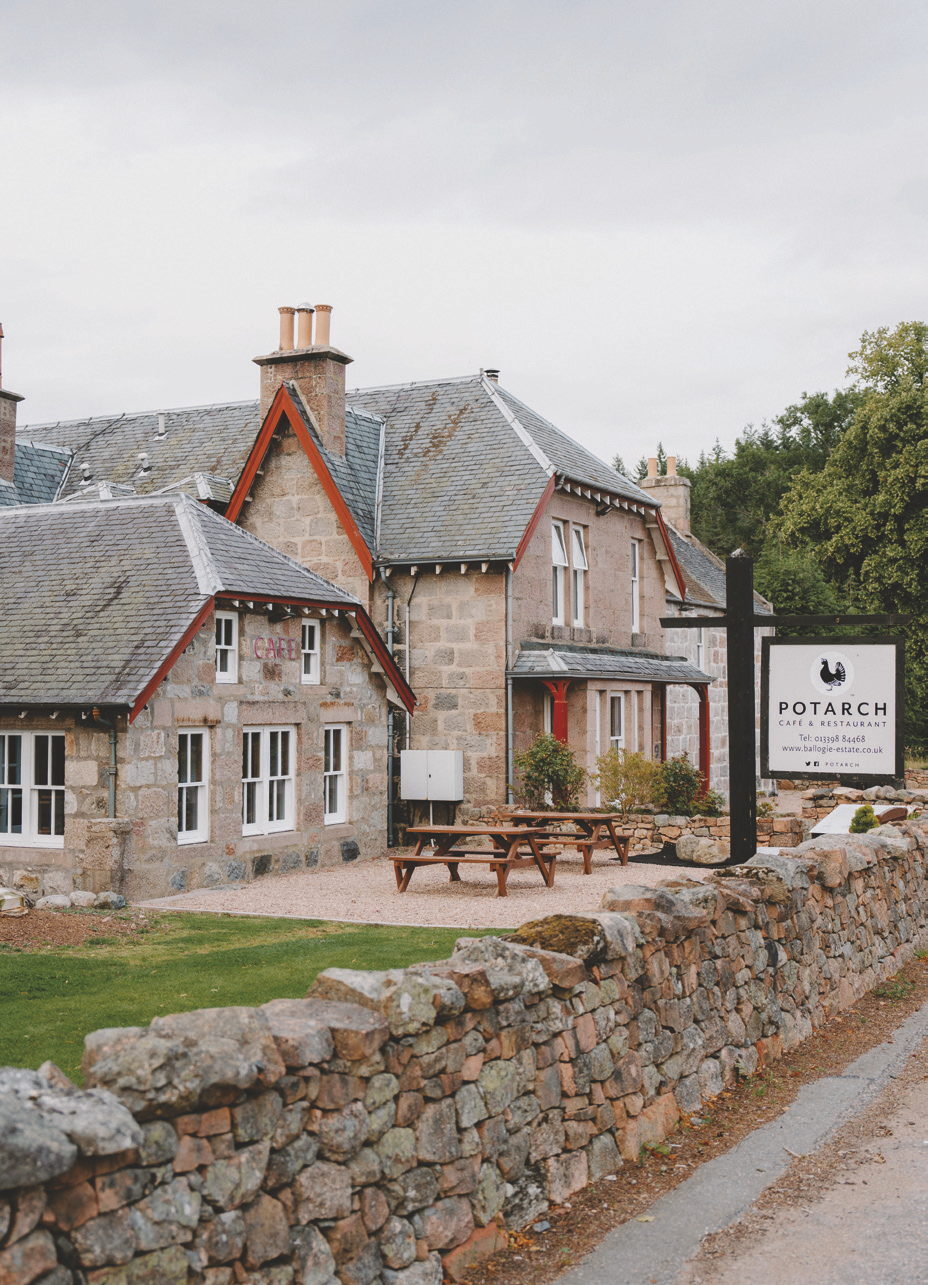
Potarch and the Dee – Café, Dinnie Stones and the Deeside Way
A day on foot, from Potarch and back.
The route
Potarch is where the road south into Birse crosses the Dee, between Banchory and Aboyne.
Within a few hundred metres stand the old inn by the bridge, now Potarch Café, the Dinnie Stones at its door, and Thomas Telford's granite bridge over a deep, fast stretch of the river. The day takes all three slowly, with brunch first and the arches seen from the bank. Then it crosses to the north bank and follows the Deeside Way upstream, between the river and the road, to Kincardine O'Neil. Often called the oldest village on Deeside, it is where the Highland Games champion Donald Dinnie won his first contest at 16, and a roofless medieval kirk stands in its kirkyard on the main street.
The day
Potarch
A slow day on foot at Potarch, where Telford's bridge crosses the Dee, setting out at about 10am with brunch at the café on the south bank and the Dinnie Stones outside its door. Then it crosses the river and follows the Deeside Way upstream to Kincardine O'Neil and its old kirk, with the bus to bring you back.
Potarch Café
A café
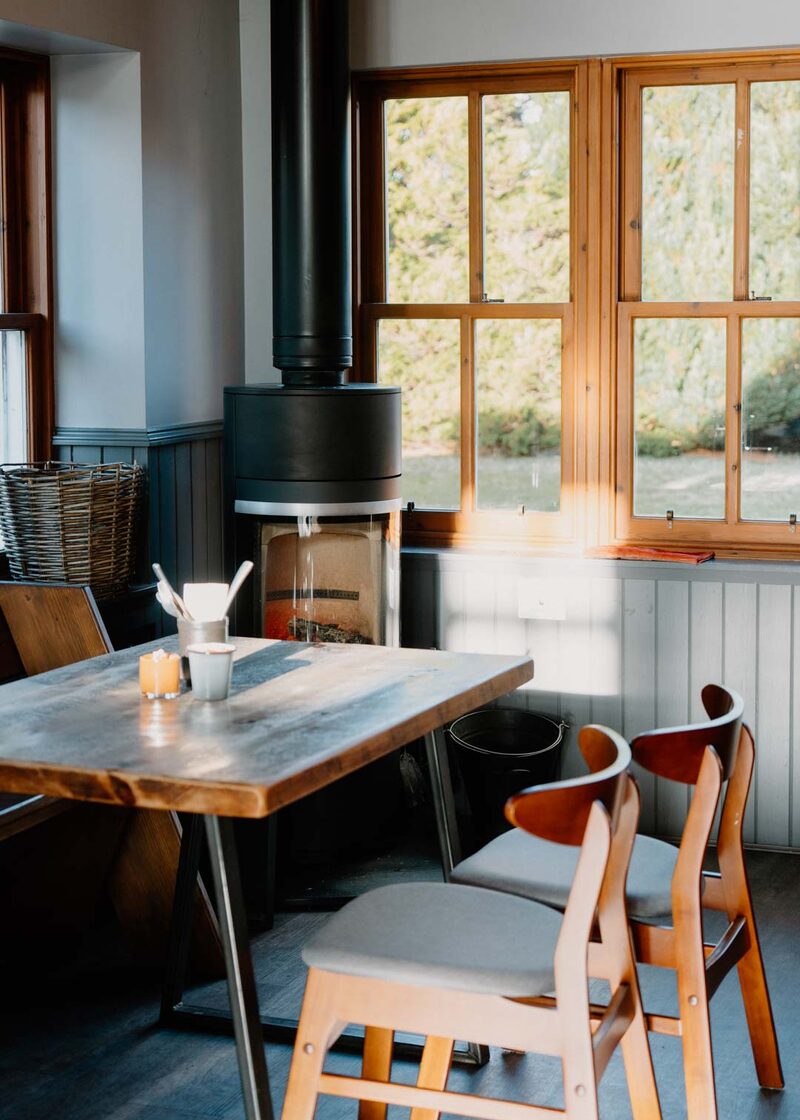
Potarch Café stands at the south end of Potarch Bridge, across the Dee from the North Deeside Road; Stagecoach's 201 bus from Aberdeen stops at the north end of the bridge. The building was the Potarch Hotel, and an inn has stood by the crossing since at least 1740. It shut in 2013, and the Ballogie Estate reopened it as a café in 2016. It opens at 10am for brunch, coffee and baking, with a wood stove and a deck, and can be busy at weekends.
The Dinnie Stones
An attraction
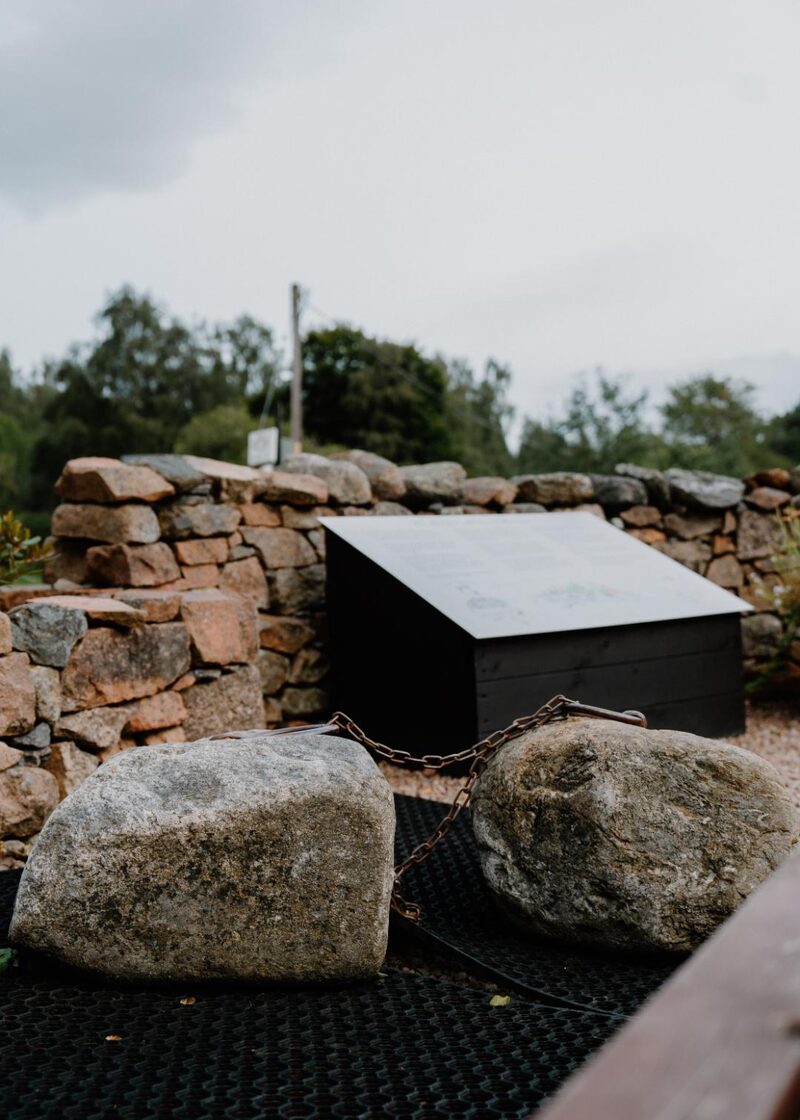
A few steps from the café door sit the Dinnie Stones, two granite boulders with iron rings, of 188 and 144 kilos. The story goes that in 1860 Donald Dinnie, born nearby in 1837 and Scottish champion of the Highland Games for 21 years, carried both across the width of the bridge. Lost after the First World War, they were found again by the river in the early 1950s. Look, touch and take a photograph: lifting them is for strength athletes, arranged ahead with the estate and the organisers.
2 min on foot
Potarch Bridge
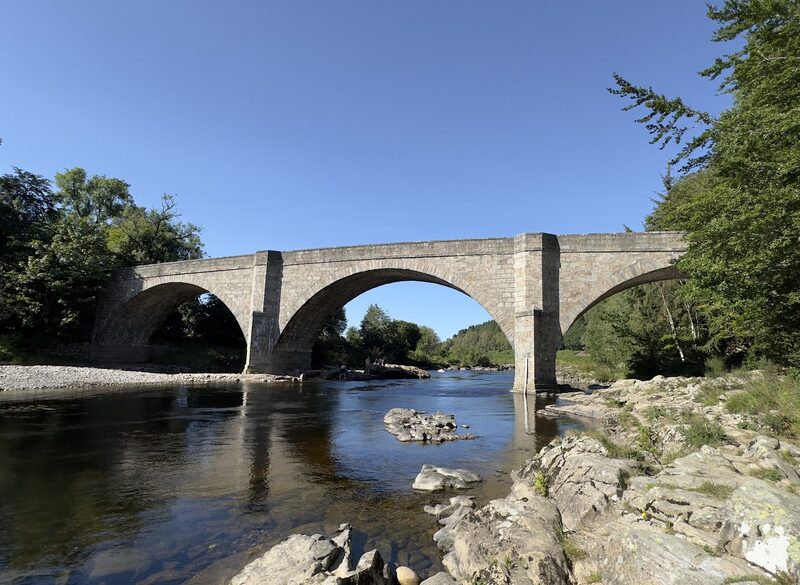
It's a 2-minute walk to Potarch Bridge, three granite arches that Thomas Telford designed in 1811, with its main pier set on a rock in midstream. Timber floated down the Dee damaged it while it was being built, in October 1812, and it was finished in 1814. There's no pavement, so step into one of the refuges above the cutwaters when a car comes. Tracks lead down to the bank on both sides for the arches and the narrows, but the water is fast and deep: keep children back.
14 min on foot
The Deeside Way
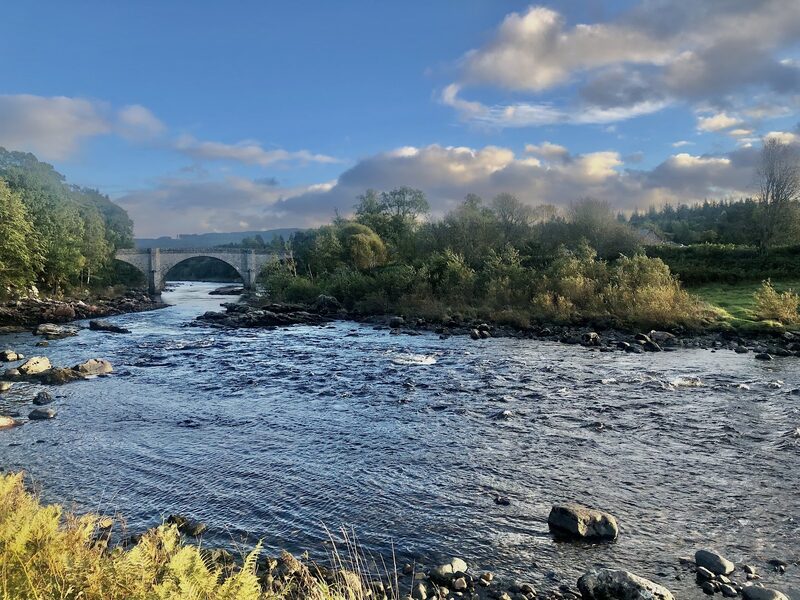
Cross the bridge for a 14-minute walk along the Deeside Way, which runs upstream on the north bank between river and road. This stretch is no railway: the old Deeside line ran further north, by Torphins and Lumphanan, and bypassed Kincardine O'Neil. The Way only joins its trackbed again near Dess. The path is mostly level and firm, through a wooden chicane, with the river beside you.
30 min on foot
The Auld Kirk
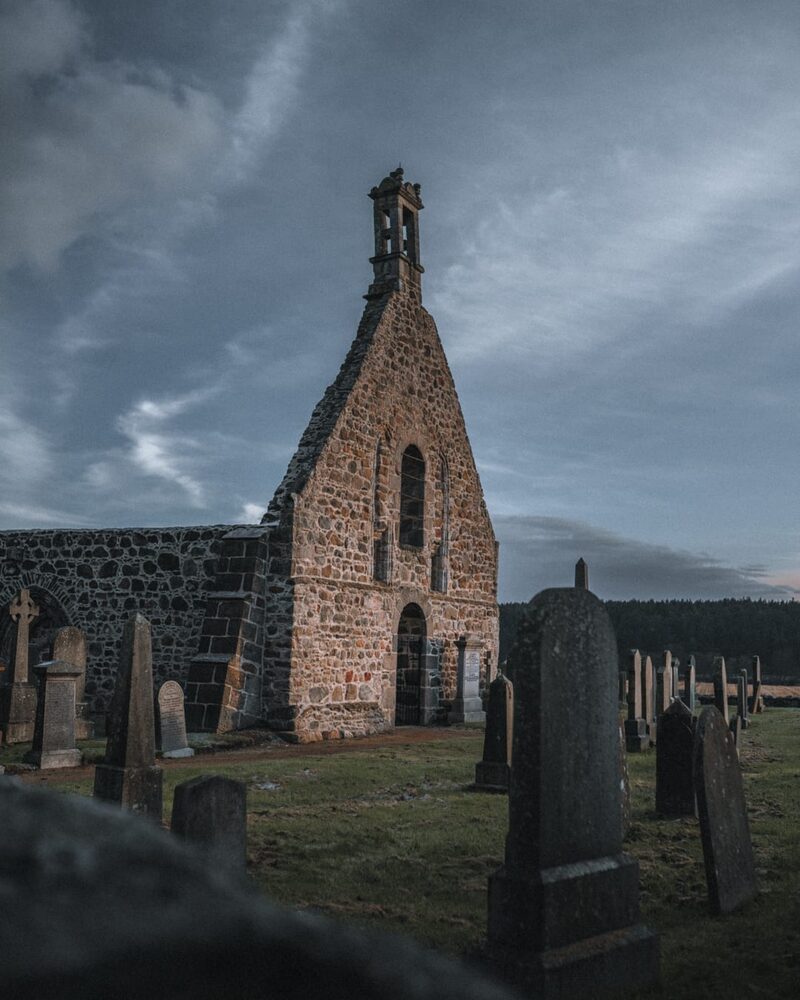
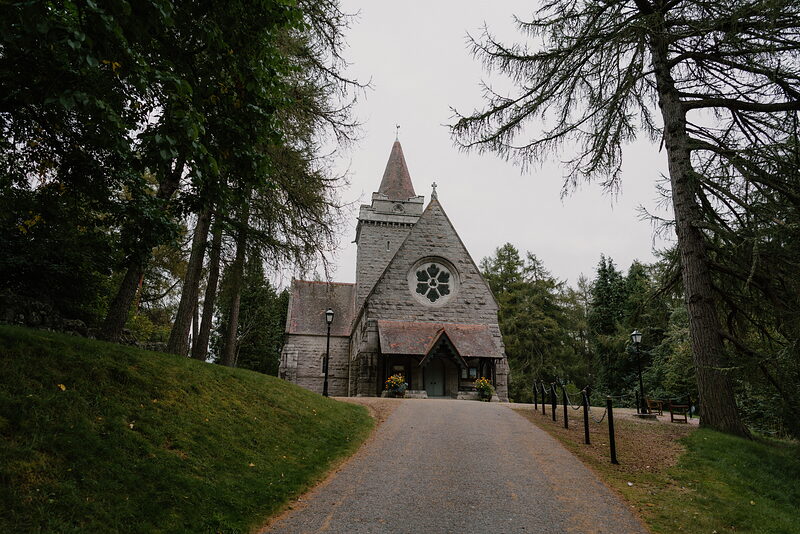
The walk on takes 30 minutes: near the village the path climbs one short, very steep bank to the road, then takes the pavement into Kincardine O'Neil. The roofless Auld Kirk stands in its kirkyard on the main street, a church of the 1200s dedicated to St Mary and to St Erchard, the village's own saint. A medieval hospital, a refuge for travellers and the poor by the old crossing of the Dee, is thought to have stood against its east end: look there for the lancet windows.
45 min on foot
Kincardine O'Neil
An attraction
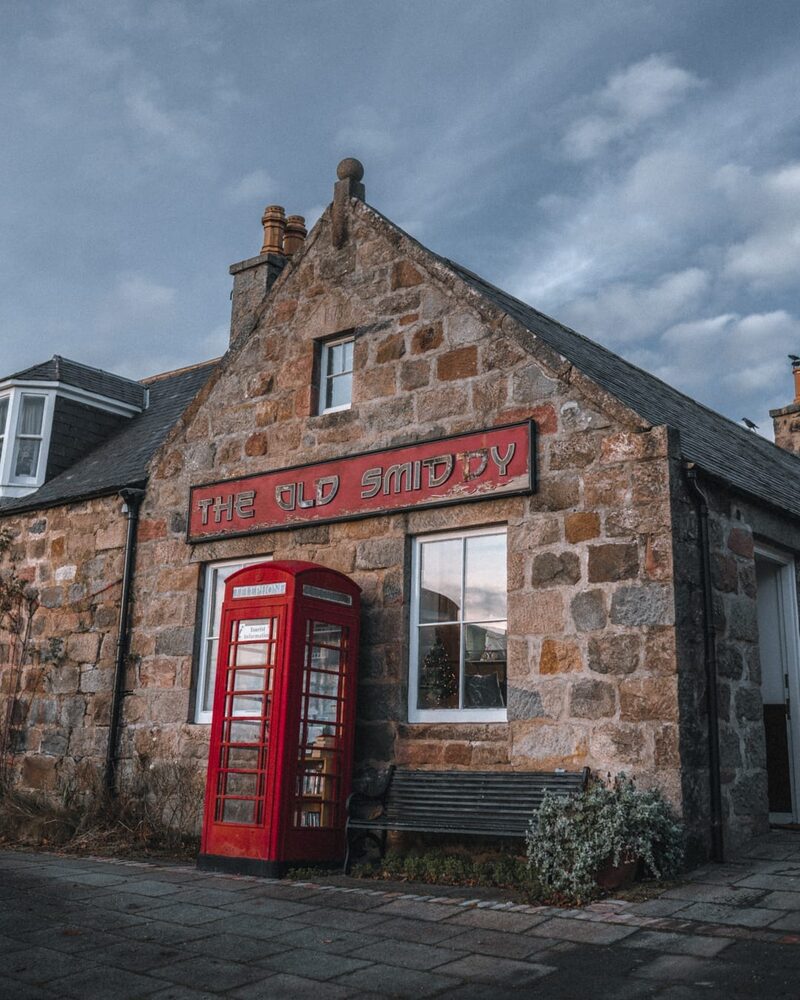
A minute along the main street is the heart of Kincardine O'Neil, by the granite Old Smiddy and the red phone box the village keeps as an information point and book swap. The Village Store does hot drinks, soup and sandwiches. Stagecoach's 201 back to Potarch, about hourly, stops outside the store and takes three minutes. It sets you down across the A93 from the bridge road, with no marked crossing: cross with care, then over the bridge, which has no pavement. Or walk back, about 45 minutes.
If it rains
The café, where the day starts, is warm, with its wood stove; the stones take ten minutes and the bridge a quarter of an hour, in any weather. In steady rain the Way is muddy but still a fair walk, and the Auld Kirk is open to the sky. When the Dee is in spate, leave the riverside path out: after brunch, ride the 201 from the north end of the bridge to Kincardine O'Neil for the kirk and a hot drink at the Village Store, and come back the same way.
Worth a detour
- Dess Waterfall
For the real Deeside line, ride the 201 west from Kincardine O'Neil for three minutes to the stop called Road End, at the turn for Dess. Cross the A93 with care, and it's a 12-minute walk up the minor road, then a short stretch of the Deeside Way, to the Dess Waterfall, loudest after rain. It's 17 minutes more, steep in places, to the old Dess station, where the Way at last runs on the railway's trackbed; the platform and station house are private homes. Walk back to Road End, about 15 minutes, for the bus to Potarch. Or follow the old line west into Aboyne, about 5 km, muddy in places and unmarked near the end, and take the bus back from there.
Make it a weekend
More days out in Aberdeenshire.
Photographs by Fraser Stewart and Lewis Tydeman via Google