
Wild Swimming with Anna Deacon
Anna Deacon takes us into the cold water and the growing wild swimming community across Scotland. What started as a challenge at Gullane Beach became a personal turning point, shaping her photography, travel, and mental wellbeing. Her story captures the appeal—and responsibility—of swimming in Scotland’s lochs, seas, and rivers.
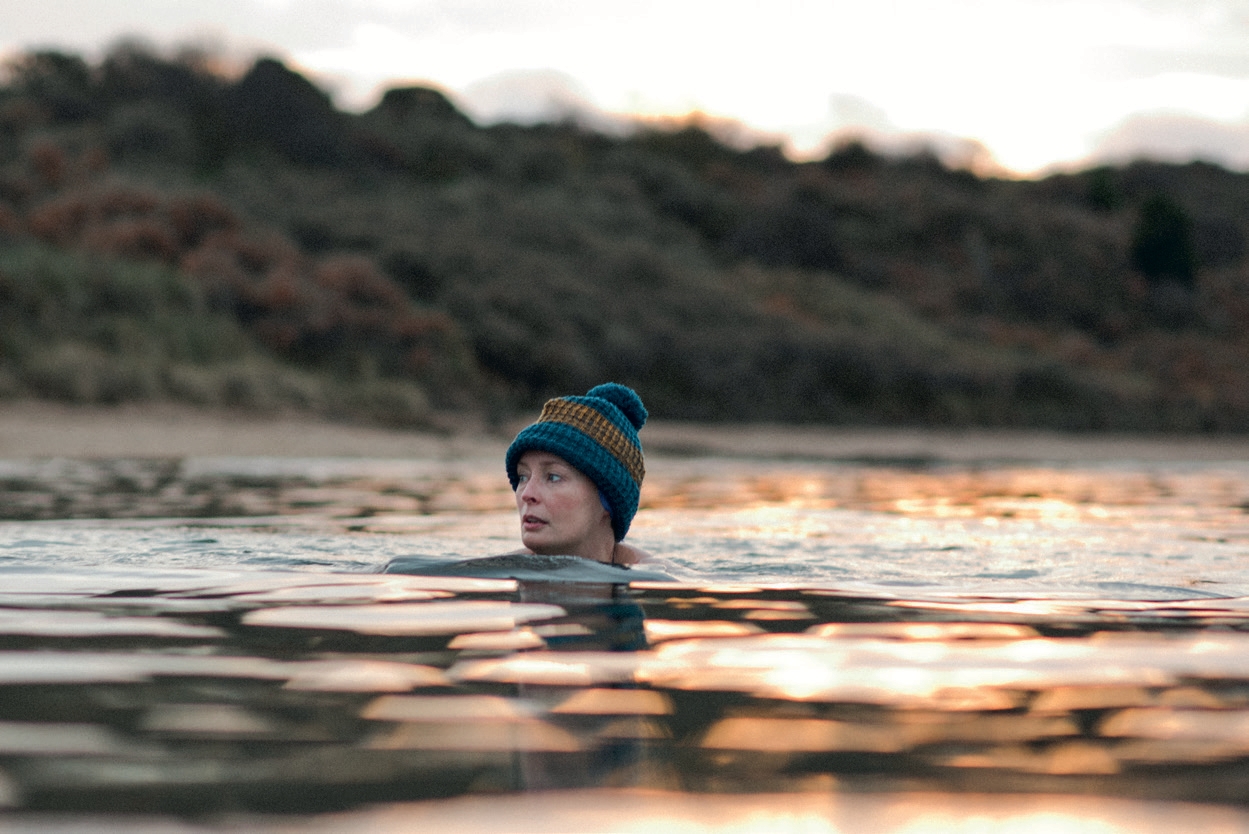
Although I have always enjoyed a little swim in a beautiful place, I wouldn’t have called myself a wild swimmer until 2016 when I, mostly in response to a challenge, went for an autumnal dip in the sea at Gullane beach. After the initial surprise of the cold water I found myself feeling overwhelmingly happy. I lay back and watched the birds wheeling overhead as I let the waves rock me and the water hold me. I turned over and looked below the surface to see the patterns of the water on the sand below and the sunshine filtering through in glittering streaks. I resolved then that this was going to be my new thing. I’m a person prone to anxiety and overthinking things.
My sleep tends to be erratic and my focus is often unclear. I can’t do mindfulness apps and I really have tried, but regularly being in the water has changed much of this. Getting into cold water, especially in the winter when the water temperature can reach freezing, requires a certain degree of mindful practice. You need to feel a total brain and body connection to stay safe, you need to be body scanning to see which parts are cold, too cold, or just ok, what is under your feet? Rocks, sand, is there an undertow? You need to connect with all of your senses: what does it feel like, what can you see, hear, smell. Can you taste the salt water tang on your tongue? This mindful state is exactly what we aim for when listening to these apps, body scanning, mind/body connection, tuning into your senses.
You need to give in to the cold, it is pointless to fight it. Breathe, take your time, relax and just let it take you over. Once you do that you can start to enjoy it. The initial cold on the outside is quickly replaced by your internal fire, a feeling of warmth that spreads across your whole body. With your senses heightened you are tapping into an animal instinct for survival that makes you feel empowered and strong. The cold water shock stimulates your fight or flight reaction, which stresses your body. By repeating this action regularly you start to be able to cope better with truly stressful life situations. You start to activate your parasympathetic nervous system and stimulate your vagus nerve which has an anti-inflammatory effect. This, in turn, can help with conditions such as depression, anxiety, chronic fatigue and even alzheimers.
Then there is the nature. As a photographer I am constantly inspired by the ever-changing sea, it is never the same from one day to the next. When you swim outdoors you are literally face to face with the creatures of the water, in their turf and as such they don’t seem to see you as such a threat and often approach much more closely. I love watching the sea birds bob along right next to us, or the gannets plummeting into the water fast and straight as an arrow and bobbing back up, fish in beak. The slightly unnerving feeling of being watched sometimes reveals a sleek seal head observing with baleful eyes then vanishing again. I know of people who have been swimming and have been joined by dolphins, orca, puffins and kingfishers. Early risers at our local city beach, Wardie Bay in Edinburgh, have watched an otter wander along the shoreline at sunrise, seen a pod of dolphins frolicking nearby and plenty of times been joined by the resident seals.
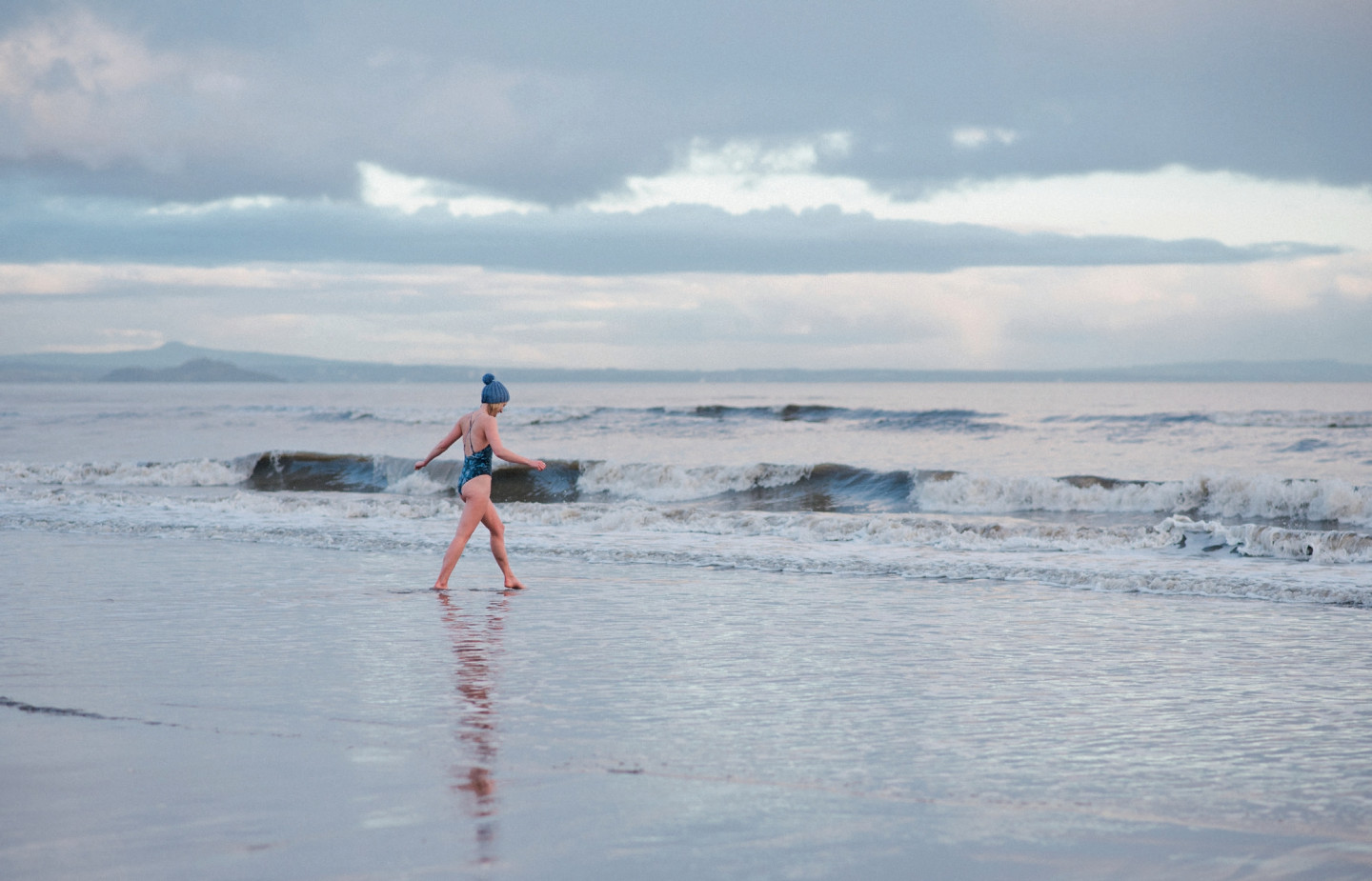
Most of my swims take place near home but when I can travel I love to explore and find new swim spots. It reminds me sometimes of the film ‘The Beach’, the secret, idyllic place whispered about by those who know. Some locations I will never reveal for fear they become overrun, some I have been taken to secretly by a local guide and I would never find again as they are so hidden. I like that though ‑ I think it is important that there are still places to discover, hidden swim spots you can have all to yourself.
When writing ‘Taking The Plunge’, Vicky Allan and I travelled all over Scotland meeting swimmers, swimming with them and hearing their stories. We got to experience waterfalls with secret passageways, nature’s spa with jacuzzi-shaped plunge pools that cascade down into one another, healing waters that have been filtered through rocks gathering minerals for thousands of years, wild and secret beaches, rivers and streams, dull, brown, peaty lochs which turn magically clear once underwater revealing an unimaginable world of wildlife below the surface. Best of all we met swimmers; wonderful, wild swimmers right across the country, with all ages and abilities, brand new swimmers seeking help with mental health, and those who have, at 90 years old, always swum in their local rivers. This wonderful, eclectic, inclusive community welcomed us with open arms, told us their stories and swam with us. I took my camera to the water for every swim and most of the portraits in the book were taken in the water with the swimmers. Being in the water together, both cold and swimsuit clad, was a leveller which allowed them to trust me and connect in a way that on-shore portraits don’t so much.
When writing ‘Taking The Plunge’, Vicky Allan and I travelled all over Scotland meeting swimmers, swimming with them and hearing their stories. We got to experience waterfalls with secret passageways, nature’s spa with jacuzzi-shaped plunge pools that cascade down into one another, healing waters that have been filtered through rocks gathering minerals for thousands of years, wild and secret beaches, rivers and streams, dull, brown, peaty lochs which turn magically clear once underwater revealing an unimaginable world of wildlife below the surface. Best of all we met swimmers; wonderful, wild swimmers right across the country, with all ages and abilities, brand new swimmers seeking help with mental health, and those who have, at 90 years old, always swum in their local rivers. This wonderful, eclectic, inclusive community welcomed us with open arms, told us their stories and swam with us. I took my camera to the water for every swim and most of the portraits in the book were taken in the water with the swimmers. Being in the water together, both cold and swimsuit clad, was a leveller which allowed them to trust me and connect in a way that on-shore portraits don’t so much.
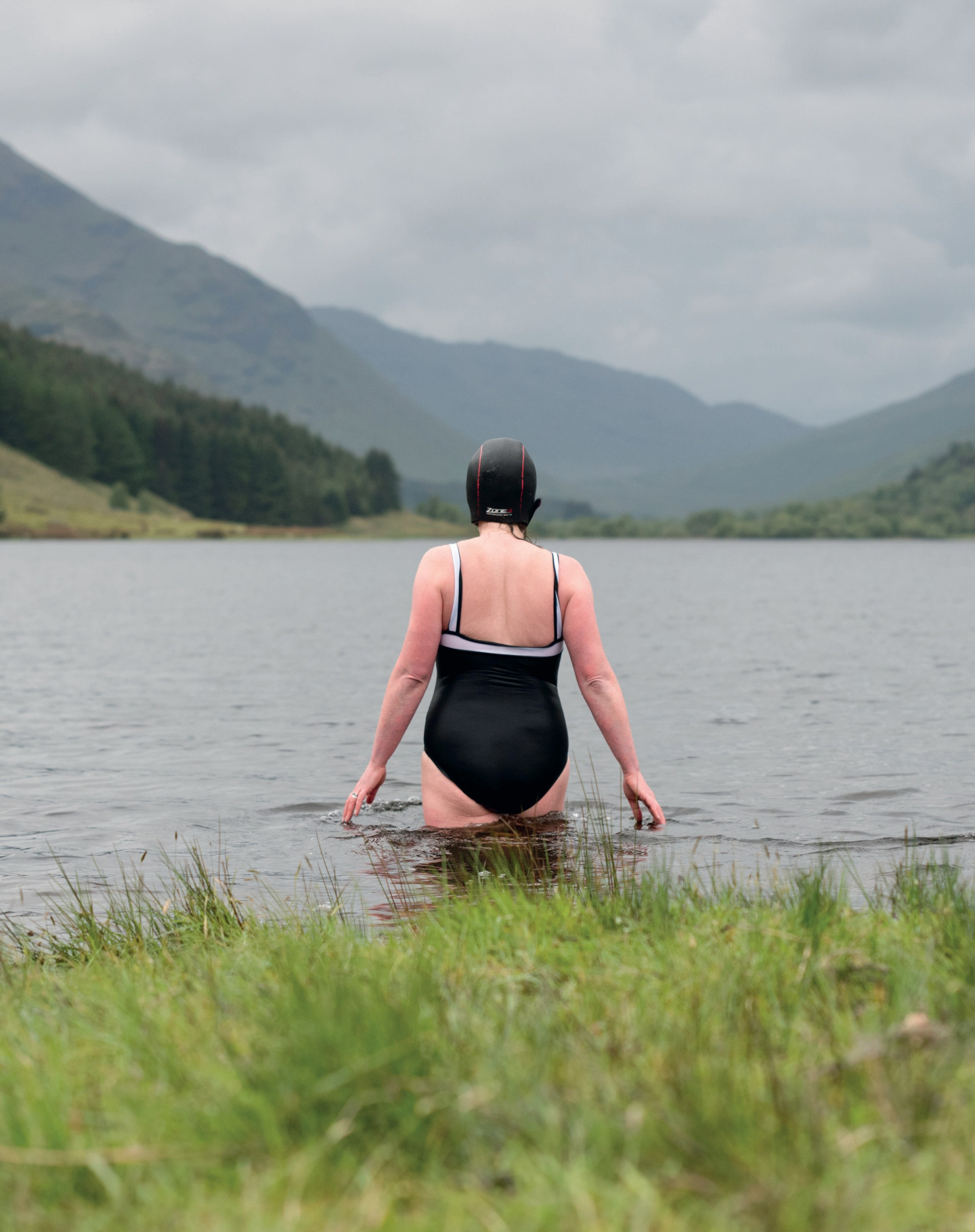
Top tips to get started
Find a local group, local knowledge is key
Learn about tides, rivers and water safety Always have a safe entry and exit point
Don’t swim alone
Keep it quick, and warm up as fast as possible
Increase your body temperature by doing exercises and drinking a hot drink
Listen to your body
Remember afterdrop, your body will continue to cool for 20 minutes after your swim, so the most dangerous time can actually be after you have left the water
Our favourite swim spots
Loch Insh, Cairngorms
This is one of my all-time favourite swim spots and is really perfect for a new swimmer. There are many good entry points near the boathouse and you can warm up in the café afterwards. The water is beautifully clear and the views are stunning.
Gullane beach, East Lothian
A regular swim spot, this stunning wide beach has plenty of room so even on a busy day you will find a quiet spot to swim. Careful of tides!
Wardie beach, Edinburgh
This tiny, city beach is my local and I swim here every week, sometimes every day. Whilst the water quality is dubious, there is a wonderful energy and great wildlife.
Sanna Bay, Ardnamurchan
A dip in this turquoise sea with the white sandy beach will make you feel like you are somewhere very far away from Scotland, until you feel the temperature!
Loch Tay
If you fancy a dip followed by a Scandinavian style sauna to warm up then a visit to the Taymouth Marina spa is a must. With a stunning view, a slide into the loch, a huge sauna, hot tub and steam room, this is a huge treat. Also the venue for the winter swimming championships.
Pittenweem Tidal Pool, Fife
This tidal pool, now fairly forlorn and unkempt is a wonderful nod to our historical roots of sea swimming. It is a beautiful spot for a peaceful swim and wonderful for whale and dolphin spotting
Promoted Post
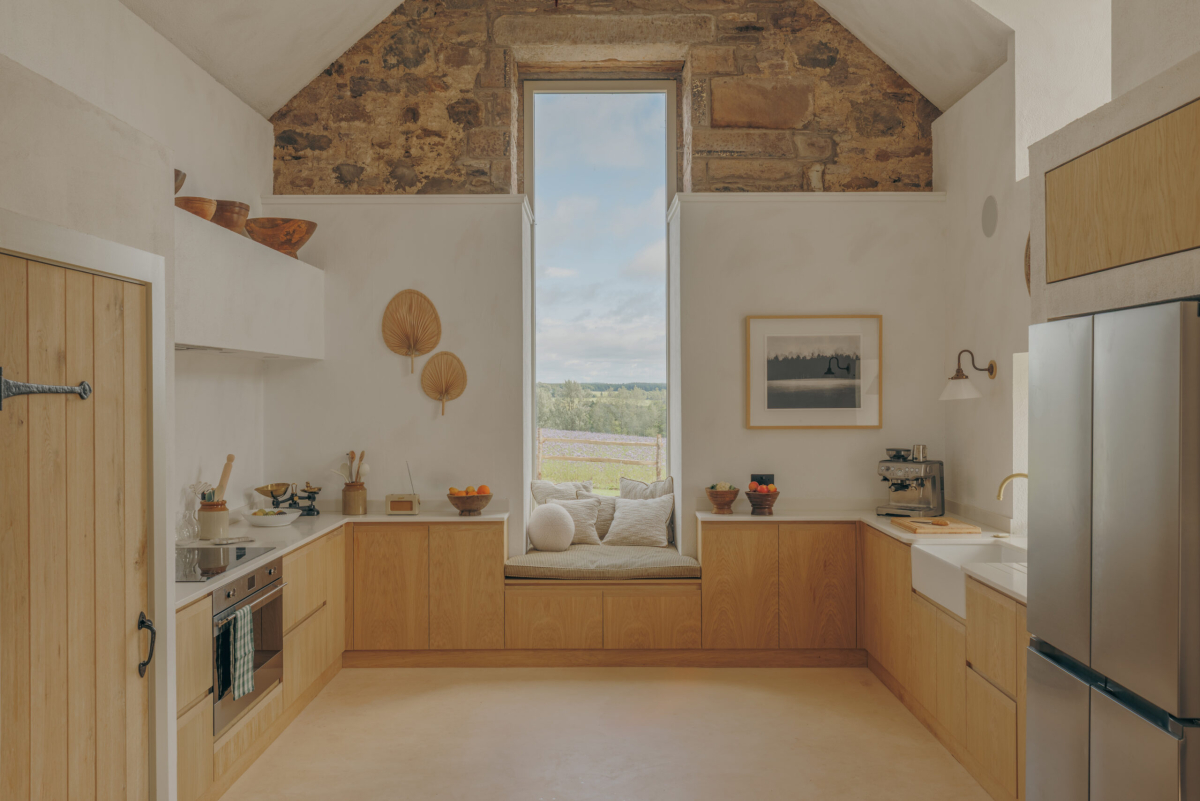
Whitehill Farmhouse
Located on Colquhalzie Estate, this 19th Century farmhouse has been lovingly restored into a family home, having previously been home to the Shepherd who lived there for 40 years. We welcome friends and families of up to 8 people on a self-catered basis for at least 4 nights.






 Sign in with Google
 Sign in with Email