
Visiting the Lochbuie Stone Circle on the Isle of Mull
Discover the Lochbuie Stone Circle on Mull. An unmarked, prehistoric site surrounded by hills and silence. No signs, no crowds, just ancient stones and one of Scotland’s quietest corners.

Written by Jack Cairney
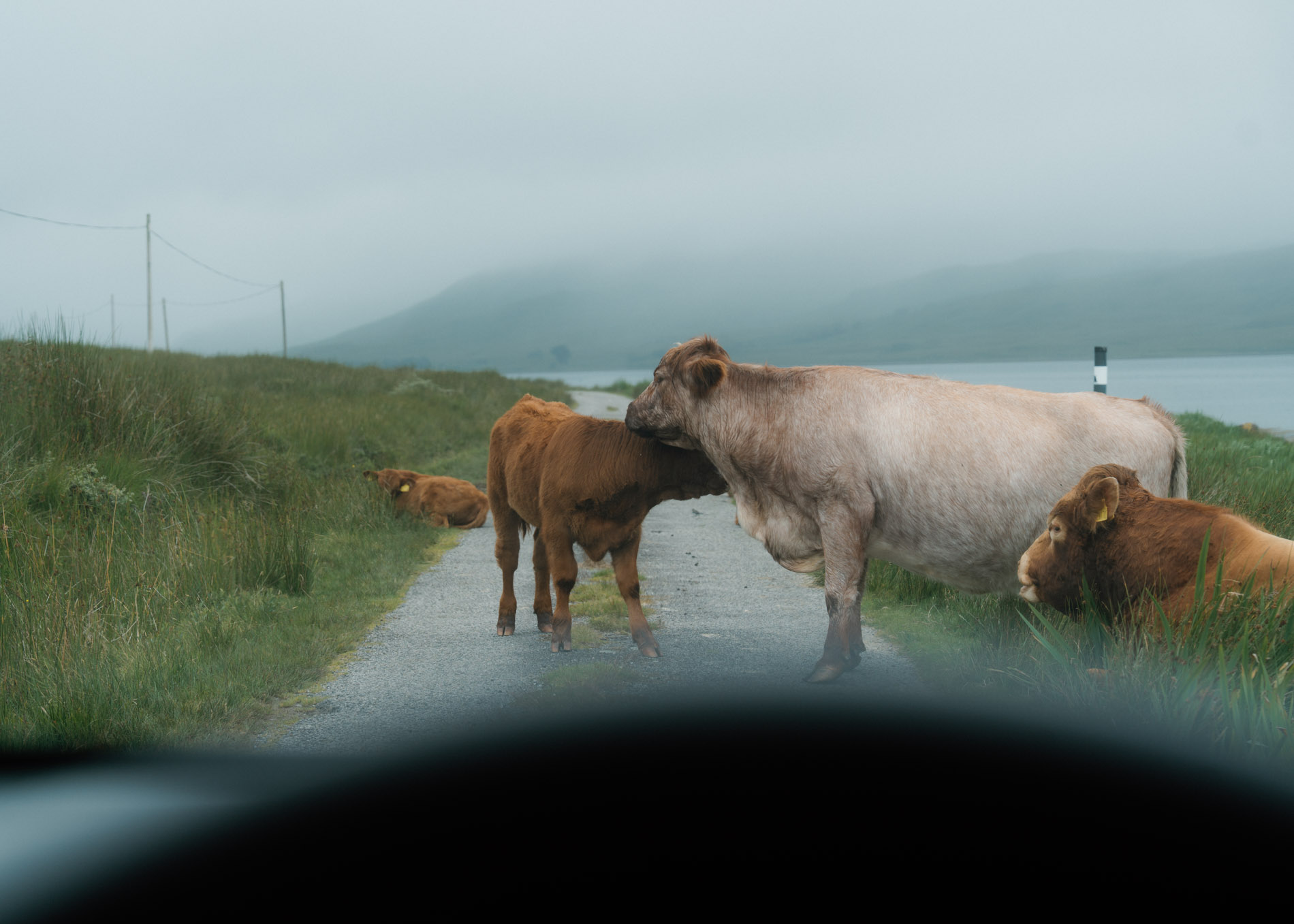
The road to Lochbuie loses interest in being a road. It narrows and twists between ferns and low stone walls, the surface rough with patches of gravel and damp earth. We passed a sun-faded post box, a bend tighter than it looked, and a few sheep that barely turned their heads. Then came the cows, five or six of them, broadside across the track, slow to acknowledge us. One lifted its gaze, blinked, and resumed chewing. Eventually, without hurry, they stepped aside. It felt less like a delay and more like a reminder to slow down.
By the time we reached the glen, rain had set in for good. Not hard, just persistent. Ben Buie had vanished into the cloud. The fields were soaked through. There were no other cars. No walkers. Just wet grass, the occasional crow, and that sense you sometimes get on Mull that the day has made up its mind and won’t be rushed.
There’s no visitor sign. No map. Just a wooden board wired to a gate—Lochbuie Standing Stones—and a faint track leading into a field. The stones don’t appear straight away. You follow the edge, boots sliding slightly on the wet ground, until they show themselves.
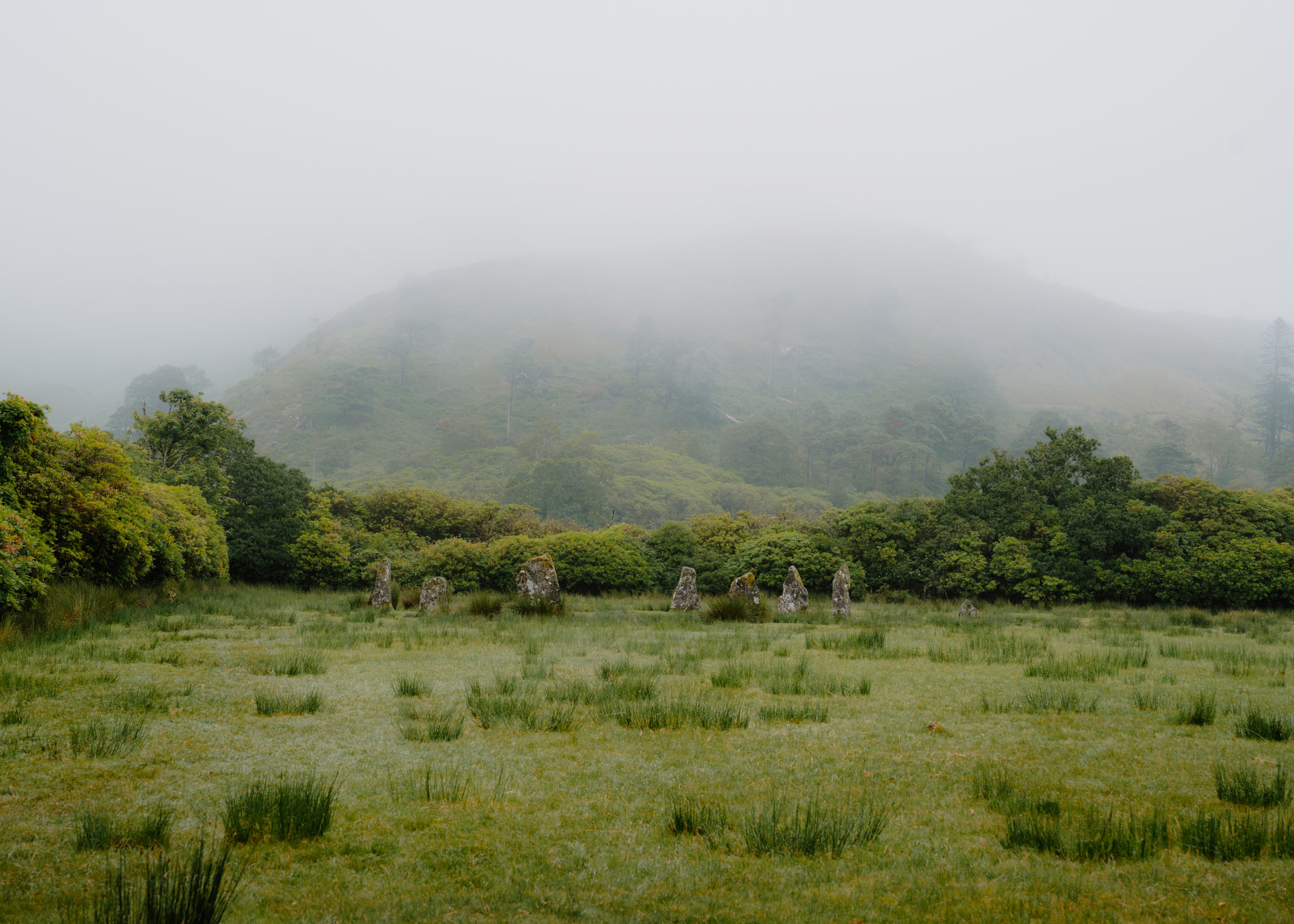
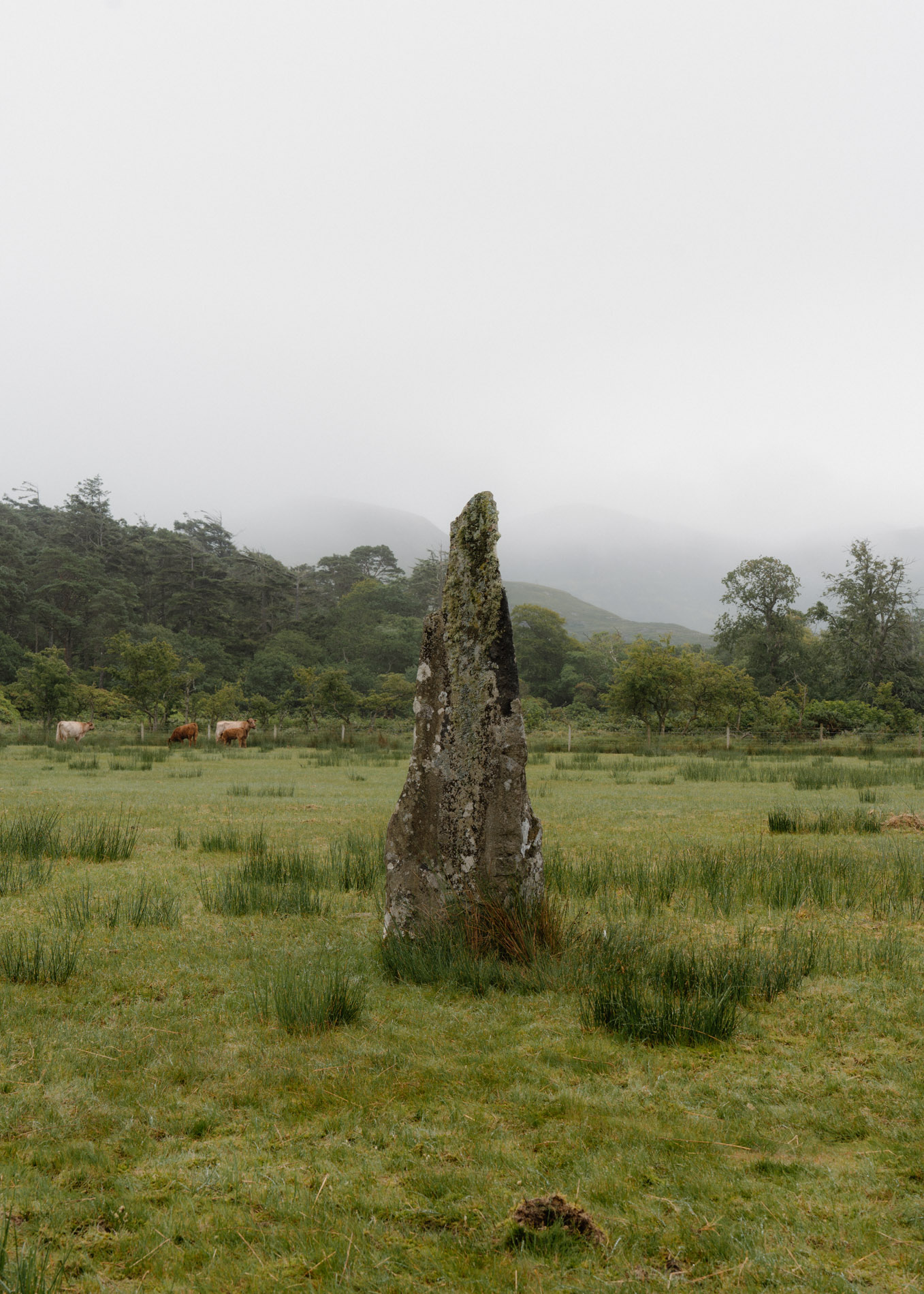
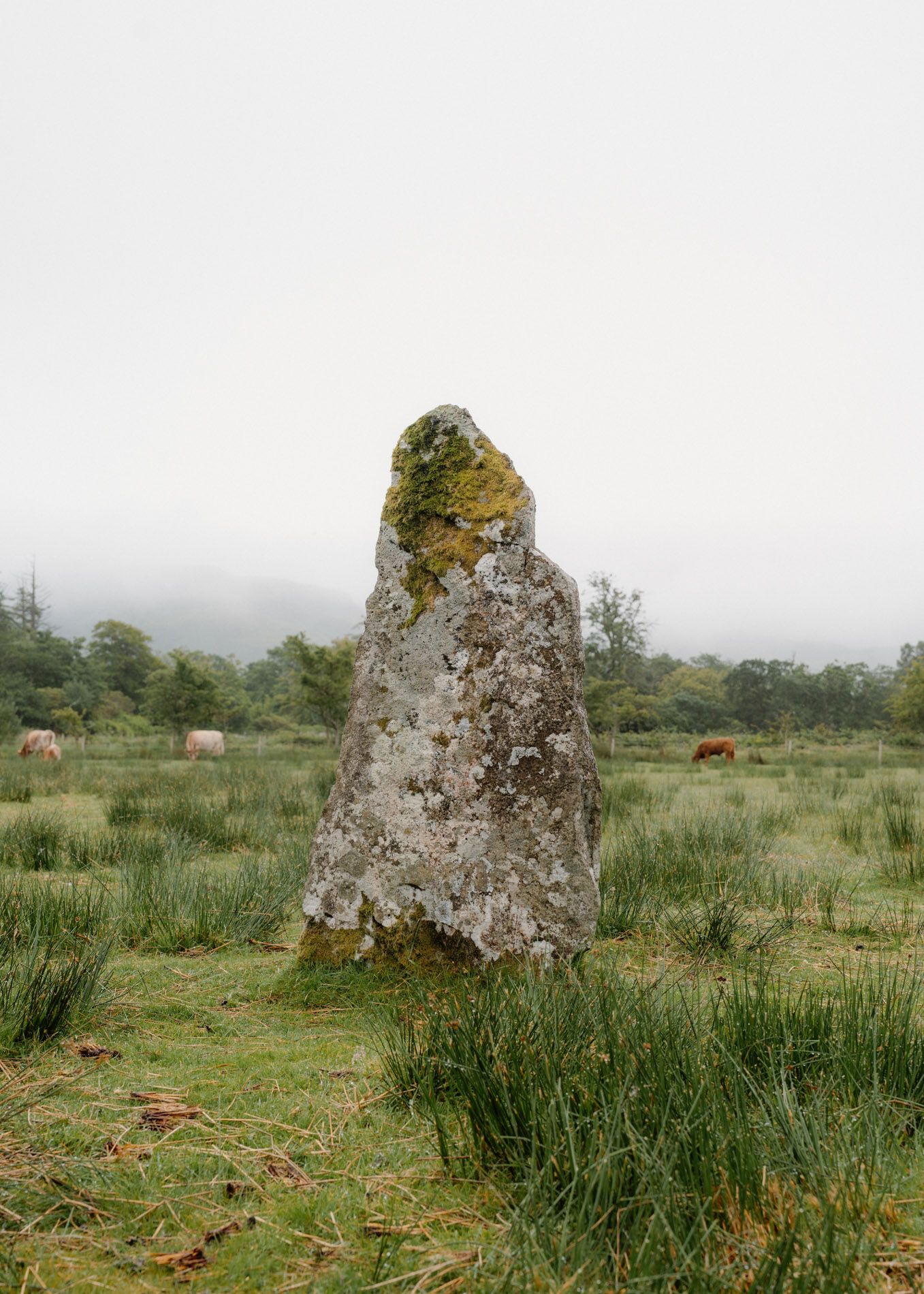
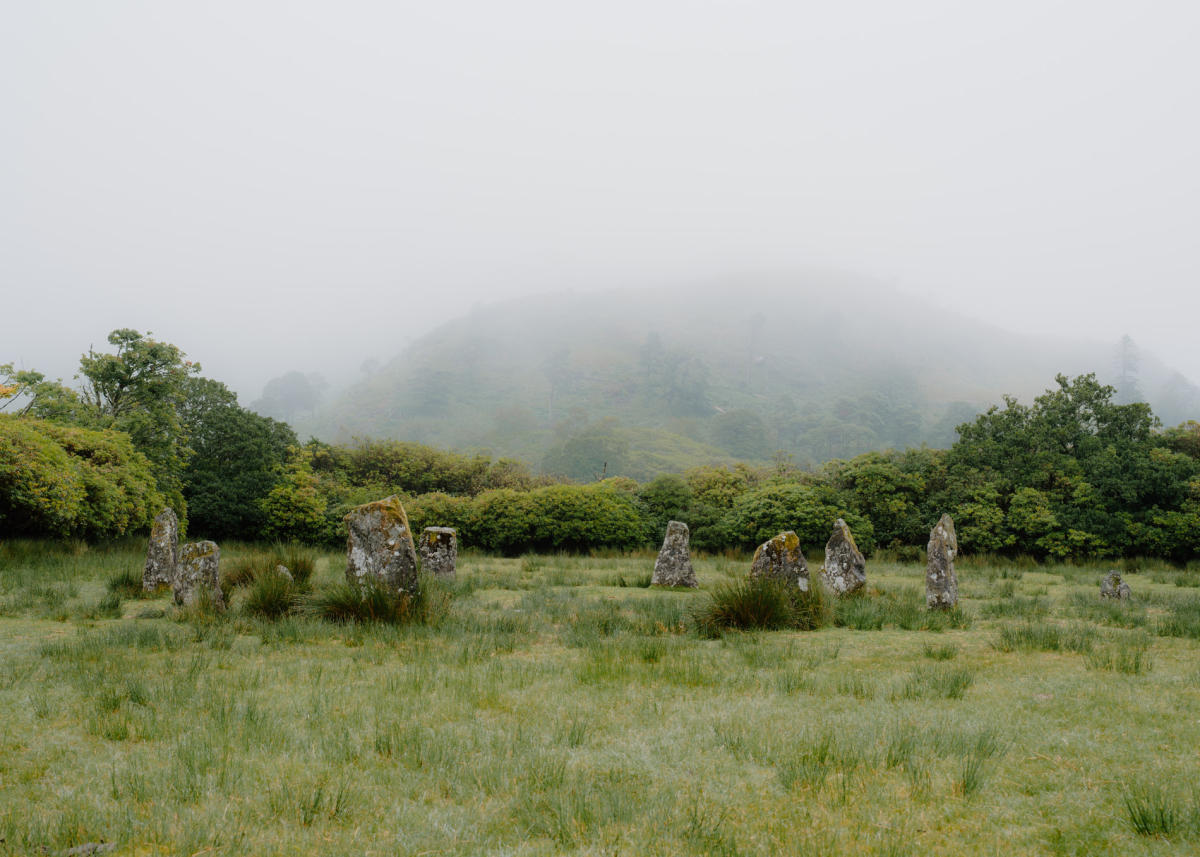
Nine granite uprights form the ring. Some tilt. One is smaller and likely a later addition. Their surfaces are coarse and speckled, pitted with lichen in pale green, rust, and black. They don’t rise impressively. There’s no symmetry, no central focus. But they’ve lasted. Four thousand years of weather, livestock, and shifting land. They sit low in a shallow basin, held by the hills and overlooked by the shoulder of Ben Buie. You get the sense they weren’t placed randomly. The builders were working with the land, not against it.
There’s a nearby kerb cairn, partly obscured in the grass. Two outliers stand at a distance, one of them angled as if pointing beyond. Maybe it once lined up with the midwinter sun. Maybe it faced a feature that mattered at the time but no longer exists. No one knows. Theories cover seasonal gatherings, burials, clan territory, or markers for routes through the glen. But nothing definitive. There’s no attached legend, no known folklore, no names. That absence gives the place its shape.
We stayed a while. Walked a loop around the ring. Watched the weather shift slightly, but not much. No big views opened up. The loch stayed hidden behind a low ridge, and Moy Castle was out of sight entirely. But the site didn’t feel cut off. It felt deliberately placed. Not to be seen from everywhere, but to hold its ground in a quiet corner of the island.
Back down the track, the Old Post Office café was still open. Soup, sandwiches, wet jackets over the backs of chairs. A gull drifting past the window. No one else in. No music. Just a warm room with a view of the bay and the soft sound of rain on glass. We left slowly. It didn’t feel like there was anywhere else to be.
That whole stretch of Mull feels unhurried. Not empty, just settled into itself. No billboards, no gates, no timetable. The circle doesn’t offer explanations. It doesn’t need to. You don’t leave Lochbuie with a story. You leave with something smaller and harder to name. Maybe that’s the point.
Planning a Visit to the Lochbuie Stone Circle
The stone circle is at the head of Loch Buie on the Isle of Mull’s southern coast. From Craignure, the drive takes around 45 minutes, with the final stretch on a narrow single-track road. Watch for sheep and cows, both take priority.
There are no formal signs beyond a small wooden board on a gate reading Lochbuie Standing Stones. You’ll need to park on the verge and walk. There’s no marked trail, but the route along the field’s edge is straightforward. Boots are recommended, especially after rain.
The site includes nine granite stones, a nearby kerb cairn, and two outliers. It’s thought to date to the late Neolithic or early Bronze Age, but little is known for certain. There are no facilities, no entry fee, and no interpretation panels. Just the stones, the field, and the surrounding hills.
After visiting, stop in at the Old Post Office café for lunch or tea. Nearby, there’s a short walk to Moy Castle and Laggan Sands. The whole area remains quiet even in summer, and if the weather holds, it’s worth taking your time.
Promoted Post
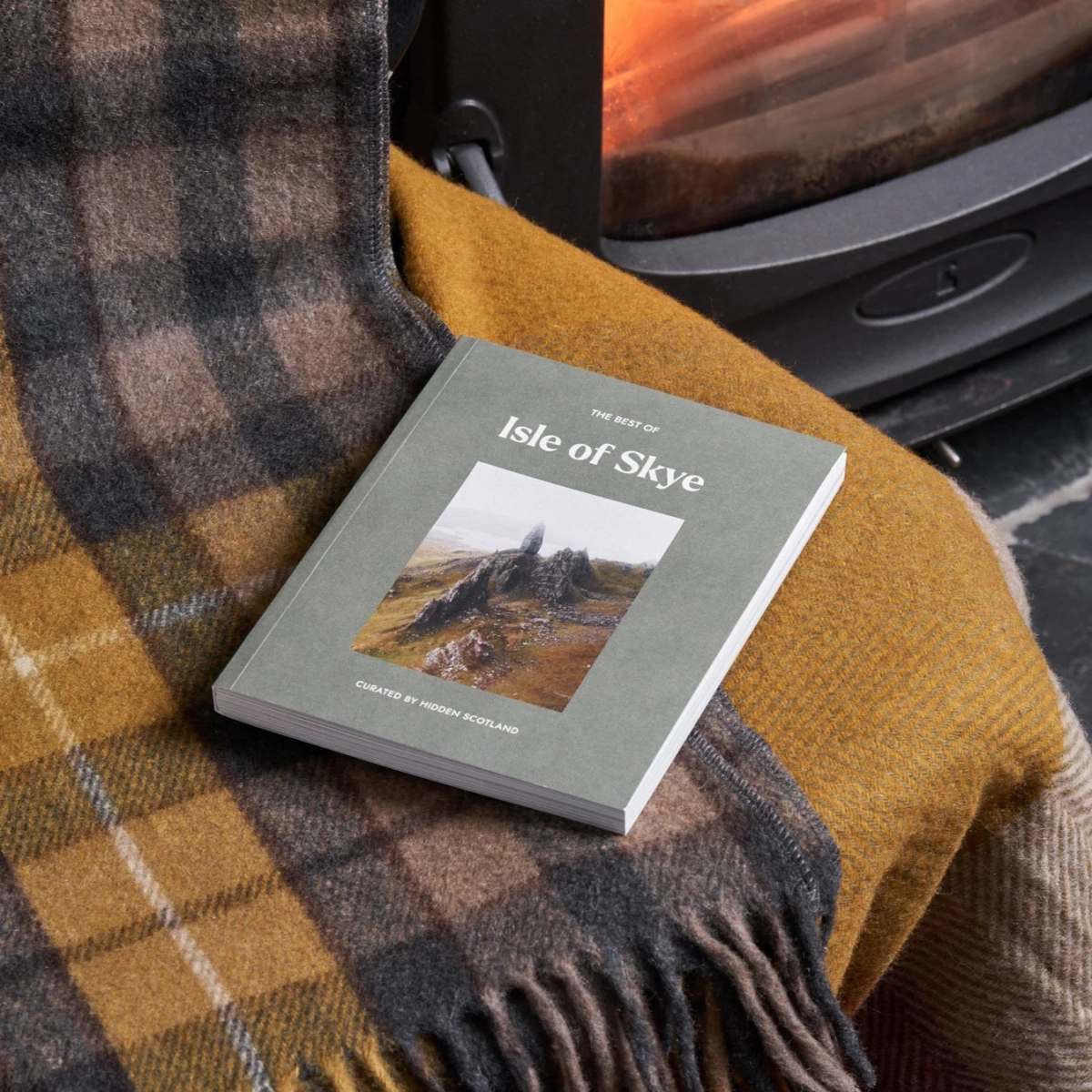
The Best of Skye Guidebook
The Isle of Skye is a place of rare wonder, a wildlife-rich spread of bays, peaks, cliffs and ridges. The views are big, but the prospect of adventure is even bigger. We hope this curated Hidden Scotland guide – which takes in everything from the best walks to the finest restaurants – helps you to have your own unforgettable island escape.





 Sign in with Google
 Sign in with Email