
Villages of Scotland
Scotland’s villages offer a quieter, more grounded experience than the well-trodden routes through cities and iconic landmarks. This guide highlights ten places where tradition holds firm, and where a slower pace reveals a different side of the country—one shaped by community, history, and the rhythms of rural life.
-full-1749412388.jpg)
When you’re visiting Scotland, it’s understandable if you want to see the ‘big ticket’ attractions for which the country is famous, especially if this is your first visit. From Edinburgh, with its narrow medieval streets cloaked in shadows and world-renowned architecture, to the stunning landscapes of the Highlands with insurmountable peaks encrusted with snow, Scotland’s reputation for vibrant cosmopolitan cities and mesmerising countryside is richly deserved. However, stepping off the popular tourist trails and ditching the hectic travel itinerary opens the door to an assortment of tiny villages in which Scottish traditions and the rural way of life has refused to be transcended by modern culture.
From tiny forgotten hamlets hidden along narrow lanes that snake through rugged countryside, to eye-wateringly pretty coastal villages which stand proudly along the water’s edge, Scotland’s villages are as unique as they are unspoilt: a window into a nation’s past where isolated tribal settlements flourished long before the urban powerhouses arose. In this guide, explore ten of Scotland’s breath-taking and memorable villages, for a tranquil and revitalising break that promises to divert you from the hectic tourist trails of the popular city haunts.
CROVIE
One of the most delightful coastal villages in Scotland, Crovie’s timeless charm is as pervasive as its sense of isolation from the modern world. Built impossibly on a narrow ledge at the bottom of 300-foot cliffs on Gamrie Bay, the village consists entirely of a single line of cottages that are sandwiched between hills and sea. There is nothing else.
Historically, Crovie owes its origins to the ejection of tenant families from their inland residences by wealthy landlords, forcing them to the coast where they established a lucrative fishing industry that thrived until more powerful trawlers from rival ports led to its inevitable decline. In the early 1950s, what remained of the Crovie community was all but destroyed when hurricane-force winds battered the Aberdeenshire coastline, destroying homes and sea defences and forcing many of the inhabitants to relocate to neighbouring Gardenstown. The remaining cottages, many of which were redeveloped as holiday lets, helped to preserve Crovie as a nineteenth century fishing village that, today, has lost none of its charm.
Such is Crovie’s isolation that its remoteness is surprising to many visitors. Motor vehicles simply cannot access the village and, even if they could, the narrow path that separates the cottages from the sea is too narrow to accommodate a vehicle. Parking above the village provides the start of a leisurely walk to Crovie that won’t be interrupted by phone calls (there’s no mobile signal), souvenir shops (there are no shops in the village) or difficult-to-cross roads. But this is what makes Crovie special: an enchanting, secluded haven that’s light years from the hectic routines of modern living. Whether you visit Crovie during calm weather, venturing further on an invigorating walk to Gardenstown, Pennan or Troup Head, or on a wild winter day when the sea pummels the bay unrelentingly, you’re guaranteed an unforgettable experience in a village that time forgot.
SEE & DO
Troup Head RSPB
Approx 10 minutes away by car, look out for the red cliffs where you’ll find thousands of nesting birds.
Cullykhan Bay
Approx 7 minutes away by car, you can enjoy the lovely little sandy cove of Cullykhan Bay.
Gardenstown
Approx 5 minutes away by car, you will find this quaint seaside harbour village.
EAT & DRINK
Coastal Cuppie
Approx 8 minutes away by car, a very friendly, shabby chic coffee and cake shack in the nearby village of Pennan.
The Captain’s Table
Approx 28 minutes away by car, a family run seafood restaurant bringing its guests delicious seafood that is landed locally.
-full-1749380629.jpg)
CULROSS
For centuries, burghs – urban settlements granted a royal charter – were the lynchpin of trade in Scotland, until their abolition in the last century. Today, Culross is not only one of the most picturesque villages in the country but is also the most complete example of a royal burgh, preserving the architecture and atmosphere of its past. If, wandering the cobbled streets of Culross you feel that you’ve walked straight into history, you probably have.
Overlooking the Firth of Forth in the south-west of Fife, Culross is renowned for its steep, narrow streets lined with white-harled and red-roofed houses that are a favourite for photographers and professional film crews alike. That said, you’re just as likely to come across a house that is mustard-yellow, brown, pale green or even pink, leaving you with the lingering sense that you’re not quite sure what you’ll discover around the next corner.
Culross is a village that seems to be untouched by modern times. It is unapologetically authentic, a page out of seventeenth century chronicles that is as eerie as it is photogenic. Among the village’s architectural merits, the Town House – once a prison where witches were reputedly confined in the attic – and the abbey feature prominently. It is, however, the distinctively yellow Culross Palace, with its rust-coloured European roof tiles, that is the standout attraction. Completed in 1611 for the industrialist Sir George Bruce, this striking manor house retains the hallmarks and atmosphere of its early life, with biblical scenes adorning the ceilings, panelled interiors, and extensive grounds modelled on seventeenth century gardens by the National Trust for Scotland.
Culross may be only an hour’s drive from Edinburgh, but it feels far removed from modern life – a distinctively unique visitor experience that is rarely surpassed.
SEE & DO
Culross Palace
A late 16th/early 17th century merchant’s house.
Culross Abbey
Explore the ruins of a Cistercian monastery of the 1200s, once home to a community of monks and lay brothers.
Fife Pilgrim Way
64 mile walking route, that runs inland through Fife, from Culross and North Queensferry to St Andrews.
EAT & DRINK
The Admiral
Enjoy coffee, tea, soft drinks, cakes, scones & light meals.
The Red Lion
Inn A cosy inn with a classic pub-style menu, with real ales and outside tables.
-full-1749381567.jpg)
SHIELDAIG
Like so many other villages and towns in Scotland, Shieldaig owes its history to the fishing industry. Established in 1800, the village was a breeding ground for families to take up fishing for their living - the Admiralty offered generous grants to support boat building and housing - but Shieldaig also helped to create a register of trained seafarers who the Royal Navy could call upon during the Napoleonic Wars.
Today, Shieldaig is a truly stunning waterside location and one of the most breath-taking villages in Scotland. Perched on the edge of Loch Shieldaig in front of the theatrical backdrop of some of the highest mountains in the UK– Liathach, Maol Chean-dearg and Beinn Alligin – Shieldaig enjoys a unique position that is best viewed from the Applecross Peninsula approximately a mile south of the village. From here, some of the finest sunsets imaginable can be savoured. Shieldaig’s heart is the series of whitewashed cottages that fringe the edge of the loch. Here, much has been achieved to retain the serenity of the village for visitors, such as encouraging motorists to park away from the village centre and grassing over large sections of the shore so that the views of the loch and beyond can be properly enjoyed. The highlight of Loch Shieldaig is its 13-hectare island whose rocky outcrops are densely covered by scrub and Caledonian pine trees – a sharp contrast to the harsh, bare slopes of the surrounding mountains. The trees on Shieldaig Island are believed to have been planted in the mid-nineteenth century to provide poles for fishermen to dry their nets.
Shieldaig and its surrounding countryside is widely regarded as some of the finest scenery in Europe, so it’s hardly surprising that the area is popular with photographers, hikers, climbers and wildlife enthusiasts. For newcomers, the atmosphere of Shieldaig leaves a lasting impression, making it arguably one of the world’s most remarkable and inspiring places.
SEE & DO
Loch Shieldaig
Look across the loch and you will see Shieldaig Island covered with rocky outcrops, seaweed, scrub and Caledonian Pine trees.
Bealach na Bà Viewpoint
Approx 30 minutes away by car, a winding single track road through the mountains of the Applecross Peninsula.
Loch Torridon
Approx 22 minutes away by car, enjoy views of the Torridon hills and lochside walks.
EAT & DRINK
Shieldaig Bar & Coastal Kitchen A friendly local bar and coastal kitchen restaurant.
Loch Torridon Smokehouse
Produces both hot and cold smoked salmon from their smokehouse.
BALLATER
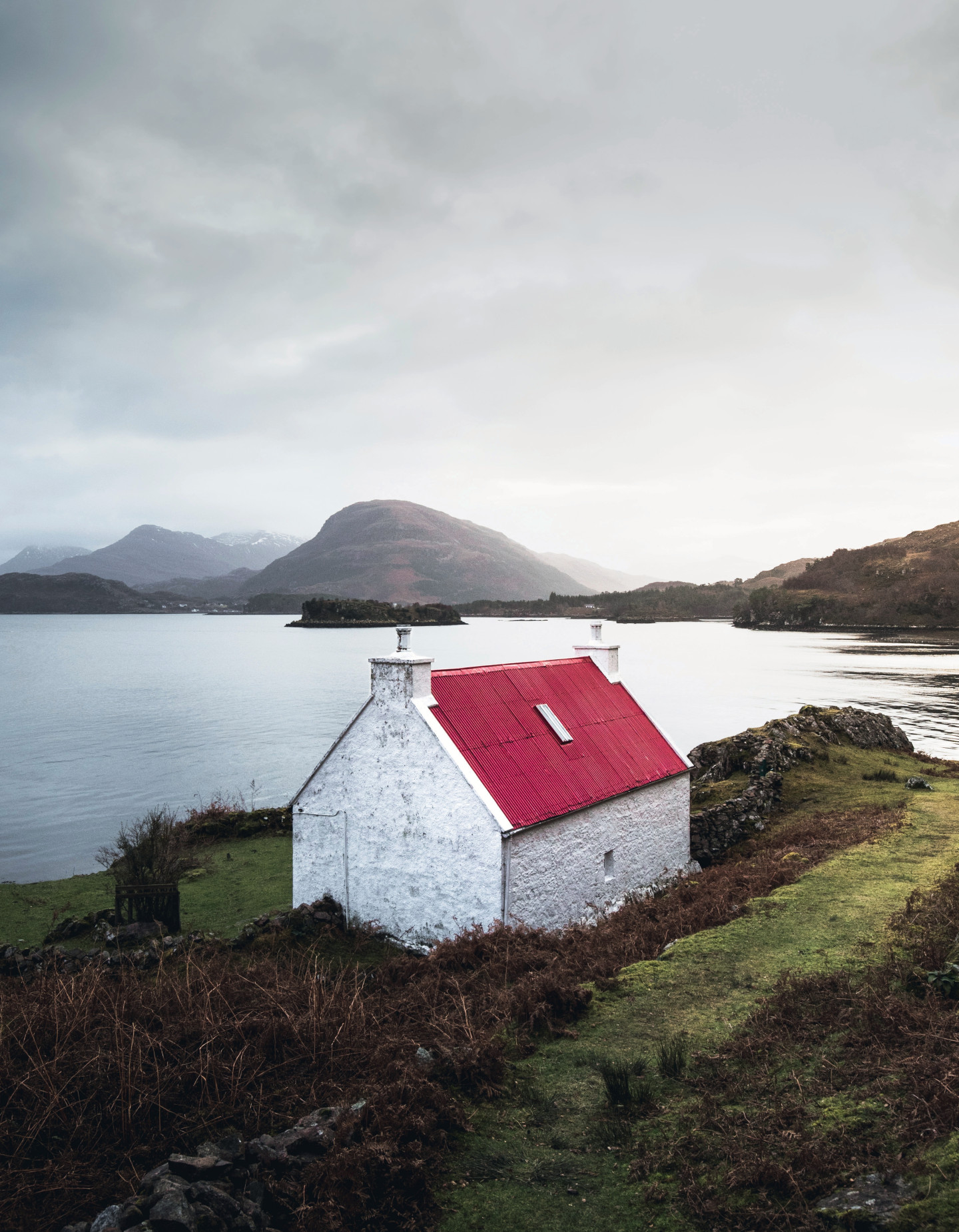
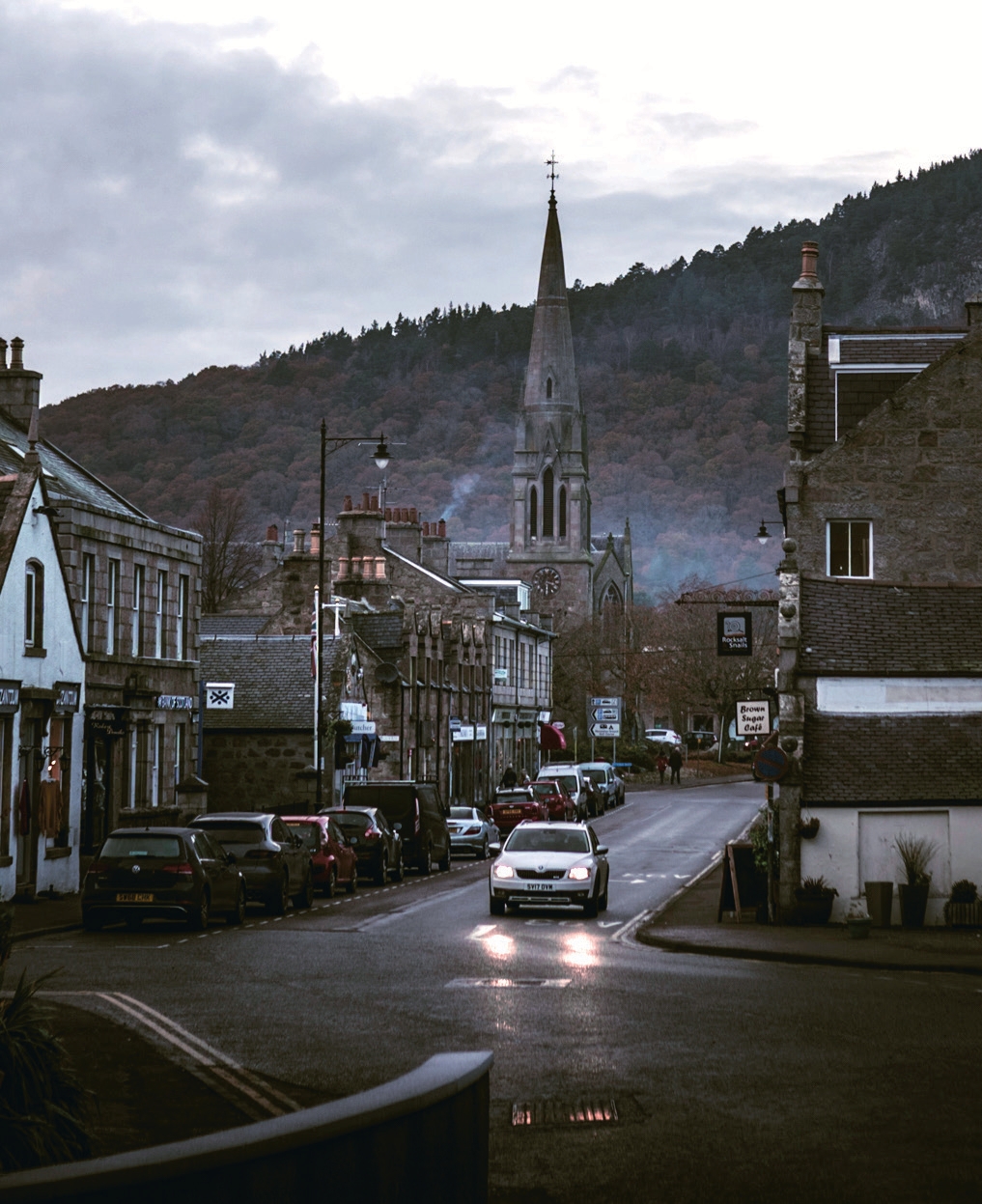
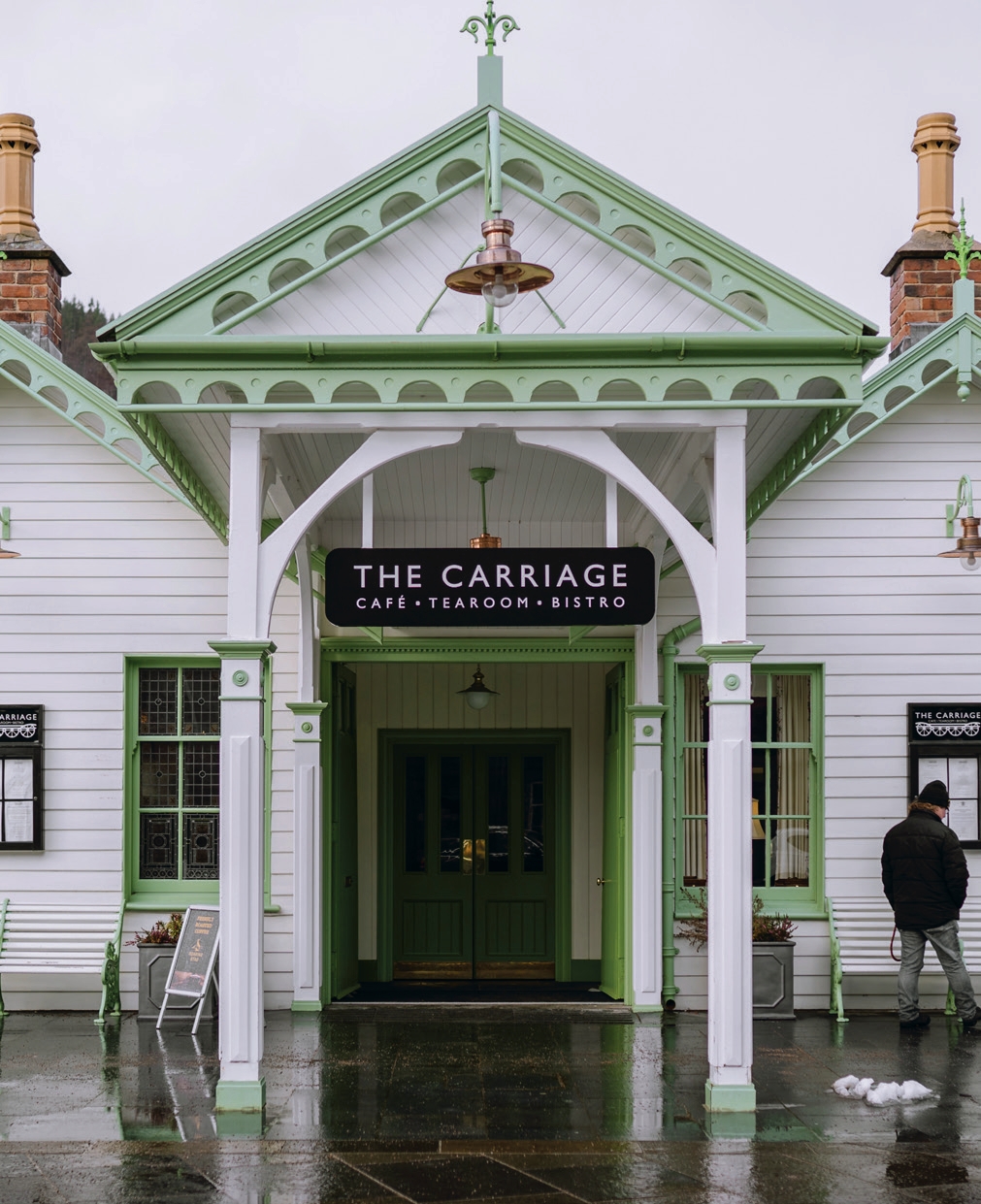
The attractive village of Ballater is renowned as the nearest village to the Balmoral Estate, Scottish home of the Royal Family. Offering extensive walking trails through picturesque woodland and across acres of farmland, alongside the River Dee which winds its way through the Cairngorms National Park towards Aberdeen. The village is also famous for its railway station, which was constructed in 1866, so that Queen Victoria and the royal family could travel by train to nearby Balmoral Castle. In fact, many of Europe’s prominent royal families travelled through Ballater en route to Balmoral throughout the nineteenth century.
Unfortunately, the railway fell victim to the Beeching review in 1963 and the station succumbed to fire five years ago. This resulted in an extensive restoration plan to reinstate the station to its former glory initiated by HRH The Duke of Rothesay’s charity, ‘The Prince’s Foundation’.
The attractive village of Ballater is renowned as the nearest village to the Balmoral Estate, Scottish home of the Royal Family. Offering extensive walking trails through picturesque woodland and across acres of farmland, alongside the River Dee which winds its way through the Cairngorms National Park towards Aberdeen. The village is also famous for its railway station, which was constructed in 1866, so that Queen Victoria and the royal family could travel by train to nearby Balmoral Castle. In fact, many of Europe’s prominent royal families travelled through Ballater en route to Balmoral throughout the nineteenth century.
SEE & DO
Royal Lochnagar Distillery
Approx 16 minutes away by car, a single malt Scotch whisky distillery offering tours, based on the Abergeldie Estate.
Loch Muick
Approx 28 minutes away by car, freshwater loch on the Balmoral Estate, where you will also find Glas-allt Shiel - a hunting lodge built by Queen Victoria in 1868.
Burn O’ Vat
Approx 16 minutes away by car, a giant bowl created by a glacial melt, the Vat provides stunning walking routes, a waterfall, caves and other natural wonders.
ELGOL
On the southernmost flank of the Isle of Skye, on the fringe of Loch Scavaig, lies the tiny hamlet of Elgol – a place that is an unmissable destination for anyone who seeks dramatic landscapes on the island. Even before you reach Elgol, along a single-track road heading southwest from Broadford, mesmerising and atmospheric scenes await. The ruins of Cill Chriosd (Christ’s Church), elevated on a rocky ridge in front of a dramatic mountainous backdrop, offer magnificent views and a perfect opportunity for some atmospheric photographs.
Elgol perches precariously on a steep hill, with picturesque croft houses recalling a local industry in by-gone centuries, and a hairpin road that links it to the harbour. The significance of the harbour dates back centuries, as a fishing port in more recent times, but local legend tells of a Viking ship called ‘The Swan’ that was consumed by the waves before it had a chance to dock. The truth of the story is as lost in the depths as the wreckage of the vessel itself.
From Elgol’s harbour, with the magnificent Black Cuillin – one of the country’s most challenging climbs – imposed on the landscape ahead, a boat trip across Loch Scavaig takes you to the entrance to Loch Coruisk, the so-called ‘Cauldron of Water’. This two-mile long glacial loch, at the base of the Black Cuillin, is a photographer’s dream. Legend says it is also the home of the Kelpie, a mystical water horse that can change into human form.
Elgol offers hikers of all ages and abilities a tremendous number of walks – you don’t need to be a seasoned climber to appreciate the mountainous landscapes that dominate the region. Visitors can reach the heart of the mountains without having to negotiate treacherous, boggy ground to witness some truly unforgettable sights: the panorama from Camasunary, which is easily found on foot or by car from Elgol, offers one of the best vistas over the Isle of Ru, the Black Cuillin and Bla Bheinn.
SEE & DO
Spar Cave
Approx 6 minutes away by car, an astonishing, cathedral-like structure, with a marble-like flowstone staircase and huge columns formed from centuries of water dripping through the limestone.
Misty Isle Boat Trip
Boat trips from Elgol to Loch Coruisk with local skipper Seumas Mackinnon.
Elgol Beach
An ideal spot for looking across the sea lochs and taking in the view of the Cuillin range.
EAT & DRINK
Cuillin View Gallery & Coffee Shop
Enjoy a coffee while admiring the views of the Cuillins.
Coruisk House Restaurant
Using the freshest seasonal ingredients to prepare dishes that celebrate the local sea and land.
-full-1749411405.jpg)
BRAEMAR
The village of Braemar is one of Scotland’s most popular visitor destinations, and it’s not difficult to see why. Nestled on the doorstep of the Cairngorms amongst mountains, woodlands and valleys, Braemar offers breath-taking scenery in every season, making it a favourite for hikers, climbers and sports enthusiasts alike. With over 24 munros in the vicinity, countless less daunting peaks, and more than 65 miles of walking and cycling routes to suit every age and ability, Braemar’s popularity as a base for outdoor pursuits is enduring.
However, there is more to Braemar than the surrounding landscapes. The village, with Clunie Water trickling through its centre, makes for a perfectly leisurely day, with a tantalising selection of cafés, restaurants and independent shops in which to relax and explore.
A little to the east of the village, Braemar Castle dominates the landscape. Burnt out and left derelict following the Jacobite Uprising, the castle was restored in the early years of the nineteenth century. With its L-shaped tower house, round stair-tower and crowning bartizans at the corners, Braemar Castle commands a distinctive presence in an area of natural rugged beauty.
Within a short driving distance, or a moderately demanding hike of just under ten miles, is Balmoral Castle, Scottish residence of the Royal Family. Standing in 50,000 acres of forestry, farmland and woodland, Balmoral’s wider estate offers a plethora of walks for hikers and wildlife enthusiasts, as well as some of the finest salmon fishing that can be enjoyed on the picturesque River Dee.
With the UK’s highest 18-hole golf course, Scotland’s largest ski and snowboarding centre – Glenshee, and the annual world famous Braemar Gathering offering hours of entertainment, it’s unsurprising that this picturesque Aberdeenshire village is a popular destination for visitors heading to the Grampian region, whatever the season.
SEE & DO
Braemar Highland Games Centre Learn more about the Highland games with a focus on the world-famous Braemar Gathering.
Braemar Castle
A 17th century castle, built by the Earl of Mar in 1628, it has been a hunting lodge, fortress, garrison and family home.
Balmoral Castle
Approx 12 minutes away by car, Scottish home of the royal family, it has been a firm favourite with monarchs since 1852.
EAT & DRINK
The Fife Arms Hotel
First class hotel built in the 19th century and reimagined in recent years. Includes ‘The Flying Stag’, a public bar serving Scottish dishes and real ales.
Gordon’s Tearoom & Restaurant
Family run business serving home cooked meals and home baking
-full-1749411641.jpg)
LUSS
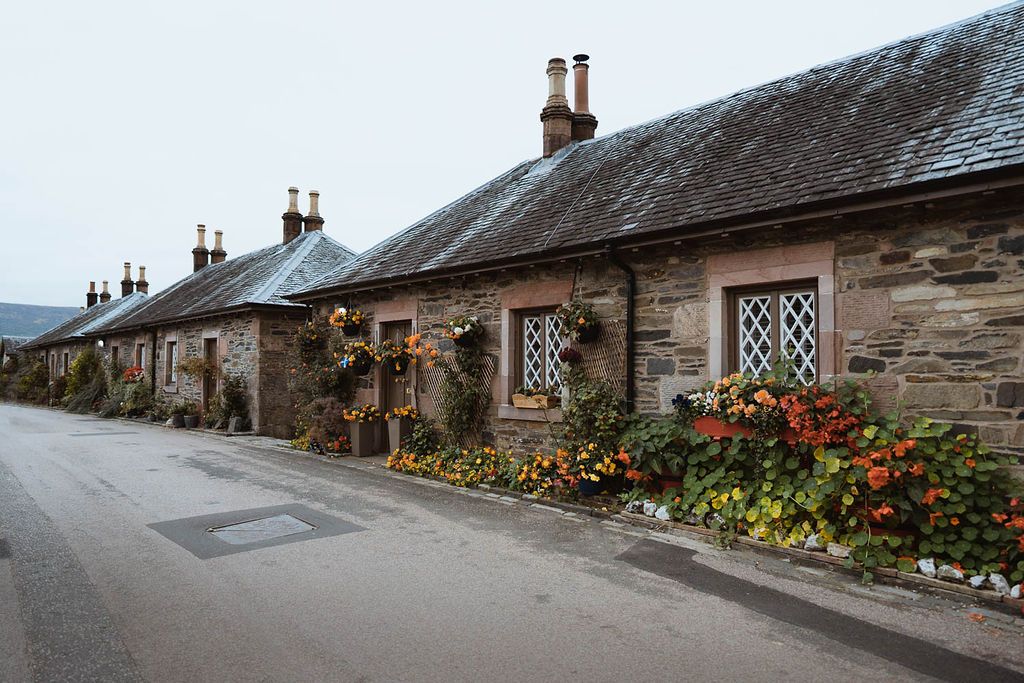
Situated on the western shore of Loch Lomond, midway between Balloch to the south and Tarbet to the north, the charming village of Luss offers picture postcard views that have made it a favourite among visitors.
Although the history of the village dates back to the medieval period, Luss’ streetscapes are dominated by impossibly neat rows of cottages that were erected in the eighteenth and nineteenth centuries to accommodate workers from the nearby slate quarry; their gardens bloom in spring and summer with a riotous show of flowers that make the short walk to the shore of the loch a delightful experience that assaults the senses. The eleventh century Viking grave in the grounds of Luss Parish Church and the neighbouring Pilgrimage Centre, which retells the legend of St Kessog, hint at a mystical past that is an undercurrent in this sleepy historic village.
Luss’ proximity to Loch Lomond is one of its biggest draws. Voted one of Britain’s natural wonders, the loch boasts a beauty that is rarely outclassed – an exhilarating place that genuinely leaves visitors breathless. From the pier, a relaxing cruise can be enjoyed, giving day trippers the chance to absorb the dramatic Highland scenery, in particular the dominant Ben Lomond that rises ominously over the Trossachs National Park. Alternatively, the shores of the loch are equally suited for a tranquil wander, a stone-skimming contest or a chance to spot Scottish wildlife in its natural habitat while, for those seeking an adrenaline rush, a variety of water sports, such as wakeboarding and water skiing, can be enjoyed from the beach at Luss.
Dining out in Luss is an exquisite experience. From home-baked coffee shop snacks to mouth-watering pub lunches featuring the finest ingredients from Scotland’s natural larder. Seafood features heavily on the menus of Luss’ cafés, restaurants and hotels, with oysters, crab and prawns best enjoyed over a panoramic view of Loch Lomond.
SEE & DO
Luss Heritage Trail
Walk approx 1 hour. Forms a full circuit of the village, the river and the surrounding countryside.
Loch Lomond Faerie Trail
A magical faerie trail with wee wooden houses, hidden trolls and a mystery to solve.
Cruise Loch Lomond
Approx 10 minutes away by car, experience the serenity of the ‘bonnie banks’ from the comfort of one of eight vessels.
EAT & DRINK
The Drovers Inn
Approx 25 minutes away by car, quality Scottish comfort food and live music every weekend.
The Village Rest Luss
Cosy café & bistro restaurant, family and dog friendly
TOBERMORY
The main town on the Isle of Mull, Tobermory is renowned for its distinctive harbour, with its neat row of colourful waterfront houses that served as the backdrop for the children’s television programme, Balamory. But Tobermory is more than just a prime photo opportunity. Tobermory is undoubtedly one of the most charming ports in Scotland and is steeped in legend. Here, it is said, a ship from the Spanish Armada sank beneath the waves in 1588, taking its consignment of gold bullion with it, while the very name of the village – Well of Mary translated from the Gaelic Tobar Mhoire – refers to the nearby well that was dedicated to the Virgin Mary in ancient times.
Modelled on a design by the renowned architect and bridge builder Thomas Telford, the fishing port of Tobermory was built to wrap around the harbour before rising into the hillside behind. Curving gently around the waterfront, Main Street, with its fine collection of independent shops, restaurants and cafés, is a perfect place to hunt out locally made arts, crafts and delicacies, but is also notable for the eclectic frontages that helped to make the village a popular destination for Balamory pilgrims.
At the western end of Main Street, the Tobermory Distillery – the only one of its kind on the island – offers an informative insight into a whisky-making tradition that reaches back over two hundred years and is very much part of island life, maintaining the same tradition and devotion that underpinned the industry in the 1790s. The Mull Museum, a tiny but intriguing collection that charts the history, geology and culture of the island, and the Mull Aquarium, Europe’s first ‘Catch and Release’ aquarium, also offer a fascinating detour from the captivating landscapes that have earned Tobermory its reputation as one of the prettiest villages in Scotland.
SEE & DO
Tobermory Distillery
Take a tour around the Isle of Mull’s only whisky distillery and one of the oldest commercial distilleries in Scotland.
Aros Park
Aros Park is one of the most attractive features in the area and can be reached by a very scenic footpath.
Mull Aquarium
Europe’s first catch & release aquarium, with creatures staying for a maximum of four weeks before they are returned to the sea.
EAT & DRINK
Isle of Mull Cheese
Café and farm shop situated in an extraordinary glass barn.
Hebridean Lodge
A café, restaurant, gallery and shop.
PORTNAHAVEN
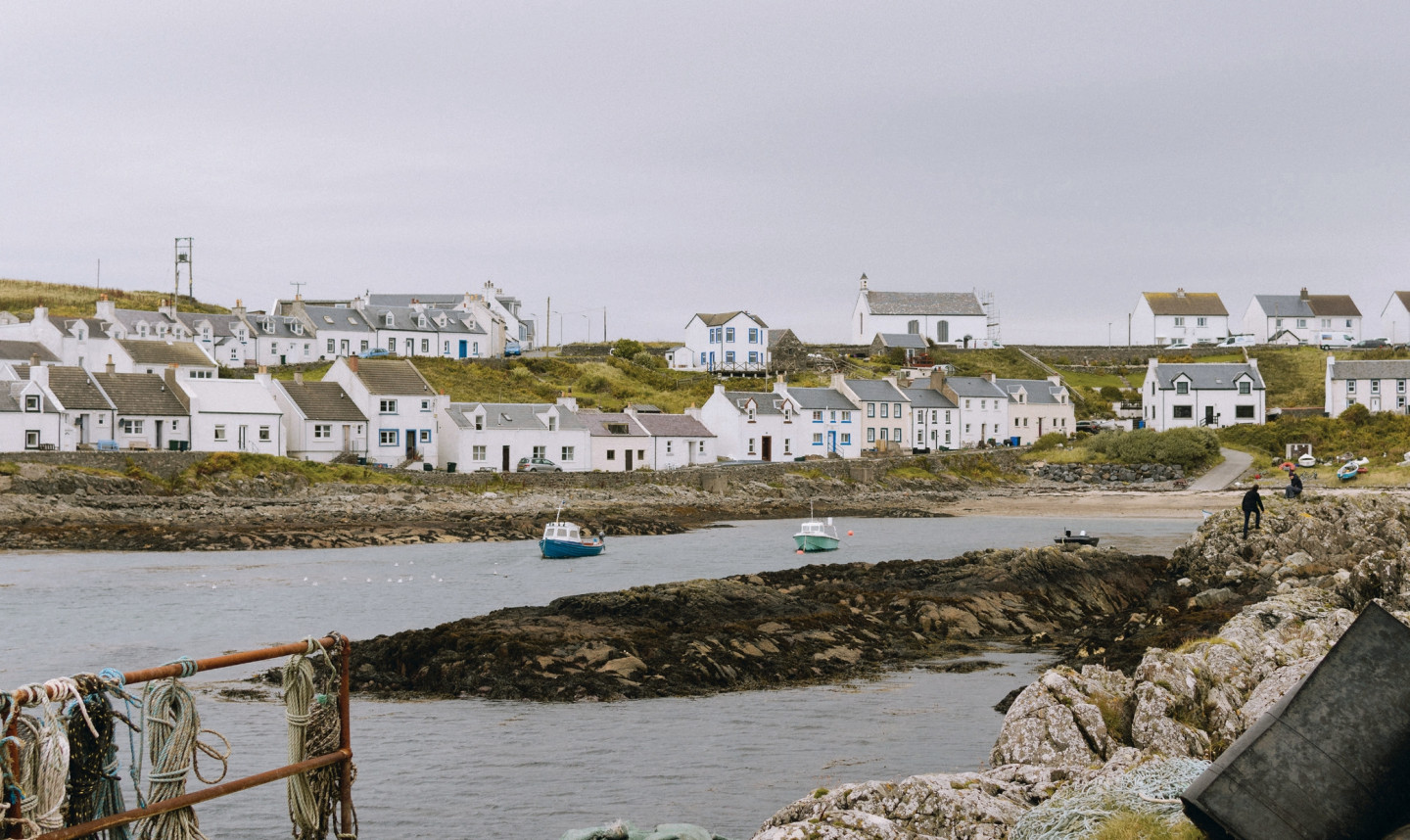
Situated at the most southerly-west tip of the Rhinns of Islay, Portnahaven is accessed via a single-track road. While not a demanding drive, the extra effort is well-worth it to reach a beautiful village dominated by whitewashed cottages that teeter on the rocky shoreline. If the tidal conditions are right, the sight of seals clambering onto the rocks for sunbathing is not unknown!
Situated at the most southerly-west tip of the Rhinns of Islay, Portnahaven is accessed via a single-track road. While not a demanding drive, the extra effort is well-worth it to reach a beautiful village dominated by whitewashed cottages that teeter on the rocky shoreline. If the tidal conditions are right, the sight of seals clambering onto the rocks for sunbathing is not unknown!
Historically, Portnahaven, like many villages on the Isle of Islay, was planned with crofting in mind, with surrounding land cultivated by locals for haymaking and the growing of potatoes and oats. While these local industries have long since declined, the Rhinns lighthouse on the neighbouring Orsay Island is a lasting memento to the past. Constructed in 1825, the lighthouse soars to a height of 45 metres above sea level and can be seen from 25 miles away. Orsay Island, which shelters the bay at Portnahaven from the elements, also boasts a well-preserved chapel, an early Christian carving from which can be viewed at the Museum of Islay Life in nearby Port Charlotte.
While the beach at Portnahaven offers a peaceful opportunity to enjoy the seascape, a short journey will take visitors to Frenchman’s Rocks, a series of three stacks that earned their notoriety from the grounding of a French squadron of ships after a battle with British frigates in 1760. For wildlife enthusiasts, this is a premier bird-spotting site, particularly in autumn when gannets, petrels, auks and shearwaters can be observed. Equally spectacular, in turbulent windy weather, is the sight of huge waves crashing against the rocks, sending spray high into the air – a stark contrast to the tranquillity of Portnahaven sea front.
SEE & DO
Rinns of Islay Lighthouse
Approx 2 minutes away by car, on Orsay island at the western tip of Islay, designed by Robert Stevenson, constructed in 1824-5.
Lossit Bay
Approx 5 minutes away by car, a beautiful bay with a wonderful sandy beach, stunning cliffs and views towards Frenchman’s Rocks.
The Museum of Islay Life
Approx 16 minutes away by car, a large and fascinating collection of objects, books, photographs and stories all illustrative of life in Islay.
EAT & DRINK
An Tigh Seinnse
A small, friendly, village pub with a cosy fire. The Harbour Inn Approx 32 minutes away by car, this old and charming whitewashed inn overlooks the stone-built harbour of Bowmore.
PORTREE
The capital of the Isle of Skye, Portree earns its name from the Gaelic Portan-Righ, or King’s Port, a moniker that allegedly recalls a visit by King James V in 1540 to persuade the island clans to side with him. However, modern thinking suggests that another translation, ‘Port on the Slope’, lies behind the village’s name and was, in fact, in use long before the royal visit.
The village of Portree that visitors see today owes its origins to its eighteenthcentury fishing village roots. It was from here that islanders, weighed down by poverty, hunger and overpopulation, fled aboard ships in pursuit of a better life in North America. From MacNab’s Inn, now Bank Street’s Royal Hotel, Bonnie Prince Charlie also expressed his farewell to Flora MacDonald in one of Scotland’s most romantic and celebrated stories.
Portree’s highlight is the harbour, which is flanked by dramatic cliffs. Once the site of public hangings, the peninsula inauspiciously known as The Lump, extends to the south, while a row of characterful terraced houses along the waterfront, in lurid pinks, yellows, greens and blues, is reminiscent of the Isle of Mull’s Tobermory.
A leisurely amble over The Lump is among the most enjoyable walks Portree offers. At thirty minutes, it’s suitable for walkers of all ages, but on a pleasant day it’s worthwhile elongating the hike, with mesmerising views of Loch Portree, Beinn Tianabhaig and the Cuillin. The peninsula is home to many rabbits who dart amongst the Scots Pines and rhododendrons.
Above the village lies the Apothecary’s Tower, which was constructed in 1829 in landscaped gardens as a sign to passing ships that medical services could be obtained there. Today, the tower offers captivating views over the village, its harbour and beyond to The Storr, the rocky hill on the Trotternish Peninsula which offers impressive views over the Island of Raasay.
SEE & DO
Scorrybreac Walk
A 45 minute walk, by the shore of the beautiful Portree Bay, enjoy views out across the sea to the Island of Raasay.
Portree Harbour
Just a minute away from the main town square and recognised for its colourful houses and buildings along the wharf.
An Corran Beach
Approx 30 minutes away by car, visit the amazing dinosaur footprints, that were discovered in 2002, when the sand was washed away after a storm.
EAT & DRINK
Scorrybreac Restaurant
Set in a beautiful location, above the harbour, serving modern Scottish cuisine with French influences.
Birch
Artisan coffee house and eatery, serving a range of specialist coffee, locally sourced food and daily home baking.
Promoted Post
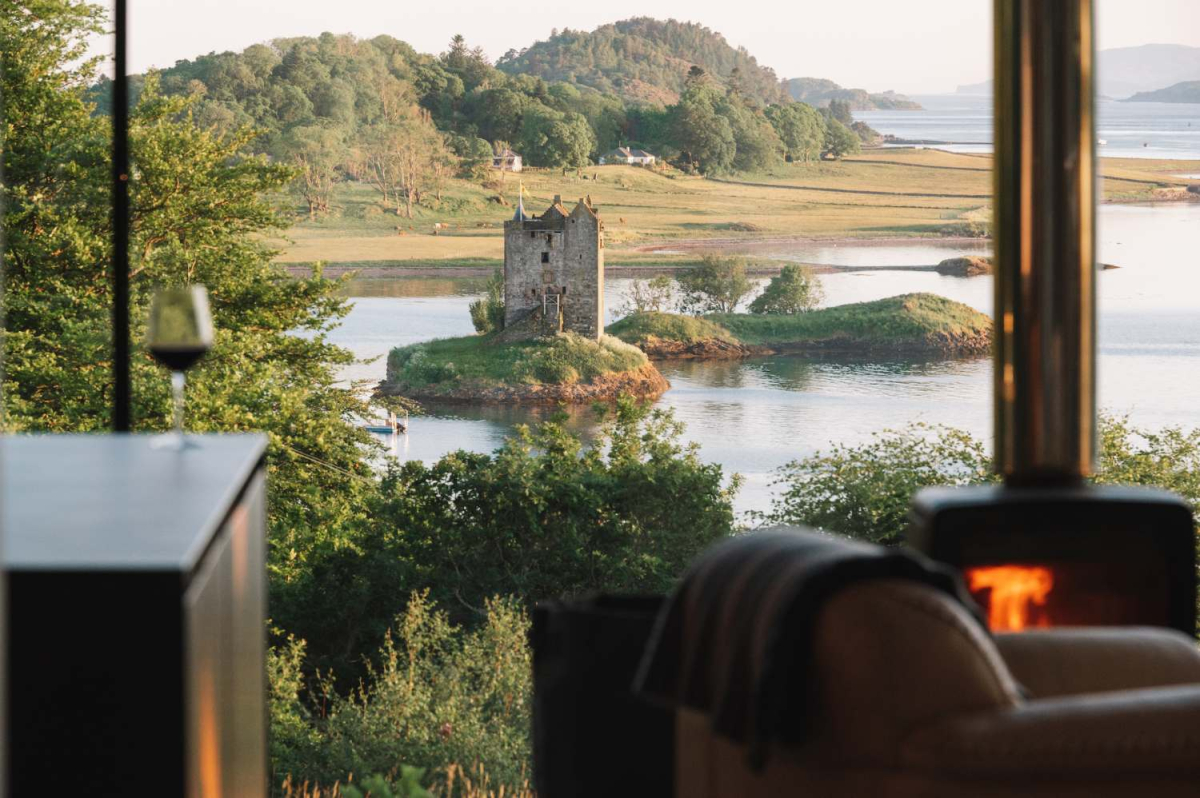
Stormhouse
Escape to the wild, rugged landscape of Scotland’s west coast, perfectly located between mountain and sea






 Sign in with Google
 Sign in with Email