
Transforming The Urban Landscape with Future Woodlands Scotland
Scotland is world-renowned for its breathtaking landscapes, drawing thousands of visitors to explore its hills, glens and incredible sweeping vistas every year. However, in many of these beautiful locations, one thing is severely lacking – trees. Thousands of years ago, this was a heavily forested land. Where towns and cities now stand, thick woodlands once thrived and their absence causes more problems than might be immediately obvious. Thankfully, there are people working to remedy that.
(1)-full-1744981606.jpg)
Founded in 2012, Future Woodlands Scotland is striving to create lasting environmental change through the power of trees. This small but dedicated charity works with landowners, farmers and community groups to help fund projects with trees at their root.
With their assistance, native woodlands are being restored, threatened habitats saved and vital research into Scotland’s green spaces carried out to ensure a better future for everyone. One topic high on Future Woodland Scotland’s agenda is urban forestry.
The vast majority of Scots live in urban areas, but canopy cover in our towns and cities is amongst the lowest in Europe, averaging less than 16%. Worse still, where there are urban trees, the distribution is often badly skewed. Affluent areas benefit greatly, while the low-income communities who need them most are going without.
The Urban Forestry Programme is set to change that, supporting projects that keep the 3:30:300 rule at their core. That means everybody should be able to see three trees from their home, have 30% tree canopy in their neighbourhood and have access to a high-quality green space within 300 metres.
Living in a beautiful, green neighbourhood with trees to shade your walk sounds like an idyllic goal. Dean Village in the very heart of Edinburgh is a perfect example of the attraction trees can have, with hundreds of visitors flocking there daily to enjoy its leafy setting.
However, urban forestry is far more essential than that, with huge hidden benefits impacting us all.
“Planting trees isn’t just about making cities prettier, although that’s a nice bonus,” explains Des Hacket, Urban Programme Manager for Future Woodlands Scotland, “Research shows that urban trees can do everything from improving air quality and reducing flooding to cutting energy costs and boosting our mental health.”
You might not realise it, but the trees growing in towns and cities are quietly improving your quality of life. They even help purify the air that we breathe. Considering around 24,000 premature deaths in the UK each year are caused by air pollution, that’s important!
The positive factors of urban trees stretch far further than just health benefits, their impact on the surrounding environment is immense.
Without trees, during summer, heat from the sun is absorbed and retained by pavements and roads. As temperatures rise to insufferable levels for both pets and their owners, many are forced to stay indoors for much of the day.
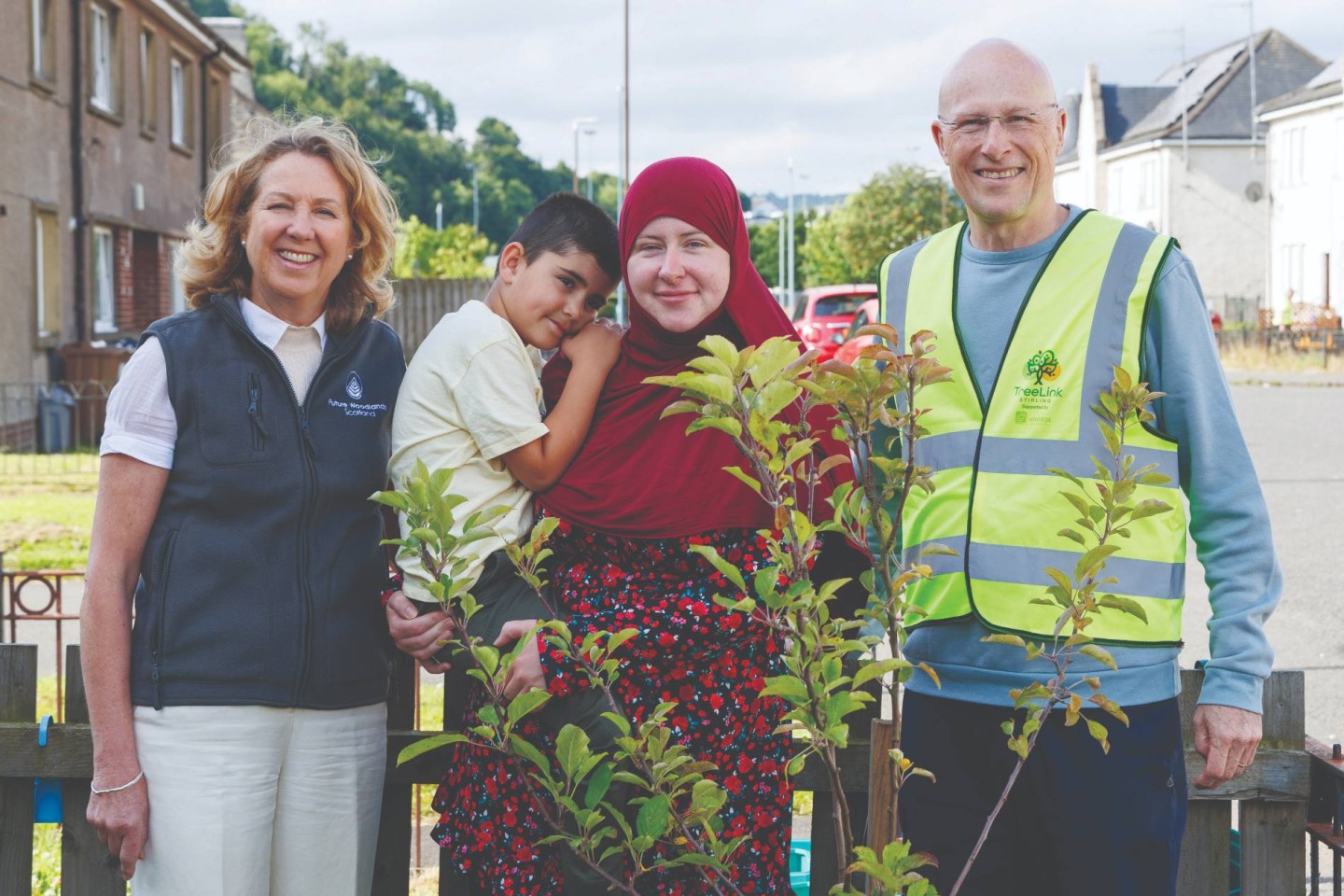
Stirling fruit and nut tree project. From left: Shireen Chambers, FWS CEO, Zara Isshac, a Stirling resident with her son, and Max Hislop, TreeLinkStirling's Vice-Chair. Image by Mark Ferguson.
Shade from leafy trees makes a remarkable difference on the temperature of the street below. Even the surrounding buildings benefit from the cooling effects, both from direct shade and evapotranspiration.
These urban trees are equally valuable in the colder months, helping buildings to retain their heat by acting as windbreaks. Lower heat loss means lower heating costs, so the economic benefits can be substantial.
As climate change continues to affect us all, urban forestry is helping Scotland’s communities adapt and thrive. There are community woodlands around the country providing the hidden benefits of urban forestry as well as a focal point for locals.
In places like Craigmillar Castle Park, volunteers work together to care for their local woodland. As well as planting and caring for new trees, a program of events encourages everybody from the community to be involved in some way. Whether it’s forming new bonds by volunteering together or just enjoying the woodland walks, the benefits of the project are immense.
Scotland’s largest city Glasgow falls far short of the target number of tree canopy cover at just 15%, so funding from the Urban Forestry Programme has gone towards employing a Community Volunteer Coordinator for the Clyde Climate Forest.
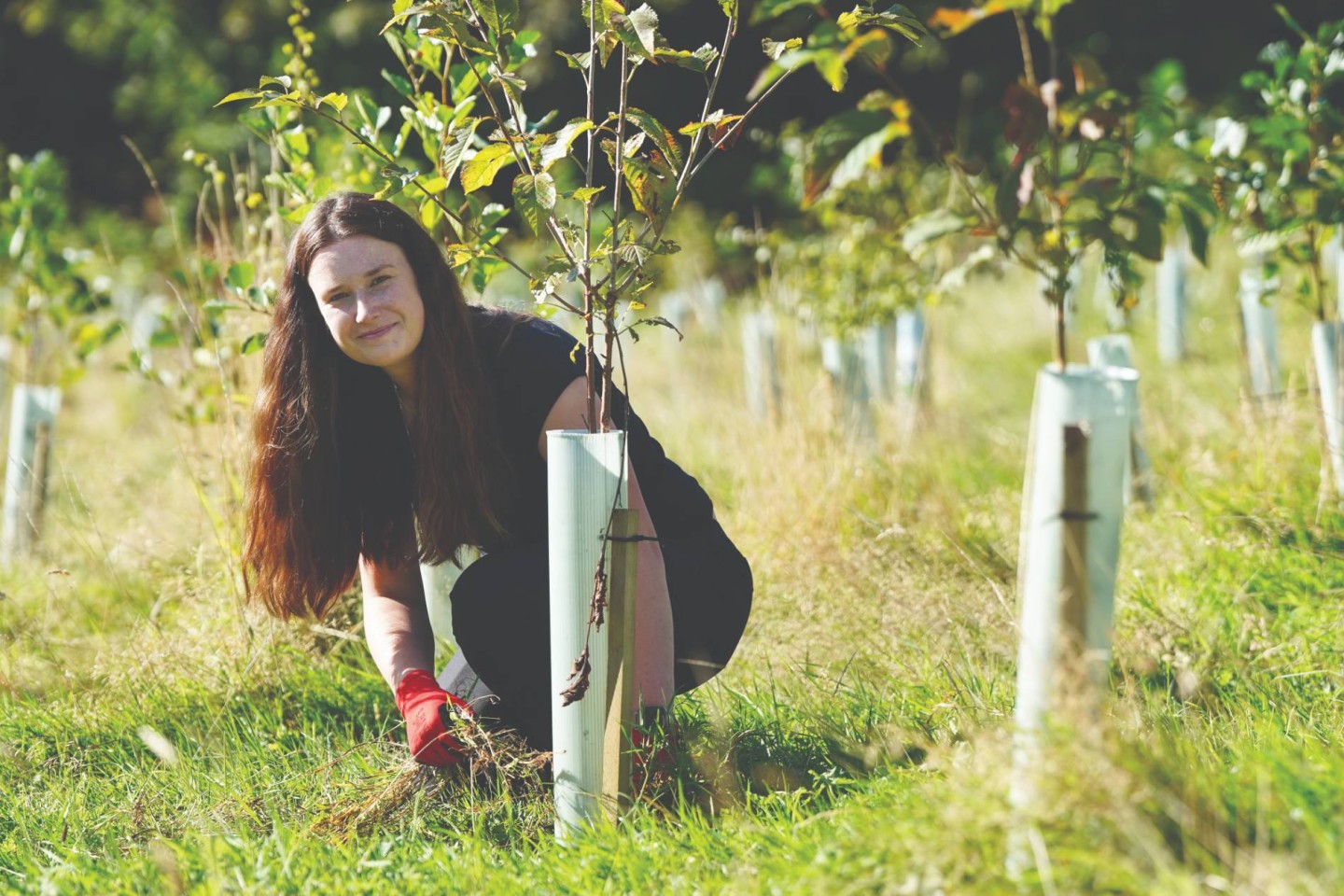
Glasgow's tree warden project, Laura Salvage, Community Volunteer Co-ordinator by Stewart Attwood.
Laura Salvage will now be responsible for training local Tree Warden volunteers to oversee more than 10,000 new urban trees. Local communities are at the heart of the project, planting and maintaining the trees that will benefit them directly, creating a stronger connection between people and nature.
As if the hidden benefits of urban trees weren’t enough, residents around Stirling are able to harvest a more obvious advantage of certain trees. With support from the Urban Forestry Programme, TreeLink Stirling have expanded their offering of free fruit and nut trees to focus on the Raploch and Bannockburn areas. Residents of these two neighbourhoods, with their particularly low tree canopy cover, can apply for local volunteers to help them plant these new trees in their own garden. Cared for properly, they’ll produce a useful bounty of homegrown produce for years to come!
This initiative is just one small part of TreeLink’s ambitious Crown of Trees project. Once completed, Stirling will have a 36km ring of trees connecting the four jewels in the crown – the woodlands at Abbey Craig, Balquhidderock, Gillies Hill and Craigforth. A fitting crown for what was once the royal capital of Scotland!
As important as it is to plant new trees, it’s equally crucial to protect those that we already have. At Astley Ainsley Hospital in Edinburgh, that need is being well met by an army of activists. A campaign run by the community trust saw dozens of people befriending trees to help protect rare and endangered species spread around the grounds.
Some of these are hundreds of years old and while protected from felling by Tree Preservation Orders, that hasn’t always saved them in the past. Befriending a tree will hopefully give it a better chance of survival as people feel a closer connection and therefore a responsibility to keep an eye on it.
Improving the tree cover in Scotland’s urban areas is no easy task, but thankfully Future Woodlands Scotland are meeting the challenge. Hopefully one day, all towns and cities will meet the 3:30:300 standard, providing a healthier, more sustainable future for us all through the immense power of trees.

Promoted Post
Stormhouse
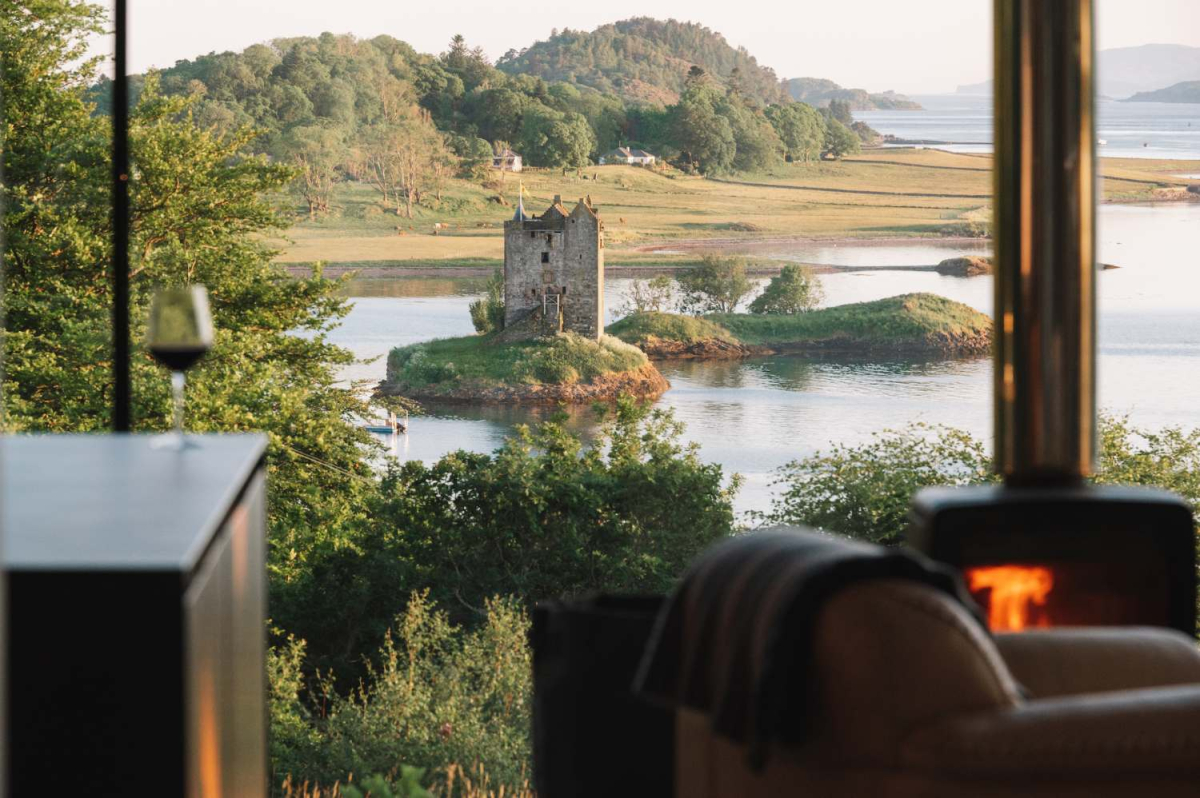
Escape to the wild, rugged landscape of Scotland’s west coast, perfectly located between mountain and sea






 Sign in with Google
 Sign in with Email