
This Farming Life
‘Rewilding’ Scotland’s wilderness has been at the top of the agenda recently, but there is also a need to restore, rehabilitate and nurture nature on cultivated land. ‘Regenerative farming’ is the new buzzword and the philosophy behind the growing number of environmental initiatives spearheaded by a group of innovative Scottish farmers and smallholders working in tandem with nature not against it – and inviting us along for the mud-splattered ride…
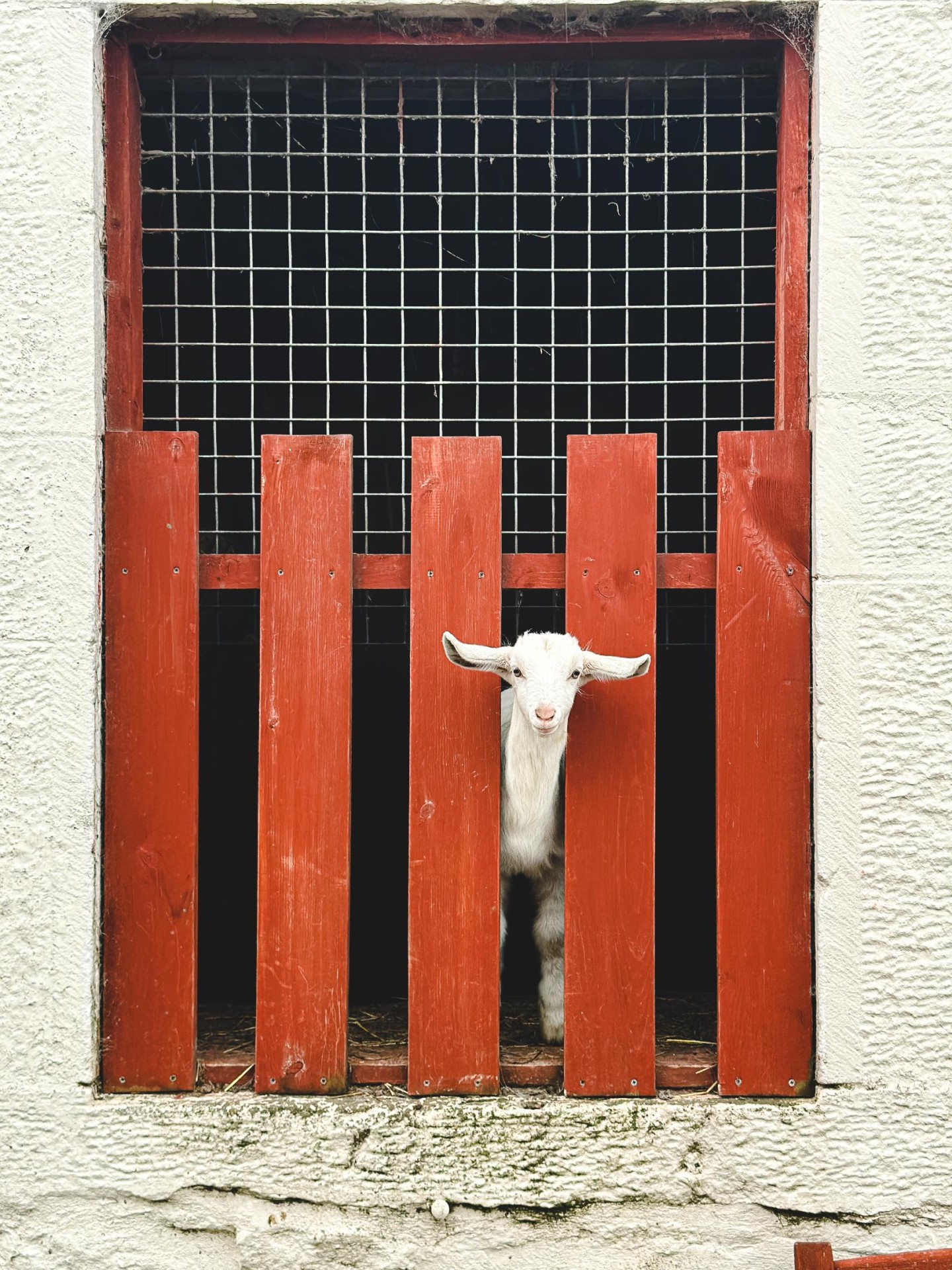
A cursory sideways glance as you wind through the hills north of Loch Ness, and South Clunes Farm appears to be a traditional Highland homestead, a handsome stone farmhouse surrounded by sheep- along with cattle-grazed paddock and pasture. The 400-acre hill farm is home to the Swifts – and a thousand Suffolk and Texel-cross ewes, 65 Luing cows and a handful of shaggy Highlanders. However, the row of young fenced-off fruit trees and beehives on a nearby slope hint at changes in the air. There’s the obligatory off-grid shepherd’s hut perched at the top of a field, but what’s not visible as you slalom along the single track-lane, dodging kamikaze guinea fowl, are the beavers.
Spotting these nocturnal creatures is not guaranteed even on one of the farm’s bespoke beaver tours – although you will see plenty of evidence of their hard work ‘creating flood defences.’ Fifteen years ago, ahead of the sometimescontroversial curve, a pair of beavers was re-introduced here in a 100-acre enclosure around a picture-perfect secret loch – created with the help of EU wetland restoration funding.
Across the reed-fringed water from the rustic safari-style cabin and viewing deck, the ‘Beaver Batch’, now used for events, is the beavers’ lodge. Curving around the water’s edge, past the makeshift diving board – it’s also a bucolic wild swimming spot - you can see their distinctive teeth marks in felled tree trunks, whittled down to pencil-sharp points and ten ‘leaky dams’ which stop the land downstream from flooding and provide natural drinking pools for the cattle during dry summers.
The reintroduction of beavers, hunted to extinction in the UK three centuries ago, has proved controversial, but those wary about the effect of beavers on river defences and potential damage to farmers’ crops are invited to visit the farm, run by father Chris and son Fred, to see the positive impact they’ve had here.
The beavers have brought more fish; the leaping trout attract kingfishers, herons and osprey. It’s win-win for the farm and for the environment, and evidence of how they are working with nature – not against it.
Fred returned to the farm after three years as a safari guide in East Africa, where he met his Argentinian wife, fellow wildlife ranger and budding beekeeper Sofi, and together they have introduced a number of new initiatives to the farm.
Diversification was once the buzzword in farming – and it still plays a key part. ‘Clunes Classrooms’ offers ‘Beekeeping for beginners’ alongside farm tours and farm stays (the cottage and shepherds hut welcome packs include ‘bee bombs’ - clay and compost balls laced with a mix of 18 native wildflower seeds). But now the catchphrase on everyone’s lips is regenerative farming.
As the climate crisis continues, farmers are attempting to minimise their environmental impact. Regenerative agriculture focuses on a more holistic approach to land management and farming practices, weaving in habitat rehabilitation, soil regeneration and carbon sequestration.
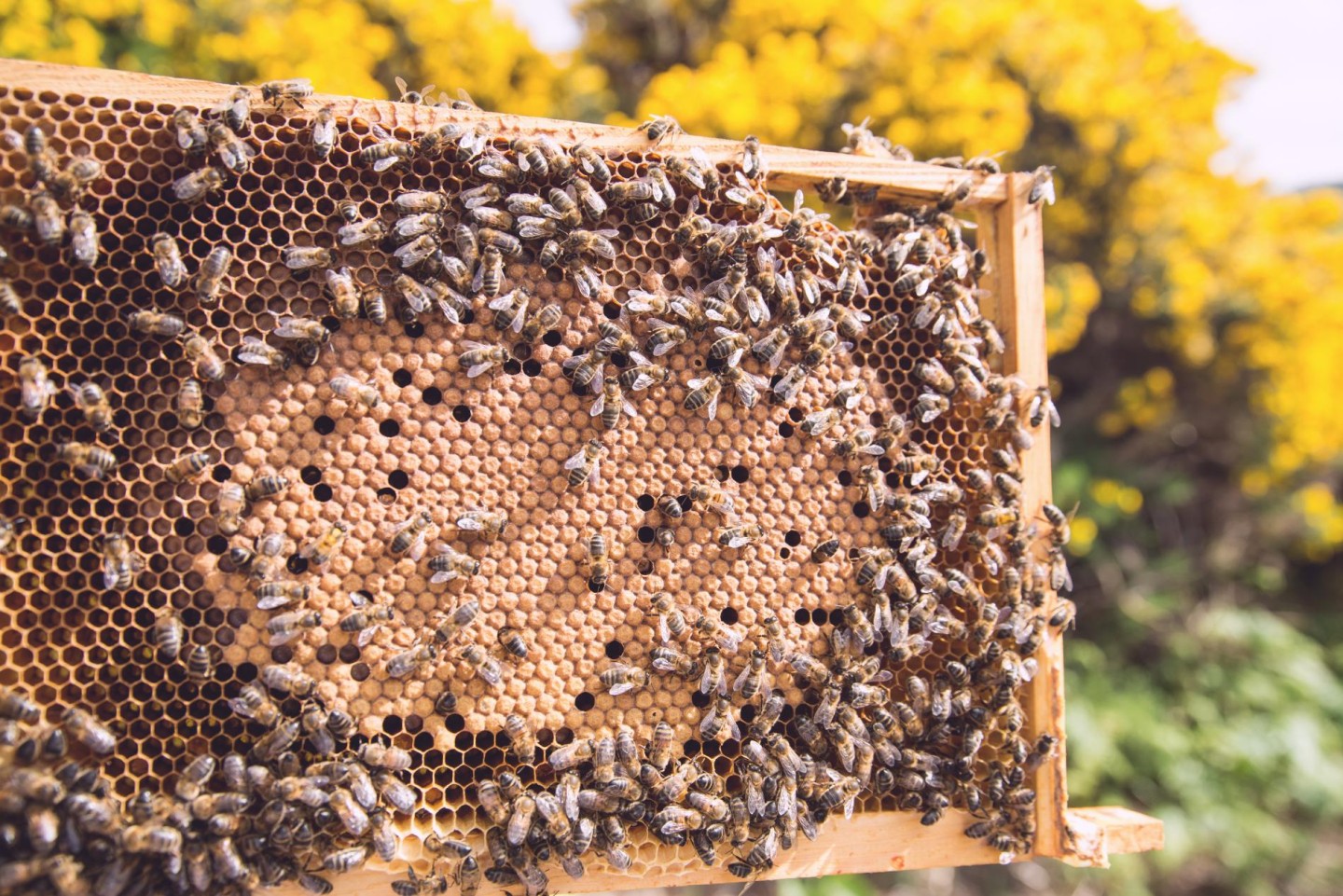
South Clunes Farm
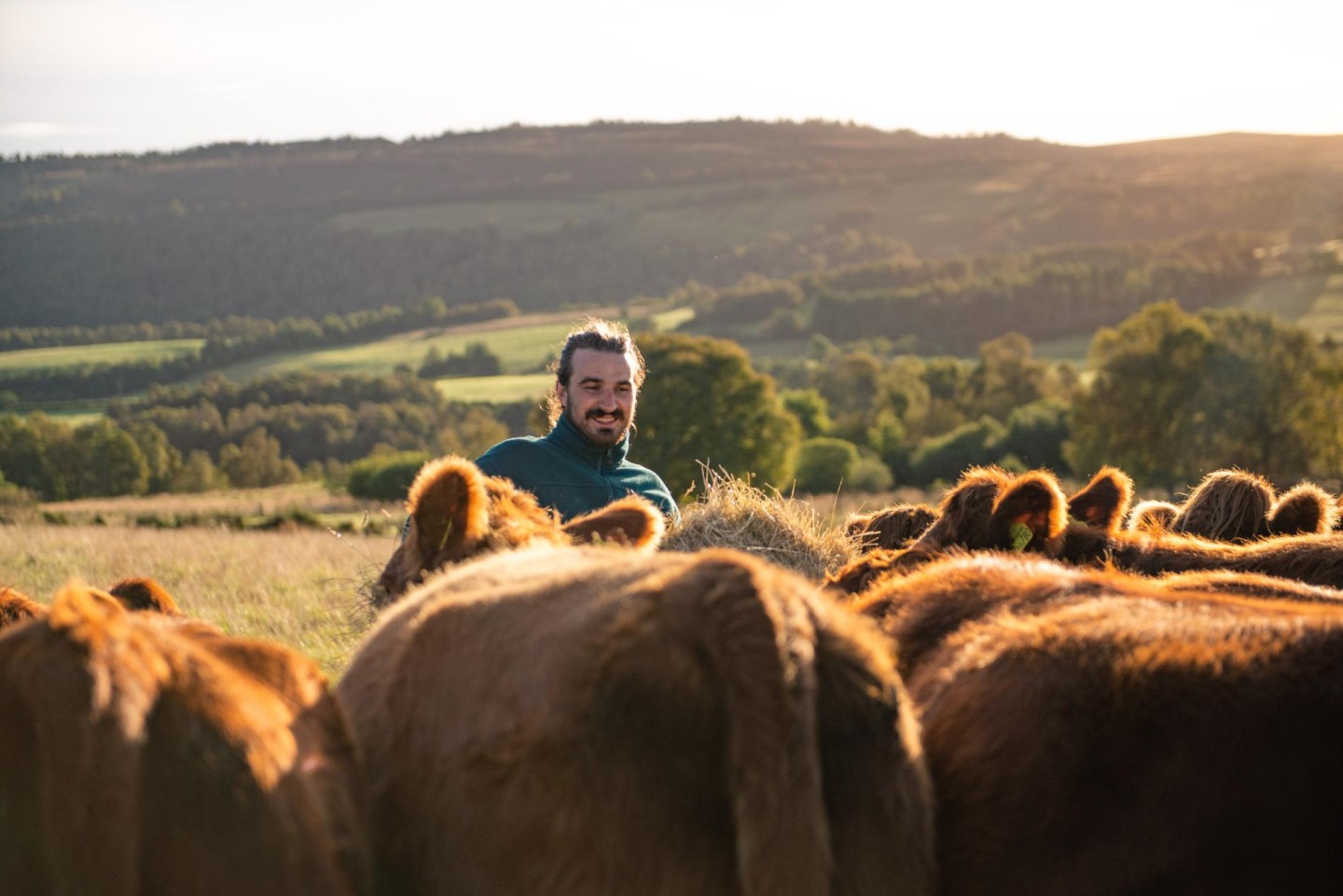
At South Clunes they no longer use inorganic fertiliser, shifting instead to liquid seaweed and vermicast (worm poo), and now practise ‘mob grazing’ the sheep and cattle together, which mimics the way animals feed in the wild, clustered together for safety from predators, constantly on the move. In a farm setting, that’s replicated by shifting the animals regularly between smaller paddocks –allowing the land and forage longer to recover. During the winter Fred rolls out giant circular hay bales across the fields, spreading it – and scattering loose seed - on the ground rather than using static ring feeders. “It means we’re feeding the soil as well as the sheep and cattle.”
They’ve also begun wintering the cows in woodland. The cattle churn up the moss and heather, allowing fungi spores to spread and saplings to break through. Turning a five-acre field over to wildflower meadow a couple of years ago, pigs were used to churn up the soil and sheep to trample in the seed. In summer it’s now a shimmering sea of sunflowers, red and white clover and nitrogen-fixing hairy vetch, alive with bumblebees, bugs and butterflies.
Fred also formed the West Loch Ness Farm Cluster with a group of likeminded farmers, crofters and estates in 2021 to stem the local decline in biodiversity. Conducting surveys of the flora and fauna, in conjunction with a team of ecologists, wildlife consultants and the Game and Wildlife Conservation Trust, revealed the extent of habitat loss and the number of wildlife species under threat.
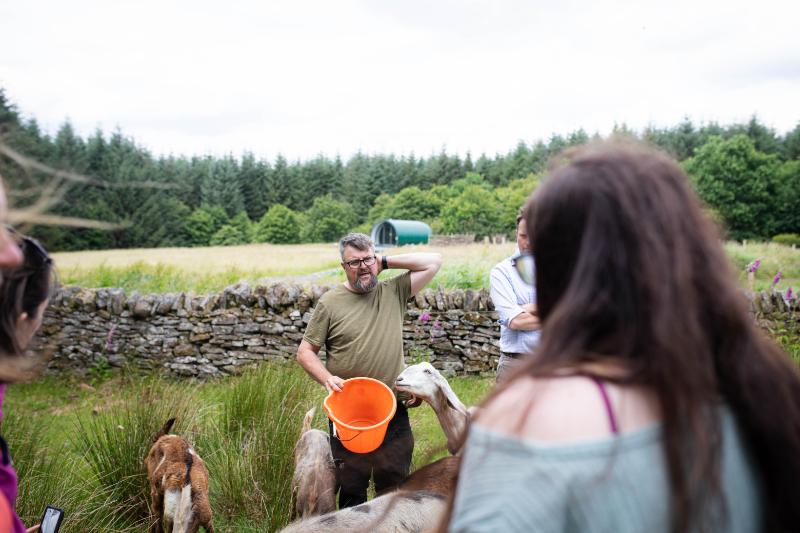
Regenerative agriculture focuses on a more holistic approach to land management and farming practices, weaving in habitat rehabilitation, soil regeneration and carbon sequestration.
Work then began to restore ecological connectivity through habitat restoration and a series of wildlife corridors. Their flagship project, re-wetting a 50-hectare area of marshland to encourage richer biodiversity has already had results; goldeneye, widgeon, lapwing, oystercatchers, teal and tufted duck have been spotted there along with bittern and kingfishers and a pair of otters.
“It is such an advantage to be working as a coordinated group rather than in isolated pockets. The climate and biodiversity crisis is a landscape-scale problem and we need landscape-scale solutions to begin to improve it,” Fred explains. “Farming seems to be the F-word in ecology, too commonly it is associated with habitat destruction, pollution and species persecution. This is our opportunity to show that it is not all farmers. We can be a big part of the solution - ‘it’s not the cow, it’s the how’ as they say.”
Other Scottish farms looking at the bigger, greener picture include Guardswell, 150 acres of pretty Perthshire grassland and Anna Lamotte’s family farm. Run on regenerative farming principles, improving the biodiversity – more birds, bugs and bees - is the long-term aim. They are planting deep-rooting plants and practise rotational grazing with their small flock of Hebridean sheep – ethically produced hogget meat boxes and, eventually, homespun jumpers. They’ve sewn wildflower meadows, planted a cider orchard and Guardswell Grows is their chemical-free market garden.
You can learn more – teaching visitors where their food comes from (food that’s good for the planet and for people) is part of their ethos - by checking in and bedding down in one of the sheepskin-strewn, rustic-chic glamping cabins or Scandi-cool farmhouse. Or you can sign up for one of their creative (spoon-carving is a regular fixture) or food-focused events from the regular pop-up locavore suppers to farm walks and lunches. They also launched Scotland’s first cider festival two years ago.
Fodder + Farm meanwhile is a regenerative farm-to-table supper club series and event space on the edge of the Trossachs set up by Kat Goldin and Kevin Harrison on their smallholding, Gartur Stitch Farm, in conjunction with open-fire chef Lucy Pattinson.
For the past eight years the family has been welcoming people to the farm – to milk a goat, feed the hens, learn about natural dyes and eat a wood-fired pizza topped with vegetables and herbs foraged from the no-dig organic market garden. They started by offering introductory smallholding courses but during the pandemic shifted to online sourdough classes as well as selling huge sacks of flour and their homemade goat’s milk soap. Now they are back doing events, workshops and long table feasts – because that’s the kind of rollercoaster ride and juggling act that farming sustainably in the 21st century is. Evolve to survive - and help connect people to their food along the way could be the mantra.
Kat, originally from Iowa, is also a writer and shares the highs and lows of farming life through her newsletters and publication ‘Life in the Making’ – with homespun tips, recipes and stories of smallholder life. Once ‘One Man and his Dog’ was the only snapshot of country life around. Now there’s ‘Landward’, ‘Countryfile,’ ‘This Farming Life’ and ‘Clarkson’s Farm’ to open urban eyes - but nothing beats a hands-on experience to give real understanding, to help forge a connection to the ground beneath our feet, to make land-lovers of us - which is, after all, what the planet so clearly needs.
words // Lucy Gillmore
Promoted Post
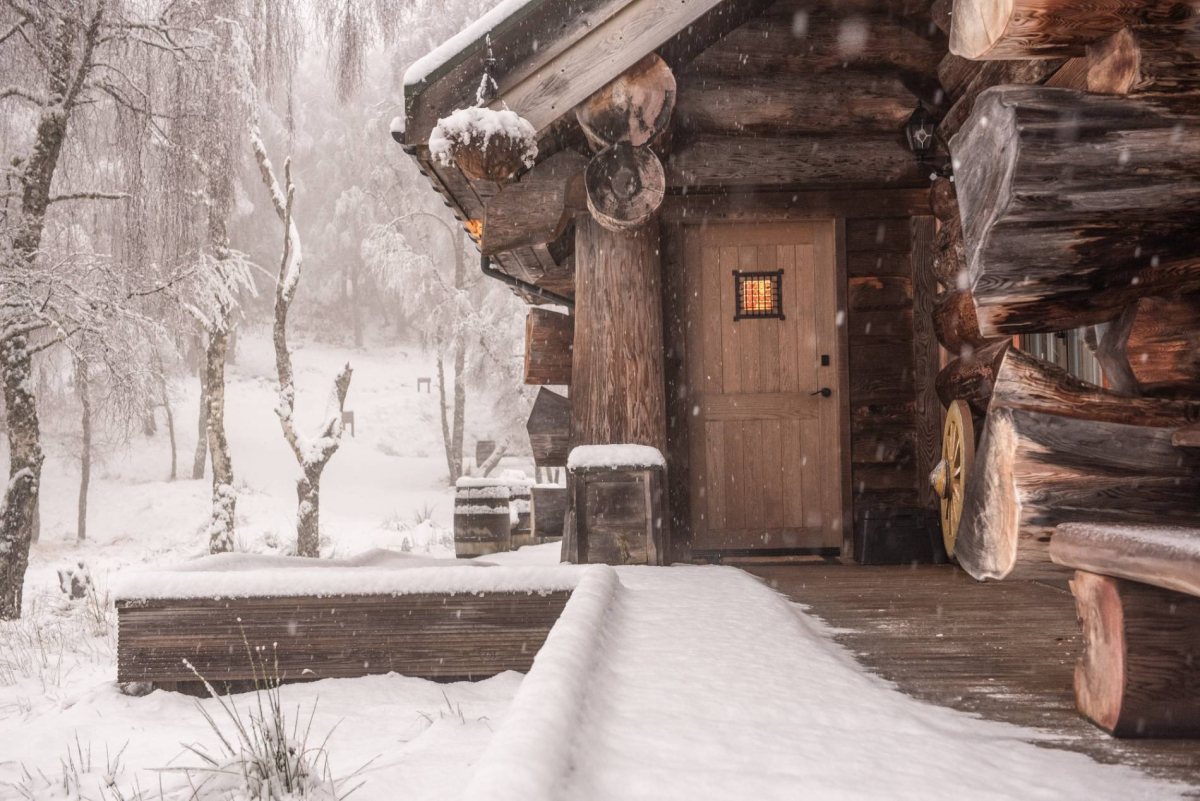
Eagle Brae
Escape to Eagle Brae, a secluded collection of Highland log cabins near Beauly. Handcrafted cedar, big skies, and deer on the hillside, with a fireside welcome that makes it easy to slow down.






 Sign in with Google
 Sign in with Email