
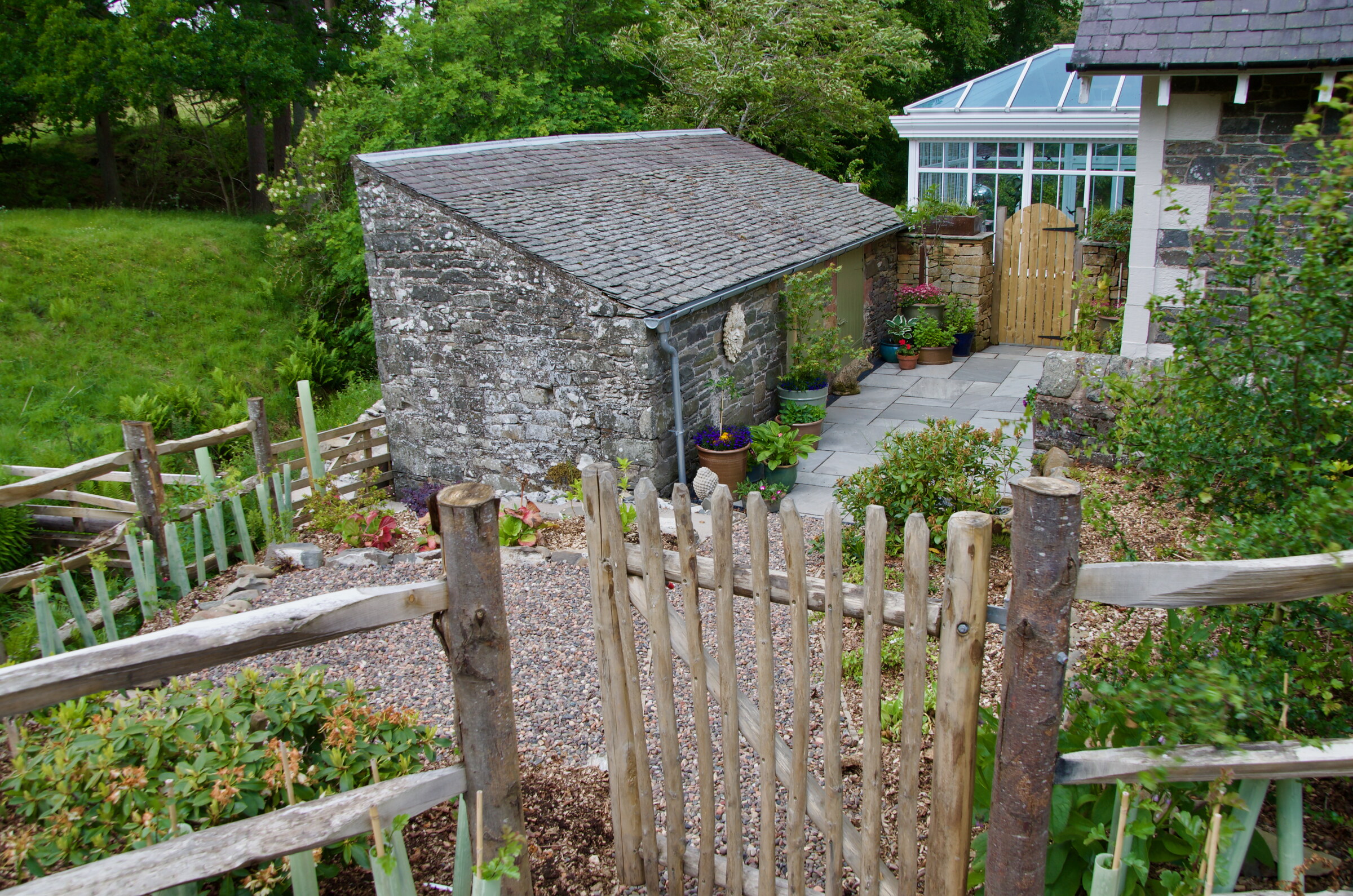
The Scullery: A Slow Stay in the Yarrow Valley
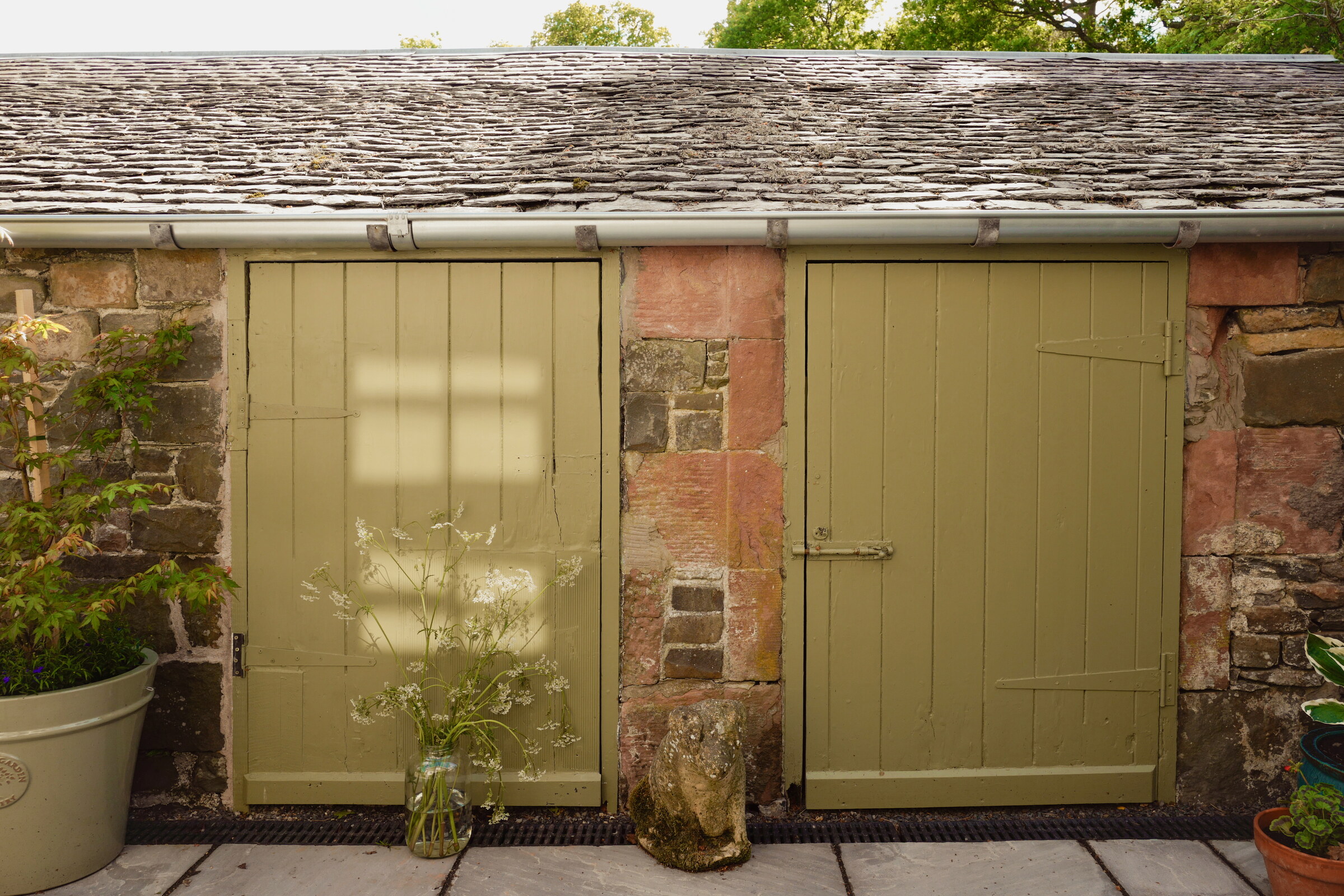
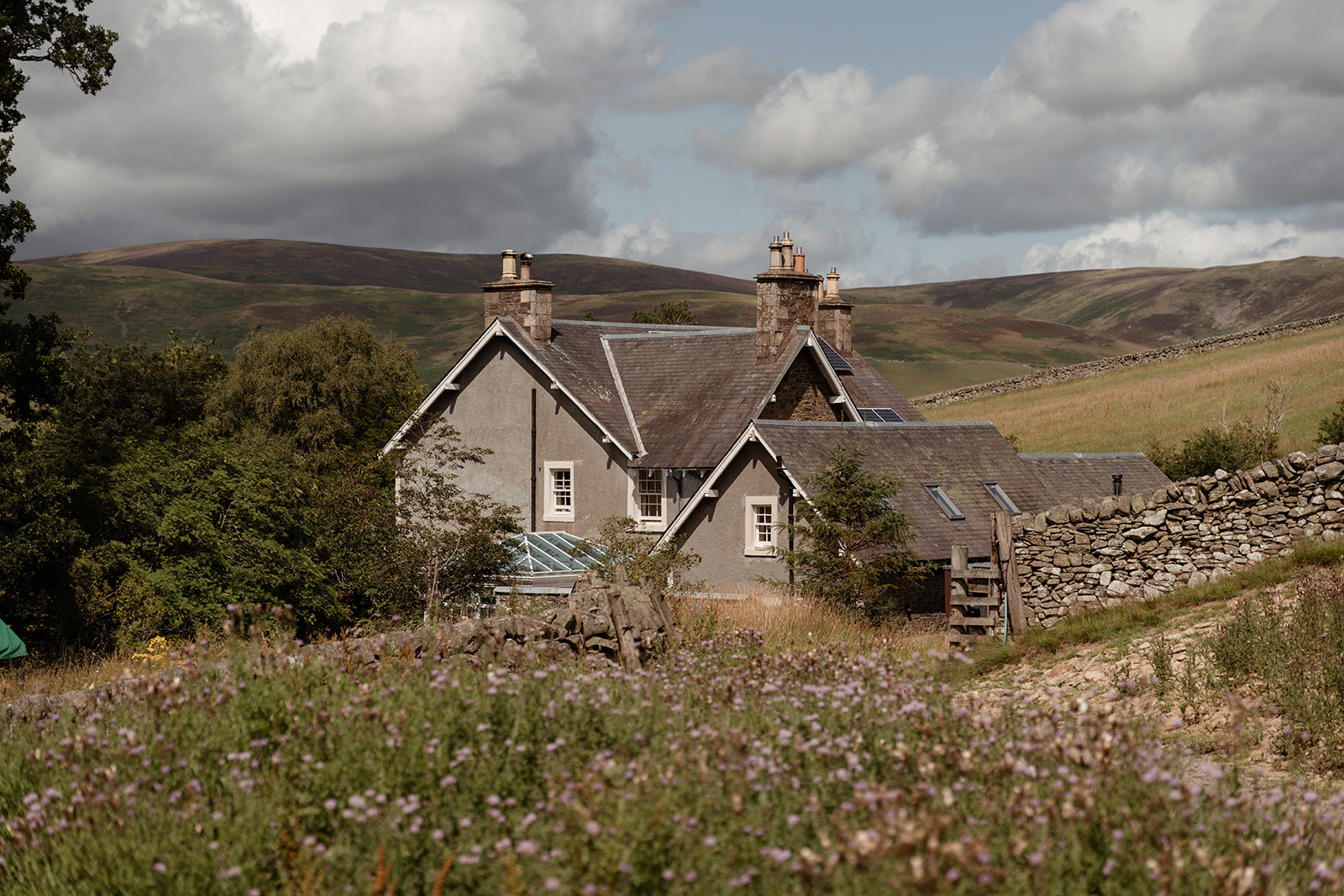
Ladhope Farmhouse stands in the Yarrow Valley in the Scottish Borders, a Victorian house believed to have been rebuilt in 1850 by the Duke of Buccleuch, with the Ladhope Burn running past it and open moorland rising behind. Its old stone scullery, once the working heart of the farm, is now The Scullery, a hideaway for two made by Neil and James, who came to the Borders after more than thirty years in London. Neil trained in hotel management before moving into property, and the rooms are furnished with antique, vintage and contemporary pieces and hung with Scottish art, several of the paintings showing hills you can walk to from the door. It opened at the end of 2025. Neil tells us how it came about, what the valley has given them, and where to walk, eat and look in the Borders.
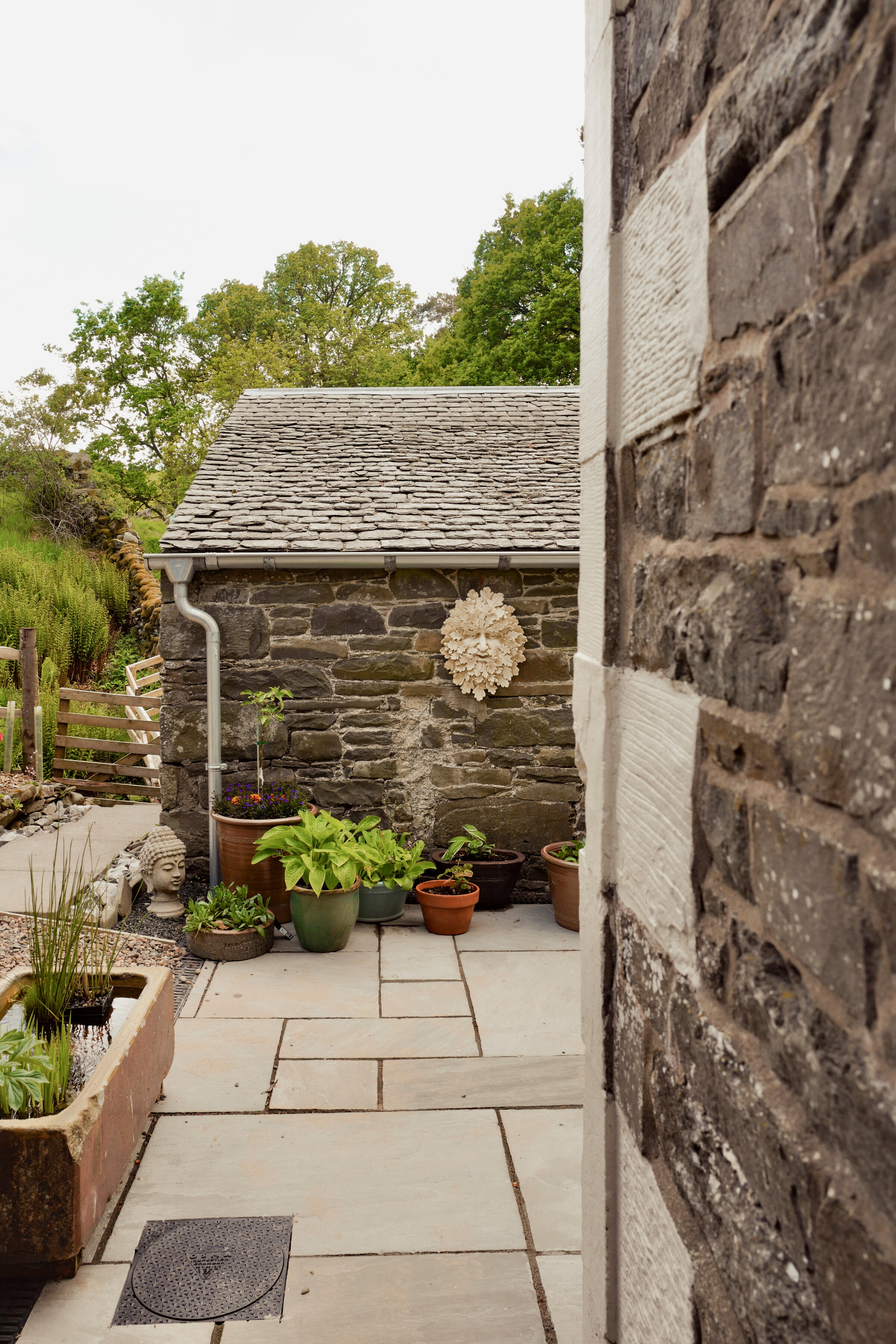
How would you describe The Scullery to someone discovering it for the first time?
The Scullery came from a very personal place. I have always loved travelling and getting away, and over the years I became increasingly drawn to stays that felt genuinely special. Places that were beautiful, comfortable and carefully considered, that felt like somewhere rather than anywhere. Coming from a city myself, I know what it feels like to need a proper escape, and I wanted to create something that I would want to stay in myself. The Scullery is the result of that.
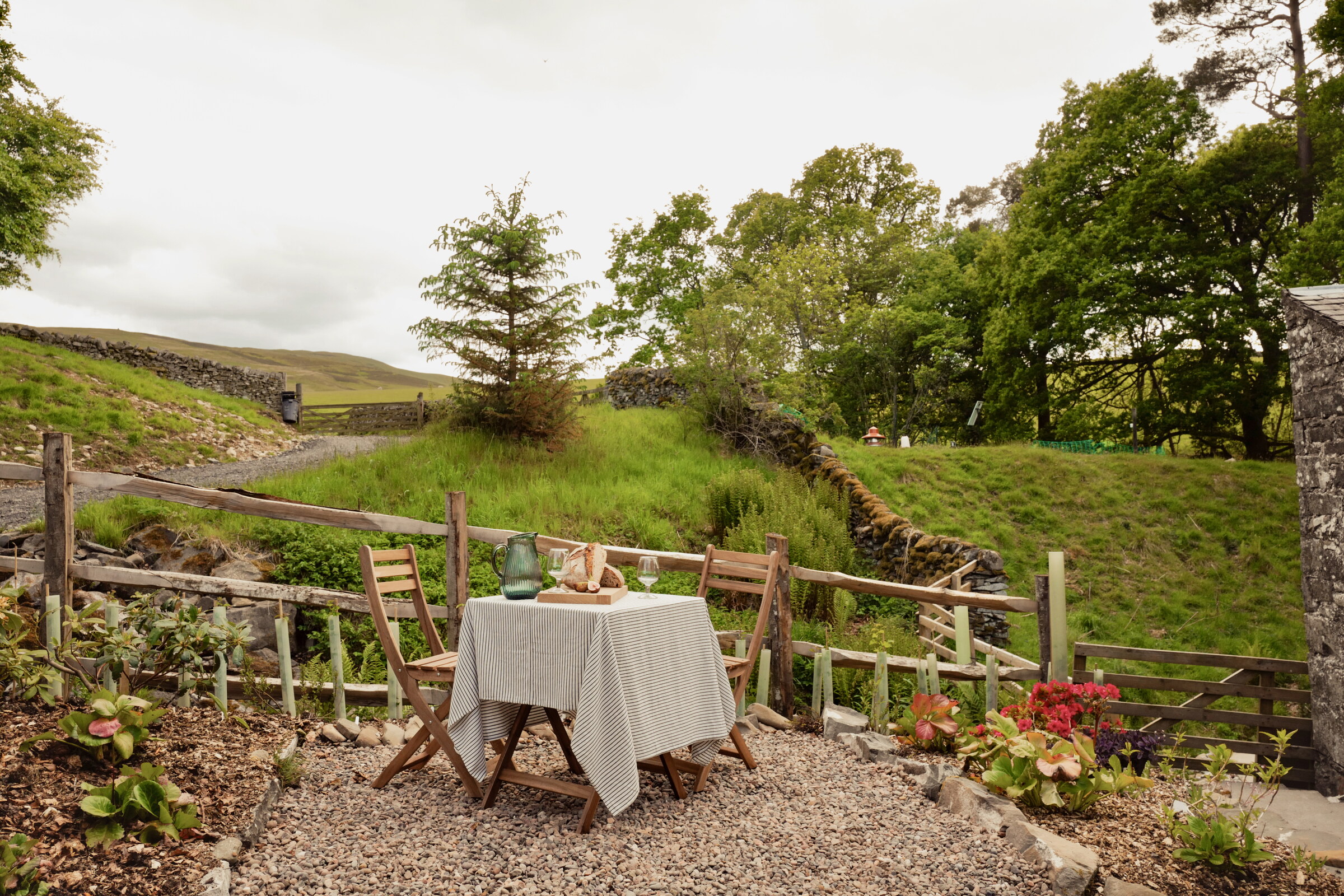
It is a boutique hideaway in the Yarrow Valley in the Scottish Borders. Quietly luxurious, deeply calm, and designed entirely around slowing down. The phone signal is intermittent, there is no TV aerial and no radio signal, and we rather love it that way. The sounds you wake to are the Ladhope Burn running just outside, birdsong in the trees, and whatever the weather is doing in the valley. Red squirrels visit the garden. Roe deer move through the treeline at dusk. Grouse call from the moorland above. The natural world simply gets on with itself, and gradually, you find yourself doing the same, stopping, noticing, breathing properly.
That said, we do have one perk for those who either want or need to stay a little connected, though we gently encourage otherwise. Full fibre broadband runs directly to the property. So, if you want to spend an evening streaming your favourite films or series, that is entirely possible. And for music or radio, there is a beautiful vintage-styled Roberts Web Radio, which feels entirely at home in the space and sounds considerably better than its appearance suggests.
The Scullery is equally perfect for solo guests. Writers, walkers, anyone who simply needs space and stillness, and one well-behaved dog is very welcome too, who will likely take to the valley and the moorland walks with great enthusiasm.
For couples, that simplicity is genuinely restorative. Without the usual noise of modern life, you find yourselves cooking together, walking without anywhere urgent to be, talking in the way you used to before everything got so busy. Guests regularly tell us that their stay reminded them of something they had not felt in a long time, that quiet ease with another person that city life has a way of quietly eroding.
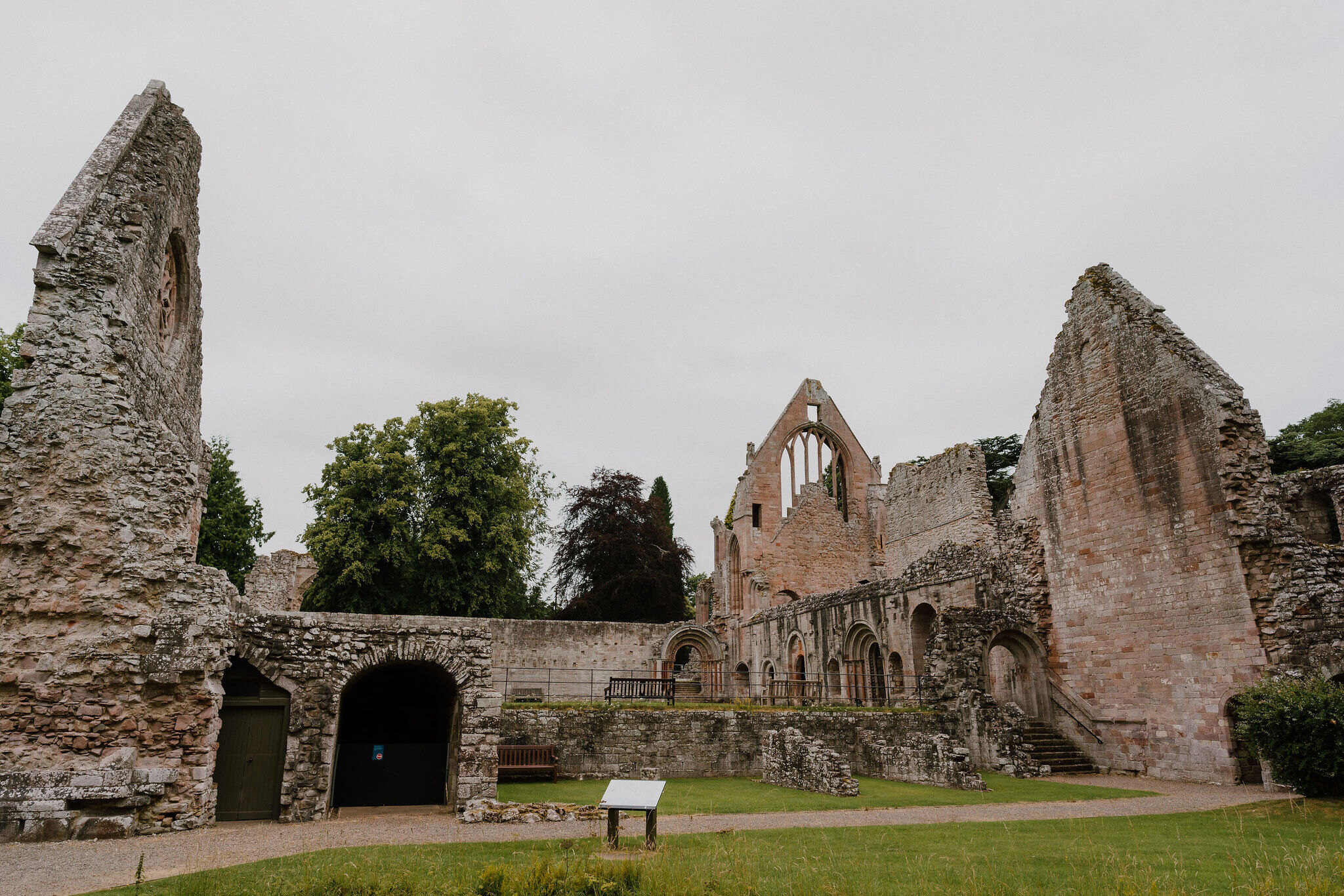
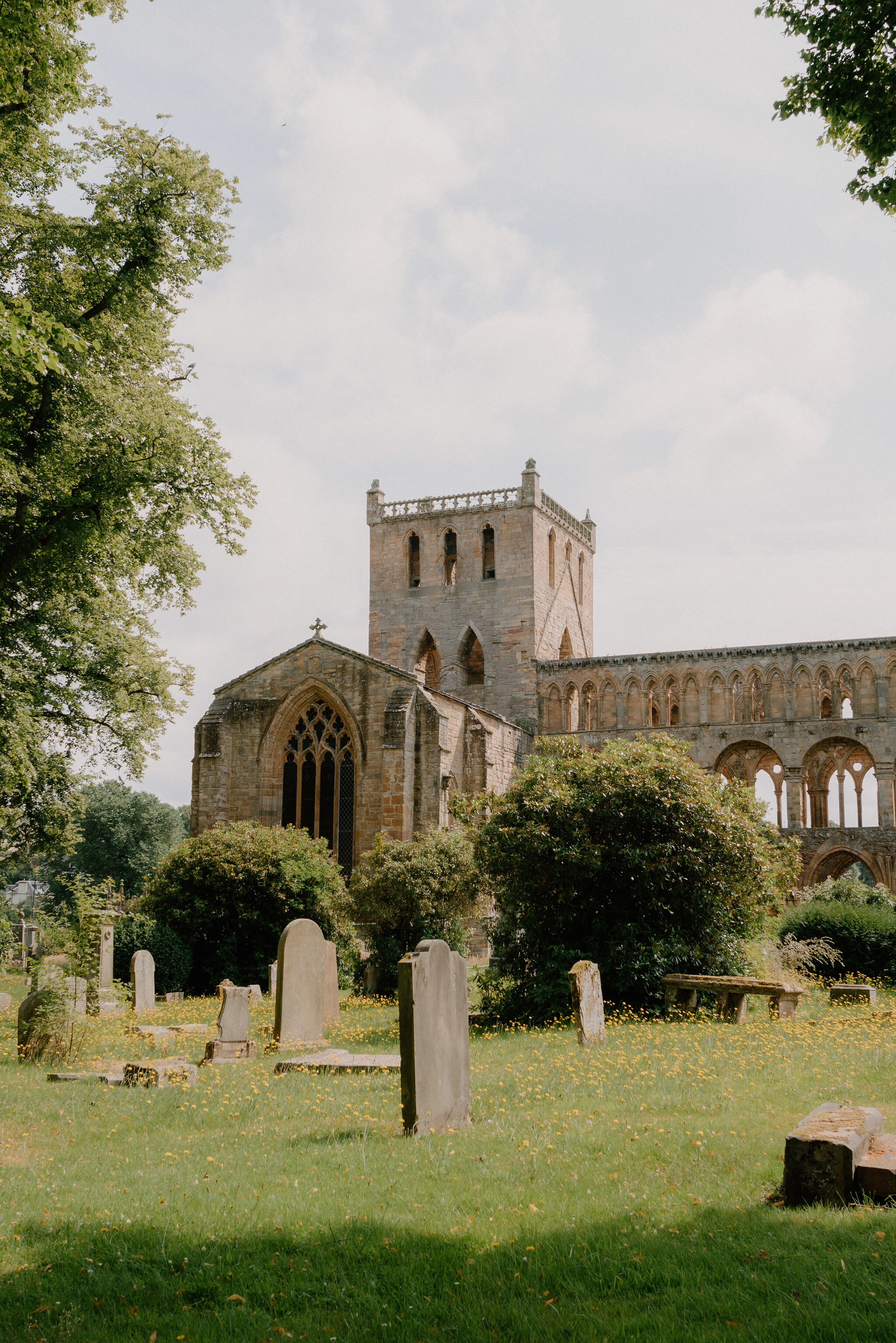
And for those who want more than peace and quiet, the location is extraordinary. The Scottish Borders is one of the most historically rich parts of Britain. Stunning abbeys at Melrose, Jedburgh, Kelso and Dryburgh, ancient castles and fortified tower houses, the literary landscape of Walter Scott, and the Common Ridings in summer, which are among the most distinctive and atmospheric traditions you will find anywhere in Scotland. There is as much or as little to do here as you want. The Yarrow Valley tends to hold you either way.
Could you tell us a little about yourselves and how the idea for The Scullery first came about?
James and I spent more than thirty years living in London before we eventually found our way to Scotland, and in many ways the journey to The Scullery began long before that move. It all began, interestingly, with a book I found as a child.
I can still picture it. It showed in intricate detail how a hotel worked, from the kitchens and laundry to reception and the guest suites, and I was completely captivated by the choreography of it all. The idea that behind every comfortable, seamless stay was this whole world of thought and craft and care. That fascination never really left me. I studied and trained in hotel management, was accepted onto a graduate management training programme, and worked across several hotels in different parts of the UK. Those years shaped how I think about interiors and the guest experience. The importance of detail, of atmosphere, of how a space makes someone feel the moment they walk into it.
Later I moved into lettings and property asset management, which I genuinely loved, and found myself drawn into refurbishment and building projects almost by default. That is where my love of interiors truly took root. Understanding how materials, light and proportion influence the way people feel in a space, often without them even knowing why.
The idea for The Scullery grew out of something deeply personal. A longing for peace, for beauty, for a slower rhythm of life. If you have ever felt that pull, that quiet but persistent sense that you need somewhere to just stop, somewhere genuinely beautiful to land, then you will understand exactly what drove this. It is the kind of place I once went looking for myself. Being able to offer that same feeling to others, to know that guests arrive one way and leave another, was a real ambition of mine. It still is.
You both spent many years living and working in London before moving to the Scottish Borders. What drew you to make a life here?
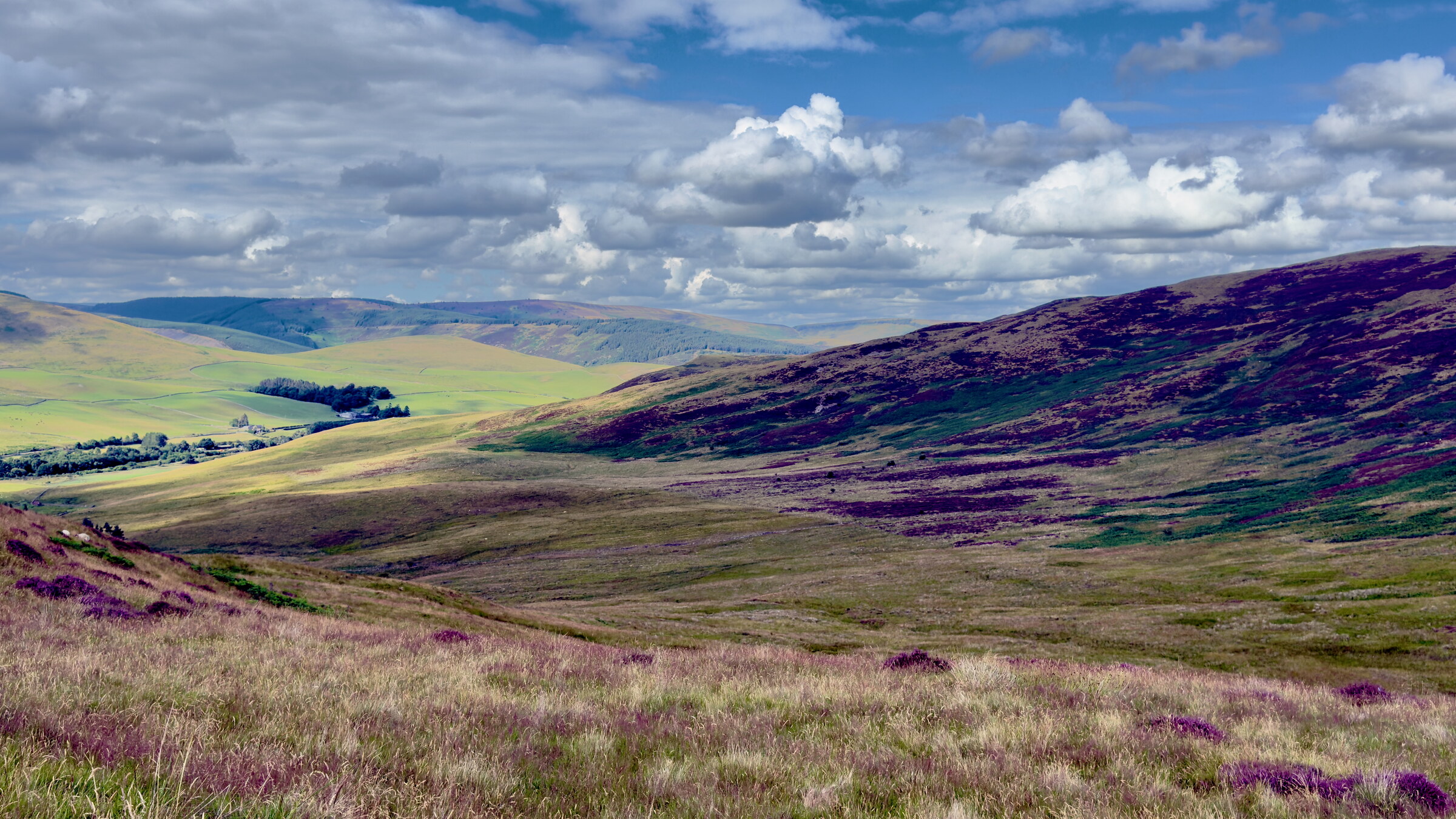
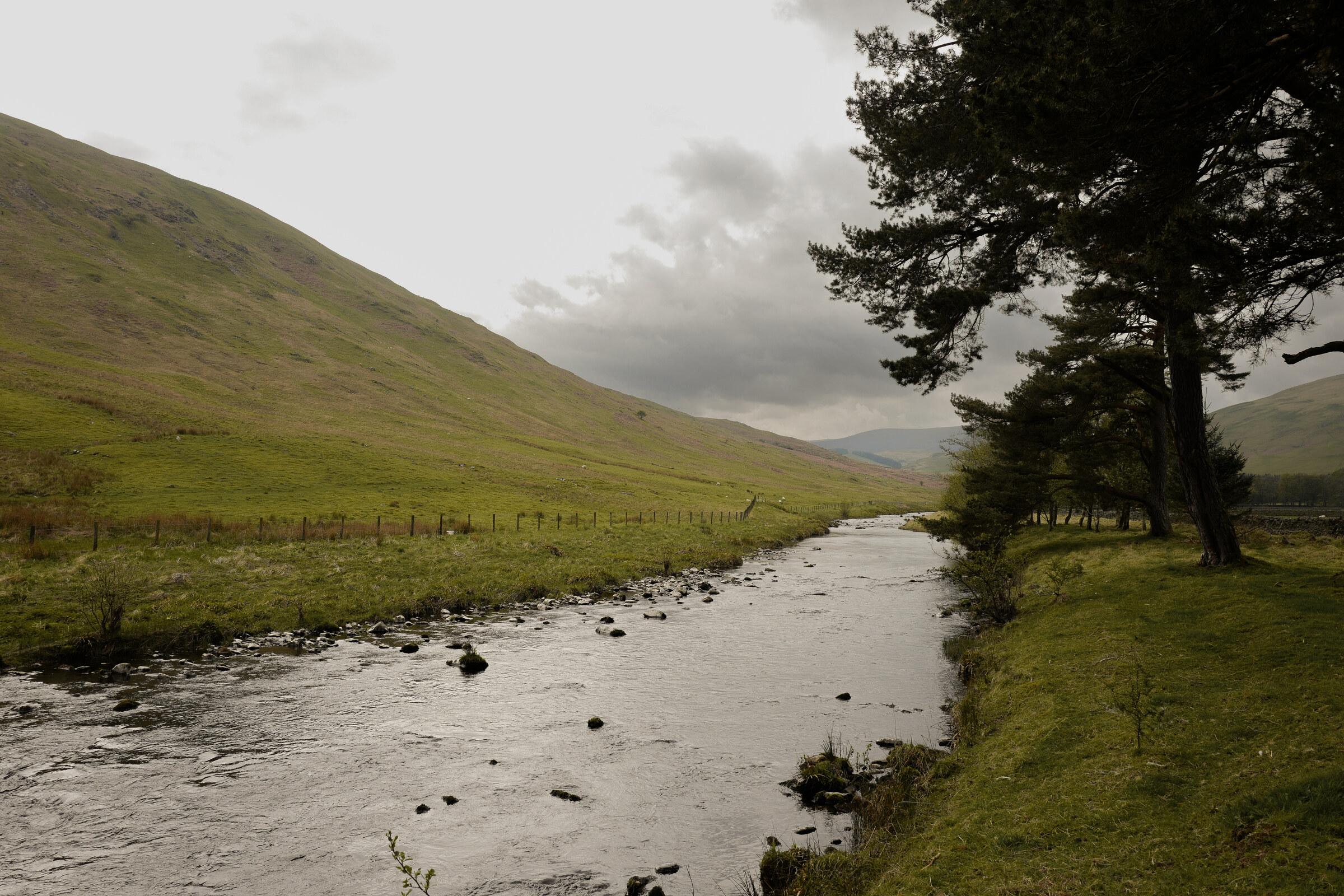
London gave us so much over thirty years. Friendships, culture, creativity, opportunity. But after COVID we both knew we were ready for something different. We spent a period in Cornwall first, which we love dearly, but I found myself still searching. The beaches were beautiful, but I realised I wanted hills rather than horizons, trees rather than tide. We looked at properties in the Highlands and along Deeside, which we adore, but they felt just a little too remote for such a significant life change. The Yarrow Valley offered what we think of as balanced remoteness. It is breathtakingly beautiful, wide skies, rolling hills, winding rivers, yet still within reach if you need it. Innerleithen is twenty minutes away, Edinburgh is roughly an hour and twenty by car, and the Borders Railway from Tweedbank runs directly into Edinburgh Waverley. In practice, though, I rarely feel the need to go anywhere else.
What first caught your attention about the disused stone scullery and made you feel it could be transformed into a place for guests to stay?
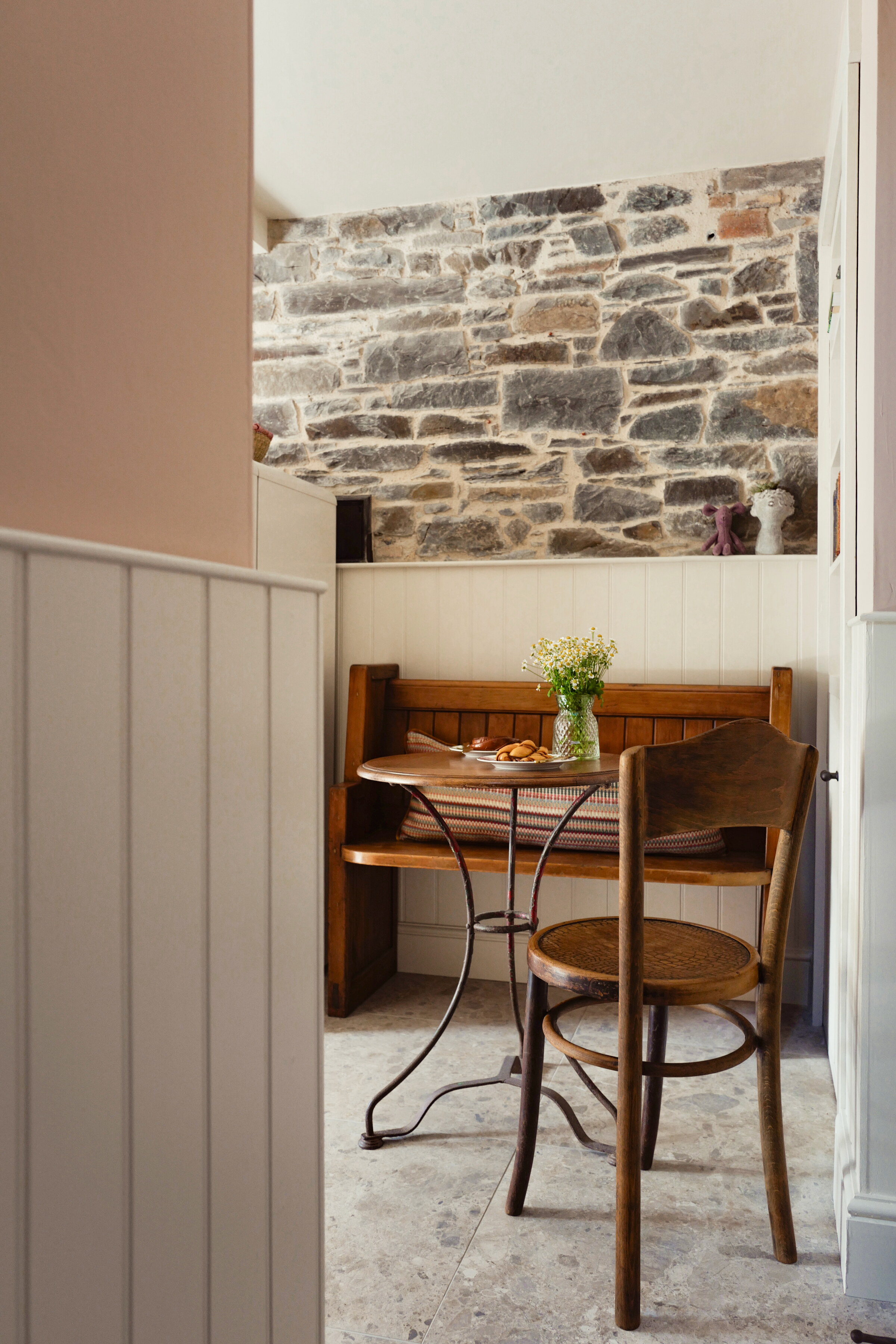
The scullery was once the working heart of the farmhouse, practical, functional, built to last. There is something very meaningful about that history. It was not decorative; it was essential. Transforming it into a peaceful retreat felt symbolic as much as anything else. When you stand in the space, even before any work has been done, you can feel the bones of it, the stone walls, the proportions, the way it sits in relation to the main house and the burn outside. I have spent years working with buildings and interiors, and sometimes a space simply tells you what it wants to be. This one wanted to be somewhere still. Somewhere you could arrive feeling frazzled and leave feeling restored.
How did the design process begin once you decided to take on the project?
It began with listening, really. I spent a lot of time in the space before making any decisions, observing how the light moved through it at different times of day, what you could hear, what the views were like from each window. There is a particular quality to the light in the Yarrow Valley that I wanted the interior to work with rather than against.
My background taught me that atmosphere is not accidental. It is the result of hundreds of small decisions made in sequence, each one building on the last. I came to it with a clear sense of what I wanted guests to feel, calm, held, unhurried, and worked backwards from that. Every material, every finish, every piece of furniture was considered through that lens.
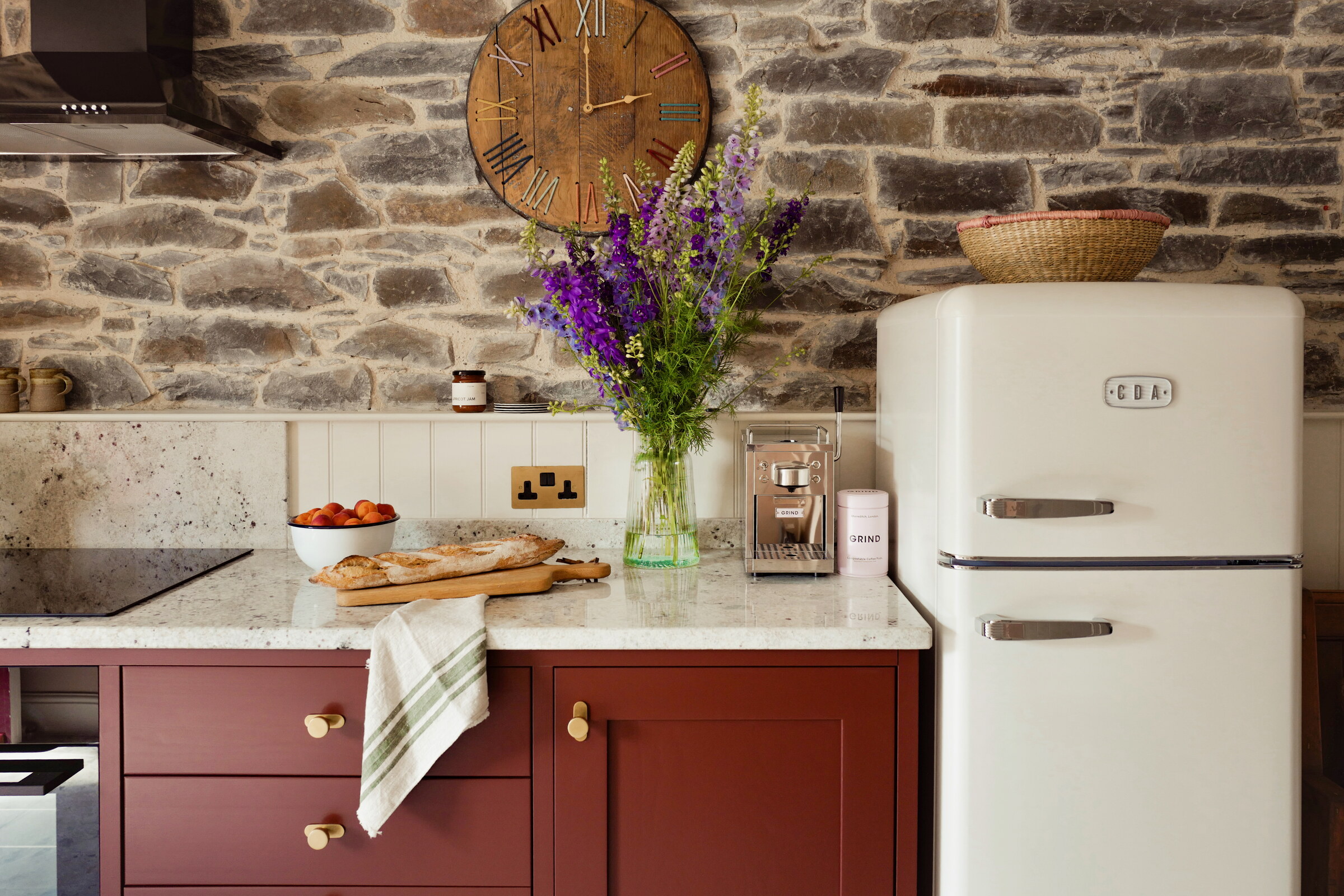
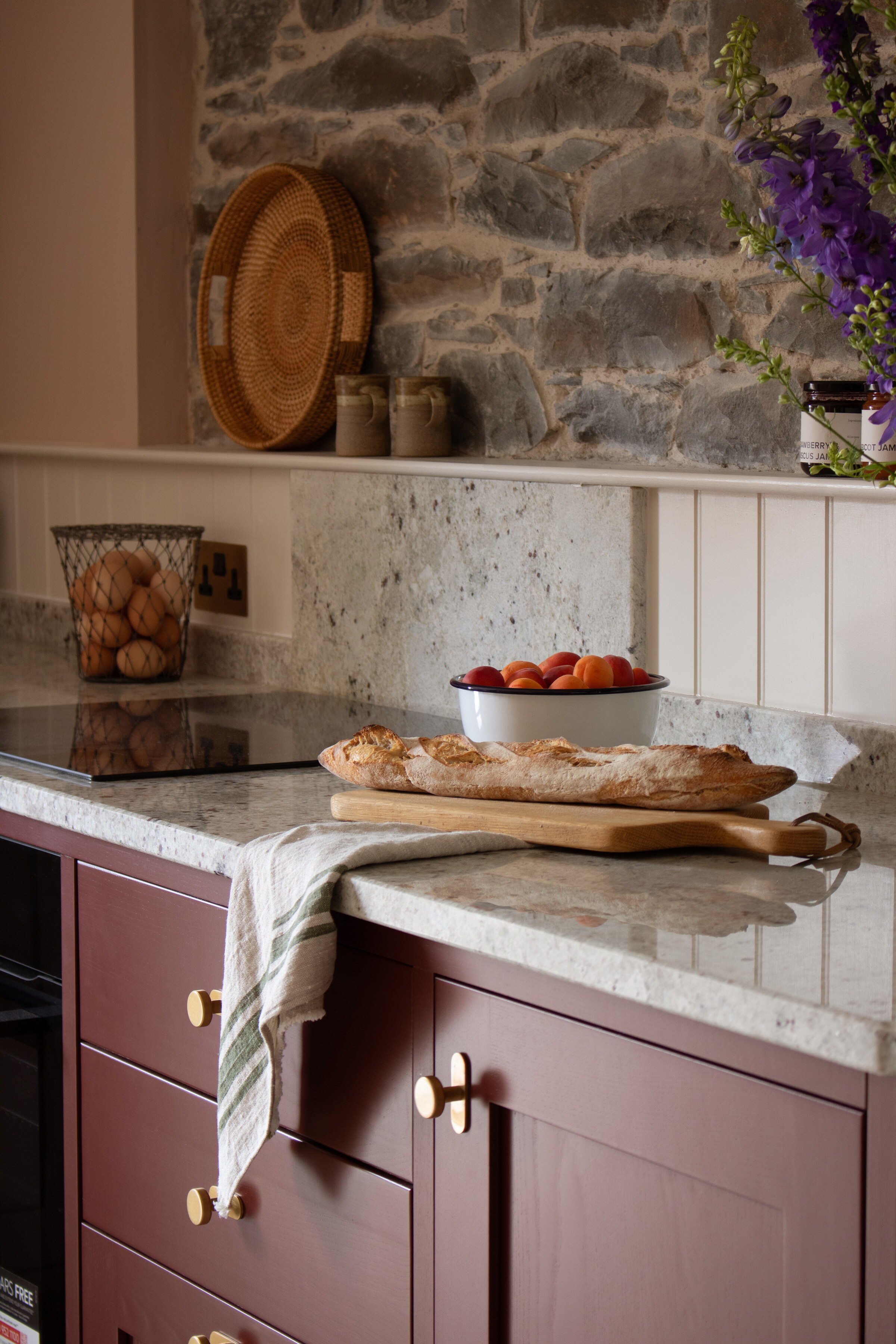
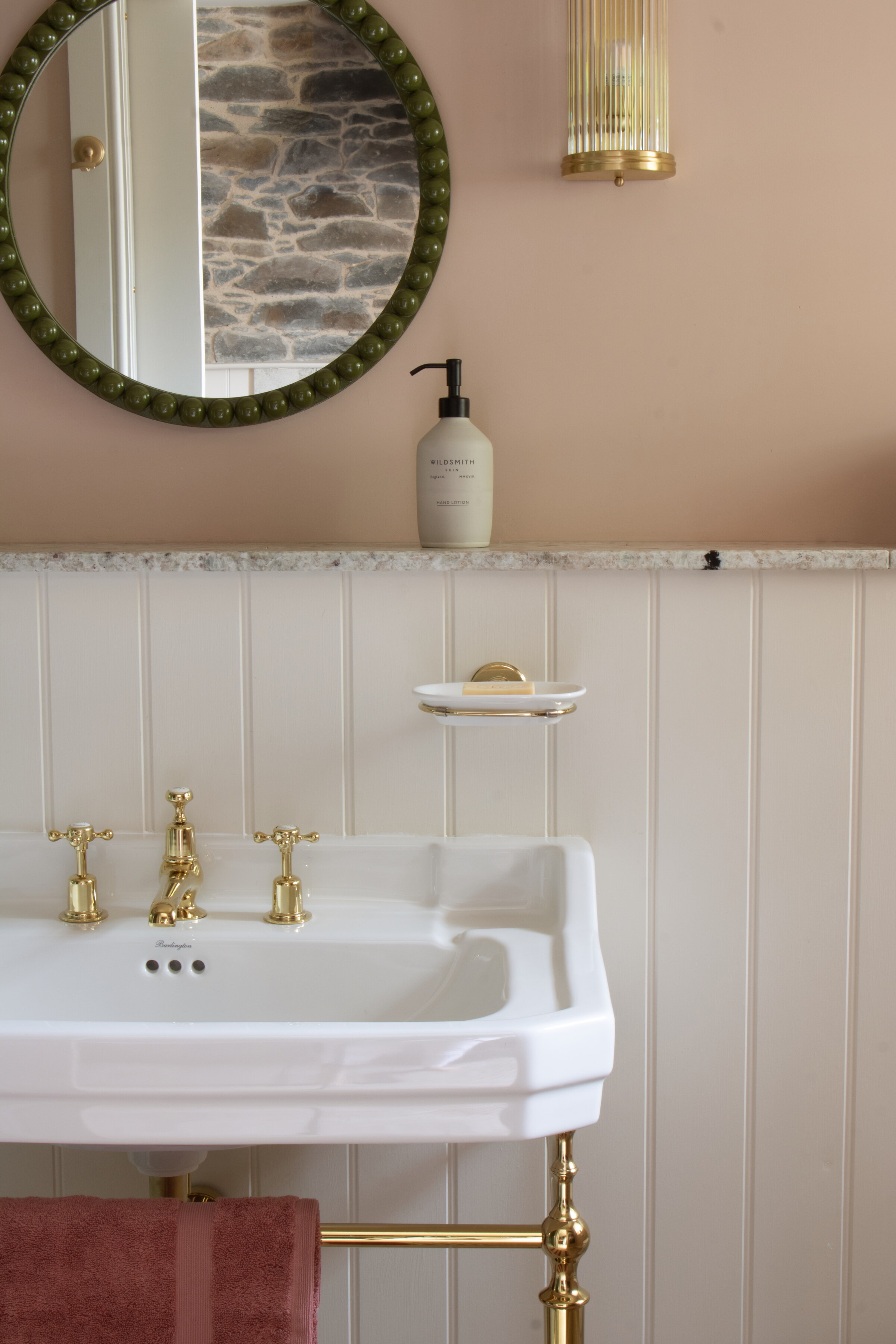
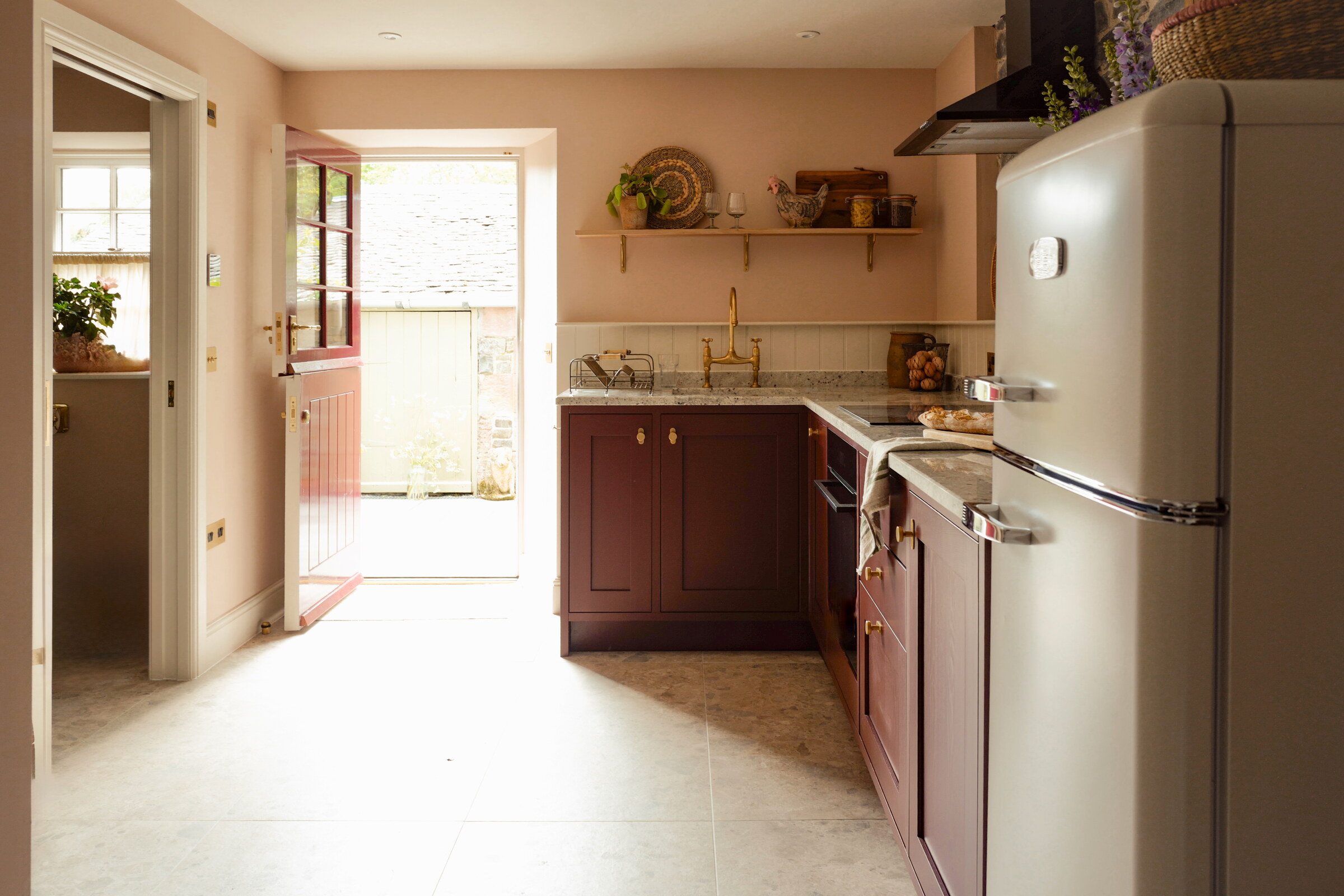
I wanted to stay faithful to the era of the building but knew that certain modern touches were not just desirable, they were essential to genuine comfort. In the bathroom, we created a spacious shower alongside an Edwardian inspired suite, so it feels period in character but entirely contemporary in how it functions. In the kitchen, we chose a deep and rich colour palette, balanced against the beautiful natural hues of the granite worktop, with aged brass ironmongery throughout. A deVOL Ionian tap, handpicked bronze hardware that nods to the romance of a traditional country kitchen without tipping into pastiche.
Underfoot, modern flooring runs throughout, and the heating is provided by sleek energy efficient electric panel heaters, partly powered by our solar panels. Guests are warm, comfortable and completely unaware of the infrastructure behind it, which is exactly as it should be. The period feel is preserved, the comfort is uncompromised, and the environmental footprint is as light as we can make it.
The interiors combine vintage and reclaimed furniture with contemporary pieces. How did you approach bringing those elements together?
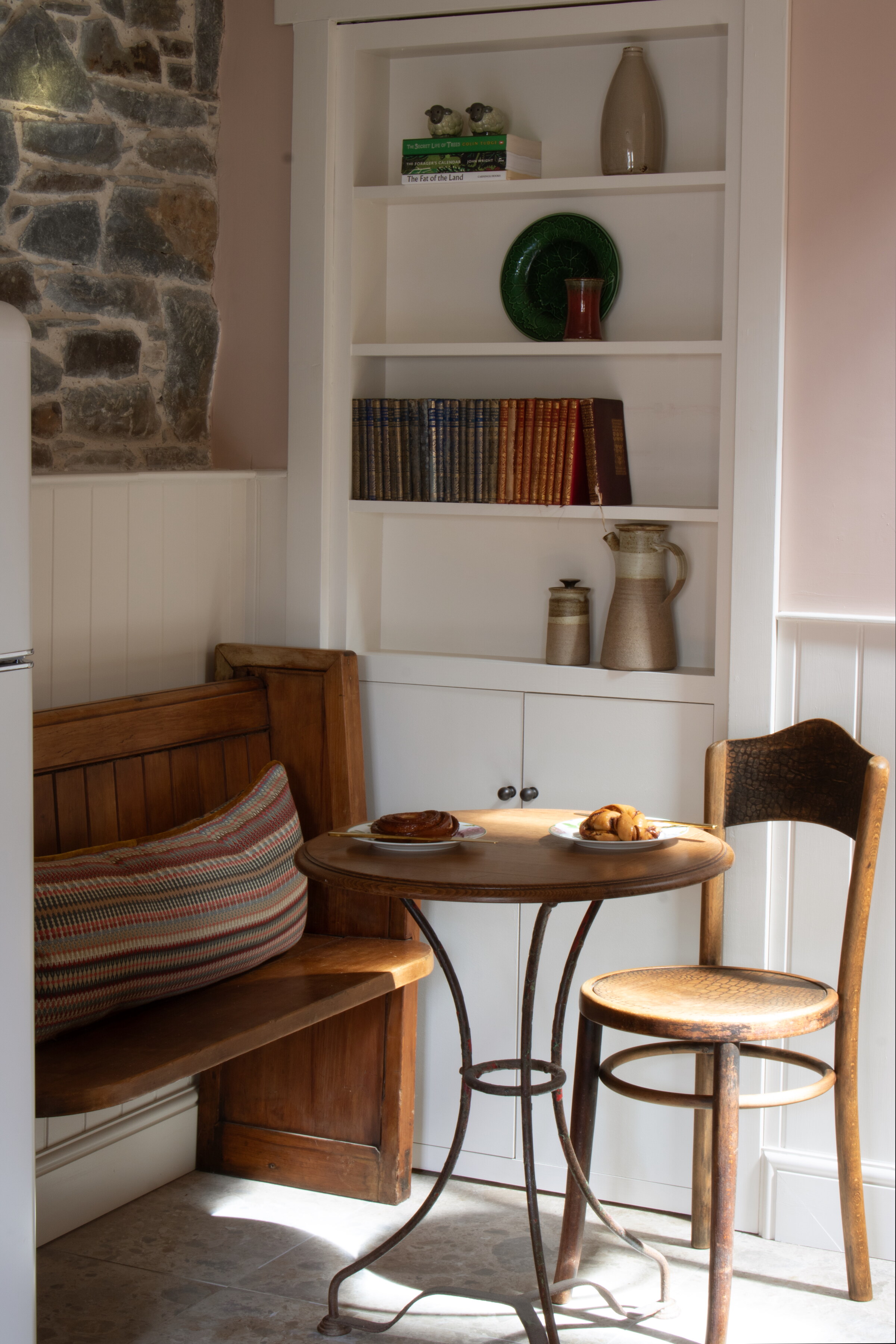
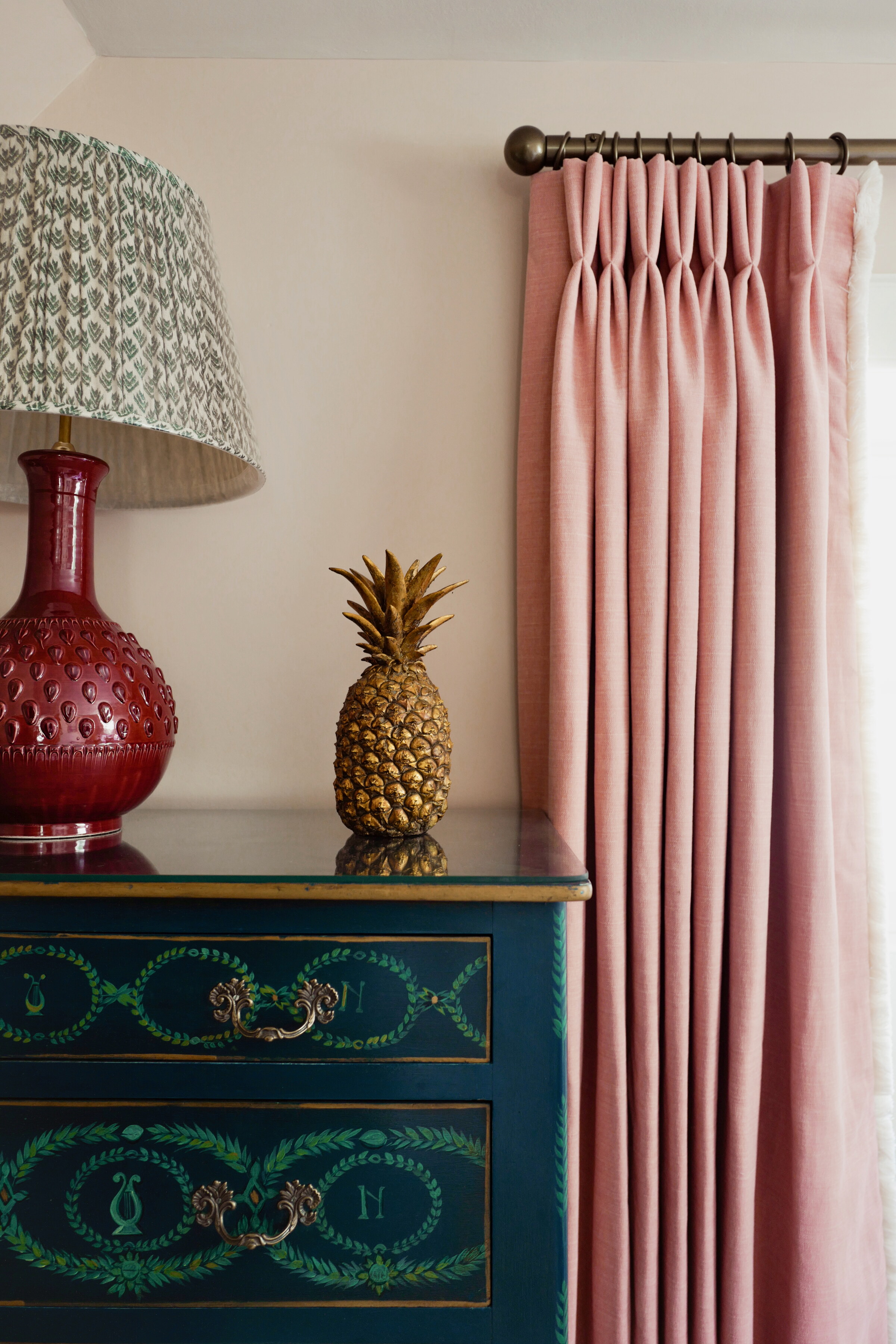
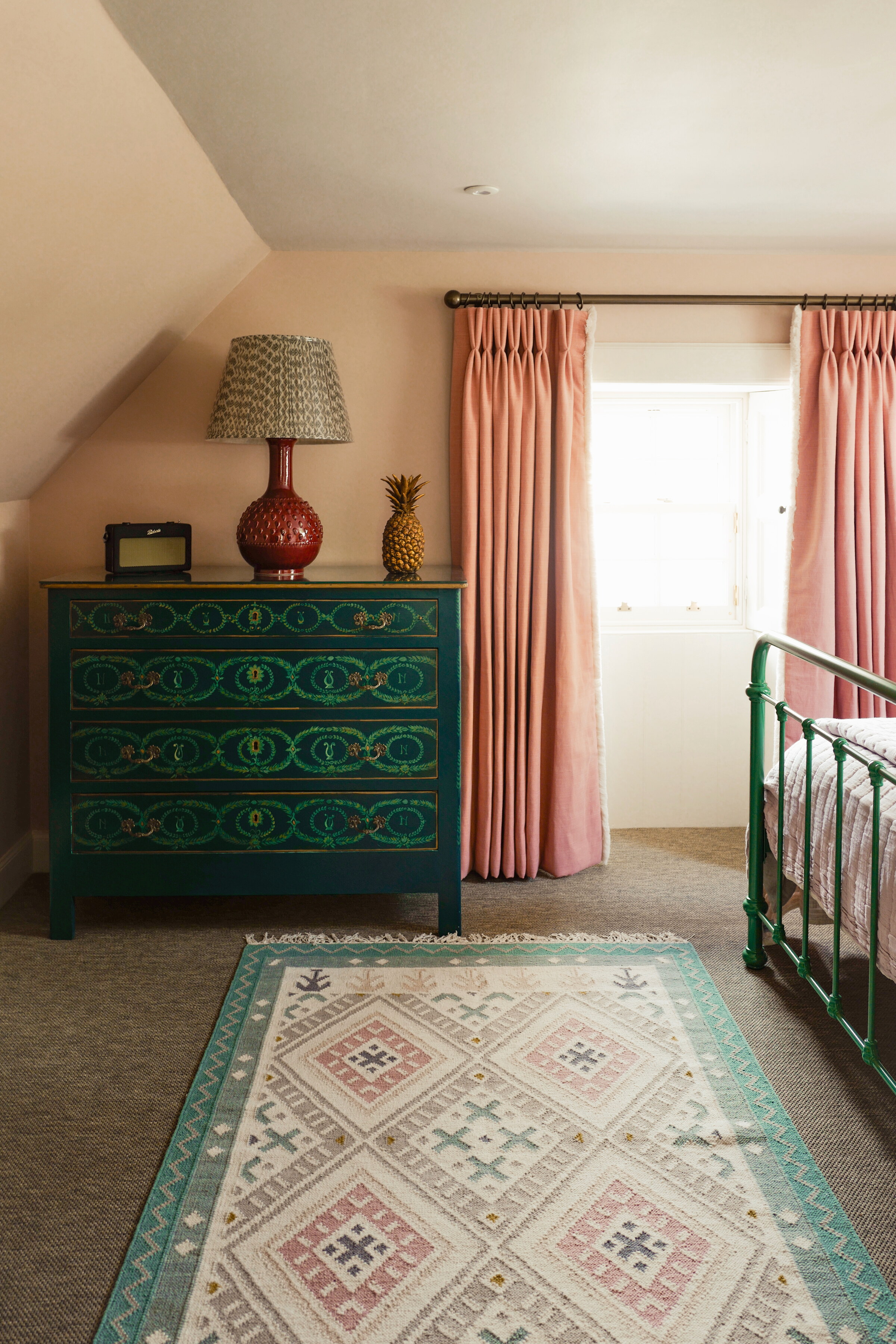
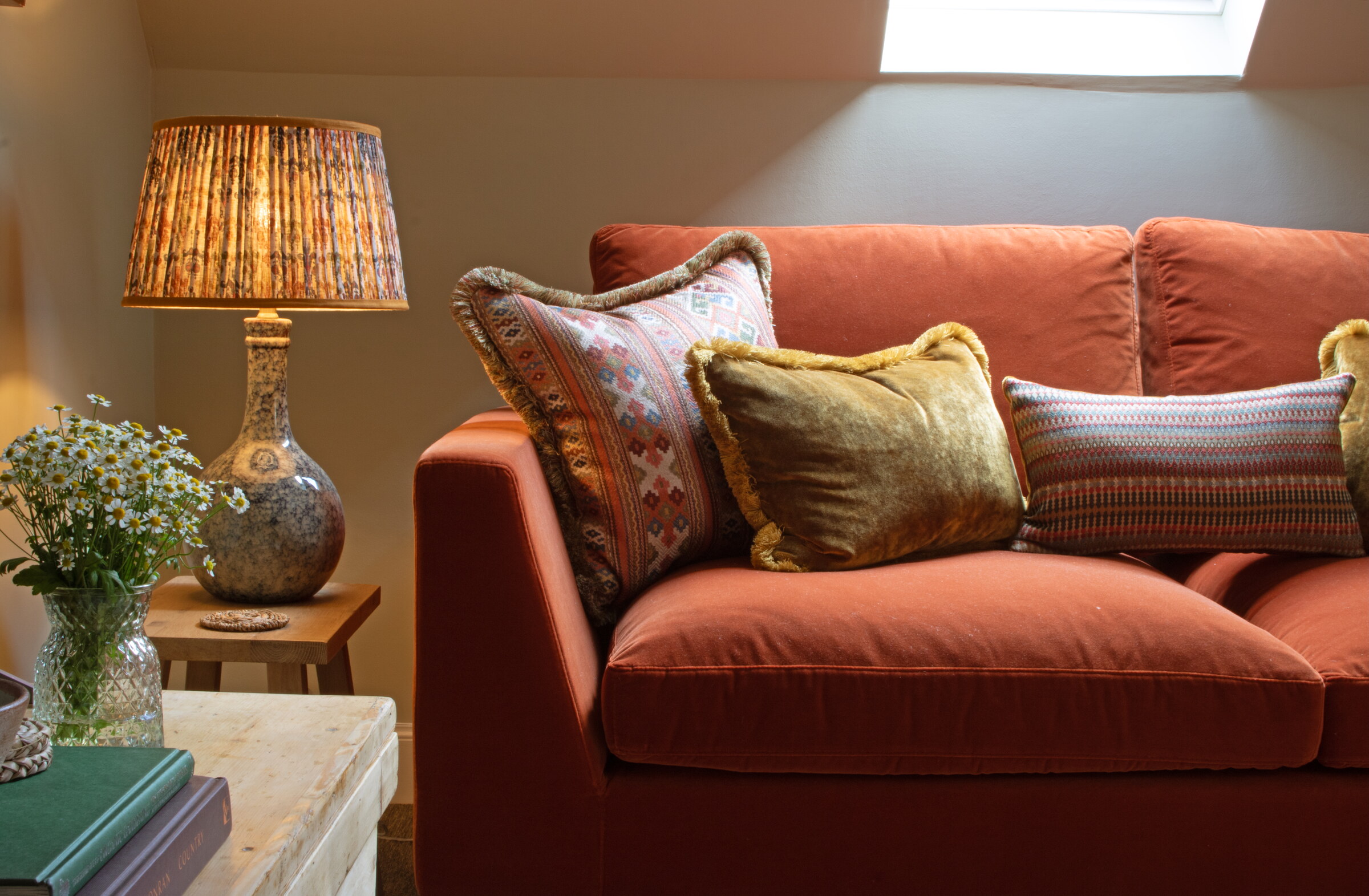
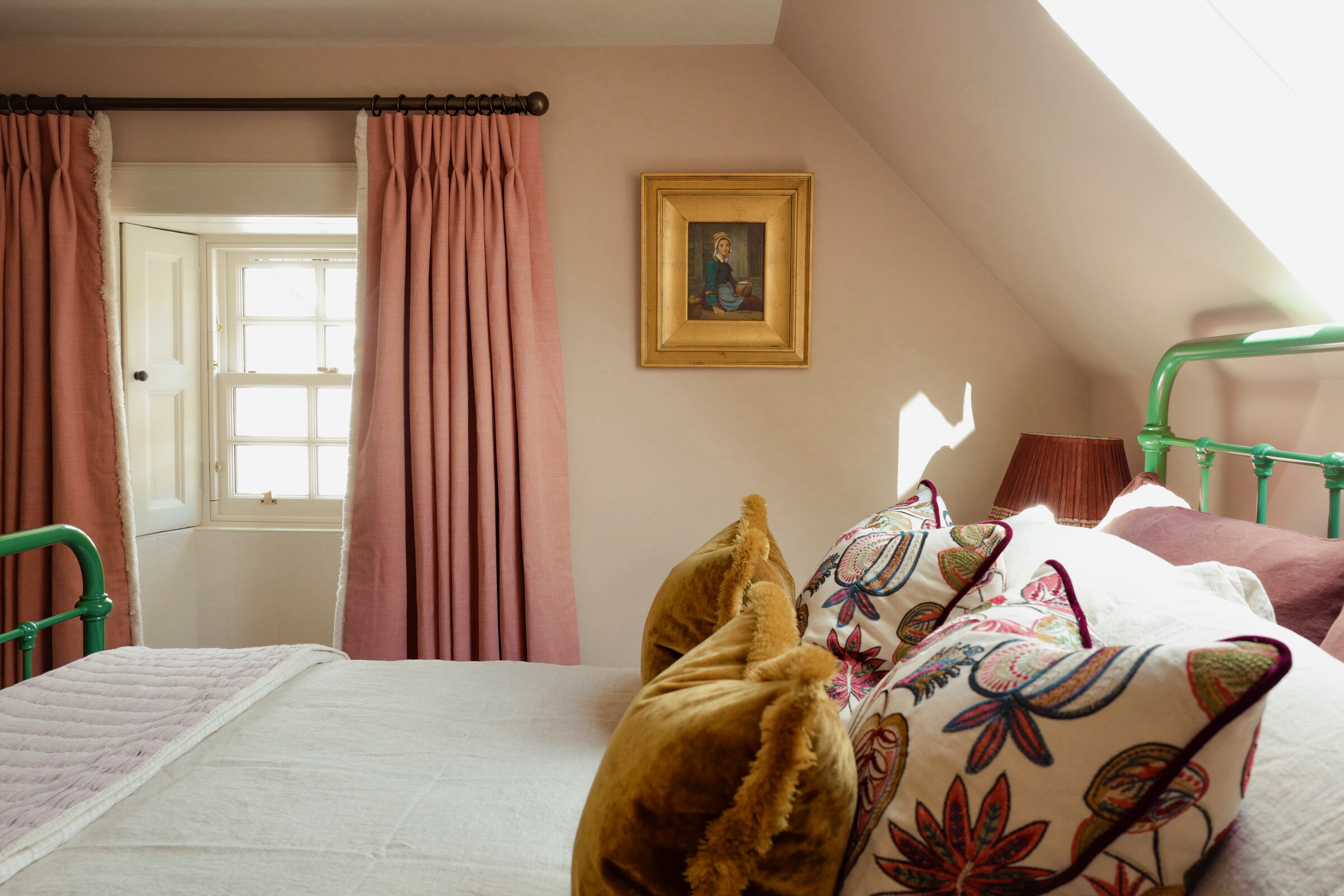
I think the key is that nothing is forced. I have always been drawn to things that carry a sense of history, pieces that have been somewhere, that have a story behind them. But if a space is all antique and reclaimed, it can feel museum-like, a little airless. So, the contemporary pieces provide breathing room. A carefully chosen modern lamp beside an antique chest, a piece of contemporary Scottish art on an original stone wall — it is about conversation between different eras rather than strict adherence to one style. The Victorian bedstead dressed in linen and brushed cotton is a good example of that balance. It feels timeless rather than dated. The Fired Earth bathroom tiles, the deVOL aged brass tap, the Paint and Paper Library palette. Each element is doing its part.
You’ve mentioned that the colour palette was inspired by the surrounding landscape. How did the setting influence the choices you made inside the space?
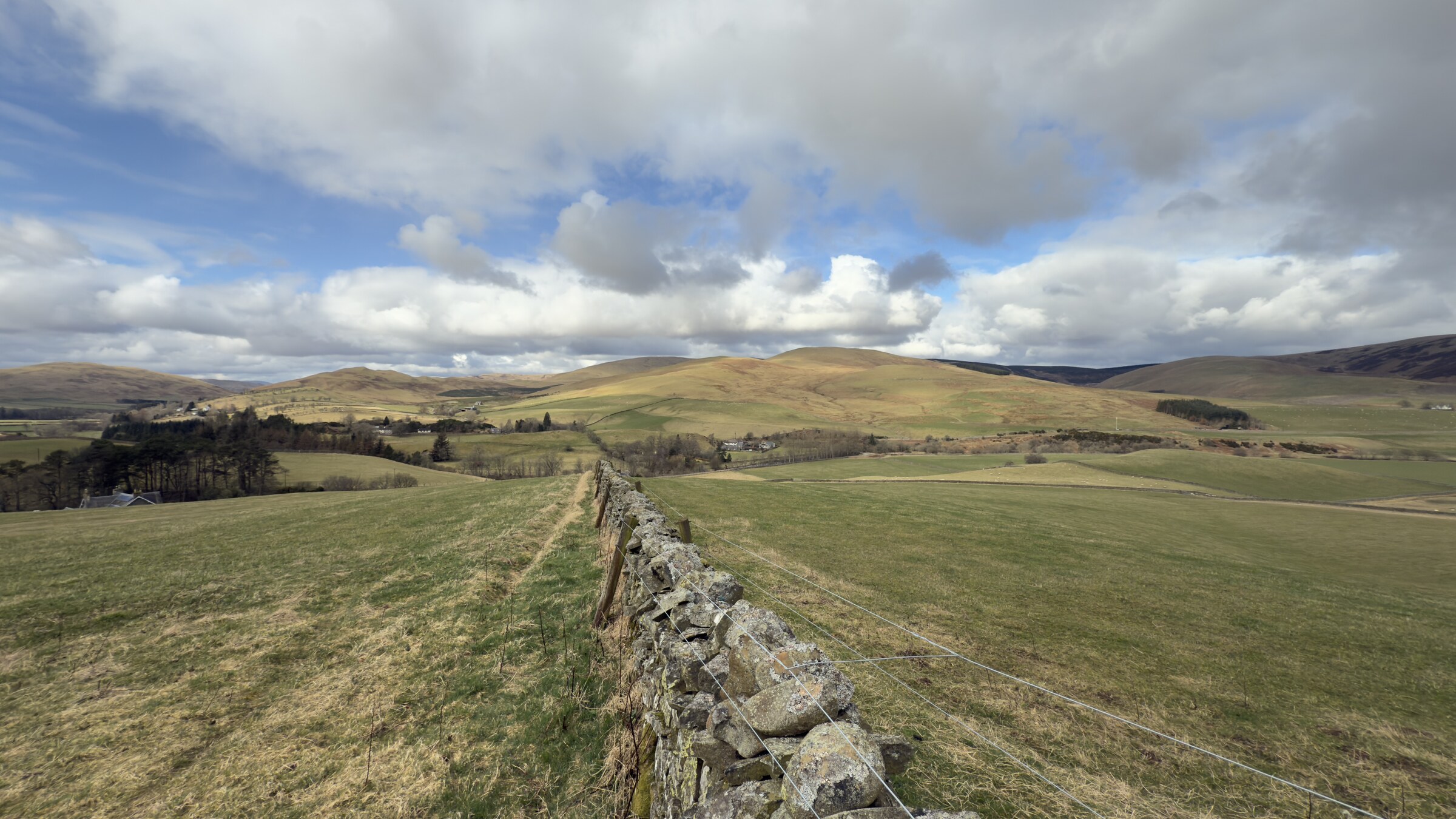
Enormously. If you look out of the windows here at different times of year, you see extraordinary gradations of colour. The deep heathers and bracken of the hillsides, the pale greys and silvers of the Yarrow Water, the warm ochres of autumn woodland, the pale pinks of a winter evening sunset settling over the hills, the particular blue green of a clear Border sky. I wanted the interior palette to feel continuous with that, so that there is no jarring transition between outside and inside. The tones throughout The Scullery are warm but grounded, earthy, textural, never stark. The Paint and Paper Library collection gave me exactly that kind of depth. The colours have an aged quality that suits a building of this age and character.
Art plays an important role in the space, with works from contemporary Scottish artists alongside pieces found locally. How did you go about curating that collection?
I have been very fortunate in that regard. Shortly after we arrived, I discovered that our neighbours own a gallery in Selkirk. Charly and her husband Javier run the Burnside Gallery, and they became an invaluable guide to the local and Scottish art scene. Working with them shaped the collection enormously.
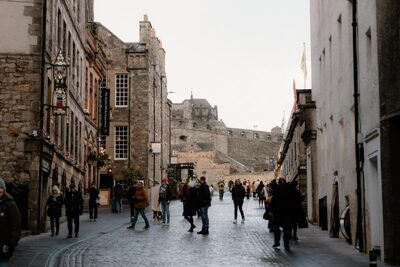
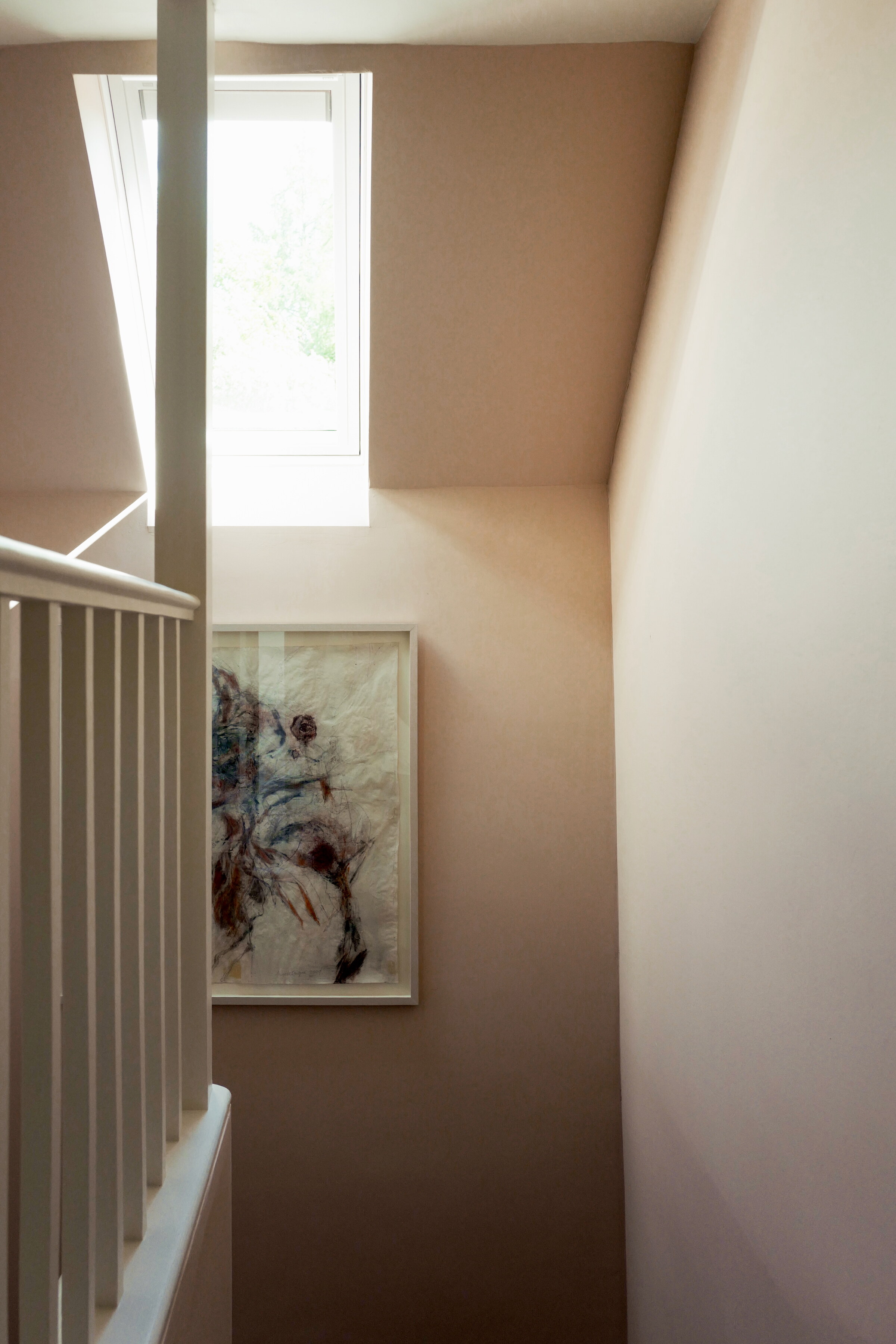
Several of the pieces are Charly Ternero’s own work, and they are particularly special to me because they depict places we can see and walk to from the door, Hatfield, Nout Hill, Peat Law, Ingleston. All watercolours, and all painted with a real feeling for the particular light and mood of the Yarrow Valley. There is something quietly profound about a guest sitting with a painting of the very hillside they walked that morning. In addition, one of the beautiful works was a view from the tram Charly took in Edinburgh.
We also have a larger piece by Angelo Cinque, an Italian artist now practising in Dumfries and Galloway, whose work brings a different energy — bold and considered. And two remarkable pieces by Rebecca Kaye: Ploterre, Bird Colours, which maps one hundred colours drawn from the twenty most common birds found here, and a Feather Foiled Print that tracks bird population changes across forty years within the fine detail of a single feather. Both are the kind of work that draws you in slowly and rewards time spent with them.
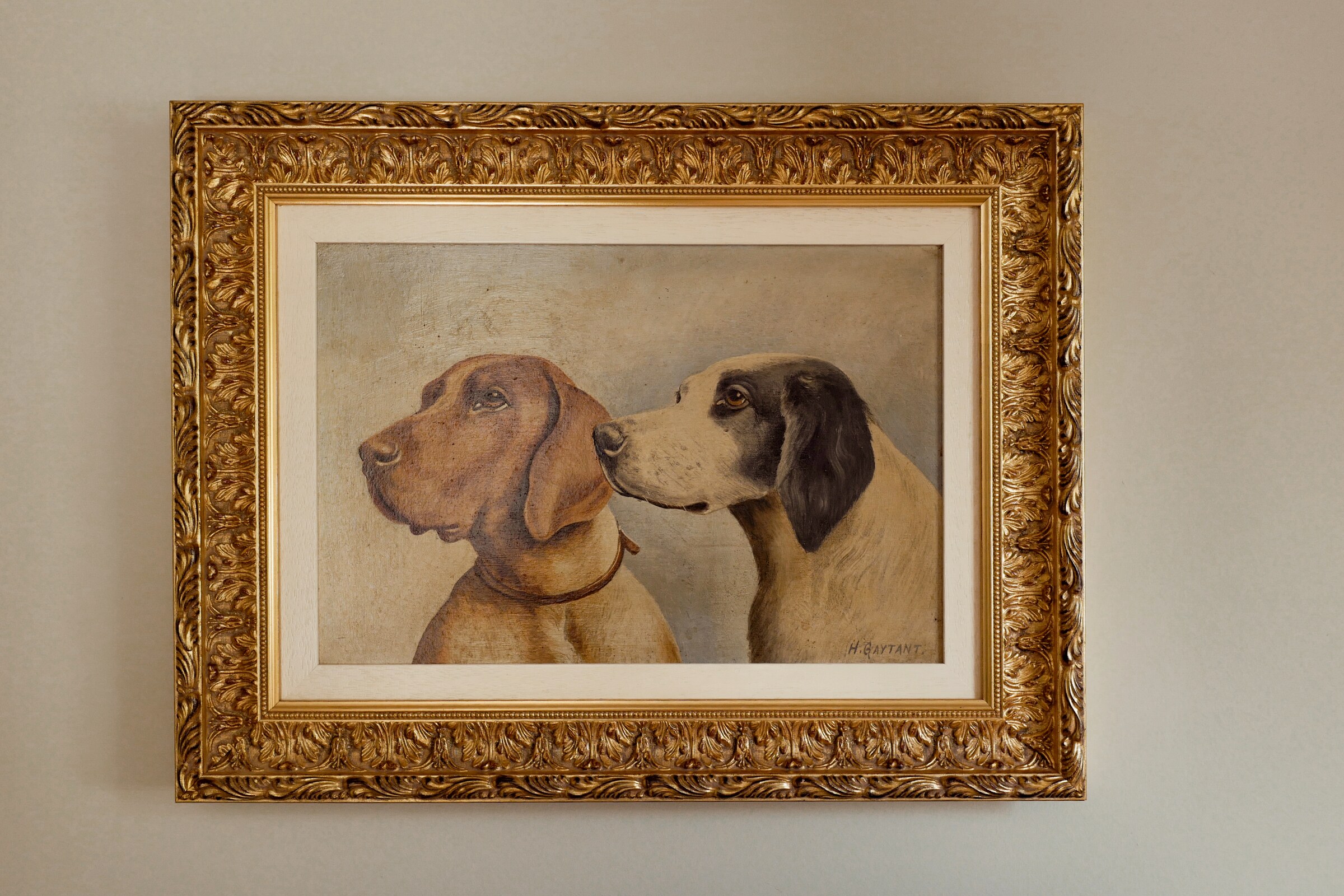
These sit alongside oils we have collected over the years from auctions and art dealers — landscapes and still life that feel at home in a building of this age. And the plan is far from finished. The tall stairwell of The Scullery is going to be filled entirely with original art as our collection continues to grow. It is one of those pleasures that has no end point, which suits me perfectly.
The Scullery sits in the Yarrow Valley in the Scottish Borders. What do you enjoy most about living in this part of the country?
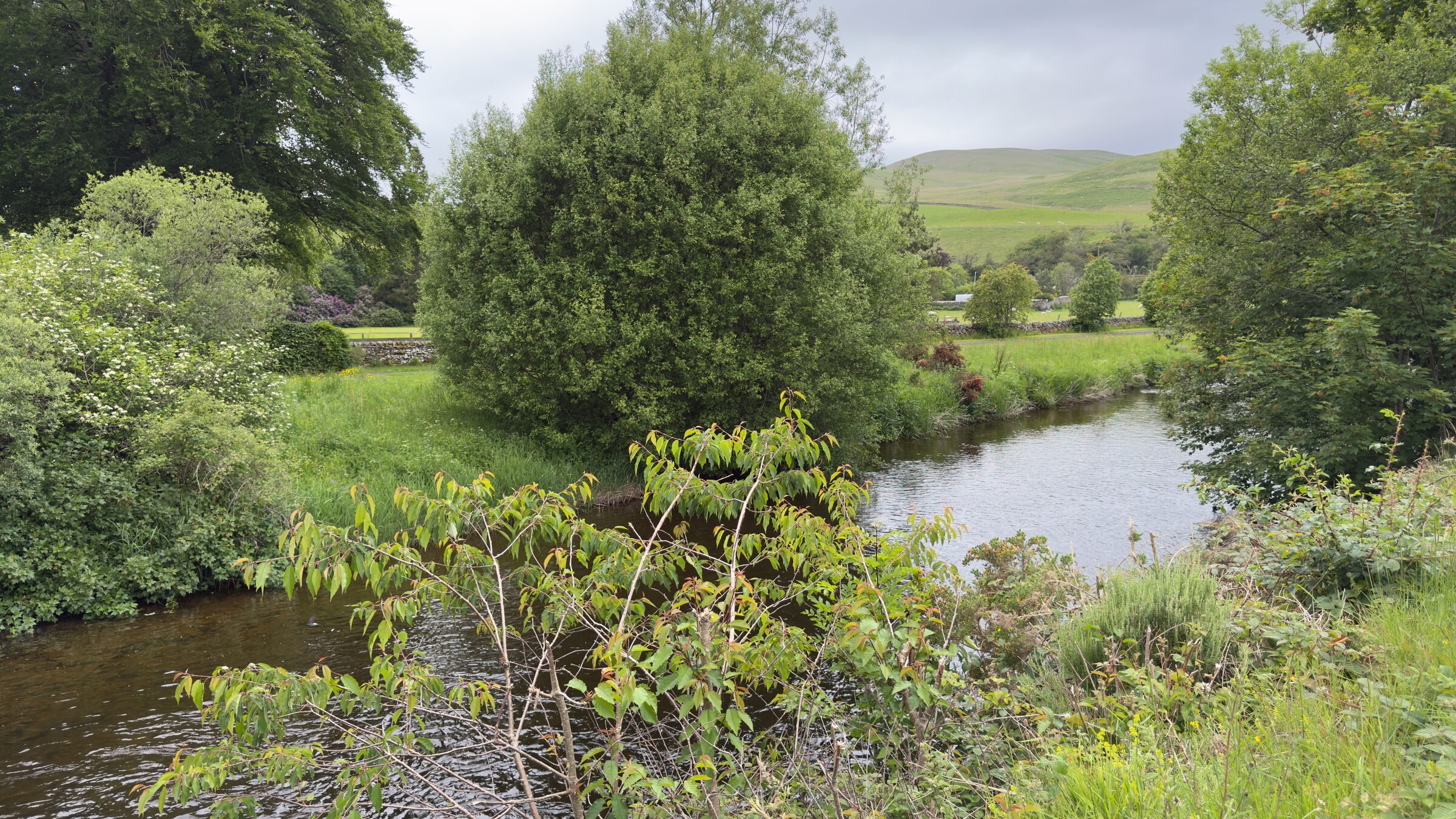
The depth of it. The Yarrow Valley has a particular character that takes time to reveal itself — it is not the kind of landscape that announces itself loudly. It unfolds. The Yarrow Water and the Ettrick Water run through the hills, St Mary’s Loch sits peacefully at the head of the valley, and the whole area carries this remarkable literary history. James Hogg, the Ettrick Shepherd, was born here. Walter Scott came to fish and walk. Wordsworth visited in 1814. All of them found their way to The Gordon Arms, just up the road from us, which has been drawing poets, writers and wanderers to this valley for two centuries. There is a sense that people have found meaning in this landscape for a very long time, and you feel that when you are here.
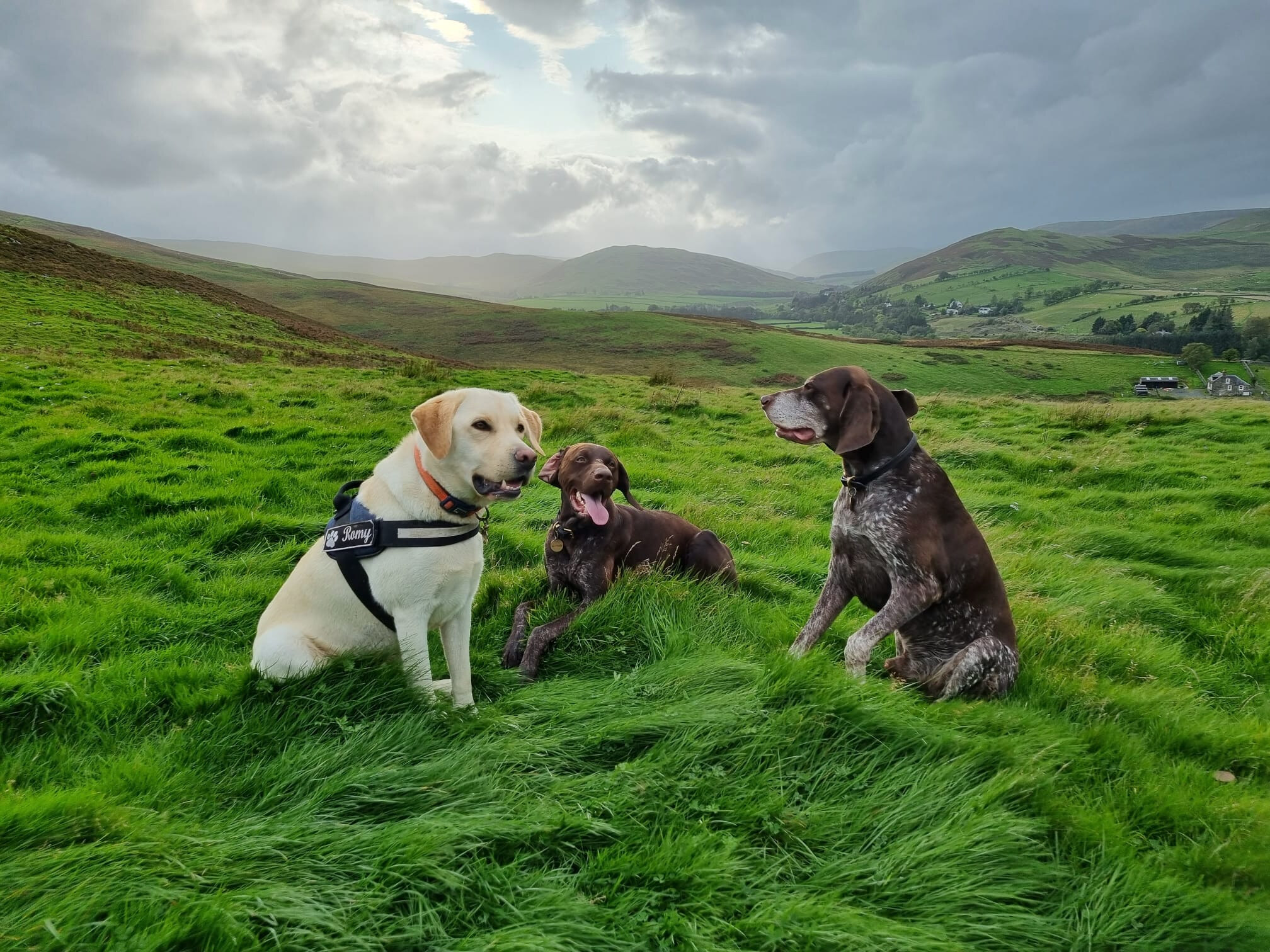
We are also keen fishermen, and we have three rivers on our doorstep, the Yarrow, the Ettrick, and the Tweed. We have working Pointers, so the access to open moorland and the Southern Upland Way from our front door is something we genuinely use every day.
You’ve spoken about the quiet here, with birdsong and the sound of the stream nearby. How has life here changed your daily pace compared with living in the city?
I spent the last fifteen years before leaving London in high-pressure commercial environments, but years before that, in my twenties, I had a period of extensive travel that shaped me profoundly. I lived in Australia, walked in Nepal, travelled India from north to south and back again, and spent time in the foothills of the Himalayas staying with Buddhist monks, attending daily meditation sessions at a monastery we walked to on foot each morning. That time taught me a great deal about stillness, simplicity and what matters. I very much regretted having to leave that time of my life, but life at that point needed to return to something more familiar. I needed to fund my existence, as one does.
Back in London, the pace took over again, as it always does. And for a while, I embraced it entirely. Art, galleries, parties, clubs, bars and restaurants. It was an extraordinary time in its own way, and I look back on it with great warmth. But eventually, with maturity, comes a need to reconnect with something steadier. The noise that once felt exciting starts to feel like interference.
Moving here has restored something deep within me. A sense of calm, a sense of simply being. But the most important thing Scotland has given me is a reconnection to the wild, and a renewed understanding of just how essential nature is. Not as a backdrop or a weekend activity, but as something fundamental to how we feel and who we are.
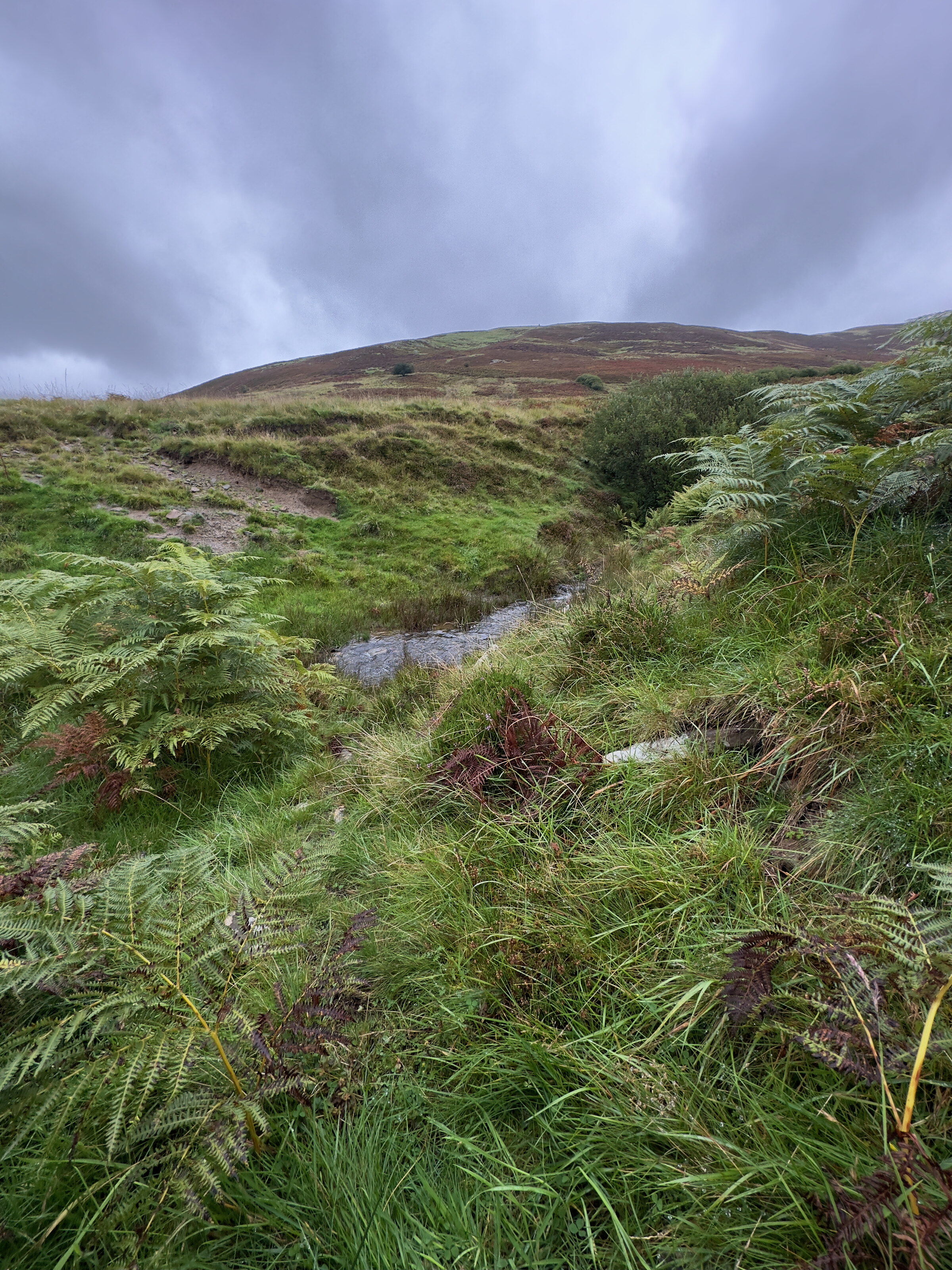
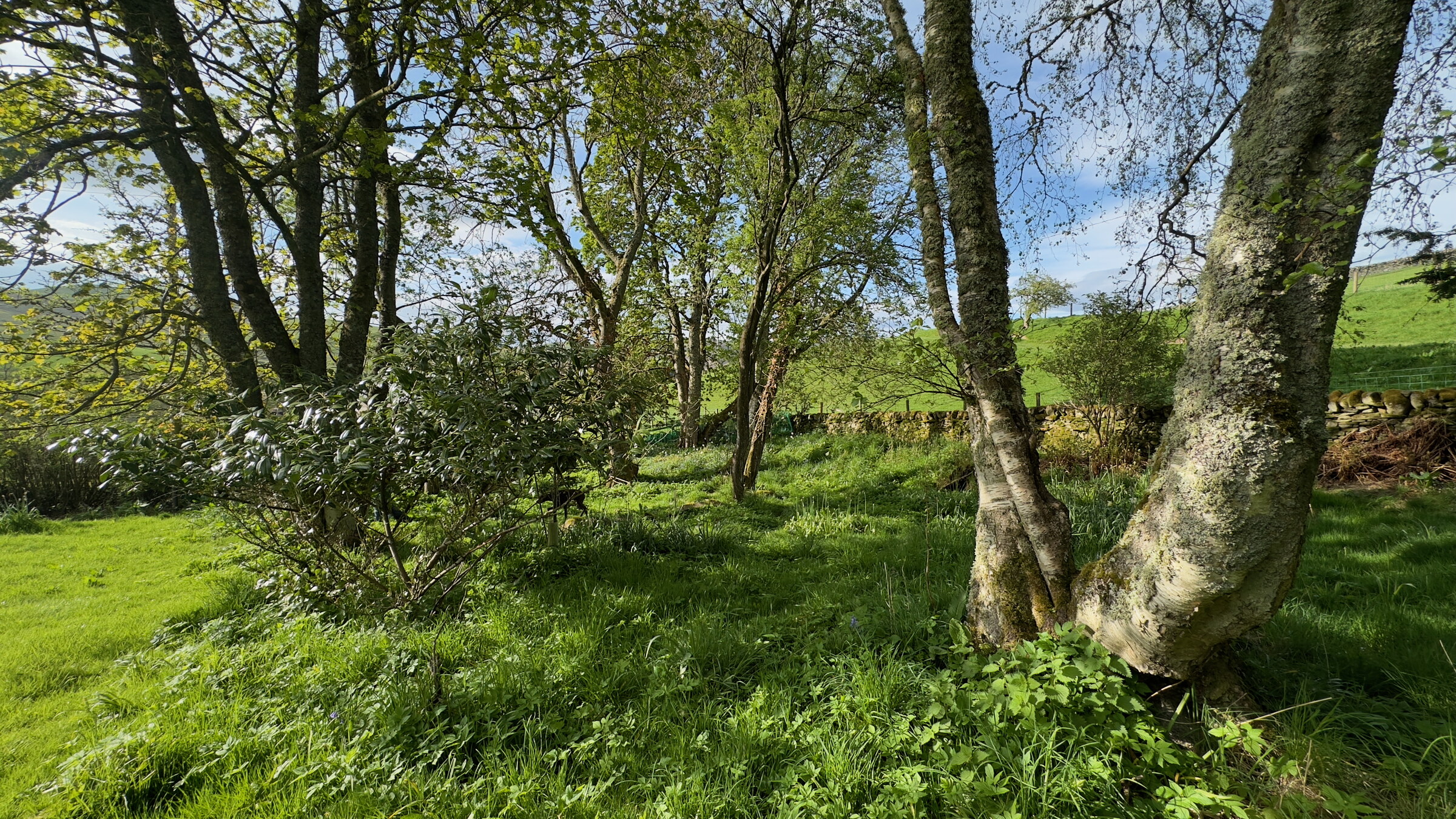
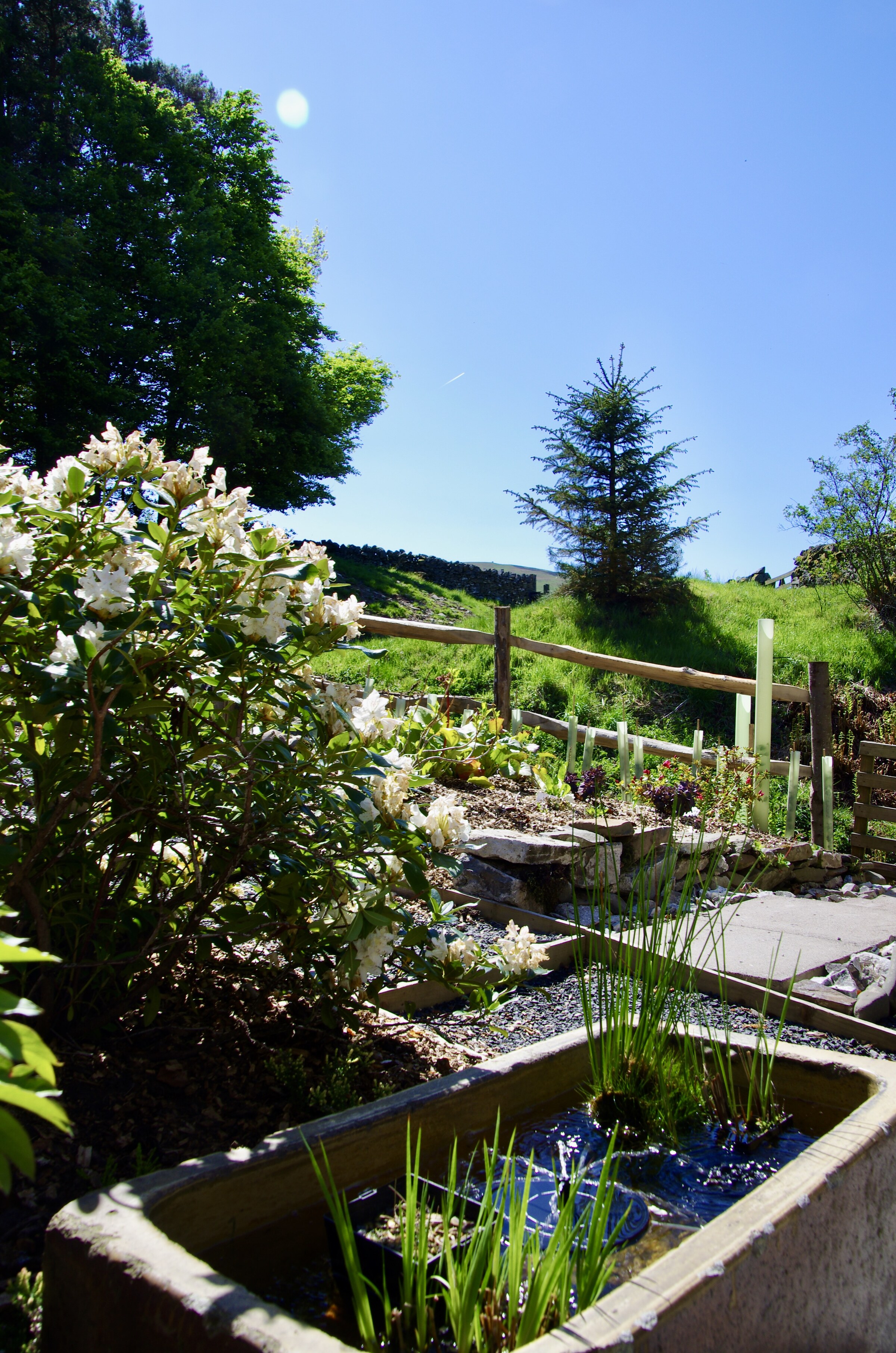
We wake to birdsong, walk the dogs through heather and woodland. The sound of the Ladhope Burn is constant, there is always moving water nearby, and I have come to feel that is essential to me. But it is not just the sound and the landscape. It is the life that fills it. Red squirrels visit most mornings. Roe deer appear at the treeline at dusk. Birds of prey circle overhead. We see them regularly, unhurried and entirely unbothered by our presence. Woodpeckers drum in the woodland, cuckoos call across the valley in spring, pheasant and grouse wander about as if they own the place, which in many ways they do. And our chickens greet me every morning with great enthusiasm, then run from me every evening when it is time for bed, which never gets less entertaining.
The swifts are perhaps my favourite. They return from Africa each year without fail and watching them arrive and begin their aerial display above the farmhouse is one of those moments that stops you in your tracks. Then as the light fades, the bats take over, and later the owls. There is always something happening, if you are paying attention.
And then there are the dark skies. Living in London, you simply forget they exist. The city glow erases them so completely that after a few years you stop thinking about what lies above. But here, on a clear night, the sky is extraordinary. Constellations sharp and vivid, the Milky Way visible, the sheer scale of it all pressing down on you in the most wonderful way. It puts everything back into perspective immediately. You are reminded, in the most direct possible way, that we are a tiny speck in an enormous galaxy and somehow, rather than feeling diminishing, that is the most resetting, calming feeling there is. All those things that felt urgent and heavy in the city suddenly seem exactly the right size.
For someone visiting the Yarrow Valley for the first time, what do you think makes this part of the Borders special?
I think what frustrates me slightly is that people often overlook the Borders entirely, not because it lacks anything, but because they are in a rush to get to the Cairngorms or the Highlands. And I understand the draw, I really do. But those are another six hours north, and what people speed past on the way is quite extraordinary.
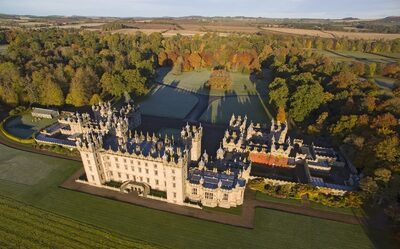
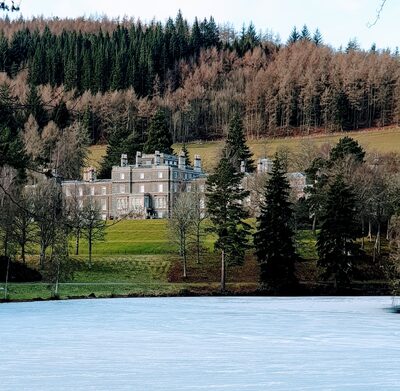
The landscape here is stunning and varied, rolling hills, wide river valleys, ancient woodland, and a coastline not far to the east that most visitors never reach. But it is the history that really sets this part of Scotland apart. The story of the English and the Scots was played out here for centuries, and it is written into every castle, fortified tower house and ruined abbey in the region. Melrose, Jedburgh, Kelso, Dryburgh, four of the great Border abbeys, all within easy reach. Floors Castle, the seat of the Duke of Roxburghe, is one of the largest inhabited castles in Scotland. Bowhill House, home to the Duke of Buccleuch, holds one of the finest private art collections in the country. The history of the Covenanters runs deep through this landscape too, and rewards anyone who takes the time to explore it.
And then there is our closest neighbour, Traquair House, just twenty minutes away, which is the oldest continuously inhabited house in Scotland. It dates back to 1107, has been lived in by the Stuart family since 1491, and has been visited by 27 Scottish Kings and Queens, including Mary Queen of Scots. It is a remarkable place and entirely worth an afternoon.
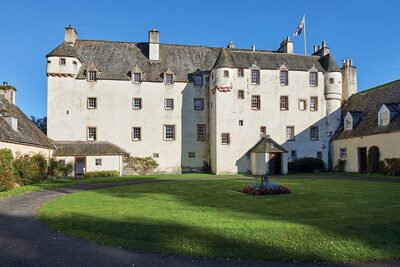
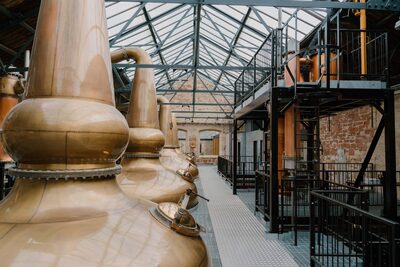
The cultural and literary heritage is equally rich. This is Walter Scott country, James Hogg country, and the Borders has a thriving independent bookshop scene and the excellent Beyond Borders cultural festival at Traquair each year, as well as The Borders Book Festival, which takes place in June. The towns themselves have a real identity and pride. Many grew up around the wool and textile trade, and brands like Pringle of Scotland have their roots here. Hawick, famous for its cashmere, is home to both The Borders Distillery and Lovat Mill, whose tweeds are among the finest produced anywhere in the world — well worth a visit at lovatmill.com. There is a great deal here for those who want to look.
If guests ask for recommendations, which walks or places nearby do you usually suggest they explore?
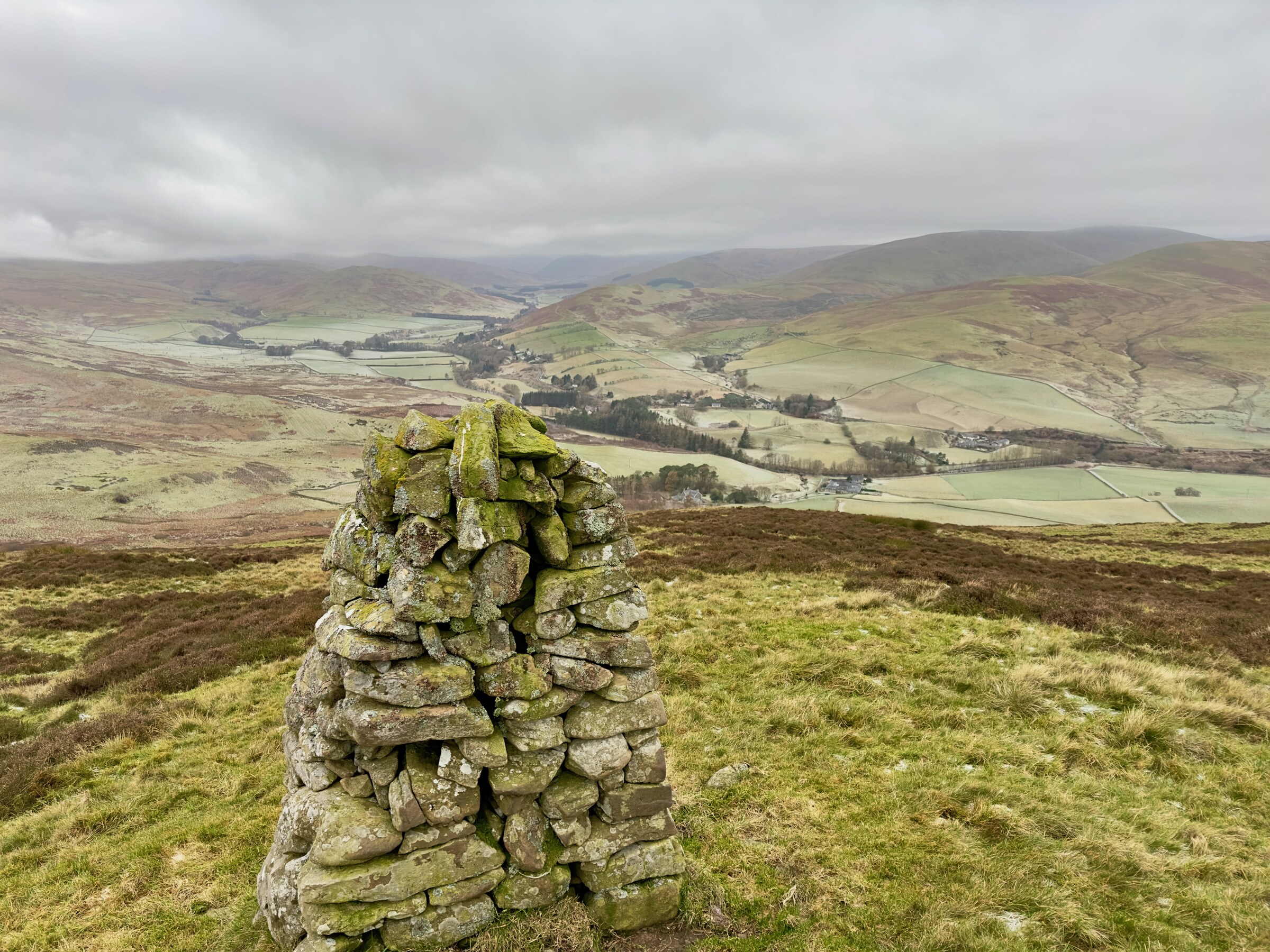
The walk up to the summit and to the Cairn above Ladhope itself is one I recommend first. You get extraordinary views across the Yarrow Valley from up there, and it is achievable without being too challenging. From the door you can walk for miles in any direction across open moorland and through woodland, which our dogs make very good use of daily.
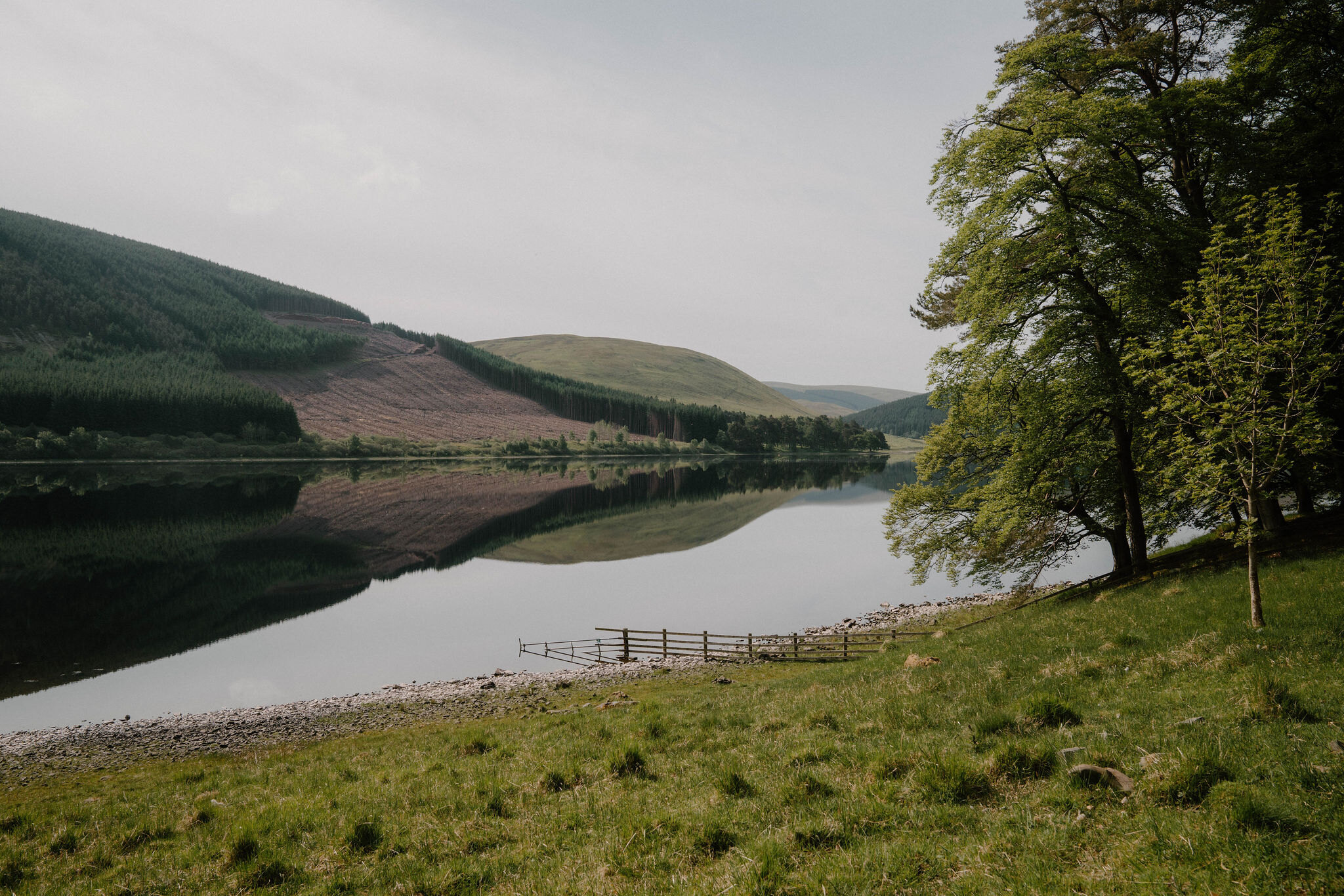
St Mary’s Loch is only a short drive and has a timeless, quietly melancholy beauty that I find endlessly moving. It is where James Hogg’s statue stands, looking out across the water, and on a still morning with low mist it is one of the most atmospheric places I know. The Loch of the Lowes sits alongside it, and the walk between the two along the water’s edge is gentle and beautiful.
The Southern Upland Way passes close by and opens up some genuinely wild hill walking for those who want it. Lee Pen above Innerleithen is a favourite. Steep enough to feel earned, with wonderful views from the top across the Tweed Valley. The Three Brethren above Selkirk is another excellent walk, and on a clear day the views stretch for miles.
For something gentler, the paths along the Yarrow Water and through the estate woodlands are lovely at any time of year. The Ettrick Valley, just over the hill from us, is equally beautiful and much less visited. For a full guide to walking in the area, ettrickandyarrow.co.uk is an excellent resource and well worth exploring before you arrive.
Are there any cafés, restaurants or local food spots in the area that you enjoy recommending to visitors?
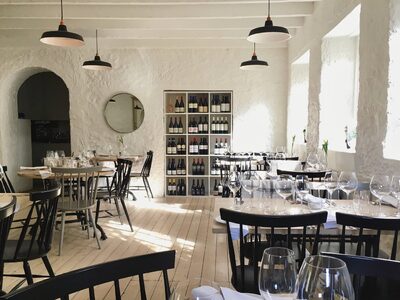
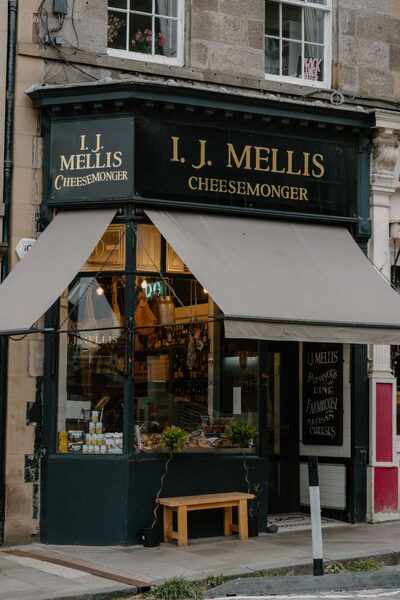
My personal favourite in the area, without hesitation, is The Hoebridge at Gattonside. An independent, family-run restaurant opened by Hamish Carruthers and Kyle Tidd, with a focus on small, seasonal menus that change each month. Everything is made by hand and sourced from the best local producers in Scotland. Fresh produce from Faldonside, local meats from Shaw’s, fish from Ross Dougal, cheese from I.J. Mellis. It is the kind of restaurant that reminds you what eating out should feel like. Open Wednesday to Saturday evenings, and well worth booking ahead at thehoebridge.com.
The Gordon Arms, just up the road from us in the Yarrow Valley, is a wonderful spot. A proper restaurant with rooms, and their Sunday lunch is a real treat. It also carries that wonderful literary history, having been a regular haunt of Scott, Hogg, Burns and Wordsworth.
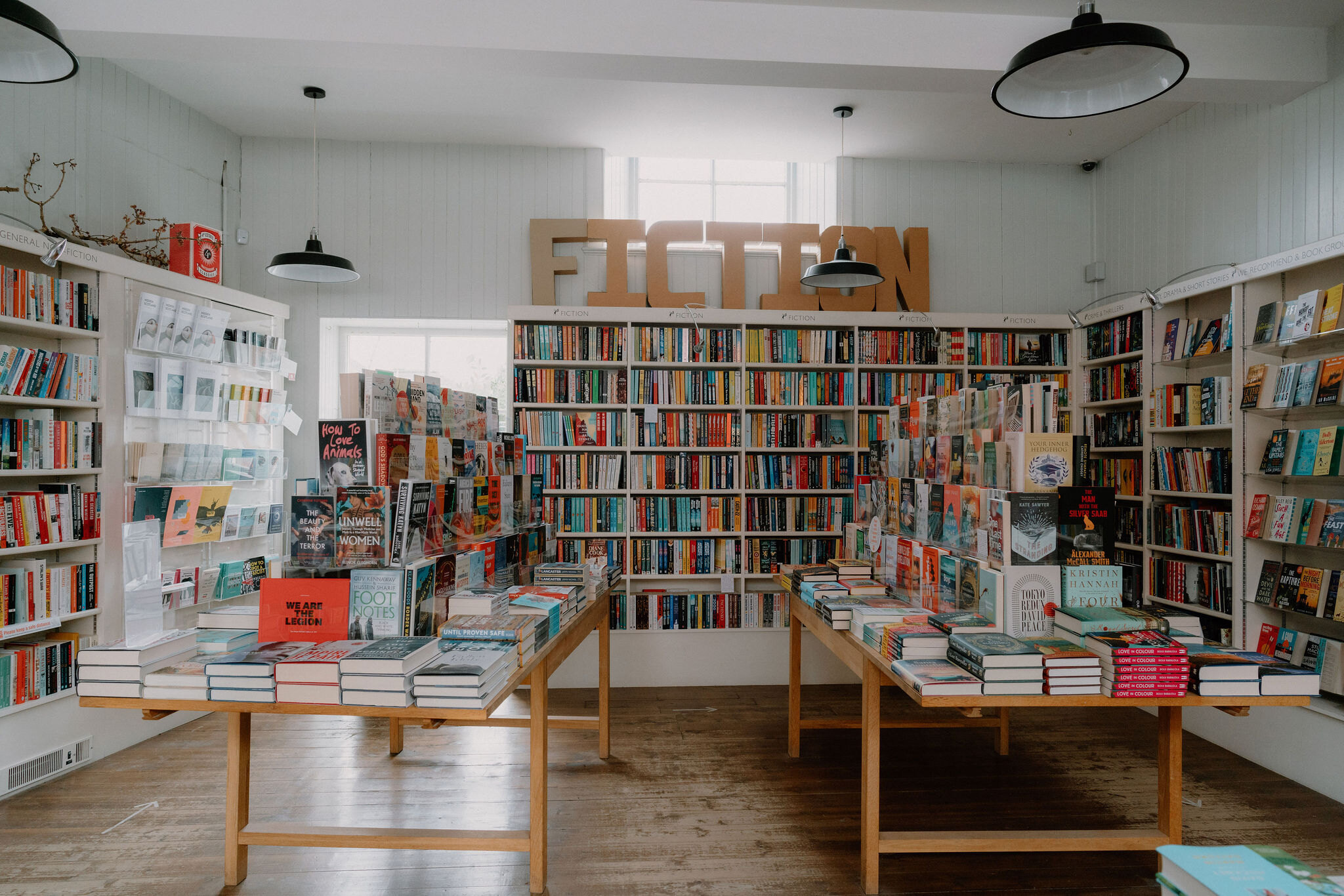
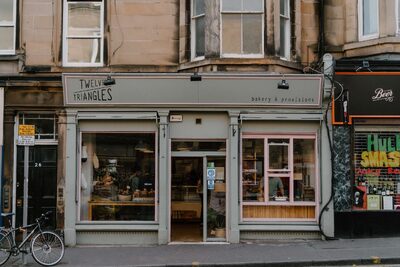
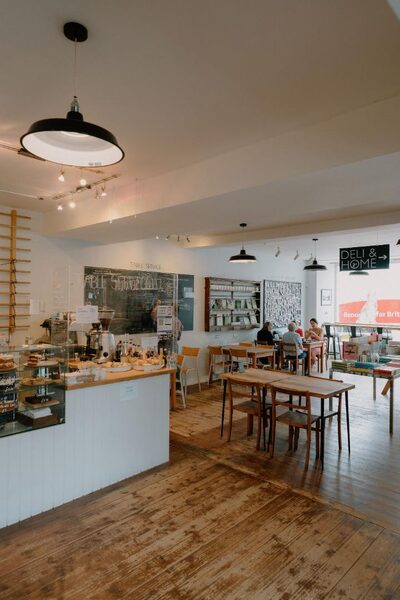
For coffee and something exceptional to eat in the morning, Twelve Triangles in Melrose is outstanding — their sourdough and pastries are some of the best I have had anywhere. Haus & Co in Innerleithen, and their new branch in Melrose, are beautifully designed with a Nordic sensibility and do excellent brunch. And The Mainstreet Trading Company in St Boswells is a genuine gem. An award-winning independent bookshop, café and deli under one roof, the kind of place you go in for twenty minutes and emerge an hour later with three books and a very good lunch.
For a fuller list of places to eat and drink across the area, from craft brewery taprooms to country house cafés, there is a dedicated guide on our website at the-scullery.com/the-area
If you were planning your own perfect day staying at The Scullery, how would you spend it?
I would wake without an alarm, already a luxury that many people have forgotten and take my time over a proper breakfast. Loose-leaf tea from Pekoe Tea Edinburgh, good coffee, something cooked slowly with no particular reason to hurry. Then a long walk up through the hill above the farmhouse with the dogs, out across the open moorland with wide views in every direction and no sound except the wind and the birds.
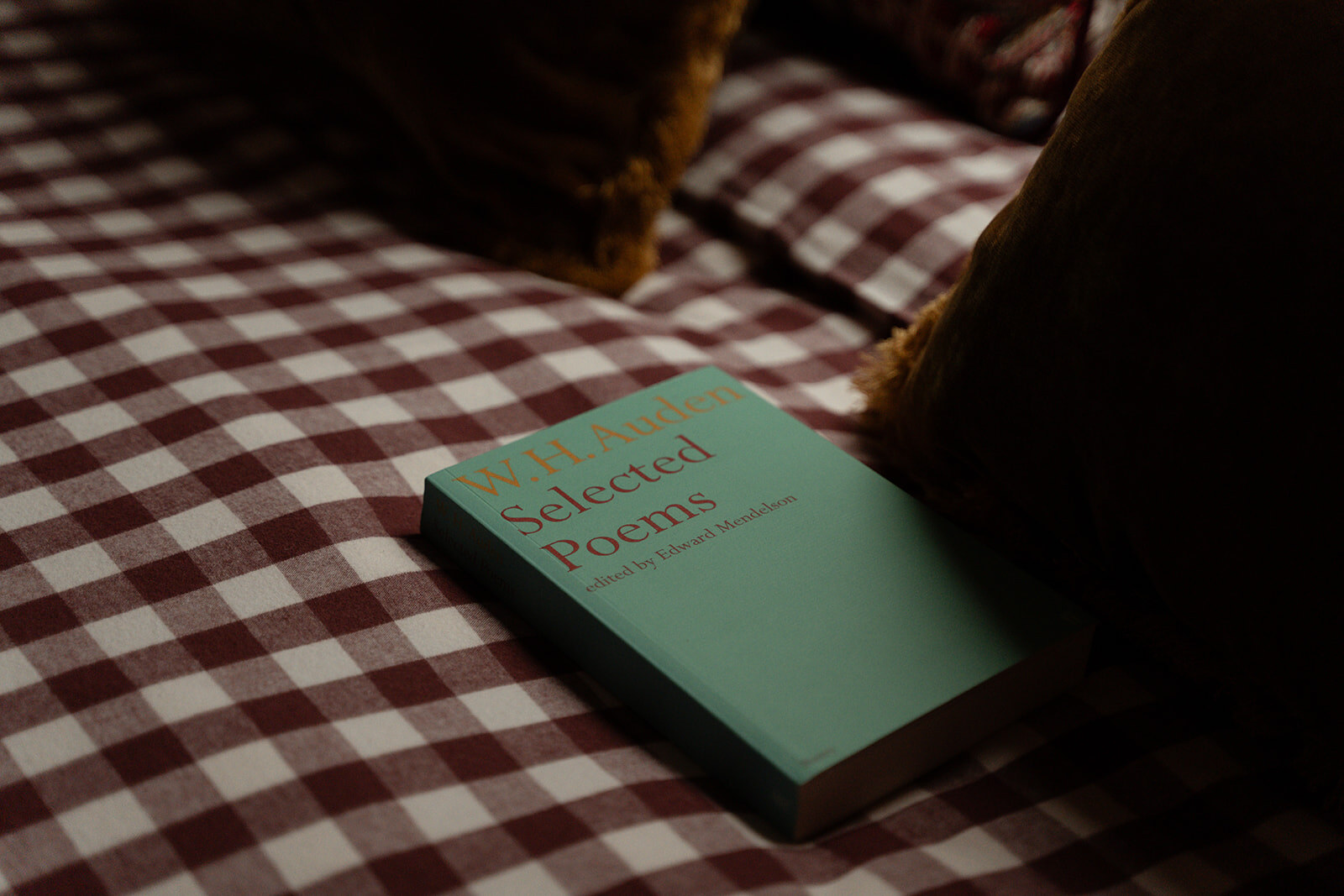
A picnic lunch somewhere with a view, probably above St Mary’s Loch. Back to The Scullery by mid-afternoon, and then honestly, just stillness. Read in the drawing room. Write, perhaps. Simply sit and watch the light move across the hills through the window, which is more absorbing than it sounds once the habit of reaching for a phone starts to loosen. As the evening comes in, a beautiful glass of red wine. Cook something simple but good using fresh local ingredients. Some delicious cheese from The Mainstreet Trading Company deli, then sleep deeply.
That is my perfect day. There are of course plenty of other things to do for those who are more adventurous. Walks to push yourself on, towns to explore, history to follow, but what I have described is what appeals to me. The art of doing less and feeling more.
Looking back on the project now, how does it feel to see guests arriving to experience the space you’ve created?
The Scullery soft launched at the end of 2025, so we are still in those early days, but the response from guests has already been quite extraordinary and deeply personal.
What strikes me most is how clearly people arrive carrying something. The accumulated weight of busy lives, overfull schedules, the relentlessness of being always connected and always available. There is a particular kind of exhaustion that modern life produces, and you can see it in people when they first pull up. And then, quite quickly, something shifts. Guests tell us that within minutes of arriving they feel their shoulders drop. That the sound of the burn, the stillness, the absence of the usual noise simply begins to do its work.
One couple recently told me something that stayed with me. They had moved from London to Cumbria some years ago in search of exactly that stillness and found that the Lake District, as beautiful as it is, has simply become too busy, a lot of traffic, and too difficult to move around in freely anymore. They came to the Borders almost as an experiment and left telling me they are planning to move here imminently. That felt significant.
Because that is really what The Scullery is offering. Not just a comfortable place to sleep, but a genuine reset. Space to read without guilt. Time to write without interruption. Walks that clear the mind rather than fill it. Meals that are occasions rather than fuel stops. The chance to meditate, to reflect, to simply be present in a way that daily life rarely permits.
I built this from a deeply personal understanding of what that need feels like, and what it means to finally find somewhere that meets it. Seeing guests experience that for themselves and leave restored rather than merely rested, is everything I hoped it would be.
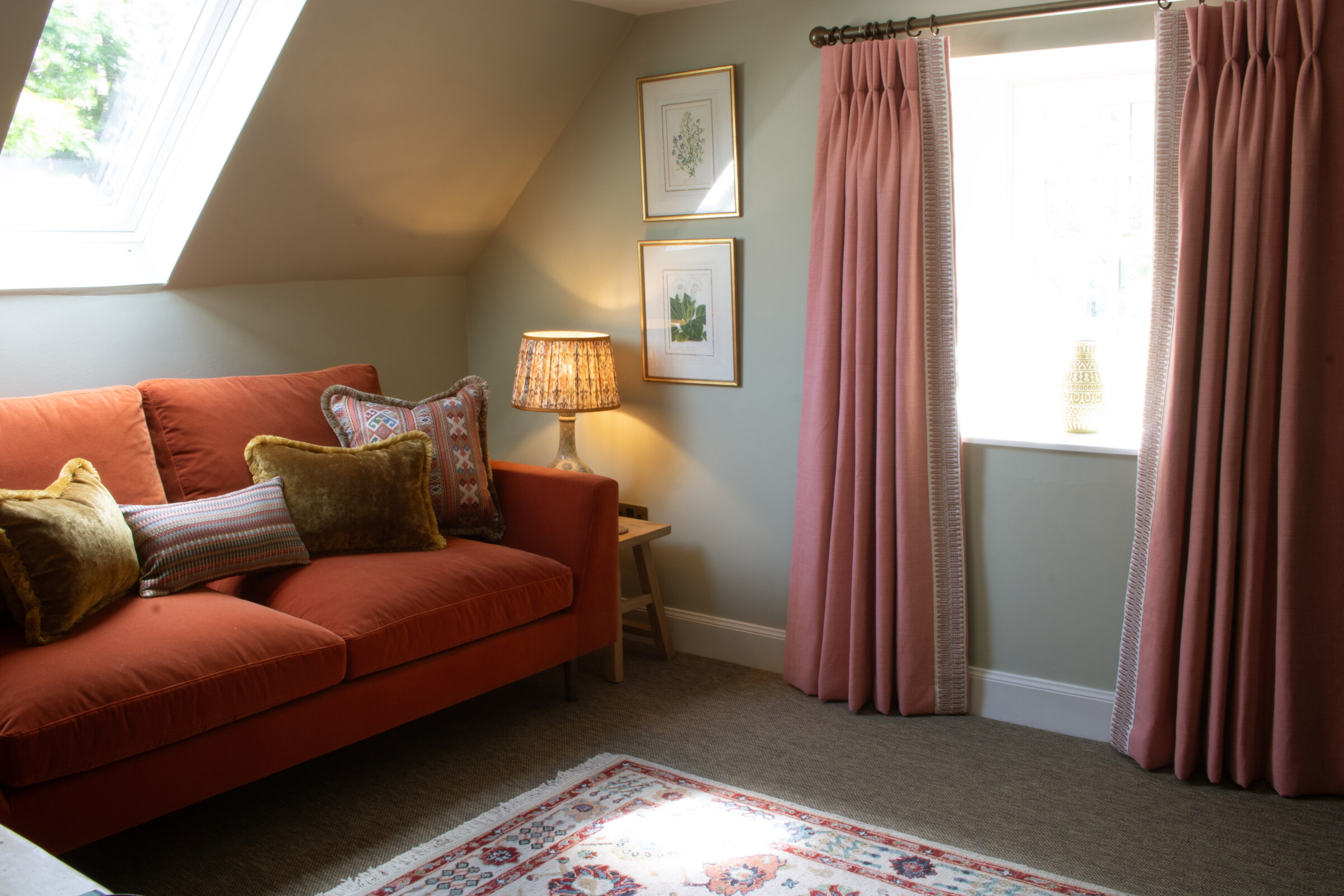
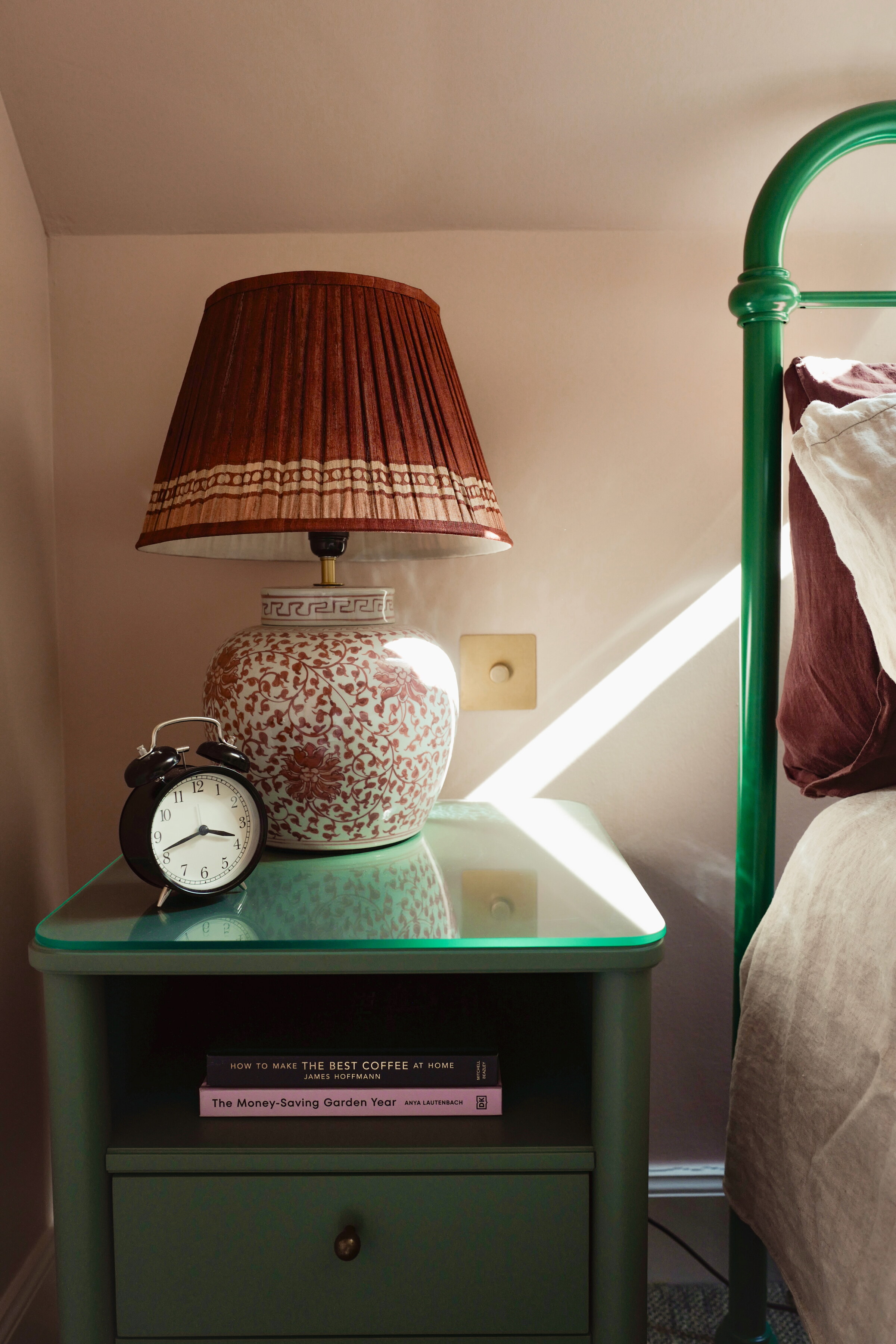
The Scullery sleeps two adults, in a king-size Victorian-style bedstead with a Wool Room mattress, and has its own stable door, courtyard and pocket garden above the Ladhope Burn, a kitchen with a granite worktop and Bosch appliances, and a first-floor drawing room. One well-behaved small to medium dog is welcome, and there is parking for one car. Guests who book direct at the-scullery.com find a hamper of Scottish and local produce waiting. The Gordon Arms is about two miles up the valley, St Mary’s Loch about six, and Selkirk ten.
Stay at The Scullery
 Out now
Twice a year, to your door
One hundred and sixty pages of Scotland, every photograph commissioned, every word written by someone who went. Members get both issues posted and everything on screen.
The Daily
Arrives at 5am every day.
A free morning email to see what’s on this week, catch up on what’s happening in Scotland and find somewhere new to go.
 The Unsung Corner
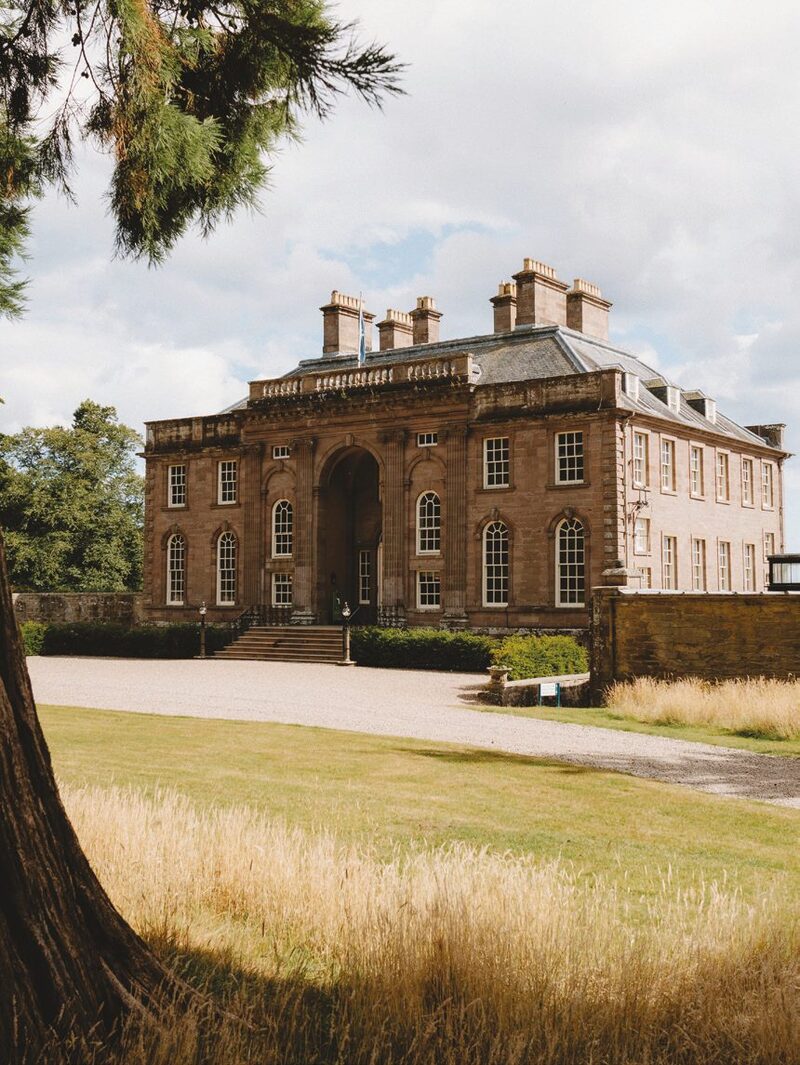
 Gretna Green, Where Sparks Fly
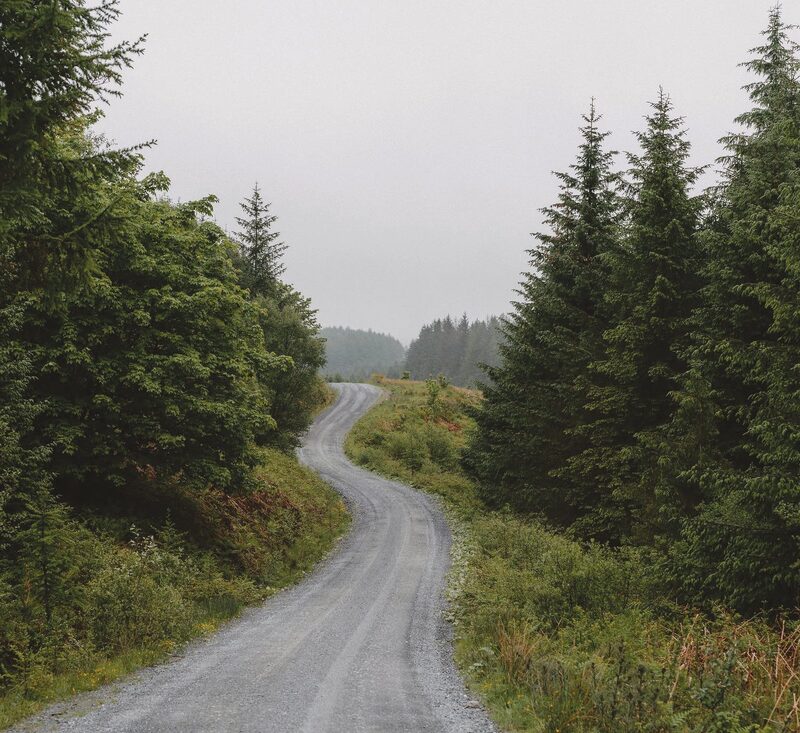
 Recycled Decorations