
The Modern Croft
The Collins dictionary defines a ‘croft’ as ‘a small, enclosed plot of land, adjoining a house, worked by the occupier and his family,’ an unsentimental summing up that does little to evoke the harsh realities of crofting life over the centuries. Today, however, the word is more likely to conjure up a cute cottage in a bucolic rural setting. For just as the ‘bothy’ has been reinvented by architects and designers in recent years, old croft houses across the Highlands and islands are being restored and converted into hip hideaways and field-to-fork restaurants for design-savvy tourists.
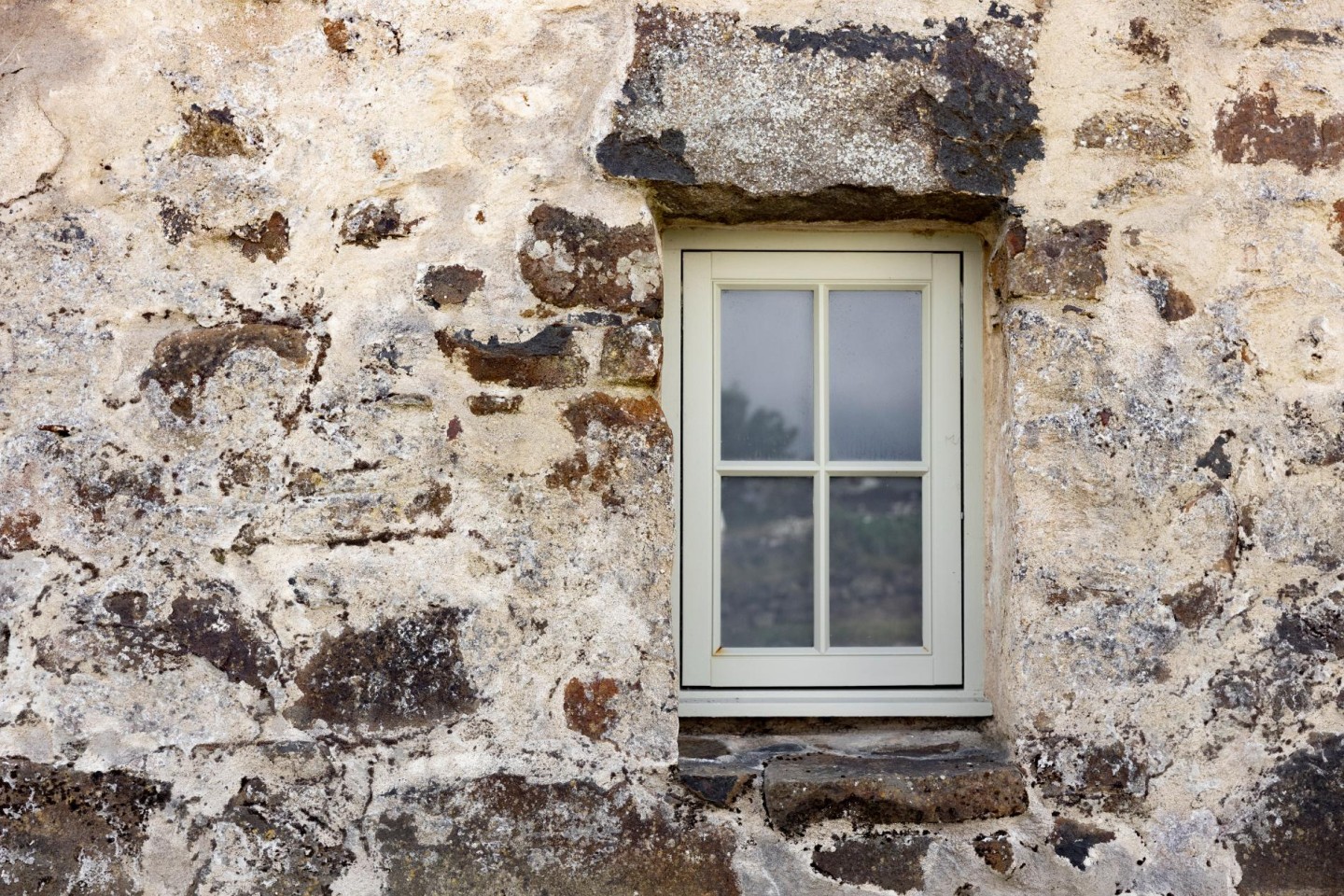
The life of a Scottish crofter was a hard one. Despite its modern-day romantic connotations, a croft was a simple smallholding, too small to be called a farm, the family living in a low-slung, thatched blackhouse, dark and smoky, peat-fire-warmed, sharing the space with their animals. On stony, unforgiving land they’d grow root vegetables, hens scratching the bare earth, a few sheep grazing the rough ground. To eke out a living the crofter would often be forced to work for the local estate owner.
Owner Sarah Chesworth, Creative Director of Glasgow-based design and branding agency Sanna Mac, whose clients on the island include independent coffee roastery and café, Birch and destination restaurant, Scorrybreac in Portree, bought the cottage a decade ago, as a place where she could escape to reboot, but now she also rents it out as a holiday let.
Inside, interiors are inspired by Scandinavian design, clean and uncluttered with a monochrome palette. Walls are whitewashed tongue and groove panelling, the sink a Belfast, the sofa grey and modular, a peppering of books on shelves to thumb in front of the wood-burning stove.
“Originally I had been looking to build a timber eco-house like so many people on Skye, but then I saw the cottage and thought, that’s it.” Trips to Denmark influenced the design. “The sofa is a story in itself. The house is so tiny that getting anything to fit and which didn’t overwhelm the space was hard. The HAY sofa is modular so came in separate parts.”
Further north on Skye’s Waternish peninsula, Shaz and Ali Morton bought Mint Croft in the coastal community of Geary in 2011. Overgrown and unworked for 15 years since the last crofter, Charlie MacKinnon, had died, the cluster of ruined croft houses provided a fascinating architectural timeline. There was the old blackhouse, built around 1800, a stone storehouse and the handsome 1930s traditional one-and-ahalf- storey croft house.
Wanting to preserve the local vernacular Ali, a trained builder (and cabinetmaker) spent three and half years renovating the buildings himself - apart from the stonework in the blackhouse. It was a labour of love, using traditional techniques, the project at times as much an archaeological dig as restoration project. They found a tractor and muckspreader buried in the grounds, old tools in the walls and two old glass buoys under a fuchsia bush.
At first, they lived in the ‘new’ house, the wildflower-sewn, turf-roof (dug from the croft), blackhouse and the stone storehouse converted into luxury B&B ‘rooms’ decorated with individual pieces of furniture designed and made by Ali. Shaz, also a designer, dished up gourmet breakfasts made from local, organic produce in their house and during the winter, three-course dinners. They built raised beds in the garden, growing their own herbs and vegetables, with free-range hens and a small flock of Hebridean sheep. The croft came with a 5-acre strip stretching down to the sea and a share of the crofting community’s common grazing.
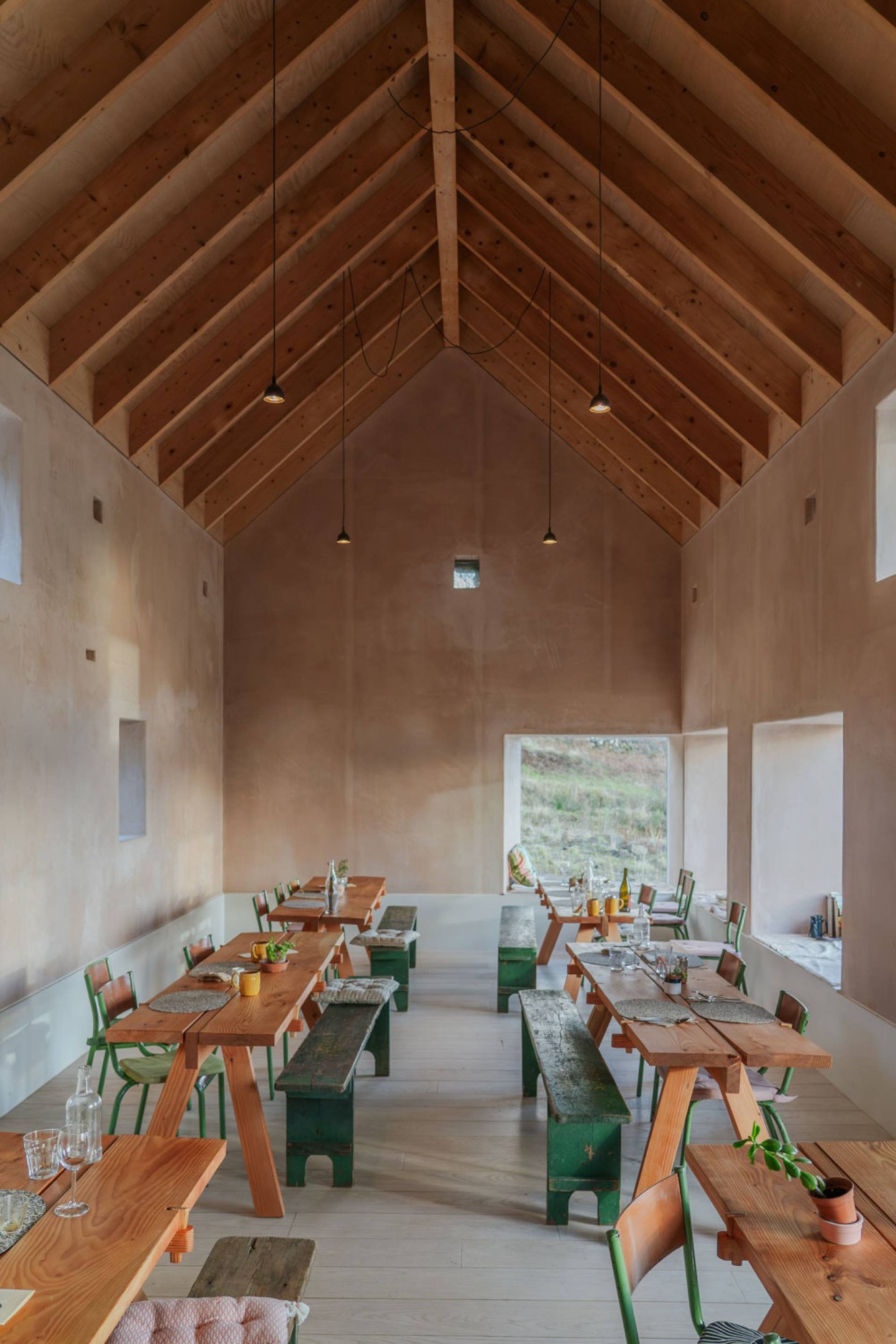
Now, twelve years on, they have passed the baton on, relocating to the Ettrick Valley in the Scottish Borders. The next chapter will see them renovating an old schoolhouse and acre of land and focusing on relaunching their furniture and lighting company, Forstaris. But their legacy at Mint Croft lives on, the two houses now luxury self-catering properties, The Blackhouse and The Croft House.
The new owners are James Ross Mitchell and Carolina Larrazábal, architects who split their time between Skye and Kenya where they have an environmental building design practice. They have plans to develop other projects on the island, including architectural restorations of old croft or blackhouses and have already put their mark on Mint Croft.
Interiors now feature bespoke furniture by artisan Scottish makers such as Sheahan Made and Laurence Veitch, ceramics by Skye-based Patricia Shone and paintings by Scottish artist Rosemary Beaton. In the Croft House a specially commissioned artwork by Beaton titled ‘Folklore of Skye’ hangs in the sitting room.
On the island of Mull, meanwhile, another restoration of a dilapidated croft has just won a prestigious RIAS award: Croft 3 a restaurant and working croft. Jeanette Cutlack moved to Mull in 2008 from Brighton and over the next ten years ran a restaurant in her rented farmhouse, but her dream was to restore the rundown croft and ruined barn she walked past every day.
In 2019 the 50-acre croft finally became hers. Together with an old university friend, architect, Edward Farleigh-Dastmalchi, the founder of London-based architect firm Fardaa, they worked on converting the old basalt and lime ruin into a contemporary dining area. The result is sublime, a paredback and chapel-like space, the ceiling soaring up to the rafters, bare plaster on the walls and deep windows framing sea and mountain views. French bistro chairs and benches cluster round communal tables made from a single Douglas fir. The look is spare, the menu simple, field-to-fork in ethos, the ongoing plan to continue clearing the land and to grow much of the produce.
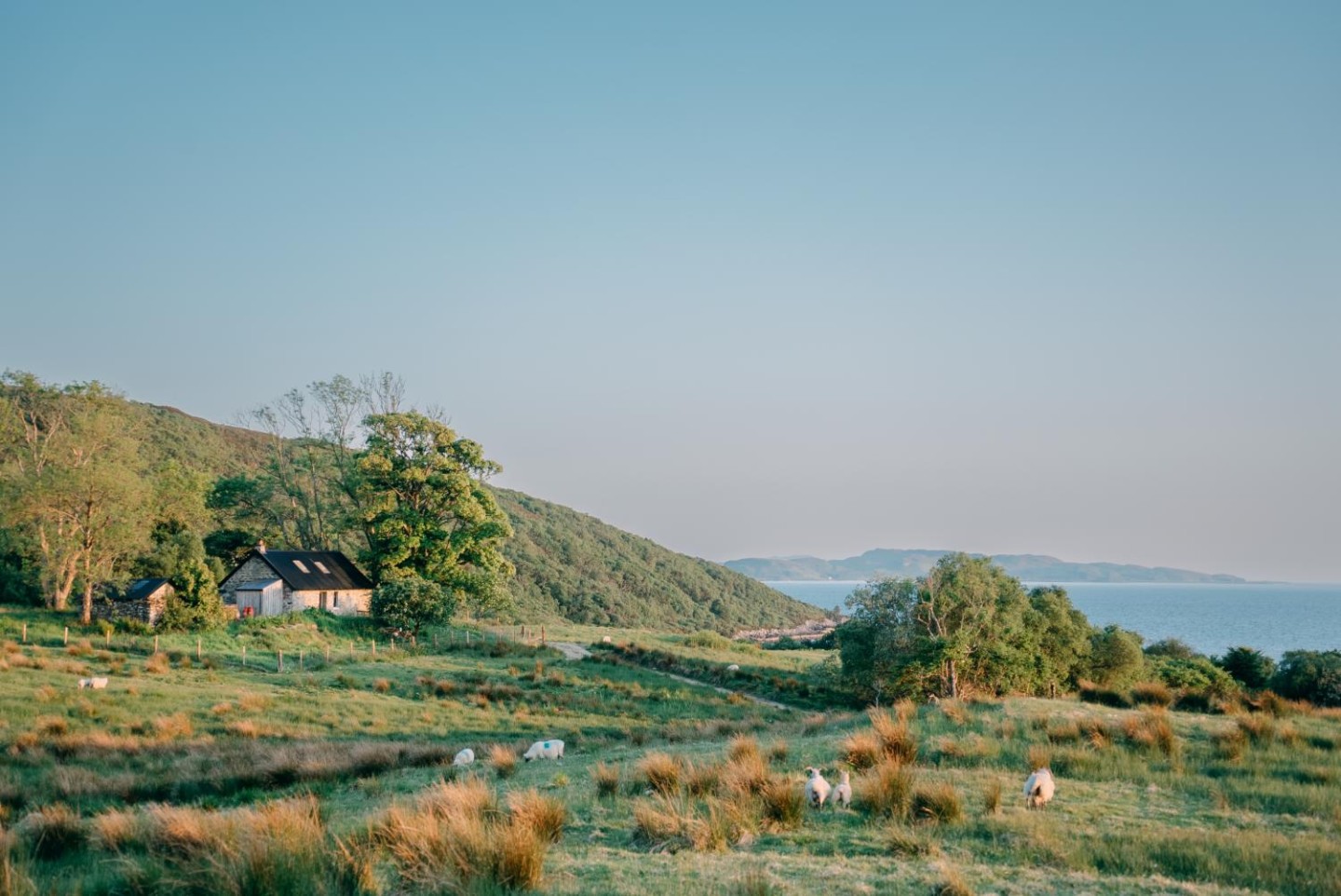
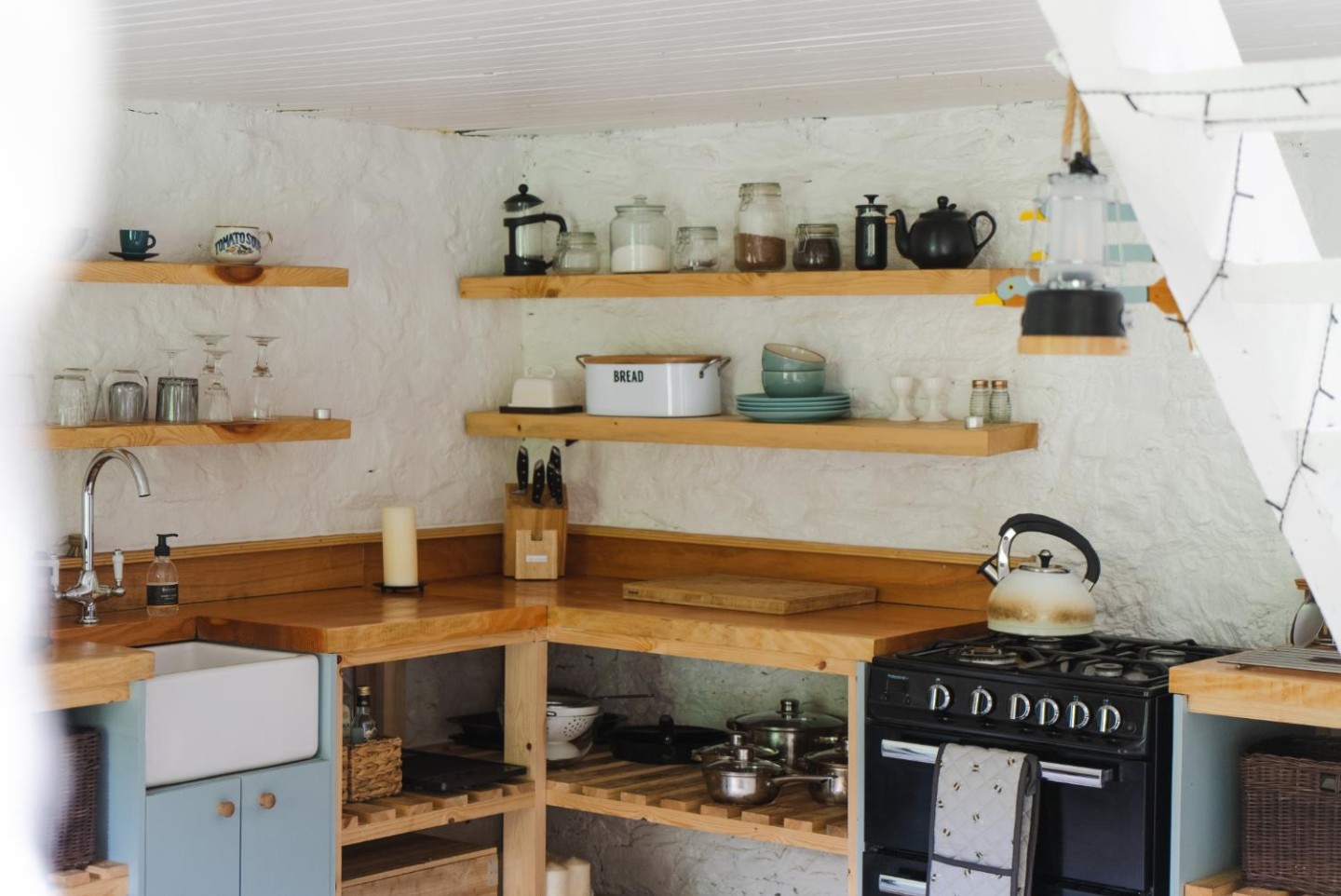
This reimagining of the croft in the 21st century speaks to our desire for a return to a simpler way of life, one with closer links to the natural world - one which a handful of off-grid hideaways also seek to fulfil.
In Argyll on the 800-acre Lochnell Estate, north of Oban, an old crofter’s cottage has been converted into an off-grid coastal hideaway. Under the banner the Croft Collective, the estate is converting ruined cottages on their land, with four more currently planned. Fuarachadh (pronounced F-Ure-A-Key) was the first, hunkered into the hillside above a secluded beach. Once the home of ‘old Babs,’ Archie Cochrane, whose family owns the estate, tells me, she lived here with her sister, a few cattle and sheep.
After she died it lay abandoned for years, but now, with the help of an architect and local craftsmen, he has breathed new life into the old building. Inside it’s open-plan, the floor rough concrete, a hand-built kitchen at one end, a sofa and wood-burning stove at the other. In the middle of the room a ladder takes you up into the attic bedroom in the eaves with whitewashed floorboards and pitched roof. Lighting comes from candles and hurricane lamps. There is a cooker and fridge powered by gas canisters and in a wooden shed behind the cottage a gaspowered rainfall shower and toilet, but the star attraction is under a sycamore tree at the front: a wood-fired outdoor bath with a sea view.
A hose is used to fill the tub with collected rainwater. Wood needs to be collected and stacked under the metal bath, a fire lit to heat the water. It’s a long, slow ‘mindful’ process – but one that’s worth the effort. Soaking in an old bath under the branches of an ancient sycamore, listening to waves breaking on the shore far below, gulls wheeling above and gazing out to sea is true escapism. The modern-day croft, in all its guises, is a reminder that a life lived more simply is often richer for it.
words // Lucy Gillmore
Promoted Post
Issue 12 is now shipping worldwide from Scotland.
Issue 12 is now shipping worldwide from Scotland.






 Sign in with Google
 Sign in with Email