
The Influence of the Outside
The Coorie Home: Beautiful Scottish Living’, is a book created by Beth Pearson and Ciara Menzies that explores the Scottish art of creating a home that’s stylish and comfortable, an irresistibly cosy sanctuary from the outside world.
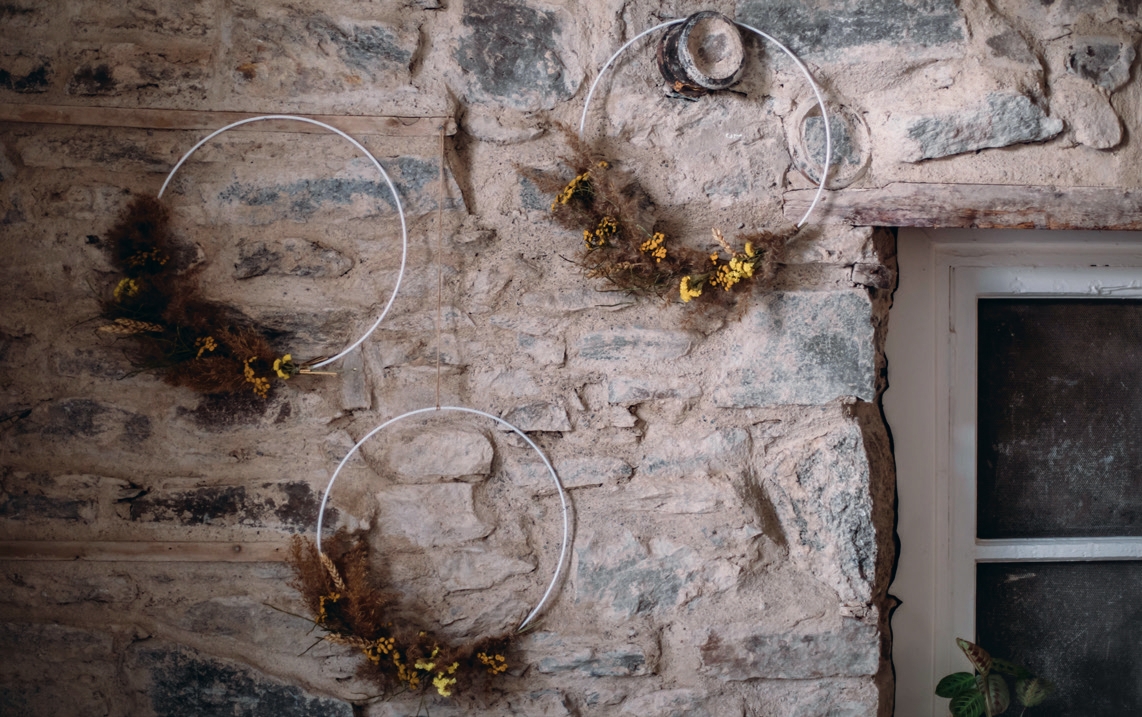
COORIE HOME [NOUN] 1. The place where one lives in contentment and conviviality; most especially a pleasant haven from the wild Scottish elements. 2. “There is nowhere else you would rather be.”
To me, at the heart of coorie is the idea of cosying up with nature. Ancient Scottish ways of living relied on the land to shape homes, and this still prevails today – whether your dwelling is a newbuild made with bright and distinctive sandstone, or you live in a remote part of the Highlands where your home is literally etched into a cliff.
Interiors are no different! You can’t live in Scotland, however much you are inside, without being affected by nature – and by the weather. Historically, people have combatted the seasonal depression that affects so many of us by creating internal sanctuaries that acknowledge the howling gales, long days of dreich and darkness, muffling snowfall that exist outside but that also exude light and life, warmth and colour on the inside. Balancing the contrasts between light and dark in the home feels essential to our wellbeing in so many ways. The Scottish Vernacular Building Group has historical Scottish buildings such as the blackhouse as ‘integrated structures within the landscape . . . [whose] form, shape and colour merged naturally with the fields’. Even in amongst tenements or semi-detached houses, you will find some sort of greenery. The idea that you have to plan an epic adventure to the highlands of Scotland in order to see nature is definitely outdated! Sure, it is invigorating to park feet from a deer in Glen Coe. But I bet you can connect with the Scottish landscape a wee bit closer to home and even bring the outside in. One of my favourite things to do is to open my flats’ south-east facing window, get a bit of fresh air, a cup of coffee and watch people tackle Arthurs Seat and the Crags. Our Scottish ancestors got it right, south facing homes definitely get the sun (when it is out); “An iar’s an ear, an dachaigh as ‘fhearr – cul ri gaoith, ‘s aghaidh ri grein.” (Gaelic proverb and translation provided by Dualchas Building Design, Skye) Or “East to west, the house that’s best – back to the wind and face to the sun.” Choosing light and bright colours throughout your home will allow this natural light to travel through even to the darkest corners. I think a good rule of thumb if you are strapped for cash or unsure about painting, keep it white. This will elude to more space even if you have a smaller property. For loftier spaces, like those in tenement blocks, you might actually want to choose deeper, darker tones to make your space more cosy.
Growing up three minutes from an exuberantly sandy beach, I didn’t think twice when seeking alternative resources to create things with. From driftwood to shards of pottery, if you take a moment you can find loads of treasures. Bits of pottery were my absolute favourite finds from the beach, each piece rarely resembles what it once was, yet, from the abrading power of sea and sand, it has become smoothed and shaped uniquely to become something new. Similar to the Japanese art of Kintsugi, putting broken pottery pieces back together with gold — built on the idea that in embracing flaws and imperfections, you can create an even stronger, more beautiful piece of art. We shouldn’t forget that a lot of materials found on beaches such as sea glass are effectively rubbish, so maybe pick up a bit of plastic or two when you are next down.
INTENTIONALITY
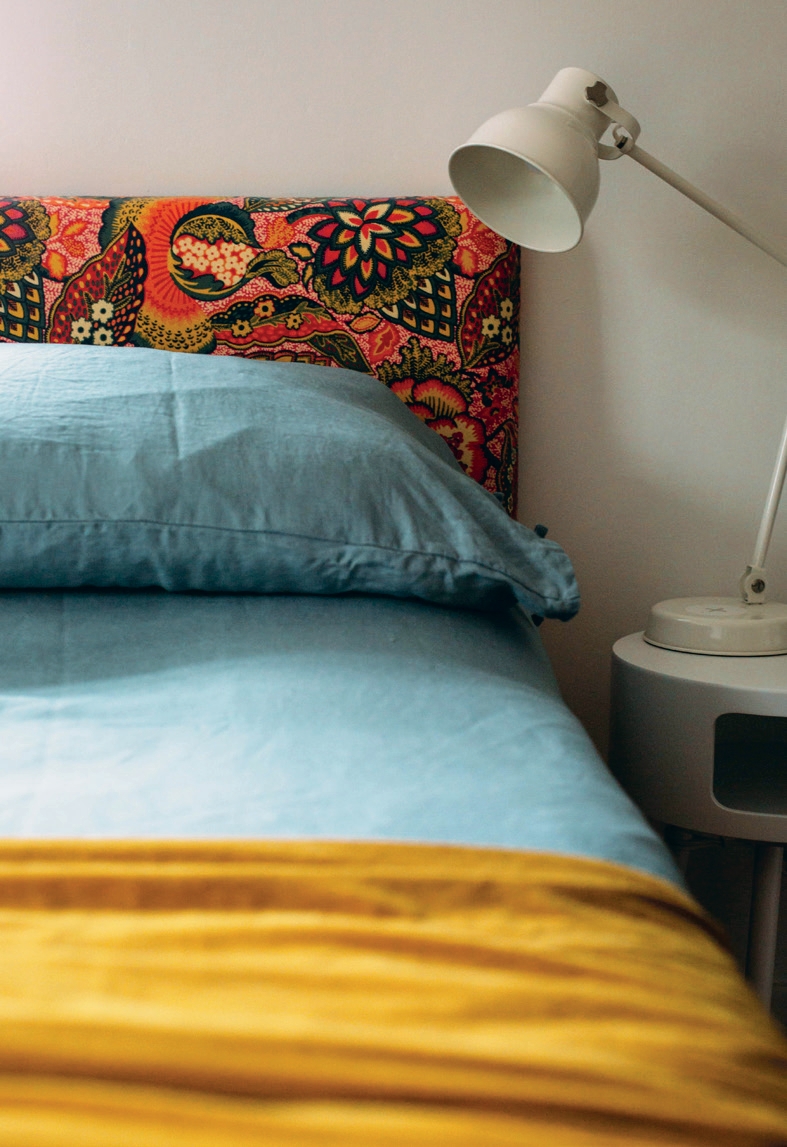
It needs to be said that Scottish homes haven’t always been blessed with what one might call ‘good taste’. Indeed, my experience is of some truly questionable interiors. I can’t be the only person who can picture the swirls of my grandparents’ brown and orange carpet in my mind’s eye.
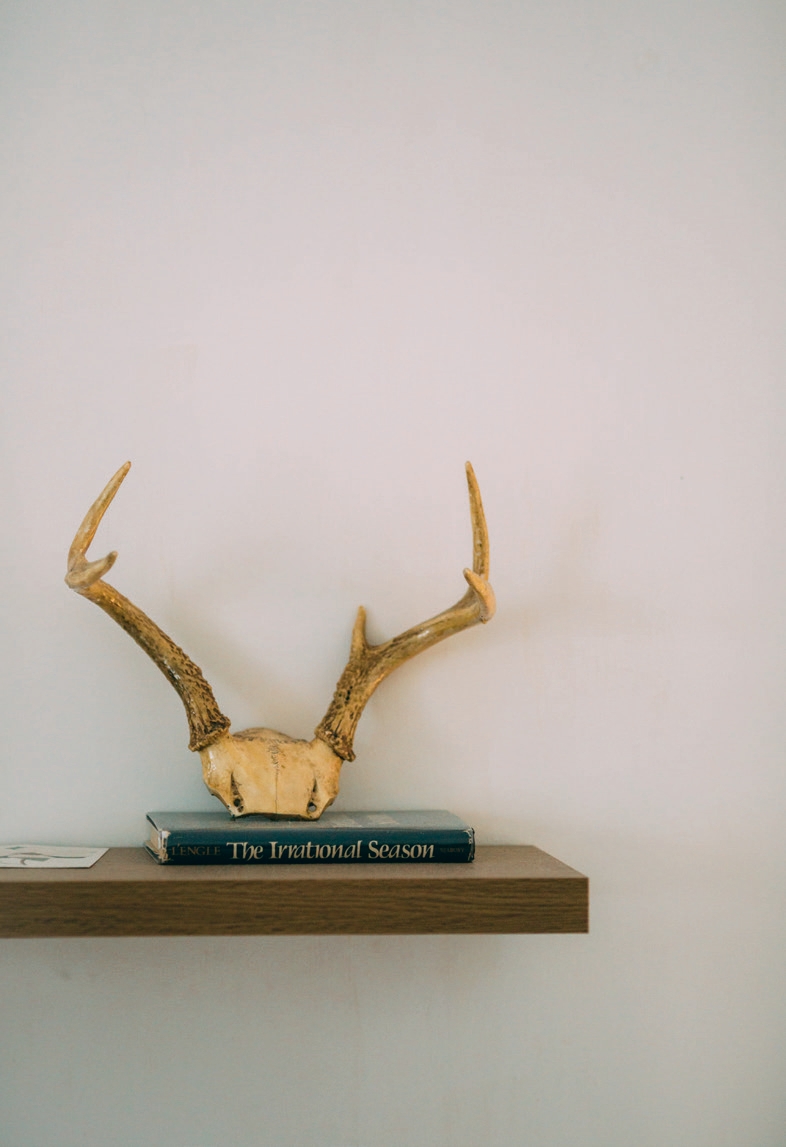
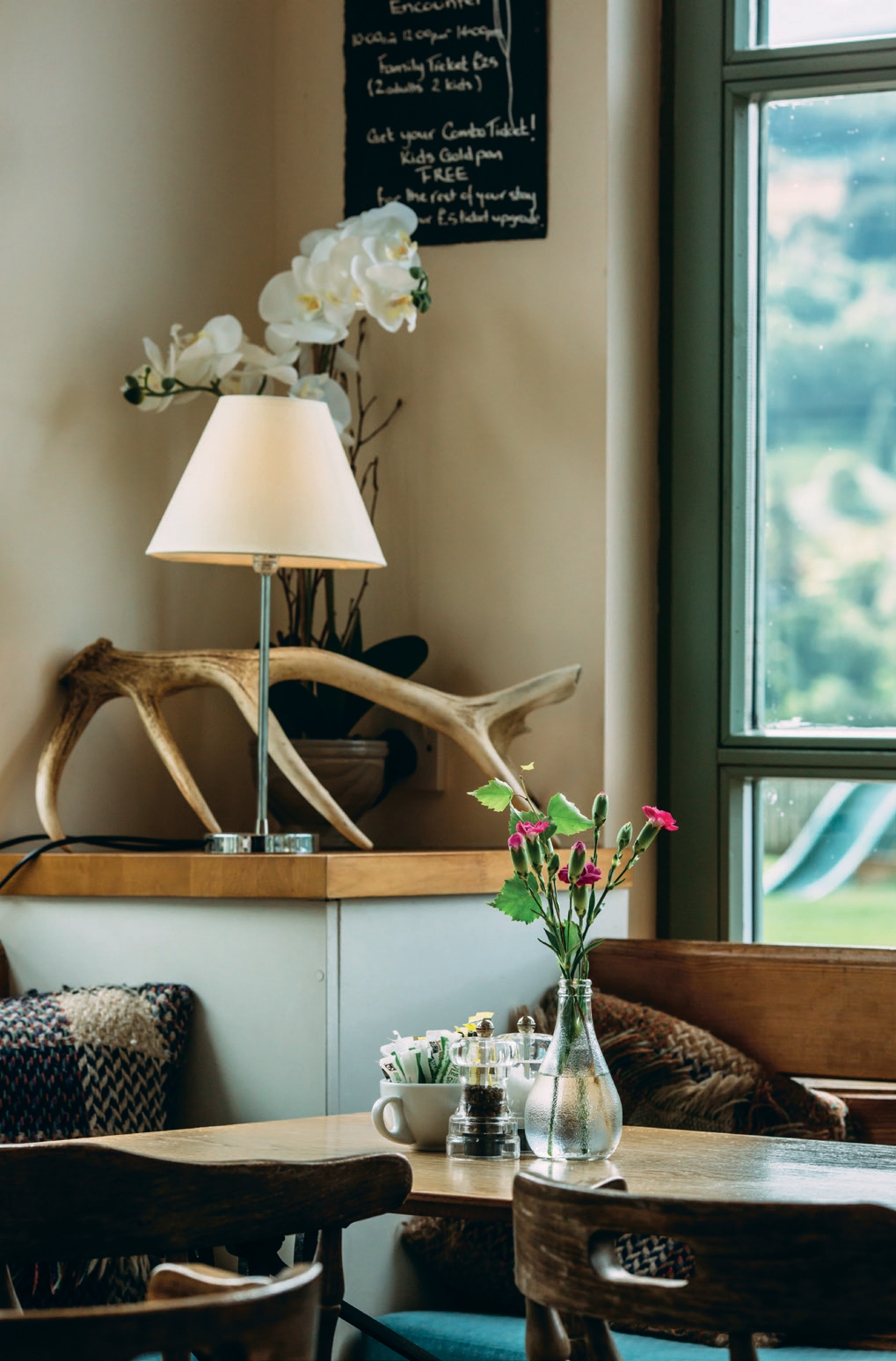
But more seriously, I do feel that all the various periods of design are reflected, for better or for worse, in our contemporary Scottish homes. The ethos of staying warm, dry and cosy, and of making the most of what is around you, is still present. So is the love of tweed and tartan, and the symbol of the red deer. The presence of game in the home is now hopefully more in the form of fabric wall mounts with majestic faux antlers, prints and cushions – not actual stuffed animals. These elements culminate in a fresh Scottish take that’s more minimalist, ironic and playful than opulent and regal in its acknowledgement of the old and welcoming of the new.
Archaeological evidence shows that seeking out, creating and displaying items that are imbued with a sentimental value is an age-old tradition in Scotland. For example, a shelving feature exists in a Neolithic farmstead at the Knap of Howar, on the island of Papa Westrayin Orkney. Archaeologists have suggested that this aspect of the dwelling serves a similar purpose to that of a mantelpiece or windowsill in a contemporary home. And, as such, it would have held items of personal significance. If this is the case, then the Neolithic farmers might well have regarded those items with a similar reverence, fondness and attachment that a modern resident feels for the prized sculptures, inherited pieces, objets trouves and keepsakes – indeed, the knick-knacks of my grandparents’ generations – that our ‘storage solutions’ display today. “
After structural elements of the home are sorted, thinking about decorating your space will take up a lot of time and energy. But this doesn’t have to break the bank, nor do you have to conform to the trends of the high street. A touch of Scottish resourcefulness can alleviate the stresses of homemaking, and can allow for really unique interiors.
UPCYCLING
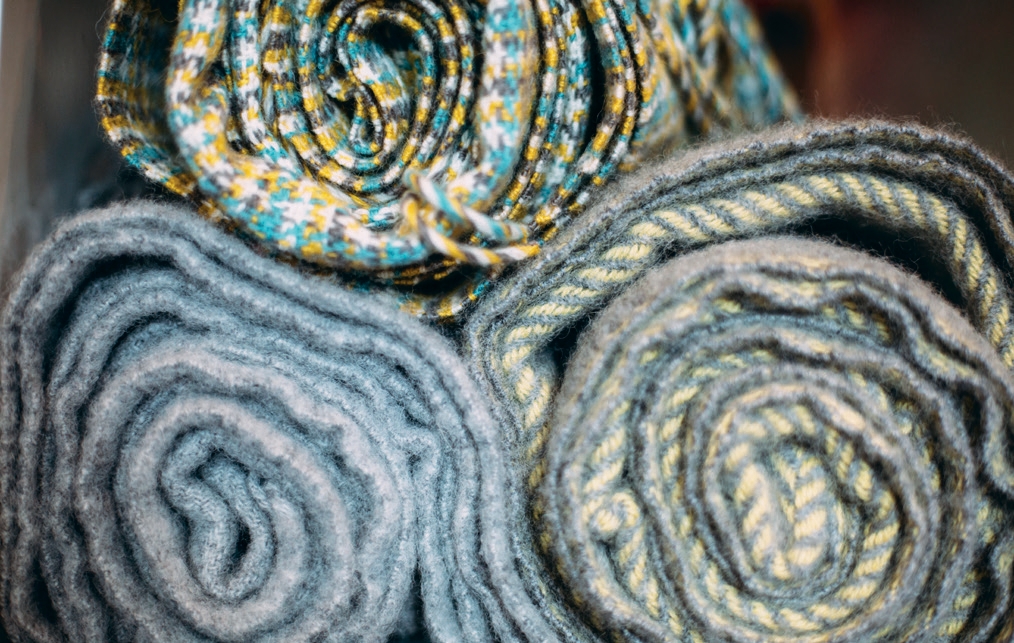
‘Upcycling’ is a term coined by Gunter Pauli in 1999, who is known as the ‘Steve Jobs or Che Guevara of sustainability’. A key aspect of sustainability is the transforming of by-products, waste materials, goods that are no longer wanted or used into new – and useful! – products.
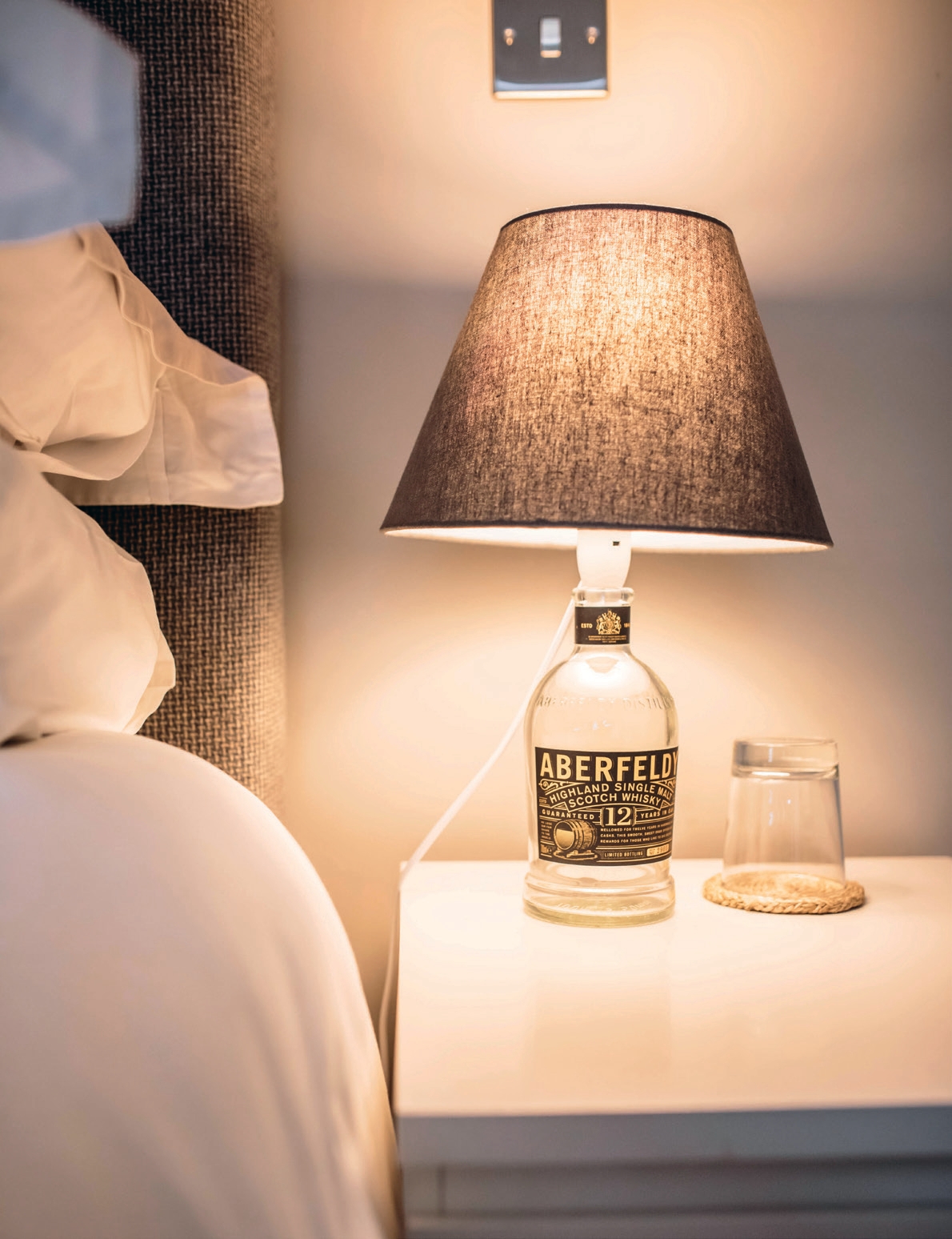
For me, this term feels so in line with the Scottish determination to make the most of whatever you have in hard times. It’s an old-school, working-class philosophy that will be familiar to those outwith these borders too! My gran liked to present me with a mountain of containers, magazines and materials saying, ‘I thought you could use these for something.’ It’s an approach that friends tell me is encouraged in primary schools with the fabulously named ‘junk modelling’ projects their children do. In the coorie home, a great example of this is how you can repurpose a beautiful whisky or gin bottle to create a striking bedside lamp – or simply as an impromptu vase for a sprig of delicate flowers.
THE COORIE HOME: BEAUTIFUL SCOTTISH LIVING
Copies of ‘The Coorie Home’, are available to buy online via Waterstones, Amazon and ciaramenzies.com/store/ the-coorie-home-book
BETH PEARSON
This article was written by Beth Pearson. To keep up to date or to get in touch, you can follow along on Instagram @bpearson1995
CIARA MENZIES
All photographs in this feature are by Ciara Menzies. To keep up to date or to get in touch you can follow along on Instagram @ciara_menzies or visit ciaramenzies.com
Promoted Post
Eagle Brae
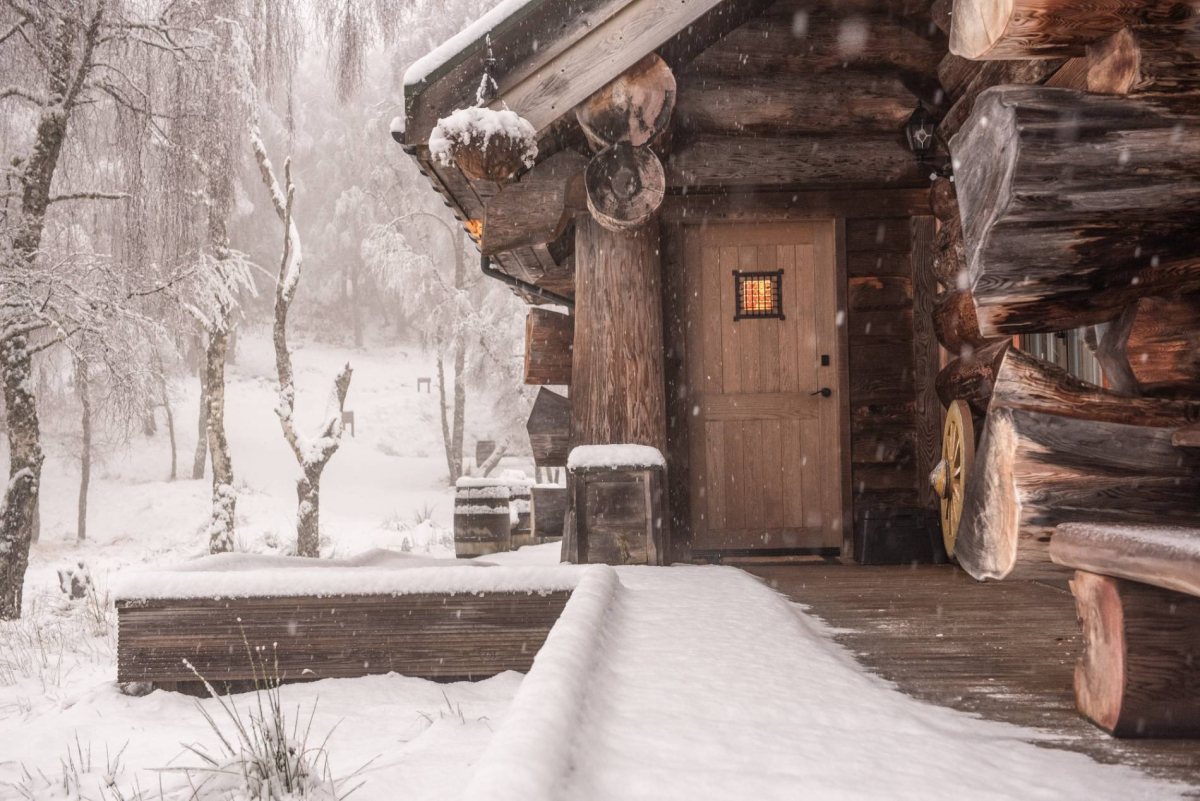
Escape to Eagle Brae, a secluded collection of Highland log cabins near Beauly. Handcrafted cedar, big skies, and deer on the hillside, with a fireside welcome that makes it easy to slow down.







 Sign in with Google
 Sign in with Email