
The Allure of Castles
There’s something inherently human in the desire to stand where the great and terrible deeds of the past unfolded.
-full-1748723528.jpg)
Why do we visit castles?
Scotland’s castles have been a source of awe since they first emerged in the 12th century. This wasn’t awe in the Romantic sense, however. For most of their history, castles were seen by many as a source of overlordship at best, and oppression and violence at worst. Few people until the late 18th and 19th centuries would have visited them purely for leisure and enjoyment, as we do.
With the rise of Romanticism, castles became valued for the feelings they evoked in individuals. Today they are still objects of adoration and admiration, the focal points of tourism adverts, and symbols through which we can connect to a semi-mythologised past.
Curious about people’s instinctive reasons for visiting castles, I conducted a social media survey asking. The responses were revealing:
“Those kings and queens and battles aren’t just for books and films - they’re real.”
“It’s the connection with the past, a portal through time fuelled by our imagination.”
“I was read fairytales and legends as a child. I love the mystery, the meaning behind them, the history.”
Stories and feelings. More than two centuries after Walter Scott, Byron, Shelley and countless artists took castles as their muses, these same forces seem to form the foundation of our fascination. They are reinforced by the books read to us as children and the films we watched in our formative years; from the desire to come into contact with dramas grander than ourselves; and, perhaps now more than ever, from the need to ‘get away from it all’.
Though not an exhaustive list, these are the reasons why so many of us feel the allure of castles:
To inhabit stories To play and explore To time-travel with our imaginations To revel in the cliché To be delighted and surprised To go on an adventure.
To inhabit stories
To play and explore
To time-travel with our imaginations
To revel in the cliché
To be delighted and surprised
To go on an adventure
Guided by these desires, which Scottish castles best answer their call?
Doune Castle
Kisimul Castle
TO INHABIT STORIES
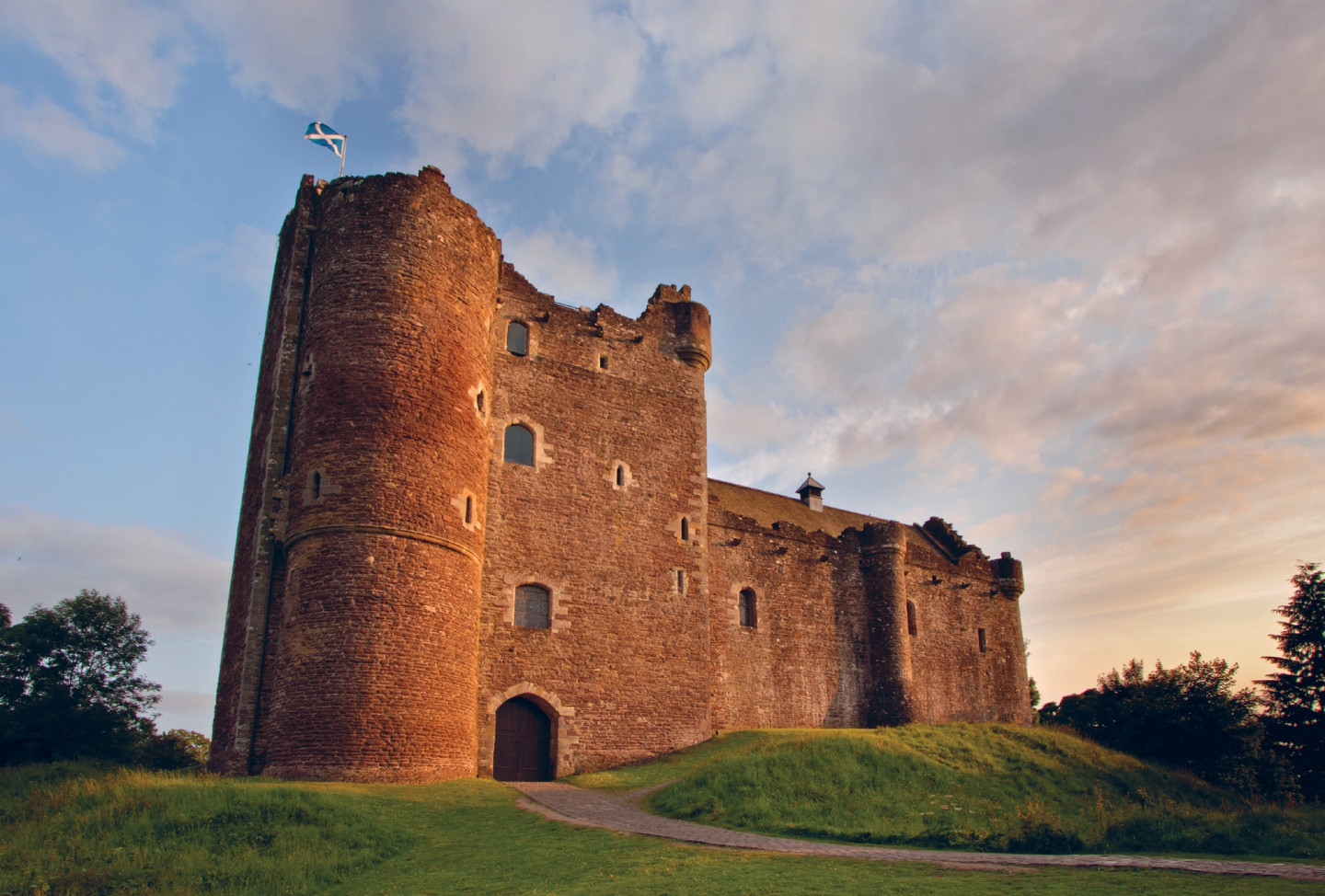
Doune Castle
The basis of my motivation for exploring castles is simple: as a child, my parents read me the works of J. R. R. Tolkien. Conversations with other historians and archaeologists reveal time and time again that their careers were born in fiction. A desire to see stories brought to life is nearly universal, and there’s no better stage than Doune Castle.
Doune is no stranger to the pop culture tourism map. Thanks to the rise of historical fiction and, again, the Romantics, a local newspaper reported in 1859 that, “scarcely a day passes without large parties of travellers surrounding it…and every nook and corner of the building is pregnant with strange historical reminisces.” This only intensified in the late 20th century with the release of Monty Python and the Holy Grail.
Python fans turned Doune Castle into a very silly place. Visitors arrived riding imaginary horses, and Frenchaccented curses were (and still are) hurled from the ramparts. During filming, unsuspecting visitors to the castle were even encouraged to dress up and be goofy as extras. Doune was the setting for many of the film’s most memorable sequences, including Sir Galahad’s test of temptation in ‘Castle Anthrax’, the moping lord’s son of ‘Swamp Castle’, and the ‘Knights of the round table’ song and dance. You can even buy coconut shells in the gift shop.
Nowadays, you are more likely to bump into someone searching for Outlander’s Jamie Fraser than a King Arthur cosplayer. Doune is none other than Castle Leoch, seat of Clan Fraser in Diana Gabaldon’s sensational series. So many have charged the gates of Doune and other historic sites featured in the TV series that the huge influx of visitors has been dubbed the ‘Outlander effect’. Whatever fandom you align with, Doune Castle has distinguished itself as the preeminent cinematic ambassador of Scotland’s castles.
TO PLAY AND EXPLORE
Craigmillar Castle
No matter how old you get, a childlike wonder is awakened in every adult when they visit a castle. It takes the right kind of castle to do justice to this impulse, and Craigmillar Castle is perfectly designed to do so.
Craigmillar is a compact labyrinth, comprising a main tower and several adjoining blocks contained within two curtain walls that give a feeling of escalating discovery as you pass through them. Climbing the tower’s central staircase, you’re presented on numerous occasions with a multitude of possibilities for where to go next, like a ‘choose your own adventure’ novel – continue up the stairs? Or turn left into a dark corridor? Or enter a chamber where you see a glint of light? Anyone who has ever played a videogame set in a high fantasy world will feel right at home, as it seems possible that treasures and baddies could be hidden around every bend.
Part of Craigmillar’s playful appeal is the sheer number of architectural features it boasts, making it a masterclass in Scottish castle design. Arrow slits and gun loops bristle from its walls; machicolations with gaps for dropping stones or liquids overhang the battlements; and the view from the top straight down onto the ruins below makes you feel like a bird flying overhead. My top tip for visiting Craigmillar? Let yourself get a little lost within it.
More recently, Craigmillar has begun to rival Doune Castle for stardom. It was used as the site of Jamie’s imprisonment following the Battle of Culloden in Outlander, made multiple appearances throughout Outlaw King, and is the closest architectural match for Game of Thrones’ Winterfell of any castle in Scotland. In spite of all this, it’s never too crowded – making Craigmillar the perfect setting not just for Hollywood, but for letting your inner child run wild.
(1)-full-1748723410.jpg)
Craigmillar Castle
TO TIME-TRAVEL WITH OUR IMAGINATION
Dunnottar Castle
There’s something inherently human in the desire to stand where the great and terrible deeds of the past unfolded. There are many reasons why castles like Stirling and Edinburgh are among the most visited historic sites in Scotland, not least because they have born witness to thousands of years of battles, intrigue, and lofty figures. There is another castle, however, that not only weathered the passing of ages but whose location truly justifies the term ‘jaw-dropping’: Dunnottar Castle.
Set upon a massive promontory bursting up like a great fist from the North Sea, Dunnottar Castle is defiance written in stone. Sheer drops on all sides made the castle nearly invincible. The only way in, a narrow defile leading straight into the castle’s jaws, seems like more of a dare than an invitation. So great is Dunnottar’s drama that it made the ‘Top 10’ list during the search for the 8th Wonder of the World in 2013.
The chronicle of major historical events that unfolded here is long, for Dunnottar is one of the anvils upon which the nation of Scotland was forged. Its inhabitants likely watched as Roman legions marched past in 83 AD. In 895 AD, king Donald II died here while fighting off a Viking army. Just 50 years later, king Aethelstan of Wessex besieged king Constantine II at Dunnottar yet could not overwhelm the fortress. During the Wars of Independence, William Wallace took the castle by surprise and burned its English garrison alive within the chapel. Cromwell’s cannons battered it in 1651 as his army attempted to seize the Honours of Scotland. They were foiled by the bravery of Mrs Grainger, who secreted the Honours through enemy lines under her clothes, as heroic a champion of Scotland as there ever was.
You do not need to know the details of these events to make the most of visiting Dunnottar. Yet, in my experience, having a story or two to hand can transform an impressive ruin into a living monument, through which you can watch the spectres of history pass. To be at Dunnottar Castle is to run one’s hand along the cord that links us to them.
-full-1748723410.jpg)
Dunnottar Castle
TO REVEL IN THE CLICHE:
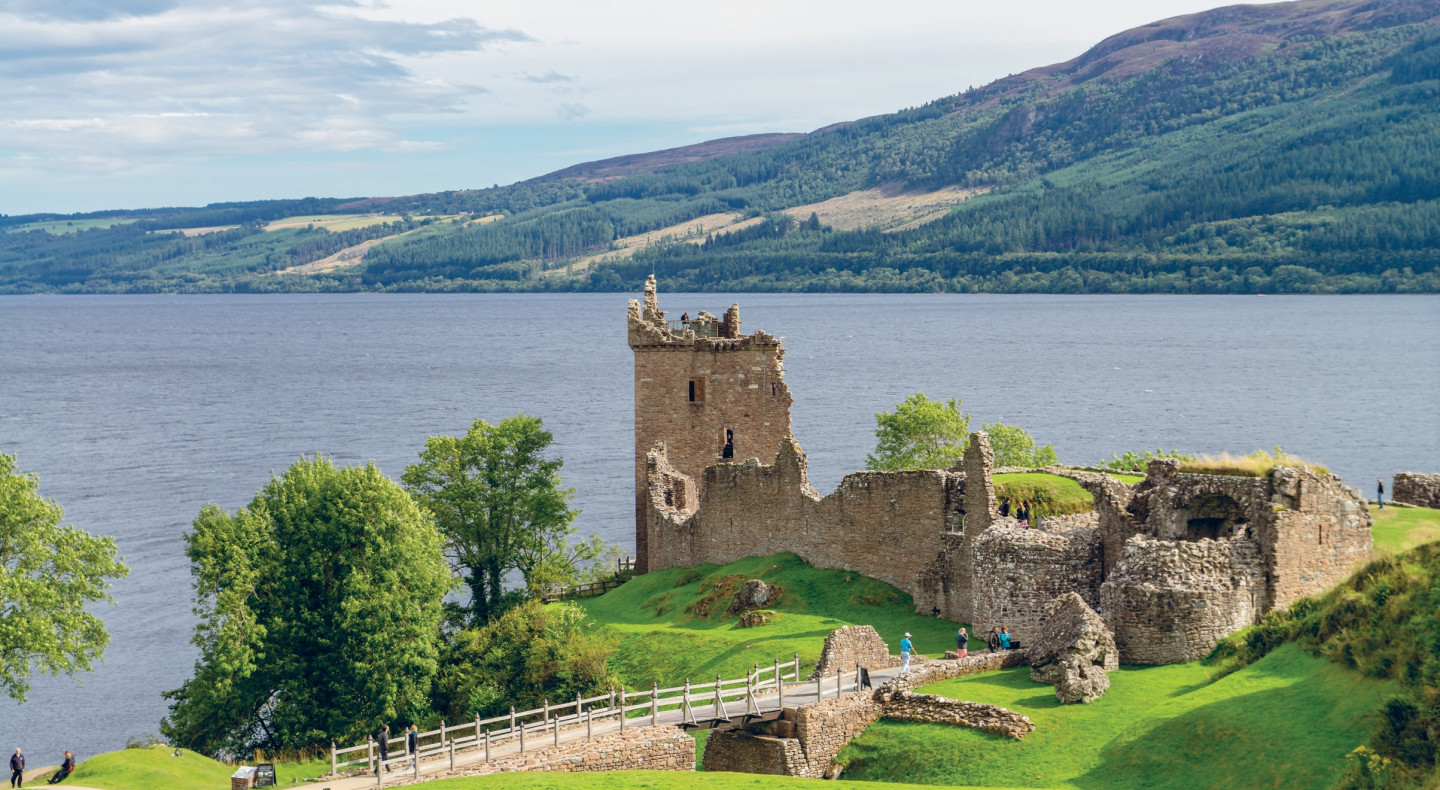
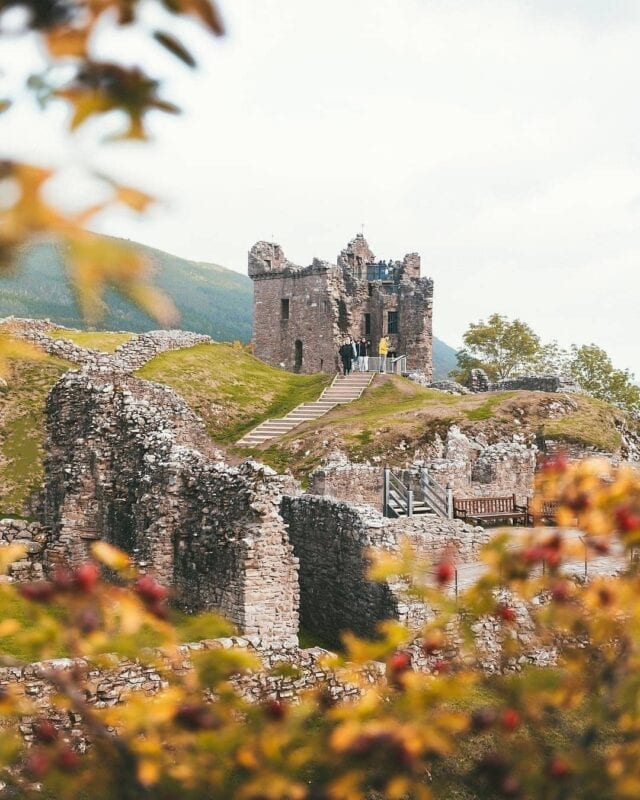
Urquhart Castle
Imagine you are on the shores of Loch Ness. Of course, you don’t actually believe in the Loch Ness monster. Yet, your eyes dart with excitement at a ripple on the loch’s surface, some part of you thinking deep down, ‘but what if…?’ Visitors pass by wearing Tam o’ Shanter caps, waxing in international accents about their family history and wondering whether William Wallace was ever here.
Let the cynics say what they will, but sometimes it’s very fun to embrace Scotland’s clichés. Often, that’s where a deeper connection and understanding begins. I may be a historian of Scotland now, but 15 years ago in the Toronto suburbs I was watching Braveheart and dreaming of running through heather-clad hills wearing anachronistic blue face paint. Of course, some clichés do more harm than good, but others can serve as gateways to something more sincere and that should always be encouraged.
In that spirit, where better than Urquhart Castle? Urquhart was the largest and most powerful castle in the Highlands, controlling much of Loch Ness and the Great Glen. It was subjected to great cattle raids by Islesmen and was reduced to ruins during the Jacobite Rising of 1689. So, check off ‘clan warfare’ and a link to the heavily romanticised Jacobites from your Scotland bingo card.
Loch Ness reaches its deepest point – some 600ft – immediately around it. In the sixth century AD, St Columba is said to have visited a Pictish settlement here, where he cast a man-eating beast back into the depths with his holiness. More recently as stories go, Urquhart Castle was where Claire of Outlander had an encounter with a ‘Water Horse’.
A Highland setting, mythical connections, appearances in pop culture, a visitor centre selling foam swords and tartan everything – if this side of Scotland holds any appeal, surely Urquhart Castle is the place to revel in it.
Urquhart Castle
TO BE DELIGHTED AND SURPRISED
Monimail Tower
There’s a magic to Monimail. On a sunny day with its unpretentious gardens in full bloom, it exudes an innocent levity typically reserved for the moment in children’s tales when a character stumbles through a door to Neverland or Narnia.
There is no single cause of this, but many little things: the sign at the entrance made from shards of green and yellow tiles that wouldn’t feel out of place at Woodstock or Glastonbury; the hall, brimming with binders and wall panels that was clearly the work of a dedicated team wishing only to share their neuk of the world; and the cheerful yellow of the tower itself. Visiting Monimail Tower is like seeing an old friend in whose company you feel entirely at ease.
Unlike many of Scotland’s castles where little changes day to day, the Monimail Tower Project has turned the site into an active community. Activities range from apple juicing to scything workshops to mini-concerts. There are recently turned soil beds, and artists’ brushes only recently set down in the tower’s dedicated arts room. Many castles can feel stripped of the human element that once made them what they were. Not so with Monimail, where people continue to reinterpret and reinvigorate its life-filled chambers.
Monimail Tower cannot be described without the word ‘petite’. The tower stands to three squat storeys and is no wider than the stairwell of a modern tenement. This wasn’t always so. The tower was once merely one corner of the Palace of Monimail, a sprawling residence of the wealthy Archbishops of St Andrews. There’s a wonderful irony in this once hyper-exclusive place throwing its doors open to all without reservation, its vanished historical grandeur now completely out-charmed by an egalitarian humility. If Bilbo Baggins had ever been struck by the desire to build a castle in Hobbiton, this would surely be it.
TO GO ON AN ADVENTURE
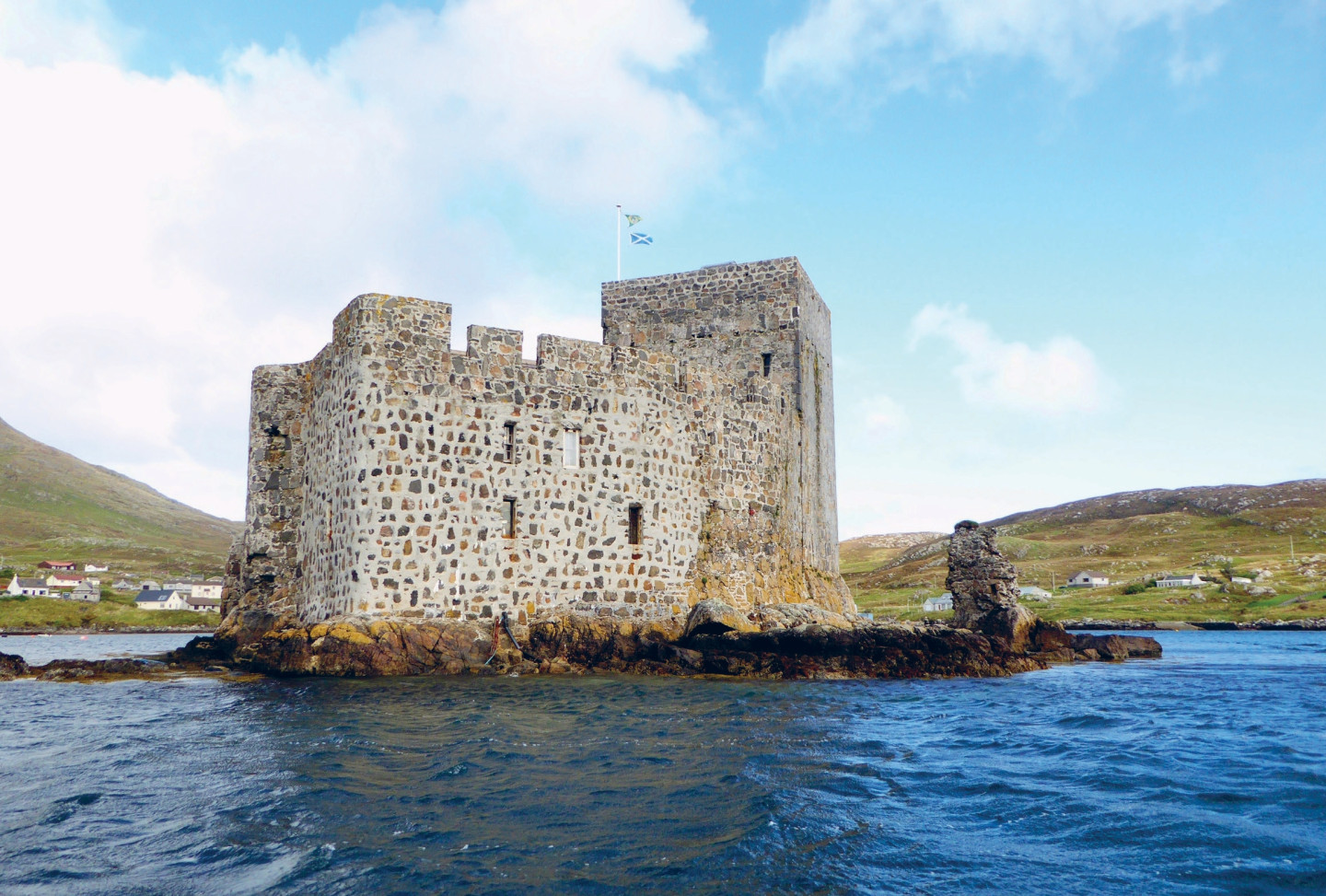
Kisimul Castle
Kisimul Castle is the culmination of the ‘castle corridor’, an area taken in from the ferry passage from Oban to Castlebay in Barra. It is a gauntlet: from the moment you sail out from Oban until you arrive in Castlebay, you are under almost constant watch from a network of coastal castles. This symbiosis of castles and ships was the basis of power for the Lords of the Isles who ruled the waves in the Middle Ages, and tempting as it is to catch the famous Twin Otter plane to Barra, arriving by ship is the only way to experience the world as they did.
Beautiful, stony headlands crowned by stone towers pass by on either side, such that you must race from portside to starboard to catch glimpses of them, as though they were a sequence of spectacles designed to pull people out from the sheltered cabins onto the windswept decks.
Ancient, ivy-clad Dunollie Castle bids you farewell from Oban, and just as it fades from view the outline of mighty Duart Castle on Mull grows in the distance. Through the Sound of Mull, several ruins reward eagle-eyed watchers. Achanduin Castle blends in among boulders beyond the Lismore Lighthouse. Ardtornish Castle, a Norse-style hall house in Morvern where international treaties were sealed and where sheep now graze. There is the MacDougall stronghold of Aros Castle near Salen in Mull, and in a break in the Ardnamurchan cliffs stands Mingary Castle, an architectural cousin to Kisimul. At the slightest sign of trouble, these ‘galley castles’ would unleash fleets of birlinn war galleys. It’s easy to conjure a mirage of sails on the hazy horizon in the corner of your eye.
Kisimul reveals itself like an exclamation mark at the very last moment. Its story contains eccentricities born of its relative isolation (bearing in mind that anywhere reachable by ship was never ‘cut off’ or ‘remote’ in the world of the sea kings). One old tale holds that during the Biblical flood, the MacNeil chieftain refused Noah’s offer of shelter on the ark because he already had a ship of his own. Another alleges that every day after the chieftain finished his lunch, a herald ascended Kisimul’s tower, gave a blast from a trumpet, and proclaimed, “Hear ye, people, and listen, ye nations! The MacNeil of Barra having finished his dinner, all the princes of the earth are at liberty to dine!”
This heady mix of lore and spectacle makes the seaborne passage to Barra and Kisimul Castle one of the most intoxicating adventures it is possible to undertake in Scotland. While the castle itself is fascinating enough, Kisimul is the ultimate example of how destination and journey work hand in hand to forge an unforgettable experience.
words // David C. Weinczok - photography on this page // Dunnottar Castle by Simon Hird
Promoted Post
The Best of Skye Guidebook
The Isle of Skye is a place of rare wonder, a wildlife-rich spread of bays, peaks, cliffs and ridges. The views are big, but the prospect of adventure is even bigger. We hope this curated Hidden Scotland guide – which takes in everything from the best walks to the finest restaurants – helps you to have your own unforgettable island escape.






 Sign in with Google
 Sign in with Email