
Shining Lights
To celebrate our 10th issue we are shining a spotlight on 10 of Scotland’s most inspiring people and projects: visionary entrepreneurs, ground- breaking pioneers, outside-the-box thinkers and food and community heroes who are not afraid to shake things up...
-full-1744746989.jpg)
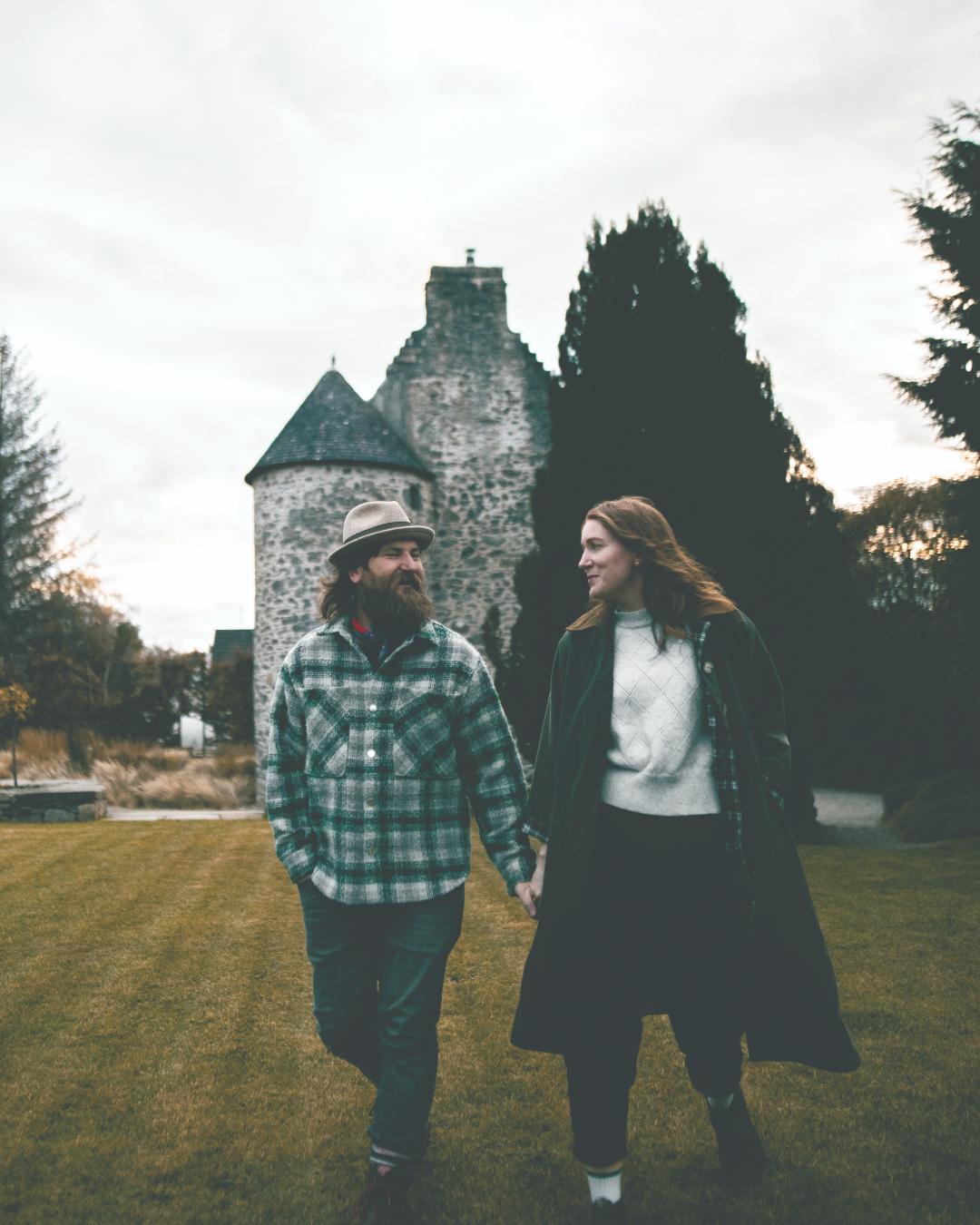
Stef Burgon & Simon Hunt
Kilmartin Castle
Under a blistering Middle Eastern sun, 3,700 miles away from Scotland’s wild, windswept west coast, Stef Burgon and Simon Hunt spotted an advertisement: a 16th-century castle for sale. Kilmartin Castle is cradled by a glen littered with ancient monuments, many dating back to prehistoric times. Within walking distance of the castle is Temple Wood stone circle and nearby Nether Largie standing stones. It was the stuff of would-be-renovator fantasies. The couple sent Stef’s parents on an eight-hour road trip to view the castle and the rest is Grand Designs-style history.
In 2018, they swapped the desert’s heat for Scottish mizzle, spending the first year living in a campervan working as ‘apprentice builders’ installing new heating, plumbing and fixing the leaks. This was no Disney-style conversion but one that respected the castle’s bones and retained the building’s integrity – with a few mod cons thrown in. Now, you can stay here. There are five bedrooms, all ensuite, decorated with antiques they’ve collected along the way, romantic four-posters, free-standing copper tubs... ‘Speel’ which means ‘the climb’ is accessed via a secret spiral staircase on the second floor; it features a vaulted ceiling and antique upholstered monkey bed. ‘1550’ has a high beamed ceiling, wood-burning stove and walk-in shower in the turret, ‘the Snug’ arrow-slit windows and a hand-crafted headboard made from a fallen tree from a nearby estate.
In 2021 they turned their attention to the garden and grounds creating a bucolic outdoor entertaining area and kitchen, a formal raised lawn, orchard and organic vegetable garden and reed-sewn, wild swimming pond, adding a glasshouse dining room the following year. Their next project? They’ve bought an old church that they’re converting into a gallery space – where they’ll exhibit some of the works from the artists’ residencies they host at the castle.
PROUDEST MOMENT
“The wild swimming pond. Garden designer Amber Crawley lives round the corner and during Covid she asked us if we’d like to create a wild swimming pond. We did, but had thought it would be too expensive. Before we did the garden guests would arrive through a boggy field and we worried they’d think ‘what have we done?’ until they got inside. The pond is one of the best things we’ve done, it’s so beautiful, alive with frogs and dragonflies. One day sitting in the greenhouse we heard quacking and a mother duck and her ducklings were waddling along the decking to the water.”
Araminta Campbell
It was only during her final few weeks at university in 2011, studying for a Fine Art Embroidery degree, that Araminta Campbell discovered handweaving - but it quickly became her passion. Over the next few years, she honed her technical skills and, in 2014, produced her first collection. Her inspiration, after a childhood spent wandering the hills and forests of Aberdeenshire, comes from the colours and textures of the Scottish landscape. She describes the design process as organic, the designs themselves, artworks: painting with texture. Each piece is unique, created to be heirlooms of the future.
Textiles used to be one of the most valuable forms of art, she explains, which is something that’s been lost - but it is a trend she hopes to reverse, championing artisan craftsmanship, training a new generation of weavers and helping to reposition Scottish textiles on a global stage. Today, she has an atelier just outside Edinburgh and is the largest employer of traditional handweavers in the UK.
Over the past few years she has collaborated with clients from Balmoral Castle (for a new hunting tartan), the Royal Scotsman, a luxury Belmond train and a string of luxury hotels from The Balmoral in Edinburgh to The Fife Arms in Braemar. For Swiss gallery owners, Iwan and Manuela Wirth, she created a bespoke tweed and tartan to be used throughout the hotel’s interiors. The drawing room’s walls are clad in the rich tartan fabric, its deep green hues inspired by the Cairngorms’ Scots Pines, red threads for rivers in spate, yellow for the wild gorse, pinkish grey tones representing the local granite. Together with the theatrical painted ceiling, the swirling shapes mimicking the layers of stratified Cairngorm rock, a work by Chinese artist Zhang Enli, it creates an overblown opulence. And showcases Scottish textile design to an international audience. In 2024 her work to revitalise Scotland’s textile industry was recognised by the prestigious WOLF Award for Future Legacy.
-full-1744743859.jpg)
PROUDEST MOMENT
“Winning the WOLF Award for Future Legacy at the Walpole British Luxury Awards 2024 was a defining highlight for me personally and for Araminta Campbell as a brand. It was a proud and deeply motivating milestone. It wasn’t just a recognition of my efforts but a celebration of everyone who works alongside me and contributes to our vision every day.”
David Gladwin
Black Isle Brewing Co
‘Save The Planet Drink Organic’ and ‘changing the world - one beer at a time’ sum up David Gladwin’s ethos and, with twin passions the environment and brewing beer, it was clear that the Black Isle Brewing Co was never going to be an ordinary craft brewery.
Back in 1998, he began brewing beer in an old cowshed, taking to the road at weekends to sell the ales at farmers markets. Now, Scotland’s first organic microbrewery exports all over the world.
It’s a grain-to-glass story. The rustic brewery on the Black Isle farm, produces craft beers with malted barley grown in their fields, the spent mash fed to their Hebridean sheep: one continuous, sustainable cycle.
When they took on the land it had been farmed intensively. Now, after working to restore biodiversity and wildlife habitats, an ecological survey has revealed no fewer than eight red list species of bird here, five butterfly and seven bumblebee. Working with local schools they also introduce children to a working farm, helping with the animals, digging the soil and harvesting the vegetables.
In 2016 they launched the first Black Isle Brewery Bar in Inverness, opening a second in Fort William three years later. The Inverness bar, with its communal tables and rooftop ringed with fairy light-strung shed-booths serves beer flights and gourmet wood-fired pizzas, the produce grown or reared on the farm. You can bed down in one of the bar’s hostel rooms or the shepherd’s hut on the farm. There are free tours of the brewery, as well as workshops and events. In the early days they held an annual beer and music festival, Jocktoberfest, and last year they brought it back as ‘Black Isle Calling’. In 2023 the brewery became B Corp certified, joining other companies ‘striving to be a force for good.’
-full-1744744432.jpg)
PROUDEST MOMENT
“Buying 125 acres of land around thebrewery and converting it to organicproduction. It had been farmed formore than 40 years using chemicalpesticides and herbicides and took threeyears to convert to organic production.Seeing the first harvest of organicbarley and using that for brewing was aproud moment.”
Clare Campbell
Prickly Thistle
A ‘tartan suffragette,’ Clare Campbell, is spearheading a campaign for a Highland Tartan Act, inspired by the 1993 Harris Tweed Act, to protect one of Scotland’s most famous icons. And if anyone can make it happen, she can.
In 2018 she launched a crowdfunding campaign to fund a pop-up textile mill in Easter Ross, sourcing looms dating back to the 1920s from the Scottish Borders. The original plan was to convert an old steading on the Black Isle into a more permanent base, the Black House Mill, heralding a new chapter for tartan textiles. But after Covid struck her priorities changed. It was more important to keep the workforce in jobs than plough money into a costly renovation.
"This is a grassroots business, regenerating skills and knowledge. We're not luxury fashion or fast fashion - we're ethical fashion." Prickly Thistle also became the first B Corp certified mill in the UK.
At the mill they design bespoke tartans for whisky distilleries, Highland estates and even The Beano comic. For Dennis the Menace's 70th birthday she was commissioned to create a tartan to reflect his signature black and red striped jumper. They also have their own range of Prickly Thistle tartans, which are used in their capsule fashion line. It's zero-waste design, the pieces made from rectangles, squares and triangles – so nothing ends up on the cutting room floor. The kilt was traditionally made from one piece of cloth. This is slow fashion, the clothing equivalent of the field-to-fork movement. And one which might soon have a stamp of recognition.
-full-1744744432.jpg)
PROUDEST MOMENT
“Realising I was brave enough to bring tartan home to the Highlands and the people of the region. One day (soon) a Highland Tartan Act will mean the global icon is anchored to the place where it all started. It was never about a mill, it was about resurrecting an industry and ensuring it remains in the hands of the people who live here.”
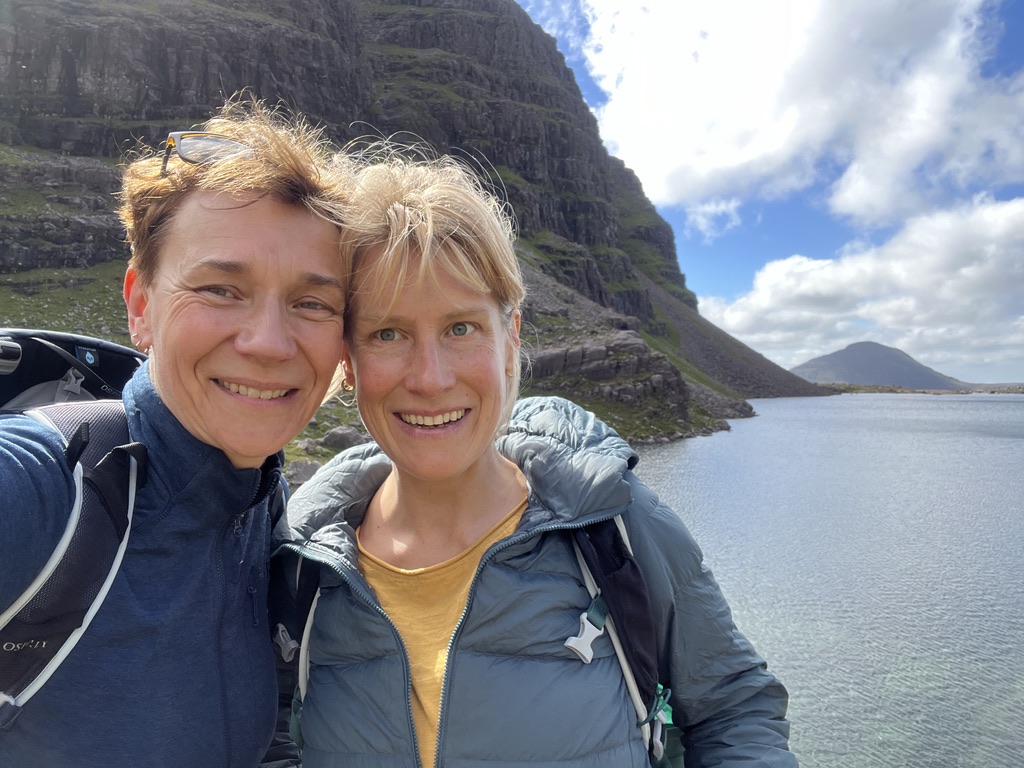
Sophie Howarth & Sarah Maclaren
Turadh
Turadh, pronounced too-rag, is Gaelic for a break in the clouds between showers when the sun shines through. This concept inspired writer and artist Sophie Howarth and her partner, garden designer Sarah Maclaren, when they launched their social enterprise in 2023 with Taigh Whin, a remote Scottish hideaway.
The idea behind Taigh Whin, which means ‘gorse house,’ was to give carers, volunteers, activists, those working for the good of their own and wider communities, a place where they could recharge their batteries and reconnect with nature. Because ‘everyone needs rest, kindness, wildness’.
Taigh Whin is also aptly named, not just for the spiky bushes of bright yellow flowers that surround this contemporary wooden retreat in Glenelg, but for its deeper meaning. Gorse is a natural remedy for hopelessness and despair.
To help fund the project the cottage can be rented as a conventional holiday let for a few weeks each year. The rest of the time those craving space and solace can apply for a subsidised stay or full bursary.
Inside there’s no television, just a well-stocked library with nature and wellbeing titles to curl up with in front of the wood-burner along with art materials and board games. There’s also a folder of walks, maps and litter-picking sticks for those seeking a more active nature-as-therapy experience, the wide-angled sea views beckoning guests out for beachcombing and wild swimming.
There are now three Turadh properties: the one-bed bothy next door, Nead Bernera; and a dreamy cabin in the woods, Feada Coille, located in Shieldaig. Perched among the treetops, the only sound birdsong and wind in the branches, the air scented with pine resin – a place for those ‘who care the most that also rest the least’ to let nature’s healing powers do their work.
PROUDEST MOMENT
“Realising that our unusual economic model works. It has been so encouraging to run a holiday let on radically new financial terms, guests contributing what they can, and finding that it is both economically viable and feels fair and rewarding for all who come to stay. It's a small way to help re-balance some of the immense economic inequality in Scotland. Reading the guest book is our best reward - we feel so proud every week discovering how Turadh has helped people recover from exhaustion and take a mental break from stressful professional circumstances.”
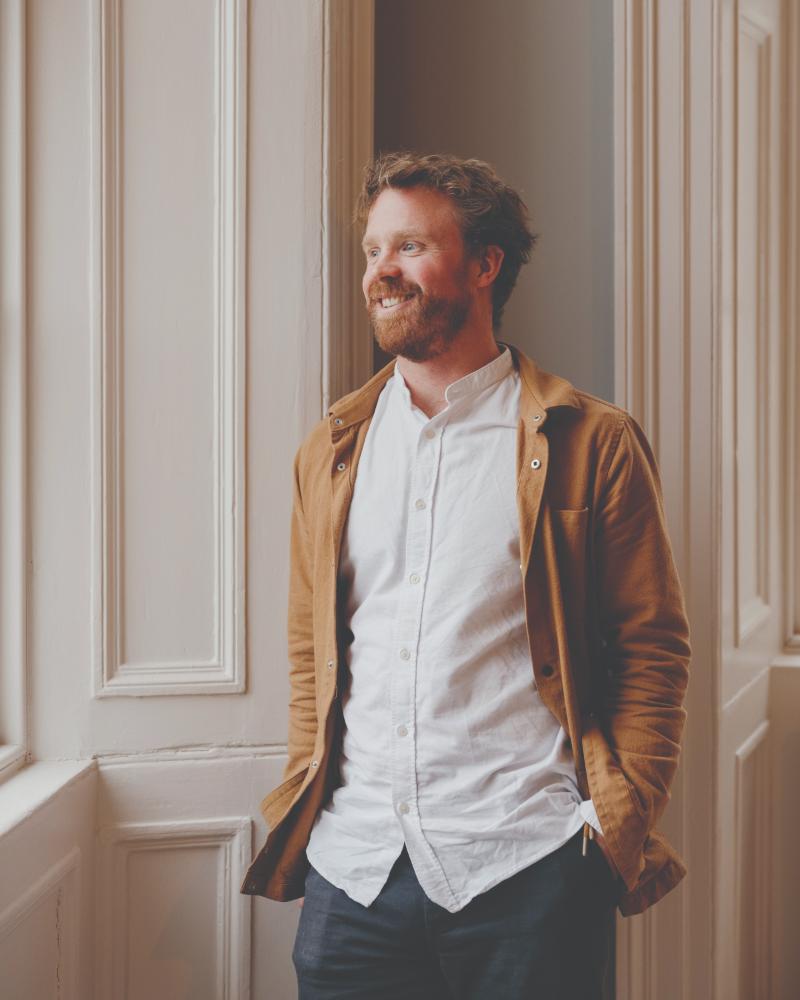
Fraser Potter
The Taybank & The Birnham Hotel
Fraser Potter spent the pandemic training to row across the Atlantic with four friends for the charity Reverse Rett— and, almost single-handedly, renovating a legendary pub, turning its car park into one of the biggest beer gardens in Scotland. Stretch canvas, circus-style awnings, hand-built wooden bar and pizza shack slope down to the River Tay. Inside, with the help of Guardswell Farm’s Anna Lamotte, he converted the five upstairs rooms into pared-back, Scandi-chic electronics-free hideaways, doing all the joinery himself.
Dunkeld is a picture-perfect Perthshire hotspot. Its high street boasts a butcher, a baker, a marmalade-maker along with a deli, an artisan grocer, specialist wine merchant - but until Potter pitched up there was nowhere cool to stay. Now there is - but it’s not just geared to tourists.
The Taybank is as much a community hub as a hip hotel. He’s kept the old-school bar with stacks of instruments for live music sessions—the pub was once owned by Dougie MacLean, who wrote the famous Scottish folk tune 'Caledonia.' On the first floor there’s a gastropub-style restaurant – 75 per cent of the herbs and veg grown in the walled garden he’s restored. In his spare time. Beside the river they hold long-table supper clubs, when the outdoor sauna craze took hold, he built one, Braar, and in the summer there’s an eclectic programme of outdoor film screenings.
And just when you wonder what he’ll do next, he spots a faded old Victorian hotel across the river. Dating back to 1850, the Birnam Hotel was built for the tourists flocking to the Highlands. The radical refurbishment will create “a new interpretation of the classic country house hotel experience.” Re-opening in spring 2026, what you can count on is that it will be “something unexpected, refreshing and full of character”
PROUDEST MOMENT
"Standing in the Birnam Hotel’s grand baronial hall, where I once used to ceilidh, and knowing that we were about to breathe life into it again and explore a new version of Scottish hospitality. Our aim is for the hotel to showcase makers, produce, stories and experiences made right here in Scotland."
Annabel Thomas
Nc’nean Organic Whisky Distillery
31 In Scottish folklore, Neachneohain was a Gaelic goddess, a huntress and fierce protector of nature – which is why Annabel Thomas chose to name the distillery she was building on the west coast’s Morvern peninsula after her. Nc’nean (pronounced Nc-ne-an) is groundbreakingly green, independent and innovative, the organic whisky ‘made by nature, not by rules.’ And, with the distillery’s team of ‘quiet rebels’, she has broken plenty, casting aside set-in-stone traditions to prove that there is a cleaner, greener way to produce world class whisky.
The barley the distillers use is organic, grown by two farmers in Aberdeenshire and Fife, with a 42 per cent lower carbon footprint than traditionally grown grain. The distillery is powered by renewable energy: a biomass boiler fed with wood chips from a local forest. For every tree felled another is planted. The bottles are made from recycled glass, an industry first, and the distillery operates a return, refill and re-use policy. There’s a refill station in the distillery bar. The stoppers are made of compostable cork and wood, the exquisite design on the bottles painted with water-based, non-toxic inks.
As a result of these pioneering initiatives, Nc’Nean is the first distillery in Scotland to be classed as net-zero. It is also B-Corp certified, and a zero-waste distillery. The largest source of waste is pot ale, the liquid left after the distilling process, which is spread on neighbouring farmland as fertiliser while the draff or leftover barley is fed to the cattle.
As a small, independent distillery, starting from scratch, they’ve been able to plot their own path, experimenting with different yeasts and fermentation times and have created a whisky without compromise – one which has won awards for its flavour, the signature single malt laced with notes of lemon posset, peach, apricot and spiced rye bread.
-full-1744745278.jpg)
PROUDEST MOMENT
“Holding the finished product in August 2020 after working towards that day for seven years. We auctioned the first 10 bottles to raise money for five charities close to our hearts. We thought we would make around £20,000 for them, but the first bottle alone went for £41,000. It was so exciting - the auction ended up raising £96,000.
Jillian McEwan
Lunan Bay Farm
Scotland is famous for its cashmere, however, the raw yarn has traditionally come from countries such as China, Mongolia, and Afghanistan, which is something Jillian McEwan is setting out to change. With her growing herd of cashmere goats she is spearheading a regenerative cashmere movement.
There have been attempts before; in the 1980s, an initiative was set up to produce homegrown Scottish cashmere, funded by the EU and the Scottish Government. Scottish hill farmers were encouraged to graze goats alongside their sheep to improve the quality of the land (goats are browsers and eat invasive species). It was supposed to be a win-win situation, giving the farmers an additional income source from the goat meat and cashmere. But the project foundered.
Today, there are more factors in its favour. The global cashmere industry is worth billions and fashion designers are looking for ethically-produced, sustainable sources.
Now, on a farm near Lunan Bay in Angus, Jillian McEwan gently brushes her 135-strong herd of goats’ coats to harvest the cashmere, the soft undercoat which grows from the summer solstice until February or March. It’s labour-intensive and only a small amount is produced. The long-term plan is to roll out the project to other farmers and form a cooperative once they have grown the herd. Until then, she is working with Johnstons of Elgin on a small capsule collection and sells the yarn along with hand- knit bunnets and wrist-warmers online with an additional income source from agritourism. At Easter, they hold a Goats in Coats Festival, where the tiny kids are dressed in hand-knitted jumpers. In the summer, they run farm-to- fibre experiences in the coastal paddock. Visitors comb and collect the cashmere, learn how to spin the yarn and take a hand-dyeing workshop in the beach bothy
-full-1744746624.jpg)
PROUDEST MOMENT
“The first time we hosted aninternational visitor who had travelledto Scotland specifically to experienceour cashmere farm tour was a trulyspecial moment. It made me realise theglobal reach of what we’re doing andhow much people value the unique mixof sustainable farming, heritage, andinnovation we offer here atLunan Bay Farm.”
Susie Walker Munro
Tea Gardens of Scotland
Radiating positivity and a gung-ho mentality, Susie Walker Munro takes most things in her stride; qualities you need if you’re going to found a tea plantation in Scotland. If they can grow tea in Cornwall, her thinking went - ignoring Scotland’s notoriously short growing season and questionable climate - why not Angus? So, in 2007 she sourced her first spindly cuttings from Tregothnan Estate.
The project had its share of stumbling blocks; the first bushes failed to flourish so she invested in polytunnels and concocted a rich liquid comfrey, dock and nettle manure. There have been financial and weather-related hiccups: using weed-suppressing fabric was a costly mistake - and remember the Beast from the East?
After launching her first batch of single-estate Kinnettles Gold, through Pekoe Tea in Edinburgh in 2015 she realised two things: it was possible to produce high quality tea in Scotland, but she had to scale things up to make it profitable. It takes 12,000 plucks to produce 1kg of black tea. So in 2016 she spread the word and a collective of nine female tea growers was formed under the banner Tea Gardens of Scotland. Now there are small plantations in abandoned walled gardens and farms across Perthshire, Kincardineshire, Angus and Fife.
With tea consultant Beverley Wainwright from the Scottish Tea Factory in Comrie they went on fact-finding trips to Japan, Sri Lanka, India and Nepal. They also sourced cold- tolerant seed to propagate their own plants. Tea bushes grown from cuttings can live for around 45 years but those grown from seed can last for over a hundred. Now in the walled garden of her family’s farm she has 4,000 tea plants propagated from seed and the group’s ‘Nine Ladies Dancing’ tea is sold in Fortnum & Mason. This year they launched a new black tea from five of the gardens called ‘Five Gold Rings’.
-full-1744747031.jpg)
PROUDEST MOMENT
“With Aberdeen University and the Scottish Tea Factory, we initiated theuse of ionomics to test the provenance of tea. Passing off tea as made andgrown in Scotland when it is not, cannow be countered. If a customer is paying a higher price for rare Scottish tea they want to know it is genuinely Scottish tea in the tin.”
Gregorie & Whirly Marshall
Blackthorn Salt
Gazing up at the statuesque, spiky structure beside disused train tracks in Ayr’s industrial port lands, you might think it’s an edgy modern art installation. In fact, it’s a graduation tower—a giant timber A-frame built from Scottish larch and fir, and clad with bundles of large-thorned Blackthorn (sloe) branches—and one of the country’s most ingenious artisan food success stories.
The Ayrshire coast was once home to a thriving salt industry, the coastline peppered with pan houses but after a gradual decline the last one closed in 1959. Salt is in architect Gregorie Marshall’s blood; his great-grandfather founded the importer and distributor Peacock Salt in 1874. It was his dream to revive the local industry. After travelling through Germany and Poland, studying the towers that have been used to extract rock salt since the 16th century, he returned home and started drawing up plans. Working with his wife Whirly, a structural engineer and team of local craftsmen the tower was constructed in 2019.
The process is simple. Seawater is pumped to the top of the tower and then filters slowly down through the thorny branches, the increased surface area created by the thorns speeding up the evaporation process. The cycle is repeated until the salinity has risen sufficiently and then the brine is piped into the adjacent pan house where it is heated in a bath and intricate pyramid salt crystals form. The salt, containing around 60 minerals, has a mellow flavor and has won a string of awards, including 3 stars at the 'Great Taste Awards' last year and one of the 12 'Great Taste Golden Forks', and it is now used by everyone from Michelin-starred chefs to artisan food producers.
Words // Lucy Gillmore.
-full-1744746890.jpg)
PROUDEST MOMENT
“An interesting and totallyunpredictable one was when NASAchristened a wee bit on the planetMars ‘Blackthorn Salt’; but there reallyare so many – parents messaging usabout how their child has changed thefamily’s attitude to salt after a schooltrip, our ‘wee’ open day when we hadto stop people coming after numbersreached 1,400...”
Promoted Post
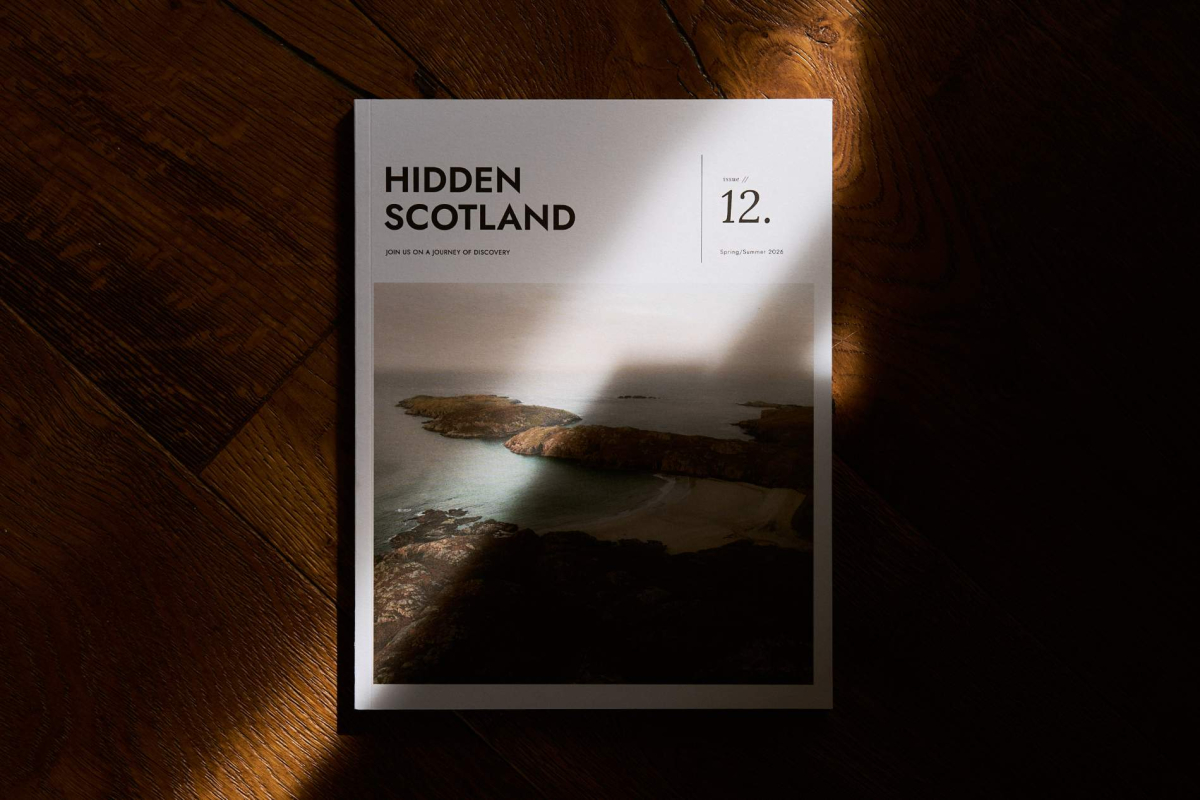
Issue 12 is now shipping worldwide from Scotland.
Issue 12 is now shipping worldwide from Scotland.






 Sign in with Google
 Sign in with Email