
Scotland’s Cider Scene
You can’t make cider this far north, they said – how wrong they were. From Herefordshire to the Highlands, Scotland is the new cider country…
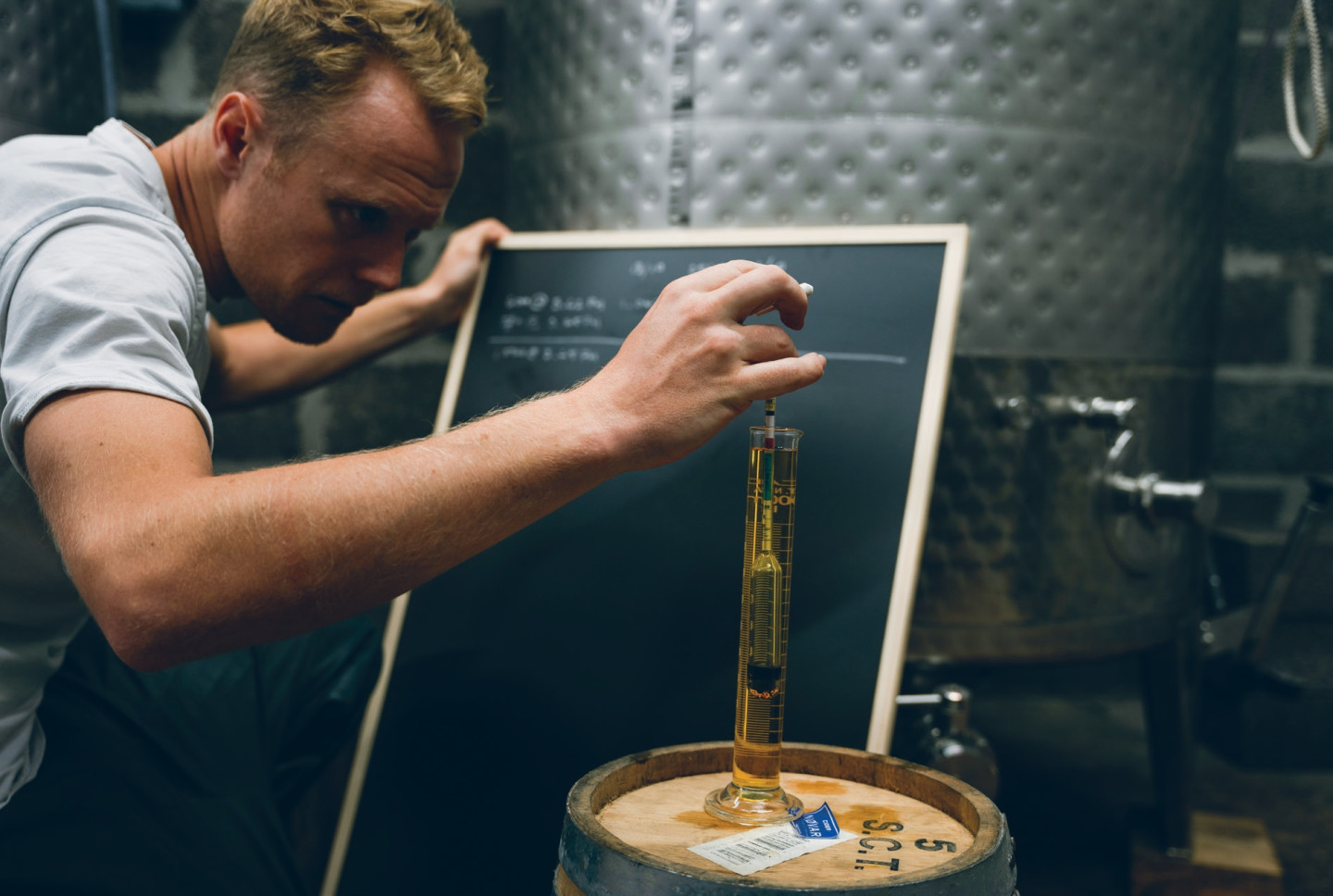
On a Highland estate on the northeast coast of Scotland, William Munro Ferguson is the UK’s most northerly cider producer. Bumping up the dirt track for an impromptu tasting I find him, glass in hand, at the rustic cidery in an old stone stables, now home to six sparkling silver tanks.
The first splash of Novar gold is a single estate Katy, naturally fermented with wild yeast.
“It’s very dry. I’ve been experimenting with spontaneous fermentation.” He swirls the liquid in his glass. “The wild yeasts up here work down to around two degrees.”
The apples are crushed and then the natural yeasts allowed to establish on the pulp for 48 hours before pressing.
From the second tank comes another rush of fermented apple juice. “I love this one, it’s thick, full on the mouth. The main apple’s Dabinett, with a bit of Katy. I needed something with more bite.”
Next he opens a bottle from 2019 made with a standard commercial yeast. “It’s a good cider, dry, biscuity, tannic - but it lacks complexity. “
As we wander down the path to the orchard he tells me how he spent a season in Normandy learning about cidermaking from a master, Eric Bordelet. Back home the next hurdle was apples.
The Highlands has apples (there are around 2,500 varieties in the UK with 40 or so known Scottish varieties) but they’re mainly cookers and eaters. For the style of cider he wanted to make he needed tannic apples to give real depth of flavour. So he headed down to Herefordshire to talk trees with John Worle, returning with 21 of the hardiest varieties.
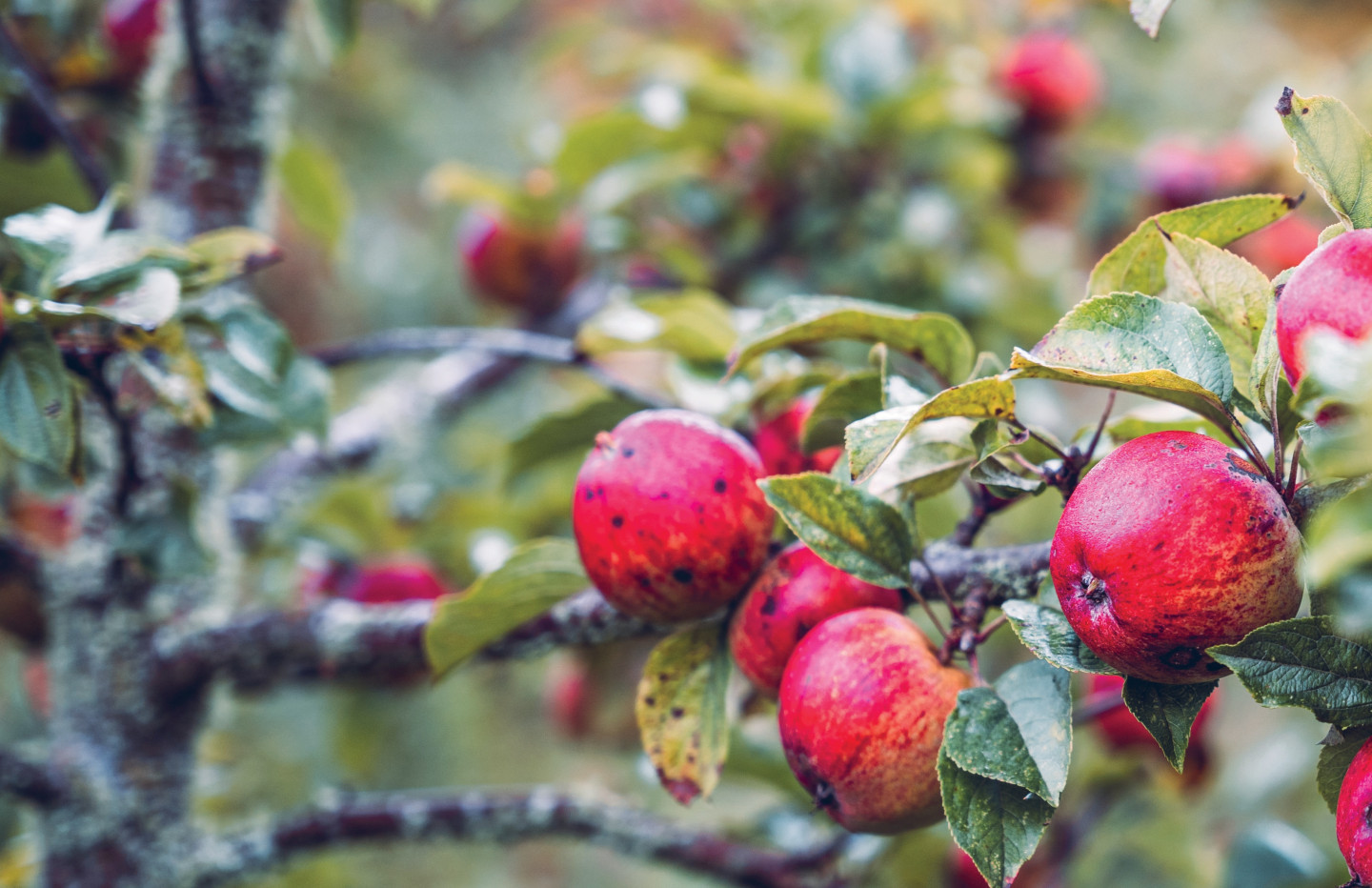
Now his seven-acre, 3,000-tree orchard, with a mix of Herefordshire and heritage Highland varieties farmed organically on a south-facing slope, is bearing fruit.
“Katy is the first to drop but it doesn’t make good cider on its own,” he explains as we meander through the regimented rows, the branches bowing under the fruits’ weight.
“Those are Morgan, Betty, Brown, Kingston Black, Yarlington Mill and Dabinett.” He reels off the names. “Dabinett is harvested late October - without Dabinett you don’t have a product.”
“I’m thinking of trying port barrels - to get some warmth for winter…’
That’s Scottish cidermaking right there – pushing the boundaries.
And he’s not alone. There are now around 15 artisan cidermakers in Scotland, as well as a dedicated cider shop, Aeble in Anstruther, set up by Jaye and Grant Hutchison (the drummer from indie band Frightened Rabbit). And this summer, Guardswell Farm in Perthshire, which overlooks Scotland’s traditional fruit growing area, the Carse of Gowrie, hosted the country’s first cider festival.
‘Pressed’ is pegged as a celebration of Scottish ciders, with talks and tastings, a cider bar and bottle shop, and live music in a converted steading looking out over the rolling fields of this 150-acre farm. It showcased the diversity and innovation of the producers here – including their own, homegrown Digger’s Cider.
Digby Legge’s cider journey began when he persuaded his parents to plant 60 apple trees on their smallholding. His first batch of cider was made with Guardswell’s old apple press – and with help from the farm’s co-owner Anna Lamotte, now his wife. Since then he’s planted 1,500 trees and makes a pet nat-style cider, selling at artisan markets such as Bowhouse in Fife.
Four bottles are lined up on the table: Still, Sparkling (the ciders), Kin and Aster. Kin cider is a second press, an old way of getting more from the fruit – a bit like a cider spritzer. Water is added to the apple pomace and then it’s re-pressed the next day. He pours me a taste of Aster. It’s light, dry, refreshing; a naturally sparkling, spontaneously fermented perry made from pesticide-free Perthshire pears.
At the next table, Caledonian Cider’s Ryan Sealey is talking wild yeast and whisky barrels. A Cornishman (who used to work for Thatchers), he moved up to the Highlands with his Scottish wife – and three apple trees - and is now based just a few miles south of Novar Cider on the Black Isle. His day job is as a distiller at the Glen Ord Distillery but his passion is making cider in his ‘shed’.
“Everything I do is in whisky casks. The guys at the Dornoch distillery give me casks in exchange for cider. I also do an apple swap every year, people drop off crates of apples for bottles of cider.”
He ferments and matures his cider in the barrels, allowing the wild yeast to work its spell. The harvest in the Highlands is late, which means a long, slow, cold fermentation through winter.
A splash in my glass of Islay Cask gives an instant peaty hit on the nose; on the palette it’s soft, smooth and smoky.
“It’s kind of weird. I’m a whisky nerd and a cider nerd. The challenge as a cidermaker is to find something that will balance that peaty smokiness, making sure there’s still just enough fruit. Not all ciders work with all barrels. You can almost pair certain distilleries with types of apples. Sweeter ciders don’t work with that peatiness.”
“Another thing I like to play around with is the apples, especially the high acid cookers.” He pours me a glass of ‘High and Dry’.
“This one has a lot of Discovery in it. It’s bone dry, fermented with the wild yeast on the apples’ skins. People don’t realise how fruit-forward a dry cider can be.”
The room is buzzing with wild Willy Wonka-esque creativity and a maverick zeal: fruit farmers and foragers, fermenters and distillers, everyone with a story, their own angle on Scottish cider. Some, like Linn cider’s Jack Arundell, find fallen fruit, while others such as Aipple’s Roger Howison tend trees. The roll call includes Easterton, Sail We Must, Novar and Lost Orchards.
Some swear by wild yeast, while others stick to what they know, which in the case of Naughton Cider’s Peter Crawford is champagne. With his wife, Sarah, and young family he moved back from London to his family’s estate in Fife during lockdown; an estate with around 50 mature apple trees. There he started to experiment, using champagne techniques to make cider. The traditional method cider is created with champagne yeast and champagne barrels and a second fermentation in the bottle.
The first release from 2019 fizzes into the glass. It’s delicate and dry with a feathering of fine bubbles. But I’m intrigued by Homage to Hogg, a single estate Yarlington Mill which is more like a skin-contact orange wine and is dedicated to Victorian pomologist Robert Hogg (1818-97) the author of ‘British Pomology’ and, incidentally, Sarah’s great-great-great-grandfather.
The cider is honeyed amber in colour, flatly robust, full-bodied and tannic, and unlike anything else in the room.
“Come and see the orchard,” he invites. “We’re planting another 500 trees, some in the old walled garden.”
So I bump up another dirt track in the Kingdom of Fife. Neat lines of young trees lead up to their cottage; on one side ‘east coast cider’ (clean, crisp, culinary varieties), on the other ‘west coast’ (the bittersweet and bittersharp cider apples).
Walking back down the track to what was an old drying shed, he shows me the traditional rack and cloth press. “This was a working sawmill back in the day.”
In a nearby stone outbuilding, shiny silver fermenting tanks are lined up.
“What I do, which is a little bit different to the other cidermakers in Scotland, is try to create a clean reductive style - super clean and super tight. I don’t want any of the bruised elements. Sometimes when you leave the lees in contact with the juice it can rob it of its cleanliness. We vinify each variety separately in its own steel bin. Then the important one is next door,” he smiles.
The barrels. The cider is aged in champagne barrels for ten months. “ I like the profile you get from oak, it creates this gorgeous little touch of oxidation and you pick up the nutty, toasty elements as well. It adds that little bit of finesse.”
“It’s so much fun experimenting. We’re in this amazing position at the moment because Scottish cider is in its infancy so people can define what it is. And it’s so diverse.”
Dodging the geese we nip into the old walled garden, where they’re planting cider apples and perry pears, then make our way up to the estate’s old game larder, a round stone building now used as a cool store for the bottled cider. He grabs an, as yet, unlabelled bottle of the 2020 vintage and we head back down to the garden.
“The phenolics of cider are very different to champagne but there are lots of sensory similarities, especially when you vinify in oak.”
Sitting in the sun, sipping the traditional method cider, its apple notes are distinctive but the feather-fine fizz of bubbles is firmly in champagne’s camp.
“We’re in this magical period where something could be done,” he muses. “You just have to have the right people to lift cider up.”
The right people, I’d say, seem to have it covered already.
FIND OUT MORE
Novar
novarcider.com
Caledonian Cider
caledoniancider.com
Diggers Cider
@diggerscider
Naughton Cider
@naughtonciderco
Linn Cider
@linncider
Easterton
eastertoncider.com
Sail We Must
sailwemust.com
Aipple
hyrneside.co.uk
Guardswell Farm
guardswell.co.uk
Bowhouse
bowhousefife.com
Aeble
aeble.co.uk
words // Lucy Gillmore - photography // Alexander Shewan
Promoted Post
The Scullery
Tucked away in the heart of the Yarrow Valley, The Scullery is a one-bedroom boutique hideaway, eloquently designed for comfort, calm, and connection. Whether you’re escaping the city or craving a countryside reset, this is your space to slow down and just be.
-listable-carousel-1769292770.jpg)






 Sign in with Google
 Sign in with Email