
Scotland's Bothies
Hidden in the glens and scattered across Scotland’s remotest reaches, bothies are simple shelters once reserved for those in the know. Now, these unlocked refuges—maintained by volunteers—offer a stripped-back way to experience the outdoors. With no electricity, plumbing or bookings, they represent a rare kind of freedom in modern travel.
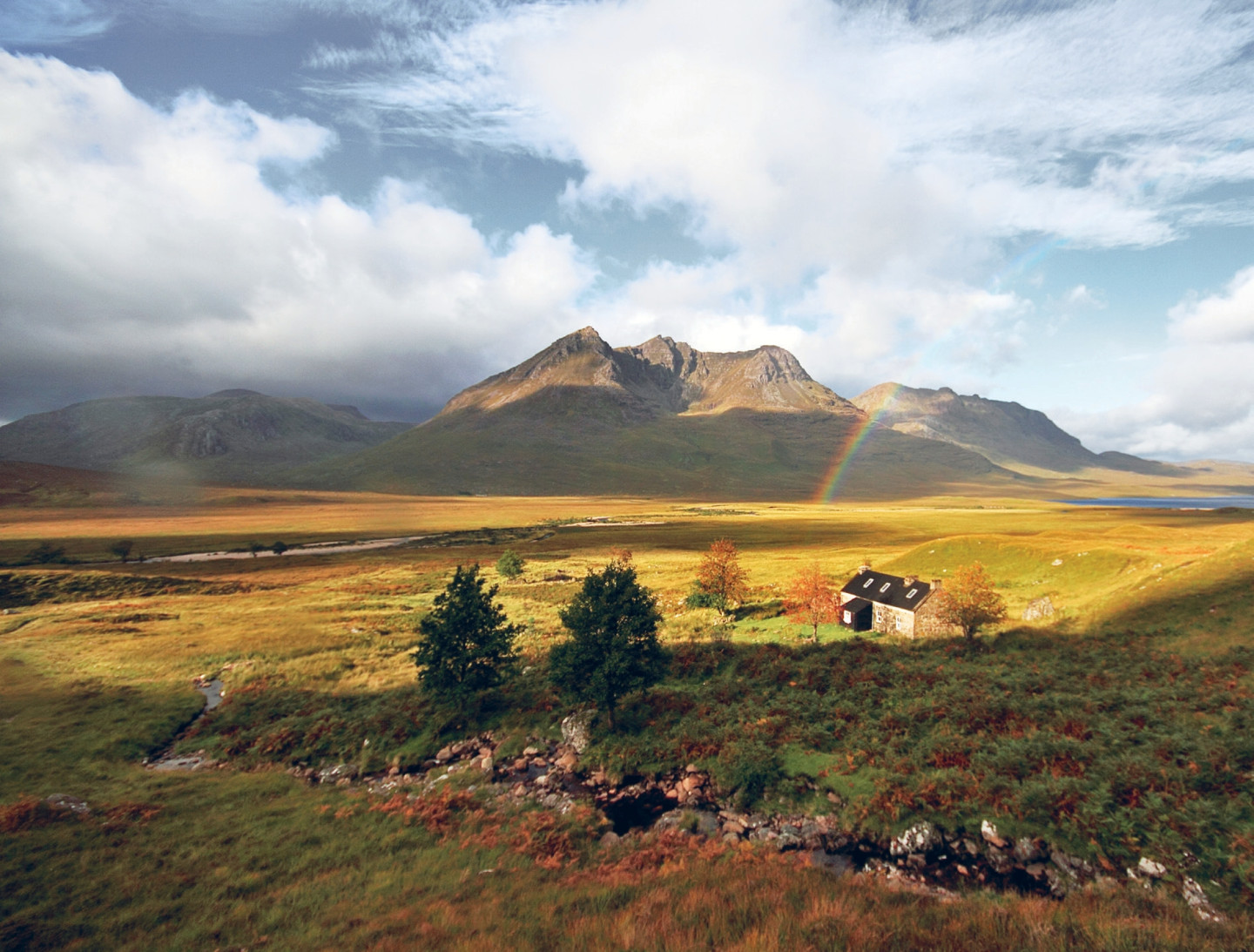
In a world before Instagram and Facebook forums, an aura of secrecy surrounded Scotland’s unique network of mountain shelters; prized locations only shared once a trusting bond had been forged in the flickering light of a bothy fire. Today there is a healthy free-flow of information, and bothies have caught the collective imagination. Located in some of the wildest and most picturesque locations in the country, a classic overnight bothy trip should be on any discerning adventurer’s bucket list. The best bothies are almost like hostels, with a well drawing fire or stove, platform beds to sleep on, and in some cases even a supply of seasoned wood or peat to burn.
Scotland’s bothies are a loose collection of shepherd’s cottages, estate houses and abandoned crofts that have been saved from ruin and renovated. The term bothy derives from the Gaelic bothan (via the Old Irish both) meaning hut, and originally described rough and ready accommodation provided by landowners for farm labourers or estate workers. More recently, though, the term has become synonymous with an idea of sanctuary and shelter. The driving force behind the creation of the current bothy network is the Mountain Bothies Association. The organisation’s volunteers have successfully rebuilt and maintained over 80 bothies in Scotland, and another 21 in the UK as a whole. Bothies come in many shapes and sizes, but the most common configuration is the classic two-roomed cottage referred to by the Scots term, but and ben; ‘but’ referring to the kitchen and living room, and the ‘ben’ the bedroom. Freely available for anyone to use as a lunch stop, or to stay in overnight, bothies have been beloved by mountaineers and stravaigers for well over a hundred years, becoming an integral feature of Scottish outdoor culture.
Bothy accommodation is pretty basic, and in almost all cases there is no gas, electricity, tap or toilet. If you are staying overnight, you will need to carry in all the equipment you would normally take camping, plus candles, and if there is a fireplace, your own supply of fuel to burn. Water comes from a nearby stream, and although some bothies have latrines or loos, answering calls of nature will involve a walk and the use of a spade. Although there are no formal rules, an unspoken bothy etiquette is generally adhered to. Put simply, it is the common-sense philosophy of treating others with respect, and leaving a bothy in the condition you would wish to find it in. Most importantly, no-one has an exclusive right to a bothy and the concept of “first come, first served” does not exist. Bothies are open shelters, with no booking system or wardens, and the overriding ethos is that, however full, there is always room for one more. Except on rare occasions, late comers will just squeeze in if the bothy is full, though it may be advisable to take a lightweight tent if you are intending to use a bothy in a popular area during the summer months.
It is also traditional to leave some essentials behind for the next person to use. Arriving cold and tired to find a kind, considerate person has left coal or chopped wood and kindling is a godsend. Once you have settled in for the evening, with the fire blazing, candles burning, hot food on the table and a beer close at hand, the sense of well-being will live long in the memory. Good social skills are definitely an asset and bothy goers tend to have a strong community spirit. I’ve had many memorable evenings chatting away to like-minded folk about our shared experiences, offering rations or hot drinks, as well as giving (and taking!) advice about the local area, kit and, well, all things bothy. And I guarantee that when you return to the hustle and bustle of modern life, there’ll be the odd wistful moment when you drift off and fondly remember a timeless bothy moment, away from the Interweb and your day to day preoccupations. This is the gift that bothying can give to you.
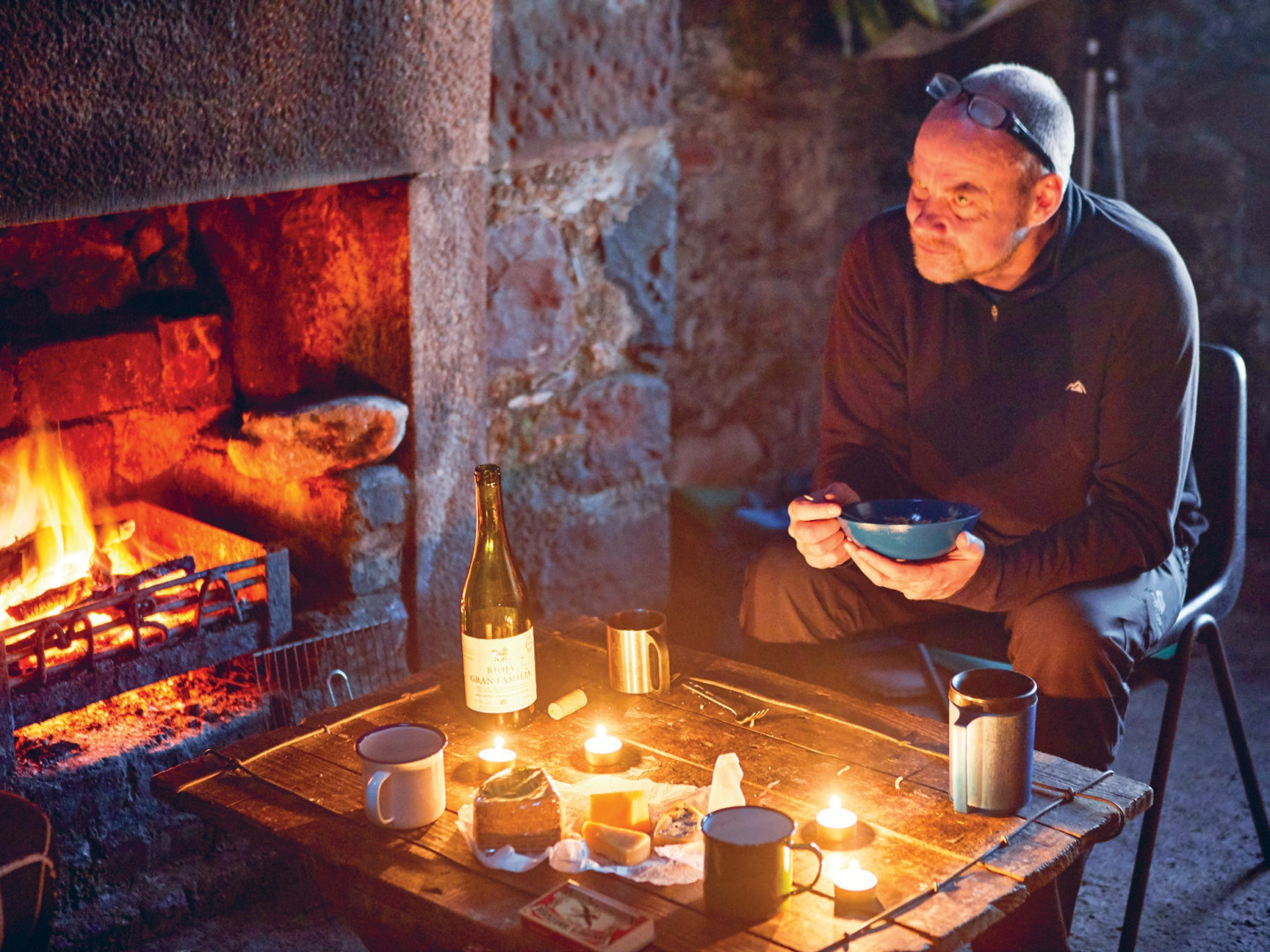
Here are six of my favourite bothies, all great locations for a bothy-beginner, geographically spread across the country.
Shenavall Bothy
Northern Highlands
Grid Ref : NH 066 810, Lat/Long 57.776800,-5.254144, LR Map 19
Walk-in : 4.5 miles
Maps : LR 19 Gairloch, Explorer 435 An Teallach and Slioch
Start : Layby at Corrie Hallie on the A832 ‘Desolation Road’, 2 miles SE of Dundonnell.
Grid Ref : NH 114 851 Lat/Long 57.8150, 5.1755
Shenavall is one of the best-known bothies in Scotland; a magnet for Munro baggers and walkers for well over a century. Set within the spectacular scenery of the Fisherfield Forest, close to an area of remote summits described by Alfred Wainwright as ‘the Great Wilderness’. Among its distinguished guests have been renowned author and mountaineer WH Murray and HRH Prince Charles, who hiked out here while still a pupil at Gordonstoun. Unless you are visiting out of season you are unlikely to have the place to yourself, but this region is one of the jewels of the Scottish Highlands and an opportunity not to be missed.
The Lookout
Isle of Skye
Grid Ref : NM 413 763 Lat/Long 57.701247, -6.344568, LR Map 23
Walk-in : 1.25 miles
Maps : LR 23 North Skye, Explorer 408 Skye Trotternish & The Storr
Start : At car park near Shulista, North Skye coast road.
Grid Ref : NG 423 743 Lat/Long (57.6841,-6.3258)
The stunning 180-degree view from the bay window at The Lookout certainly gives the bothy its wow factor. This former coastguard watch station, positioned precariously close to the cliff top above Rubha Hunis - the most northerly tip of Skye - offers a panorama encompassing the entire Western Isles and the profile of the mainland all the way to Cape Wrath. The bothy is also a fantastic spot for whale and dolphin watching. Prepare to experience all kinds of weather: shimmering sunlight, castles of cumulus clouds building from the west, rain showers scooting across the water. The canvas changes with every passing moment and it is difficult to tear yourself away.
Words - Geoff Allan, author of The Scottish Bothy Bible & Scottish Bothy Walks
-full-1749642115.jpg)
Gleann Dubh-lighe Bothy
Western Highlands
Grid Ref : NM 944 819.Lat/Long 56.883413, -5.375076, LR Map 40
Walk-in : 2 miles
Maps : LR 40 Mallaig and Glenfinnan, Explorer 398 Loch Morar and Mallaig
Start : Small layby at Drochaid Sgainnir off the A830.
Grid Ref : NM 931 799 Lat/Long 56.8641, -5.3959
Gleann Dubh-lighe is only a couple of miles down the road from the magnetic attraction of Glenfinnan, and the ‘Harry Potter Bridge’ but is a world away from the tourist crush. The last recorded occupants of the cottage were the Mclennan family, who lived here in the early 1900s. Seven children were raised within the cramped confines of the homestead, their father combining work as a shepherd and forester with duties as a ghillie and stalker for the local estate. The place was described as a typical ‘but and ben’; two narrow front doors opening inwards to a small entry space with the kitchen/living area to the left. There was a shelf bed with a curtain across it to the right of the fire, and to the left a large chest, colloquially known as a ‘girner’, which was split into two and contained flour on one side and oatmeal on the other. The sleeping room was to the right of the front door, with a small pantry facing it. The bothy is held in great affection by its regulars, who rebuilt the shelter after it accidently burnt down in the summer of 2012.
Ruigh Aiteachain Bothy
Cairngorms
Grid Ref : NN 847927, Lat/Long 57.011814, -3.900425, 389m, LR Map 43/35
Walk-in : 3.5 miles
Maps : LR Map 35 Kinguisse & Monadhliath Mountains, Explorer OL57 Cairn Gorm and Aviemore
Start : Car park at Achlean, Glen Feshie.
Grid Ref : NN 851 984 Lat/Long 57.0626, -3.8964
Carved and smoothed by glaciers and carpeted with moss and heather, Glen Feshie is crowned by a patchwork of beautifully shaped pines interspersed with spiky green knots of juniper. This wide valley, the ‘jewel in the crown of the Cairngorms’, is the stunning setting for Ruigh Aiteachain, the ‘shieling of the juniper bush’. The bothy has a particular association with the 19th-century English landscape painter Sir Edwin Landseer, whose most famous work, the instantly recognisable Monarch of the Glen, was inspired by the time he spent here.
Danish businessman Anders Holch Povlsen, the present owner of the Glen Feshie Estate, has not only supported the bothy’s upkeep but undertaken a major refurbishment. Povlsen has also prioritised the regeneration of the natural habitat, aiming to double the area of native woodland on the estate. He invested heavily in stalking to drive down the numbers of deer browsing the buds and seedlings of established trees. This strategy, together with some re-seeding, has resulted in young pines, birches, and rowans flourishing on the forest floor, while the high woodland edge has started to extend back towards Rothiemurchus.
Carron Bothy
Southwest Highlands
Grid Ref : NR 944 996 Lat/Long 56.144820,-5.310817, LR Map 55
Walk-in : 5.25 miles
Maps : LR 55 Lochgilphead and Loch Awe, Explorer Sheet 360 Loch Awe and Inveraray
Start : Small improvised parking spot at Kilneuair by a track leading to Finchairn on the B840.
Grid Ref : NM 885 038 Lat/Long 56.1794,-5.4089
Folded into the gently undulating moorland that separates Loch Fyne and Loch Awe, the bothy at Carron sits above the River Add, which gives the shelter its Gaelic name Car Abhuinn, meaning ‘winding river’. The cottage rests between two large expanses of forestry, and a new line of wind turbines that poke their heads above the tree line to the west. Despite these encroachments, this is a tranquil spot, where red-throated divers and black grouse share their moorland home with sheep, which are left to roam the hills only corralled every spring in the gathering pens close by. The bothy serves as a waymarker on an old cattle droving road running from Auchindrain to Kilneuair and the most obvious remnant of the route is the fine old stone bridge that spans the River Add upstream from the bothy, a well-engineered curiosity startlingly out of place in this lonely glen.
White Laggan Bothy
Southern Highlands
Grid Ref : NX 476 775 Lat/Long 55.067938, -4.403352, LR Map 77
Walk-in : 4 miles
Maps : LR Map 77 Dalmellington & New Galloway, Explorer 319 Galloway Forest Park South
Start : Upper car park at Bruce’s Stone, Loch Trool.
Grid Ref : NX416 803 Lat/Long 55.0916, -4.4866
Instantly recognisable by the large Saltire painted on its north gable end, White Laggan Bothy stands proudly on the southern flank of the Galloway hills, deep within the confines of Galloway Forest Park. This untamed granite land has been scraped clean in unsentimental fashion by successions of ice sheets, forming gnarly peaks and ridges with mysterious doom-laden names, such as Dungeon Hill and the Rig of Jarkness. The bothy was home to a tenant shepherd in the early 19th century, and later served as the sleeping quarters for shooting parties organised by the Kirroughtree Estate. Through an initiative by the Forestry Commission, Galloway Forest was designated as the UK’s first Dark Sky Park in 2009. The region has some of the darkest skies in Europe and so few people live within its 75,000 hectares of woodland and plantation, that on inky-black, cloud-free nights, this really is a brilliant place to enjoy the stars.
Promoted Post
Issue 12 is now shipping worldwide from Scotland.
Issue 12 is now shipping worldwide from Scotland.






 Sign in with Google
 Sign in with Email