
Savouring Scottish Puffindom
In just a few places around Scotland, spring comes with the whirring of thousands of wings. At the edges of some islands and a scatter of mainland cliff tops, sudden bursts of colour and contrast speckle winter-browned turf, vibrant as flowers unfolding on a woodland floor.
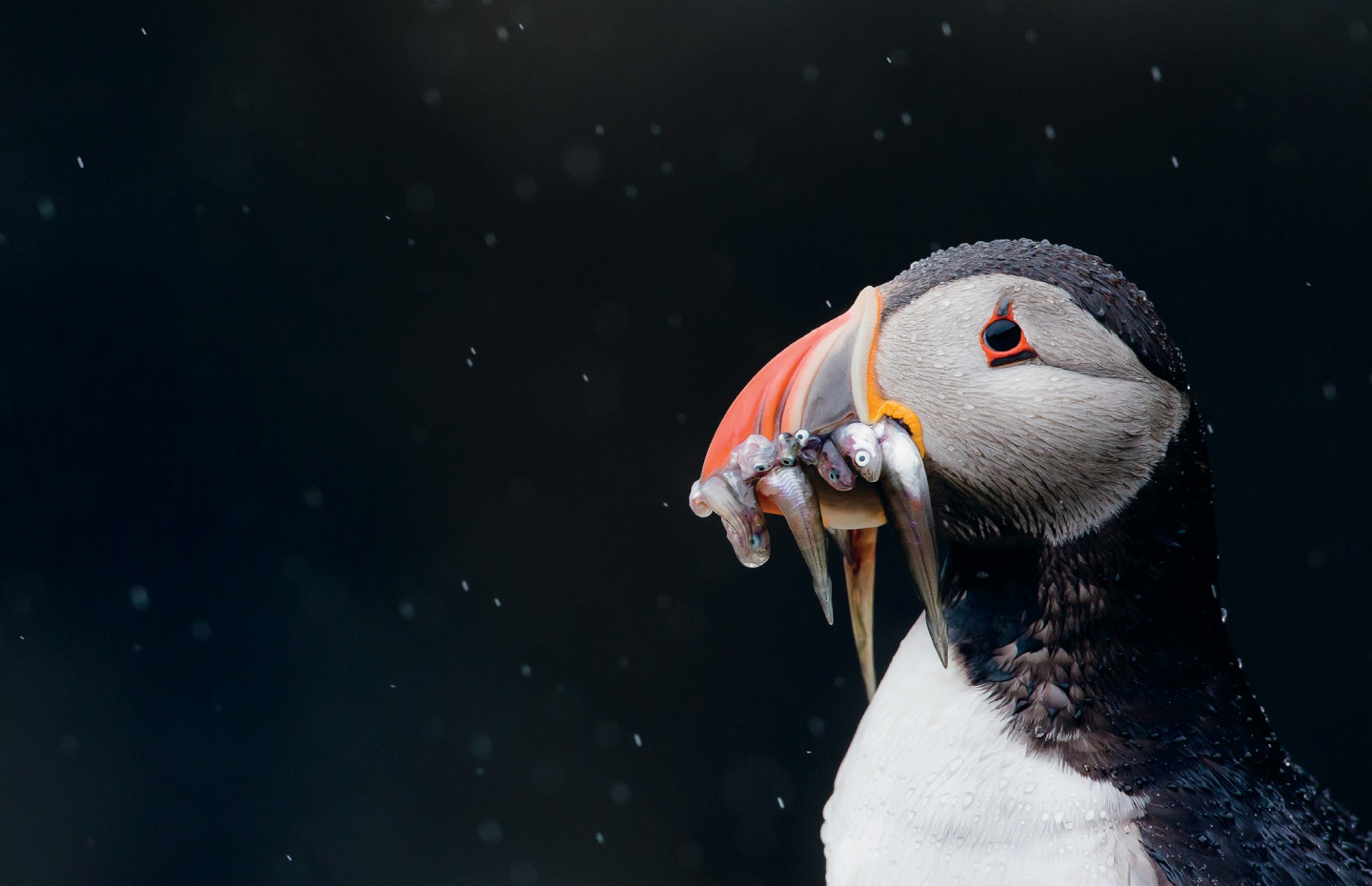
Tangerine feet are part of it, pattering over grey rocks, scuffing soil from the entrances of burrows that pock the slopes. So too are bodies feathered in black and white, dapper as serving staff in an old-school restaurant, but walking with the roll of sailors newly come ashore. And bills of carmine, blue-grey and cream, beak parts connected at the base by a rosette of buttercup yellow. The puffins are back.
The annual homecoming of puffins to their breeding places is one of the seabird wonders of the northern world. From the Gulf of Maine to Iceland, Brittany north to Svalbard, flocks funnel in from wider seas. The birds have spent the previous seven months there, far from land and scattered as singletons or in very small groups. Some could have ranged as far as waters off Greenland, others gone south to the Bay of Biscay.
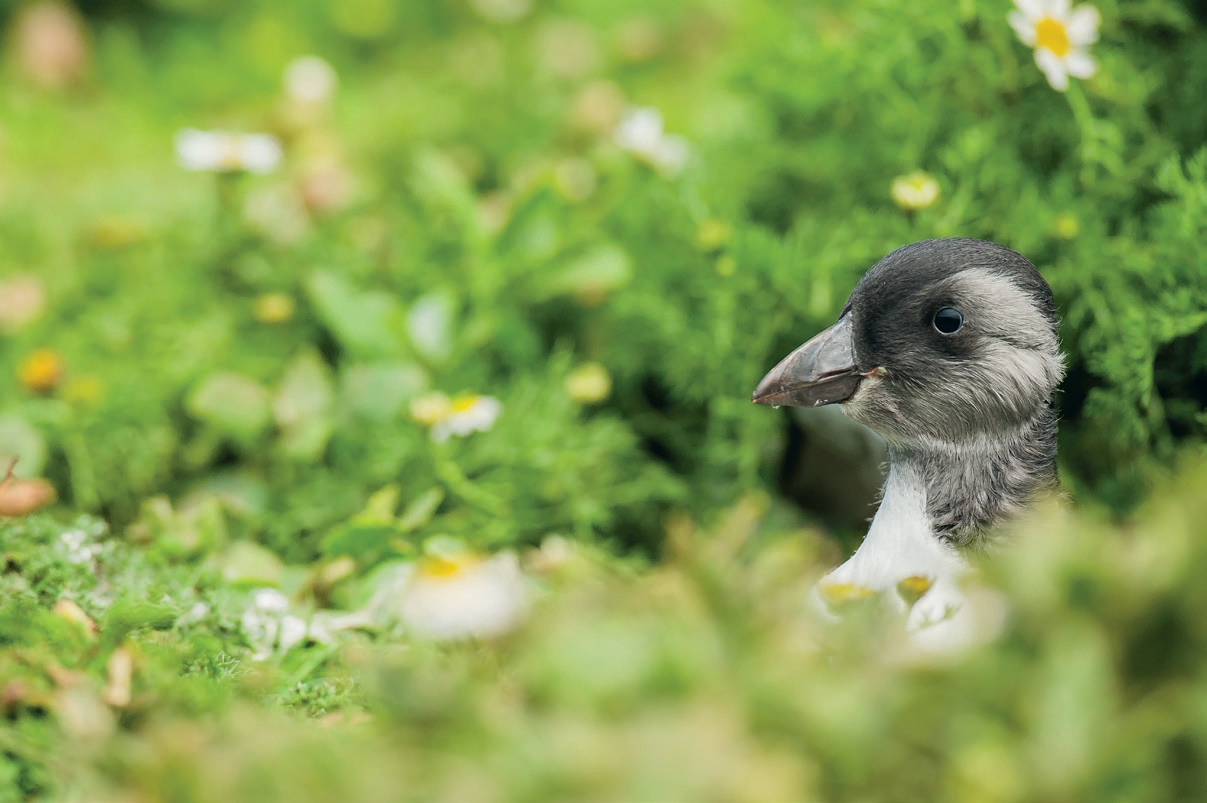
Now the wanderers gather again, riding the swell off colonies, then taking to the air to swirl over the land. April is the peak period for mass arrivals at Scottish colonies, with the middle of the month a prime landfall time from here to northern Norway. Over the rest of the spring and summer, each pair will try to rear a single youngster – a ‘puffling’ – after first spring-cleaning their nest chamber to cradle an off-white egg. After hatching, often some time in June, the parents will feed the youngster with many puffin-trademark beakloads of fish over the next six weeks.
Each adult goes fishing several times a day, while the puffling sits snug in a burrow, or sheltered in a crevice under boulders. Later in July or sometimes into August, the puffling will leave the warmth of the burrow or boulder nook for good and head for the cold sea beyond. If it weathers the challenges of its first winter, it will likely spend the next two years away from land, before returning to its place of birth – or another colony – as an immature.
For would-be puffin watchers, all of these phases in the puffin calendar are important to consider. If you want a chance of taking a picture of a Scottish puffin carrying fish, for example, don’t expect to have much luck before the second half of June. If you visit a puffinry in late August, appreciate the coastal scene, but from then and through many months to follow, relish it without expecting the added spice of shore-based puffins.
Such seasonal travel advisories apply across the whole of puffindom, within which Scotland is a very important place. Few other countries have colonies on the scale of our largest, though total numbers are higher in Iceland and Norway. The Isle of May, not far from the fishing villages in the East Neuk of Fife, is now home to tens of thousands of puffins. Shetland is blessed with several big puffinries, Orkney and the Hebrides a few. St Kilda – far to the west of other Hebridean islands - is the largest of all. There are huge numbers on each of its four main islands and an overall tally of hundreds of thousands of breeders.
It’s difficult to keep tabs on such swarms, especially on islands that are tricky to access. I know, having had the good fortune to carry out research on St Kildan puffins over several summers, including on an expedition that spent nearly three weeks on Boreray, northernmost of the group. The perils of landing on its surge-splashed, slippery rocks and (after a Force-10 storm had calmed at the end of our stay) eventually leaving such a spectacularly craggy island, have been etched in my memory ever since.
Whatever you might think of puffin counting as an extreme sport, the numbers at some of Scotland’s largest colonies become even more impressive when further swelled in summer after immature birds arrive. Look very carefully at the beaks of a group of puffins standing ashore and you might pick-out the immatures among it by their slightly smaller, more triangular bills in comparison to the deeper, more parrot-like beaks of nearby adults.
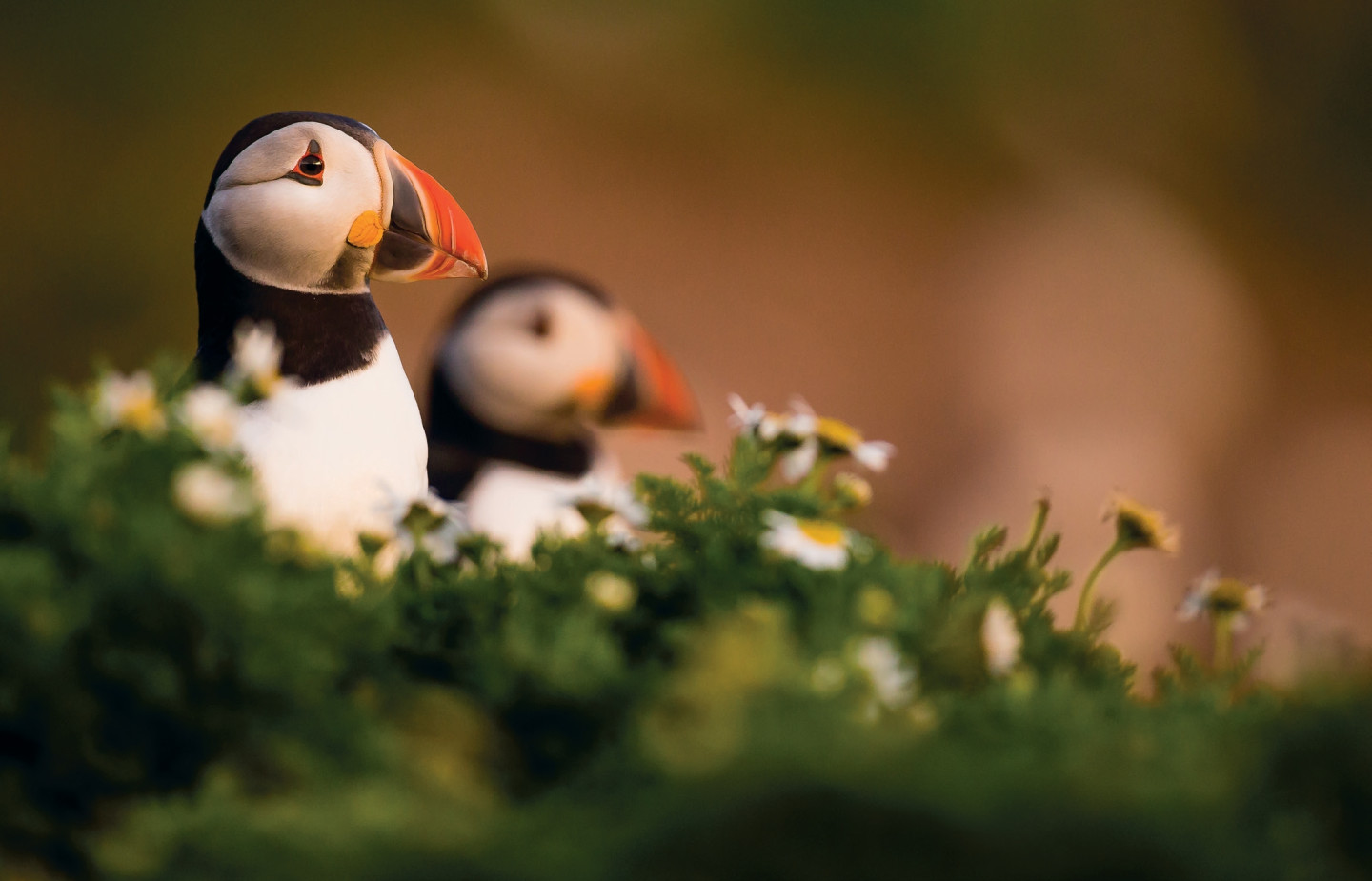
Many of these youngbloods will be three-to-fiveyear-olds, searching for a nesting place and seeking a life-long partner. Once paired, that breeding life could last for decades, so careful courtship and finicky house hunting could pay future dividends. That’s part of how immatures can add huge interest when they come ashore in June and July.
Picture the scene: an immature couple has decided to go walkabout on part of a puffin-thronged slope. They move quickly, trying to socially distance from adults standing outside burrows, in case of threat or attack. An apparently unoccupied hole is different. They pause, look around, and the male (slightly bigger than his likely mate) descends to the darkness. A few seconds later, he peeks out, trying to coax the female to explore. She does so, and for a while, both are lost to view. When they emerge, they look along the slope, then resume the search. Maybe the next hole – or a site where they could dig one – will better fit their needs. Watching behaviour like this can be one of the many pleasures of visiting a puffin colony. The challenge, of course, is that puffins don’t spread their brilliance equally around our coasts. Much of the mainland fringe of Scotland and most of the islands have no puffinries at all. So how - and where - can you increase your chances of seeing a Scottish puffinry in full whirl, fish carriers and all?
Remember the seasonal timing, for starters, and block-in some potential calendar dates in late June or July. Then choose a colony that you might have a realistic chance of reaching. Maybe one day you’ll get to St Kilda, but there are colonies elsewhere where the puffins can be watched more readily than on the dizzying slopes of those ultimate Hebridean outliers.
The Isle of May, mentioned already and sitting where the Firth of Forth meets the North Sea, has regular day-trip sailings from Anstruther (once current restrictions relax), allowing a few hours ashore. On the north mainland, a walk to where Dunnet Head or Strathy Point juts into the tiderips of the Pentland Firth could take you to where some Caithness-breeding puffins live. On Shetland, the puffins at Sumburgh Head in the south and Hermaness at the northern tip of the group throng cliff edges and can be very relaxed about people nearby.
The same applies to the modest colony atop the Great Stack of Handa, near Scourie in Sutherland, and to the puffins on Lunga – largest of the Treshnish Islands, off the west side of Mull. Boat trips ply from Ulva and Tobermory to here. Visitors can often enjoy excellent viewing, including by stretching out on the turf by a well-used path and making eye-to-eye contact with puffins at their own height.
These descriptions reveal something else about puffin watching the world over. Like many of the best things in life, it takes time, effort and a bit of luck to gain the prize. Often, you’ll need to plan well ahead, such as for a trip to an uninhabited island or a walk to one of the few mainland colonies. Weather might scupper the schedule, and once at the colony, you could be there on a day when many of the puffins have decided they’re better off out at sea, chasing glistening shoals of prey, than socialising ashore.
But on days when plans have come together, seas have given safe passage and the puffins have made landfall in force, the experience can be superb. Above, the flocks wheel and turn, dipping low over the land then rising up and back over the inshore, where many other birds are swimming. Ranks of puffins are standing ashore, ranged along different levels of the slopes. On rocks and tussocks, groups are loafing, sleeping and eyeing-up their neighbours.
A bird lands, its beak brimful with silver-scaled sandeels, then scampers underground to feed a cheeping puffling. There’s a flicker of dark wings, a sough of salted breeze and a dappling of colour along this seabird-blessed slice of Scotland’s wild edge. The puffins are back.
WRITER // Kenny Taylor is a writer, editor, naturalist and musician who communicates through different media. This includes magazines such as BBC Wildlife and Northwords Now, scripts and interviews for TV, radio and social media and live performances. kennytaylor.info Twitter: @KennyWildNorth
PHOTOGRAPHY // Kevin is a multi-award-winning wildlife photographer, tour leader, and photographic guide with a passion for UK wildlife. Kevin was last year a category runner up in Nature Photographer of The Year. kevinmorgans.com Instagram: @kevmorgans
Promoted Post
The Scullery
Tucked away in the heart of the Yarrow Valley, The Scullery is a one-bedroom boutique hideaway, eloquently designed for comfort, calm, and connection. Whether you’re escaping the city or craving a countryside reset, this is your space to slow down and just be.
-listable-carousel-1769292770.jpg)






 Sign in with Google
 Sign in with Email