Roads Less Travelled
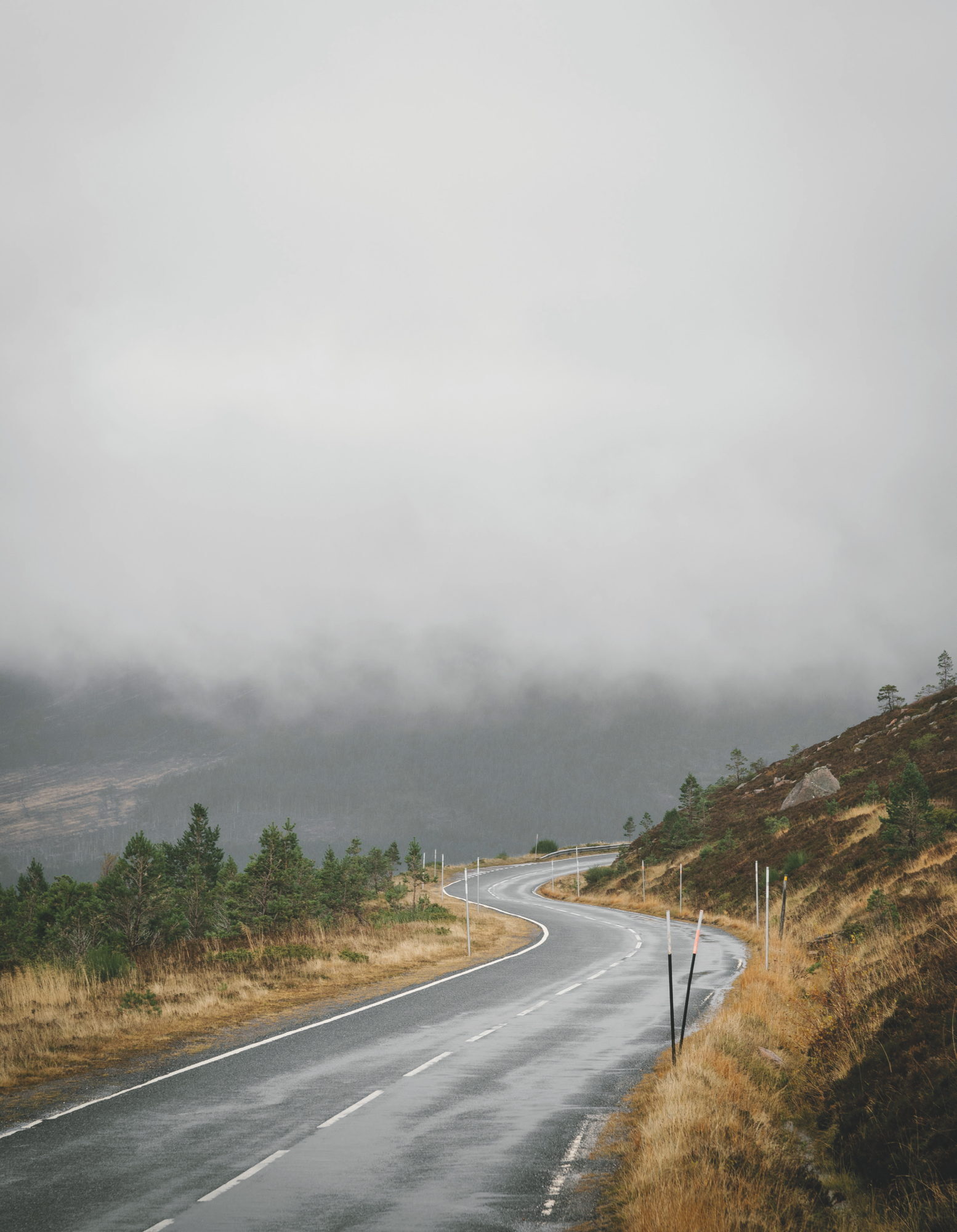
For a number of years I made an occasional television series for BBC Scotland called Roads Less Travelled, a passing nod to the American poet Robert Frost who once wrote, “Two roads diverged in a wood, and I— I took the one less traveled by...”
-full-1749030165.jpg)
My less travelled roads took me and my little red campervan all around Scotland discovering extraordinary places and meeting a host of fascinating people, each with their own unique stories to tell. Every journey was a voyage of discovery but what has remained in my memory is how amazingly diverse Scotland is. Diverse in culture, diverse in history and, in particular, diverse in landscape.
Compare, if you will, the rolling hills of the Borders with the Torridonian giants of Wester Ross, or the high and rounded Arctic slopes of the Cairngorms with the jagged and pointed ridges of the Skye Cuillin. Or how about the Flow Country of Sutherland and Caithness, or the marram-grass sand dunes of the Western Isles, or the tumbled hills and rocky bluffs of the Trossachs? And bear in mind that you can travel between these extremes of landscape in less than a day or so.
It’s fascinating to consider how the Gaelic and Norse languages have dominated the place names and culture of the Western seaboard and islands and how Scots language has affected the place names, songs, legends and culture of places as diverse as Banff and Buchan, Fife and Ayrshire. There are many who admire the Gaelic works of Sorley MacLean just as much as the more familiar Scots poems of Robert Burns.
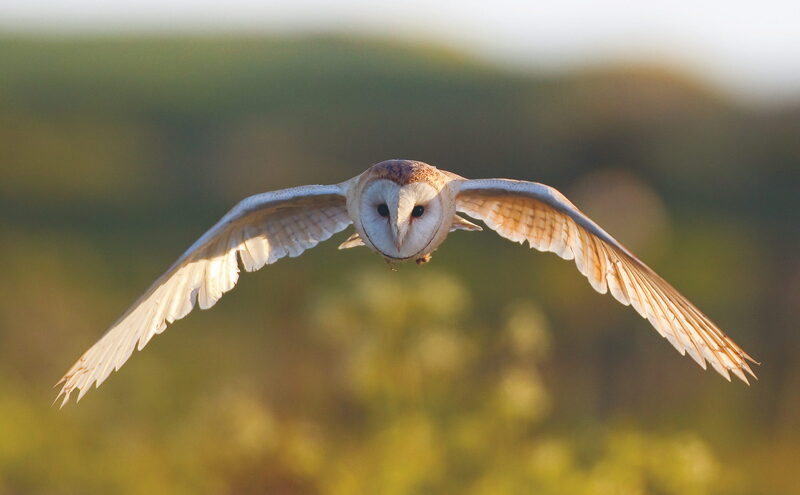
Making these television programmes convinced me that even in a small and popular country like Scotland (recently voted the most beautiful country in the world by Rough Guides’ readers) there are many hidden corners that are quiet, peaceful and unspoiled, far removed from the madding crowds. Such places often boast a richness in legend and folklore seldom found elsewhere. And, of course, where there are few people you’ll find more wildlife and, if you take the time, you might just experience a curious phenomenon that I refer to as spirit of place.
My wife and I first experienced this in the Scottish Borders at a remote and ruined farm called Riskinhope. We had been walking on the Southern Upland Way, a wonderful alternative to the busy and over-subscribed West Highland Way, and we stopped for our flask and sandwiches by the broken gable walls of this old ruin. As we sat there cocooned in our own thoughts, we were both overcome by a sense of timelessness, as though the time barrier between our world and bygone times had become wafer-thin.
Despite the dereliction, a spirit of the past was almost tangible; a little spot in the folds of the hills where people were born and died, laughed and cried, rejoiced and were saddened, worked and played. Could something of human emotion remain tethered to a place like this? The Roman term, genius loci, tends to a belief in guardian angels, or faery folk, or even ghosts, while the Chinese feng shui celebrates something similar. Our own Celtic ancestors had a stronger sense of place than we do today, and crucially, were more aware of its importance. So perhaps it’s unsurprising that such senses still linger in our psyche, awaiting the right conditions to surprise us. Provided, that is, we give them the time and space to surface.

Our Celtic ancestors were also travellers and that itinerant tendency also remains with us. Keen to experience this spirit of place in other areas, and as an alternative to the overcrowded roads of the NC500, we drove south in our campervan a couple of years ago and enjoyed a week on the relatively unknown South of Scotland 300. What a discovery that was; a campervan trip on good, quiet roads, with more ruined castles, abbeys and old churches than you could shake a stick at. We roamed the wader-rich shores of the Solway Firth and visited the impressive Caerlaverock Castle and we learned how Sweetheart Abbey got its name. We climbed the slopes of Criffel, the highest hill in Dumfriesshire, and discovered the pilgrim trail from the Isle of Whithorn to Whithorn Abbey itself with a wee diversion to wonderful Wigtown, Scotland’s internationally recognised book town. We enjoyed the coastal drama of St Ninian’s Cave and travelled as far south as we could in Scotland, to the impressive cliff-girt lighthouse on the Mull of Galloway.
Another week-long ‘alternative’ journey took us down the long peninsula of Kintyre, an area of coastal nooks and crannies as highland and Hebridean as you’d find in Harris or Lewis. We drove along Paul McCartney’s Long and Winding Road, down the lovely east coast of Kintyre and spent time walking to the sensational coastline of the Mull of Kintyre, complete with mists rolling in from the sea.
This is an area chock-full of surprises. Just beyond Campbeltown we crossed over the ‘dorlinn’ at low tide to reach Davaar Island and its series of caves, one of which boasts a painting of the crucifixion ‑ as startling as it was beautiful ‑ before enjoying the serenity of the Cistercian Abbey at Saddell, founded in 1160 by Somerled, Lord of the Isles.
Further north, at Knapdale and in Kilmartin Glen you’ll find more ancient artefacts, cup and saucer ring marks, ancient cairns, chambered cairns and stone circles than anywhere else in the country. You might also like to place your foot in the footsteps of the ancient kings of Scotland who were crowned on the stubby outcrop castle at Dunadd.
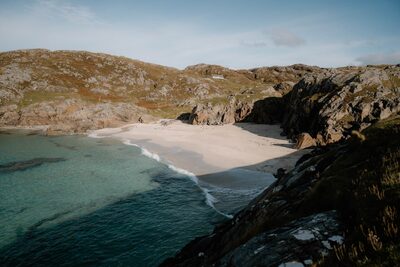
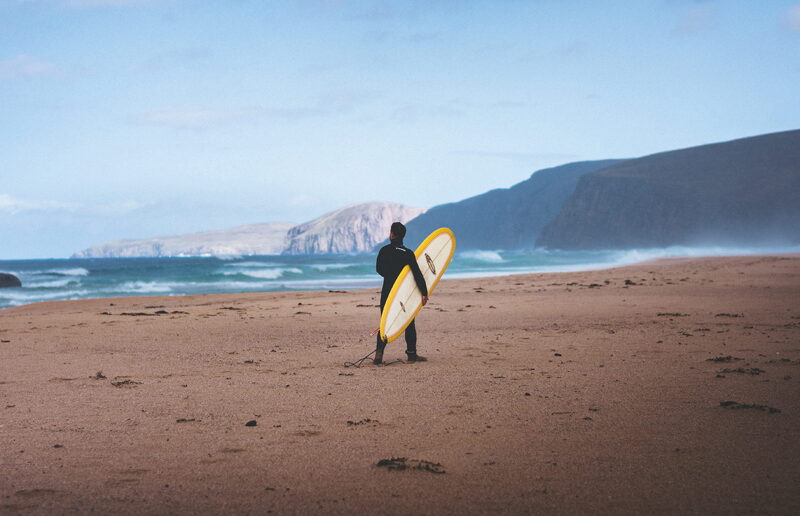
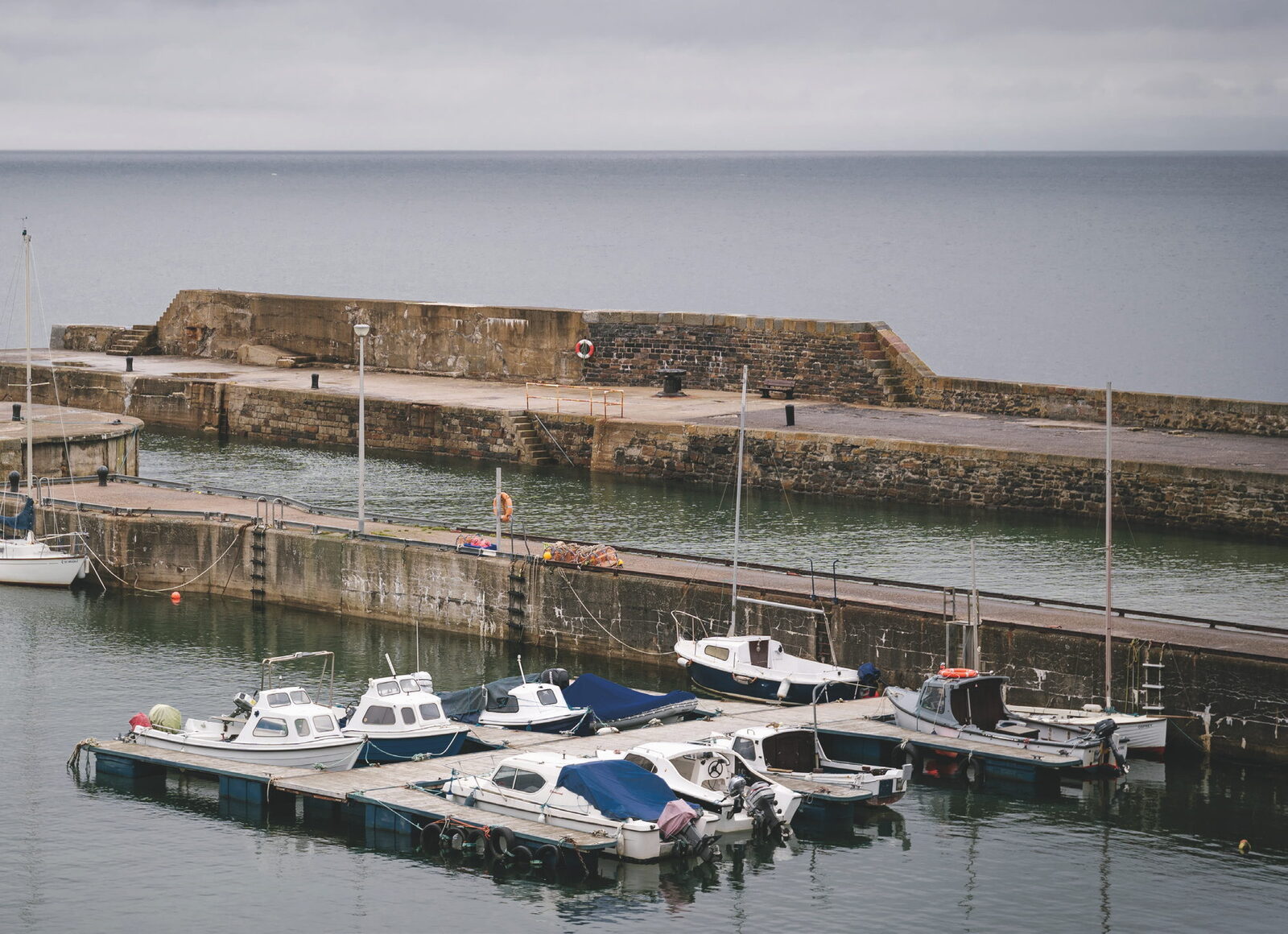
Holidaying in Scotland can occasionally test you, especially if the weather decides not to play ball, but if you want to experience some of the longest hours of sunshine in the UK then head for the coast of Moray. Just east of Inverness this majestic coast boasts cliffs, enormous sandy beaches, pinewoods and the opportunity to watch dolphins and porpoise. Even in the midst of winter’s dreary gloom, seaside villages like Findhorn and Hopeman, Findochty and Cullen are often bathed in golden winter light.
That’s probably why the Moray (try Murray) coast became such a popular holiday destination for Victorian visitors, many of whom described their surprise at the mild climate and early harvests of north-east Scotland.
Figures from the Met Office show that between November and March, you’re likely to experience more sunshine in Moray than in London and suffer less rainfall than the English average.
Kinloss, for example, has an average annual rainfall of 624mm – compare that to Eastbourne on the south coast of the UK with 790mm of rain. While not quite the Malaga of the North, such promise tempts walkers to the Moray Coastal Trail, one of Scotland’s best kept secrets. With its 44 miles/70 km of beach walking, coastal paths, quiet roads and old railways and its views from coves, beaches and skerries across the vastness of the Moray Firth towards the hills of Sutherland, the Moray Coast Trail, between Cullen and Forres, is one of Scotland’s best, if least known, walking routes.
Scotland, of course, has long been a destination for adventure seekers, climbers, mountaineers, skiers, paragliders, canoeists and other adrenaline junkies, but an increasing number of people are seeking something less thrill-and-rush. Slow adventure is about slowing down, immersing yourself in a place, in its traditions and community. It’s about surrendering to the forces of nature as you reflect, reconnect and come closer to the natural world. It is, in many ways, a state of mindfulness brought on by time and passage, moving through a landscape at a pace and in a way that allows you to ‘connect’ with that landscape and everything in it.


As well as being intended as something of an antidote to the adrenaline seeking tourism that exists today, slow adventure is also a counter to the road-trip experiences like the NC500, where drivers arrive in popular spots, take a quick selfie, and hasten off to the next ‘bucket list’ destination. Slow adventure tempts you into a deeper game, travelling through landscapes and experiencing all their time frames and their seasons, immersing yourself in their culture and history. It gives you the time to read the small print of the landscapes you pass through and such immersion also reminds you of the concerns and needs of local residents, both human and wildlife, and teaches you how to walk softly in the wild and fragile places that enrich this wonderful country of ours.
Needless to say, just as the fast-paced, high-adrenaline adventure market has been packaged and commercialised to appeal to a certain sector of the outdoor market, so the concept of slow adventure has also proven to be highly marketable. Just as the Norwegian word ‘Hygge’ and the Scots word ‘Coorie’ have been used to describe some kind of cosy contentment, so ‘slow adventure’ has been adopted by a number of outdoor activity providers to suggest a relaxed ‘return to the womb’ kind of experience. I have to confess I’m slightly uncomfortable with the commercial emphasis of slow adventure but there is absolutely no reason why the concept of slowing down can’t be adopted by individuals. Some of us have been practising its core values for years.
As I get older I’ve become more and more attracted to these slower ways of exploring. I no longer find the summit cairn the priority on hill-walking trips and I like the idea of slowing down the journey. I’m attracted to the idea of travelling through a landscape and experiencing all its time frames and its seasons, immersing myself in its culture and history, but if I’m being truly honest I suspect it’s growing older that has slowed me down. I’m sure many readers will concur with that so I wonder if slow adventure will appeal to younger generations, to those with a surplus of energy, ambition and boldness? Only time will tell. If not, Scotland can offer plenty of thrill-seeking adventure. It’s as though the country was made for it.
Please ensure you follow government guidelines for where you live and respect the landscapes and people around you.
If in Scotland, follow the Outdoor Access Code.
WRITER // Cameron McNeish is an award -winning writer and television presenter and is an Honorary Fellow of the Royal Scottish Geographical Society.
cameronmcneish.wixsite.com/cameronmcneish
Instagram: @mcneishcameron
PHOTOGRAPHY // Murray Orr is a Scottish photographer and videographer based in Edinburgh.
murrayorr.com
Instagram: @murrayorr
Promoted Post
Newhall Mains
Newhall Mains on the Black Isle offers cottages and suites in restored farm buildings, plus a restaurant and bar. It is well placed for Cromarty, Fortrose and Chanonry Point, with beaches and coastal walks close by.


Sign in with Google
Sign in with Email