
People of the Past who Shaped Scotland Today
Scotland’s history is often viewed through dramatic events and iconic locations. From the crumbling ruins of castles and the remnants of cathedrals, to battlefields and standing stones, Scotland’s built heritage is synonymous with the watershed moments that rocked the centuries. However, at the centre of this, we find people. There is no Scottish history without people. It was people who decided the course of a kingdom, who influenced religious reform, who made unthinkable sacrifices, who achieved great victories and suffered terrible losses. To understand and appreciate Scotland’s history a little better, let us turn to the people.
-full-1745005146.jpg)
Queen/Saint Margaret
In 1070, Malcolm III married Margaret, the refugee princessof Wessex. She would become one of the most importantfemale figures from Scottish history.
Margaret was the daughter of a claimant to the Englishthrone, Edward the Exile, and was born and raised inHungary during her father’s exile. Although her familyreturned to England in 1057, they were quickly forced toflee to the mercy of Malcolm III of Scotland with the arrivalof the Norman Conquest in 1066. Margaret and Malcolmmarried four years later, forming an incredibly successfulunion in which Malcolm entrusted considerable royalpower to his queen. Of the couple’s eight children, threewould become kings of Scots, one a French countess, andone the Queen consort to Henry I of England.
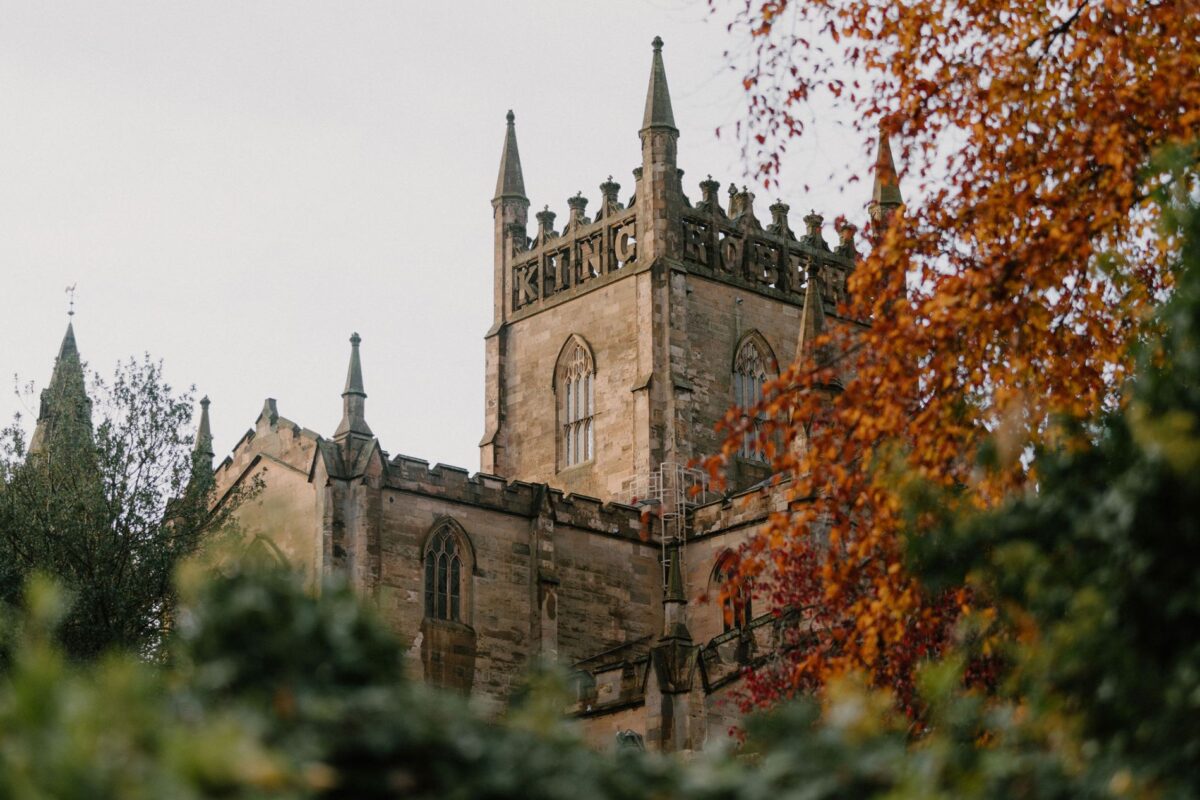
Margaret is the only Scottish royal to have been canonisedas a saint, and the political power which she wielded inher lifetime is still felt in Scotland today. Renowned for hercharity and influence over religious reform, her most famousacts are the establishment of a ferry crossing for pilgrimsover the River Forth (Queensferry), and the founding of aBenedictine monastery at Dunfermline. Her son, David I,elevated this monastery to royal abbey status in 1128. Hertomb and shrine lay in Dunfermline Abbey until they weredestroyed during the Scottish Reformation of 1560.
-full-1745005146.jpg)
Dunfermline Abbey
Christina Bruce
Women in medieval society are often misunderstood as being wholly on the sidelines of politics and warfare. Christina Bruce, sister to Robert the Bruce, proves that this was not the case.
In addition to being kept as a political prisoner in England for eight years, Christina was a powerful ally for her brother’s royal dynasty. Robert appointed her as keeper of Kildrummy Castle in the 1320s, a mighty fortress in the earldom of Mar. In 1335, Christina defended this very castle against siege by David Strathbogie, a powerful nobleman who had set out to expand his authority in northern Scotland.
As keeper of Kildrummy, Christina would have managed the defence with her garrison, utilising the natural and built fortifications to successfully defend the mighty fortress. She was able to hold out against the siege in time for her husband’s forces to arrive and challenge Strathbogie in battle, where he was defeated. The siege and battle were crucial victories that turned the tide of the conflict for the Bruce Scots
-full-1745005147.jpg)
Kildrummy Castle
Margaret & Ellen More
The 16th-century royal court of James IV of Scotland was a vivid display of Renaissance glory. His court was considerably cosmopolitan, with courtiers, minstrels, and servants hailing from a number of different countries and regions. James’ court became home to a number of individuals from Africa or of African descent, who played a variety of roles that ranged in political importance. This included Margaret and Ellen More.
Margaret and Ellen arrived in Edinburgh in 1504 after being ‘rescued’ from a Portuguese trading vessel. Their presence on this Portuguese ship was likely enslavement; we have no information of where they came from, or indeed what their birth names were. The Scottish ‘rescue’ of the two women was more accurately the seizing of goods, with the women presenting them as gifts, not people, to James IV.
However, Margaret and Ellen quickly became important figures in James’ court by participating in pageantry and becoming part of the household of his queen, Margaret Tudor. They attended the queen at Edinburgh Castle and Linlithgow Palace, two key royal residences for the Stewart monarchy, with Margaret More present at the birth of the future James V of Scotland. The two women were paid wages which suggests their freedom, but we should remember that they were not in Scotland by choice.
Margaret and Ellen’s presence provides evidence about the interests of Scottish royalty in the 16th century, but importantly sheds light on the historical experiences of people of colour in Scottish history.
(1)-full-1745005147.jpg)
The Vennel Steps
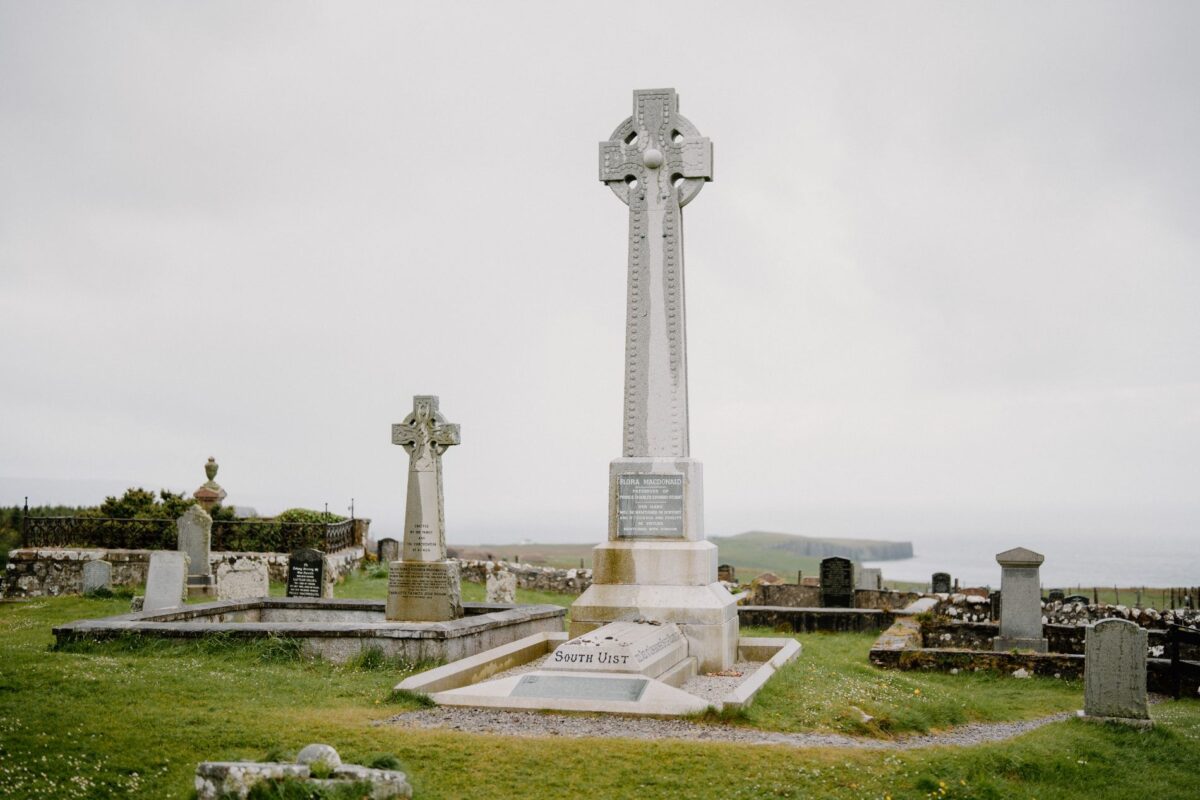
Flora MacDonald
On April 16th 1746, the Jacobites were brutally defeated at the Battle of Culloden by British government forces. Their leader, Bonnie Prince Charlie, fled for his life to Benbecula in the Outer Hebrides. Once there, Charles’ movements were constrained as the MacDonalds who controlled this region did not support the Jacobite cause. The Prince was trapped, until he met Flora MacDonald.
In June 1746, Flora happened to be on Benbecula when Charles and his bedraggled supporters took refuge there. One of the Prince’s companions was a distant relation to Flora, and begged her for help. She faced the prospect of rebelling against her family and community to aid a disgraced and defeated Prince.
Flora bravely chose to help Charles, acquiring passage for herself and eight companions to Skye. In late June 1746, she sailed over the sea to Skye with Charles disguised as her maid, nicknamed Betty Burke. After arriving on Skye on June 27th, Charles then fled to Raasay before crossing to the mainland and eventually fleeing to France. He and Flora would never meet again.
Two weeks after her courageous journey, Flora was arrested and imprisoned in the Tower of London for almost a year. She was released in June 1747 after gaining the sympathy and support of members of the royal court. Flora MacDonald returned to Skye, having played a crucial and unforgettable part during one of the most defining chapters of Scottish history.
-full-1745005147.jpg)
Flora MacDonald Grave
Andrew de Moray
Andrew de Moray was a military leader of the Scottish resistance in 1297, during the Scottish Wars of Independence. His premature death shortly after the Battle of Stirling Bridge in September 1297 has led him being forgotten or overshadowed by other leaders, despite his invaluable contribution to Scottish history.
The de Moray family held considerable power in northern Scotland, including Moray and the Black Isle. Shortly after the outbreak of war with England in 1296, Andrew and his father were captured and imprisoned in England. Andrew escaped and returned to his home in the north where in 1297, he raised his standard at his family home of Avoch Castle and ignited a rebellion.
The rebels tried to seize Urquhart Castle, a major fortification on the banks of Loch Ness which guaranteed control of the Great Glen. Despite failing to take Urquhart, they were undeterred and swept across Moray, capturing castles and ousting leaders of the English administration. Andrew posed such a threat that Edward I of England attempted to negotiate with him twice. Andrew refused to comply, and joined forces with William Wallace at Dundee before travelling to Stirling to meet the English at the Battle of Stirling Bridge.
Arthur Roberts
In 1917, twenty-year-old Arthur Roberts from Glasgow volunteered to serve his country in the Great War. Within months, he became embroiled in the horrific conditions and violence of the Battle of Passchendaele, a months-long military offensive that claimed the lives of over 450,000 soldiers.
Arthur’s experience was not dissimilar to many men who fought in World War I. However, despite his service for his country, he was forgotten due to the colour of his skin. Arthur was the son of an Afro-Caribbean ship steward named David Roberts, and was raised by the River Clyde in Glasgow in the heart of the shipbuilding industry. The experiences of many people of colour who fought in the British Armed Forces during the 20th century have been neglected, leaving behind men like Arthur, who made immense sacrifices for their country. Arthur’s name and contributions to Scottish history gradually faded, and he died in a care home in Glasgow in 1982 aged 84.
That was until 2004, when a collection of his diaries, drawings, letters, and photographs from 1917 were discovered in the attic of a house in Glasgow. Arthur’s deeply expressive and informed accounts of fighting in WWI are absolutely invaluable in expanding our understanding and recognition of the role people of colour played during this conflict. Moreover, these accounts revived Arthur’s spirit and memory, and we can now remember him for fighting in and surviving WWI.
Promoted Post
Issue 12 is now shipping worldwide from Scotland.
Issue 12 is now shipping worldwide from Scotland.
-listable-carousel-1720035176.jpg)






 Sign in with Google
 Sign in with Email