
Fields of Gold - Scotland’s Ancient Grains
Offering a resilient, nutrient-rich alternative to their modern counterparts, ancient grains areenjoying a revival in Scotland, with benefits for both the natural landscape and we humans,discovers Emily Rose Mawson.
-full-1744832228.jpg)
“You could drive home sitting on one of my loavesand it would spring back,” says the Isle of Arran-based baker George Grassie. “I’m not exaggerating,”he grins, when he sees my disbelieving expression.To prove the point, he pushes his fist, with someforce, into one of the day’s sourdough loaves,fresh from the oven in Blackwater Bakehouse,Blackwaterfoot. Sure enough, it slowly reflates.
This resilience is – alongside hours of proving and physical kneading – thanks to George’s use of flour from ancient, or heritage, wheats. These are defined by the Whole Grains Council as “grains that are largely unchanged over the last several hundred years”. And they really are hardy, says George.
He explains that whereas modern wheat grows to a maximum height of 1.2 metres – not far above mould and pests, and therefore requiring pesticides and fungicides to survive – so-called “tall wheats”, the ancient kind, can exceed 1.7 metres and thrive naturally.
Ancient grains were “the grasses grown by Bronze Age farmers, then later through the Middle Ages”, George continues. Thanks to their structure, ancient wheats have a more valuable nutritional profile than modern common wheats. “Some researchers think you could survive indefinitely on nothing but these ancient grains, as long as they’re fermented and baked into loaves, because they contain so many vitamins, proteins, minerals and iron,” says George.
As well as wheat, ancient grains fill a Tolkien-ish list of names – the likes of einkorn, emmer (farro) and spelt, as well as, according to the Whole Grains Council, heirloom varieties of black barley, red, black and wild rice, millet, quinoa, amaranth and buckwheat.
Another is bere barley, the ancient form of the grain grown on northern Scottish islands with low-fertility soils since the early Iron Age. The dominant staple crop in Orkney and Shetland until the late 19th century thanks to its ability to withstand challenging northern conditions – read: high winds, salt spray and low inputs – it gradually disappeared as modern species took hold.
But lately, although only one mill remains dedicated to grinding bere – Barony Mill in Birsay, Orkney – it’s enjoying a revival. In 2002, the market-led research centre Agronomy Institute at Orkney College UHI started a research and development programme with bere, going on to launch its first commercial collaboration in 2004 with Isle of Arran Distillers to develop a specialist bere whisky. It has also supplied bere grains to the CAMRA award-winning Orkney brewery Swannay, which malts it for its Scapa Bere beer, and has worked with the Islay-based whisky distillery Bruichladdich, among others.
In Orkney, bere is marketed as a typical local product, and it has forged its way back into traditional products like beremeal biscuits, beremeal oatcakes and bere bannock. Meanwhile, historic varieties of wheat have been explored in St Monans, Fife, by Scotland the Bread, which in 2017 launched its first three flours milled from varieties of wheat that were common in Scotland in the 19th century (Rouge d’Ecosse, Golden Drop and Hunter’s). It has since been selecting and developing bread grains that grow well in Scottish soils, can nourish consumers and provide local farmers with a fair return.
Another is bere barley, the ancient form of the grain grown on northern Scottish islands with low-fertility soils since the early Iron Age. The dominant staple crop in Orkney and Shetland until the late 19th century thanks to its ability towithstand challenging northern conditions – read:high winds, salt spray and low inputs – it graduallydisappeared as modern species took hold.
But lately, although only one mill remains dedicatedto grinding bere – Barony Mill in Birsay, Orkney – it’senjoying a revival. In 2002, the market-led researchcentre Agronomy Institute at Orkney College UHIstarted a research and development programmewith bere, going on to launch its first commercialcollaboration in 2004 with Isle of Arran Distillers todevelop a specialist bere whisky. It has also suppliedbere grains to the CAMRA award-winning Orkneybrewery Swannay, which malts it for its Scapa Berebeer, and has worked with the Islay-based whiskydistillery Bruichladdich, among others.
In Orkney, bere is marketed as a typical local product, and it has forged its way back into traditional products like beremeal biscuits, beremeal oatcakes and bere bannock. Meanwhile, historic varieties of wheat have been explored inSt Monans, Fife, by Scotland the Bread, which in2017 launched its first three flours milled fromvarieties of wheat that were common in Scotlandin the 19th century (Rouge d’Ecosse, GoldenDrop and Hunter’s). It has since been selecting anddeveloping bread grains that grow well in Scottishsoils, can nourish consumers and provide localfarmers with a fair return.
-full-1744832335.jpg)
WHERE TO TRY ANCIENT GRAINS
In a dram
A number of distilleries across Scotland workwith bere barley. Try Bruichladdich BereBarley 2013 from Bruichladdich Distilleryon Islay, which is matured in a combinationof first-fill bourbon barrels and second-fillPauillac wine casks, and balances the maltysweetness of bere barley with oak, greenfruits and gingerbread.
With your soup
Look for artisan bakeries baking bread usingflours from ancient grains – visit Scotlandthe Bread’s website for a list of bakeriesthat work with its organic flours made withheritage wheat and rye from Balcaskie Estatein the East Neuk of Fife. For beremeal, BaronyMill’s online shop has a good selection
his renewed interest in ancient grains can be attributed to a number of factors, according to Landrace Cereal Researcher Maria Scholten. “Niche markets with a premium price such as in the whisky industry,” she says, “or culinary markets with distinctive tastes for heritage varieties.” Then there are health interests that mean flours derived from ancient grains are more attractive due to their higher concentrations of micronutrients and other biochemical compounds.
Nowadays, ancient grains are protected by legal designation. As Maria explains, “modern plant breeding aims at uniformity, resulting in varieties that have passed the legal requirement of DUS (distinctness, uniformity and stability)”. This distinction, she says, makes a legal difference between ancient and modern varieties: “Some ancient varieties, such as bere barley, can be marketed without having to pass the uniformity mark, through a special legal status called ‘Conservation Variety’ that aims to preserve the genetic diversity of ancient grains from genetic erosion – or extinction.”
One way to help preserve bere barley is by growing it at home. “By growing bere barley in your garden, you have a living connection to the culture and traditions of the past,” says Finlay Keiller of Seeds of Scotland near Inverness, which sells ancient grains to the home gardener. “Our particular interest in growing and distributing bere barley is mainly because it has been such an important part of the history of agriculture in Scotland,” adds Finlay, who co-founded the company specialising in Scottish-grown, open-pollinated seeds in 2023. And looking back into history, the way grain was grown was different, he says. “There wasn't the reliance on chemical inputs that is associated with the growing of modern varieties. As a result, there was a lot more biodiversity in the fields.” Whereas “domesticated modern grains do not survive so well in the low-input, biodiverse fields of the past”, according to Finlay, ancient grains are “locally adapted”. Essentially, by growing them you are supporting biodiversity.
So I’m no longer surprised that loaves made with flour from ancient grains are so tough. Perhaps cushion material after all!
words // Emily Rose Mawson -photography // Simon Hird
Promoted Post
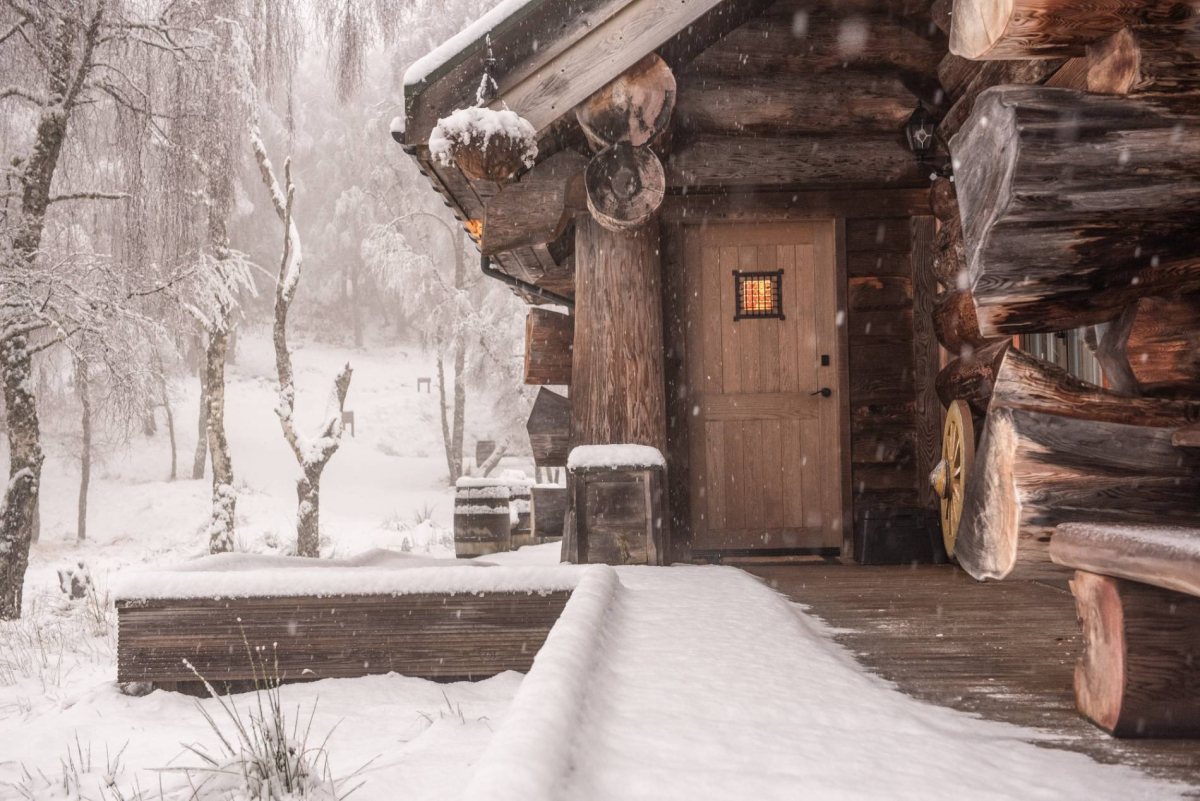
Eagle Brae
Escape to Eagle Brae, a secluded collection of Highland log cabins near Beauly. Handcrafted cedar, big skies, and deer on the hillside, with a fireside welcome that makes it easy to slow down.






 Sign in with Google
 Sign in with Email