
Conor Gault and the last of Scotland’s lighthouse keepers
Exploring the practice of lighthouse keeping at the edges of Scotland, photographer Conor Gault’s latest project honours a nevermore way of life. To the work, Conor brings a very personal connection: his Granda, Bill Gault, the last of the Scottish Lighthouse Keepers.
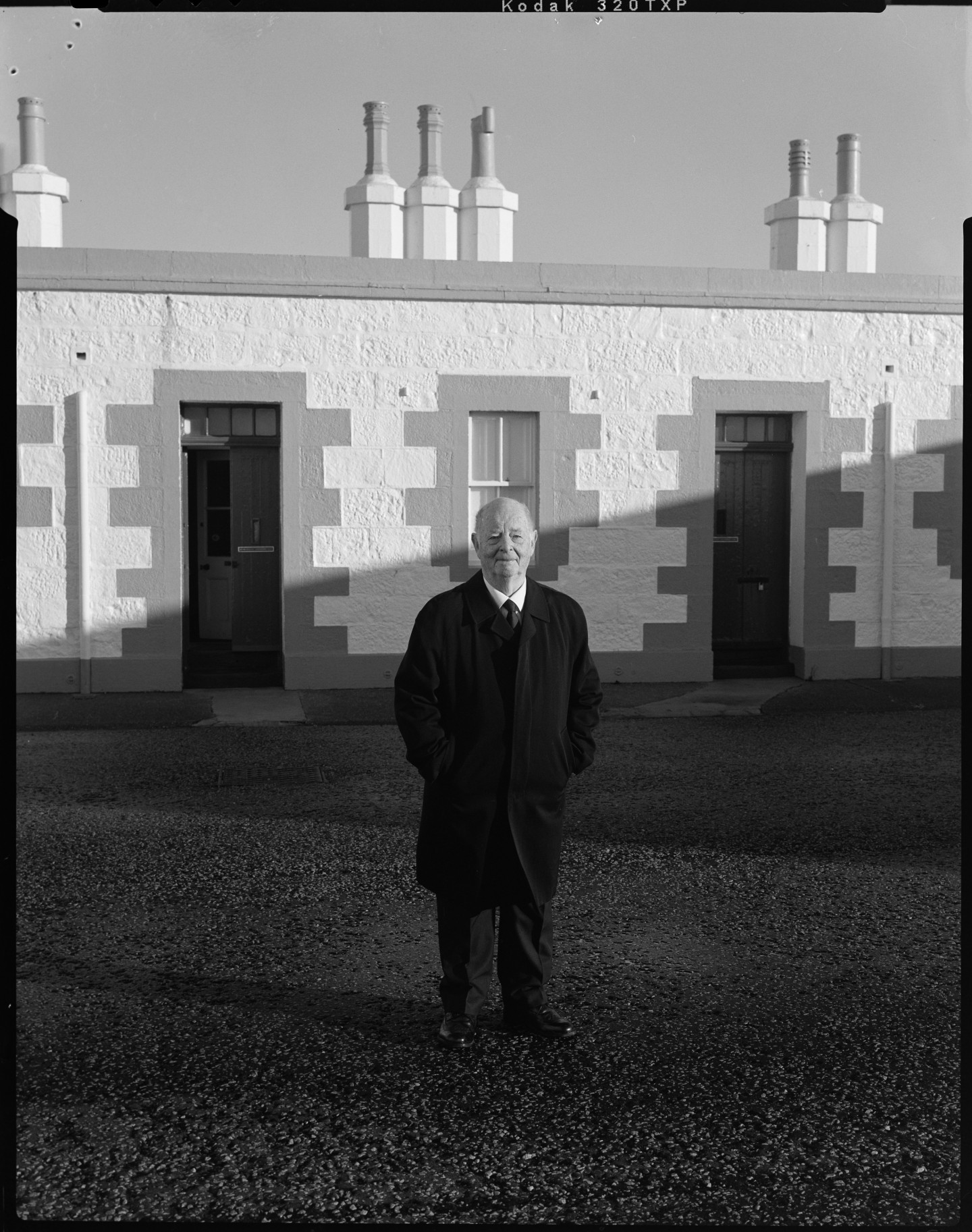
When photographer Conor Gault visited Ardnamurchan Lighthouse, the weather was wild. Monstrous white-capped breakers slammed the peninsula – the westernmost point on the British mainland, and the wind blew thick and dark, smearing from view the next nearest landmasses, the Hebridean islands of Skye, Muck, Eigg and Rum.
Conor, there to research a photography project remembering the lives of Scottish lighthouse keepers, was the only person for miles around. But what stood out were the details in the 35-metre tower and its keepers’ cottages: staircases cut into rock, well-worn door handles and windows opened by many a hand.
“I imagined my Dad and Uncle running up and down the stairs, playing games,” he says. “I got a real feel for how it must have felt for my Granda and his children to live out in such a barren place with nothing and no one around.”
Conor’s connection to the now-extinct practice of lighthouse keeping, you see, is personal. His Granda, Bill Gault, who was stationed at Ardnamurchan from 1969 to 1972, became the last of Scotland’s lighthouse keepers in 1998, when he turned off the light at Fair Isle South Lighthouse. Automation marked the end of 200 years of around-the-clock duties to keep the light burning, guiding sailors to safety.
Today, Bill is part of a small group of remaining lighthouse keepers. And Conor’s new project tells their story. “I’ve always been interested in my Granda’s career as a lighthouse keeper,” says Conor, who became a freelance photographer in 2018 after studying at Gray’s School of Art in Aberdeen. “When I heard the Museum of Scottish Lighthouses was hosting an event commemorating the 25th anniversary of the automation in 2023, I had to be there to meet and photograph some keepers.
The project, which received support from the Coward Analogue Photography Grant, features captivating portraits of numerous keepers and their families – who Conor says he tracked down with “enormous help” from the Northern Lighthouse Board.
But it’s also about the environment the keepers would have touched and walked through on a day-to-day basis, says Conor. He explains that “photographing details of the lighthouses and areas surrounding them, which the keepers would have interacted with on a daily basis, brings a sort of tactile feel to the project”. It is, adds Conor, an attempt to find “some echoes of the past in the structures themselves”.
These are the details that tell of a lighthouse keeper’s duty. As well as ensuring the light ran smoothly and turned at a regular pace, Conor continues, keepers would be responsible for the general upkeep of the station, performing maintenance tasks, cleaning, and taking weather readings and fog signals.
“One particular challenge, I’ve been told, was getting along with the other keepers,” says Conor. “In shore stations, the keepers could have their families live with them. But in a rock station – such a confined space, where there were always three keepers at any one time – you couldn’t choose who you were stationed with. You had to put up with whatever quirks or habits your colleagues had.”
A tension that was no doubt heightened by a challenging sleep-wake schedule. “They worked a four-hour watch, with eight hours off,” says Conor. And isolation, of course, was part of the arrangement – especially in places like the Flannan Isles, Hyskier and Skerryvore, one of Scotland’s most famous rock tower stations.
Even closer to the mainland, easy access home wasn’t guaranteed. “When my Granda was stationed at Ruvaal lighthouse on Islay, despite being only three or four miles from the nearest town, there was no road to the lighthouse,” explains Conor, “so he had to travel there by boat and was stationed there for a month on and a month off, while my Dad and Uncle stayed in Bowmore.” If the weather wasn’t on their side when it came to relief day, they would be stuck there until the weather changed – which could be weeks at a time.
When the weather did break, however, the keepers found themselves in some of the most beautiful places in the world. “Granda saw orcas, whales and dolphins, and was surrounded by gannets and fulmars. Puffins are a common sight along some of the coastlines he worked and lived at, red deer would feed just over the hill at Ardnamurchan, and sea eagles and golden eagles would make an appearance quite frequently,” says Conor.
Bill Gault
He can still remember attending the closing ceremony on Fair Isle South, when he was just five. “I remember the feeling of travelling to the island on a helicopter, and my kilt socks itching my legs,” he recalls. It was the only time he visited a station with his Granda, other than Kinnaird Head while Bill worked as a tour guide for the Museum of Scottish Lighthouses. Its collection is dedicated to a never-more way of life. One that fascinates and intrigues, and holds strong in memories like this one, of Conor’s: “My Dad remembers Bill Gault living in Stromness on Orkney, and every few days checking in with Granda over the radio while he was posted at Copinsay Lighthouse. He would say, ‘Hello, Dad. Over.’ and they would have a quick conversation before my Granda had to return to his duties.
The Lives of Scotland's Lighthouse Keepers
As captured and remembered by Conor Gault
Bill Gault
Bill was appointed Supernumerary Lighthouse Keeper (SLK) with the Northern Lighthouse Board on 9th November 1966, aged 25. In 1967, he was promoted to Assistant Lighthouse Keeper (ALK), going on to work at more than 16 lighthouses, including Ruvaal, Skerryvore, Copinsay and Buchanness. In 1998, following the automation, he retired as a keeper and went to work as a tour guide at the Museum of Scottish Lighthouses in Fraserburgh.
Conor says: “Granda told me about one of the most memorable experiences in his lighthouse career. It started on 4th January 1993, when at the last minute he was called to Muckle Flugga in the Shetland Isles to provide relief. The weather was particularly bad, with storm force 10 winds, gusting to force 11 at times. He said to the pilot it was not a great day for going to Flugga, but the pilot said they were going to try anyway.
“As they flew, their helicopter was engulfed by white- out snow showers, had to land to wait for better visibility, and, flying at around 500 feet above the sea, was thrown around by the wind. Granda says he saw the Pentland Firth at its worst, with the waves around Stroma rising to 100 feet in height. He thought, ‘if we go down, not only will they never find us – we will be gone in seconds’.
“Earlier in the day, they had seen a news report of an oil tanker likely to ground – and suddenly, there it was beneath them, three quarters submerged, oil gushing out. Finally, they made it to Muckle Flugga and the two keepers who had been on for Christmas and New Year got home to Lerwick. Granda said: ‘Days like this you never forget!’.”
Alan & Jennifer Law
Alan and Jennifer were the only keepers to be married who also worked on separate stations. They met as colleagues at DC Thomson in 1973, after Alan had worked as a ladies’ hairstylist, photographer and cocktail bartender at Gleneagles Hotel. After a short period of illness, Alan found himself looking for work again, responded to an advert in the paper for lighthouse keepers, and the rest is history. Conor says: “While Alan was stationed at Stroma Lighthouse, Jennifer lived at their permanent residency at Holborn Head Lighthouse. It happened to need an attendant keeper and Jennifer eagerly agreed to take up the position.”
David Fraser
In his lighthouse keeping career, which began in December 1973 as SLK with promotion to ALK a year later, David was stationed at St Abbs Head, Inchkeith, Mull of Kintyre, Pladda, Davaar Island and Noss Head. Conor says: “After being in the army, David was resilient, but he soon realised this was an organisation with its own structures. He told me about one particular night, while on the 2 a.m. to 6 a.m. watch, when he felt a bit peckish. After checking all was okay with the light, he went down to the kitchen and made himself a cup of tea and a few slices of toast. The next day, it was noted that some bread was missing. He immediately owned up to his snack during the night, thinking he’d be in trouble for leaving the lightroom during his watch, but the misdemeanour was stealing rations!”
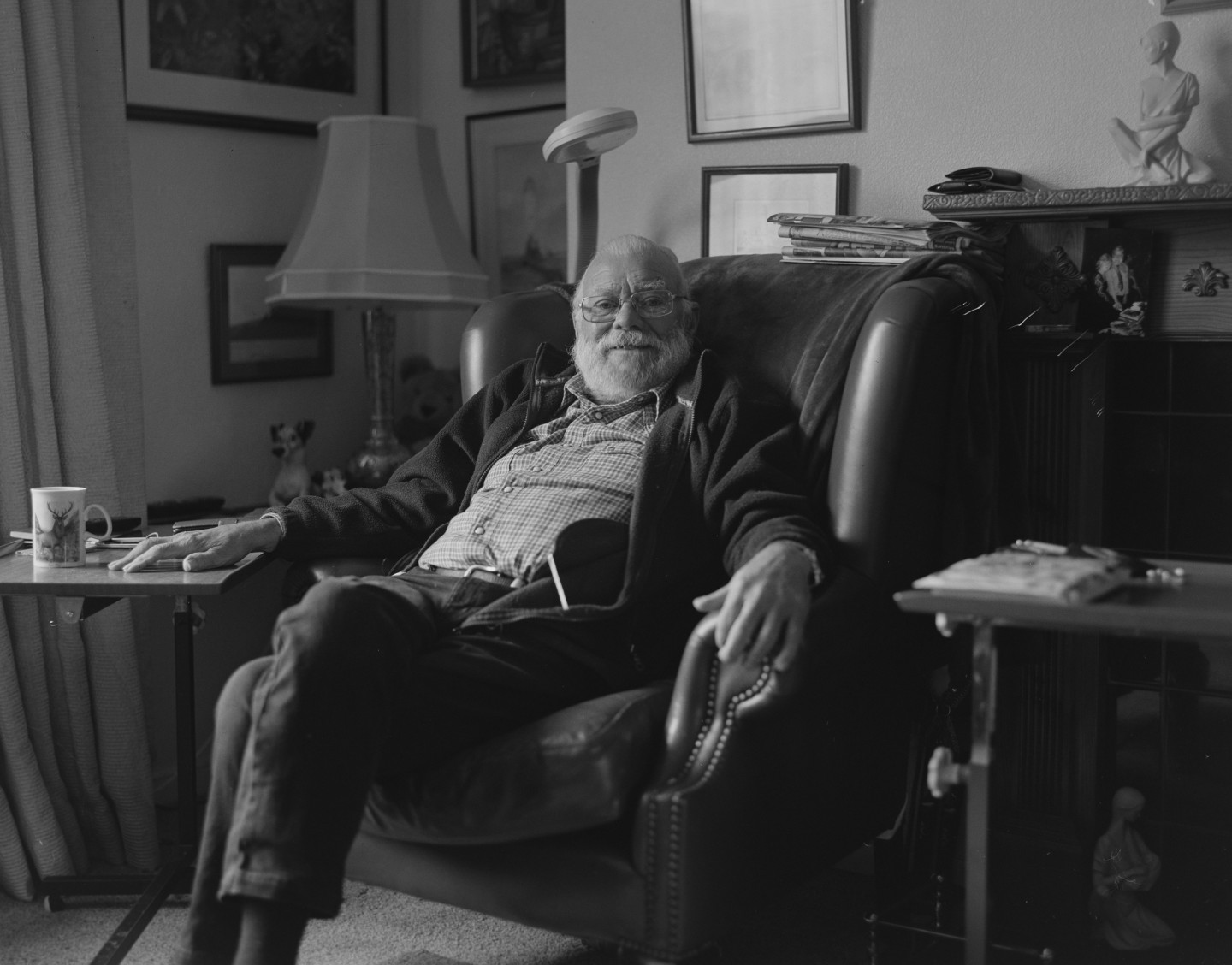
John Boath
John began his career in lighthouse keeping on 7th March 1966, when he was appointed SLK. Later that year, he was promoted to ALK. Conor says: “John and his wife Hazel integrated very well with the local communities while they lived together on shore stations like Stoer Head. When it was time for them to move to a new station, their friends would come out to wave them goodbye as they drove past, phoning the next cottage down the road so that they could come out and wave as well. “When they were leaving Maughold, one keeper and former military man, Richard, who referred to himself as ‘Squadron Leader Scammells’, wasn’t there to see them off. This confused John, but as they drove away, over a small hill they saw him with his dog. He told his dog to sit, stood to attention and saluted John and Hazel as they drove off. I could tell how moved John was by this story.”
Promoted Post
Issue 12 is now shipping worldwide from Scotland.
Issue 12 is now shipping worldwide from Scotland.






 Sign in with Google
 Sign in with Email