
Autumnal Arrangement with author of Slow Seasons Rosie Steer
Capture the essence of autumn and winter by arranging fresh and dried seasonal flowers.

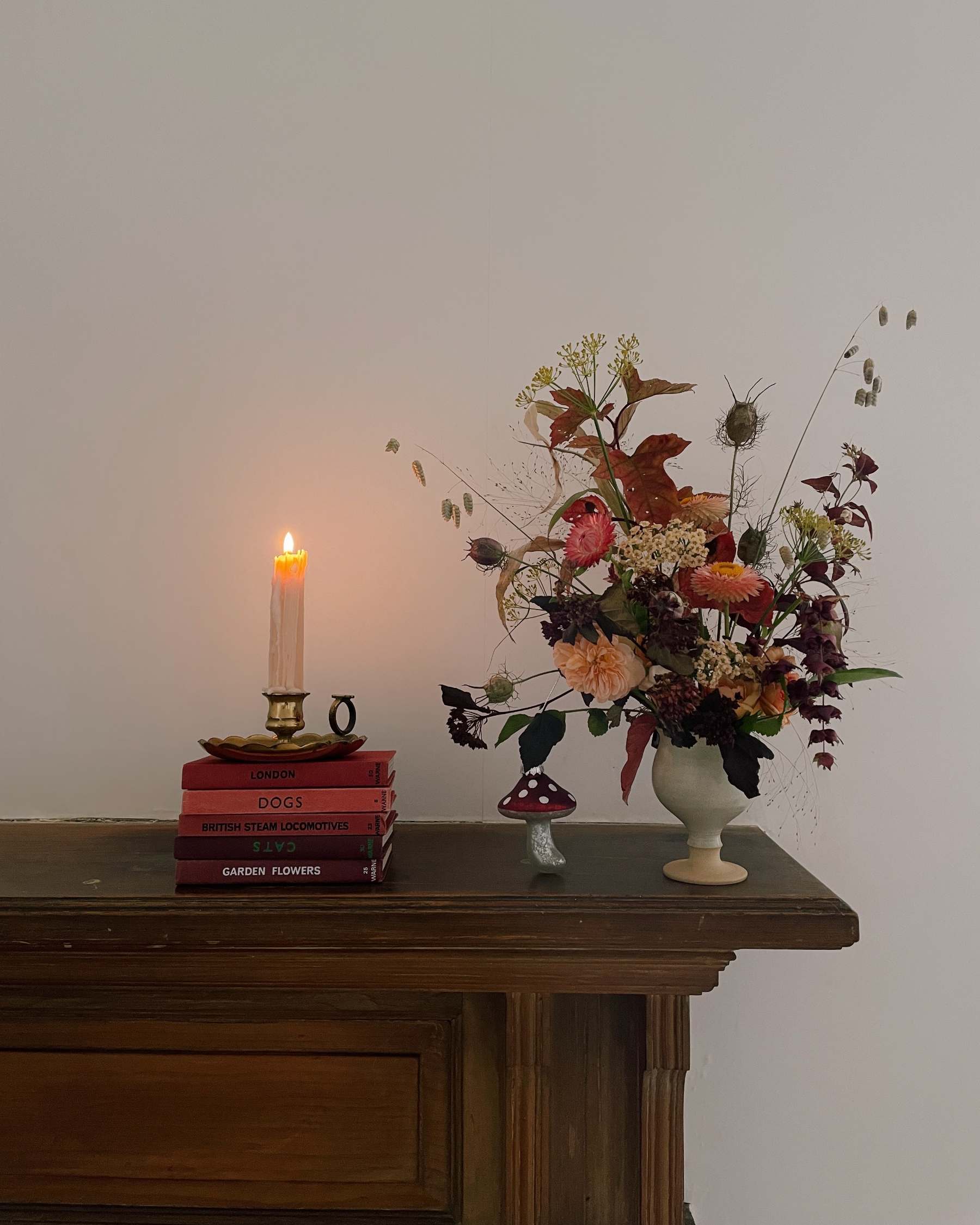
Seasonal flowers
Before the first frosts arrive, the flowers enjoy their final flush, with the last sweet peas, scented roses, daisy-like cosmos and dinnerplate dahlias blooming well into October and even November, depending on the weather. Source them from local florists – you can find one near you via the website Flowers From the Farm. Adding seasonal fruits such as rosehips, brambles, elderberries, crab apples or late vines of tomatoes can give an unexpected element to arrangements that ground them in the season.
How to dry flowers
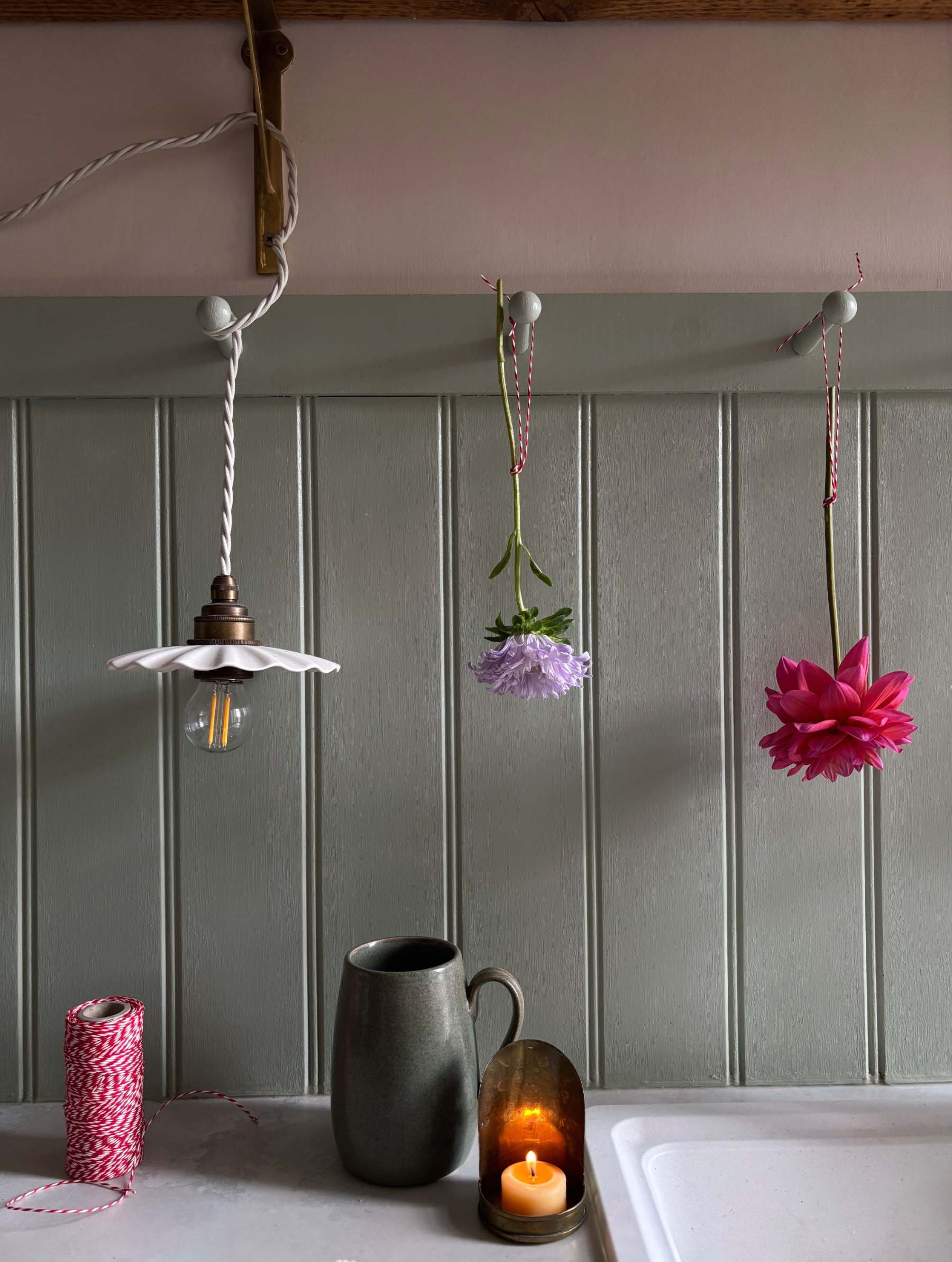
As the growing season winds down, it’s fun to play with a mixture of fresh and dried flowers in a seasonal arrangement to add contrasting texture, such as rusty, dried bracken or honesty seedheads. To dry autumn flowers, experiment by letting nature take its course: leave a few stems – for example, hydrangea – in a vessel with a little water in a cool, preferably dark place to dry out naturally. Alternatively, you can dry flowers by hanging them upside down somewhere dark, dry and well-ventilated.
Arranging your flowers
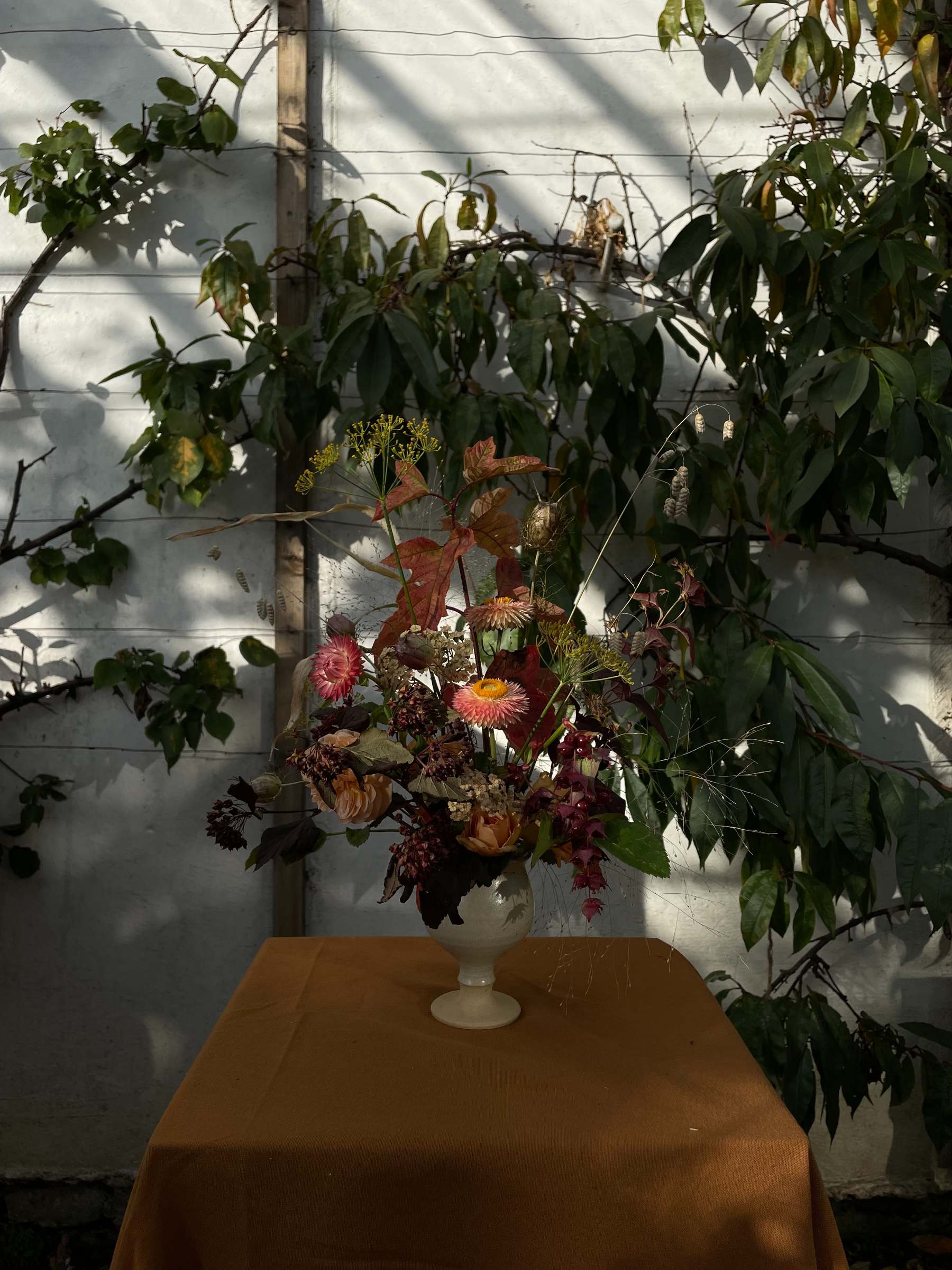
In any arrangement, it is always good to work with one feature or focal flower, two or three secondary stems to complement it, and foliage to fi ll out the arrangement and add texture. Odd numbers of fl owers – one, three, fi ve or seven – look aesthetically pleasing and stop the arrangement from looking too perfect or symmetrical.
First, condition fresh fl owers by cutting their stems on the diagonal so they can take up water easily. Remove any foliage that will sit below the waterline (this will cause them to rot and your arrangement to deteriorate more quickly).
Lay out your stems so that you can see clearly what you’re working with, and consider the kind of design you want to make.
Fill your vessel with a little water.
Start to build your arrangement by placing the thickest stem in the middle of the vessel. Hold it against the vessel to decide the height you want, then trim as necessary.
Add another sturdy stem to the vessel, crossing it with the first.
Continue adding your foliage and berries by criss-crossing them through one another – this will help the fl owers to support themselves. Follow the natural direction that the flowers want to go in, and add stems at different heights.
Step back and look at your arrangement from different angles. Don’t forget to add interest at the rim of your vessel, and ensure there’s enough height. Play around with your stems and don’t be afraid to take flowers out – negative space is also important.
Top up your vessel with more water if necessary. Remember to change it every day or so, and remove any stems that have past their best to prevent the other flowers from decaying.
Words & Photography: Rosie Steer
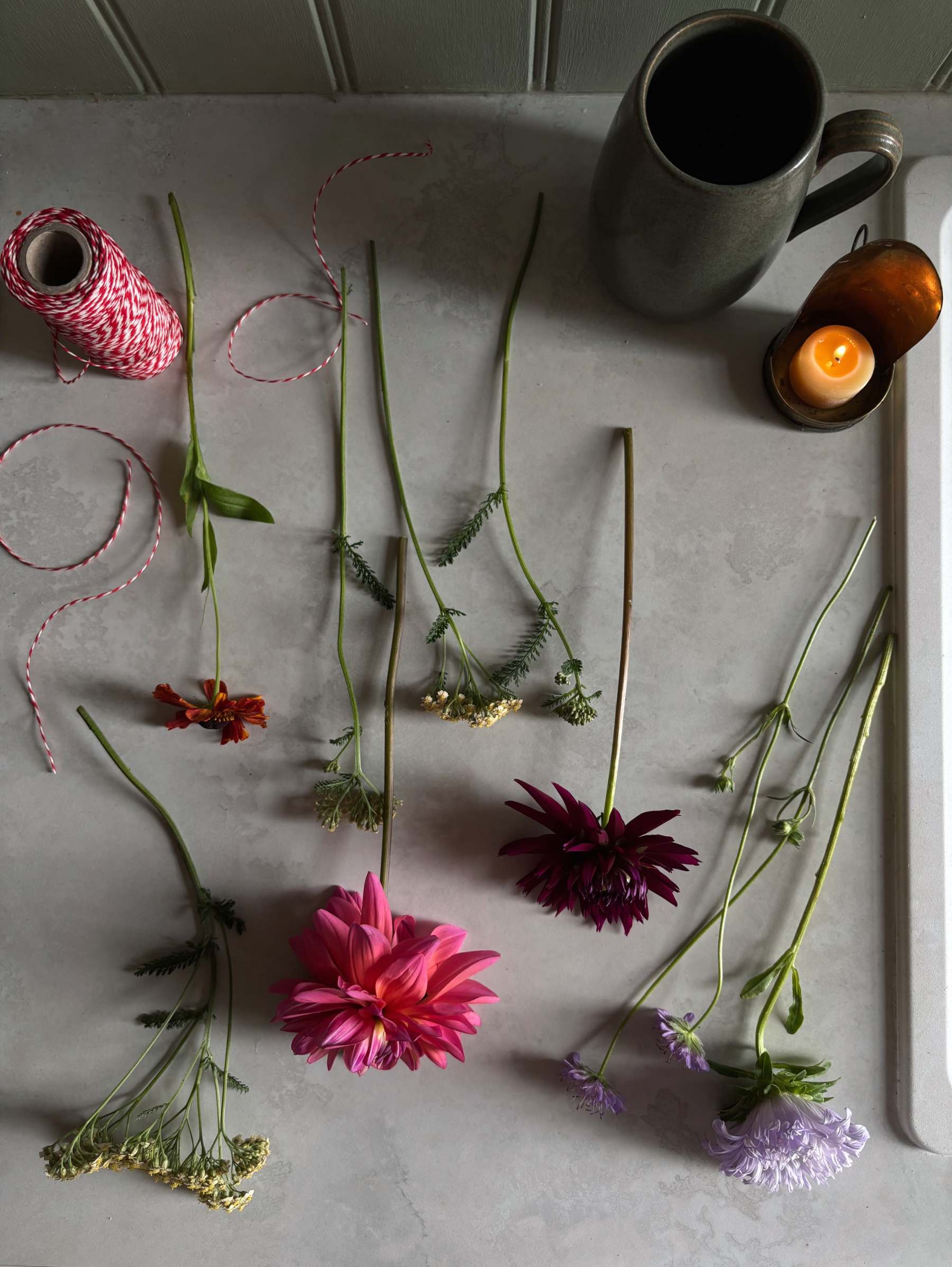
WHAT YOU WILL NEED
A range of autumnal fl owers and foliage A vessel such as a jam jar, small vase or bottle Scissors
Promoted Post
The Scullery
Tucked away in the heart of the Yarrow Valley, The Scullery is a one-bedroom boutique hideaway, eloquently designed for comfort, calm, and connection. Whether you’re escaping the city or craving a countryside reset, this is your space to slow down and just be.
-listable-carousel-1769292770.jpg)







 Sign in with Google
 Sign in with Email