
A Whisky Business
That ambitious understudy, gin, might have swaggered onto the Scottish stage, briefly snatching its moment in the limelight, but whisky is still the star of the show. And with bucolic whisky trails and tours threading through some of our most evocative landscapes, a raft of eye-catching new distilleries springing up, a calendar jammed with whisky festivals and a smattering of luxurious distillery hotels, it’s never been easier to plan a bucket-list booze cruise from the capital to the country and coast.
Close your eyes and breathe in. The tell tale aroma of hops and malts – when the wind’s blowing in the right direction – is quintessentially Edinburgh. It lingers on the air, seeps into ancient crevasses and swirls around the capital’s cobbled closes and wynds. Edinburgh, a UNESCO World Heritage Site, home to the very modern Scottish parliament and the country’s self-proclaimed food capital, is also an historic brewing – and distilling - centre.
At its essence, whisky, of course, is simply distilled beer and the Scottish capital’s brewing and distilling heritages are richly entwined – and currently experiencing an exciting renaissance.
Back in the 12th century medieval monks in Holyrood Abbey began brewing ale using the pure spring water beneath their feet. By the 15th century local women known as ‘alewives’ took up the task. Jump to 1596 and the establishment of the Edinburgh Society of Brewers and, over the next few centuries, a slew of breweries emerging.
At one time there were as many as 38, around 20 within an area surrounding Canongate nicknamed the Charmed Circle, its access to a natural aquifer one of the reasons for the cluster.
Today, the capital’s beer scene is more micro-brewery-led but the hold-the-front-page story is that, for the first time in over a century, there is a whisky distillery once more in the heart of the city.
Founded in 2019 by Rob Carpenter, a Canadian who launched Canada’s Scotch Malt Whisky Society, Holyrood Distillery on the edge of the Old Town has been shoehorned into a listed building dating back to the 1830s. Once the terminus for the Dalkeith-Edinburgh Railway, it was dubbed the Innocent Railway because, unusually for the time, nobody died building it and horses pulled the carts of coal from Lothian mines rather than the scarily new-fangled steam engines.
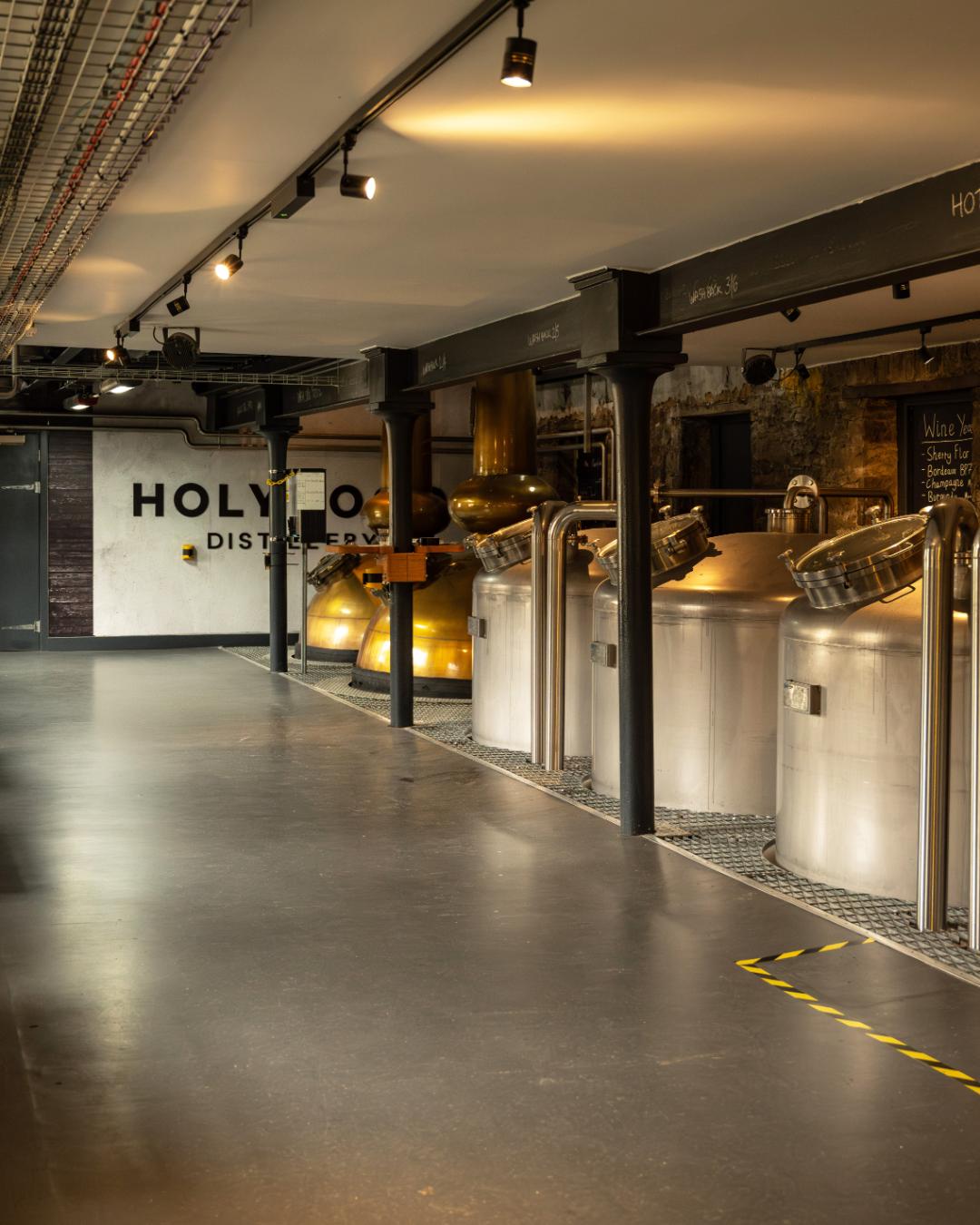
Holyrood Distillery
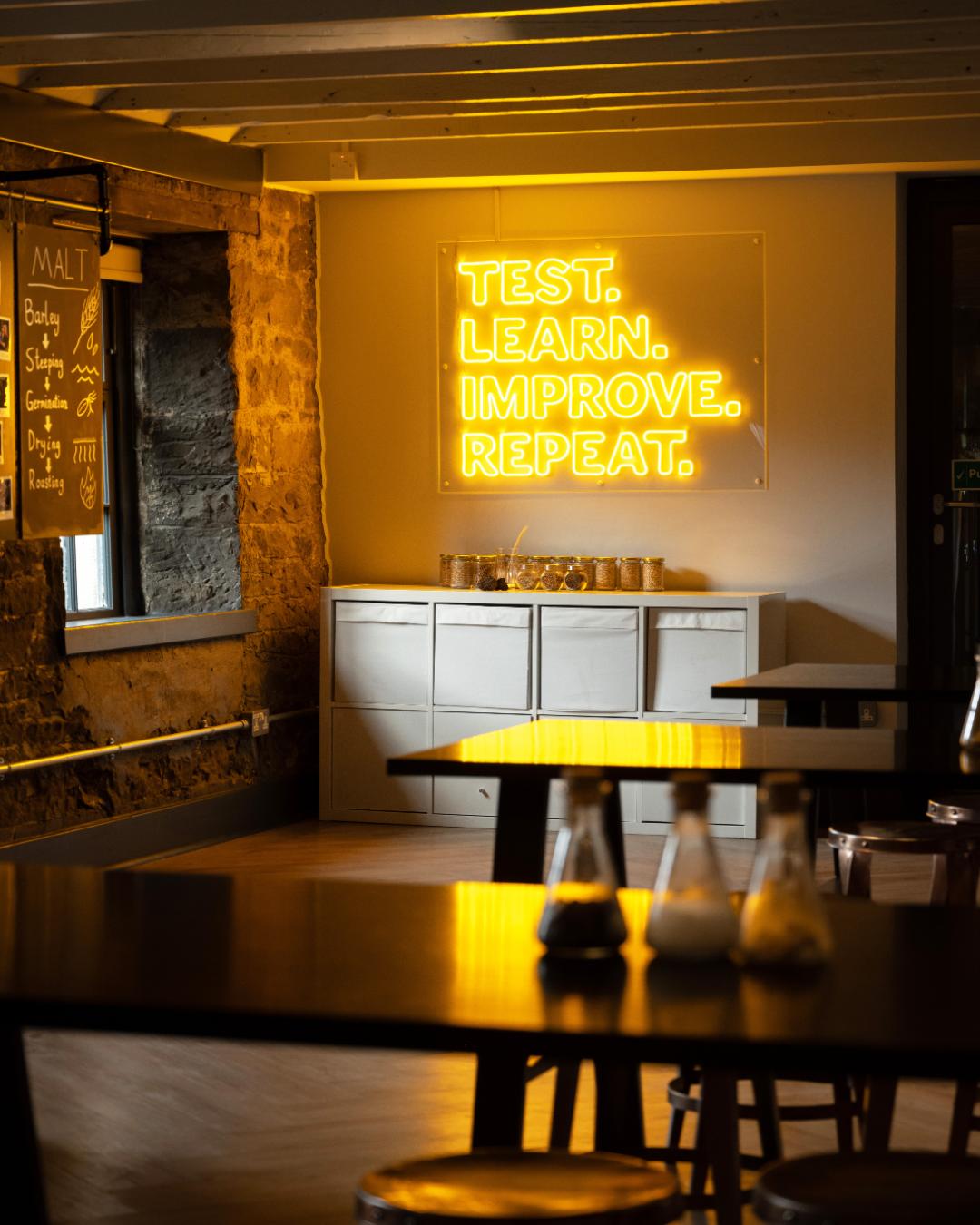
Holyrood Distillery
The old stone building now cradles a new-wave distillery, the young team combining traditional whisky production with craft brewing techniques, re-examining both method and raw materials in order to create modern and innovative whiskies that reflect the city’s brewing heritage.
“It’s a mad scientist approach. We’re experimenting with different yeasts and casks,” distillery manager and exbrewer Calum Rae explains. “We’ve dug into the malt that we use and we’re experimenting with heritage barley. We’ve tried sherry yeast - and saki yeast.” I spot ‘Black Death’ – worryingly - on one of the blackboards. “Some sourdough yeast was discovered dating back to the Black Death,” he laughs. “We’ll give anything a go! It’s super-exciting.”
In terms of casks they dabble with sherry, bourbon, port, red wine and rum barrels. “Anything we can get our hands on. I’m a sucker for a Caribbean cask.”
The distillery offers a range of tours and, during the Edinburgh Fringe, a Charmed Circle walking tour, showcasing the area’s historic links to brewing and distilling, as well as a cool bar – with a view of Arthur’s Seat – and a series of events such as the sell-out Mash Up Festival every summer.
The annual three-day beer and whisky festival celebrates the connection between brewing and distilling; Pilot Brewery in Leith is a regular collaborator. There are masterclasses, tastings and talks and a courtyard bar. It’s also a celebration of that famous Scottish ‘half and half’ - a dram of whisky followed by a half-pint beer chaser.
And, last October, the distillery finally launched its first release, Arrival – the bottle fittingly designed to resemble a brown beer bottle, the label based on an old train ticket.
It has a bourbon barrel base, then two types of sherry cask and has been finished in rum barrels. “The light vanilla comes from the rum finish,” Calum guides us through a deconstructed tasting.
On the nose there’s dried fruit, butterscotch, leather and sticky toffee pudding, on the palate toffee, tablet, vanilla and raisin with a long finish laced with sweet spice, red fruit and apple pie. At only three-and-a-half years old it’s a young whisky – but surprisingly smooth.
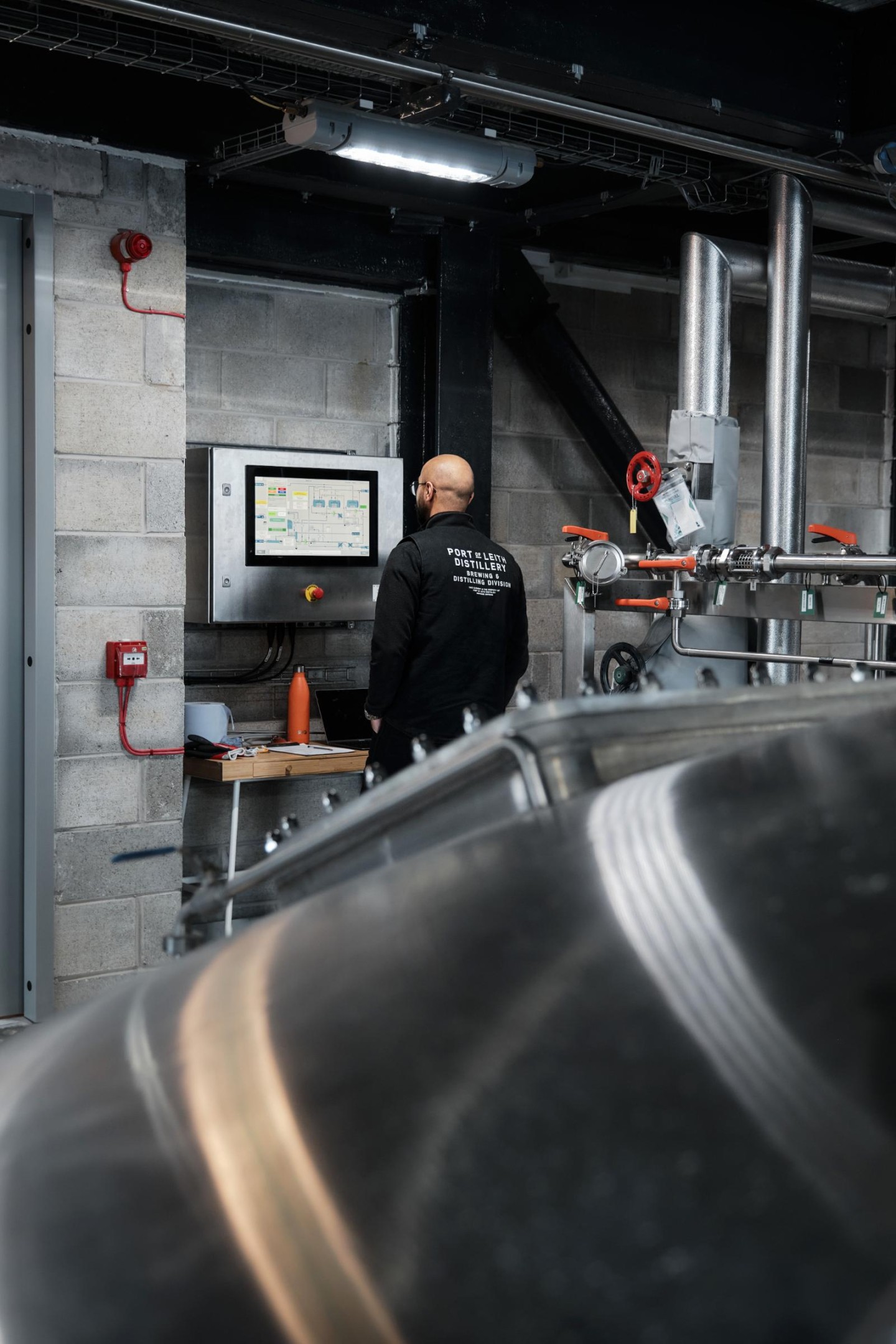
Holyrood is not the only whisky distillery in Edinburgh now, however. October also saw the opening of the city’s first vertical distillery on the waterfront in Leith. Founded by two friends, Ian Stirling and Paddy Fletcher, Port of Leith Distillery has architectural wow-factor, the vertical nine-storey distillery soaring above the quayside.
On the top floor there’s a mezzanine whisky bar, with 360-degree views while tours allow visitors to taste their way through the distillery’s production process in a purpose-built Quality Control Tasting Laboratory.
“We never set out to build a vertical distillery,” Stirling explains. “The shape and size of the building is a product of the tiny site we were able to secure. We wedged our distillery tower into Edinburgh’s historic harbour to make our building as accessible as possible to people who, like us, love whisky,”
“Coming from Edinburgh,” Fletcher adds “we were always confused as to why there were no single malt distilleries operating in the city… hopefully it will encourage people to take a second look at Scotch whisky as there’s a huge amount of innovation within the industry.”
Whisky tourism is also one of Scotland’s star attractions. In 2013 visitor numbers reached 1.3 million, by 2019 the Scotch Whisky Association reported a rise to 2.16 million. “Whisky tourists are like Munro baggers,” Mike Bain, the owner of Burn O’Bennie distillery in Speyside once told me. And with each year there are more and more to tick off the list, from architectural showstoppers to resurrected ghost distilleries - and even inspiring community-owned projects.
The Cabrach, a remote corner of the north-east of Scotland, which lays claim to being the birthplace of whisky, its hills once sprinkled with illicit stills and roamed by smugglers, was once home to a 1,000-strong community. However, around ten years ago when The Cabrach Trust was founded to preserve its cultural heritage and kickstart regeneration in the area, the population had fallen to under 100. The Trust purchased the historic 170-acre Inverharroch Farm, the aim to develop a distillery in an old steading along with a heritage centre and café, to breathe new life into the region and encourage tourism.
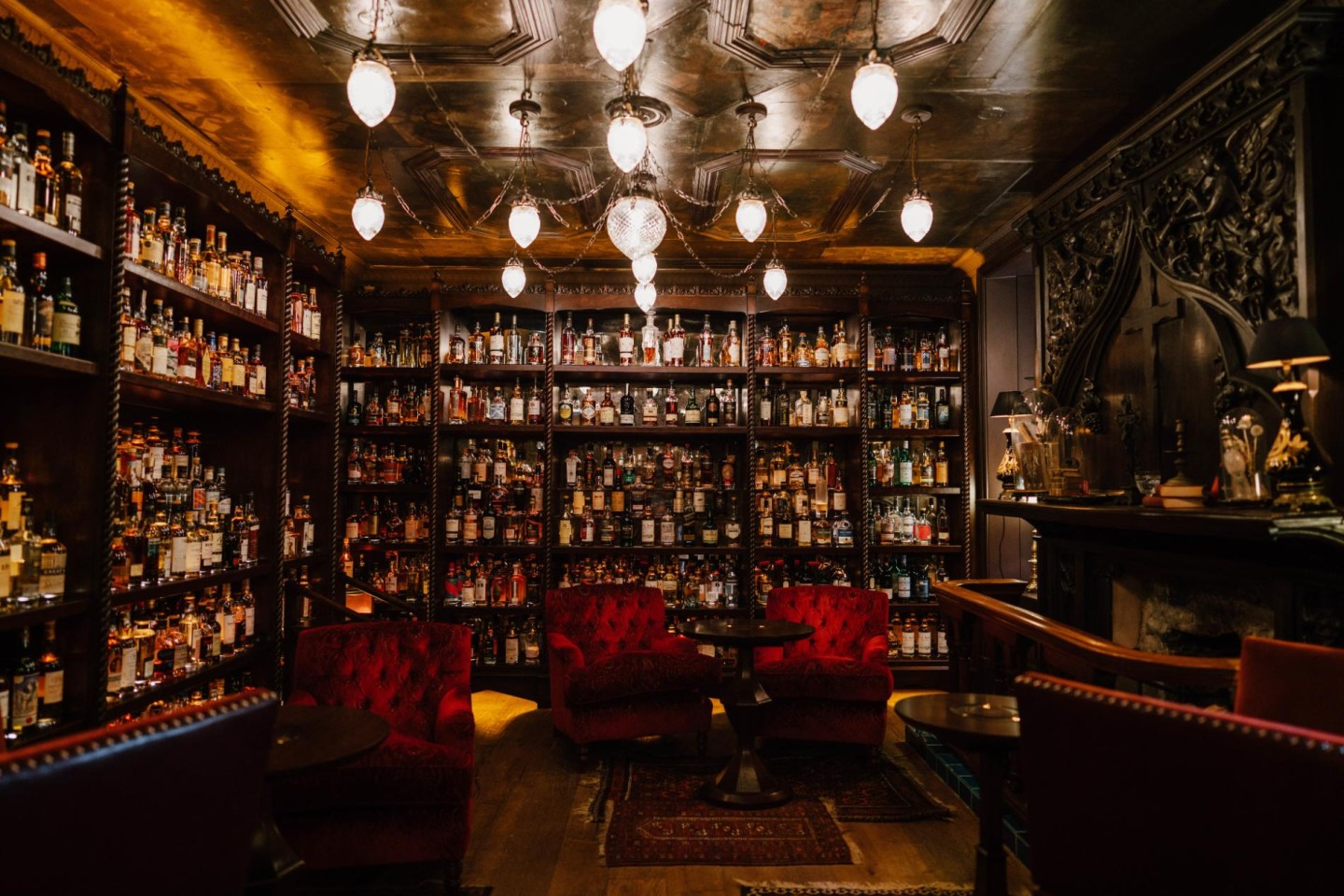
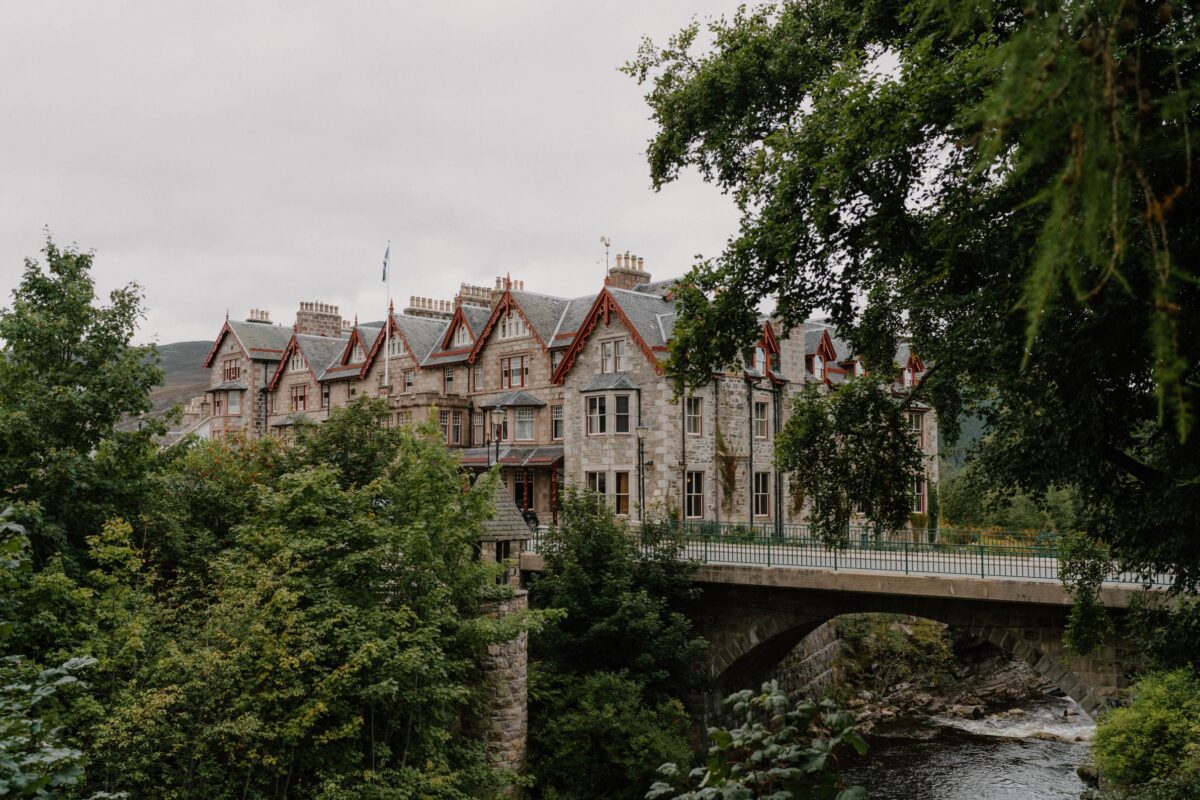
Fife Arms Hotel
It joins the 140 or so working whisky distilleries currently peppering the country, a number that’s growing; nine new distilleries were flagged to open last year, something those remembering Scotland’s ‘whisky loch’ in the 1980s when over-production and lack of demand led to the closure of many distilleries, might have had a hard time imagining.
Not all nine opened on schedule. Those taking a rain-check and launching this year, included Portintruan and Port Ellen on Islay – home to a week-long whisky festival each May - and Eden Mill in St Andrews, one of the country’s first carbon neutral distilleries. Part of the University of St Andrews campus, all the electricity will be provided by renewables, the CO2 generated during fermentation used by the University.
Those that did open include Dunphail in Speyside, home to the annual whisky-fuelled shindig the Spirit of Speyside, and the Malt Whisky Trail, which meanders through the softly rolling countryside to the gates of whisky greats Glenfiddich and The Glenlivet. Created from an old farm steading, Dunphail combines the best of old and new, with a traditional malthouse and kiln, the local barley spread on the malting room floor, a process rarely seen these days, while the distillery’s power is provided by solar panels.
Inverness also saw the opening of the first city centre distillery in over 130 years. Uile-bheist (Gaelic for monster) distillery and brewery – or as it’s dubbed, a ‘brewstillery’ – is a striking glass-fronted building on the banks of the River Ness. The distillery uses a water source heat pump to harness heat from the water they draw from the Ness along with solar panels. Heat and hot water is also provided for owners Jon and Victoria Erasmus’s neighbouring hotel, Glen Mhor. Uile-bheist is unusual in that it’s a distillery founded by hoteliers – it’s usually the other way round.
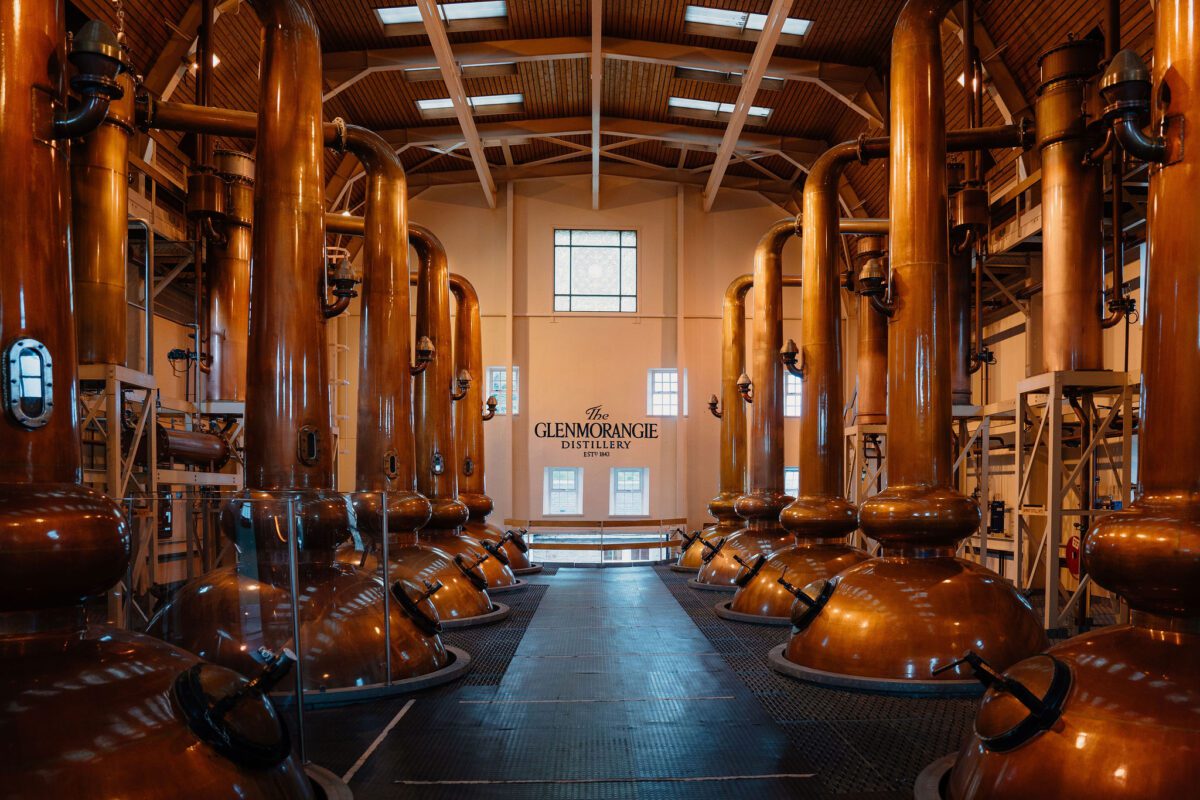
The Isle of Raasay distillery has a handful of luxury rooms on the rugged island off Skye, while Glenmorangie on the north-east coast boasts one of the most glamorous hotels in Scotland.
Scotland has no shortage of hotels with great whisky bars – from ‘Scotch’, the Balmoral’s bijoux bar in Edinburgh, stocked with over 500 single malts and blends along with kilt-clad whisky ambassadors who take you on a tailored whisky journey, to The Fife Arms in Braemar, whose whisky bar, Bertie’s, is named after Queen Victoria’s hedonistic eldest son. A warm, womb-like room with a dramatic backlit library of bottles, the 365 carefully curated malts are divided not geographically but by flavour profile (fragrant, fruity, rich and smoky). But where better to get the ultimate whisky experience than a distillery-owned hotel?
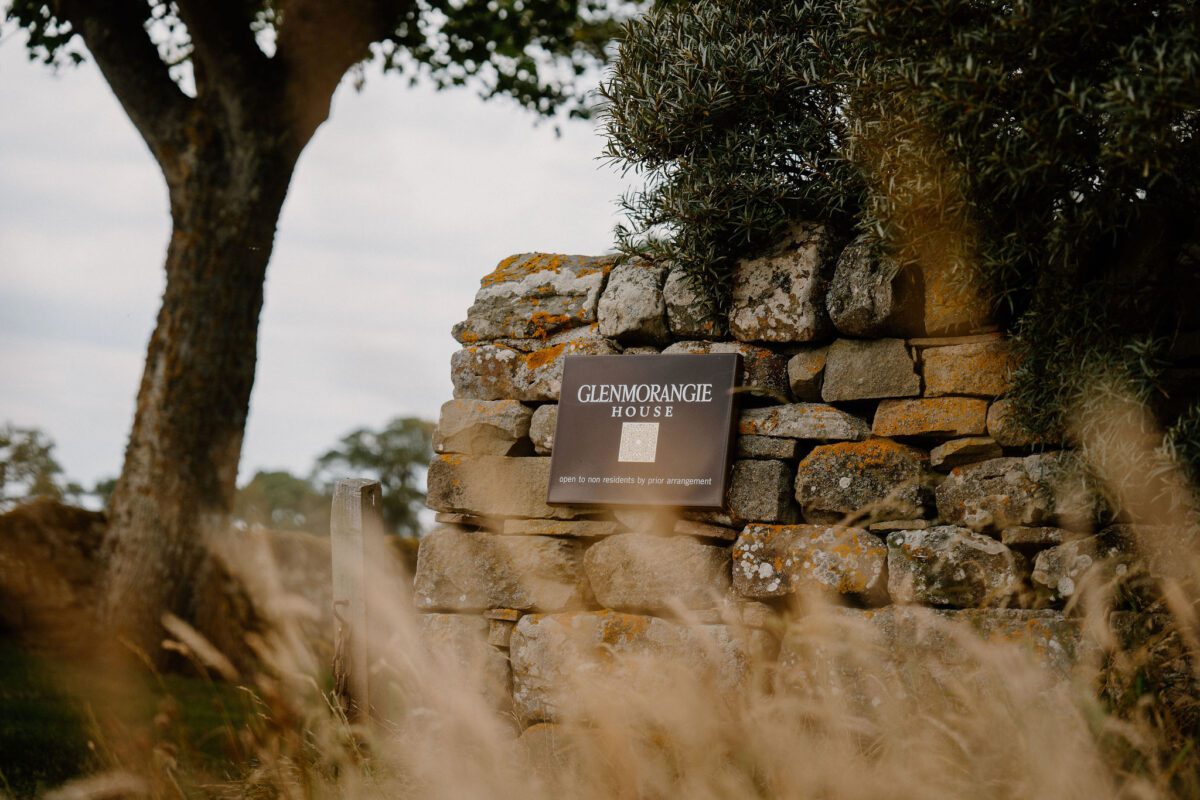
Glenmorangie House
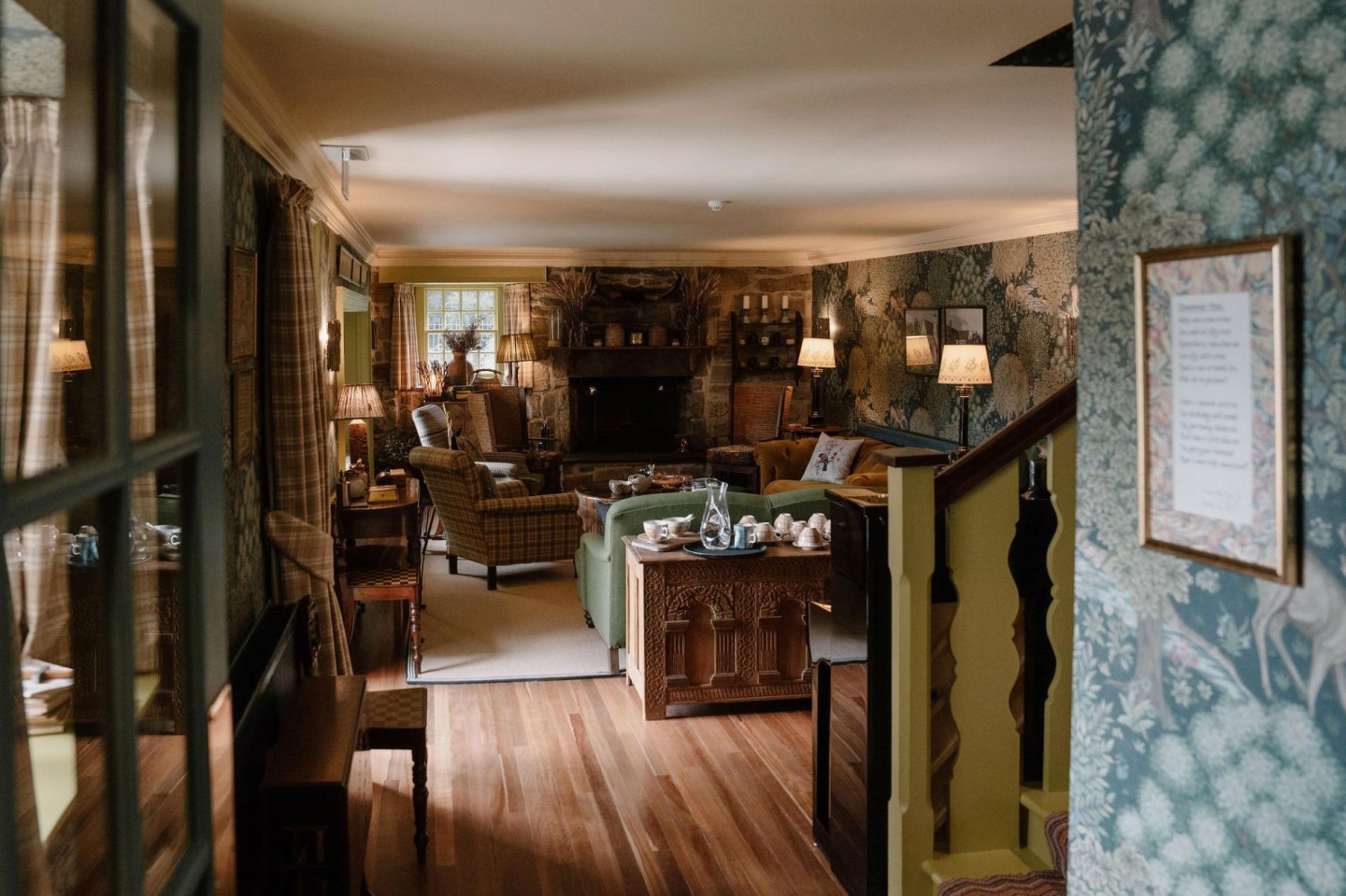
By the entrance to the 17th-century Glenmorangie House there is a clue to the fantastical world within – the towering giraffe is a nod to the distillery’s giraffe-high copper stills. Inside, the historic house has been transformed into a dazzling wonderland by Russell Sage – the designer who also waved his wand over The Fife Arms.
There’s a playful vibe and the opulent interiors have been designed to reflect the stories surrounding the whiskies created by Glenmorangie’s director of distilling and whisky creation, Dr Bill Lumsdem - often described as the Willy Wonka of Whisky. In the morning room, walls are clad in bespoke golden wallpaper sprinkled with wildflowers, butterflies and bees, conjuring up a field of barley. On the mantelpiece, sheaths of the dried grain. Each of the six bedrooms, meanwhile, takes its cue from one of the malts; ‘Wild Wood’ a bosky botanical-themed boudoir reflecting the spirit of adventure that inspired Glenmorangie’s Quinta Ruban.
There are mixology classes, tutored tastings and fire-pit stargazing on offer along with sumptuous whisky-laced, bagpiper-led dinners beneath fiery molten amber orbs the colour of the copper stills. And before bed a nightcap, a warming dram in front of a roaring fire, the perfect way to end another day on the whisky trail.
Promoted Post
Issue 12 is now shipping worldwide from Scotland.
Issue 12 is now shipping worldwide from Scotland.





 Sign in with Google
 Sign in with Email