
A Scent of The Wild
You know it’s there, though you sense that you might not see it. Months pass, and it tantalises with a presence that seems near and yet is hidden...
You can recognise the signs: an old pine where dead wood has been ripped near the base to remove beetle grubs; a chaffinch nest, empty of eggs and lying on the ground. You know the calling cards it leaves along quiet woodland tracks, on boulders below the hills, on tussocks where trees meet moor or rough pasture. Sometimes they’re dark as fox droppings and flecked with white shards of small bones. Sometimes they’re solid with undigested fruit seeds. In late summer and early autumn, they can be swollen with the orange-gold of rowan berries, echoing the season.
Move closer to them, if you dare, and the scent of the scat is soft and pleasant; a subtle drift of crushed almonds with a hint of violet. It perfumes the stillness. For this is the fragrance of the matrix, or mertrick, as the Old Scots tongue would have two of its names, centuries past. ‘Sweetmart’ as a third, back then, to distance it from the foul-smelling polecat or ‘foumart’. Pine marten is how it’s known to most now: the hidden paw in the forests and some of the ground beyond – in the places being re-inhabited as their clan spreads once more, after generations of persecution and retreat.
Sometimes, just sometimes, you might get lucky and see the animal emerge from the shadows on its nightly wanderings. Perhaps – as I’ve done on rare occasions, you’ll meet someone whose garden is used for a while by a pine marten at nightfall. For people who are relaxed about welcoming a medium-sized predator to their home space, such visits are a blessing; one that can be boosted and repeated by laying out offerings of food, especially sweet stuff like jam, to tempt the spirit of the woods to take shape, be made manifest, come close.
Jammy, or what?
Years ago, friends in Morvern did this by smearing jam on the outside of a kitchen window at their cottage, which sits between an oakwood and a loch. At dusk, a marten might call. And as it pressed close to the glass, licking sweetness from the pane, the children of the house took turns to press their own noses, quietly, to the other side of the glass.
I’ve seen pine martens just a few miles from there, in the grounds of another house where an elderly couple used to relish the evening visitations and were liberal with scatters of food. Years later, my most prolonged sightings in recent months have been thanks to a trail camera, set up near a woodland burn on the Black Isle in late winter and primed to record short videos when triggered by its infrared motion sensors.
The trailcam was placed close to some fresh otter prints, without thought of their sleek-furred relative in the ‘mustelid’ family (which also includes weasels, stoats, polecats, otters and badgers in this country). After a night or two, with some success in recording otters and much footage showing the eyeshine of woodmice as they leapt across the scene, there it was. A pine marten, not far from the house and moving with a grace that seemed almost balletic as it crossed the burn along a fallen tree, paused to look around, then was gone, merging once more with the mirk. On some other nights that followed, scatters of peanuts kept it in frame for longer, but it never tarried for more than a minute.
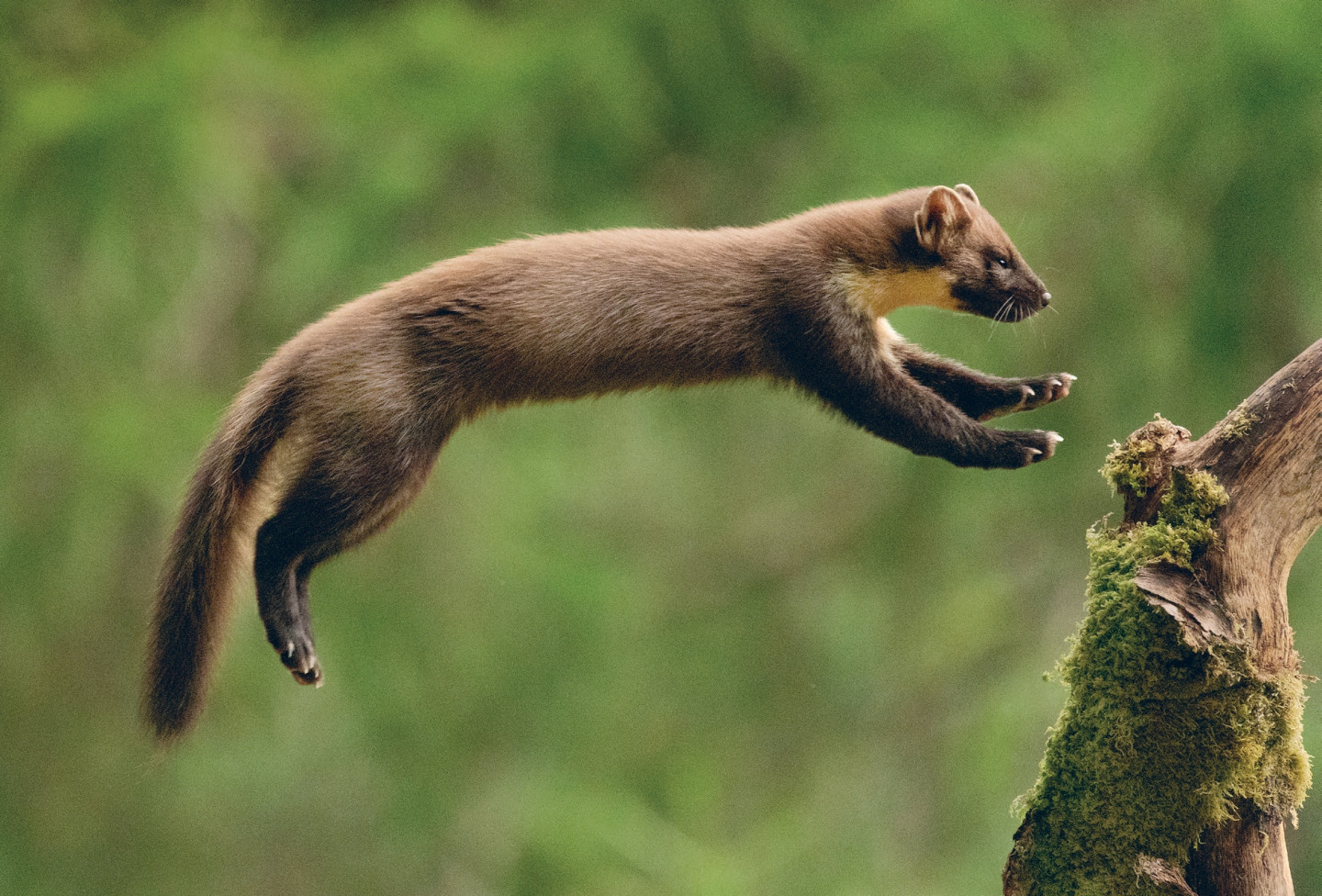
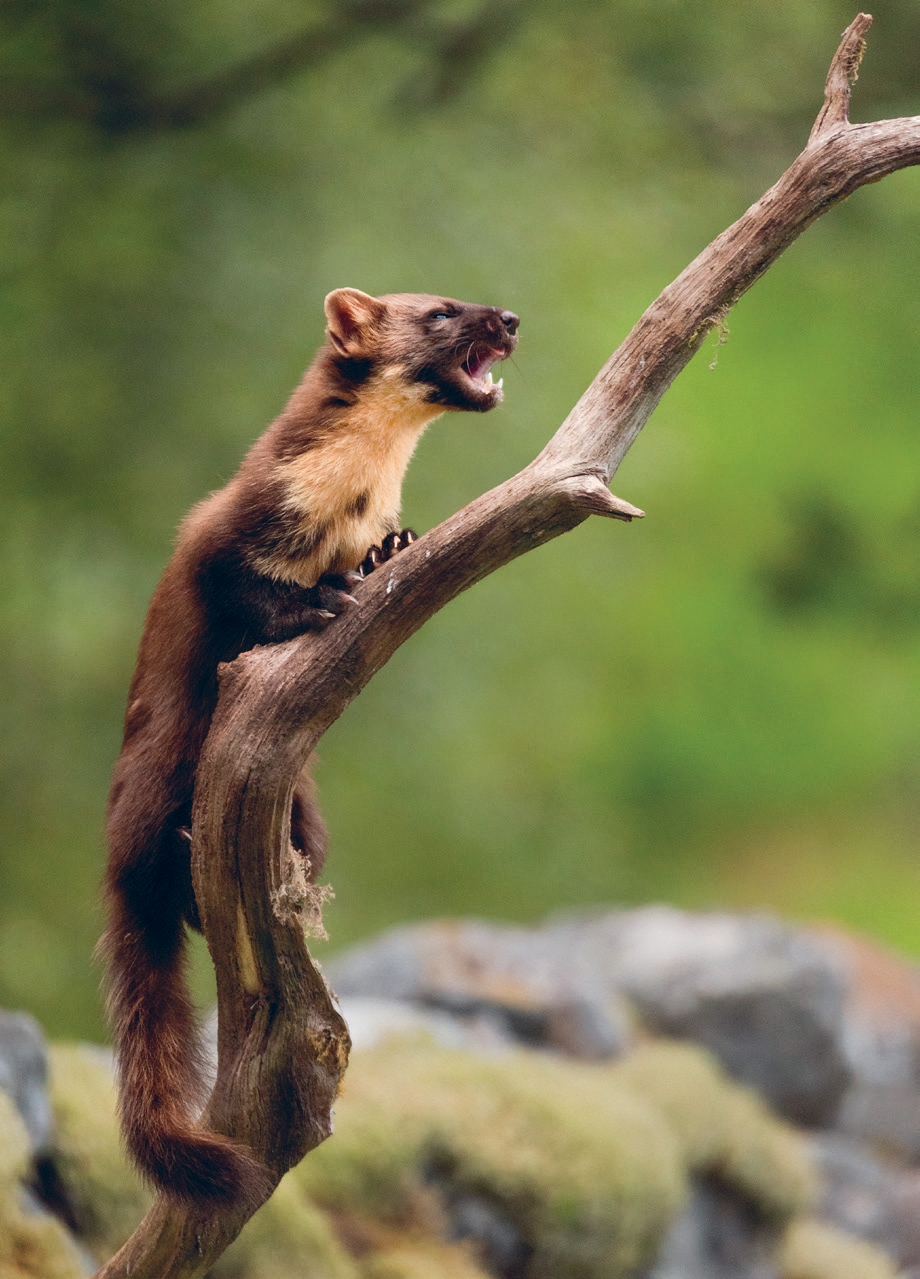
Those movements and moments stay fresh in mind, as do sightings I’ve snatched off camera in other places. Pine martens don’t so much walk as ripple across the ground, curving their back as they go. On a tree trunk, their sharp claws grip as they climb with ease, and then move fast along branches before leaping to the next tree, high above.
This arboreal agility means that pine martens can chase red squirrels through the canopy, pursuing them as prey. But that’s more often noticed on the continent, in areas with very extensive forests. In Scotland, cover of native trees, though expanding once more, is much depleted relative to many parts of Europe. So red squirrels don’t much feature in the marten diet. Here, doubtless also reflecting the patchwork nature of the wider countryside, field voles are a staple on the marten menu. These small rodents thrive in rough grassland and number tens of millions across Britain. Although they also live largely unseen by people, both many humans and most pine martens will seldom be far from a field vole.
Here’s looking at you, mertrick
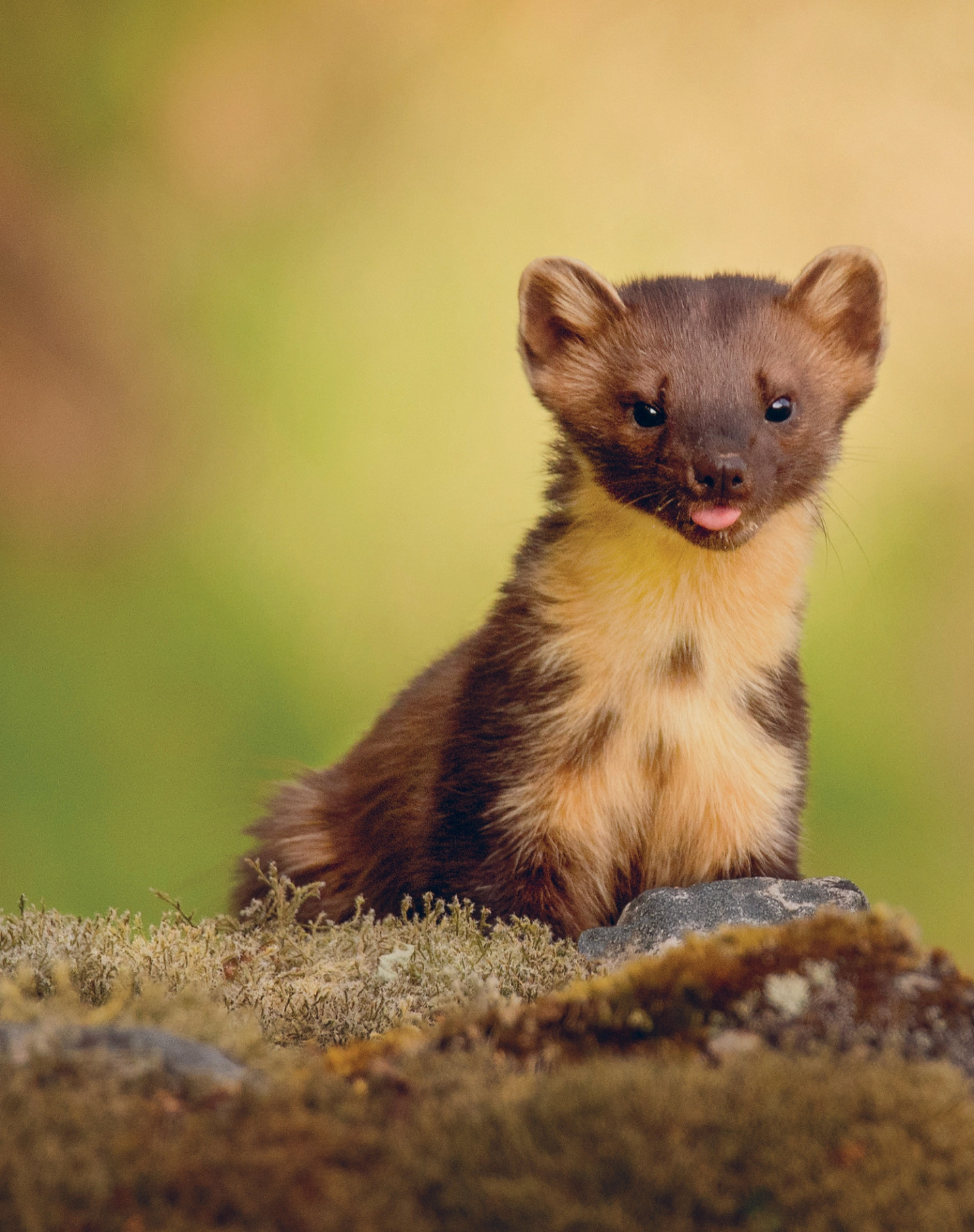
Pine martens are omnivores, able to turn a paw to many kinds of food. They will devour small mammals such as voles, along with birds, eggs, earthworms, beetles and fruit, including brambles in autumn and ivy berries in winter. Fuelled by such a diet, a marten in its prime is magnificent. Fur of chocolate brown covers much of its long body, which is about the size of a small domestic cat. A creamy yellow bib gives contrast to its chest. The bushy tail can be as long as the body it helps to balance. And over the whole fur, there’s a lustre so gorgeous it was part of the pine marten’s past undoing. For a pine marten’s coat looks good, feels good and retains heat. No wonder it was once in demand for use in fancy garments worn by those with power and money.
In the 1300s, pine marten skins were a valuable Scottish export, with customs duty paid on each batch of 30 before it left the country, to raise money for the Crown. By the middle of the following century – perhaps reflecting a decline in marten numbers through hunting and woodland loss by this stage – the Scottish Parliament restricted the public wearing of clothing that included ‘furrings of mertricks’ by various state and town officials, including ‘clerks and burgesses’ and their families.
Loss of woodland would continue to restrict marten numbers. But the biggest blow came from killing by gamekeepers in Victorian and Edwardian times. Pine martens were among the many creatures, both furred and feathered, viewed simply as ‘vermin’ to be exterminated in hopes of boosting quarry species, such as grouse and pheasants.
By the end of the 19th century, martens had vanished from the whole of the rest of Britain and from most of Scotland. Some clung on in parts of the northwest mainland, helped both by the remoteness of the area and by ground that can be tricky to traverse, such as woods of pine and birch on steep, rocky hillsides.
Martens on the rebound
If people were the reason for the marten’s massive decline, people have also contributed to its recovery in recent decades, both in Scotland and now in Wales, England and Ireland. At first, this marten boosting was unwitting. A downturn in numbers of gamekeepers after the First World War meant that fewer martens were killed. At the same time, conifer plantations established by the Forestry Commission and private landowners in the wake of that conflict and onwards through the 20th century gave martens an increasing number of relatively safe havens.
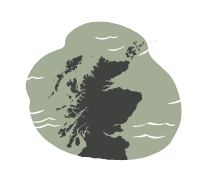
Occasional surveys since the 1980s have kept track of how pine martens are reclaiming old haunts across the Highlands and beyond, in a slow and continuing advance south and eastwards. Moray and Deeside are part of that expansion. So, too, is the reoccupation of much of Aberdeenshire, parts of Angus and Fife, and many swathes of Stirlingshire and the Trossachs. Some of the Central Belt is pine marten ground once more. Further west, southern Argyll and Cowal are in the marten frame. In southern Scotland, following an intentional release of a few animals some 40 years ago, martens have spread, though only in modest numbers, south and east from Glen Trool.
As they’ve expanded in range, so knowledge of marten habits has increased. Some folk, not least those who keep domestic poultry and so need to fortify hen roosts and duck houses against night raids, are worried by this. So, too, are people who reckon that by eating eggs and chicks, martens could hamper recovery of Scotland’s dwindling population of capercaillie.
Many others, myself included, reckon that martens on the rebound is a symbol of recovery of wild nature in a time of crisis for so many other creatures. As I write, I have a pine marten skull near me, from a female I found as roadkill some years ago. Her teeth are still sharp and her jaws look powerful, running much of the length of her low-slung cranium. There’s wildness there, even beyond her life. She reminds me that pine martens are worth celebrating for their vibrancy as a quick-witted, nimble predator that’s as natural a part of the Scottish scene as Atlantic salmon or golden eagles.
Holding the red line
Through recent research, there’s also been greater understanding of how the pine marten can be an ally in tackling the problem of grey squirrels in many areas. Introduced to Britain in the 1800s from North America, grey squirrels have since spread widely, much to the detriment of native red squirrels. Greys carry a disease – squirrelpox – which doesn’t affect them but can kill red squirrels. They also compete for food resources with the smaller reds. The weak spot for greys is that they feed on the ground much more than reds, making them more vulnerable to attack by a fast-moving mustelid that’s adept at hunting on the woodland floor. Greys have little in the way of inherited behaviour that could reduce the risk of being killed by a marten, whether below or in the trees. That includes the way that a grey will remain in its breeding place, such as a tree hole, when a marten comes near, while a red will scarper when it senses the danger. Upshot is that where martens move in, greys will diminish or vanish.
That’s why Forestry and Land Scotland has been working this year to install special pine marten ‘den boxes’ to boost marten numbers in areas where grey squirrels might spread, or where they are already a problem. Siting the boxes along corridors of country where greys could move into the Highlands has been part of the plan, since The Highland Region is still a grey-free zone and a refuge for reds. Further research is also continuing to track the changing fortunes of pine martens and how they interact with both species of squirrel.
Marten droppings are a boon, not only for naturalists with a nose for good poo, but also for scientists keeping tabs on changes. That includes through the way that DNA can be sampled from both scats and fur to find out how many individual martens are using an area. Not surprisingly, scats can also reveal fine details of the diet of Scottish martens. That’s how field voles are known to be such a major part of their food, as is fruit, with the odd crunch of dung beetle (also known, more delicately, as Dor beetle) at some seasons.
The iridescence of scat deposited by a marten that’s just chewed a big, shiny-black Dor beetle is an image to gladden many with a passion for wild Scotland.
On a path through the trees, twilight is deepening. You can see little detail, other than silhouettes of trunks and branches against the darkening sky; hear little except your own footfalls. But on a stone just ahead, something glistens in the half light. You move closer, and inhale.
Now there’s a scent of crushed almonds on the cool air; a hint of violets, though no flowers are near. You stay to savour the moment, then move on, but the memory of the scent still lingers.
Perhaps this will be the night when what has been hidden will be revealed. That’s the magic of the sweetmart, the mertrick, the matrix. That’s the abiding allure of the marten.
words // Kenny Taylor - photography // Keith Thorburn

Promoted Post
Stormhouse
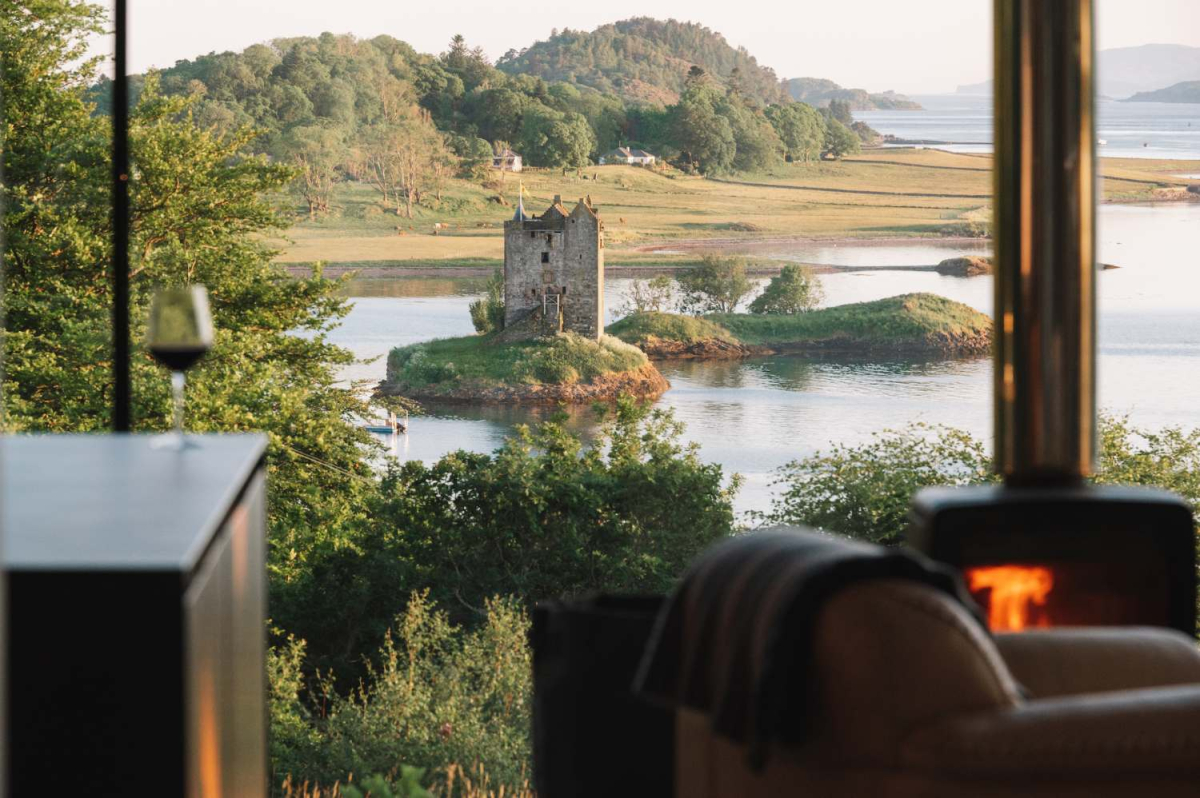
Escape to the wild, rugged landscape of Scotland’s west coast, perfectly located between mountain and sea






 Sign in with Google
 Sign in with Email