
A Place in Scotland
Interior Designer Banjo Beale and photographer Alexander Baxter go behind the scenery in their new book, A Place in Scotland to uncover the most beautiful Scottish interiors.
ALEXANDERBAXTER_SomwhereinScotland_HMSOWN_RossShire_25-full-1741130884.jpg)
Something is happening in Scotland – a new confidence – and inspiring new voices are redefining what 'Scottish style' really is. From merchant houses reimagined for the 21st century to windswept castles rescued from ruin, Scotland is home to some of the most remarkable homeowners, architects, designers and craftspeople lacing our spaces with a new verve. Stone bothies nestled in the Highlands and blackhouses on the edge of the islands are at once preserving history and adding new chapters with contemporary additions. Victorian coaching inns have become beacons for international art and tiny tenement flats are reinventing how we live, work and play in our city neighbourhoods.
ALEXANDERBAXTER_SomewhereinScotland_RodelHouse_IsleofHarris_9-full-1741131003.jpg)
History
The people and places making their mark today have not forgotten the past, instead, embracing history to peel back years of neglect and tartan wallpaper to return buildings to their former glory. There will always be room in our collective hearts for tartan and tweed, but traditional emblems are being reimagined and repurposed, with new dream weavers adding their spin, mixing contemporary art, heritage crafts and international influences to create a new, rejuvenated vernacular.
Nature
From Royals to watercolourists to Royal watercolourists like Queen Victoria it is the wide open spaces, wild glens, glassy lochs, majestic munros and long sandy beaches of Scotland that have long been a beacon. Today, our spaces not only seek to make the most of our natural surroundings, but to leave the least impact possible. New homes are lightly bedded into the landscape and traditional places are rejuvenated with restraint, creating quiet spaces to sit still and embrace the rhythms of nature.
Our materials and palettes are transforming hotels and homes into moody meccas, inspired by the rugged beauty on our doorstep with stone and wood, earthen lime and natural textures. Meanwhile, bright young things are animating their homes with the colours of the wildflowers and machair of our Hebridean islands.
Neighbours
Our Norse neighbours have long been a part of Scottish history and today their influence is apparent in our Scandi Scot aesthetic, combining minimal interiors with design classics. For every hygge home in Copenhagen there is a nook to coorie into in Scotland. Our warm nests, antidotes to long, dark winters.
The trade winds even blow all the way to Japan and in exchange for our whisky we have imported wabi sabi, celebrating the imperfection and impermanence of our homes.
Wit
The Scots hold their tongues firmly planted in their cheek at all times. In fact, the phrase itself first appeared in 1828 in The Fair Maid of Perth by Sir Walter Scott. A sense of playfulness extends to our spaces, with refined hotels outlandishly adorned in flying stags and ancient castles bedecked in bearded ladies.
Bravery
From turning a World War Two control tower into a family home to raising children in a castle ruin, it takes a brave, hardy and sometimes foolhardy person to rehabilitate and create spaces in wild and woolly places.
For those souls who saw potential to add new energy to abandoned buildings, their bold endeavours are rewarded with a place in history; like castle custodians carving their new family motto in stone above their door, they challenge accepted wisdom.
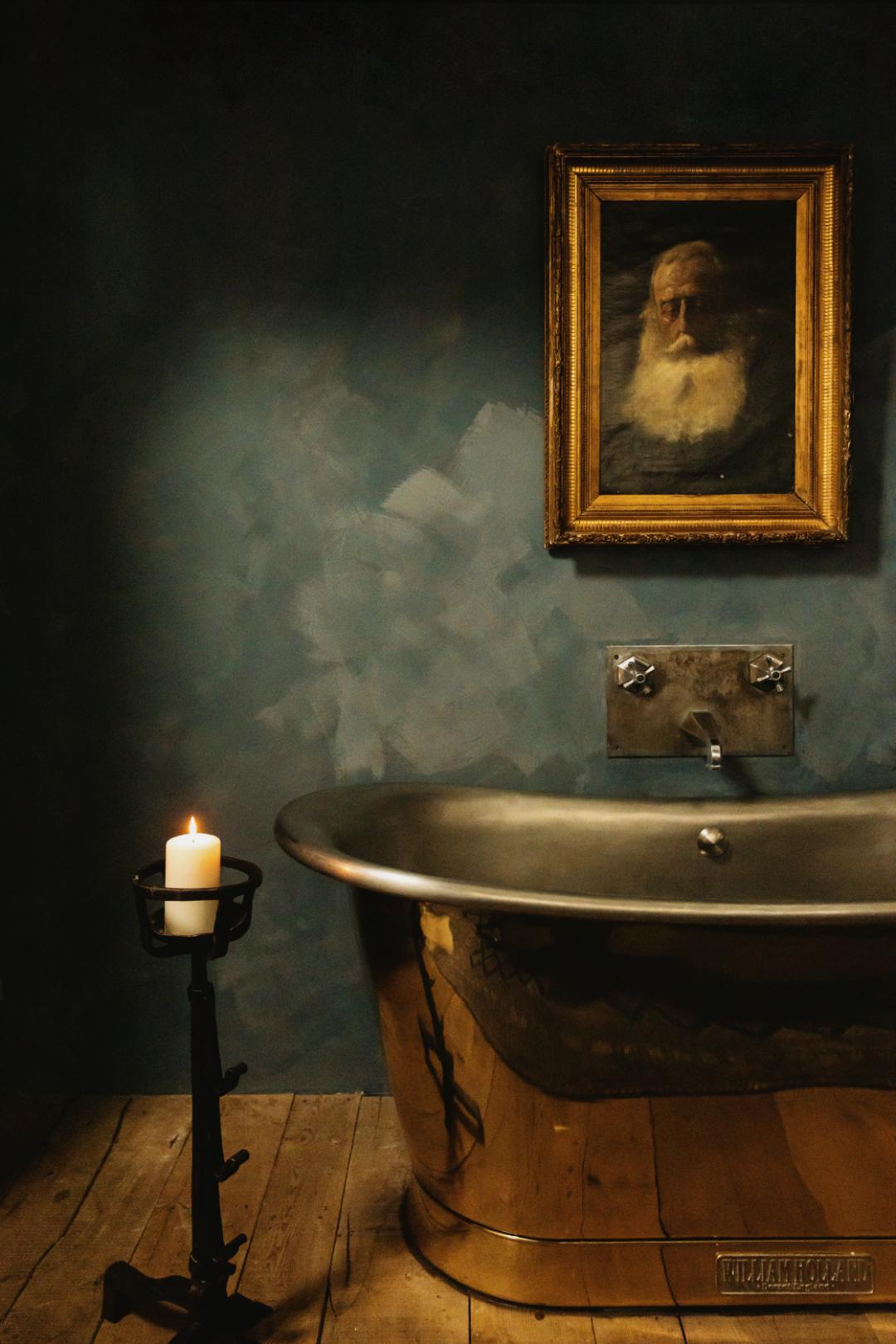
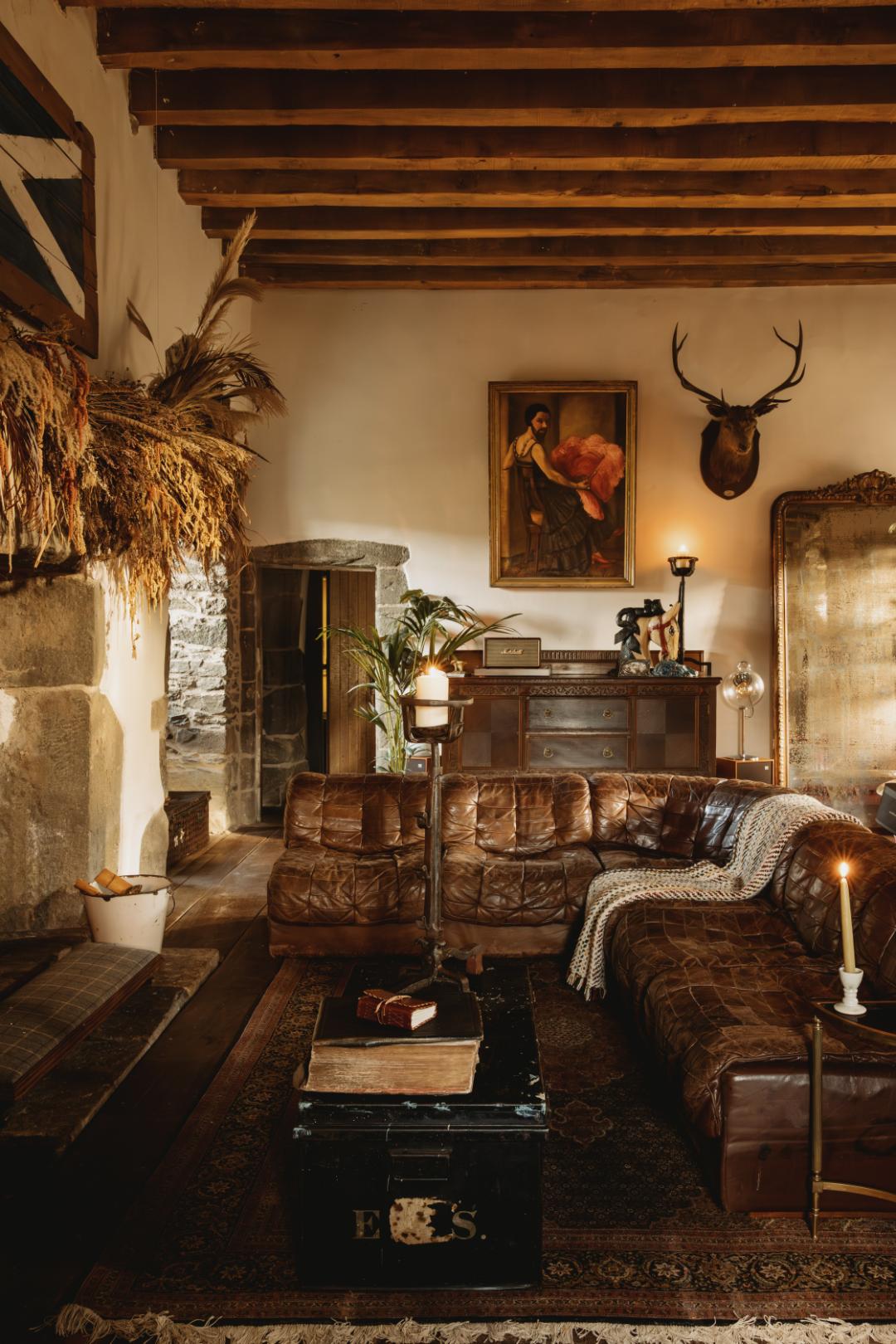
HMS Owl. Tain
HMS Owl is a four-storey brutalist brick tower built in 1942 on Fearn Airfield in Tain in the Scottish Highlands. The former Royal Navy air control tower was transformed over five years into a family home by Justin Hooper and Charlotte Seddon.
During World War Two, Fearn Airfield was one of Britain's most important naval airbases as the Barracuda Operational Training Unit and the No. 2 Torpedo School. The tower was closed in 1957, falling into disrepair.
This unusual restoration project, transforming its crumbling shell, was a messy job after years of occupation by only the farmer's livestock that sheltered here during winter. Only after excavating a foot of cow dung could work begin.
Kilmartin Castle, Argyll
An Aussie and a Geordie walked into a Scottish Castle with a for sale sign out front and the Geordie girl said "OK, never mind, at least it was a pretty drive". The Australian said "Holy-cow, this is bloody awesome, we can absolutely do this".
Once upon a time, around the Ice Age, the valley of Kilmartin was carved out by the melting of glaciers. Sitting proudly above the prehistoric glen, the 16th-century stronghold is today covered in modern art, vintage signs and cinema posters. From Iron Age to New Age, knights have been replaced by Pac-Man Ghost statues guarding the stairs, a pull-down cinema screen and a portrait of a bearded man in a dress.
Rodel House Isle of Harris, Outer Hebrides
Rodel House is "at the end of everything", noted poet Louis MacNeice upon visiting this handsome Hebridean outpost in 1938. Standing proudly on the southern tip of the Isle of Harris, with views out across the Isle of Skye, this is a building with quite a tale to tell.
In its heyday, Rodel has been a hotel, storehouse, fishing lodge and a pub with a clock that famously ticked backwards, much to the chagrin of crofters’ wives. Rodel has long been the scene of salty yarns and a respite for queens, rebels and ratbags. The hotel was to be restored, rebuilt and reborn yet again by Francine Stone and Anderson Bakewell, one of the founders of the Isle of Harris Distillery and owner of the nearby uninhabited island of Scarp.
Wormistoune Crail, Fife
Wormistoune is the home of the mythical Scottish Wyrm, a fearsome dragon-like serpent allegedly slain by a medieval knight on the mound. Today, the Wyrm, in the form of a cast creature, hides in plain sight, patiently watching over the McCallums, the new Laird and Lady of this 17th-century tower house and garden. Sitting on the edge of the East Neuk, close to the royal burgh of Crail in the Kingdom of Fife, this deliciously warm ochre lime-washed home has played host to ancient family feuds, artists and, as legend has it, was the last place in Scotland where witches were tried.
Promoted Post
The Scullery
Tucked away in the heart of the Yarrow Valley, The Scullery is a one-bedroom boutique hideaway, eloquently designed for comfort, calm, and connection. Whether you’re escaping the city or craving a countryside reset, this is your space to slow down and just be.
-listable-carousel-1769292770.jpg)






 Sign in with Google
 Sign in with Email