
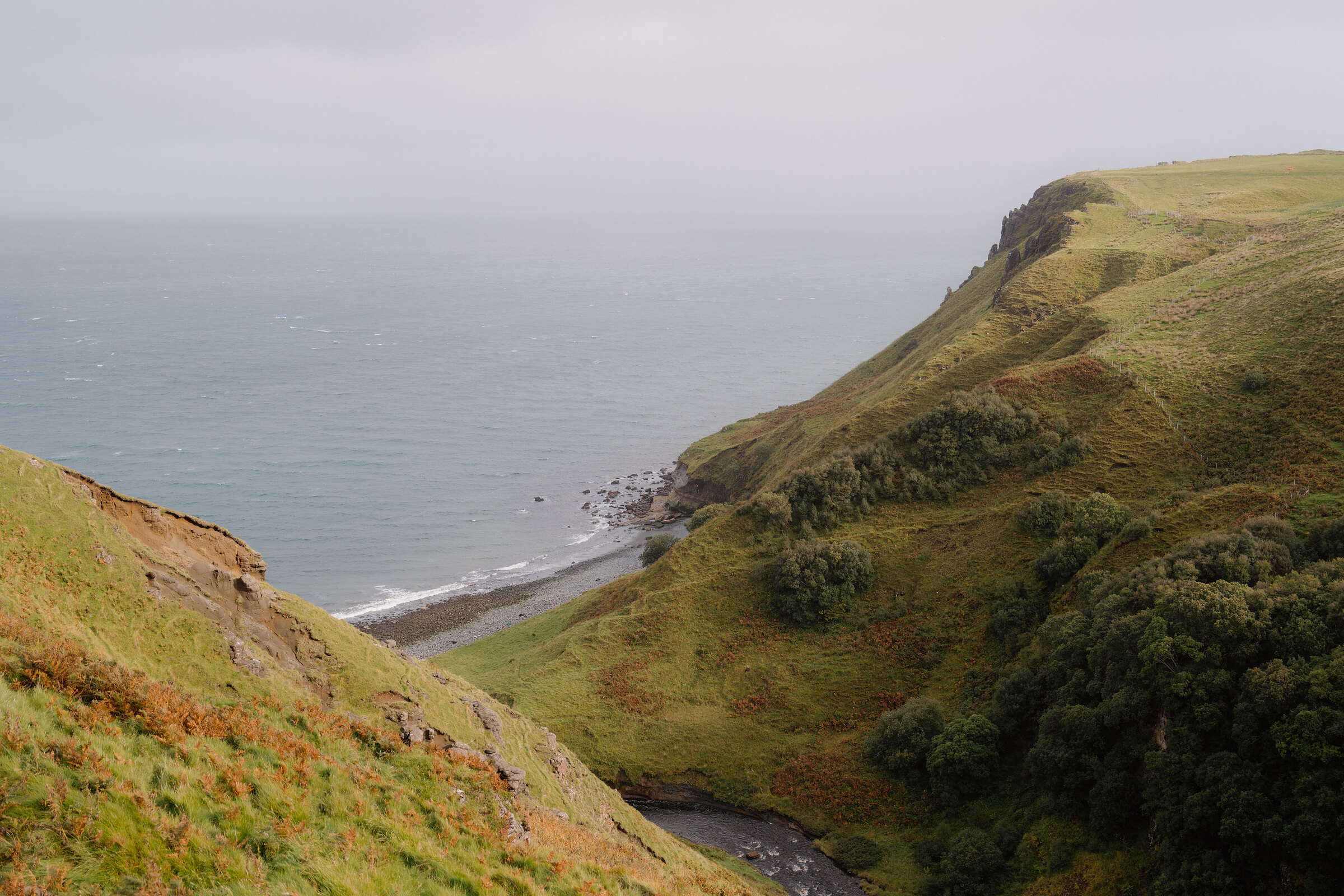
Loch Cuithir – The Diatomite Line under the Trotternish Ridge
About 6.2 miles on foot.
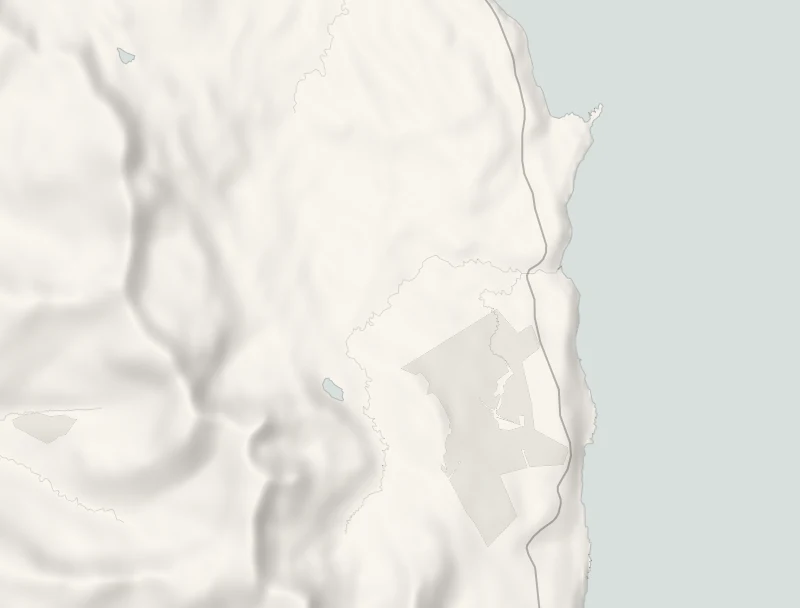
Loch Cuithir lies under the cliffs of the Trotternish ridge, at the end of a long, easy track that leaves the coast at the Lealt gorge.
From the 1880s a floury grey clay called diatomite was dug from the loch and carried down to the sea on a tramway, and the last of the industry shut in the early 1960s. The walk is about 10 km there and back.
- Time
- About three hours' walking: about 10 km, a bit over 6 miles, there and back on an easy Land Rover track. A long, easy walk.
- The path
- A rough Land Rover track over open moor.
- Where to start
- The community's free car park at Lealt, beside the A855 south of Staffin.
- Set off
- From November to January, set off by 11.30am to be back in daylight.
- When to go
- All year in daylight. From November to January set off by 11.30am.
- Dogs
- Under close control: this is working croft land.
- Children
- An easy track but a long one; keep children on the platforms at the gorge.
- Before you set out
- The Staffin Community Trust asks walkers not to go past the viewpoint at the mouth of the Lealt gorge: the way down is dangerous. Working croft land.
The walk
Park in the community car park at Lealt, beside the A855 south of Staffin. It's free, and it serves the viewing platforms over the Lealt gorge and its waterfall as well. Look at the gorge first, but don't go past the viewpoint at its mouth: the Staffin Community Trust asks walkers not to, as the way down is dangerous and there have been accidents. The walk to Loch Cuithir heads the other way, inland. The Trust gives it as about 10 km, a bit over 6 miles, there and back, on an easy Land Rover track all the way. Allow about three hours' walking.
The track passes the old township of Lealt and crosses open moor, with the wall of the Trotternish ridge growing ahead until the loch lies right under it. Diatomite was found here in the 1880s. It's a floury, clay-like grey deposit that turns pure white when dried, and it went into paint, polish, toothpaste, filters and matches. A tramway took it down to Invertote, on the shore below the gorge, and steamers took it on from there. Work stopped between the wars and began again in 1950, when a new company could lift 300 wet tons a day from the loch for its factory at Uig. That shut in the early 1960s, and traces of the line can still be seen.
This is working croft land, so keep dogs under close control. There's no shelter and nothing to buy on the way: take food, water and waterproofs. Staffin has public toilets and places to eat. From November to January, set off by 11.30am.
If it rains
The track is firm enough in rain but there's no shelter on the moor, and low cloud hides the ridge that makes the walk. On a wet day the gorge platforms beside the car park are a ten-minute look.
Before you go
Book accommodation nearby
If you are staying over: here are ours nearest where the day starts and ends.
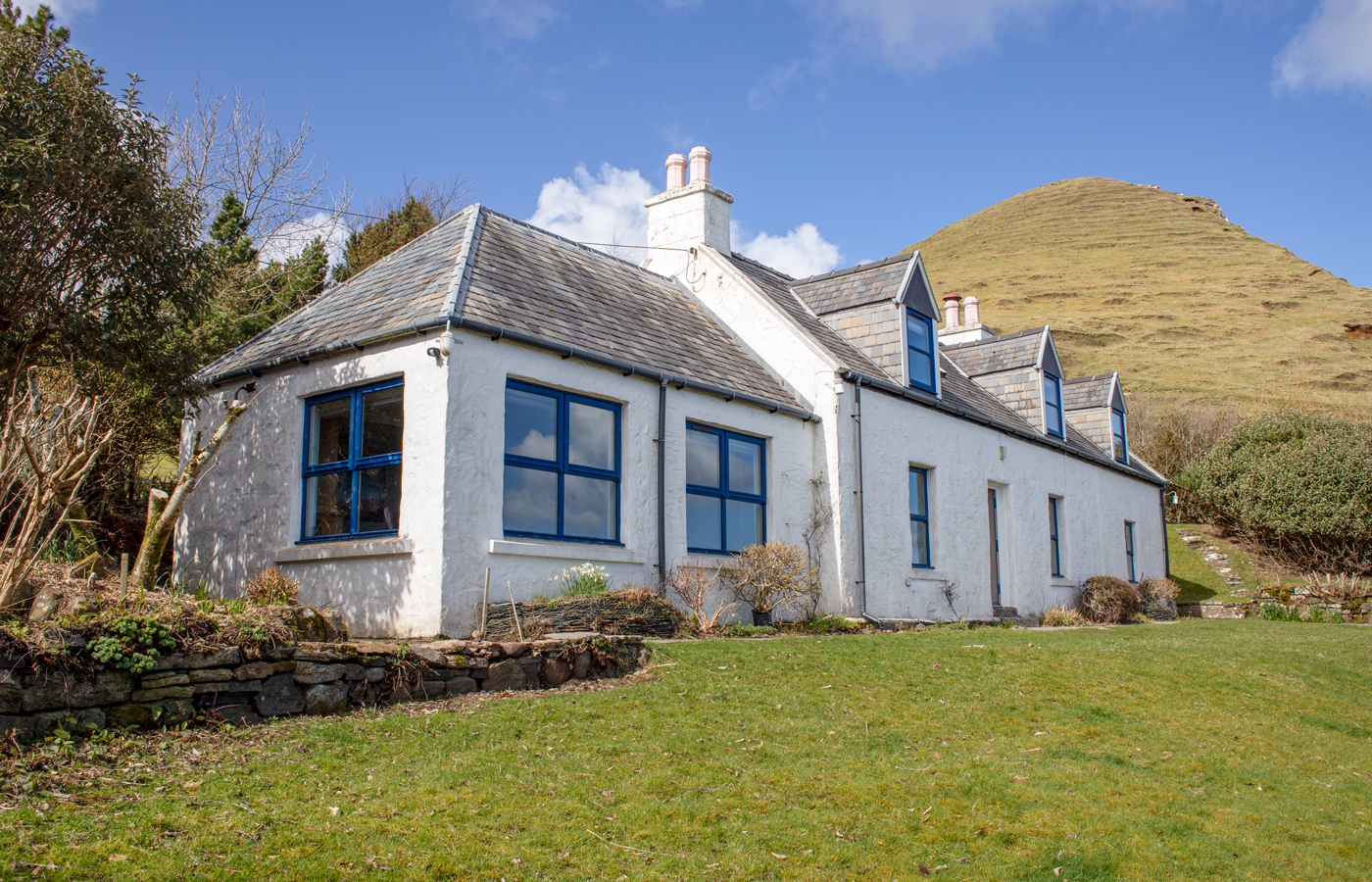
The nearest of ours is Half of One, a mile away. Sleeps 8; next free Mon 19 Oct to Wed 21 Oct.
For further reading, before you go.