
Ardwell Bay – A Sandy Bay and an Iron Age Broch
About 2 miles on foot.
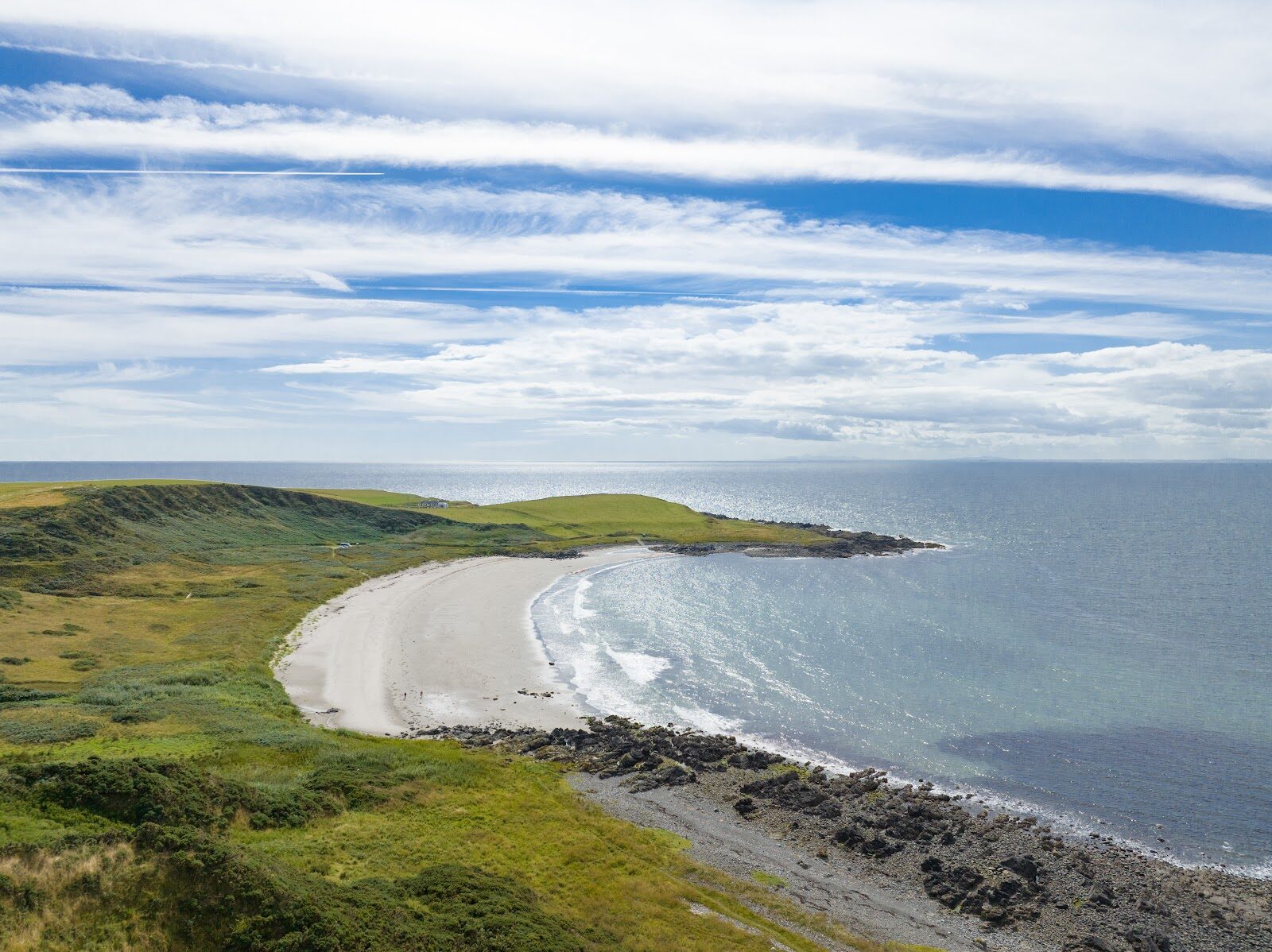
Ardwell Bay is on the quiet west side of the Rhins of Galloway, a curve of sand shut in by low cliffs and dunes at the end of a rough track.
A short walk takes in the beach, a cottage called Saltpans where salt was once made from the sea, and Doon Castle, an Iron Age broch, or stone tower, on a rocky point. It's about 3 km and an hour, and it needs the tide out.
- Time
- About an hour: the council's circular coast and farmland walk at Ardwell Bay, 3 km. A short walk on sand, grass and farm tracks.
- The path
- Sand, shingle, beaten earth and grass, hard farm tracks, stiles and gates.
- Where to start
- Ardwell Bay car park, at the end of the road signed for the Kirkmadrine Stones off the A716 south of Sandhead; the last stretch is a rough, uneven track. Do not park on the slipway.
- Set off
- Check the tide times: a very high tide can cut off the beach. From November to January, start by 2.30pm.
- When to go
- All year in daylight, with the tide out: a very high tide can cut off the beach. From November to January start by 2.30pm.
- Dogs
- Under close control at all times: farm livestock.
- Children
- A sandy beach and a short walk; cliffs at the broch, so keep hold of small children there.
- Toilets
- None at the bay; public toilets in Ardwell village and in Sandhead.
- Before you set out
- On very high tides the way along the beach can be cut off; turn back the way you came.
The walk
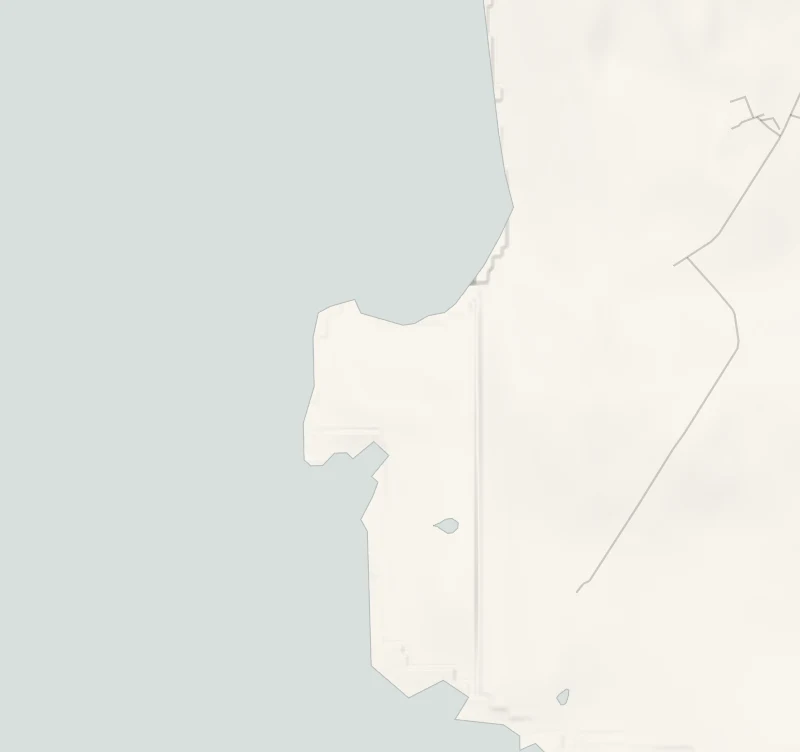
Park at Ardwell Bay car park, at the end of the road on the west coast of the Rhins. South of Sandhead on the A716, take the side road signed for the Kirkmadrine Stones and keep on to its end, where the last stretch is a rough, uneven track. Don't park on the slipway. The council's walk here is a 3 km round of about an hour, on sand, grass and farm tracks with stiles and gates. To the north is the bay, sandy and so closed in by cliffs and dunes that you don't see it until you're nearly on the beach.
A cottage called Saltpans stands at its far end, and salt was made from sea water along this coast from medieval times until the early 1800s. A niche in the low cliffs was home in the late 1800s to William Purves, a retired clown and strongman who sold postcards of himself. The way back is over the fields above the bay. To the south, a short walk along the rocky shore reaches Doon Castle, a broch on a headland at the cliff's edge, built between 100 BC and 200 AD. Its walls are low now, but you can still make out the circle and both doorways, one to the land and one to the sea.
Grey seals swim in the bay and dunlin feed on the sand. A very high tide can cut off the beach, so check the tide times and turn back if the sand is covered. Keep off the dunes, which are fragile, and keep dogs under close control near livestock. There are no toilets here, and the nearest are in Ardwell village and Sandhead. From November to January, start by 2.30pm to be back in daylight.
If it rains
An open west-facing shore with no shelter at all. In rain or a gale, walk only to the broch and back, or keep it for a better day.
Before you go
Book accommodation nearby
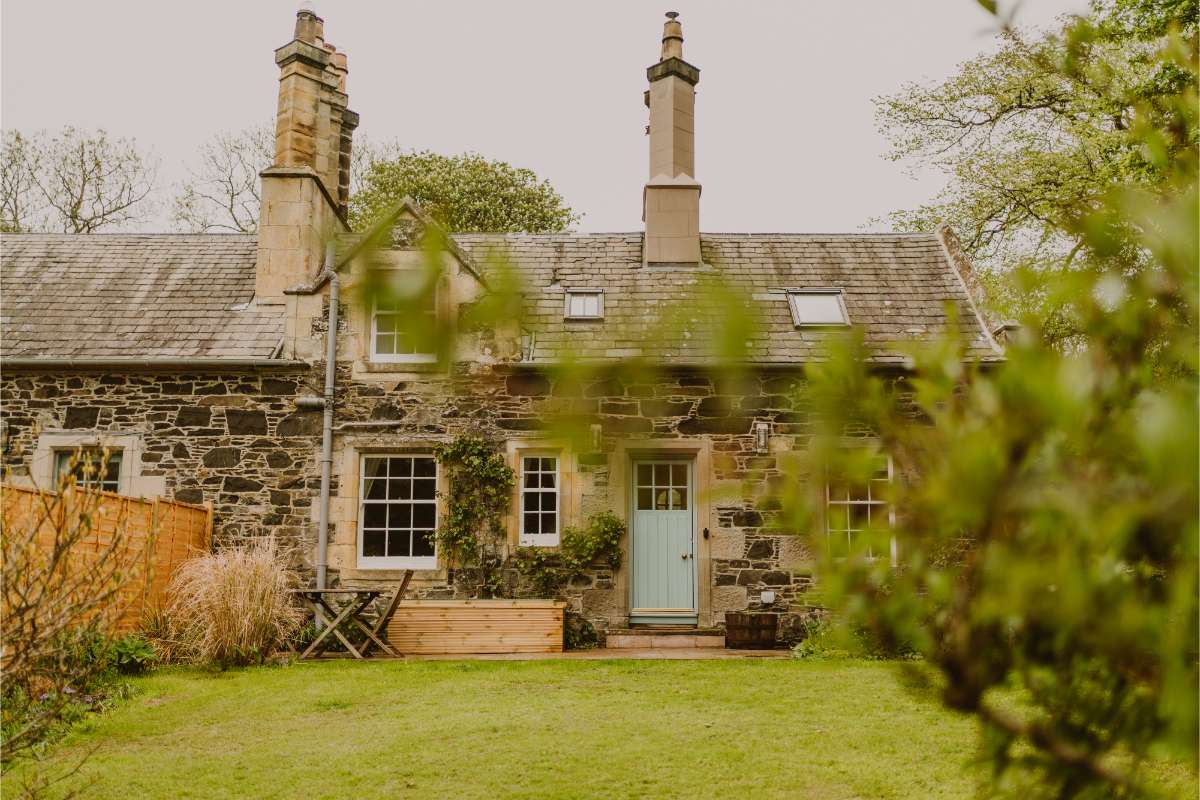
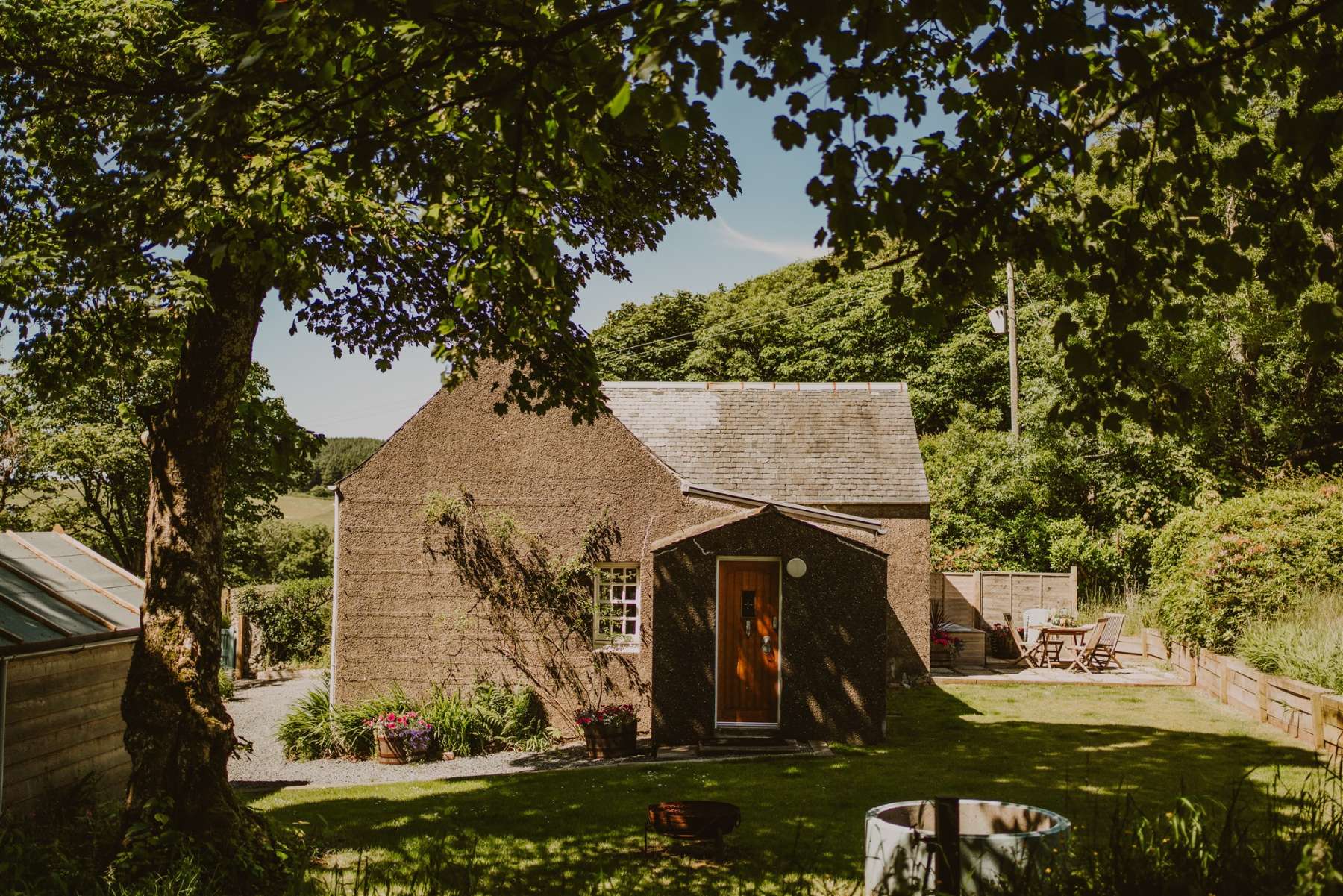
If you are staying over: here are ours nearest where the day starts and ends.
For further reading, before you go.
Photograph by P&D Harris via Google