
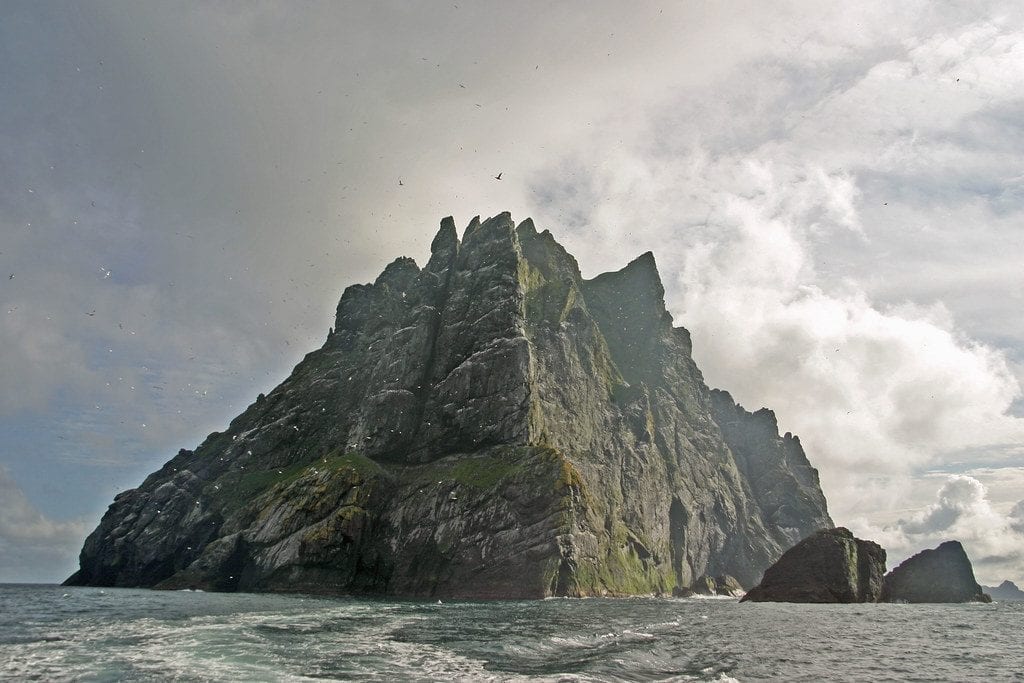
St Kilda
The remotest islands in Britain, fifty miles west of Harris, with the world's largest gannet colony and an abandoned village.
The St Kilda islands rise out of the Atlantic fifty miles west of Harris, the remotest part of the British Isles and a World Heritage Site.
Their cliffs and sea stacks are among the greatest seabird sites in Europe, with puffins, fulmars and guillemots, and the largest gannet colony in the world, on Boreray and its stacks.
People lived here for thousands of years, until the last thirty-six islanders were taken off in 1930. On Hirta, the main island, the village street of cottages is kept by the National Trust for Scotland, with the church, the schoolroom, the feather store and a small museum of St Kildan life up to the evacuation. It takes a whole day: day trips from Leverburgh on Harris leave at 8am, weather permitting, and take nearly three hours each way, landing by small boat in Village Bay for four or five hours ashore, then circling the stacks and Boreray on the way home. There is no food on the island.
Day trips run from Leverburgh on Harris, weather permitting: arrive 7.45am, back about 7.30pm.
In 2026 the trip cost £310, or £280 for under-15s, refunded if the weather stops it. Keep the next day free in case the trip is moved. Take food; there is none on the island.
- Getting there
- CalMac ferry from Uig on Skye to Tarbert, or from North Uist to Leverburgh.
- Boat
- From Leverburgh, weather permitting.
- Ashore
- About 10.45am to 3.30pm on Hirta.
Fifty miles west of Harris; boats from Leverburgh.
Nothing of ours in this part of the map.
Scotland in your inbox at five
One photograph, one story, what is on across Scotland, five quiz questions. Free. One press to stop.
Scotland, in print.
Every photograph commissioned, every word written by somebody who went. Printed twice a year, made in Scotland.
For further reading, before you go.